seamus dubhghaill

Promoting Irish Culture and History from Little Rock, Arkansas, USA


Leave a comment

Death of Darrell Figgis, Writer, Sinn Féin Activist & Parliamentarian

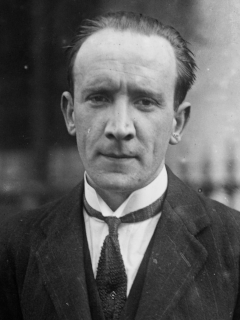
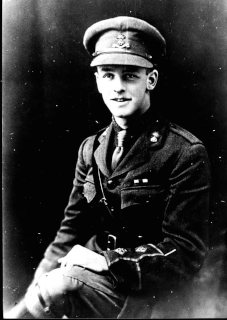
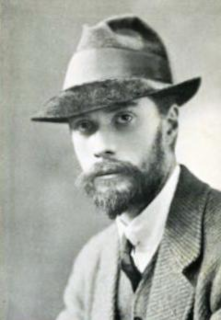
Darrell Edmund Figgis, Irish writer, Sinn Féin activist and independent parliamentarian in the Irish Free State, dies in London on October 27, 1925. The little that has been written about him has attempted to highlight how thoroughly his memory and works have been excised from Irish popular culture.

Figgis is born at Glen na Smoil, Palmerstown Park, Rathmines in Dublin, on September 17, 1882, the son of Arthur William Figges, tea merchant, and Mary Anne Deane. While still an infant, his family emigrates to Calcutta, India. There his father works as an agent in the tea business, founding A. W. Figgis & Co. They return when he is ten years of age, though his father continues to spend much of his time in India. As a young man he works in London at the tea brokerage owned by his uncle, and it is at this time that he begins to develop his interest in literature and literary criticism.

In 1910 Figgis, with the help of G. K. Chesterton, who wrote the introduction to his first book of verse, joins the Dent publishing company. He moves to Achill Island in 1913 to write, learn the Irish language and gain an appreciation of Irish culture, as perceived by many of his contemporaries to uniquely exist on the western seaboard. On his detention following the 1916 Easter Rising, he and the publishing house parted company. Subsequently, he establishes his own firm in which he republishes the works of William Carleton and others.

Figgis joins the Irish Volunteers in Dublin in 1913 and organises the original Battalion of Volunteers in Achill, where he had built a house. While in London, he is contacted by The O’Rahilly, who acquaints him with the arms dealers who had supplied the Ulster Volunteers. In this way he becomes part of the London group that discusses the financing and supply of German rifles for the Volunteers. He travels with Erskine Childers, initially to Belgium and from there to Germany, to make the purchase of the army surplus Mauser rifles. He then charters the tug Gladiator, from which the arms are transferred at sea to the Childers’ yacht Asgard and Conor O’Brien‘s Kelpie.

At this time the Royal Navy is patrolling the Irish Sea in anticipation of imminent war with Germany, and Figgis is tasked with taking a motorboat to Lambay Island to signal to the Asgard the all-clear. By his own account, he is unable to persuade the skipper of the pilot vessel to put to sea as one of the worst storms in many years is raging. Due to luck and the skill of the crews, the three over-laden yachts arrive at their destinations. Figgis, accompanied by Seán McGarry, watch Asgard helplessly from Howth pier until Erskine decides to take a calculated risk and sails into the harbour. Against the odds, the conspiracy to buy rifles in Germany and land them safely in Ireland has succeeded. A large party of Volunteers, on their way to Dublin with rifles and ammunition is confronted by a detachment of the King’s Own Scottish Borderers and Dublin Metropolitan Police. With their route blocked, Figgis and Thomas MacDonagh engage the officers in an attempt to distract them.

Although Figgis does not participate in the 1916 Easter Rising, he is arrested and interned by the British authorities between 1916 and 1917 in Reading Gaol. After his release, he returns to Ireland. At the 1917 Sinn Féin Ardfheis he and Austin Stack are elected Honorary Secretaries of the party. The conference sees Éamon de Valera replace Arthur Griffith as President of the party. Shortly after, Figgis is one of four recently released internees who travels to the South Longford constituency to campaign for Joseph McGuinness in the by-election caused by the death of John Phillips. The overwhelming victory of the Sinn Féin candidate over the Irish Parliamentary Party (IPP) nominee marks the beginning of the eclipse of the latter party by the former party. In May 1918, Figgis is arrested for his alleged part in the spurious German Plot a second time and again deported to England. In 1918, he becomes editor of the newspaper The Republic.

From September 1919 to 1921 Figgis heads the Commission of Inquiry into the Resources and Industries of Ireland. At this time a serious rift between Figgis and Michael Collins, then Minister for Finance, becomes a matter of public record. This close attention of Collins will pursue Figgis in his later activities on the Constitution Committee. While he is participating in a Dáil Court at Carrick-on-Shannon, the proceedings are interrupted by a British Army raid. An officer named Captain Cyril Crawford summarily condemns Figgis and Peadar Kearney to be hanged. He orders rope for the purpose, but another officer intervenes and Keaney and Figgis are set free.

Figgis supports the Anglo-Irish Treaty. He is extremely critical of the Collins/De Valera Pact for the June 1922 Irish general election which is an attempt to avoid a split in the Sinn Féin party and, more importantly, in the Irish Republican Army (IRA). On May 25, 1922, he attends a meeting of the executive council of the Farmers’ Union and representatives, of business interests, and encourages them to put forward candidates in constituencies where anti-Treaty candidates might otherwise head the poll. As he is a member of the Sinn Féin Ard Chomhairle National Executive at the time, he is expelled from the party.

Soon after the signing of the Treaty, the necessity of quickly drafting a constitution for the proposed Free State becomes apparent. It is intended by Arthur Griffith that Figgis will chair the Constitution Committee, but this proposal is vetoed by Collins who nominates himself for the position specifically to minimise Figgis’ influence. The animosity between Collins and Figgis remained an undercurrent of the project. In the end, Collins decides the job should go to Captain David Robinson, but this did nothing to heal the rift between Figgis and James G. Douglas.

In the 1922 and 1923 Irish general elections Figgis runs and is elected an independent Teachta Dála (TD) for the Dublin County constituency. While still a TD, he stands in the 1925 Seanad election to Seanad Éireann, where he polls only 512 first preferences.

In December 1923, it is decided that a committee be established to investigate the means by which a public radio broadcasting service should be operated in the Free State. A central issue of contention is whether the service should be run and controlled directly by the State or operated commercially by an Irish Broadcasting Company. The latter option, it is suggested, would follow the model adopted in the UK by the establishment of the BBC. Figgis is co-opted onto the committee, and this decision leads to a series of allegations resulting in the new State’s first corruption scandal of which Figgis himself is the focus. The allegations result in his resignation from the Broadcasting committee and the launching of a second enquiry. He strenuously denies any impropriety.

On November 18, 1924, Figgis’s wife Millie commits suicide in the back of a taxi in Rathfarnham using a Webley revolver given to them by Collins following the 1922 assault. A year later, his new love, a 21-year-old Catholic woman named Rita North, dies due to complications when a doctor tries to surgically remove an already dead child. The court, after investigating her death, determines that she died due to peritonitis, an inflammation in the lining of the abdominal cavity. The public, however, jumps to the conclusion that she died in a failed illegal abortion.

Figgis himself commits suicide in a London boarding house in Granville Street on October 27, 1925, just a week after giving evidence at North’s inquest. He had been staying at the Royal Automobile Club until the day before his death, as is usual when he visits London. A small group of mourners comprising close family and friends attend his interment at the Hampstead Cemetery in West Hampstead, London.

The by-election caused by his death is won by William Norton of the Labour Party.


Leave a comment

State Funeral in Honour of the “Forgotten Ten”

On October 14, 2001, the first multiple state funeral is held in honour of the “Forgotten Ten,” a term applied to ten Irish Republican Army (IRA) volunteers who were executed by British forces in Mountjoy Prison, Dublin, following courts martial for their role in the Irish War of Independence.

Based upon military law at the time, they are buried within the prison precincts, their graves unmarked in the unconsecrated ground. The names of the Forgotten Ten are Kevin Barry, Thomas Whelan, Patrick Moran, Patrick Doyle, Bernard Ryan, Thomas Bryan, Frank Flood, Thomas Traynor, Edmond Foley, and Patrick Maher. The hangman is John Ellis.

Following the Irish War of Independence, Mountjoy Prison is transferred to the control of the Irish Free State, which becomes the State of Ireland in 1937. In the 1920s, the families of the dead men request their remains be returned to them for proper burial. This effort is joined in the later 1920s by the National Graves Association. Through the efforts of the Association, the graves of the men are identified in 1934, and in 1996 a Celtic cross is erected in Glasnevin Cemetery, Dublin, to commemorate them.

The campaign to rebury the men drags on for 80 years from their deaths. Following an intense period of negotiations, the Irish government relents. Plans to exhume the bodies of the ten men are announced on November 1, 2000, the 80th anniversary of the execution of Kevin Barry. On October 14, 2001, the Forgotten Ten are afforded full state honours, with a private service at Mountjoy Prison for the families of the dead, a Requiem Mass at St. Mary’s Pro-Cathedral and burial in Glasnevin Cemetery.

According to The Guardian, some criticise the event as glorifying militant Irish republicanism. It coincides with the Fianna Fáil Ardfheis. The progress of the cortège through the centre of Dublin is witnessed by crowds estimated as being in the tens of thousands who break into spontaneous applause as the coffins pass. On O’Connell Street, a lone piper plays a lament as the cortège pauses outside the General Post Office (GPO), the focal point of the 1916 Easter Rising. In his homily during the Requiem Mass, Cardinal Cahal Daly, a long-time critic of the IRA campaign in Northern Ireland, insists that there is a clear distinction between the conflict of 1916–22 and the paramilitary-led violence of the previous 30 years:

“The true inheritors today of the ideals of the men and women of 1916 to 1922 are those who are explicitly and visibly committed to leaving the physical force tradition behind… Surely this state funeral can be an occasion for examination of conscience about the ideals of the men who died, and about our responsibility for translating those ideals into today’s realities.”

In his graveside oration Taoiseach Bertie Ahern echoes these sentiments and also pays tribute to the Ten:

“These 10 young men were executed during the War of Independence. The country was under tremendous pressure at the time. There was a united effort. Meanwhile, elected by the people, Dáil Éireann was developing, in spite of a war going on. Democracy was being put to work. Independent civic institutions, including the Dáil courts, were beginning to function. Before their deaths, the ten had seen the light of freedom. They understood that Ireland would be free and independent.”

The state funeral, broadcast live on national television and radio, is only the 13th since independence. Patrick Maher is not reburied with his comrades. In accordance with his wishes, and those of his family, he is reinterred in Ballylanders, County Limerick.

A feature length Irish language documentary on the re-interments, An Deichniúr Dearmadta (The Forgotten Ten) airs on TG4 on March 28, 2002.

(Pictured: The grave of nine of the Forgotten Ten in Glasnevin Cemetery, Dublin)


1 Comment

Assassination of Kevin O’Higgins, Politician, by the IRA

Kevin Christopher O’Higgins, Irish politician who serves as Vice-President of the Executive Council of the Irish Free State and Minister for Justice from 1922 to 1927, is assassinated by an Irish Republican Army (IRA) unit in Booterstown, County Dublin, on July 10, 1927. He also serves as Minister for Economic Affairs from January 1922 to September 1922 and Minister for External Affairs from June 1927 to July 1927. He serves as a Teachta Dála (TD) from 1921 to 1927 and is a Member of Parliament (MP) for Queen’s County from 1918 to 1921.

A man of intellectual power, O’Higgins is described by William Butler Yeats as “a great man in his pride confronting murderous men.” He is in fact murdered by maverick republicans while on his way to church.

O’Higgins is born in Stradbally, Queen’s County (County Laois since 1922) on June 7, 1892. Educated at University College Dublin, he is apprenticed to his uncle, a lawyer. Following the Easter Rising in 1916, he joins the Sinn Féin nationalist movement and is imprisoned. In 1918, while still in jail, he is elected to Parliament from Queen’s County, and in the next year he becomes assistant to the minister of local government, William Thomas Cosgrave. He goes on to become a prominent member of Cumann na nGaedheal.

O’Higgins supports the Anglo-Irish Treaty with Great Britain that creates the Irish Free State. In 1922 he is appointed Minister for Economic Affairs and Vice-President of the Executive Council. He helps to draft the Constitution of the Irish Free State and secures its passage through Dáil Éireann, lower house of the Oireachtas, the Irish parliament. Working for a united Ireland within the British Commonwealth, he plays an important part in the 1926 Imperial Conference. He also prominently represents the Free State in the League of Nations.

As Minister for Justice, O’Higgins establishes the Garda Síochána police force and takes summary measures to restore order following the civil war between the Free State forces and the Irish Republican Army. His role in the execution of 77 republicans in 1922–23 makes him many enemies, as does his sardonic wit, his inflammatory speeches during the civil war, and his curtailment of the liquor trade.

On Sunday, July 10, 1927, O’Higgins is assassinated at the age of 35 on the Booterstown Avenue side of Cross Avenue in Booterstown, a coastal suburb of Dublin, while on his way to Mass at the Church of the Assumption. The assassination is carried out by three anti-Treaty members of the IRA, Timothy Coughlan, Bill Gannon and Archie Doyle, in revenge for O’Higgins’ part in the executions of the 77 IRA prisoners during the Irish Civil War.

None of the three assassins is ever apprehended or charged, but Coughlan, a member of Fianna Fáil as well as the IRA, is killed in 1928 in Dublin by a police undercover agent whom he is attempting to murder. The other two benefit from the amnesty to IRA members issued by Éamon de Valera, upon his assumption of power in 1932. Gannon, who dies in 1965, joins the Communist Party of Ireland and plays a central role in organising Irish volunteers for the Spanish Civil War. Doyle remains a prominent IRA militant and takes part in various acts in the early 1940s. He lives to an old age, dying in 1980, and continues to take pride in having killed O’Higgins.


Leave a comment

Beginning of the Battle of Dublin and the Irish Civil War

The Battle of Dublin is a week of street battles in Dublin from June 28 to July 5, 1922, that mark the beginning of the Irish Civil War. Six months after the Anglo-Irish Treaty ended the Irish War of Independence, it is fought between the forces of the new Provisional Government and a section of the Irish Republican Army (IRA) that opposes the Treaty.

The Irish Citizen Army also becomes involved in the battle, supporting the anti-Treaty IRA in the O’Connell Street area. The fighting begins with an assault by Provisional Government forces on the Four Courts building and ends in a decisive victory for the Provisional Government.

On April 14, 1922, about 200 Anti-Treaty IRA militants, with Rory O’Connor as their spokesman, occupy the Four Courts in Dublin, resulting in a tense stand-off. They want to spark a new armed confrontation with the British, which they hope will bring down the Anglo-Irish Treaty, unite the two factions of the IRA against their former common enemy and restart the fight to create an all-Ireland Irish Republic. At the time the British Army still has thousands of soldiers concentrated in Dublin, awaiting evacuation.

Winston Churchill and the British cabinet have been applying pressure on the Provisional Government to dislodge the rebels in the Four Courts, as they consider their presence a violation of the Treaty. Such pressure falls heaviest on Michael Collins, President of the Provisional Government Cabinet and effective head of the regular National Army. Collins, a chief IRA strategist during the War of Independence from Britain, has resisted giving open battle to the anti-Treaty militants since they occupied Four Courts in April. His colleagues in the Provisional Government Cabinet, including Arthur Griffith, agree that Collins must mount decisive military action against them.

In June 1922 the Provisional Government engages in intense negotiations with the British Cabinet over a draft Constitution that seeks to avert the impending civil war. They particularly seek to remove the requirement of an oath to the British Crown by all members of the Dublin government, a key point of contention with anti-Treaty partisans. However, the conservative British Cabinet refuses to cooperate. The pro-treaty element of Sinn Féin wins the elections on June 16.

Following the assassination of Sir Henry Wilson in London on June 22, 1922, and the arrest by Four Courts troops of National Army Deputy Chief of Staff Gen. J. J. “Ginger” O’Connell, British pressure on the Provisional Government intensifies. The British now threaten to invade and re-occupy all of Ireland. On June 27 the Provisional Government Cabinet agrees on an ultimatum to the Four Courts garrison to evacuate or face immediate military action.

Churchill offers a loan of British artillery for use by the National Army, along with 200 shells from their store of 10,000 at Kilmainham, three miles away. It is possible that some British special troops are also covertly loaned. Two 18-pounder field guns are placed on Bridge Street and Winetavern Street, across the River Liffey from the Four Courts complex. After an ultimatum is delivered to the anti-Treaty garrison in the early hours of June 28, the National Army commences the bombardment of Four Courts.

No authoritative record exists regarding the order to commence bombardment. Historians tend to attribute the order to Collins, but some biographers dispute this. Anti-Treaty survivors allege that they are preparing for an 8:00 a.m. evacuation when the bombardment begins at 4:00 a.m.

Inside the building are 12 members of the Irish Republican Army Executive, including Chief of Staff Joe McKelvey, Director of Engineering Rory O’Connor, Quartermaster General Liam Mellows and Director of Operations Ernie O’Malley. The garrison consists of roughly 180 men drawn from the 1st and 2nd Battalions of the IRA’s 1st Dublin Brigade, commanded by Commandant Paddy O’Brien, armed for the most part only with small arms apart from one captured armoured car, which they name “The Mutineer.” The members of the IRA Army Executive are the political leaders of the garrison but serve as common soldiers under the command of O’Brien. The Anti-Treaty side fortifies the Four Courts to some extent, planting mines around the complex and barricading the doors and windows, but their leadership orders them not to fire first, in order to retain the moral high ground, and so the Free State troops are allowed to surround the Four Courts.

After the first day’s bombardment proves ineffective, the British give the Free State two more 18-pounder cannon and proffer 60-pounder howitzers along with an offer to bomb the Four Courts from the air. Collins turns down the latter two offers because of the risk of causing heavy civilian casualties. On June 29, Free State troops storm the eastern wing of the Four Courts, losing three killed and 14 wounded and taking 33 prisoners. The republicans’ armoured car is disabled and abandoned by its crew. Early the next day O’Brien is injured by shrapnel and O’Malley takes over military command in the Four Courts. By this time the shelling has caused the Four Courts to catch fire. In addition, orders arrive from Oscar Traynor, the anti-treaty IRA commander in Dublin, for the Four Courts garrison to surrender, as he cannot reach their position to help them. O’Malley rules this order invalid, as the Four Courts is a GHQ operation. However, in view of the rapidly deteriorating situation, at 3:30 p.m. on June 30, O’Malley surrenders the Four Courts to Brigadier General Paddy Daly of the Free State’s Dublin Guard unit. Three of the republican garrison die in the siege.

Several hours before the surrender, the Public Record Office of Ireland (PRO) block located in the western block of the Four Courts, which is used as an ammunition store by the Four Courts garrison, is the centre of a huge explosion, destroying Irish state records going back to the Anglo-Norman conquest. Forty advancing Free State troops are badly injured. Assigning blame for the explosion remains controversial. It is alleged by the National Army Headquarters that the Anti-treaty forces deliberately booby-trapped the PRO to kill advancing Free State troops. Tim Healy, a government supporter, later claims that the explosion is the result of land mines laid before the surrender, which explode after the surrender. However, a study of the battle concludes that the explosion is caused by fires ignited by the shelling of the Four Courts, which eventually reach two truckloads of gelignite in the munitions factory. A towering mushroom cloud rises 200 feet over the Four Courts.

At this stage in the battle troops on each side still have a sense of kinship with the other, as most of them had fought together in the Irish Republican Army during the Irish War of Independence. By appealing to friends on the Free State side, several anti-Treaty leaders among the Four Courts garrison, notably Ernie O’Malley and Seán Lemass, escape from captivity to continue the fight.

Despite the Free State force’s success in taking the Four Courts, fighting continues in Dublin until July 5. On June 29 anti-Treaty IRA units from the Dublin Brigade led by Oscar Traynor have occupied O’Connell Street, part of Parnell Square, York Street and some of other locations to try to distract Free State attention from their attack on the Four Courts. Not all the IRA units in the capital are prepared to fight against the new Irish government, however, and their numbers are probably about 500 throughout the city. Their numbers are supplemented by about 150 Citizen Army men and women who bring with them arms and ammunition dumped since the insurrection of Easter 1916.

The republicans occupy the northeastern part of O’Connell Street, with their strong point at “the block,” a group of buildings that the Anti-Treatyites had connected by tunneling through the walls. They had also taken over the adjoining Gresham, Crown, Granville and Hammam hotels. Their only position on the western side of the street is in the YMCA building. Additionally, they have an outpost south of the River Liffey at the Swan Pub on Aungier Street. Oscar Traynor apparently hopes to receive reinforcements from the rest of the country, but only Anti-Treaty units in Belfast and Tipperary reply and both of them arrive too late to take part in the fighting.

The Provisional Government troops, commanded by General Tom Ennis, start by clearing out the outlying anti-treaty garrisons, which is accomplished by July 1. They then draw a tighter cordon around O’Connell Street. Artillery is used to drive the Anti-Treaty fighters out of positions on Parnell Street and Gardiner Street, which gives the Free State troops a clear field of fire down O’Connell Street.

The republican outpost in the YMCA is eliminated when Free State troops tunnel underneath it and detonate a bomb. Traynor’s men in “the block” hold out until artillery is brought up, under the cover of armored cars, to bombard them at point-blank range. Incendiary bombs are also planted in the buildings. Traynor and most of his force make their escape when the buildings they are occupying catch fire. They mingle with civilian crowds and make their way to Blessington.

Left behind is Republican leader Cathal Brugha and a rear guard of 15 men, who stay behind in the Hammam Hotel after Traynor, and most other IRA men have left. At 5:00 p.m. on July 5, when the fires make the hotel untenable, Brugha orderes his men to surrender. He, however, stays behind, only to emerge from the building alone, armed with a revolver. He is shot in the thigh by Free State troops and dies later from blood loss. There are some further sporadic incidents of fighting around the city as Free State troops disperse anti-treaty IRA groups.

Cathal Brugha is the last casualty in the Battle of Dublin, which costs the lives of at least 80 people (15 anti-Treaty IRA Volunteers, 29 National Army soldiers, one British Royal Air Force serviceman and 35 civilians) and over 280 wounded. In addition, the Free State takes over 450 Republican prisoners. The high civilian casualties are doubtless the result of the use of heavy weapons, especially artillery, in a densely populated urban area.

When the fighting in Dublin dies down, the Free State government is left firmly in control of the Irish capital and the anti-treaty forces disperse around the country. Roundups after the fighting result in more Republican prisoners and the death of prominent anti-Treaty activist Harry Boland who is shot dead in Skerries, Dublin, on July 31.

Oscar Traynor, Ernie O’Malley and the other anti-Treaty fighters who escape the fighting in Dublin regroup in Blessington, around 30 km southwest of the city. An anti-Treaty IRA force from County Tipperary had arrived there but too late to participate in the Dublin fighting. Instead, this force heads south and takes a string of towns, including Enniscorthy and Carlow, but quickly abandons them when faced with superior Free State forces. Most of the Republicans then retreat further south to the so-called Munster Republic, territory southwest of a line running from Limerick to Waterford. This in turn is taken by the Free State in an offensive from July to August 1922.

Four of the Republican leaders captured in the Four Courts, Rory O’Connor, Liam Mellows, Joe McKelvey and Richard Barrett, are later executed by the government in reprisal for the Anti-Treaty side’s killing of TD Seán Hales. The street where Cathal Brugha is killed is later renamed Cathal Brugha Street in his honour.

The destruction of irreplaceable historical record in the PRO explosion (and the 1921 burning of the Custom House) has impaired Irish historiography. Some had been calendared to varying degrees. The National Archives of Ireland and Irish Manuscripts Commission have assembled and published original documents from other sources to mitigate the loss. A consortium led by Trinity College Dublin is creating the website “Beyond 2022” to provide a “virtual recreation” of the PRO and its contents, in time for the centenary of the explosion.

(Pictured: The Four Courts ablaze during the Battle of Dublin, June 30, 1922)


Leave a comment

Birth of Timothy Michael Healy, Politician, Journalist, Author & Barrister

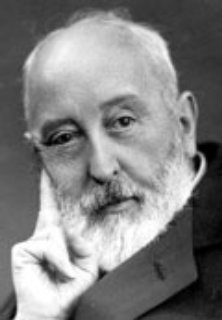
Timothy Michael “Tim” Healy, Irish nationalist politician, journalist, author, barrister, and one of the most controversial Irish Members of Parliament (MPs) in the House of Commons of the United Kingdom of Great Britain and Ireland, is born in Bantry, County Cork on May 17, 1855.

Healy is the second son of Maurice Healy, clerk of the Bantry Poor Law Union, and Eliza Healy (née Sullivan). His elder brother, Thomas Healy (1854–1924), is a solicitor and Member of Parliament (MP) for North Wexford and his younger brother, Maurice Healy (1859–1923), with whom he holds a lifelong close relationship, is a solicitor and MP for Cork City.

Healy’s father is transferred in 1862 to a similar position in Lismore, County Waterford. He is educated at the Christian Brothers school in Fermoy, and is otherwise largely self-educated, in 1869, at the age of fourteen, he goes to live with his uncle Timothy Daniel Sullivan in Dublin.

Healy then moves to England in 1871, working first as a railway clerk and then from 1878 in London as parliamentary correspondent of The Nation, writing numerous articles in support of Charles Stewart Parnell, the newly emergent and more militant home rule leader, and his policy of parliamentary obstructionism. Healy takes part in Irish politics and becomes associated with Parnell and the Irish Parliamentary Party. After being arrested for intimidation in connection with the Irish National Land League, he is promptly elected as member of Parliament for Wexford Borough in 1880.

In Parliament, Healy becomes an authority on the Irish land question. The “Healy Clause” of the Land Law (Ireland) Act 1881, which protects tenant farmers’ agrarian improvements from rent increases imposed by landlords, not only makes him popular throughout nationalist Ireland but also wins his cause seats in Protestant Ulster. He breaks with Parnell in 1886 and generally remains at odds with subsequent leaders of the Irish Parliamentary Party, though he is a strong supporter of proposals for Irish Home Rule. Meanwhile, he is called to the Irish bar in 1884 and becomes a queen’s counsel in 1899.

Dissatisfied with both the Liberals and the Irish Nationalists after the Easter Rising in 1916, Healy supports Sinn Féin after 1917. He returns to considerable prominence in 1922 when, on the urging of the soon-to-be Irish Free State‘s Provisional Government of W.T. Cosgrave, the British government recommends to King George V that Healy be appointed the first “Governor-General of the Irish Free State,” a new office of representative of the Crown created in the 1921 Anglo-Irish Treaty and introduced by a combination of the Irish Free State Constitution and Letters Patent from the King.

Healy believes that he has been awarded the Governor-Generalship for life. However, the Executive Council of the Irish Free State decides in 1927 that the term of office of Governors-General will be five years. As a result, he retires from the office and public life in January 1928 and publishes his extensive two volume memoirs later in that year. Throughout his life he is formidable because he is ferociously quick-witted, because he is unworried by social or political convention, and because he knows no party discipline. Towards the end of his life, he becomes more mellowed and otherwise more diplomatic.

Healy dies on March 26, 1931, at the age of 75, in Chapelizod, County Dublin. He is buried in Glasnevin Cemetery in Dublin.


Leave a comment

Passage of the Constitution (Removal of Oath) Act 1933

The Constitution (Removal of Oath) Act 1933 (act no. 6 of 1933, previously bill no. 2 of 1932), an Act of the Oireachtas of the Irish Free State amending the Constitution of the Irish Free State and the Constitution of the Irish Free State (Saorstát Eireann) Act 1922, is passed on May 3, 1933. The Act removes the Oath of Allegiance required of members of the Oireachtas and of non-Oireachtas extern ministers.

The oath, pledging allegiance to the Constitution and fidelity to George V as King of Ireland, is required by the Anglo-Irish Treaty signed in 1921, and has been the symbolic focus of Irish republican opposition to the Treaty in the 1922–23 Irish Civil War. When Fianna Fáil is founded in 1926 by veterans of the losing anti-Treaty side in the Civil War, abolishing the oath is a core aim. It is a main item in the manifesto for its successful 1932 Irish general election campaign, after which it forms a minority government whose first action is to introduce the Constitution (Removal of Oath) Bill 1932. Seanad Éireann has more ex-unionists and others conciliatory towards the United Kingdom and vote to reject the bill unless the Treaty can be amended by agreement. After the 1933 Irish general election, the Fianna Fáil majority government is able to override the Seanad and enact the law.

As well as amending the Constitution, the 1933 act also amends the Constitution of the Irish Free State (Saorstát Eireann) Act 1922, which had both created the Constitution in Irish law and also prohibited any Constitutional amendment incompatible with the Treaty. Since the Free State cannot unilaterally amend the Treaty, Fianna Fáil amends the 1922 act to remove the Treaty’s precedence over the Constitution. Later constitutional amendments are also incompatible with the terms of the Treaty, in particular by weakening and ultimately abolishing the office of Governor-General of the Irish Free State. There is legal controversy over whether the Oireachtas has the power to amend the 1922 act, because it had been passed by the Third Dáil sitting as a constituent assembly before the Oireachtas had come into being. In 1935 the Judicial Committee of the Privy Council (JCPC) in London rules that, in British law, the Oireachtas does have the power, under the Statute of Westminster 1931. Irish jurisprudence takes issue with many of the assumptions underlying the 1935 decision.

The question is rendered moot with the adoption of the Constitution of Ireland in 1937 which repeals the Free State Constitution. The 1933 act is itself repealed as spent by the Statute Law Revision Act 2016.

(Pictured: Great Seal of the Irish Free State)


Leave a comment

Death of Liam Tobin, Irish Army Officer & IRA Intelligence Officer

Liam Tobin, officer in the Irish Army and the instigator of the Irish Army Mutiny in March 1924, dies in Dublin on April 30, 1963. During the Irish War of Independence, he serves as an Irish Republican Army (IRA) intelligence officer for Michael CollinsSquad.

Tobin is born William Joseph Tobin at 13 Great Georges Street in Cork, County Cork, on November 15, 1895, the eldest son of Mary Agnes (nee Butler) and David Tobin, a hardware clerk. He has two younger siblings, Katherine and Nicholas Augustine Tobin, also born in Cork. His family moves to John Street in Kilkenny and then to Dublin. He goes to school in Kilkenny and is an apprentice in a hardware shop at the time of the 1916 Easter Rising. As a participant in the Rising he fights in the Four Courts garrison under Edward Daly. He is arrested, court martialed, and sentenced to death but his sentence is commuted to life imprisonment. He is a prisoner in Kilmainham, Mountjoy, Lewes, Dartmoor, Broadmoor and Pentonville prisons. He is released in June 1917.

In early 1919 Tobin becomes Collins’ chief executive in the Intelligence Directorate handling the many spies in Dublin Castle, including double agent David Neligan. Nancy O’Brien works for Under-Secretary for Ireland James Macmahon, decoding messages sent from London. Each day between 2:30 and 3:30 she passes any information acquired to either Tobin, Joseph McGrath, or Desmond FitzGerald. Tobin is involved in planning the assassinations of British soldiers, informants, members of the Royal Irish Constabulary, the Dublin Metropolitan Police, and operatives of MI5. He constructs detailed profiles of everyone remotely connected to the British government, often using Who’s Who, The Morning Post, and The Times, a newspaper that describes him as “one of the most formidable of [the] Twelve Apostles.”

In October 1921, Tobin travels with the Irish Treaty Delegation as part of Collins’ personal staff.

Tim Pat Coogan and James Mackay have examined Tobin’s involvement in the assassination of British Field Marshal Sir Henry Wilson. Wilson’s public tirades about Collins is evidence of mutual personal dislike between the two men. In May 1922 Collins tells Tobin “We’ll kill a member of that bunch” to the news of “bloody pogroms” in Belfast. Wilson is intimately involved with the Ulster loyalist cause, including the Curragh Mutiny and the establishment of the Ulster Special Constabulary. Just before the shooting, Coogan places Tobin in London. He meets courier Peig Ni Braonain at Euston Station collecting a document that has been sent from Dublin. Returning to Dublin before the incident, he is jubilant when he tells defence minister Richard Mulcahy about Wilson’s death. Mulcahy is appalled and threatens to resign.

Following the Anglo-Irish Treaty, Tobin is appointed deputy director of intelligence in the new state and assigned to the Criminal Investigation Department based at Oriel House. However Collins soon replaces him with Joseph McGrath. Tobin is placed on the Army Council and is Director of Intelligence from September 1922 until his appointment as Senior Aide-de-Camp to the new GovernorGeneral of the Irish Free State, Tim Healy, in November 1922. The position provides an apartment in Viceregal Lodge.

In October 1922, Tobin’s brother Nicholas, a Free State captain, is accidentally shot dead by his own troops during the raid and capture of a bomb making factory at number 8 Gardiner’s Place, Dublin.

Tobin believes in the stepping stone doctrine which sees the Treaty as a stage towards full independence. With the outbreak of the Irish Civil War he remains loyal to Collins and takes the Pro-Treaty side. He leads in the fight against the Anti-Treaty IRA in the south. Disillusioned with the continuing hostilities and in the aftermath of the death of Collins, he forms an association called the IRA Organisation (IRAO) or “Old Irish Republican Army” to distinguish themselves from the anti-treaty insurgents.

Richard Mulcahy, the new Irish defence minister, proposes to reduce the army from 55,000 to 18,000 men in the immediate post- Civil-War period. Tobin knows his own position is to be affected and shares the perception that the Irish Army treats former British officers better than former IRA officers. On March 7, 1924, Tobin, together with Colonel Charlie Dalton, sends an ultimatum to President of the Executive Council of the Irish Free State W. T. Cosgrave demanding an end to the army demobilisation. The immediate response is an order for the arrest of the two men on a charge of mutiny. The cabinet, already wary of the Irish Army, orders an inquiry and appoints Garda Commissioner Eoin O’Duffy to the army command.

On March 18, the mutineers assemble with hostile intent at a Dublin pub. An order is made to arrest the mutineers and the cabinet demands the resignation of the army council. The generals resign, affirming the subservience of the military to the civilian government of the new state.

In later years, Tobin rebuilds relations with his Civil War foes and joins Éamon de Valera‘s Anti-Treaty Fianna Fáil party. He joins up with Joseph McGrath to form the Irish Hospitals’ Sweepstake in the 1930s. Many other former army comrades find work in this lottery. He leaves the Sweep in 1938. After World War II, he becomes Superintendent of the Oireachtas for the Irish Dáil.

On October 14, 1929, Tobin marries Monica “Mona” Higgins at the Church of the Holy Family, Aughrim Street, Dublin. They have two daughters, Máire and Anne Tobin. Following the death of his father, David, in 1956, Tobin’s health declines, resulting in his death in Dublin on April 30, 1963.

Tobin is portrayed by actor Brendan Gleeson in Neil Jordan‘s biopic Michael Collins.


1 Comment

Death of Joseph McGrath, Politician & Businessman

Joseph McGrath, Irish politician and businessman, dies in Ballsbridge, Dublin, on March 26, 1966. He is a Sinn Féin and later a Cumann na nGaedheal Teachta Dála (TD) for various constituencies: Dublin St James’s (1918–1921), Dublin North-West (1921–1923) and Mayo North (1923–1924), and develops widespread business interests.

McGrath is born in Dublin on August 12, 1888. By 1916 he is working with his brother George at Craig Gardiner & Co., a firm of accountants in Dawson Street, Dublin. He works with Michael Collins, a part-time fellow clerk and the two strike up a friendship. In his spare time he works as secretary for the Volunteer Dependents’ Fund.

McGrath soon joins the Irish Republican Brotherhood. He fights in Marrowbone Lane in the 1916 Easter Rising. He is arrested after the rising, and jailed in Wormwood Scrubs and Brixton prisons in England. In the 1918 Irish general election, he is elected as Sinn Féin TD for the Dublin St. James’s constituency, later sitting in the First Dáil. He is also a member of the Irish Republican Army (IRA), and successfully organises many bank robberies during the Irish War of Independence (1919–1921), where a small percentage of the proceeds is retained as a reward by him and his fellow-soldiers. During this time he is interred briefly at Abercorn Barracks but escapes by dressing in army uniform and walking out of the gate with soldiers going on leave. He is eventually recaptured and spends time in jail in Belfast.

In October 1921 McGrath travels with the Irish Treaty delegation to London as one of Michael Collins’ personal staff. When the Provisional Government of Ireland is set up in January 1922, he is appointed Minister for Labour. In the Irish Civil War of 1922–1923, he takes the pro-Treaty side and is made Director of Intelligence, replacing Liam Tobin. In a strongly worded letter, written in red ink, he warns Collins not to take his last, ill-fated trip to County Cork.

McGrath is later put in charge of the police Intelligence service of the new Irish Free State, the Criminal Investigation Department (CID). It is modelled on the London Metropolitan Police department of the same name, but is accused of the torture and killing of a number of republican (anti-Treaty) prisoners during the civil war. It is disbanded at the war’s end with the official reason given that it is unnecessary for a police force in peacetime. He goes on to serve as Minister for Labour in the Second Dáil and the Provisional Government of Ireland. He also serves in the 1st and 2nd Executive Councils holding the Industry and Commerce portfolio.

In September 1922 McGrath uses strikebreakers to oppose a strike by Trade Unionists in the Post Office service, despite having threatened to resign in the previous March of the same year when the government threatened to use British strikebreakers.

In December 1922 McGrath is a reluctant supporter of the government’s decision to execute four high profile IRA prisoners: Liam Mellows, Dick Barrett, Rory O’Connor, and Joe McKelvey.

McGrath resigns from office in April 1924 because of dissatisfaction with the government’s attitude to the Army Mutiny officers and as he says himself, “government by a clique and by the officialdom of the old regime.” By this he means that former IRA fighters are being overlooked and that the Republican goals on all Ireland has been sidelined. He and eight other TDs, who had resigned from Cumann na nGaedheal, resign their seats in the Dáil and form a new political party, the National Party. However, the new party does not contest the subsequent by-elections for their old seats. Instead, Cumann na nGaedheal wins seven of the seats and Sinn Féin wins the other two.

In 1927, McGrath takes a libel case against the publishers of The Real Ireland by poet Cyril Bretherton, a book that claims he is responsible for the abduction and murder of Noel Lemass, the brother of Seán Lemass, in June 1923 during the civil war, as well as a subsequent coverup. He wins the court case. During the 1930s, he and Seán Lemass reconcile and regularly play poker together.

Following his political career, McGrath goes on to become involved in the building trade. In 1925 he becomes labour adviser to Siemens-Schuckert, German contractors for the Shannon hydroelectric scheme near Limerick. He founds the Irish Hospitals’ Sweepstake in 1930, and the success of its sweepstakes makes him an extremely wealthy man. He has other extensive and successful business interests always investing in Ireland and becomes Ireland’s best-known racehorse owner and breeder, winning The Derby with Arctic Prince in 1951.

McGrath dies at his home, Cabinteely House, in Ballsbridge, Dublin on March 26, 1966. Cabinteely House is donated to the state in 1986 and the land is developed as a public park. His son, Patrick W. McGrath, inherits many of his father’s business interests, and also serves as Fine Gael Senator from 1973 to 1977.

(Pictured: Screenshot of a film of Irish politician Joseph McGrath shot in 1922)


Leave a comment

Knocknagoshel Booby Trapped Mine Attack

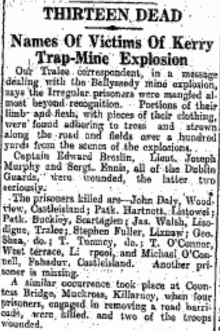
Five Free State soldiers, including three officers are killed by a booby trapped mine while clearing a road in Knocknagoshel, County Kerry, on March 6, 1923, during the Irish Civil War. Another soldier is badly wounded. National Army commander Paddy Daly issues a memorandum that Republican prisoners are to be used to clear mined roads from now on.

A party of eight Free State soldiers are sent to investigate a tip-off about an Irish Republican Army (IRA) arms dump. The tip-off is a ruse devised by the local IRA brigade to lure the enemy into a trap. At about 2:00 AM as they move stones to investigate the location where arms are allegedly buried, a mine explodes. Body parts are “strewn in all directions.” Paddy O’Connor, Michael Galvin, Laurence O’Connor, Michael Dunne and Edward Stapleton die instantly and a sixth is so badly injured, his legs are amputated. The IRA members who set the mine are hiding in a dugout about a mile away. The Knocknagoshel explosion represents the highest daily death toll among the Free State army in over six months.

Retaliation is swift and ferocious. Over the following two weeks, nineteen Republican prisoners die in County Kerry at the hands of the Free State. Knocknagoshel prompts an army statement that any future barricades or obstructions on the roads will be removed by republican prisoners. In his letter to officers in the Kerry Command, Brigadier Paddy O’Daly insists that “the taking out of prisoners is not to be regarded as a reprisal, but as the only alternative left us to prevent the wholesale slaughter of our men.” The implementation of O’Daly’s instructions is immediate and hugely repercussive.

On the night after the explosion, and in a move which reverberateds politically for generations, nine republican prisoners in Ballymullen Barracks in Tralee are taken to Ballyseedy on the Tralee to Killorglin road to clear a pile of rubble blocking the road. The nine, who had already been interrogated and abused in revenge for Knocknagoshel, are driven to the scene. It is suggested that one of the reasons these nine are selected from a wider group of prisoners is that they have no known links to the Catholic clergy or hierarchy so as not to antagonise the church which is actively and vocally supportive of the Free State and its leadership.

The army had planted a bomb in the rubble. They tie the prisoners by the wrists and their shoelaces and detonate the device. Eight of the nine are blown to pieces and killed instantly. The ninth, Stephen Fuller of Fahavane, Kilflynn, is thrown a considerable distance by the force of the explosion and, despite his injuries, manages to flee with the only eyewitness account of the incident.

When the dismembered remains of the eight dead men are placed in coffins and returned to their families at Ballymullen Barracks, there follows a “frenzy.” It is alleged that O’Daly orders the army band to play ragtime music as the bodies are handed over to the families at the gates of the barracks. The families react furiously, throwing stones at the soldiers and smashing the army coffins on the ground as they place the deceased in coffins they had brought themselves.

The funerals which follow prompted an outcry of condemnation of the actions of the Free State Army. As a result, it is decided that henceforth, prisoners who die in military custody in the Kerry Command areas will be buried by troops where they die rather than in their own parish. This is, as T. Ryle Dwyer argues, “tantamount to approving the barbarities that we being perpetrated and merely telling the soldiers to cover up their vile acts properly.”

Meanwhile, the police authorities move quickly to absolve themselves of any connections with the deaths at Ballyseedy on the basis that it was not reported to the Civic Guard in Kerry. The area is under an 11:00 PM curfew at the time and no patrols are undertaken after this hour. However, the superintendent Tralee notes, “In any event, in the Ballyseedy area at that time there were a considerable number of Irregulars, which rendered it unsafe for the Guards to patrol there.”

(From: “Body parts were ‘strewn in all directions’ – the bloody climax of the Civil War in Kerry” by Owen O’Shea, http://www.owenoshea.ie, March 7, 2021)


Leave a comment

Birth of Emmet Dalton, Soldier & Film Producer

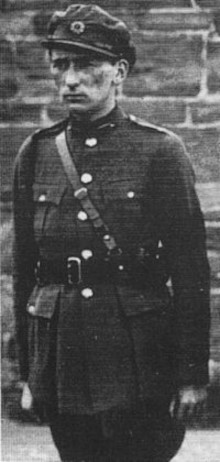
James Emmet Dalton MC, Irish soldier and film producer, is born in Fall River, Massachusetts, on March 4, 1898. He serves in the British Army in World War I, reaching the rank of captain. However, on his return to Ireland he becomes one of the senior figures in the Dublin Brigade of the Irish Republican Army (IRA) which fights against British rule in Ireland.

Dalton is born to Irish American parents James F. and Katharine L. Dalton. The family moves back to Ireland when he is two years old. He grows up in a middle-class Catholic background in Drumcondra in North Dublin and lives at No. 8 Upper St. Columba’s Road. He is educated by the Christian Brothers at O’Connell School in North Richmond Street. He joins the nationalist militia, the Irish Volunteers, in 1913 and the following year, though only fifteen, is involved in the smuggling of arms into Ireland.

Dalton joins the British Army in 1915 for the duration of the Great War. His decision is not that unusual among Irish Volunteers, as over 20,000 of the National Volunteers join the British New Army on the urgings of Nationalist leader John Redmond. His father, however, disagrees with his son’s decision. He initially joins the 7th battalion of the Royal Dublin Fusiliers (RDF) as a temporary 2nd Lieutenant. By 1916 he is attached to the 9th Battalion, RDF, 16th (Irish) Division under Major-General William Hickie, which contains many Irish nationalist recruits.

During the Battle of the Somme in September 1916, Dalton is involved in bloody fighting during the Battle of Ginchy, in which over 4,000 Irishmen are killed or wounded. He is awarded the Military Cross for his conduct in the battle. Afterwards he is transferred to the 6th Battalion, Leinster Regiment, and sent to Thessaloniki then Palestine, where he commands a company and then supervises a sniper school in el-ʻArīsh. In 1918 he is re-deployed again to France, and in July promoted to captain, serving as an instructor.

On demobilisation in April 1919, Dalton returns to Ireland. There, finding that his younger brother Charlie had joined the IRA, he himself follows suit. He later comments on the apparent contradiction of fighting both with and against the British Army by saying that he had fought for Ireland with the British and fought for Ireland against them.

Dalton becomes close to Michael Collins and rises swiftly to become IRA Director of Intelligence and is involved in The Squad, the Dublin-based assassination unit. On May 14, 1921, he leads an operation with Paddy Daly that he and Collins had devised. It is designed to rescue Gen. Seán Mac Eoin from Mountjoy Prison using a hijacked British armoured car and two of Dalton’s old British Army uniforms.

Dalton follows Collins in accepting the Anglo-Irish Treaty in 1922 and is one of the first officers, a Major General, in the new National Army established by the Irish Provisional Government of the Irish Free State. The Treaty is opposed by much of the IRA and Civil War between pro and anti-treaty factions eventually results.

Dalton is in command of troops assaulting the Four Courts in the Battle of Dublin which marks the start of the war in June 1922. At Collins’ instigation he, as Military liaison officer with the British during the truce, takes control of the two 18 pounder guns from the British that are trained on the buildings. He becomes commander of the Free State Army under Richard Mulcahy‘s direction. He is behind the Irish Free State offensive of July–August 1922 that dislodges the Anti-Treaty fighters from the towns of Munster. He proposes seaborne landings to take the Anti-Treaty positions from the rear and he commands one such naval landing that takes Cork in early August. In spite of firm loyalty to the National Army, he is critical of the Free State’s failure to follow up its victory, allowing the Anti-Treaty IRA to regroup resuming the guerrilla warfare started in 1919.

On August 22, 1922, he accompanies Collins in convoy, touring rural west Cork. The convoy is ambushed near Béal na Bláth and Collins is killed in the firefight. He had advised Collins to drive on, but Collins, who is not an experienced combat veteran, insists on stopping to fight.

Dalton is married shortly afterwards, on October 9, 1922, to Alice Shannon in Cork’s Imperial Hotel. By December 1922 he has resigned his command in the Army. He does not agree with the execution of republican prisoners that mark the latter stages of the Civil War. After briefly working as clerk of the Irish Senate, Seanad Éireann, he leaves the job to work in the movie industry.

Over the following forty years, Dalton works in Ireland and the United States in film production. In 1958 he founds Irish Ardmore Studios in Bray, County Wicklow. His company helps produce films such as The Blue Max, The Spy Who Came In from the Cold and The Lion in Winter, all of which are filmed in Ireland. His daughter is Irish actress Audrey Dalton.

Dalton dies in his daughter Nuala’s house in Dublin on March 4, 1978, his 80th birthday, never having seen the film that Cathal O’Shannon of RTÉ had made on his life. During the making of the film, they visit the battlefields in France, Kilworth Camp in Cork, Béal Na Bláth, and other places that Dalton had not visited since his earlier years. He wishes to be buried as near as possible to his friend Michael Collins in Glasnevin Cemetery in Dublin and is buried there in March 1978 after a military funeral. None of the ruling Fianna Fáil government ministers or TDs attend.

(Pictured: Dalton photographed in lieutenant’s uniform, Royal Dublin Fusiliers, taken circa. 1914-1918)