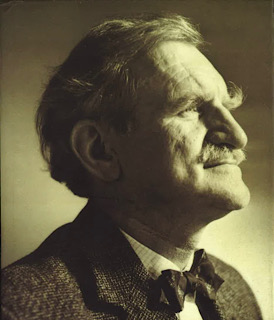
Following the sudden death of his father in 1918, Bell is brought at the age of seven to live near Raffery in the Strangford Lough area of County Down. He lives with his mother and two brothers in a cottage with no electricity or running water. This is the setting of his acclaimed novel of Ulster rural life, December Bride (1951). He moves to Belfast in 1921, where he works at a variety of manual jobs before securing a post with the BBC in 1945. He is a co-founder of the left-leaning literary journal, Lagan, in 1943.
Bel’s first collection of short stories, Summer Loanen and Other Stories, is published in 1943. His novels include December Bride (1951), The Hollow Ball (1961), A Man Flourishing (1973) and Across the Narrow Sea (1987).
Bell is recruited to the BBC in 1946, along with fellow writer, W. R. Rodgers, by poet and radio producer, Louis MacNeice. Some of his work as a radio producer is highly innovative. This is Northern Ireland, An Ulster Journey (1949) is a classic radio feature incorporating actuality, poetry, music and narration. In later work, Bell incorporates the voices of “ordinary people” in his attempt to paint a picture of Ulster as rooted in the lives and traditions of its people. His collaboration with W. R. Rodgers, The Return Room (1955), is one of the most important post-war Irish radio features and shows the influence of Dylan Thomas on Rodgers, the poet.
In 1977, Bell is honoured with an MBE in recognition of his contribution to the cultural life of Northern Ireland.
December Bride is made into an acclaimed film in 1990. Reviewing the film, The Irish Times columnist and literary critic Fintan O’Toole says it is “not just a remarkable artistic achievement, but also a remarkable political one…restoring a richness and complexity to a history that has been deliberately narrowed.” In April 1999, December Bride is selected by award-winning novelist and critic Colm Tóibín and publisher, writer and critic Dame Carmen Callil, for inclusion in The Modern Library: The 200 Best Novels in English Since 1950 (Picador).
Bell dies on February 9, 1990, at 190 King’s Road, Knock, Belfast, aged 80, shortly before the premiere of the film of December Bride. On October 15, 2009, the eve of what would have been Bell’s centenary, a blue plaque is unveiled by Northern Ireland Minister of Culture, Arts and Leisure Nelson McCausland on the Belfast house where Bell had written December Bride. Such plaques are erected to commemorate and honour notable people.
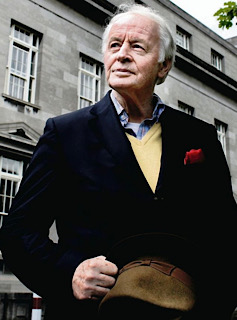
O’Connor is a well-known intellectual figure in contemporary Irish affairs and expresses strong opinions against censorship and the war on drugs. He contributes a regular poetry column to the Irish daily, the Evening Herald, also writes a column for the Sunday Mirror and a sporting column for TheSunday Times, as well as broadcasting on RTÉ.
O’Connor is also known for the autobiographical The Ulick O’Connor Diaries 1970-1981: A Cavalier Irishman (2001), which details his encounters with well-known Irish and international figures, ranging from political (Jack Lynch and Paddy Devlin) to the artistic (Christy Brown and Peter Sellers). It also documents the progress of the Northern Ireland peace process during the same time, and the progress of the Northern Ireland Assembly. Although he travels extensively, he lives in his parental home in Dublin’s Rathgar. He is a member of Aosdána.
A serious interest in poetry and literature begins to manifest itself during his years at TCD. In 1900, he makes the acquaintance of W. B. Yeats and George Moore and begins to frequent Dublin literary circles. In 1904 and 1905 he publishes several short poems in the London publication The Venture and in John Eglinton‘s journal Dana. His name also appears in print as the renegade priest Fr. Oliver Gogarty in George Moore’s 1905 novel The Lake.
In 1905, Gogarty becomes one of the founding members of Arthur Griffith‘s Sinn Féin, a non-violent political movement with a plan for Irish autonomy modeled after the Austro-Hungarian dual monarchy.
In July 1907, his first son, Oliver Duane Odysseus Gogarty, is born, and in autumn of that year he leaves for Vienna to finish the practical phase of his medical training. Returning to Dublin in 1908, he secures a post at Richmond Hospital, and shortly afterward purchases a house in Ely Place opposite George Moore. Three years later, he joins the staff of the Meath Hospital and remains there for the remainder of his medical career.
Gogarty maintains close friendships with many of the Dublin literati and continues to write poetry in the midst of his political and professional duties. He also tries his hand at playwriting, producing a slum drama in 1917 under the pseudonym “Alpha and Omega,” and two comedies in 1919 under the pseudonym “Gideon Ouseley,” all three of which are performed at the Abbey Theatre. He devotes less energy to his medical practice and more to his writing during the twenties and thirties.
With the onset of World War II, Gogarty attempts to enlist in the Royal Air Force (RAF) and the Royal Army Medical Corps (RAMC) as a doctor. He is denied on grounds of age. He then departs in September 1939 for an extended lecture tour in the United States, leaving his wife to manage Renvyle House, which has since been rebuilt as a hotel. When his return to Ireland is delayed by the war, he applies for American citizenship and eventually decides to reside permanently in the United States. Though he regularly sends letters, funds, and care-packages to his family and returns home for occasional holiday visits, he never again lives in Ireland for any extended length of time.
Gogarty suffers from heart complaints during the last few years of his life, and in September 1957 he collapses in the street on his way to dinner. He dies on September 22, 1957. His body is flown home to Ireland and buried in Cartron Church, Moyard, near Renvyle, County Galway.
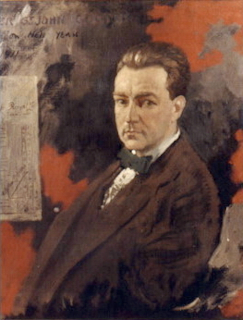
(Pictured: 1911 portrait of Oliver St. John Gogarty painted by Sir William Orpen, currently housed at the Royal College of Surgeons in Ireland)
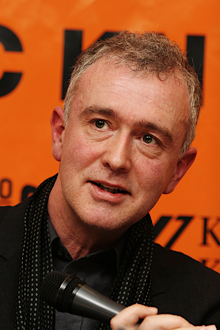
O’Connor is the eldest of five children and brother of singer Sinéad O’Connor. He is from the Glenageary area of south Dublin. His parents are Sean O’Connor, a structural engineer who later turns barrister, and Marie O’Connor.
O’Connor’s novel Cowboys and Indians (1991) is on the shortlist for the Whitbread Book Award.
On February 10, 1985, O’Connor’s mother is killed in a car accident. The mother of his character Sweeney in The Salesman (1998) dies in the same manner.
In 2002, O’Connor writes the novel Star of the Sea, which The Economist lists as one of the top books of 2003. His 2010 novel Ghost Light is loosely based on the life of the actress Maire O’Neill, born Mary “Molly” Allgood, and her relationship with the Irish playwrightJohn Millington Synge. It is published by Harvill Secker of London in 2010.
In 2014, O’Connor is announced as the inaugural Frank McCourt Chair in Creative Writing at the University of Limerick, where he teaches on the MA in Creative Writing.
O’Connor is a regular contributor to Drivetime, an evening news and current affairs programme on RTÉ Radio 1.
O’Connor’s Shadowplay, published in 2019, is shortlisted for the2019 Costa Book Award in the Novel category.
O’Connor is married to television and film writer Anne-Marie Casey. They have two sons. He and his family have lived in London and Dublin, and occasionally reside in New York City.
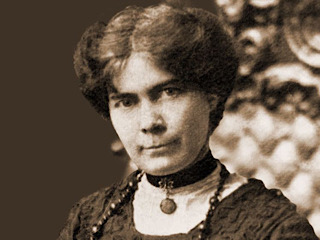
Brayton is born Teresa Coca Boulanger in Kilbrook, the youngest daughter and fifth child of Hugh Boylan and Elizabeth Boylan (née Downes). Her family are long-time nationalists, with her great grandfather previously leading a battalion of pikesmen at the Battle of Prosperous.
Brayton is educated from the age of 5 in Newtown National School. She writes her first poem at the age of twelve, and soon after wins her first literary award. Later on, she trains to be a teacher, and then becomes an assistant teacher to her older sister Elizabeth in the same school she received her education.
Brayton’s father is a tenant farmer, and from a young age she witnesses the effects of the land wars in Ireland. She is a supporter of Parnell, the Irish National Land League and the Irish Home Rule movement. Her work is largely influenced by her family history and Irish nationalism.
In September 1895, Brayton emigrates to the United States at the age of 27. She first lives in Boston, Chicago, and later moves to New York City. She meets Richard H. Brayton, a French-Canadian who works as an executive in the Municipal Revenue Department, who she then marries. She looks after their home and focuses on her career as a freelance journalist. She lives in the United States for 40 years and becomes well known in Irish American circles as a prominent figure in the Celtic Fellowship. It was in the United States that her reputation is established.
In the 1880s, Brayton begins her career as a poet, writing poetry for both national and provincial Irish newspapers, including Young Ireland and the King’s County Chronicle. She uses the pseudonym “T. B. Kilbrook” while contributing to these papers.
Brayton continues writing under the pseudonym until moving to the United States, where she becomes an acclaimed writer and continues to contribute to papers including the Boston newspaper The Pilot, New York Monitor and Rosary Magazine. Her target audience is the Irish immigrant population of the United States. After establishing herself she releases her poetry in collections including Songs of Dawn (1913) and The Flame of Ireland (1926).
Brayton makes return trips to Ireland regularly and develops a relationship with nationalist peers, and the leaders of the Easter Rising. Upon returning to the United States, she becomes an activist for the Irish Republic and participates in organising the distribution of information to the Irish population through pamphlets and public speaking. Her contribution is acknowledged by Constance Markievicz. Her patriotism to Ireland admit her to the Celtic Fellowship in America, where she shares her poetry at events.
Brayton’s best-known poem is “The Old Bog Road,” which is later set to music by Madeline King O’Farrelly. It has since been recorded and released by many Irish musicians including Finbar Furey, Daniel O’Donnell and Eileen Donaghy, among many others. Many more of her best-known ballads include, The Cuckoo’s Call, By the Old Fireside and Takin’ Tea in Reilly’s.
Brayton makes her permanent return to Ireland at the age of 64 following the death of her husband in 1932 and continues her career as a journalist writing for Irish newspapers and publishes religious poetry in the volume Christmas Verses in 1934. A short story called The New Lodger written by Brayton is published by the Catholic Trust Society in 1933. She dedicates much of her work to the exiled Irish living in the United States, incorporating themes of nostalgia, the familiarity of home and religion throughout her poetry.
Initially upon moving back to Ireland, she lives for a few years with her sister in Bray, County Wicklow. She then moves to Waterloo Avenue, North Strand, County Dublin. Here, she witnesses the bombing of the North Strand on May 31, 1941 during World War II. Shortly after the bombing, she eventually settles back in Kilbrook, where she was born, and lives there for the rest of her life. She spends a brief period of time in the Edenderry Hospital before her death. During her stay there she becomes a good friend with Padraig O’Kennedy, the “Leinster Leader,” who is able to reveal to her something that is linked to a family member of his. A copy of her The Old Bog Road which had been set to music and autographed by her while she was living in the United States. She had it sent to O’Kennedy’s eldest son and on it she wrote the words: “To the boy who sings the Old Bog Road so sweetly.”
Two years after her return to Kilbrook, on August 19, 1943, Brayton dies in the same room where her mother had given birth to her over 75 years previously. She is buried at the Cloncurry cemetery in County Kildare. Her funeral is attended by many, including the then Taoiseach, Éamon de Valera.
From the vivid imagery she speaks of in her poetry, Brayton, both a poet and a novelist, is described by some as “the poet of the homes of Ireland.” Such scenes include the vivid imagery of the fireside chats, the sound of her latch lifting as neighbours in to visit at night from her poem “The Old Boreen” and about her home cooking and work from “When the Leaves Begin to Fall.” Such images can be compared to most Irish households and can depict a vivid picture to those reading her poetry.
Brayton’s poetry leaves a lasting sense of Irish beauty and community. This can be seen in such poems as “A Christmas Blessing” where she speaks of “taking and giving in friendship” during Christmas. Since her passing she has continued to keep an audience from overseas from Boston and New York primarily, this as a result of the reminder her poems give to Irish exiles of Irish traditions and music which was close to them. While her poems are more often serious, some portray an almost comical undertone tone. In an article in The Irish Times, her poetry is also said to have a racy feel to them.
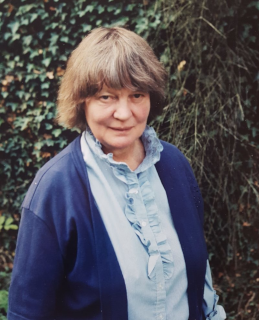
Murdoch is the daughter of Irene Alice (née Richardson) and Wills John Hughes Murdoch. Her father, a civil servant, comes from a mainly Presbyterian sheep farming family from Hillhall, County Down. In 1915, he enlists as a soldier in King Edward’s Horse and serves in France during World War I before being commissioned as a second lieutenant. Her mother trains as a singer before Iris is born and is from a middle-class Church of Ireland family in Dublin. Her parents first meet in Dublin when her father is on leave and are married in 1918. Iris is the couple’s only child. When she is a few weeks old the family moves to London, where her father had joined the Ministry of Health as a second-class clerk. She is a second cousin of the Irish mathematician Brian Murdoch.
From 1947 to 1948 Murdoch studies philosophy as a postgraduate at Newnham College, Cambridge. She meets Ludwig Wittgenstein at Cambridge but does not hear him lecture, as he had left his Trinity College professorship before she arrives. In 1948 she becomes a fellow of St. Anne’s College, Oxford, where she teaches philosophy until 1963. From 1963 to 1967 she teaches one day a week in the General Studies department at the Royal College of Art.
In 1956 Murdoch marries John Bayley, a literary critic, novelist, and from 1974 to 1992 Warton Professor of English at Oxford University, whom she had met in Oxford in 1954. The unusual romantic partnership lasts more than forty years until Murdoch’s death. Bayley thinks that sex is “inescapably ridiculous.” She in contrast has “multiple affairs with both men and women which, on discomposing occasions, Bayley witnesses for himself.”
Murdoch’s first novel, Under the Net, is published in 1954 and is selected in 1998 as one of Modern Library’s 100 best English-language novels of the 20th century. She had previously published essays on philosophy, and the first monograph about Jean-Paul Sartre published in English. She goes on to produce 25 more novels and additional works of philosophy, as well as poetry and drama.
Murdoch’s last novel, Jackson’s Dilemma, is published in 1995. She is diagnosed with Alzheimer’s disease in 1997 and dies on February 8, 1999, in Oxford, England. There is a bench dedicated to her in the grounds of Lady Margaret Hall, Oxford, where she enjoyed walking.
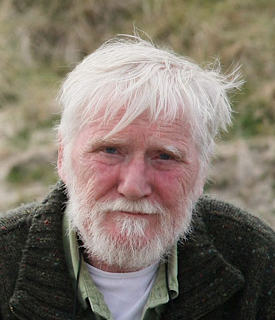
Dermot Healy, Irish novelist, playwright, poet and short story writer, dies at his home in Ballyconnell, Sligo, County Sligo, on June 29, 2014. A member of Aosdána, he is also part of its governing body, the Toscaireacht. He is described variously as a “master,” a “Celtic Hemingway” and as “Ireland’s finest living novelist.”
Healy is born in Finnea, County Westmeath, on November 9, 1947, the son of a Guard. As a child the family moves to Cavan, County Cavan, where he attends the local secondary school. In his late teens he moves to London and works in a succession of jobs, including barman, security man and as a labourer. He later returns to Ireland, settling in Ballyconnell, County Sligo, a small settlement on the Atlantic coast.
Often overlooked due to his relatively low public profile, Healy’s work is admired by his Irish literary predecessors, peers and successors alike, many of whom idolise him. Among the writers to have spoken highly of him are Seamus Heaney, Eugene McCabe, Roddy Doyle, Patrick McCabe and Anne Enright.
Healy dies at his home in Ballyconnell on June 29, 2014, while awaiting an ambulance after suddenly being taken ill. He is laid to rest at Carrigans Cemetery following funeral mass by Fr. Michael Donnelly at St. Patrick’s Church in Maugherow, County Sligo.
Foster is the fourth of the six children of Presbyterian minister of Newmills congregation, James Foster, and Lydia (née Harkness). She has three brothers and two sisters. She is educated at home and is later sent to board at Miss Black’s school in Holywood, County Down. She, with her sisters Jane and Bessie, move to Belfast to establish a girls’ school, the Ladies’ Collegiate School, in the Balmoral suburbs, first at Myrtlefield Park, at 434 Lisburn Road, and then in Maryfield Park. This is after Bessie graduates from Trinity College Dublin in 1896 having studied modern languages. Their school teaches boys and girls, both day pupils and boarders. Foster and Jane teach music, and possibly other subjects as well. Their brother Henry, who works in Belfast, lives with them. All four of the siblings attend the Malone Presbyterian Church and are members of the temperance movement. Throughout her life, Foster remains attached to Newmills, visiting regularly and laying the foundation stone for the new manse in 1910. Her brother, Nevin, is the only one of the six siblings to marry and is an Irish ornithological expert.
The school closes after the deaths of Bessie in December 1917 and Jane in October 1918. The death of Henry in December 1922 leaves Foster alone, and having lost her hearing almost completely, she is in difficult circumstances. To support herself, she begins to write literary sketches and dialect verse for a number of publications such as the Northern Whig, Ireland’s Own, and the annual miscellany Ulster Parade. A selection of these writings are published as a volume, Tyrone Among the Bushes, in 1933. She also writes plays, but these are not collected or produced. She is best known for her three books which are set in rural County Tyrone around the time of Foster’s parents and her childhood. The books, The Bush that Burned (1931), Manse Larks (1936), and Elders’ Daughters (1942) are published by Quota Press in Belfast and are seen as part of the Scottish Kailyard school genre of writing. The Bush that Burned details the story of a young man becoming a minister despite opposition, and is widely read in Ulster and beyond. Aodh de Blácam references the book as evidence that there is little difference between rural Ulster Protestants and their Catholic counterparts. Manse Larks recounts a rural childhood of six siblings growing up in the minister’s house. Foster’s fondness for animals is clear from the book, she is a supporter of the Royal Society for the Prevention of Cruelty to Animals (RSPCA), and her companion in later years is a dog named Stewart. Elders’ Daughters explores the experiences, romantic dreams and misadventures of young women subject to paternal authority in rural County Tyrone.
As Foster’s health declines and after the Belfast Blitz of April 1941, she goes to live with a married niece in Hollowbridge House near Royal Hillsborough, County Down. It is to this niece that she dictates the last chapters of Elders’ Daughters. She dies at Hollowbridge House on December 13, 1943. She is buried at Newmills Presbyterian Church, with her parents and siblings.
Dryhurst is born to Alexander Robinson and Emily Egan. Her father is a dyer. She is known as Nannie to her sisters and she decides to change her name to Nannie Florence in honour of a young friend who had died. As a result she is known variously (and following her marriage) as N.F. Dryhurst, Nannie, Nora and Florence Dryhurst.
After the death of her father, Dryhurst takes a position as a governess as she speaks fluent French, German and Irish, as well as having considerable skill as an artist. She works first in Ireland and then in London. She looks after a doctor’s daughter, Nellie Tenison, and through them she meets the Dryhurst family. In 1882, she becomes engaged to British Museum official Alfred Robert Dryhurst and marries him in August 1884. Their first daughter, Norah, is born in 1885 and the second, Sylvia, in 1888.
Dryhurst soon gets involved with an anarchist group and writes regularly for the Freedom newspaper. She is friends with Charlotte Wilson and acts as editor when Wilson is away. In the early 1890s she takes over as editor completely for a period of time. She also works as a translator for Peter Kropotkin‘s works. She spends time teaching with Wilson, Agnes Henry, and Cyril Bell at the International Anarchist School set up in Fitzroy Square in London by Louise Michel. She gives active support to Spanish refugees fleeing repression and gives money to support the colony at Clousden Hill from 1895 to 1902.
Dryhurst supports a number of different countries attempting to gain independence. She becomes secretary of the Nationalities and Subject Races Committee and uses her writing in working toward Irish independence. She writes for various Irish newspapers and assists with the creation of The Irish Citizen. A friend of W. B. Yeats, she appears in his play The Land of Heart’s Desire in June 1904. She speaks Georgian, having learned it from Varlam Cherkezishvili, a close associate of Kropotkin. In 1906, she is a member of the Georgian Relief Committee and travels to the country. She speaks at an international conference at The Hague in support of Georgia. She is also a supporter of Indian independence.
It was through Dryhurst that the Gifford sisters get their connection to the Irish independence movement. She introduces Muriel Gifford to Thomas McDonagh and Grace Gifford to James Plunkett. After the executions of fifteen leaders of the Easter Rising in Dublin, she spends her time campaigning unsuccessfully for the reprieve of Roger Casement. Not all her activities are purely political. She is a neighbour of Martin Shaw and on her suggestion he founds the Purcell Operatic Society in 1899. She becomes the Society’s secretary. He rents accommodation near her and through her friends they find talented amateurs to put on their productions.
Dryhurst has a long affair with Henry Nevinson, a journalist she meets in 1892. The affair ends in 1912. She dies in 1930. Her papers are kept in the National Library of Ireland.
Duff is the eldest of seven children of John Duff, a civil servant with the local government board, and his wife, Susan Letitia (née Freehill), a civil servant with the post office. The wealthy family lives in the city at St. Patrick’s Road, Drumcondra. He attends Blackrock College.
In 1908, Duff enters the Civil Service and is assigned to the Irish Land Commission. In 1913, he joins the Society of Saint Vincent de Paul and is exposed to the real poverty of Dublin. Many who live in tenement squalor are forced to attend soup kitchens for sustenance, and abject poverty, alcoholism, street gangs, and organized prostitution are rife in parts of Dublin. He joins and soon rises through the ranks to become President of the Saint Patrick’s Conference at Saint Nicholas of Myra Parish. Having concern for people he sees as materially and spiritually deprived, he has the idea to picketProtestant soup kitchens as he considers they are giving aid in the form of food and free accommodation at hostels, in return for not attending Catholic services. He sets up rival Catholic soup kitchens and, with his friend, Sergeant Major Joe Gabbett, who has already been working at discouraging Catholics from patronizing Protestant soup kitchens. They succeed in closing down two of them over the years.
In 1916, Duff publishes his first pamphlet, Can we be Saints?, where he expresses the conviction that all are called to be saints without exception, and that through Christian faith, all have the means necessary.
In 1918, a friend gifts Duff a copy of the book True Devotion to Mary by the seventeenth-century French cleric Louis de Montfort, which influences his views on Mary. He is additionally influenced by the writings of John Henry Newman.
On September 7, 1921, along with Fr. Michael Toher and fifteen predominantly young women, he is present at the first meeting of the association which he would forge as the Legion of Mary. He models the Legion on the Roman legions, naming the local unit the “praesidium,” and he immerses himself in the apostolic work which dominates the rest of his life.
In 1922, Duff establishes the Sancta Maria hostel in Dublin as a refuge for prostitutes, and is the driving force behind the closure of “Monto,” Dublin’s notorious red-light district. In 1927, he establishes the Morning Star hostel for homeless men in Dublin, and in 1930 the Regina Coeli hostel for homeless women, which provides special units for unmarried mothers and their children at a time when neither church nor state favour helping unmarried women to keep their children.
While Duff enjoys the support of W. T. Cosgrave, Ireland’s head of government, and in May 1931 is granted an audience with Pope Pius XI, his efforts are opposed internally in the Dublin diocese. In the 1930s and 1940s, he creates the Mercier Society, a study group designed to bring together Catholics and Protestants, as well as the Pillar of Fire, a group designed to promote dialogue between Irish Catholics with Ireland’s Jewish community.
Duff retires from the Civil Service in 1934 to devote all of his time to the Legion of Mary. For the rest of his life, with the help of many others, he guides the Legion’s worldwide extension.
In 1965, Pope Paul VI invites Duff to attend the Second Vatican Council as a lay observer. When he is introduced to the assembly by Archbishop John Heenan of Liverpool, he receives a standing ovation.
Duff makes the promotion of devotion to the Sacred Heart of Jesus part of the Legion’s apostolate.
Duff dies in Dublin at the age of 91 on November 7, 1980. He Is interred in Glasnevin Cemetery. In July 1996, the cause of Duff’s beatification is introduced by Cardinal Desmond Connell.
Today, the Legion of Mary has an estimated four million active members and 10 million auxiliary members in close to 200 countries in almost every diocese in the Catholic Church.