seamus dubhghaill

Promoting Irish Culture and History from Little Rock, Arkansas, USA


Leave a comment

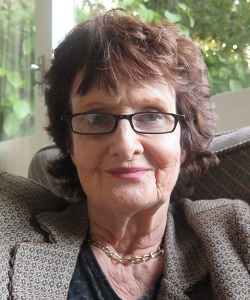
Birth of Eavan Boland, Irish Poet, Author & Professor

Eavan Boland, Irish poet, author and professor who has been active since the 1960s and helped develop feminist publishing company Arlen House, is born in Dublin on September 24, 1944. She is currently a professor at Stanford University, where she has taught since 1996. Her work deals with the Irish national identity and the role of women in Irish history. A number of poems from Boland’s poetry career are studied by Irish students who take the Leaving Certificate.

Boland’s father, Frederick Boland, is a career diplomat and her mother, Frances Kelly, is a noted post-expressionist painter. When she is six, her father is appointed Irish Ambassador to the United Kingdom. The family follows him to London, where she has her first experiences of anti-Irish sentiment. Her dealing with this hostility strengthens her identification with her Irish heritage. She speaks of this time in her poem “An Irish Childhood in England: 1951.”

At 14, she returns to Dublin to attend Holy Child School in Killiney. She publishes a pamphlet of poetry, 23 Poems, in her first year at Trinity College, Dublin in 1962. She earns a BA with First Class Honors in English Literature and Language from Trinity in 1966. Since then, she has held numerous teaching positions and published poetry, prose criticism and essays. She marries the novelist Kevin Casey in 1969 and has two daughters. Her experiences as a wife and mother influence her to write about the centrality of the ordinary, as well as provide a frame for more political and historical themes.

Boland has taught at Trinity College, Dublin, University College Dublin, and Bowdoin College, and was a member of the International Writing Program at the University of Iowa. She was also writer in residence at Trinity College, Dublin, and at the National Maternity Hospital, Dublin. In the late 1970s and 1980s, she teaches at the School of Irish Studies in Dublin. Since 1996 she has been a tenured Professor of English at Stanford University where she is currently Bella Mabury and Eloise Mabury Knapp Professor in the Humanities and Melvin and Bill Lane Professor for Director of the Creative Writing program. She divides her time between Palo Alto, California and her home in Dublin.

In 2015, Boland says that Trinity College, Dublin not only “influenced her career,” but “determined her career.”


Leave a comment

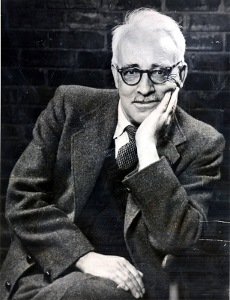
Birth of Irish Writer Frank O’Connor

Frank O’Connor, Irish writer of over 150 works and best known for his short stories and memoirs, is born Michael Francis O’Donovan in Cork, County Cork, on September 17, 1903. The Frank O’Connor International Short Story Award is named in his honour.

Raised in Cork, the only child of Minnie (née O’Connor) and Michael O’Donovan, O’Connor attends Saint Patrick’s School on Gardiner’s Hill and North Monastery CBS. His early life is marked by his father’s alcoholism, debt, and ill-treatment of his mother. His childhood is shaped in part by his mother, who supplies much of the family’s income by cleaning houses, because his father is unable to keep steady employment due to his drunkenness. He adores his mother and is bitterly resentful of his father. In his memoirs, he recalls his childhood as “those terrible years,” and admits that he has never been able to forgive his father for his abuse of himself and his mother. When his mother is seventy, O’Connor is horrified to learn from his own doctor that she has suffered for years from chronic appendicitis, which she has endured with great stoicism, as she has never had the time nor the money to see a doctor.

In 1918 O’Connor joins the First Brigade of the Irish Republican Army and serves in combat during the Irish War of Independence. He opposes the Anglo-Irish Treaty of 1921 and joins the Anti-Treaty IRA during the Irish Civil War, working in a small propaganda unit in Cork City. He is one of twelve thousand Anti-Treaty combatants who are interned by the government of the new Irish Free State. Between 1922 and 1923 he is imprisoned in Cork City Gaol and in Gormanston, County Meath.

Following his release, O’Connor takes various positions including that of teacher of Irish, theatre director, and librarian. He begins to move in literary circles and is befriended by George William Russell (Æ), through whom he comes to know most of the well-known Irish writers of the day, including William Butler Yeats, Lennox Robinson, F. R. Higgins and Lady Gregory. In his memoirs, he pays tribute to both Yeats and Russell for the help and encouragement they gave him.

In 1935, O’Connor becomes a member of the board of directors of the Abbey Theatre in Dublin, founded by Yeats and other members of the Irish National Theatre Society. In 1937, he becomes managing director of the Abbey. Following Yeats’s death in 1939, O’Connor’s long-standing conflict with other board members comes to a head and he leaves the Abbey later that year. In 1950, he accepts invitations to teach in the United States, where many of his short stories have been published in The New Yorker and have won great acclaim. He spends much of the 1950s in the United States, although it is always his intention to return eventually to Ireland.

From the 1930s to the 1960s O’Connor is a prolific writer of short stories, poems, plays, and novellas. His work as an Irish teacher complements his plethora of translations into English of Irish poetry, including his initially banned translation of Brian Merriman‘s Cúirt an Mheán Oíche (The Midnight Court). Many of O’Connor’s writings are based on his own life experiences – notably his well-known The Man of the House in which he reveals childhood details concerning his early life in County Cork. The Sullivan family in this short story, like his own boyhood family, is lacking a proper father figure.

O’Connor’s early years are recounted in An Only Child, a memoir published in 1961 which has the immediacy of a precocious diary. He continues his autobiography through his time with the Abbey Theatre in Dublin in his book My Father’s Son, which is published posthumously in 1968. It contains valuable character sketches of many of the leading Irish literary figures of the 1930s, in particular Yeats and Æ.

Frank O’Connor has a stroke while teaching at Stanford University in 1961, and he later dies from a heart attack in Dublin on March 10, 1966. He is buried in Deans Grange Cemetery two days later.


Leave a comment

Birth of Novelist Marian Keyes

Marian Keyes, Irish novelist and non-fiction writer best known for her work in women’s literature, is born on September 10, 1963, in Limerick, County Limerick. She is an Irish Book Awards winner. More than 22 million copies of her novels have been sold worldwide, and her books have been translated into 32 languages. She is regarded as a pioneer of the “chick lit” genre. Her stories usually revolve around a strong female character who overcomes numerous obstacles to achieve lasting happiness.

Raised in Monkstown, Keyes graduates from University of Dublin with a law degree. After completing her studies, Keyes takes an administrative job before moving to London in 1986. During this period, she develops alcoholism and clinical depression, culminating in a suicide attempt and subsequent rehabilitation in 1995 at the Rutland Centre in Dublin.

Keyes begins writing short stories while suffering from alcoholism. After her treatment at the Rutland Centre, she returns to her job in London and submits her short stories to Poolbeg Press. The publisher encourages her to submit a full-length novel, and Keyes begins work on her first book, Watermelon. The novel is published the same year.

Since 1995 she has published twelve novels and three works of nonfiction. After a long hiatus due to severe depression, a food title, Saved by Cake, is released in February 2012. Keyes currently lives in Dún Laoghaire with her husband Tony Baines, after returning to Ireland from London in 1997.

Keyes has written frankly about her clinical depression, which left her unable to sleep, read, write, or talk. She becomes known worldwide for Watermelon, Lucy Sullivan is Getting Married, and This Charming Man, with themes including domestic violence and alcoholism.

In 2014, after Keyes goes on Marian Finucane‘s RTÉ One show to talk about her new book, she tells her Twitter followers that Finucane has the “compassion and empathy of a cardboard box. Even my mammy called her a bad word.”


Leave a comment

Birth of Christopher Nolan, Irish Poet & Author

Christopher Nolan, Irish poet and author, is born to parents Joseph and Bernadette Nolan in Mullingar, County Westmeath on September 6, 1965.

Due to asphyxiation at birth, Nolan is born with permanent impairment of his nerve-signaling system, a condition now labelled dystonia. Because of these complications, Nolan is born with cerebral palsy and can only move his head and eyes. Due to the severity of the cerebral palsy, he uses a wheelchair. In an interview, his father, Joseph, explains how, at the age of 10, he is placed on medication that “relaxed him so he could use a pointer attached to his head to type.” To write, Nolan uses a special computer and keyboard. In order to help him type, his mother holds his head in her cupped hands while Christopher painstakingly picks out each word, letter by letter, with a pointer attached to his forehead.

He communicates with others by moving his eyes, using a signal system. When he is young, his father tells him stories and reads passages from James Joyce, Samuel Beckett and D.H. Lawrence to keep his mind stimulated. His mother strings up letters of the alphabet in the kitchen, where she keeps up a stream of conversation. His sister, Yvonne, sings songs and acts out skits. His mother stated that “he wrote extensively since the age of 11 and went on to write many poems, short stories and two plays, many of which were published.” Many of the writings are compiled for his first publication, the chapbook Dam-Burst of Dreams.

Upon becoming a teenager, Nolan receives his education from the Central Remedial Clinic School, Mount Temple Comprehensive School and at Trinity College, Dublin. His first book is published at the age of fifteen. He is also awarded an Honorary Doctorate of Letters in the U.K., the medal of excellence from the United Nations Society of Writers, and a Person of the Year award in Ireland. He writes an account of his childhood, Under the Eye of the Clock, published by St. Martin’s Press, which wins him the U.K.’s Whitbread Book of the Year Award in 1987 at the age of 21. He soon drops out of Trinity College to write a novel entitled The Banyan Tree (1999).

Nolan spends more than a decade writing The Banyan Tree. According to The New York Times, the book is a multigenerational story of a dairy-farming family in Nolan’s native county of Westmeath. The story is seen through the eyes of the aging mother. It is inspired, he tells Publishers Weekly, by the image of “an old woman holding up her skirts as she made ready to jump a rut in a field.” A review of the book is done in The New York Times by Meghan O’Rourke. She reviews the book and relates it to James Joyce’s A Portrait of the Artist as a Young Man; in the story the protagonist leaves his mother in Ireland while he moves on to travel the world. Nolan, however, gives the reader a version of the mother’s story. “And so, in the end, one suspects that he wants Minnie’s good-natured, commonplace ways to stand as their own achievement, reminding us that life continues in the places left behind.”

At the age of 43, while working on a new novel, Christopher Nolan dies in Beaumont Hospital in Dublin at 2:30 AM on February 20, 2009. His death is the result of a piece of salmon becoming trapped in his airway. However, nothing from the novel he was working on has been released since his death.

Upon hearing the news of Nolan’s death, President of Ireland Mary McAleese says, “Christopher Nolan was a gifted writer who attained deserved success and acclaim throughout the world for his work, his achievements all the more remarkable given his daily battle with cerebral palsy.”


Leave a comment

Birth of Fanny Parnell, Poet & Nationalist

Fanny Parnell, Irish poet and Nationalist, is born Frances Isabelle Parnell in Avondale, County Wicklow on September 4, 1848. She is the sister of Charles Stewart Parnell, an important figure in nineteenth century Ireland.

Parnell is the eighth child out of eleven and fourth daughter born to John Henry Parnell, a landowner and the grandson of the last Chancellor of the Exchequer of Ireland, and Delia Tudor Stewart Parnell, an Irish American and the daughter of Admiral Charles Stewart (1778–1869) of the United States Navy. Her mother hates British rule in Ireland, a view presented through her children’s works. She is an intelligent girl and before she is through her teen years, she has studied mathematics, chemistry, and astronomy, and she can speak and write fluently in almost all the major European languages. She also has talents in music and painting and drawing in oil and water colours. Her parents separate when she is young. Soon afterwards, in July 1859, her father dies at the age of forty-eight and she and her mother move to Dalkey. A year later they move to Dublin, and in 1865 they move to Paris where Fanny studies art and writes poetry. In 1874 they move to Bordentown, New Jersey in the United States.

Parnell is known as the Patriot Poet. She shows interest in Irish politics and much of her poetry is about Irish nationalism. While she is living in Dublin in 1864, she begins publishing her poetry under the pseudonym “Aleria” in The Irish People, the newspaper of the Fenian Brotherhood. Most of her later work is published in The Pilot in Boston, the best-known Irish newspaper in America during the nineteenth century. Two of her most widely published works are The Hovels of Ireland, a pamphlet, and Land League Songs, a collection of poems. Her best-known poem is “Hold the Harvest,” which Michael Davitt refers to as the “Marseillaise of the Irish peasant.”

Parnell’s brother, Charles, becomes active in the Irish National Land League, an organisation that fights for poor tenant farmers, in 1879 and she strongly supports him. She and her younger sister, Anna Parnell (1852–1911), co-found the Ladies’ Land League in 1880 to raise money in America for the Land League. In 1881 the Ladies’ Land League continues the work of the men in the Land League while they are being imprisoned by the British government. In Ireland Anna becomes the president of the Ladies’ Land League, and the women hold many protests and quickly become more radical than the men, to the resentment of the male leaders. Fanny stays in America and works to raise money for the organisation. Most of the Land League’s financial support comes from America because of the campaigning done by Fanny Parnell.

Fanny Parnell dies on July 20, 1882, at the young age of 33, of a heart attack at the family mansion in Bordentown, New Jersey. She is buried at the Tudor family plot at Mount Auburn Cemetery in Cambridge, Massachusetts.


Leave a comment

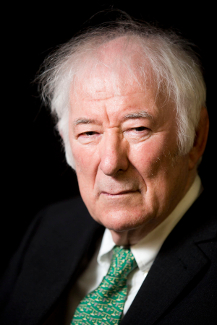
Death of Poet Seamus Heaney, Nobel Prize Recipient

Seamus Justin Heaney, Irish poet, playwright, translator and lecturer, dies in Dublin on August 30, 2013. He is the 1995 recipient of the Nobel Prize in Literature.

Heaney is born near Castledawson, County Londonderry, in Northern Ireland. The family moves to nearby Bellaghy when he is a boy. After attending Queen’s University Belfast, Heaney becomes a lecturer at St. Joseph’s College in Belfast in the early 1960s and begins to publish poetry. He lives in Sandymount, Dublin from 1976 until his death. He also lives part-time in the United States from 1981 to 2006. Heaney is recognised as one of the principal contributors to poetry during his lifetime.

Heaney is a professor at Harvard University from 1981 to 1997, and its Poet in Residence from 1988 to 2006. From 1989 to 1994, he is also the Professor of Poetry at the University of Oxford. In 1996, he is made a Commandeur de l’Ordre des Arts et des Lettres. Other awards that he receives include the Geoffrey Faber Memorial Prize (1968), the E. M. Forster Award (1975), the PEN Translation Prize (1985), the Golden Wreath of Poetry (2001), the T. S. Eliot Prize (2006) and two Whitbread Book Awards (1996 and 1999). In 2011, he is awarded the Griffin Poetry Prize and, in 2012, a Lifetime Recognition Award from the Griffin Trust for Excellence in Poetry. His literary papers are held by the National Library of Ireland.

American poet Robert Lowell describes Heaney as “the most important Irish poet since Yeats,” and many others, including the academic John Sutherland, have said that he is “the greatest poet of our age.” Robert Pinsky has stated that “with his wonderful gift of eye and ear Heaney has the gift of the storyteller.” Upon his death in 2013, The Independent describes him as “probably the best-known poet in the world.” One of his best-known works is Death of a Naturalist, published in 1966.

Seamus Heaney dies in the Blackrock Clinic in Dublin on August 30, 2013, aged 74, following a short illness. After a fall outside a restaurant in Dublin, he enters the hospital for a medical procedure, but dies at 7:30 the following morning before it takes place. His funeral is held in Donnybrook, Dublin, on the morning of September 2, 2013, and he is buried in the evening in the Cemetery of St. Mary’s Church, Bellaghy, County Londonderry, Northern Ireland, in the same graveyard as his parents, young brother, and other family members. His son Michael reveals at the funeral mass that his father texted his final words, “Noli timere” (Latin: “Do not be afraid”), to his wife, Marie, minutes before he died. Shortly after Heaney’s death, graffiti artist Maser paints a mural in Dublin referencing this message.

On September 1, the day after his death, a crowd of 81,553 spectators applaud Heaney for three minutes at a semi-final match of the 2013 All-Ireland Senior Football Championship. His funeral is broadcast live the following day on RTÉ television and radio and is streamed internationally at RTÉ’s website. RTÉ Radio 1 Extra transmits a continuous broadcast, from 8:00 AM until 9:15 PM on the day of the funeral, of his Collected Poems album, recorded in 2009. His poetry collections sell out rapidly in Irish bookshops immediately following his death.


Leave a comment

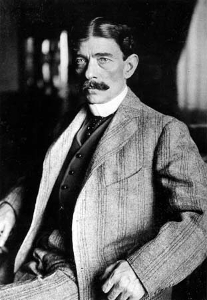
Death of Frank Harris, Novelist & Journalist

Frank Harris, British editor, novelist, short story writer, journalist and publisher, dies on August 26, 1931. He is friendly with many well-known figures of his day.

Harris is born James Thomas Harris on February 14, 1855, in Galway, County Galway, to Welsh parents. While living with his older brother he is, for a year or more, a pupil at The Royal School, Armagh. At the age of twelve he is sent to Wales to continue his education as a boarder at the Ruabon Grammar School in Denbighshire, a time he is to remember later in My Life and Loves. Harris is unhappy at the school and runs away within a year.

Harris runs away to the United States in late 1869, arriving in New York City virtually penniless. The 13-year-old takes a series of odd jobs to support himself, working first as a shoeshiner, a porter, a general laborer, and a construction worker on the erection of the Brooklyn Bridge. He later turns these early occupational experiences into art, incorporating tales from them into his book The Bomb.

From New York Harris moves to the American Midwest, settling in Chicago, where he takes a job as a hotel clerk and eventually a manager. Owing to Chicago’s central place in the meat packing industry, Harris makes the acquaintance of various cattlemen, who inspire him to leave the big city to take up work as a cowboy. He eventually grows tired of life in the cattle industry and enrolls at the University of Kansas, where he studies law and earns a degree, gaining admission to the Kansas state bar association.

Harris is not cut out to be a lawyer and soon decides to turn his attention to literature. He returns to England in 1882, later traveling to various cities in Germany, Austria, France, and Greece on his literary quest. He works briefly as an American newspaper correspondent before settling down in England to seriously pursue the vocation of journalism.

Harris first comes to general notice as the editor of a series of London papers including The Evening News, The Fortnightly Review and the Saturday Review, the last-named being the high point of his journalistic career, with H. G. Wells and George Bernard Shaw as regular contributors.

From 1908 to 1914 Harris concentrates on working as a novelist, authoring a series of popular books such as The Bomb, The Man Shakespeare, and The Yellow Ticket and Other Stories. With the advent of World War I in the summer of 1914, Harris decides to return to the United States.

From 1916 to 1922 he edits the U.S. edition of Pearson’s Magazine, a popular monthly which combines short story fiction with socialist-tinted features on contemporary news topics. One issue of the publication is banned from the mails by United States Postmaster General Albert S. Burleson during the period of American participation in the Great War. Despite this Harris manages to navigate the delicate situation which faces the left wing press and to keep the Pearson’s Magazine functioning and solvent during the war years.

Harris becomes an American citizen in April 1921. In 1922 he travels to Berlin to publish his best-known work, his autobiography My Life and Loves. It is notorious for its graphic descriptions of Harris’ purported sexual encounters and for its exaggeration of the scope of his adventures and his role in history. Years later, Time Magazine reflects in its March 21, 1960 issue “Had he not been a thundering liar, Frank Harris would have been a great autobiographer….he had the crippling disqualification that he told the truth, as Max Beerbohm remarked, only ‘when his invention flagged’.” A fifth volume, supposedly taken from his notes but of doubtful provenance, is published in 1954, long after his death.

Harris also writes short stories and novels, two books on Shakespeare, a series of biographical sketches in five volumes under the title Contemporary Portraits and biographies of his friends Oscar Wilde and George Bernard Shaw. His attempts at playwriting are less successful. Only Mr. and Mrs. Daventry (1900), which is based on an idea by Oscar Wilde, is produced on the stage.

Married three times, Harris dies of a heart attack in Nice at the age of 75 on August 26, 1931. He is subsequently buried at Cimetière Caucade in the same city. Just after his death a biography written by Hugh Kingsmill (pseudonym of Hugh Kingsmill Lunn) is published.


Leave a comment

Death of Novelist & Playwright Kate O’Brien

Kathleen Mary Louise “Kate” O’Brien, novelist and playwright, dies in Canterbury, England, on August 13, 1974.

O’Brien is born in Limerick, County Limerick on December 3, 1897. Following the death of her mother when she is five years old, she becomes a boarder at Laurel Hill Convent. She graduates in English and French from the newly established University College Dublin, and she then moves to London, where she works as a teacher for a year.

In 1922–1923, O’Brien works as a governess in the Basque Country, in the north of Spain, where she begins to write fiction. Upon her return to England, she works at the Manchester Guardian. After the success of her play Distinguished Villa in 1926, she takes to full-time writing and is awarded both the 1931 James Tait Black Memorial Prize and the Hawthornden Prize for her debut novel Without My Cloak. O’Brien is best known for her 1934 novel The Ante-Room, her 1941 novel The Land of Spices, and the 1946 novel That Lady.

Many of O’Brien’s books deal with issues of female agency and sexuality in ways that are new and radical at the time. Her 1936 novel, Mary Lavelle, is banned in Ireland and Spain, while The Land of Spices is banned in Ireland upon publication. In addition to novels, she writes plays, film scripts, short stories, essays, copious journalism, two biographical studies, and two very personal travelogues. Throughout her life, she feels a particular affinity with Spain. While her experiences in the Basque Country inspire Mary Lavelle, she also writes a life of the Spanish mystic Teresa of Avila, and she uses the relationship between the Spanish king Philip II and Maria de Mendoza to write the anti-fascist novel That Lady.

O’Brien writes a political travelogue, Farewell Spain, to gather support for the leftist cause in the Spanish Civil War, and it has been argued that she is close to anarchism in the 1930s. A feminist, her novels promote gender equality and are mostly protagonised by young women yearning for independence. Several of her books include positive gay/lesbian characters. Her determination to encourage a greater understanding of sexual diversity makes her a pioneer in queer literary representation. She is very critical of conservatism in Ireland, and by spearheading a challenge to the Irish Censorship Act, she helps bring to an end the cultural restrictions of the 1930s and 40s in the country.

Kate O’Brien lives much of her life in England and died in Faversham, near Canterbury, on August 13, 1974.


Leave a comment

Birth of Anglo-Irish Poet Richard Murphy

Richard Murphy, Anglo-Irish poet, is born on August 6, 1927, in County Mayo. He is a member of Aosdána and currently lives in Sri Lanka.

Murphy is born to an Anglo-Irish family at Milford House, near the Mayo-Galway border. His childhood in Ireland is documented in the film The Other Irish Travellers made by his niece, Fiona Murphy.

He spends much of his early childhood in Ceylon, now Sri Lanka, where his father, William Lindsay Murphy, serves in the Colonial Service and is active as mayor of Colombo and Governor-General of the Bahamas, in succession to the Duke of Windsor. He first receives his education at Canterbury School and Wellington College, Berkshire. He wins a scholarship to Magdalen College, Oxford, at 17, where he studies English under C.S. Lewis. He is later educated at the Sorbonne, and between 1953 and 1954, he runs a school in Crete. In his Archaeology of Love (1955), Murphy reflects on his experiences in England and the Continent.

In 1954, Murphy settles at Cleggan, a village on the coast of Galway where fishing has been abandoned after a famous sailing disaster. Several years later, in 1959, he purchases and renovates the Ave Maria, a traditional Galway hooker type boat, from Inishbofin fisherman, Michael Schofield, which he uses to ferry visitors to the island. Taking the first-hand accounts of survivors of the sailing disaster, he weaves the material into a long tour de force poem which closes his first collection Sailing to an Island, published in the early 1960s by Faber & Faber. In 1969, he purchases Ardoileán (High Island), a small island in the vicinity of Inishbofin.

Murphy enjoys commissions for his poems from the BBC which prompts him to start on his long book-length sequence The Battle of Aughrim. Ostensibly about the 18th century triumph of Dutch-led Protestant forces over the Irish and French Catholic forces, the poem deals obliquely not only with the brewing strife in Ulster of the 1960s, but also with the issues of the Vietnam War. Its episodic structure is highly influential on poetic sequences subsequently published by Montague and Heaney.

Since 1971 Murphy has been a poet-in-residence at nine American universities. He lives in Sri Lanka, having previously divided his time between Dublin and Durban, South Africa, where his daughter and her family reside. He is the maternal grandfather of YouTuber Caspar Lee. In 2002, a memoir of his life and times, The Kick, is published by Granta, constructed from detailed diaries kept over the course of five decades.


Leave a comment

Death of Charles G. Halpine, Journalist, Author & Soldier

Charles Graham Halpine (Halpin), Irish journalist, author and soldier during the American Civil War, dies on August 3, 1868, in New York City.

Born at Oldcastle, County Meath, on November 20, 1829, Halpine is the son of the Rev. Nicholas John Halpin. He is educated at Trinity College, Dublin, until 1846, with original intentions for the medical profession, but ultimately prefers the law. In his leisure time he writes for the press. The sudden death of his father and his own early marriage compel him to adopt journalism as a profession.

In 1851 he emigrates to the United States, and takes up residence in Boston, where he becomes assistant editor of The Boston Post, and, with Benjamin Penhallow Shillaber, commences a humorous journal called The Carpet Bag, which is unsuccessful. Afterwards he resides in Washington, D.C., where he acts as the correspondent of The New York Times.

After moving back to New York, he secures employment with the New York Herald, and in a few months establishes relations with several periodicals. He undertakes a great variety of literary work, most of which is entirely ephemeral. He next becomes associate editor of The New York Times, for which he writes in 1855 and 1856 the Nicaragua correspondence at the time of William Walker‘s filibustering expedition. In 1857 he becomes principal editor and part proprietor of the New York Leader, which under his management rapidly increases in circulation.

At the beginning of the American Civil War in April 1861, he enlists in the 69th New York Infantry, in which he is soon elected a lieutenant, and serves during the three months for which he has volunteered. He is then transferred to the staff of General David Hunter as assistant-adjutant-general with the rank of major, and soon afterwards goes with him to Missouri to relieve General John Charles Frémont. He accompanies General Hunter to Hilton Head, and while there writes a series of burlesque poems in the assumed character of an Irish private. Several of them are contributed to the New York Herald in 1862 under the pseudonym of “Miles O’Reilly,” and with additional articles are issued in two volumes entitled Life and Adventures, Songs, Services, and Speeches of Private Miles O’Reilly, 47th Regiment New York Volunteers (1864), and Baked Meats of the Funeral, a Collection of Essays, Poems, Speeches, and Banquets, by Private Miles O’Reilly, late of the 47th Regiment New York Volunteer Infantry, 10th Army Corps. Collected, revised, and edited, with the requisite corrections of punctuation, spelling, and grammar, by an Ex-Colonel of the Adjutant-General’s Department, with whom the Private formerly served as Lance-Corporal of Orderlies (1866).

Halpine is subsequently assistant-adjutant-general on General Henry W. Halleck‘s staff with the rank of colonel in 1862 and accompanies General David Hunter as a staff-officer on his expedition up the Shenandoah Valley in the spring of 1864. On his return to New York, he resigns his commission in consequence of his bad eyesight, receiving the brevet of brigadier-general of volunteers.

He then makes New York his home and resumes his literary work. He becomes editor and, later, proprietor of the Citizen, a newspaper issued by the citizens’ association to advocate reforms in the civil administration of New York City. In 1867 he is elected registrar of the county of New York by a coalition of republicans and democrats. Incessant labour brings on insomnia. He has recourse to opiates, and his death in New York City on August 3, 1868, is caused by an undiluted dose of chloroform.