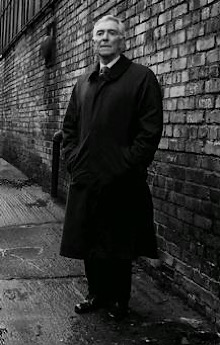
Farquhar is assistant priest at Dunsford and Ardglass Parish. He is a hospital chaplain in 1966. He is later assigned to teach Latin at St. MacNissi’s College, Garron Tower, where he stays as a teacher from 1966 to 1970. From 1970 to 1975 he is assistant chaplain, along with Ambrose Macaulay, to Queen’s University Belfast, and finally as Chaplain/Lecturer at the University of Ulster from 1975 to 1983.
On April 6, 1983, aged 42, Farquhar is appointed Titular Bishop of Hermiana and, with Patrick Walsh, as Auxiliary Bishop of Down and Connor. The principal consecrator is the Bishop of Down and Connor, Cahal Daly, (later Cardinal Archbishop of the Archdiocese of Armagh) and principal co-consecrators are Archbishop Gaetano Alibrandi, the Apostolic Nuncio to Ireland and William J. Philbin (Bishop Emeritus of Down and Connor). During the ordination ceremony, the assistant Priests to Bishop Farquhar are his priest uncles, Canon Walter Larkin and Fr. Thomas Aquinas Larkin O.C.D.
Farquhar’s episcopal motto is “Sapientia Proficere” (“to increase in wisdom”) from Luke 2:52. He takes an active and ongoing interest in interchurch relations and serves as Chairman of the Irish Catholic Bishops’ Conference on Ecumenism.
In December 2007, he officiates at the dedication of the new altar in the Church of the Good Shepherd in his native parish of the Most Holy Rosary, Belfast, following the renovation programme.
A book titled Inter-Church Relations: Developments and Perspectives, published by Veritas Communications to mark the 25th anniversary of Farquhar’s ordination as a bishop, contains contributions by a number of people praising Farquhar’s work. Seán Brady notes he was “engaged actively in promoting bonds of friendship and understanding at times when it has been far from easy to do so.”
On December 3, 2015, Pope Francis accepts Farquhar’s resignation on the grounds of age. He is at the time the longest serving bishop in Ireland.
Farquhar dies in Belfast on November 18, 2023, at the age of 83. His funeral requiem mass is celebrated in the Church of the Good Shepherd, Ormeau Road, Belfast, on November 23 followed by interment in the adjoining cemetery.
McGeown joins the IRA’s youth wing, Fianna Éireann, in 1970. He is first arrested at the age of 14, and in 1973 he is again arrested and interned in Long Kesh Detention Centre until 1974. In November 1975, he is arrested and charged with possession of explosives, bombing the Europa Hotel, and IRA membership. At his trial in 1976 he is convicted and receives a five-year sentence for IRA membership and two concurrent fifteen-year sentences for the bombing and possession of explosives, and is imprisoned at Long Kesh with Special Category Status.
In March 1978, McGeown attempts to escape along with Brendan McFarlane and Larry Marley. The three have wire cutters and dress as prison officers, complete with wooden guns. The escape is unsuccessful, and results in McGeown receiving an additional six-month sentence and the loss of his Special Category Status.
McGeown is transferred into the Long Kesh Detention Centre’s H-Blocks where he joins the blanket protest and dirty protest, attempting to secure the return of Special Category Status for convicted paramilitary prisoners.He describes the conditions inside the prison during the dirty protest in a 1985 interview:
“There were times when you would vomit. There were times when you were so run down that you would lie for days and not do anything with the maggots crawling all over you. The rain would be coming in the window and you would be lying there with the maggots all over the place.“
In late 1980, the protest escalates and seven prisoners take part in a fifty-three-day hunger strike, aimed at restoring political status by securing what are known as the “Five Demands:”
The right not to wear a prison uniform.
The right not to do prison work.
The right of free association with other prisoners, and to organise educational and recreational pursuits.
The right to one visit, one letter and one parcel per week.
Full restoration of remission lost through the protest.
The strike ends before any prisoners die and without political status being secured. A second hunger strike begins on March 1, 1981, led by Bobby Sands, the IRA’s former Officer Commanding (OC) in the prison. McGeown joins the strike on July 9, after Sands and four other prisoners have starved themselves to death. Following the deaths of five other prisoners, his family authorises medical intervention to save his life after he lapses into a coma on August 20, the 42nd day of his hunger strike.
McGeown is released from prison in 1985, resuming his active role in the IRA’s campaign and also working for Sinn Féin, the republican movement’s political wing. In 1988, he is charged with organising the Corporals killings, an incident where two plain-clothes British Army soldiers are killed by the IRA. At an early stage of the trial his solicitor, Pat Finucane, argues there is insufficient evidence against McGeown, and the charges are dropped in November 1988. McGeown and Finucane are photographed together outside Crumlin Road Courthouse, a contributing factor to Finucane being killed by the Ulster Defence Association (UDA) in February 1989. Despite suffering from heart disease as a result of his participation in the hunger strike, McGeown is a member of Sinn Féin’s Ard Chomhairle and is active in its Prisoner of War Department. In 1993, he is elected to Belfast City Council.
McGeown is found dead in his home on October 1, 1996, after suffering a heart attack. Sinn Féin chairman Mitchel McLaughlin says his death is “a great loss to Sinn Féin and the republican struggle.” McGeown is buried in the republican plot at Belfast’s Milltown Cemetery. His death is often referred to as the “11th hunger striker.” In 1998, the Pat McGeown Community Endeavour Award is launched by Sinn Féin president Gerry Adams, with Adams describing McGeown as “a modest man with a quiet, but total dedication to equality and raising the standard of life for all the people of the city.” A plaque in memory of McGeown is unveiled outside the Sinn Féin headquarters on the Falls Road on November 24, 2001, and a memorial plot on Beechmount Avenue is dedicated to the memory of McGeown, Kieran Nugent and Alec Comerford on March 3, 2002.
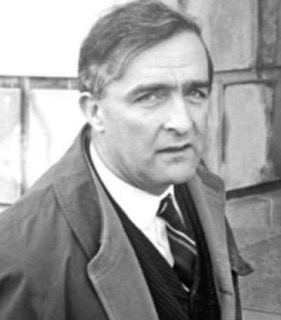
James NesbittMBE, a Royal Ulster Constabulary (RUC) Detective Chief Inspector who is best known for heading the Murder Squad team investigating the notorious Shankill Butchers‘ killings in the mid-1970s, dies on August 27, 2014, following a brief illness.
Nesbitt is born on September 29, 1934, in Belfast, Northern Ireland, the son of James, an electrician, and Ellen. He is brought up in the Church of Ireland religion and lives with his parents and elder sister, Maureen, in a terraced house in Cavehill Road, North Belfast, which is considered to be a middle class area at the time. Having first attended the Model Primary School in Ballysillan Road, in 1946 he moves on to Belfast Technical High School where he excels as a pupil. From an early age, he is fascinated by detective stories and dreams about becoming a detective himself.
As a child, Nesbitt avidly reads about all the celebrated murder trials in the newspapers. At the age of 16, he opts to leave school and goes to work as a sales representative for a linen company where he remains for seven years.
At the age of 23, Nesbitt seeks a more exciting career and realises his childhood dream by joining the Royal Ulster Constabulary as a uniformed constable. He applies at the York Road station in Belfast and passes his entry exams. His first duty station is at Swatragh, County Londonderry. During this period, the Irish Republican Army‘s Border Campaign is being waged. He earns two commendations during the twelve months he spends at the Swatragh station, having fought off two separate IRA gun attacks which had seen an Ulster Special Constabulary man shot. In 1958, he is transferred to the Coleraine RUC station where his superiors grant him the opportunity to assist in detective work. Three years later he is promoted to the rank of detective.
Nesbitt marries Marion Wilson in 1967 and begins to raise a family. By 1971 he is back in his native Belfast and holds the rank of Detective Sergeant. He enters the RUC’s Criminal Investigation Department (CID) section and is based at Musgrave Street station. Many members of the RUC find themselves targeted by both republican and loyalistparamilitaries as the conflict known as The Troubles grows in intensity during the late 1960s and early 1970s.
In September 1973, Nesbitt is promoted to Detective Inspector and moves to head up the RUC’s C or “Charlie” Division based in Tennent Street, off the Shankill Road, the heartland of loyalism and home of many loyalist paramilitaries. C Division covers not only the Shankill but also the republican Ardoyne and “The Bone” areas. Although he encounters considerable suspicion from his subordinates when he arrives at Tennent Street, he manages to eventually create much camaraderie within the ranks of those under his command when before there had been rivalry and discord. C Division loses a total of twelve men as a result of IRA attacks. During his tenure as Detective Chief Inspector at Tennent Street, he and his team investigate a total of 311 killings and solve around 250 of the cases.
By 1975, Nesbitt is encountering death and serious injury on a daily basis as the violence in Northern Ireland shows no signs of abating. However, toward the end of the year, he is faced with the first of a series of brutal killings that add a new dimension to the relentless tit-for-tat killings between Catholics and Protestants that has already made 1975 “one of the bloodiest years of the conflict.”
The Shankill Butchers are an Ulster loyalist paramilitary gang, many of whom are members of the Ulster Volunteer Force (UVF), that is active between 1975 and 1982 in Belfast. It is based in the Shankill area and is responsible for the deaths of at least 23 people, most of whom are killed in sectarian attacks.
The gang kidnaps, tortures and murders random civilians suspected of being Catholics. Each is beaten ferociously and has their throat slashed with a butcher knife. Some are also tortured and attacked with a hatchet. The gang also kills six Ulster Protestants over personal disputes and two other Protestants mistaken for Catholics.
Most of the gang are eventually caught by Nesbitt and his Murder Squad and, in February 1979, receive the longest combined prison sentences in United Kingdom legal history.
In 1991, after Channel 4 broadcasts a documentary claiming that the Ulster Loyalist Central Co-ordinating Committee had been reorganised as an alliance between loyalist paramilitaries, senior RUC members and leader figures in Northern Irish business and finance, Nesbitt and Detective Inspector Chris Webster are appointed by Chief Constable Hugh Annesley to head up an internal inquiry into the collusion allegations. The investigation delivers its verdict in February 1993 and exonerates all those named as Committee members who did not have previous terrorist convictions arguing that they are “respectable members of the community” and in some cases “the aristocracy of the country.”
Prior to his retirement, Nesbitt has received a total of 67 commendations, which is the highest number ever given to a policeman in the history of the United Kingdom. In 1980, he is awarded the MBE “in recognition of his courage and success in combating terrorism.”
Nesbitt dies on August 27, 2014, after a brief illness.
Swanzy lives at 31 Railway Street and attends Morning Service at the Cathedral. At 1:06 p.m. as he is walking past the entrance to the Northern Bank (now Shannon’s Jewelers), he is shot by the IRA and dies at the scene.
In February 1921, a memorial is erected in the north wall of the Cathedral by his mother and sister. The brass tablet mounted in Irish Oak bears the following inscription:
“In proud and loving memory of Oswald Ross Swanzy DI Royal Irish Constabulary who gave his life in Lisburn on Sunday, August 22, 1920, and his gallant comrades who, like him, have been killed in the unfaltering discharge of their duty and in the service of their country. Be thou faithful unto death and I will give you a crown of life.”
In his book, Police Casualties in Ireland 1919 to 1922, Royal Ulster Constabulary (RUC) Inspector Richard Abbott says the decision to kill Swanzy is taken by Michael Collins himself who believes the officer had been the leader of the party of unidentified men who killed Tomás Mac Curtain, the Lord Mayor of Cork and Commandant of Cork Number One Brigade of the IRA.
With the help of RIC Sergeant Matt McCarthy, who had provided Collins with information in the past, Swanzy is traced to Lisburn. The Intelligence Officer of B Company of the IRA’s First Cork Battalion, Sean Culhane, is then sent to Belfast to link up with local IRA activists. On the day of the attack, Culhane and a number of Belfast IRA men leave the city in a taxi and make their way to Lisburn.
Culhane and Roger McCorley, a Belfast member of the IRA, walk up to Swanzy and shoot him at close range. They, along with their accomplices, then run in pairs along Castle Street with another man in the middle of the road. They continue to fire as they make their way to the taxi which is waiting outside the Technical College.
The vehicle starts to move off before McCorley reaches it and he is forced to throw himself into the car. As he does so he lands in a heap on the back floor of the car and accidentally fires a round from his revolver inside the taxi.
A member of the public notes the taxi’s number as it leaves Lisburn and the driver is arrested later that afternoon. He tells police he works for the Belfast Motor Cab and Engineering Co. at Upper Library Street. At 11:45 a.m., he says he had been sent to the Great Northern Railway Station in Great Victoria Street to collect a fare who wanted to “take a run along the County Down coast.” The taxi driver is later tried for the killing of Swanzy but is found not guilty.
The IRA killing of Detective Inspector Swanzy leads to bitter sectarian rioting in Lisburn. A number of Catholics are murdered and others assaulted and terrorised as their homes and businesses are burned by mobs on the rampage. Journals kept at the time recall how groups of people wait at Lambeg to attack Catholics fleeing the town on the main Belfast Road. This forces many to leave Lisburn by way of the mountain route into the city as columns of smoke rise into the air above the town.
Workers at local mills are also called upon to sign the following declaration: “I…. …hereby declare I am not a Sinn Féiner nor have any sympathy with Sinn Féin and do declare I am loyal to king and country.” Violence also sweeps across Belfast in the wake of the Market Square attack.
A total of 22 people are killed in one week and on August 24 the authorities swear in a number of special constables to try to regain control of the situation. This is the first time since the start of the IRA campaign in 1919 that Special Constables have to be used.
(From: “Assassination of Detective Inspector Oswald Ross Swanzy,” Lisburn.com)
The Irish Times reports that “This stretch of road has been a favourite ambush spot for successive generations of IRA men since the 1920s.” The Provisional IRA has been attacking British Army patrols and convoys with roadside bombs regularly since the beginning of the Troubles in the early 1970s. Most of these attacks take place in rural parts of Northern Ireland, especially eastern and southern County Tyrone (where the IRA’s Tyrone Brigade is active) and southern County Armagh (heartland of the South Armagh Brigade). In August 1979, the IRA ambushes a British Army convoy with two large roadside bombs near Warrenpoint, killing eighteen soldiers. This is the deadliest attack on the British Army in Northern Ireland during the Troubles. In December 1979, four more British soldiers are killed on Ballygawley Road in the Dungannon land mine attack. In May 1981, five British soldiers are killed when their Saracen APC is ripped apart by a roadside bomb at Altnaveigh, County Armagh. In July 1983, four Ulster Defence Regiment (UDR) soldiers are killed when their vehicle strikes an IRA land mine near Ballygawley, County Tyrone. In December 1985, the Tyrone IRA launches an assault on the police barracks in Ballygawley, shooting dead two officers and destroying the barracks with a bomb.
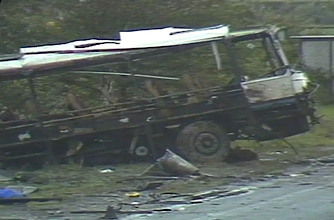
On the night of August 19/20, 1988, an unmarked 52-seater bus is transporting 36 soldiers of The Light Infantry from Aldergrove Flying Station to a military base near Omagh. The soldiers, who came from England, have just finished 18 months of a two-year tour of duty in Northern Ireland and are returning to the base after a short holiday.
As it is driving along the main road from Ballygawley to Omagh, at about 12:30 a.m., IRA members remotely detonate a roadside bomb containing 200 pounds (91 kg) of Semtex. According to police, the bomb had been planted in a vehicle by the roadside and had been detonated by command wire from 330 yards (300 m) away. A statement by one of the survivors claims instead that the roadside bomb was made of “two fertilizer bags filled with Semtex.” The blast hurls the bus 30 metres down the road and throws the soldiers into neighbouring hedges and fields. It leaves a crater 6 feet deep and scatters body parts and twisted metal over a wide area. Witnesses describe finding dead, dying and wounded soldiers strewn on the road and caught in the wreckage of the bus. Others are walking around “stunned.” Some of the first to arrive on the scene and offer help are loyalist bandsmen of the Omagh Protestant Boy’s Band returning from a parade in Portadown, who have also been traveling in buses.
Eight of the soldiers are killed and the remaining 28 are wounded. The soldiers killed are: Jayson Burfitt (aged 19), Richard Greener (aged 21), Mark Norsworthy (aged 18), Stephen Wilkinson (aged 18), Jason Winter (aged 19), Blair Bishop (aged 19), Alexander Lewis (aged 18) and Peter Bullock (aged 21). This is the single biggest loss of life for the British Army from an IRA attack in Northern Ireland since the Warrenpoint ambush in 1979, although eleven off-duty British soldiers had been killed in the Droppin Well bombing in 1982, carried out by the Irish National Liberation Army (INLA). An account from one of the survivors is published in Ken Wharton‘s book A Long Long War: Voices from the British Army in Northern Ireland, 1969–98 (2008).
An inquest into the attack is told that the road is usually off-limits to military vehicles, due to the threat from the IRA. The driver of the bus, who is also a soldier, claims he had been directed on to the road by diversion signs. The inquest hears that signs had not been placed by the police or the roads service. The IRA denies placing any signs and says that military buses often use the road. The mother of one of those killed accuses the British military of negligence and claims it is “trying to conceal the truth.”
Shortly thereafter, the Provisional IRA issues a statement claiming responsibility. It says that the attack had been carried out by its Tyrone Brigade and adds: “We will not lay down our arms until the peace of a British disengagement from Ireland.” The security forces suspect that an informer may have told the IRA of the bus’s route and the time it would pass a specific spot. After the attack, the British military decides to start ferrying their troops to and from East Tyrone by helicopter to avoid any future attacks like this.
Tom King, then Secretary of State for Northern Ireland, says there is “some evidence” that the explosives used are part of a consignment from Libya. He also states that the possibility of reintroducing internment is “under review”. Libyan weaponry enables the IRA to mount some of its biggest operations during its campaign. The Ballygawley bus bombing is believed to be one of these attacks. One former IRA member later suggests that Semtex explosive was not crucial to the outcome of the attack, saying, “we were having plenty of success without Semtex… at Ballygawley we ‘only’ got eight, but it was a bus of about fifty-six. If we’d used a fertiliser bomb, the whole bus would have been destroyed.”
On August 30, 1988, three IRA members are ambushed and killed by the Special Air Service (SAS) at Drumnakilly, County Tyrone. According to author Nick Van der Bijl, the men—Gerard Harte, Martin Harte and Brian Mullin—are identified by British intelligence as the perpetrators of the bombing. Peter Taylor, instead, says that only Mullin is suspected, and that plans for the SAS operation were already underway at the time of the IRA attack.
Two months after the attack, the British Government introduces the broadcasting ban. It means that the voices of Sinn Féin and IRA members are not allowed to be broadcast on television or radio. The Ballygawley bus bombing is believed to have influenced the Government’s decision to introduce the ban.
According to state papers declassified in 2019, the attack sparks “panic” in the British Government, and tension between the Royal Ulster Constabulary (RUC) and the British Army over who is at fault for the security lapse. British Prime MinisterMargaret Thatcher warns RUC chief, John Hermon, that she will no longer send British troops over “in waves to be killed.”
Discontented with James Chichester-Clark and Brian Faulkner who come to government after O’Neill’s 1969 fall from power, Boal resigns from the UUP in 1971 and joins Ian Paisley in establishing the Democratic Unionist Party (DUP) in order to provide dissident unionist opinion with a viable political alternative. He works as the first chairman and one of the first public representatives of the DUP and continues to sit in Stormont during the years of 1971–1972. He later resumes his practice as a barrister.
While Boal’s interest in federalism diminishes after the 1970s, the federalist Boal scheme of January 1974 is again put forward by liberal protestants such as John Robb as late as 2007. His friendship with Paisley finally breaks when the DUP agrees to enter government with Sinn Féin in 2007. He tells Paisley, who takes the breach very hard, that he had betrayed everything he ever advocated.
The “supergrass” trial of thirty-eight alleged members of the Irish Republican Army (IRA) ends in Belfast on August 5, 1983. The defendants face various charges including murder and attempted murder. Eighteen later have their convictions quashed. The trial has lasted 120 days with most of the evidence being offered by IRA supergrass Christopher Black. The judge jails twenty-two of the accused to sentences totaling more that 4,000 years. Four people are acquitted and others receive suspended sentences. In 1986, eighteen of the twenty-two who received prison sentences have their convictions quashed by the Court of Appeal.
Kevin Malgrew, who faces the most charges, eighty-four, is sentenced to jail terms totaling 963 years. When sentencing him, the judge, Justice Basil Kelly, says, “You are a ruthless terrorist. I do not expect any words of mine will ever raise in you a twinge of remorse.”
In spite of the long sentences, none of those convicted is expected to spend more than twenty years in prison as the judge orders the terms should be served concurrently.
The IRA members are convicted largely on the evidence of a police informant, the so-called “supergrass” Christopher Black. He is granted immunity from prosecution and is believed to be abroad at the time the trial ends. A police spokesman says they believe Black is being hunted by the IRA.
Justice Kelly wears a bulletproof vest throughout the trial. Like all judges in such cases, he will receive police protection for the rest of his life.
But in spite of some of the long sentences he hands down, Justice Kelly also shows compassion to some of those on trial. He sets thirteen people free with suspended sentences or discharges saying he realises the “enormous pressure” placed upon them within their community to help extremists.
Postman Francis Murphy receives a suspended sentence for allowing an IRA man to wear his uniform so he could carry out a murder. And Justice Kelly gives Murphy’s mother an absolute discharge for having later burned the uniform. “Very many other mothers would have done the same,” he says.
(From: “1983: IRA members jailed for 4,000 years,” by BBC News, news.bbc.co.uk | Pictured: IRA volunteer Kevin Malgrew)
Kilfedder leaves the UUP in 1977 in opposition to the party’s policies tending to integrationism, preferring to advocate the restoration of the Stormont administration. For a time he sits as an “Independent Ulster Unionist.” He contests the 1979 European Parliament election under that label, finishing fourth in the count for the three seats, having overtaken the UUP leader Harry West on transfers.
On March 20, 1995, while traveling by train into London from Gatwick Airport, Kilfedder dies of a heart attack. This is the same day that the Belfast Telegraph carries a front-page story saying that an Ulster MP has been targeted as one of twenty MPs invited by the LGBT rights organisation OutRage! in a letter to come out. He dies unmarried and is survived by two sisters.
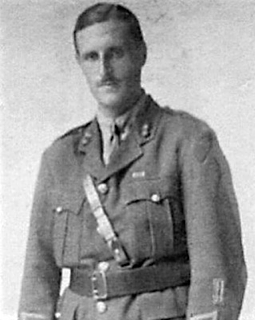
MacDermott is born in Belfast on April 12, 1896, the third surviving son and sixth of seven children of the Reverend John MacDermott DD, a Presbyterian clergyman who is minister of Belmont and moderator of the Presbyterian Church in Ireland, and of his wife Lydia Allen MacDermott (née Wilson), the daughter of a Strabane solicitor. He is educated at Campbell College, Belfast, from where he wins a scholarship to read Law at the Queen’s University Belfast (QUB) in 1914.
Eight years later MacDermott is appointed to determine industrial assurance disputes in Northern Ireland, and in 1931 becomes a lecturer in Jurisprudence at Queen’s University Belfast, teaching for four years.
In 1940, MacDermott is appointed Minister of Public Security in the Government of Northern Ireland, and the following year becomes the Attorney General for Northern Ireland. He is succeeded in this post by William Lowry, whose son, Lord Lowry, would eventually succeed MacDermott as Lord Chief Justice. In 1944, he resigns his parliamentary seat on appointment as a High Court Judge for Northern Ireland, and three years later, on April 23, 1947, is made a Lord of Appeal in Ordinary, becoming a life peer as Baron MacDermott, of Belmont in the city of Belfast.
MacDermott returns from the House of Lords to take up his appointment as Lord Chief Justice of Northern Ireland. His successors to the latter office become Law Lords subsequently. Whilst Lord Chief Justice, he is affectionately known as “the Baron.”
In 1977, aged over eighty, MacDermott offers to redeliver a lecture at the Ulster College, which had been interrupted by a bomb meant for him and which had severely wounded him.
Having been made a Northern Ireland Privy Counsellor seven years earlier, MacDermott is sworn of the British Privy Council in 1947.
Four years later, in 1951, MacDermott is appointed Lord Chief Justice of Northern Ireland, a post he holds for twenty years. He is also Pro-Chancellor of his alma mater from 1951 to 1969. In 1958, he chairs the commission on the Isle of ManConstitution. He dies at his home in Belfast on July 13, 1979.
In 1926, MacDermott weds Louise Palmer Johnston, later Lady MacDermott. Their son, Sir John MacDermott, is also sworn into the British Privy Council in 1987, as a Lord Justice of Appeal in Northern Ireland. He later became a Surveillance Commissioner for Northern Ireland.
Wright attracts considerable media attention at the Drumcree standoff, where he supports the Orange Order‘s desire to march its traditional route through the Catholic/Irish nationalist area of Portadown. In 1994, the UVF and other paramilitary groups call ceasefires. However, in July 1996, Wright’s unit breaks the ceasefire and carries out a number of attacks, including a sectarian killing. For this, Wright and his Portadown unit of the Mid-Ulster Brigade are stood down by the UVF leadership. He is expelled from the UVF and threatened with execution if he does not leave Northern Ireland. Wright ignores the threats and, along with many of his followers, defiantly forms the breakaway Loyalist Volunteer Force (LVF).
In March 1997, Wright is sent to the HM Maze Prison for having threatened the life of a woman. While imprisoned, he continues to direct the LVF’s activities. On December 27 of that year, he is assassinated at the prison by Irish National Liberation Army (INLA) prisoners as he is led out to a van for a visit with his girlfriend. The LVF carries out a wave of sectarian attacks in retaliation.
Owing to his uncompromising stance as an upholder of Ulster loyalism and opposition to the Northern Ireland peace process, Wright is regarded as a cult hero, cultural icon, and martyr figure by hardline loyalists. His image adorns murals in loyalist housing estates and many of his devotees have tattoos bearing his likeness.
Wright’s funeral procession moves at a snail’s pace on a grey and windy day. Groups of mourners take turns carrying the coffin. Women carry a wreath that simply says “Billy.” Twenty men with tight haircuts and white shirts with black armbands flank the cortège. There is heavy security. Troops stand guard on bridges and Royal Ulster Constabulary (RUC) Land Rovers prowl the housing estates. A spotter plane flies overhead. A lone piper plays “Abide with Me” before a banner bearing the letters “LVF.”
Wright is buried at Seagoe Cemetery, Portadown, Northern Ireland.





 seamus dubhghaill