seamus dubhghaill

Promoting Irish Culture and History from Little Rock, Arkansas, USA


Leave a comment

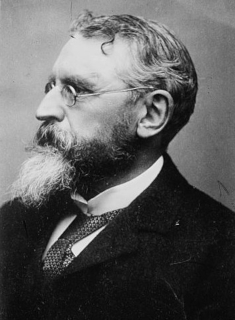
Death of William O’Brien, Journalist & Politician

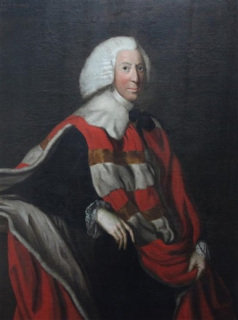
William O’Brien, Irish nationalist, journalist, agrarian agitator, social revolutionary, politician, party leader, newspaper publisher, author and Member of Parliament (MP) in the House of Commons of the United Kingdom of Great Britain and Ireland, dies suddenly on February 25, 1928, at the age of 75 while on a visit to London with his wife.

O’Brien, who is for several years second only to Charles Stewart Parnell among Irish Nationalist leaders, is born on October 2, 1852, in Mallow, County Cork. He is perhaps most important for his Plan of Campaign (1886), by which Irish tenant farmers withhold all rent payments from landlords who refuse to lower their rents and instead pay the money into a mutual defense fund on which evicted tenants can draw.

O’Brien shares his primary education with a townsman with whom he is later to have a close political connection, Canon Patrick Augustine Sheehan of Doneraile. He enjoys his secondary education at the Cloyne diocesan college, which results in his being brought up in an environment noted for its religious tolerance. He greatly values having had this experience from an early age, which strongly influences his later views for the need of such tolerance in Irish national life.

A journalist from 1869, O’Brien is appointed editor of the Irish Land League’s weekly United Ireland by Parnell in 1881. In October of that year the British authorities suppress the paper and put O’Brien in Kilmainham Gaol in Dublin, along with Parnell and others. There he draws up a No Rent Manifesto, which, when read at a Land League meeting, results in the outlawing of the League. Released from prison in 1882, he resumes the editorship of United Ireland, and in 1883 he is elected to the British House of Commons, remaining there until 1895. His “plan of campaign” is disavowed by Parnell but nonetheless stirs up fierce agitation. To suppress the movement, the British government passes the Criminal Law and Procedure (Ireland) Act 1887, under which O’Brien is jailed again.

For some time following the Katherine O’Shea divorce case (1889–90), in which Parnell is correspondent, O’Brien attempts to mediate between the Parnellites and their opponents, although he sides with the majority in rejecting Parnell’s continued leadership of the Irish Home Rule struggle. In 1902 he supports the Land Conference, which secures agreement between landlords and tenants’ representatives and results in George Wyndham‘s Land Purchase Act (1903), which is designed to turn Irish tenant farmers into occupying owners.

In 1898 O’Brien founds the United Irish League, and in 1910, after control of that group passes to the Parnellite John Redmond, he establishes the All-for-Ireland League in opposition to the older organization. Most of his personal following, however, join Arthur Griffith’s Sinn Féin party by the end of World War I.

Retiring from political life, O’Brien contents himself with writing and declines Éamon de Valera‘s offer to stand for Fianna Fáil in the 1927 general election. He dies suddenly at the age of 75 on February 25, 1928, while on a visit to London with his wife. His remains rest in Mallow, and one of the principal streets in the town bears his name to this day. His head-bust overlooks the town Council’s Chamber Room and one of his finest portraits hangs in University College Cork.


Leave a comment

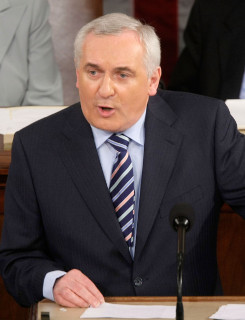
Bertie Ahern Requires Second UN Resolution Prior to Iraq War

On February 19, 2003, Taoiseach Bertie Ahern says a second United Nations (UN) resolution is a political imperative before any military action against Iraq can take place. But Ahern refuses to state whether the Government of Ireland will halt the use of Shannon Airport by the United States military if the George W. Bush administration undertakes unilateral action against Saddam Hussein without UN backing.

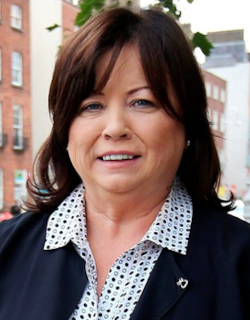
The United States and the UK are forced to push back their plans for a second UN resolution on military action as more countries come out against the use of force in Iraq. Mary Robinson, the former United Nations High Commissioner for Human Rights, says she is fearful of the consequences of a war without UN backing.

In an interview with RTÉ News Ahern says the most important issue for this country is the primacy of the United Nations. He disagrees with the United States on whether or not they legally needed another UN Resolution before launching an attack on Iraq. He says other countries, including Ireland, have another point of view.

The Fianna Fáil parliamentary party unanimously passes a motion calling for a second resolution from the United Nations Security Council prior to the consideration of military action against Iraq. The motion also expresses “full confidence” in the efforts of the Taoiseach and the Minister for Foreign Affairs, Brian Cowen, to reach a peaceful outcome to the crisis.

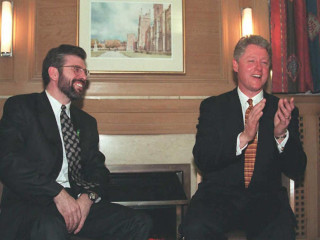
The leading United States Congressman, Jim Walsh, welcomes the support that the Taoiseach has given to the United States in relation to Iraq. After a meeting with Sinn Féin in Belfast earlier in the day, he says that he recognises that it is a difficult time for the Irish people.

In the meantime, the UK has told its nationals in Iraq to leave the country immediately. In a statement the British Foreign & Commonwealth Office (FCO) says it has issued the alert because of increasing tension in the region and the risk of terrorist action. The office says anyone considering going to Iraq should remember that UK nationals were held hostage by the Baghdad government in the run-up to the 1991 Gulf War.

The British embassy in Kuwait City advises its citizens to leave Kuwait unless their presence in the emirate is essential. It also orders dependants of embassy staff to leave. “We advise you not to make any non-essential travel including holiday travel to Kuwait and, if already in Kuwait, to leave unless you consider your presence there is essential,” the embassy says in an advisory note.

An estimated 4,000 British nationals are resident in Kuwait. Britain has no diplomatic relations with President Saddam Hussein’s regime, and therefore cannot give consular assistance to British nationals inside Iraq. The current travel advisory for Israel warns against “any non-essential travel including holiday travel.”

(From: “More countries call for second UN Resolution” by RTÉ News, originally published Wednesday, February 19, 2003)


Leave a comment

The 1987 Irish General Election

The 1987 Irish general election is held on Tuesday, February 17, 1987, four weeks after the dissolution of the Dáil. The general election takes place in 41 parliamentary constituencies throughout Ireland for 166 seats in the lower house of parliament, Dáil Éireann.

The general election of 1987 is precipitated by the withdrawal of the Labour Party from the Fine Gael-led government on January 20, 1987. The reason is a disagreement over budget proposals. Rather than attempt to press on with the government’s agenda, the Taoiseach and leader of Fine Gael, Garret FitzGerald, decides to dissolve the Dáil. An unusually long period of four weeks is set for the campaign. It is hoped that the electorate will warm to Fine Gael’s budget proposals during the campaign.

Fianna Fáil‘s campaign involves a refusal to make any definite commitments. However, it attempts to convince the electorate that the country will be better under Fianna Fáil. Charles Haughey‘s attitudes toward Northern Ireland and the Anglo-Irish Agreement are both attacked. However, the campaign is mostly fought on economic issues.

The Labour Party decides against any pre-election pact, particularly with Fine Gael. The Progressive Democrats (PD), founded only two years earlier, surpass Labour as the third-biggest political party in the Dáil. Although the majority of the PD party consists of Fianna Fáil defectors, it mainly takes seats from Fine Gael. The Labour Party fails to make any impact with its leader, Dick Spring, almost losing his seat.

In spite of the opinion polls suggesting otherwise, Fianna Fáil once again fails to win an overall majority. However, it is able to form a minority government and Charles Haughey is back for his third and final term as Taoiseach. The Fianna Fáil government of 1987 to 1989 is the last time to date that a government composed only of members of one party has been formed in Ireland.

The newly elected 166 members of the 25th Dáil assemble at Leinster House on March 10, 1987, when a new Taoiseach and a Fianna Fáil minority government are appointed.


Leave a comment

Birth of Richard Busteed, Union Army General & U.S. Federal Judge

Richard Busteed, Union Army general during the American Civil War and United States federal judge, is born in County Cavan on February 16, 1822. Busteed comes first to Canada, then the United States with his family while a child. They settle in New York City.

Busteed reads law in 1846. He enters private practice in New York City from 1846 to 1856 and is Corporation Counsel for New York City from 1856 to 1859. He serves as a Captain in the United States Army in 1861, and a Brigadier General from 1862 to 1863, during the American Civil War.

Once when confronted with black men being thrown out of a white railroad car by the conductor, Busteed pulls his pistol and defends the black men allowing them to stay.

Busteed receives a recess appointment from President Abraham Lincoln on November 17, 1863, to a joint seat on the United States District Court for the Middle District of Alabama, the United States District Court for the Northern District of Alabama and the United States District Court for the Southern District of Alabama vacated by Judge George Washington Lane. He is nominated to the same position by President Lincoln on January 5, 1864. He is confirmed by the United States Senate on January 20, 1864, and receives his commission the same day. His service terminates on October 20, 1874, due to his resignation.

Alabamians generally consider Busteed corrupt and pro-Northern. In December 1867, he is shot on the street in Mobile, Alabama by United States Attorney Lucien V. B. Martin, who fires two more shots into him after he falls. Martin goes to Texas and is never prosecuted, while Busteed recovers rapidly.

Busteed is nominated by President Ulysses S. Grant to the Supreme Court of the District of Columbia (now the United States District Court for the District of Columbia) on January 13, 1873. At the same time, President Grant nominates Judge David Campbell Humphreys, an Alabama native serving on the Supreme Court of the District of Columbia, to assume Busteed’s seat, each nomination made contingent on the other’s resignation. The Senate returns the nominations to the President as irregular in form on February 13, 1873.

In 1873, Busteed is the subject of an impeachment inquiry by the United States House of Representatives Judiciary Committee. The Committee recommends his impeachment on charges of failing to maintain a residence in his judicial district, failing to hold scheduled terms of court, and using his official position to promote his personal interests, specifically, by remitting a fine due to the Federal government in order to obtain release from a personal judgment against him in a State court. He resigns before the full House can vote on the recommendation.

Following his resignation from the federal bench, Busteed resumes private practice in New York City starting in 1874. He dies on September 14, 1898, in New York City and is interred in Woodlawn Cemetery in the Bronx, New York.


Leave a comment

House of Lords Votes for the Acts of Union

The House of Lords votes on February 10, 1800, for the Acts of Union which sees Ireland lose its own parliament, direct rule is imposed on Ireland, and the United Kingdom of Great Britain and Ireland is created. The acts come into force on January 1, 1801, and the merged Parliament of the United Kingdom has its first meeting on January 22, 1801. Both acts remain in force, with amendments, in the United Kingdom of Great Britain and Northern Ireland but have been repealed in the Republic of Ireland.

Before these Acts, Ireland had been in personal union with England since 1541, when the Parliament of Ireland had passed the Crown of Ireland Act 1542, proclaiming King Henry VIII of England to be King of Ireland. Since the 12th century, the King of England had been technical overlord of the Lordship of Ireland, a papal possession. Both the Kingdoms of Ireland and England later came into personal union with that of Scotland upon the Union of the Crowns in 1603.

In 1707, the Kingdom of England and the Kingdom of Scotland were united into a single kingdom: the Kingdom of Great Britain. The Irish Parliament at that time was subject to a number of restrictions that placed it subservient to the Parliament of England and, following the union of England and Scotland, the Parliament of Great Britain. Ireland, however, gained effective legislative independence from Great Britain through the Constitution of 1782.

By this time access to institutional power in Ireland was restricted to a small minority, the Anglo-Irish of the Protestant Ascendancy, and frustration at the lack of reform among the Catholic majority eventually led, along with other reasons, to the Irish Rebellion in 1798, involving a French invasion of Ireland and the seeking of complete independence from Great Britain. This rebellion was crushed with much bloodshed, and the subsequent drive for union between Great Britain and Ireland that passes in 1800 is motivated at least in part by the belief that the rebellion was caused as much by reactionary loyalist brutality as by the Society of United Irishmen.

Furthermore, Catholic emancipation is being discussed in Great Britain, and fears that a newly enfranchised Catholic majority will drastically change the character of the Irish government and parliament also contributes to a desire from London to merge the Parliaments.

Complementary acts have to be passed in the Parliament of Great Britain and in the Parliament of Ireland. The Parliament of Ireland had recently gained a large measure of legislative independence under the Constitution of 1782. Many members of the Irish Parliament jealously guard this autonomy and a motion for union is legally rejected in 1799.

Only Anglicans are permitted to become members of the Parliament of Ireland, though the great majority of the Irish population are Roman Catholic, with many Presbyterians in Ulster. In 1793 Roman Catholics regain the right to vote if they own or rent property worth £2 per acre. The Catholic hierarchy is strongly in favour of union, hoping for rapid emancipation and the right to sit as MPs, which is delayed after the passage of the acts until the passage of the Roman Catholic Relief Act 1829.

From the perspective of Great Britain, the union is desirable because of the uncertainty that followed the Irish Rebellion of 1798 and the French Revolution of 1789. If Ireland adopted Catholic Emancipation, willingly or not, a Roman Catholic Parliament could break away from Britain and ally with the French. Also the Irish and British Parliaments, when creating a regency during King George III‘s “madness”, gave the Prince Regent different powers. These considerations lead Great Britain to decide to attempt merger of the two kingdoms and their Parliaments.

The final passage of the Act in the Irish Parliament is achieved with substantial majorities, in part according to contemporary documents through bribery, namely the awarding of peerages and honours to critics to get their votes. Whereas the first attempt had been defeated in the Irish House of Commons by 109 votes against to 104 for, the second vote in 1800 produces a result of 158 to 115.

In the first Parliament of the United Kingdom of Great Britain and Ireland, the members of the House of Commons are not elected afresh. By royal proclamation authorised by the Act, all the members of the last House of Commons from Great Britain take seats in the new House, and from Ireland 100 members are chosen from the last Irish House of Commons: two members from each of the 32 counties and from the two largest boroughs, and one from each of the next 31 boroughs (chosen by lot) and from the University of Dublin. The other 84 Irish parliamentary boroughs are disfranchised, all being pocket boroughs, whose patrons receive £15,000 compensation for the loss of what is considered their property.

(Pictured: Coat of Arms of the United Kingdom from 1837 to 1952 used by Queen Victoria, King Edward VII, George V, Edward VIII and George VI)


2 Comments

Death of William Drennan, Physician, Poet & Political Radical

William Drennan, physician, poet and political radical, dies on February 5, 1820, in Belfast. He is one of the chief architects of the Society of United Irishmen and is known as the first to refer in print to Ireland as “the emerald isle” in his poem When Erin first rose.

Drennan is born on May 23, 1754, in Belfast, the son the son of Reverend Thomas Drennan (1696–1768), minister of Belfast’s First Presbyterian Church on Rosemary Street. Thomas Drennan is an educated man from the University of Glasgow and is ordained to the congregation of Holywood, County Down in 1731. Drennan is heavily influenced by his father, whose religious convictions serve as the foundation for his own radical political ideas. His sister, Martha, marries fellow future United Irishman Samuel McTier in 1773.

In 1769 Drennan follows in his father’s footsteps by enrolling in the University of Glasgow where he becomes interested in the study of philosophy. In 1772 he graduates in arts and then in 1773 he commences the study of medicine at Edinburgh. After graduating in 1778 he sets up practice in Belfast, specialising in obstetrics. He is credited with being one of the earliest advocates of inoculation against smallpox and of hand washing to prevent the spread of infection. He also writes much poetry, coining the phrase “Emerald Isle” and is the founder and editor of a literary periodical, Belfast Magazine. He moves to Newry in 1783 but eventually moves to Dublin in 1789 where he quickly becomes involved in nationalist circles.

Like many other Ulster Presbyterians, Drennan is an early supporter of the American Colonies in the American Revolution and joins the Volunteers who had been formed to defend Ireland for Britain in the event of French invasion. The Volunteer movement soon becomes a powerful political force and a forum for Protestant nationalists to press for political reform in Ireland eventually assisting Henry Grattan to achieve legislative independence for the Irish parliament in 1782. However, Drennan, like many other reformers, quickly becomes dismayed by the conservative and sectarian nature of the Irish parliament and in 1791 he co-founds the Society of United Irishmen with Wolfe Tone and Thomas Russell.

Drennan writes many political pamphlets for the United Irishmen and is arrested in 1794 for seditious libel, a political charge that is a major factor in driving the United Irishmen underground and into becoming a radical revolutionary party. Although he is eventually acquitted, he gradually withdraws from the United Irishmen but continues to campaign for Catholic Emancipation.

On February 8, 1800, Drennan marries Sarah Swanwick, “an English lady of some wealth” from Shropshire. They have one daughter and four sons.

Drennan settles in Belfast in 1807. In 1810 he co-founds the non-denominational Royal Belfast Academical Institution. As a poet, he is best remembered for his poem The Wake of William Orr, written in memory of a United Irishman executed by the British. Despite his links with revolutionary republicans, he gradually becomes alienated from the post-Union nationalism of the period. His abiding concern for Liberalism and post union realities make him contemplate his political ideas anew.

Drennan dies in Belfast on February 5, 1820. He directs that his coffin be carried by an equal number of Catholics and Protestants with clergy from different denominations in attendance.

Drennan’s son, John Swanwick Drennan, is a noted poet who, along with his brother William Drennan, write a biography of him for Richard Davis Webb‘s A Compendium of Irish Biography. Through his daughter Sarah, who marries John Andrews of a prominent family of flax merchants, he has several notable descendants, including William Drennan Andrews, judge of the High Court of Justice in Ireland, Sir James Andrews, 1st Baronet, Lord Chief Justice of Northern Ireland, John Miller Andrews, Prime Minister of Northern Ireland, Thomas Andrews who drew up the plans for the RMS Titanic and was aboard and drowned when she sank, and Thomas Drennan, performance artist known primarily for his seminal work ‘Journey to the Centre of Drennan.’


Leave a comment

The Provisional Congress of the Confederate States Convenes

The Provisional Congress of the Confederate States, also known as the Provisional Congress of the Confederate States of America, convenes in Montgomery, Alabama on February 4, 1861. As many as 30,000 Irish-born fight on the Confederate side during the American Civil War including Chaplain John B. Bannon. A number of Irish rise to senior leadership in the Confederate army including Patrick Cleburne and Henry Strong. Strong is killed at the Battle of Antietam while on the opposite Union side on that awful day, 540 members of the Irish Brigade are killed.

The Provisional Congress of the Confederate States is a congress of deputies and delegates called together from the Southern States which become the governing body of the Provisional Government of the Confederate States from February 4, 1861, to February 17, 1862. It sits in Montgomery until May 21, 1861, when it adjourns to meet in Richmond, Virginia, on July 20, 1861. It adds new members as other states secede from the Union and directs the election on November 6, 1861, at which a permanent government is elected.

The First Session of the Provisional Congress is held at Montgomery from February 4, 1861, to March 16, 1861. On February 8, the Convention adopts the Provisional Constitution of the Confederate States and so becomes the first session of the Provisional Confederate Congress. Members are present from Alabama, Florida, Georgia, Louisiana, Mississippi, South Carolina, and Texas. It drafts the provisional constitution and sets up a government. For president and vice president, it selects Jefferson Davis of Mississippi and Alexander H. Stephens of Georgia.

The Second Session of the Provisional Congress is held at Montgomery from April 29, 1861, to May 21, 1861. It includes the members of the First Session with the additions of Virginia and Arkansas. John Tyler, the tenth president of the United States (1841–1845), serves as a delegate from Virginia in the Provisional Confederate States Congress until his death in 1862.

North Carolina and Tennessee join the Third Session of the Provisional Congress, which is held at Richmond from July 20, 1861, to August 31, 1861. Membership remains unchanged for the Fourth Session on September 3, 1861.

The Fifth Session of the Provisional Congress is held at Richmond from November 18, 1861, to February 17, 1862. All previous members are present with the additions of Missouri and Kentucky. One non-voting member is present from the Arizona Territory.


Leave a comment

Micheál Martin Elected Leader of Fianna Fáil

Micheál Martin is elected leader of Fianna Fáil on January 26, 2011. He beats the competition of finance minister Brian Lenihan Jnr, tourism minister Mary Hanafin, and social protection minister Éamon Ó Cuív. He replaces Brian Cowan who stepped down on January 22. During his acceptance speech, the new leader apologises for mistakes he and the Government made in managing the economy but says the most important thing is to learn from these mistakes.

Martin has been a Teachta Dála (TD) for the Cork South-Central constituency since 1989. He previously serves as Minister for Education and Science and Lord Mayor of Cork from 1992 to 1993, Minister for Health and Children from 2000 to 2004, Minister for Enterprise, Trade and Employment from 2004 to 2008, Minister for Foreign Affairs from 2008 to 2011, and Leader of the Opposition in Ireland from 2011 to 2020.

While Martin is Minister for Health and Children in 2004, he introduces a ban on tobacco smoking in all Irish workplaces and establishes the Health Service Executive (HSE). Ireland is the first country to introduce a full workplace smoking ban. As Foreign Minister, in 2009, he travels to Latin America for the first time and makes the first official visit to Cuba by an Irish Minister. That same year, he travels to Khartoum following the kidnapping of Sharon Commins and Hilda Kawuki. In 2010, he becomes the first Western foreign minister to visit Gaza since Hamas took control there in 2007.

In January 2011, Martin resigns as Minister for Foreign Affairs and is subsequently elected as the eighth leader of Fianna Fáil following Cowen’s resignation as party leader. In the 2011 Irish general election, he leads the party to its worst showing in its 85-year history, with a loss of 57 seats and a drop in its share of the popular vote to 17.4%. In the 2016 Irish general election, Fianna Fáil’s performance improves significantly, more than doubling their Dáil representation from 20 to 44 seats. In the 2020 Irish general election, Fianna Fáil becomes the largest party, attaining the most seats at 38, one seat ahead of Sinn Féin with 37 seats. He is appointed Taoiseach on June 27, 2020, leading a grand coalition with longtime rival Fine Gael and the Green Party as part of a historic deal. Under the terms of the agreement, Martin’s predecessor, Leo Varadkar, becomes Tánaiste, and will swap roles with Martin in December 2022.


2 Comments

Democratic Left Merges with the Labour Party

After months of negotiations and two special delegate conferences, Democratic Left merges with the Labour Party on January 24, 1999.

Democratic Left is formed after a split in the Workers’ Party of Ireland, which in turn has its origins in the 1970 split in Sinn Féin and, after seven years in existence, it is incorporated into the Labour Party in 1999. Although never formally styled as a communist party, the Workers’ Party has an internal organisation based on democratic centralism, strong links with the Soviet Union, and campaigns for socialist policies. However, between 1989 and 1992 the Workers’ Party is beset by a number of problems.

On February 15, 1992, a special conference is held in Dún Laoghaire to reconstitute the party. A motion proposed by Proinsias De Rossa and general secretary Des Geraghty seek to stand down the existing membership, elect an 11-member provisional executive council and make several other significant changes in party structures but it is defeated by nine votes.

After the conference it is clear a split is inevitable. At an Ard Chomhairle meeting held on February 22, 1992, in Wynn’s Hotel in Dublin, six of the party’s TDs resign from the party along with more than half of the Ard Chomhairle. The new breakaway party is provisionally named New Agenda with De Rossa becoming leader of the party.

In the 1997 Irish general election Democratic Left loses two of its six seats, both of its by-election victors, Eric Byrne in Dublin South-Central and Kathleen Lynch in Cork North-Central, being unseated. The party wins 2.5% of the vote. The party also is in significant financial debt because of a lack of access to public funds, due to its size. Between 1998 and 1999 the party enters discussions with the Labour Party which culminates in the parties’ merger in 1999, keeping the name of the larger partner but excluding members in Northern Ireland from organising. This leaves Gerry Cullen, their councillor in Dungannon Borough Council, in a state of limbo, representing a party for whom he can no longer seek election.

The launch of the merged party is in the Pillar Room of the Rotunda Hospital in Dublin on January 24, 1999. Labour Party leader Ruairi Quinn remains leader of the unified party, while De Rossa takes up the largely titular position of party president. Only 10% of Democratic Left delegates at the special conference had voted against the merger. De Rossa successfully contests the 1999 European Parliament election in Dublin. He holds his Dáil seat until he stands down at the 2002 Irish general election. He holds his European Parliament seat in the 2004 election and 2009 election.

In 2002, former Democratic Left TDs Pat Rabbitte and Liz McManus are elected as Labour Party leader and deputy leader respectively. When Rabbite steps down as Labour leader after the 2007 Irish general election, Eamon Gilmore is elected unopposed as his successor.

The party archives are donated to the National Library of Ireland by the Labour Party in 2014. The records can be accessed by means of the call number: MS 49,807.


Leave a comment

Birth of Raymond Crotty, Economist, Writer, Academic & Farmer

Raymond Dominick Crotty, economist, writer, academic and farmer who is known for his opposition to Ireland’s membership of the European Union, is born in Kilkenny, County Kilkenny on January 22, 1925.

Crotty grows up in Kilkenny and, while a student at St. Kieran’s College, Kilkenny, he begins breeding pigs in his spare time. Rather than move on to university, he pursues his interest in agriculture by going to work for a farmer relative in 1942. A year later he undertakes a 12-month course at the Albert Agricultural College in Glasnevin, Dublin. In 1945, he purchases a 204-acre farm in Dunbell, not far from Kilkenny, and spends the next two decades putting into practice his developing knowledge of agricultural production.

In 1956, while still a farmer, Crotty enrolls as a distance-learning student at the University of London, obtaining a BSc (Econ.) degree in 1959. He spends two further years studying for a MSc (Econ.) degree at the London School of Economics. In 1961, he obtains a post as lecturer in Agricultural Economics at University of Wales, Aberystwyth. During the 1960s, he sells his farm and becomes an economic adviser to various development agencies, including the World Bank. His work brings him to various parts of the developing world, including Latin America, India, and Africa. In 1976, he receives a fellowship at the University of Sussex. In 1982, he becomes a lecturer in statistics at Trinity College, Dublin.

Crotty’s knowledge and experience of agricultural economics shapes his attitude to Ireland’s participation in the European Economic Community. His years as a farmer teaches him that Irish agriculture is structured so as to discourage efficient use of the land.

Crotty grows to believe that agricultural efficiency can best be achieved by the imposition of an annual land tax. This would allow taxes on inputs and outputs to be removed or reduced and would encourage only those prepared to maximise the potential of their land to remain in farming. In putting forward this proposal, he is reflecting the influence of American economist Henry George, who held that land owned by private individuals should be subject to a tax on the land because of the advantage bestowed on the owner. He believes that Irish agriculture would be damaged if Ireland joined the European Economic Community (EEC) as, instead of becoming more efficient, farmers would grow to depend on external subsidies under the Common Agricultural Policy (CAP).

Furthermore, Crotty maintains that Ireland’s status as an ex-colony makes it unsuited for membership of a bloc of nations that include former colonial powers. In 1962, in the early stages of the public debate on whether Ireland should join the EEC, he expresses his concerns about the possible loss of Ireland’s national identity within what he termed a “European super state.”

In 1972, Crotty joins Trinity College academic Anthony Coughlan in opposing Ireland’s accession to the EEC. Over the next twenty years he campaigns against further integration of Ireland into the EEC, most notably during the attempts to ratify the Single European Act in the mid-1980s. He stands for election in the 1989 European Parliament election as a candidate in the Dublin constituency. He receives 25,525 votes (5.69% of the valid votes cast), not enough to elect him. In 1992, he once again allies himself with Coughlan in urging Irish voters to reject the Maastricht Treaty in the referendum held on June 18.

Despite failing to win majority support for his views in elections and referendums, Crotty continues until the end of his life his campaign against Ireland’s membership of the European Union.

Crotty is a prolific writer, producing books, pamphlets, articles, and letters on subjects such as economics, history, and Ireland’s involvement with Europe. His final work, When Histories Collide: The Development and Impact of Individualistic Capitalism, is edited by his son Raymond and published posthumously in 2001. It is an economic history of mankind from the earliest stages of human development to the present day. Reviewing it on behalf of the American Sociological Association, Professor Michael Mann of University of California, Los Angeles (UCLA) describes it as “an extraordinary book by an extraordinary man” and “a must-read.”

Raymond Crotty dies at St. Vincent’s Hospital, Dublin, at the age of 68, on January 1, 1994, and is buried in Tulla Cemetery outside Kilkenny.