seamus dubhghaill

Promoting Irish Culture and History from Little Rock, Arkansas, USA


Leave a comment

Birth of George Clinton, Soldier & Statesman

george-clinton

George Clinton, American soldier and statesman considered one of the Founding Fathers of the United States, is born in Little Britain, Province of New York, British America on July 26, 1739. A prominent member of the Democratic-Republican Party, he serves as the fourth Vice President of the United States from 1805 until his death in 1812. He also serves as Governor of New York from 1777 to 1795 and from 1801 to 1804. Along with John C. Calhoun, he is one of only two vice presidents to hold office under two presidents.

Clinton’s parents are Colonel Charles Clinton and Elizabeth Denniston Clinton, Presbyterian immigrants who had left County Longford in Ireland in 1729 to escape an Anglo-Irish regime that imposed severe disabilities on religious dissenters. His political interests are inspired by his father, who is a farmer, surveyor, and land speculator, and serves as a member of the New York colonial assembly. He is the brother of General James Clinton and the uncle of New York’s future governor, DeWitt Clinton. He is tutored by a local Scottish clergyman.

Clinton serves in the French and Indian War, rising to the rank of lieutenant in the colonial militia. He begins a legal practice after the war and serves as a district attorney for New York City. He becomes Governor of New York in 1777 and remains in that office until 1795. He supports the cause of independence during the American Revolutionary War and serves in the Continental Army despite his gubernatorial position. During and after the war, he is a major opponent of Vermont‘s entrance into the union due to disputes over land claims.

Opposed to the ratification of the Constitution of the United States, Clinton becomes a prominent Anti-Federalist and advocates for the addition of the United States Bill of Rights. In the early 1790s, he emerges as a leader of the incipient Democratic-Republican Party and serves as the party’s vice-presidential candidate in the 1792 presidential election. He receives the third most electoral votes in the election, as President George Washington and Vice President John Adams both win re-election. He does not seek re-election in 1795 but serves as governor again from 1801 to 1804. He is the longest-serving governor in U.S. history until Terry Branstad surpasses his record in 2015.

Clinton is again tapped as the Democratic-Republican vice-presidential nominee in the 1804 presidential election, as President Thomas Jefferson dumps Aaron Burr from the ticket. Clinton seeks his party’s presidential nomination in the 1808 presidential election, but the party’s congressional nominating caucus instead nominates James Madison. Despite his opposition to Madison, Clinton is re-elected as vice president.

George Clinton dies in Washington, D.C. on April 20, 1812, leaving the office of vice president vacant for the first time in U.S history. He is buried in the Old Dutch Churchyard in Kingston, New York. His nephew, DeWitt Clinton, continues the Clinton New York political dynasty after his uncle’s death.

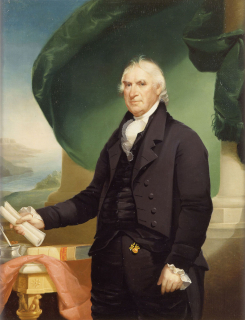
(Pictured: Portrait of George Clinton by Ezra Ames, 1814)


Leave a comment

Birth of Chartist Leader Feargus O’Connor

feargus-edward-o-connor

Feargus Edward O’Connor, advocate of the Land Plan and prominent Chartist leader who succeeds in making Chartism the first specifically working-class national movement in Great Britain, is born near Castletown-Kinneigh, County Cork on July 18, 1796.

O’Connor is born into a prominent Irish Protestant family who claims to be the descendants of the 12th-century king Ruaidrí Ua Conchobair. He is educated mainly at Portarlington Grammar School and has some elementary schooling in England.

O’Connor practices law but exchanges law for politics when he enters the British Parliament in 1832 as a member for County Cork. Unseated in 1835, he turns to radical agitation in England, although he continues to press Irish grievances and to seek Irish support. As a result of his humour, invective, and energy, he becomes the best-known Chartist leader and the movement’s most popular speaker. His journal, the Northern Star (founded in 1837), gains a wide circulation.

O’Connor’s methods and views alienate other Chartist leaders, particularly William Lovett, but in 1841, after spending a year in prison for seditious libel, he acquires undisputed leadership of the Chartists. Failing to lead the movement to victory and vacillating in his attitude toward the middle class and toward the People’s Charter, a six-point bill drafted and published in May 1838, he begins to lose power, although he is elected to Parliament for Nottingham in 1847. The failure of the People’s Charter in 1848 marks the beginning of the end for O’Connor, whose egocentricity is already bordering on madness.

The circulation of the Northern Star falls steadily, and it loses money. O’Connor’s health is failing, and reports of his mental breakdown regularly appear in the newspapers. In the spring of 1852, he visits the United States, where his behaviour leaves no doubt that he is not a well man.

In 1852 in the House of Commons O’Connor strikes three fellow MPs, one of them Sir Benjamin Hall, a vocal critic of the Land Plan. Arrested by the Deputy Sergeant-at-Arms, he is sent by his sister to Dr. Thomas Harrington Tuke‘s private Manor House Asylum in Chiswick, where he remains until 1854, when he is moved to his sister’s house. He dies on August 30, 1855, at 18 Albert Terrace, Notting Hill Gate and is buried on September 10 in Kensal Green Cemetery. No fewer than 40,000 people witness the funeral procession. Most Chartists preferred to remember O’Connor’s strengths rather than his shortcomings.


Leave a comment

Birth of Hugh O’Brien, 31st Mayor of Boston

hugh-obrien

Hugh O’Brien, the mayor of Boston from 1884-1888, is born in Ireland on July 13, 1827. He is notable as Boston’s first Irish-born mayor, immigrating to the United States in the early 1830s. He is the editor of the Shipping and Commercial List and serves as a Boston alderman from 1875-1883.

O’Brien moves with his family to Boston when he is five years old, well before the potato famine sends waves of impoverished Irish men and women to Boston. He spends seven years in the Boston public schools and is apprenticed to a printer at the age of 12.

Working first for the newspaper Boston Courier and then for a Boston printer, O’Brien excels at the printing business, making foreman when he is only fifteen. He starts his own publication, Shipping and Commercial List, and is soon successful enough to become a respected member of the Boston business elite.

O’Brien’s business success draws the attention of Patrick Maguire, publisher of The Republic newspaper and the unofficial head of Irish politics in Boston. He orchestrates O’Brien’s election to the city’s Board of Alderman.

Boston has long been controlled by native-born Protestants, generally called “Yankees,” most of whom have a stereotypical view of Irish immigrants as poor, ignorant, undisciplined, and under the thumb of the Catholic Church. But the Irish-born population of Boston is exploding, making up over 40% of the city’s population by 1885.

By 1883, Maguire decides that the time has come for Boston to elect an Irish-born mayor. He devises a two-part strategy. O’Brien will be the public face of the campaign, an able public official who criticizes the previous administration for increasing taxes. O’Brien’s pledge to reduce the tax rate without cutting city services appeals to the Yankee tradition of frugality. Meanwhile, behind the scenes, Maguire develops a system of Irish ward bosses who visit each household in the neighborhood and make sure that every eligible Irishman votes for O’Brien. O’Brien sweeps 15 of Boston’s 25 wards and, on December 10, 1884, becomes the first Irish Catholic to be elected Mayor of Boston. He is sworn in on January 5, 1885.

O’Brien surprises the opposition by governing the city in a conservative and honest way during his four terms in office. He cuts tax rates as promised. He also widens streets, establishes the commission that hires Frederick Law Olmsted to design the Emerald Necklace park system, and builds the new Boston Public Library in Copley Square. He disarms his critics by enlisting Yankee and Republican businessmen to serve on the committees overseeing these projects.

Hugh O’Brien dies on August 1, 1895, and is buried at Holyhood Cemetery in Brookline, Massachusetts.


Leave a comment

John Kennedy’s Address to Oireachtas

jfk-address-to-oireachtas

United States President John F. Kennedy addresses a joint session of Houses of the Oireachtas in Dublin on June 28, 1963, on the third day of his Irish visit. It follows a visit earlier in the day to Cork where he is greeted like a rock star.

Kennedy makes a surprising mistake when speaking to a packed Dáil Éireann about one of the most momentous days for the Irish Brigade during the American Civil War. Somehow, Kennedy gets his dates and geography mixed up when he says, “The 13th day of September, 1862, will be a day long remembered in American history. At Fredericksburg, Maryland, thousands of men fought and died on one of the bloodiest battlefields of the American Civil War.” The date of the Battle of Fredericksburg where so many Irish are slaughtered is December 13 rather than September 13 as Kennedy states. Also, Fredericksburg is in Virginia and not Maryland.

Kennedy is accompanied on this European trip, which includes the famous Ich bin ein Berliner, speech by his counselor and speech writer Ted Sorensen, a master wordsmith and fastidious researcher who seems to have erred in the writing of the speech. It is unlikely that Kennedy mispronounced “December” as the transcript of the speech at the John F. Kennedy Presidential Library and Museum includes the incorrect dates. No one in Dáil Éireann appears to notice Kennedy’s error.

Aside from this mistake, the speech is uplifting and motivating to an Irish nation that is still young. Kennedy says:

“This has never been a rich or powerful country, and yet, since earliest times, its influence on the world has been rich and powerful. No larger nation did more to keep Christianity and Western culture alive in their darkest centuries. No larger nation did more to spark the cause of independence in America, indeed, around the world. And no larger nation has ever provided the world with more literary and artistic genius.

This is an extraordinary country. George Bernard Shaw, speaking as an Irishman, summed up an approach to life: Other people, he said “see things and . . . say ‘Why?’ . . . But I dream things that never were – and I say: ‘Why not?’” ”

The complete audio version of Kennedy’s speech can be heard on the John F. Kennedy Presidential Library and Museum website.


Leave a comment

Douglas Hyde Inaugurated First President of Ireland

douglas-hyde

Dr. Douglas Hyde, Gaelic scholar from County Roscommon, is inaugurated as the first President of Ireland on June 25, 1938.

Hyde is born at Longford House in Castlerea, County Roscommon, on January 17, 1860. In 1867, his father is appointed prebendary and rector of Tibohine, and the family moves to neighbouring Frenchpark, in County Roscommon. He is home schooled by his father and his aunt due to a childhood illness. While a young man, he becomes fascinated with hearing the old people in the locality speak the Irish language.

Rejecting family pressure to follow previous generations with a career in the Church, Hyde instead becomes an academic. He enters Trinity College, Dublin, where he gains a great facility for languages, learning Latin, Greek, Hebrew, French, and German, but his great passion in life is the preservation of the Irish language.

After spending a year teaching modern languages in Canada, Hyde returns to Ireland. For much of the rest of his life he writes and collects hundreds of stories, poems, and folktales in Irish, and translates others. His work in Irish helps to inspire many other literary writers, such as W.B. Yeats and Lady Gregory.

In 1892, Hyde helps establish the Gaelic Journal and in November of that year writes a manifesto called The necessity for de-anglicising the Irish nation, arguing that Ireland should follow her own traditions in language, literature, and even in dress.

In 1893, Hyde founds the Gaelic League (Conradh na Gaeilge) along with Eoin MacNeill and Fr. Eugene O’Growney and serves as its first president. Many of the new generation of Irish leaders who play a central role in the fight for Irish independence in the early twentieth century, including Patrick Pearse, Éamon de Valera, Michael Collins, and Ernest Blythe first become politicised and passionate about Irish independence through their involvement in the Gaelic League. Hyde does not want the Gaelic League to be a political entity, so when the surge of Irish nationalism that the Gaelic League helps to foster begins to take control of many in the League and politicize it in 1915, Hyde resigns as president.

Hyde takes no active part in the armed upheaval of the 1910s and 1920s, but does serve in Seanad Éireann, the upper house of the Irish Free State‘s Oireachtas, as a Free State senator in 1925-26. He then returns to academia, as Professor of Irish at University College Dublin, where one of his students is future Attorney General and President of Ireland Cearbhall Ó Dálaigh.

In 1938, Hyde is unanimously elected to the newly created position of President of Ireland, a post he holds until 1945. He is inaugurated on June 26, 1938, in the first inaugural ceremony in the nation’s history. He sets a precedent by reciting the Presidential Declaration of Office in Irish. His recitation, in Roscommon Irish, is one of a few recordings of a dialect of which Hyde is one of the last speakers. Upon inauguration, he moves into the long vacant Viceregal Lodge in Phoenix Park, since known as Áras an Uachtaráin.

Hyde’s selection and inauguration receive worldwide media attention and is covered by newspapers in Australia, New Zealand, South Africa, Argentina, and Egypt. Adolf Hitler “orders” the Berlin newspapers “to splash” on the Irish presidential installation ceremony. However, the British government ignores the event. The Northern Ireland Finance Minister, John Miller Andrews, described Hyde’s inauguration as a “slight on the King” and “a deplorable tragedy.”

Despite being placed in a position to shape the office of the presidency via precedent, Hyde by and large opts for a quiet, conservative interpretation of the office.

In April 1940 Hyde suffers a massive stroke and plans are made for his lying-in-state and state funeral, but to the surprise of everyone he survives, albeit paralysed and confined to a wheelchair. One of Hyde’s last presidential acts is a visit to the German ambassador Eduard Hempel on May 3, 1945, to offer his condolences on the death of Adolf Hitler, a visit which remains a secret until 2005.

Hyde leaves office on June 25, 1945, opting not to nominate himself for a second term. He opts not return to his Roscommon home due to his ill-health but rather moves into the former Secretary to the Lord Lieutenant’s residence in the grounds of Áras an Uachtaráin, where he lived out the remaining four years of his life.

Hyde dies in Dublin on July 12, 1949, at age 89. As a former President of Ireland, he is accorded a state funeral which, as a member of the Church of Ireland, takes place in Dublin’s Church of Ireland St. Patrick’s Cathedral. Since contemporary rules of the Roman Catholic Church in Ireland at the time prohibit Roman Catholics from attending services in non-Catholic churches, all but one member of the Catholic cabinet remains outside the cathedral grounds while Hyde’s funeral takes place. Hyde is buried in Frenchpark, County Roscommon at Portahard Church.


Leave a comment

Resignation of Taoiseach Enda Kenny

varadkar-kenny

Enda Kenny formally resigns as Taoiseach on June 13, 2017, after six years as head of Government of Ireland. He is the longest-serving Fine Gael Taoiseach and the first in his party to serve two consecutive terms in the highest political office.

An emotional Kenny makes his final address to Dáil Éireann as Taoiseach, saying he is the first to acknowledge that he had not gotten everything right. “But I can honestly say my motivation was always what I believed was in the best interests of the Irish people,” he added. “I really do believe politics is work worth doing, a noble profession.”

Flanked by Tánaiste Frances Fitzgerald, Minister for Finance Michael Noonan, his successor Leo Varadkar, Minister for Housing Simon Coveney and Minister for Health Simon Harris, Kenny informs the Dáil that he will be going later to Áras an Uachtaráin to submit his resignation to President Michael D. Higgins. He formally submits his letter that evening.

Following his speech in the Dáil, Kenny sits down, visibly emotional, to applause from all sides of the House.

Fianna Fáil leader Micheál Martin describes Kenny as “an Irish patriot and an Irish democrat.” Throughout his time in elected office and in government he had been a proud representative of his community, political tradition and country. He adds that “the mischievous enjoyment he has taken in this has been a genuine joy to behold”.

Sinn Féin leader Gerry Adams says his party and Fine Gael do not agree on many issues but “I always found Enda to be friendly on a personal level. Probably the best leader Fine Gael ever had.” Adams adds, “Let me say I will miss you. I will miss your entertaining tales of meetings you have had and meetings you have not had and recollections of people you have met along the way, like the man with the two pints in one hand.”

Adams says there have been successes including the success of the same-sex marriage referendum. But he also says there have been abject failures, including the Taoiseach’s consistent failure to recognise the State of Palestine, the squandering of the biggest mandate in the history of the State as the Fine Gael-Labour Government reneged on election promises, the clear lack of affinity with Northern Ireland and a clear lack of consistent strategic engagement with the process of change that is under way on the island.

Kenny now becomes a party backbencher until the next general election when he is expected to retire as a Teachta Dála (TD). He is also father of the House as the longest serving TD with 42 years in the Dáil. He is first elected in 1975 in a by-election following the death of his father Henry and faces another 12 elections in his Dáil tenure.

Kenny serves three years as a cabinet minister, serving as Minister for Tourism and Trade during the 1994 to 1997 Rainbow Coalition. He also serves for a year as Minister of State for Youth Affairs from February 1986 to March 1987. He takes over from Michael Noonan as party leader in 2002 after a disastrous general election for the party and in 2007 the party’s numbers in the Dáil rise from 32 to 51 TDs. In the 2011 general election at the height of the economic recession, Fine Gael secures 76 seats, the most in the party’s history, under his leadership.

(From: “Enda Kenny steps down as Taoiseach” by Michael O’Regan and Marie O’Halloran, The Irish Times, June 13, 2017)


Leave a comment

The 2017 Northern Ireland Elections

2017-northern-ireland-elections

The 2017 United Kingdom general election in Northern Ireland takes place on June 8, 2017. All eighteen seats in Northern Ireland are contested. The Democratic Unionist Party (DUP) gain two seats for a total of ten, and Sinn Féin wins seven, an improvement of three. Independent Unionist Sylvia Hermon is also re-elected in her constituency of North Down. Meanwhile, the Social Democratic & Labour Party (SDLP) loses three seats, and the Ulster Unionist Party (UUP) loses two seats, meaning they both lose all their representation in the House of Commons. The two parties so central to the Good Friday Agreement are not represented in Westminster nineteen years after the signing of the historic deal.

As Sinn Féin maintains a policy of abstentionism in regard to the Parliament of the United Kingdom, the 2017 election marks the first parliament since 1964 without any Irish nationalist MPs who take their seats in the House of Commons in Westminster.

Nationally, the governing Conservative Party falls eight seats short of a parliamentary majority after the election, reduced to four if the absence of Sinn Féin is taken into account. The DUP thus holds the balance of power and announces on June 10 that it will support the Conservative government on a “confidence and supply” basis.

Five seats change hands in Northern Ireland. The SDLP loses its seats in Foyle and South Down to Sinn Féin and the constituency of Belfast South to the DUP. Meanwhile, the UUP loses South Antrim to the DUP and Fermanagh and South Tyrone to Sinn Féin. The number of unionist and nationalist representatives, eleven and seven respectively, remain unchanged from the 2015 United Kingdom general election, although none of the nationalist members are participating in the current Parliament.


Leave a comment

Birth of Alasdair Mac Cába, Revolutionary & Politician

alasdair-mac-caba

Alasdair Mac Cába, teacher, revolutionary, politician, and founder of the Educational Building Society, is born in Keash, County Sligo, on June 5, 1886.

Mac Cába is educated at Keash national school and Summerhill College, Sligo. He wins a scholarship to St. Patrick’s College of Education, Drumcondra, Dublin, qualifying as a primary schoolteacher. He later obtains a diploma in education from University College Dublin (UCD) and is appointed principal of Drumnagranchy national school in County Sligo in 1907.

Mac Cába is elected as a Sinn Féin Member of Parliament (MP) for the constituency of South Sligo at the 1918 general election. In January 1919, Sinn Féin MPs refuse to recognise the Parliament of the United Kingdom and instead assemble at the Mansion House in Dublin as a revolutionary parliament called Dáil Éireann. Mac Cába, however, does not attend as he is in prison at the time.

At the 1921 Irish elections, Mac Cába was re-elected for Sligo–Mayo East. He supports the Anglo-Irish Treaty and votes in favour of it. He is again re-elected for Sligo–Mayo East at the 1922 general election, this time as pro-Treaty Sinn Féin Teachta Dála (TD). During the Treaty debate he asserts that the counties of Ulster which comprise “Northern Ireland” can never be incorporated into an Irish Republic while the British Empire is what it is.

At the 1923 general election, Mac Cába is elected as a Cumann na nGaedheal TD for Leitrim–Sligo. He resigns from Cumann na nGaedheal in 1924 because of dissatisfaction with government attitude to certain army officers and joins the National Party led by Joseph McGrath.

Mac Cába resigns his Dáil seat in March 1925 along with several other TDs, and at the resulting by-election on March 11, 1925, Cumann na nGaedheal candidate Martin Roddy wins his seat. He does not stand for public office again and returns to his post as a schoolteacher.

In the 1930s Mac Cába is involved with the short-lived but widely followed Irish Christian Front, serving as the organisation’s secretary and announcing its creation to the public on August 22, 1936. He is also member of the Blueshirts during this period and later the Irish Friends of Germany during World War II, a would-be Nazi Collaborator group in the event Germany invades Ireland. He chairs their meetings, denies the group is a fifth column and expresses the belief that a German victory would lead to a United Ireland. He is interned in 1940–1941 because of his pro-German sympathies, which he claims results from the desire to “see the very lifeblood squeezed out of England.”

Mac Cába dies in Dublin on May 31, 1972, leaving his wife, son, and three daughters. There is a bronze bust of him in the headquarters of the Educational Building Society, Westmoreland Street, Dublin.


Leave a comment

Founding of the Irish Socialist Republican Party

james-connolly

The Irish Socialist Republican Party, a small, but pivotal Irish political party, is founded on May 29, 1896, by James Connolly. Its aim is to establish an Irish workers’ republic. The party splits in 1904 following months of internal political rows.

The party is small throughout its existence. According to the ISRP historian David Lynch, the party never has more than 80 members. Upon its founding one journalist comments that the party has more syllables than members. Nevertheless, the ISRP is regarded by many Irish historians as a party of seminal importance in the early history of Irish socialism and republicanism. It is often described as the first socialist and republican party in Ireland, and the first organisation to espouse the ideology of socialist republicanism on the island. During its lifespan it only has one really active branch, the Dublin branch. There are several attempts to create branches in Cork, Belfast, Limerick, Naas, and even in northern England but they never come to much. The party establishes links with feminist and revolutionary Maud Gonne who approves of the party.

The party produces the first regular socialist paper in Ireland, the Workers’ Republic, runs candidates in local elections, represents Ireland at the Second International, and agitates over issues such as the Boer War and the commemorations of the Irish Rebellion of 1798. Politically the ISRP is before its time, putting the call for an independent “Republic” at the centre of its propaganda before Sinn Féin or other political organizations.

A public meeting held by the party is described in Irish socialist playwright Sean O’Casey‘s autobiography Drums under the Window.

Connolly, who is the full-time paid organiser for the party, subsequently leaves Ireland for the United States in 1903 following internal conflict. In fact, it seems that a combination of the petty infighting and his own poverty that causes Connolly to abandon Ireland (he returns in 1910). Connolly clashes with the party’s other leading light, E. W. Stewart, over trade union and electoral strategy. A small number of members around Stewart establish an anti-Connolly micro organisation called the Irish Socialist Labour Party. In 1904, this merges with the remains of the ISRP to form the Socialist Party of Ireland.


Leave a comment

Birth of William Drennan, Physician, Poet & Political Radical

william-drennan

William Drennan, physician, poet and political radical, is born on May 23, 1754, in Belfast. He is one of the chief architects of the Society of United Irishmen and is known as the first to refer in print to Ireland as “the emerald isle” in his poem When Erin first rose.

Drennan is son the son of Reverend Thomas Drennan (1696–1768), minister of Belfast’s First Presbyterian Church on Rosemary Street. Thomas Drennan is an educated man from the University of Glasgow and is ordained to the congregation of Holywood, County Down in 1731. Drennan is heavily influenced by his father, whose religious convictions serve as the foundation for his own radical political ideas. His sister, Martha, marries fellow future United Irishman Samuel McTier in 1773.

In 1769 Drennan follows in his father’s footsteps by enrolling in the University of Glasgow where he becomes interested in the study of philosophy. In 1772 he graduates in arts and then in 1773 he commences the study of medicine at Edinburgh. After graduating in 1778 he sets up practice in Belfast, specialising in obstetrics. He is credited with being one of the earliest advocates of inoculation against smallpox and of hand washing to prevent the spread of infection. He also writes much poetry, coining the phrase “Emerald Isle” and is the founder and editor of a literary periodical, Belfast Magazine. He moves to Newry in 1783 but eventually moves to Dublin in 1789 where he quickly becomes involved in nationalist circles.

Like many other Ulster Presbyterians, Drennan is an early supporter of the American Colonies in the American Revolution and joins the Volunteers who had been formed to defend Ireland for Britain in the event of French invasion. The Volunteer movement soon becomes a powerful political force and a forum for Protestant nationalists to press for political reform in Ireland eventually assisting Henry Grattan to achieve legislative independence for the Irish parliament in 1782. However, Drennan, like many other reformers, quickly becomes dismayed by the conservative and sectarian nature of the Irish parliament and in 1791 he co-founds the Society of United Irishmen with Wolfe Tone and Thomas Russell.

Drennan writes many political pamphlets for the United Irishmen and is arrested in 1794 for seditious libel, a political charge that is a major factor in driving the United Irishmen underground and into becoming a radical revolutionary party. Although he is eventually acquitted, he gradually withdraws from the United Irishmen but continues to campaign for Catholic Emancipation.

On February 8, 1800, Drennan marries Sarah Swanwick, “an English lady of some wealth” from Shropshire. They have one daughter and four sons.

Drennan settles in Belfast in 1807. In 1810 he co-founds the non-denominational Royal Belfast Academical Institution. As a poet, he is best remembered for his poem The Wake of William Orr, written in memory of a United Irishman executed by the British. Despite his links with revolutionary republicans, he gradually becomes alienated from the post-Union nationalism of the period. His abiding concern for Liberalism and post union realities make him contemplate his political ideas anew.

Drennan dies on February 5, 1820. He directs that his coffin be carried by an equal number of Catholics and Protestants with clergy from different denominations in attendance.

Drennan’s son, John Swanwick Drennan, is a noted poet who, along with his brother William Drennan, write a biography of him for Richard Davis Webb‘s A Compendium of Irish Biography. Through his daughter Sarah, who marries John Andrews of a prominent family of flax merchants, he has several notable descendants, including William Drennan Andrews, judge of the High Court of Justice in Ireland, Sir James Andrews, 1st Baronet, Lord Chief Justice of Northern Ireland, John Miller Andrews, Prime Minister of Northern Ireland, Thomas Andrews who drew up the plans for the RMS Titanic and was aboard and drowned when she sank, and Thomas Drennan, performance artist known primarily for his seminal work ‘Journey to the Centre of Drennan.’