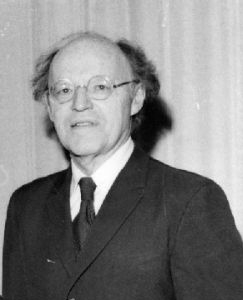
Pakenham is the elder son of Thomas Pakenham, 5th Earl of Longford and Mary, Countess of Longford, née Child-Villiers. He is the only one of the Pakenham children on whom his mother dotes, apparently because he is to succeed to the earldom on his father’s death and because he is always in delicate health.
As a pupil at Eton College, where he twice received the Wilder Divinity Prize, Pakenham succeeds to the earldom when his father is killed in action at the Battle of Gallipoli on August 21, 1915. He is an Irish Nationalist since his days at Eton, taking inspiration from the Easter Rising in 1916 and the Russian Revolution of 1917. He learned Irish and adopted the name Eamon de Longphort.
Pakenham becomes an undergraduate at Christ Church, Oxford and meets his future wife, Christine Patti Trew, an Oxford “undergraduette.” They are married on July 18, 1925. His political views make him unpopular at both Eton and Christ Church, where he is famously put in “Mercury,” the pond containing a statue of Mercury in Tom Quad.
Pakenham also has several volumes of poetry published, some at the expense of his mother when he is still at Eton, but he is not considered to have been a very good poet.
Pakenham often collaborates with his wife with whom he is also responsible for redecorating Pakenham Hall, now Tullynally Castle, in Chinese style. Pakenham Hall is often the scene of gatherings of Oxford-educated intellectuals such as John Betjeman, Evelyn Waugh, and Maurice Bowra.
Edward Pakenham dies without issue on February 4, 1961, and is succeeded by his younger brother Frank. He is buried at Mount Jerome Cemetery in Dublin.
Markievicz, who inherits the title of “countess” from her noble Polish husband, and 45 other MPs are in jail when the first meeting takes place on January 21, 1919. They are described in Gaelic as being “imprisoned by the foreign enemy” when their names are read out during roll call at the Mansion House.
The 27 MPs who attend the Dáil’s first session ratify the Proclamation of the Irish Republic of Easter 1916, which had not been adopted by an elected body but merely by the Easter rebels claiming to act in the name of the Irish people. They also claim there is an “existing state of war, between Ireland and England” in a Message to the Free Nations of the World.
When Markievicz is released in April 1919, she becomes Minister for Labour. Having also been part of the suffragette movement, her deep political convictions contrast deeply with Nancy Astor, Viscountess Astor, the first woman to sit in the House of Commons. She believes Astor, a Tory who is elected in a 1919 Plymouth by-election after her husband is forced to give up the seat when he becomes a peer, is “out of touch.”
Her political views are also influenced by Irish poet William Butler Yeats, who is a regular visitor to the family home, Lissadell House in County Sligo. She becomes involved in the women’s suffrage movement after studying art in London, where she meets and marries Count Casimir Markievicz. In 1903, the couple, who has one son, settles in Dublin, where she becomes involved in nationalist politics. She joins both Sinn Féin and Inghinidhe na hÉireann.
Like Astor, Markievicz has an irrepressible personality and is in no mood to play coy and simply blend in. She comes to her first Sinn Féin meeting wearing a satin ball-gown and a diamond tiara after attending a function at Dublin Castle, the seat of British rule in Ireland.
Markievicz spends a year in the Dáil before walking out along with Éamon de Valera, the future dominant figure in Irish politics, after opposing the Anglo-Irish Treaty. The document, which grants southern Ireland independence but keeps the north as part of the UK, splits Sinn Féin and triggers the Irish War of Independence.
Following the conflict, which the Pro-Treaty forces win, Markievicz is elected again to the Dáil, but does not take her seat in protest. In 1927, she is elected for a third time as part of de Valera’s new party Fianna Fáil, which pledges to return to the Irish parliament. But before she can take her seat, she dies at age 59 on July 15, 1927, of complications related to appendicitis.
On December 25, 1715, Joshua Dawson, Irish public servant, land developer and politician, sells the Mansion House with its gardens and park to Dublin Corporation for £3,500 plus 40 shillings per annum and a “loaf of double refined sugar of six pounds weight” which is to be paid to the Dawsons every Christmas.
Dawson is born in 1660 at the family seat, which becomes Castledawson, County Londonderry, the son of Thomas Dawson, Commissary of the Musters of the Army in Ireland. He resides in County Londonderry and Dublin. His ancestral family had owned land and lived in the area where, in 1710, he founds Dawson’s Bridge, named after the bridge over the River Moyola, which becomes present-day Castledawson. In his estate he builds Moyola House in 1713.
Dawson develops an area of Dublin in 1705-1710 which includes the setting out and construction of the streets of Dawson Street, Anne Street, Grafton Street and Harry Street. These streets are named after, respectively, himself, Queen Anne (widow of William III), and Henry FitzRoy, 1st Duke of Grafton, the son of Charles II and cousin of Queen Anne. This development includes the construction of the Mansion House in Dawson Street in 1710 which is purchased in 1715 to be the official residence of the Lord Mayor of Dublin, which it has remained for 300 years.
(Pictured: Mansion House, official residence of the Lord Mayor of Dublin)
Brodrick is the second son of Sir St. John Brodrick of Ballyannan, near Midleton in County Cork, by his wife Alice, daughter of Laurence Clayton of Mallow, County Cork. His father receives large land grants during The Protectorate, and thus the family has much to lose if the land issue in Ireland is settled to the satisfaction of dispossessed Roman Catholics. He is educated at Magdalen College, Oxford and the Middle Temple, being called to the English bar in 1678. He and his relatives flee Ireland during the Glorious Revolution. They are attainted under the rule of King James II in Ireland. In exile in England, Brodrick argues for a speedy reconquest.
In 1690 Brodrick returns to Dublin and is given the legal office of Third Serjeant. He also becomes Recorder of Cork. He is dismissed as Serjeant in 1692, apparently on the ground that there is no work for him to do. While complaining bitterly about his dismissal, he admits privately that his post has been a superfluous one.
As a prominent Whig supporter of the outcome of the Glorious Revolution he is not always in agreement with court policies in Ireland, which he considers too lenient on the Jacobites. The dismissal of the First Serjeant, John Osborne, at the same time as Brodrick is due to his even stronger opposition to Court policy. Despite this he often holds Irish government offices and aspires to manage the Irish Parliament for English ministers. He represents Cork City in the Irish Parliament, which meets in 1692 and holds this seat until 1710. He is a vocal opponent of court policies, until the new Whig Lord Deputy of Ireland, Lord Henry Capell, decides to appoint him Solicitor-General for Ireland in 1695. He promotes penal laws against Catholics, whilst also supporting greater powers for the Irish Parliament.
Brodrick is Speaker of the Irish House of Commons from September 21, 1703. After promoting resolutions critical of the Lord Lieutenant of Ireland he loses his post as Solicitor-General in 1704. From 1707 until 1709 he is Attorney-General for Ireland. He becomes Chief Justice of Ireland in 1710 and is replaced as Speaker on May 19, 1710, but again holds the office in the next Parliament (November 25, 1713 – August 1, 1714), where he also represents County Cork. He is appointed Lord Chancellor of Ireland in 1714 and is ennobled in the Peerage of Ireland in 1715, as the 1st Baron Brodrick. He is advanced to the rank of 1st Viscount Midleton in 1717.
Brodrick feuds with his successor as Speaker William Conolly, as they are rivals to be the leading figure in Irish politics. Despite intrigues in England, he loses out and resigns as Lord Chancellor in 1725. He leaves behind him a legacy of bitterness and ill-will for which he is not really responsible as the Irish peers choose to blame him for the loss of their powers under the Sixth of George I, rather than their own misjudgment in imprisoning the Barons of the Exchequer.
The declaration affirms both the right of the people of Ireland to self-determination, and that Northern Ireland will be transferred to the Republic of Ireland from the United Kingdom only if a majority of its population is in favour of such a move. It also includes, as part of the prospective of the so-called “Irish dimension,” the principle of consent that the people of the island of Ireland, have the exclusive right to solve the issues between North and South by mutual consent.
The latter statement, which later becomes one of the points of the Good Friday Agreement, is key to produce a positive change of attitude by the republicans towards a negotiated settlement. The joint declaration also pledges the governments to seek a peaceful constitutional settlement, and promises that parties linked with paramilitaries, such as Sinn Féin, can take part in the talks, so long as they abandon violence.
Mellows is born at Hartshead Military Barracks, Ashton-Under-Lyne, Lancashire, England, to William Joseph Mellows, a British Armynon-commissioned officer, and Sarah Jordan, of Inch, County Wexford. His family moves to 10 Annadale Avenue, Fairview, Dublin, in February 1895 when Sergeant Mellows is transferred there, however Liam remains in Wexford with his grandfather Patrick Jordan due to ill health. He attends the military school in Wellington Barracks in Cork and the Portobello garrison school in Dublin but ultimately refuses a military career much to his father’s disappointment, instead working as a clerk in several Dublin firms, including the Junior Army & Navy Stores on D’Olier Street.
A nationalist from an early age, Mellows approaches Thomas Clarke, who recruits him to Fianna Éireann, an organisation of young republicans.
Mellows leads roughly 700 Volunteers in abortive attacks on Royal Irish Constabulary stations at Oranmore and Clarinbridge in County Galway and takes over the town of Athenry. However, his men are very badly armed and supplied and they disperse after a week, when British troops and the cruiser HMS Gloucester are sent west to attack them.
After this insurrection fails, Mellows escapes to the United States, where he is arrested and detained without trial in The Tombs in Lower Manhattan, New York, on a charge of attempting to aid the German side in World War I. After his release in 1918, he works with John Devoy and helps to organise Éamon de Valera’s fund-raising visit to America in 1919–1920.
Mellows returns to Ireland to become Irish Republican Army “Director of Supplies” during the Irish War of Independence, responsible for buying arms. At the 1918 general election of December, he is elected to the First Dáil as a Sinn Féin candidate for both East Galway and for North Meath. He considers the Anglo-Irish Treaty as signed to be a betrayal of the Irish Republic. A conference of 9 TDs is deputed to meet privately on January 5, 1922, to resolve the dispute and to achieve a unified front by compromise. The four other anti-Treaty TDs say there is agreement but Mellows does not and is seen thereafter by pro-Treaty TDs as one of their most implacable opponents. The following day the Dáil votes to approve the Treaty by a majority of 64 to 57.
Mellows is one of the more strident TDs on the approach to the Irish Civil War. In June 1922, he and fellow republicans Rory O’Connor, Joe McKelvey and Richard Barrett, among others, enters the Four Courts, which has been occupied by anti-Treaty forces since April. However, they are bombarded by pro-Treaty Free State forces and surrender after two days. Mellows has a chance to escape along with Ernie O’Malley but does not take it. Imprisoned in Mountjoy Gaol, Mellows, O’Connor, McKelvey and Barrett are executed by firing squad on December 8, 1922, in reprisal for the shooting of TD Seán Hales. Mellows is buried in Castletown cemetery, County Wexford, a few miles from Arklow. An annual commemoration ceremony is held at his grave site, in which a wreath is laid by a member of the Liam Mellows Commemoration committee.
Mellows is commemorated by statues in Oranmore and Eyre Square in Galway, in the official name of the Irish Defence Forces army barracks at Renmore and in the naming of Mellows Bridge in Dublin. Mellows Avenue in Arklow is named in his honour. He is also commemorated in the names of two hurling clubs, one in Galway and one in Wexford, and by Unidare RFC in Ballymun and their “Liam Mellows Perpetual Cup.”
Patrick John Hillery, Irish politician, is inaugurated as the sixth President of Ireland on December 3, 1976. He serves two terms in the presidency and, though widely seen as a somewhat lacklustre President, is credited with bringing stability and dignity to the office. He also wins widespread admiration when it emerges that he has withstood political pressure from his own Fianna Fáil party during a political crisis in 1982.
Hillery is born in Spanish Point, County Clare on May 2, 1923. He is educated locally at Milltown Malbay national school before later attending Rockwell College. At third level he attends University College Dublin where he qualifies with a degree in medicine. Upon his conferral in 1947 he returns to his native town where he follows in his father’s footsteps as a doctor.
Following Ireland’s successful entry into Europe in 1973, Hillery is rewarded by becoming the first Irishman to serve on the European Commission, serving until 1976 when he becomes President. In 1976 the Fine Gael–Labour Party National Coalition under Liam Cosgrave informs him that he is not being re-appointed to the Commission. He considers returning to medicine; however, fate takes a turn when Minister for DefencePaddy Donegan launches a ferocious verbal attack on President Cearbhall Ó Dálaigh, calling him “a thundering disgrace” for referring anti-terrorist legislation to the courts to test its constitutionality. When a furious President Ó Dálaigh resigns, a deeply reluctant Hillery agrees to become the Fianna Fáil candidate for the presidency. Fine Gael and Labour decide it is unwise to put up a candidate in light of the row over Ó Dálaigh’s resignation. As a result, Hillery is elected unopposed, becoming President of Ireland on December 3, 1976.
When Hillery’s term of office ends in September 1983, he indicates that he does not intend to seek a second term, but he changes his mind when all three political parties plead with him to reconsider. He is returned for a further seven years without an electoral contest. After leaving office in 1990, he retires from politics.
Hillery’s two terms as president, from 1976 to 1990, end before the 1998 Good Friday Agreement, which sets terms for an end to violence in Northern Ireland. But he acts at crucial moments as an emollient influence on the republic’s policies toward the north and sets a tone that helps pave the way for eventual peace.
Patrick Hillery dies on April 12, 2008, in his Dublin home following a short illness. His family agrees to a full state funeral for the former president. He is buried at St. Fintan’s Cemetery, Sutton, Dublin. In the graveside oration, TánaisteBrian Cowen says Hillery was “A humble man of simple tastes, he has been variously described as honourable, decent, intelligent, courteous, warm and engaging. He was all of those things and more.”
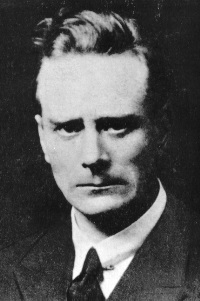
Sinn Féin, a left-wingIrish republican political party active in both the Republic of Ireland and Northern Ireland, is founded on November 28, 1905, when, at the first annual Convention of the National Council, Arthur Griffith outlines the Sinn Féin policy, “to establish in Ireland’s capital a national legislature endowed with the moral authority of the Irish nation.”
The phrase “Sinn Féin” is Irish for “ourselves” or “we ourselves,” although it is frequently mistranslated as “ourselves alone.” The meaning of the name itself is an assertion of Irish national sovereignty and self-determination, i.e., the Irish people governing themselves, rather than being part of a political union with Great Britain under the Westminster Parliament.
Around the time of 1969–1970, owing to the split in the republican movement, there are two groups calling themselves Sinn Féin, one under Tomás Mac Giolla, the other under Ruairí Ó Brádaigh. The latter becomes known as Sinn Féin (Kevin Street) or Provisional Sinn Féin, and the former becomes known as Sinn Féin (Gardiner Place) or Official Sinn Féin. The “Officials” drop all mention of Sinn Féin from their name in 1982, instead calling itself the Workers’ Party of Ireland. The Provisionals are now generally known as Sinn Féin. Supporters of Republican Sinn Féin, which comes from a 1986 split, still use the term “Provisional Sinn Féin” to refer to the party led by Gerry Adams.
Sinn Féin is a major party in both Northern Ireland and the Republic of Ireland. It is the largest nationalist party in the Northern Ireland Assembly, and the second-largest overall. It has four ministerial posts in the most recent power sharingNorthern Ireland Executive. It holds seven of Northern Ireland’s eighteen seats, the second largest bloc after the Democratic Unionist Party (DUP), at Westminster, where it follows a policy of abstentionism, refusing to attend parliament or vote on bills. It is the third-largest party in the Oireachtas, the parliament of the Republic of Ireland. As Ireland’s dominant parties of Fine Gael and Fianna Fáil are both centre-right, Sinn Féin is the largest left-wing party in Ireland.
Sinn Féin members have also been referred to as Shinners, a term intended as a pejorative.
After finishing his education, Childers works for a period in a tourism board in Paris. In 1931, Éamon de Valera invites him to work for his recently founded newspaper, The Irish Press, where Childers becomes advertising manager. He becomes a naturalised Irish citizen in 1938. That same year, he is first elected as a Fianna Fáil Teachta Dála (TD) for Athlone–Longford. He remains in the Dáil Éireann until 1973, when he resigns to become President.
Childers joins the cabinet in 1951 as Minister for Posts and Telegraphs in the de Valera government. He then serves as Minister for Lands in de Valera’s 1957–59 cabinet, as Minister for Transport and Power under Seán Lemass, and, successively, as Transport Minister, Posts and Telegraphs Minister, and Health Minister under Jack Lynch. He becomes Tánaiste in 1969.
Fine Gael TD Tom O’Higgins, who had almost won the 1966 presidential election, is widely expected to win the 1973 election when he is again the Fine Gael nominee. Childers is nominated by Fianna Fáil at the behest of de Valera, who pressures Jack Lynch in the selection of the presidential candidate. He is a controversial nominee, owing not only to his British birth and upbringing but to his Protestantism. However, on the campaign trail his personal popularity proves enormous, and in a political upset, Childers is elected the fourth President of Ireland on May 30, 1973, defeating O’Higgins by 635,867 votes to 578,771.
Childers quickly gains a reputation as a vibrant, extremely hard-working president, and becomes highly popular and respected. However, he has a strained relationship with the incumbent government, led by TaoiseachLiam Cosgrave of Fine Gael. Childers had campaigned on a platform of making the presidency more open and hands-on, which Cosgrave views as a threat to his own agenda as head of government. Childers considers resigning from the presidency but is convinced to remain by Cosgrave’s Minister for Foreign Affairs and Trade, Garret FitzGerald.
In the House of Commons of the United Kingdom on November 5, Churchill bemoans the fact that the Irish ports had been returned to the Free State government in 1938:
“The fact that we cannot use the South and West Coasts of Ireland to refuel our flotillas and aircraft and thus protect the trade by which Ireland as well as Great Britain lives, is a most heavy and grievous burden and one which should never have been placed on our shoulders, broad though they be.”
De Valera responds to Churchill’s statement two days later, on November 7:
“I would have refrained from making any comment upon it were it not that it has been followed by an extensive Press campaign by Britain itself, and re-echoed in the United States of America, the purport of the campaign being that we should surrender or lease our ports to Britain for the conduct of the war…
We have chosen the policy of neutrality in this war because we believed that it was the right policy for our people. It is the policy which has been accepted, not merely by this House, but by our people as a whole, and nobody who realises what modern war means, and what it means particularly for those who have not sufficient air defences, will have the slightest doubt that that policy was the right one, apart altogether from any questions of sympathy on one side or the other…
There can be no question of the handing over of these ports so long as this State remains neutral. There can be no question of leasing these ports. They are ours. They are within our sovereignty, and there can be no question, as long as we remain neutral, of handing them over on any condition whatsoever. Any attempt to bring pressure to bear on us by any side—by any of the belligerents—by Britain—could only lead to bloodshed.”





 In a statement before
