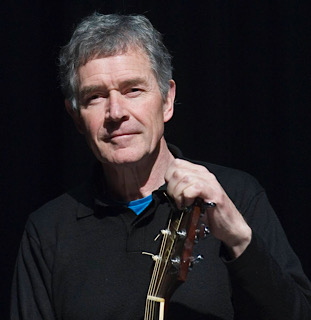
Duhan is one of nine children, one of whom dies before Johnny is born. His parents, John and Christina (née Murphy), raise their family on Wolfe Tone Street, Limerick. He attends the Christian Brothersnational school on Sexton Street but hates it.
Duhan is writing songs from an early age. He leaves school and starts his career as the 15-year-old frontman of the Irish beat group Granny’s Intentions. After success in Limerick and Dublin, where he shares a flat with Phil Lynott and Gary Moore, the band moves to London and is signed to the Deram Records record label. His girlfriend, Maureen, leaves her job as a teacher to travel to London with him. The band releases several singles and one album, Honest Injun, with Duhan composing eight of the band’s eleven songs. Granny’s Intentions melds a bluesy rock sound with a down-home earthiness. Moore joins the band at the age of 17, and Pete Cummins (later of The Fleadh Cowboys) is also a member. The band has their sights set on a further move to Los Angeles, California, but the deal falls through. The band disbands before Duhan is twenty-one. While in London he is offered a job as lead singer with St. James Gate, but that deal falls through as well.
From there, the couple set about a different kind of life, with Duhan growing his own vegetables and embarking on a path as a solo singer-songwriter in earnest. He has a cry in his voice that is plaintive and highly distinctive. An advance from Arista Records allows him and Maureen to put a deposit on their first home in Sandyvale Lawn on Headford Road in Galway. Later they move to Barna, where he enjoys a quiet but very orderly, some might say even regimental life: rising daily before dawn, attending daily Mass, reading vociferously and enjoying his daily swims on his beloved Silver Strand. He climbs Diamond Mountain most Sundays and Carrauntoohil annually.
Just Another Town, To the Light, Flame, and The Voyage are some of Duhan’s work. These align with the first four sections of his poetic autobiography, To The Light. His songs have been performed by Christy Moore, The Dubliners, Mary Black, and other Irish and international singers. Christy Moore states that his song “The Voyage” has been performed at over a million weddings worldwide.
His daughters, Ailbhe and Niamh, describe Duhan as a kind, gentle and selfless soul. He is a true family man. Headstrong in his beliefs, he never follows trends. He spends his life seeking meaning, delving deeply into philosophical and theological works. Mornings are devoted to reading and studying his favourite writers, making meticulous notes on whether he agrees or disagrees with their thoughts, and more importantly why. He teaches all his children to play music, and Niamh is now a music teacher.
Duhan drowns on November 12, 2024, while swimming off Silver Strand in Galway. His funeral Mass takes place at St. Killian’s New Inn Church in County Galway. He is laid to rest at Killaan Cemetery, Woodlawn.
Stanford is born in Dublin into a well-off and highly musical family on September 30, 1852, the only son of John James Stanford, a prominent Dublin lawyer, Examiner to the Court of Chancery in Ireland and Clerk of the Crown for County Meath, and his second wife, Mary (née Henn). He is educated at the University of Cambridge before studying music in Leipzig and Berlin. He is instrumental in raising the status of the Cambridge University Musical Society, attracting international stars to perform with it.
While still an undergraduate, Stanford is appointed organist of Trinity College, Cambridge. In 1882, at the age of 29, he is one of the founding professors at the Royal College of Music, where he teaches composition for the rest of his life. From 1887 he is also Professor of Music at Cambridge. As a teacher, he is skeptical about modernism and bases his instruction chiefly on classical principles as exemplified in the music of Johannes Brahms. Among his pupils are rising composers whose fame go on to surpass his own, such as Gustav Holst and Ralph Vaughan Williams. As a conductor, he holds posts with the Bach Choir and the Leeds Triennial Music Festival.
Stanford composes a substantial number of concert works, including seven symphonies, but his best-remembered pieces are his choral works for church performance, chiefly composed in the Anglican tradition. He is a dedicated composer of opera, but none of his nine completed operas has endured in the general repertory. Some critics regard him, together with Hubert Parry and Alexander Mackenzie, as responsible for a renaissance in music from the British Isles. However, after his conspicuous success as a composer in the last two decades of the 19th century, his music is eclipsed in the 20th century by that of Edward Elgar as well as former pupils.
In September 1922, Stanford completes the sixth Irish Rhapsody, his final work. Two weeks later he celebrates his 70th birthday and thereafter his health declines. On March 17, 1924, he suffers a stroke and dies on March 29 at his home in London, survived by his wife and children. He is cremated at Golders Green Crematorium on April 2 and his ashes are buried in Westminster Abbey the following day.
Stanford’s last opera, The Travelling Companion, composed during World War I, is premiered by amateur performers at the David Lewis Theatre, Liverpool in 1925 with a reduced orchestra. The work is given complete at Bristol in 1928 and at Sadler’s Wells Theatre, London, in 1935.
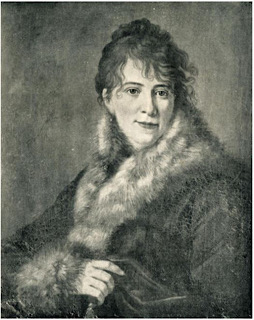
Katherine Wilmot, Irish traveler and diarist, dies in Paris, France, on March 28, 1824. She makes a Grand Tour from 1801 to 1803 and documents her experiences through letters, including encounters with notable figures like Napoleon Bonaparte. She later travels to Russia to join her sister Martha Wilmot and lives there from 1805 to 1807. She later moves to France and dies in Paris in 1824. Her writings, letters, and diaries provide insight into the Napoleonic era, on Russian society and on travel in the 19th century. Her works also include her sister’s transcript of the memoirs of Princess Yekaterina Vorontsova-Dashkova.
Wilmot is born around 1773 in Drogheda, County Louth, to Edward and Martha Wilmot (née Moore). She is the eldest daughter of six daughters and three sons. Her father is the port surveyor in Drogheda, having previously served as captain in the 40th Regiment of Foot. He is transferred to a similar post in County Cork in 1775, where Wilmot is raised. The family settles in Glanmire, near the seat of the Earl Mount Cashell in Moore Park. The earl’s family uses the surname Moore.
Wilmot is friendly with Lady Mountcashell, formerly Margaret King, an early and eager pupil of Mary Wollstonecraft. She is invited to accompany the party of Stephen Moore, 2nd Earl Mount Cashell, and his wife on a grand tour of the continent. Her letters from the time survive, in France from November 1801 to October 1802, and in Italy until July 1803. The Mount Cashells entertain lavishly, especially during the first nine months in Paris, and through them she meets Napoleon Bonaparte, and becomes friends with the Austrian painter Angelica Kauffman. She also meets the French diplomat and politician Charles Maurice de Talleyrand-Périgord, and the Irish republicanRobert Emmet fleetingly. She recounts her meeting in Rome with the English aristocrat Frederick Augustus Hervey, and her audience with Pope Pius VII. She returns to London from Italy in October 1803, via Germany and Denmark, after England and France resume hostilities.
Wilmot then goes to Russia to bring home her sister Martha, and ends up spending two years there. Martha is in the country as a favourite of Princess Dashkova, one of the key figures of the Russian Enlightenment and a close friend of Catherine the Great. Martha is living at the Princess’s estate in Troitskoe on the Oka River, about 100 km from Moscow. Wilmot arrives on August 4, 1805, having set out from Cork on June 5. Her writings from this time record the Russian aristocracy‘s opulence and attitudes to the servile classes (the serfs). The sisters come to know the customs of the Russian elite, as well as the festivals and religious rites of the country people. She leaves Moscow on July 4, 1807, a combination of passport problems, wars and storms at sea, resulting in delays and in her reaching Yarmouth on September 7, 1807, and returning to Ireland in October 1807.
Wilmot moves to France to live in a warmer, drier climate than Ireland. Her health declines when she moves to Paris, and she dies there on March 28, 1824. Her nephew by Martha, Wilmot Henry Bradford, lives to be “Father of the Army.”
Wilmot had taken Martha’s transcript of the memoirs of the Princess Dashkova when she left Russia. These are published by Martha in 1840, as she had burned the original manuscript before her departure from Russia in 1808.
Wilmot’s letters are published a century later, and have been described as a unique portrayal of the Napoleonic period. They describe the social scene, as well as the experience of traveling by coach and ship at that time. The family makes transcriptions of the letters. The collection belonging to Martha is donated to the library of the Royal Irish Academy by Elisabeth van Dedem Lecky, the historian and writer. Among these Russian letters are a number written by Eleanor Cavanagh, who describes the lives of servants. Wilmot’s diaries are published in 1920 by Thomas Sadleir, and later by H. Montgomery Hyde and Edith Vane-Tempest-Stewart, Marchioness of Londonderry.
TheGrand Tours of Katherine Wilmot, France 1801-1803, and Russia 1805-07(Weidenfeld & Nicolson, 1992)
An Irish Peer on the Continent, 1801-03 (1920)
The Russian Journals of Martha and Catherine Wilmot (1934)
More letters from Martha Wilmot; Vienna 1819-29 (1935)
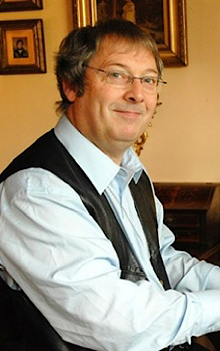
Holohan is chairman of the Association of Irish Composers from 1987 to 1989 and is later appointed chairman of the Droichead Arts Centre in Drogheda, County Louth, where he has lived since 1983.
Holohan is elected to Aosdána in 1999 and later serves as a member and chair of its Toscaireacht, its ten-member steering body.
Holohan’s music has been performed and broadcast in Ireland and internationally. Career highlights in Drogheda include performances of Cromwell (1994), The Mass of Fire (1995) and No Sanctuary (1997).
Holohan’s work has been reviewed in Irish music journalism. Writing in The Journal of Music following a National Concert Hall composers’ showcase, Benedict Schlepper-Connolly describes The Dream of Aengus as demonstrating Holohan’s “orchestrational control,” and characterises Portrait of the Artist as “captivating,” while noting the influence of Irish traditional music within his choral writing.
Regional press coverage has also documented performances and recordings of his work, including reports on the release of the piano album Fields of Blue and Whiteand concerts of his music in Drogheda.
Hamilton enters Trinity College Dublin on November 17, 1742, at the age of 13 with Thomas McDonnell as his tutor. He graduates Bachelor of Arts (BA) in 1747 and Trinity Master of Arts (MA Dubl) in 1750. He takes the competitive examination for a vacant fellowship of the college in 1750, but the position is secured instead by his friend Richard Murray, who is a few years older. Two fellowships become vacant the following year and Hamilton is elected to one of them at the age of 22. He is appointed Erasmus Smith’s Professor of Natural and Experimental Philosophy at Trinity College Dublin in 1759 and that same year graduates Bachelor of Divinity (BD). He is elected a Fellow of the Royal Society on February 19, 1761, and graduates Doctor of Divinity (DD) in 1762.
Trinity College presents him to the rectory of Kilmacrennan in the diocese of Raphoe, County Donegal, in 1764. This is a small benefice in the gift of the college, for which he resigns his fellowship. He retains the Erasmus Smith’s chair, however, being succeeded in that by Thomas Wilson in 1769. He resigns from Kilmacrenan in 1767 and becomes vicar of St. Ann’s Church in Dublin.
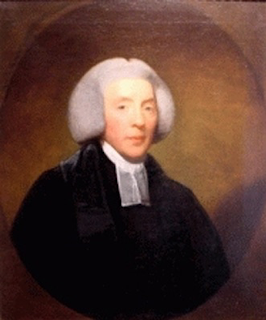
Hamilton then becomes Dean of Armagh, the chief resident cleric of St. Patrick’s Cathedral in Armagh, County Armagh, from April 1768 to 1796. Finding the existing dean’s house inconvenient and poorly situated, he has a new one built in a better location just off Portadown Road, now known as Dean’s Hill. The house, of three stories and a semi-basement, is built in 1772–74. The house is later sold by the church and the present owners provide bed and breakfast accommodation in it. While dean he also acts as treasurer for the infirmary or county hospital, he establishes Sunday schools in the districts of the parish, and he founds a charitable loan for poor tradesmen. He is also instrumental in planning a piped water supply for the town, which is later put into effect. He is one of the 38 original members of the Royal Irish Academy when it is founded in 1785. Gilbert Stuart paints his portrait in about 1790 (pictured above).
Hamilton is promoted to Bishop of Clonfert and Kilmacduagh on January 20, 1796, without seeking it. On January 24, 1799, he is translated to Ossory, where he is bishop until 1805. He dies of a fever at Kilkenny, County Kilkenny, on December 1, 1805. He is buried in the graveyard of St. Canice’s Cathedral at Kilkenny, and there is a memorial to him inside the cathedral.
Hamilton writes a mathematical treatise on conic sections called De Sectionibus Conicis: Tractatus Geometricus, published in 1758. In this book he “was the first to deduce the properties of the conic section from the properties of the cone, by demonstrations which were general, unencumbered by lemmas, and proceeding in a more natural and perspicuous order,” according to writer James Wills in 1847. The work is acclaimed for its lucidity and Leonhard Euler describes it as a perfect book. It is “soon adopted in all the British universities” and is translated from Latin into English as A Geometrical Treatise of the Conic Sections in 1773.
Hamilton also writes Philosophical Essays on Vapours (1767), Four Introductory Lectures on Natural Philosophy (1774), and An Essay on the Existence and Attributes of the Supreme Being (1784). His principal works are collected and republished, with a memoir, as The Works of the Right Rev. Hugh Hamilton by his eldest son, Alexander Hamilton, in two volumes in 1809.
Hamilton marries Isabella, daughter of Hans Widman Wood of Rosmead, County Westmeath, in 1772. Isabella’s mother Frances is the twin sister of Edward King, 1st Earl of Kingston. They have five sons and two daughters. They are Alexander, who was a barrister; Frances; Hans, who is rector of Knocktopher, County Kilkenny, and associated with the Carrickshock incident of 1831; Isabella; Henry; George, who is a biblical scholar; and Hugh, who marries Elizabeth Staples, a daughter of John Staples, a Member of Parliament. The younger Hugh is the great-grandfather of Clive Staples Lewis, better known as C. S. Lewis. Bishop Hugh Hamilton is a great-great-great-grandfather of the mathematicians John Lighton Synge and his brother Edward Hutchinson Synge. Dodgson Hamilton Madden, the High Court judge and noted scholar, is Hamilton’s great-grandson.
(Pictured: “Hugh Hamilton,” oil on canvas by Gilbert Stuart)
In 1992, Flanagan returns to duty with the RUC as Assistant Chief Constable of Operations, later taking on the responsibilities of Operational Commander for Belfast. He is appointed as head of Special Branch in 1994 and is promoted to Acting Deputy Chief Constable the following year. He becomes the Deputy Chief Constable proper in 1996, and when Chief Constable Hugh Annesley retires later that year, he succeeds him. When the PSNI is established in 2001, he serves as Chief Constable until his retirement the following year. He is replaced by Hugh Orde.
Since then Flanagan has served in Her Majesty’s Inspectorate of Constabulary and is appointed as HM Chief Inspector of Constabulary in 2005. He is tasked to review the police arrangements in Iraq in December 2005 as part of the British involvement there. Following his retirement in December 2008, Denis O’Connor succeeds him as Her Majesty’s Acting Chief Inspector of Constabulary.
Flanagan denies any wrongdoing or acting with any knowledge of the events in question. He agrees that these events had taken place. In the aftermath of the ombudsman’s report, Irish nationalist politicians say he should be forced to resign from his job as Chief Inspector of Constabulary.
The Police Ombudsman criticises Flanagan’s role in the RUC inquiry into the Omagh Bombing of August 15, 1998, in a report published in 2001, to which his response is that he would “publicly commit suicide” if he believed her report was correct, though he later apologises for the form of words he used.
In July 2010, Flanagan appears before the Iraq Inquiry into the UK’s role in the Iraq War. In 2005, he had conducted a review into the UK’s contribution to policing reform in Iraq. As he gives evidence, he has to apologise for the amount of acronyms in his report on Iraq, which is presented to the government in January 2006:
“In my view, and I would like to almost apologise for the number of acronyms in this report – but it wasn’t written with a view to being read publicly. It was written for the people who invented the acronyms…”
McAleese marries Mary Leneghan in 1976. The couple resides in Scholarstown, Dublin, for a short period, and then for almost twelve years near Ratoath, County Meath. In 1980, he returns to full-time education at Trinity College Dublin (TCD), to study as a dentist, subsequently moving back, with his family, to Northern Ireland, where he practises as a dentist in Crossmaglen and Bessbrook, County Armagh.
While his wife serves as President of Ireland, McAleese initiates a series of meetings with senior Ulster loyalistparamilitary leaders to pursue peace negotiations. These actions do not take place without controversy, but are widely viewed as instrumental in bringing loyalist paramilitary groups to peace talks.
In May 2011, McAleese is appointed as a Senator by the Taoiseach Enda Kenny. In August 2011, he is appointed the Chancellor of Dublin City University, taking over from David Byrne.
On February 1, 2013, McAleese announces his intention to resign as a member of Seanad Éireann.
McAleese accepts an appointment as Chairman of the Inter-Departmental Committee which is set up by the Government of Ireland to investigate the Magdalene laundries. His findings have been criticised by some survivors and researchers from the Magdalene Names project.
On October 18-19, 2014, McAleese attends the One Young World Summit in Dublin as a keynote speaker. Here, he hosts a special session for the One Young World Peace and Conflict Resolution Project alongside former Ulster Defence Association (UDA) prisoner Jackie McDonald and former Irish Republican Army (IRA) prisoner Sean Murray. They address young people from 191 countries to share and develop ideas to strengthen efforts at conflict resolution in their own countries.
McAleese and his wife Mary have three children. The family moves to Rostrevor, County Down, in 1987, when he sets up practice in County Armagh.
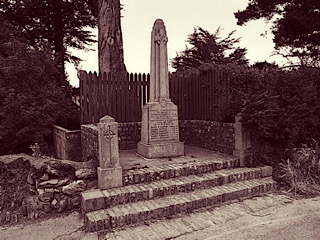
The Clogheen Ambush takes place in the early morning of March 23, 1921, as six members of “C” Company, First Battalion, 1st Cork Brigade of the Irish Republican Army (IRA) are shot by a party of Black and Tans and Royal Irish Constabulary (RIC) at a farm at Ballycannon, Clogheen, just outside Cork, County Cork, during the Irish War of Independence. The IRA believes that they have been betrayed by Patrick ‘Cruxy’ Connor. Connor has returned to Cork after the Coolavokig Ambush, which had taken place on February 25. Once in Cork he is soon arrested by the RIC for the possession of a revolver. The IRA believes that Connors broke down under interrogation and betrayed them.
Cornelius O’Keefe farms 105 acres at Ballycannon, on the road leading from Clogheen to Tower. His house is a known ”safe house” where volunteers can shelter when it is unsafe for them to sleep at home. On the farm there are secure hiding places for the guns and explosives with which they carry out their missions.
At 4:00 a.m on the morning of Wednesday, March 23, O’Keefe is awakened by the arrival of a large force of police. They break down the farm door with blows from their rifle butts. The family is ordered back to the bedrooms and the house is thoroughly searched. The British then search the farmyard, where six volunteers are discovered asleep in a barn.
A local schoolteacher whose house overlooks the two fields outside the barn is awakened by the sound of gunshots at about 4:30 a.m., while it is still quite dark. He watches the lights moving around the farmyard. He hears one voice scream out and another shout “run for it.” He can barely see a man breaking away and running across the field. A volley of shots ring out and the man falls. Another man with a light walks toward the body. After ten minutes there are more shots but this time he sees nobody fall. Later he sees another man fleeing and more shots ring out. As the light increases, he identifies the men with guns as police. Later he watches as the police bring down bodies in blankets and lay them outside the house in the boreen, which leads from the O’Keeffe farmyard to the public road. Around 6:00 a.m. the bodies are placed in lorries which then drive away.
Meanwhile Cornelius O’Keeffe, the farm owner, is brought across the field where he sees five bodies laid out in blankets. He watches as they are placed in the lorries. In his sworn deposition he states that a sixth man is then brought out blindfolded, still alive, and is also put in the lorry. O’Keefe is put in a third lorry, which follows the other two to Victoria Barracks. There the first two lorries speed off and he loses sight of them. He is imprisoned in a cell in the Barracks and is kept there until on April 17, when he is finally released without charge.
The six IRA men killed are:
Daniel Crowley, aged 23. occupation plasterer, of 171 Blarney Street, Cork
William Deasy, aged 20, of Mount Desert , Blarney Road, Cork
Thomas Dennehy, aged 21, of 104 Blarney Street, Cork
Daniel Murphy, aged 24. occupation pig buyer, of Orrery Hill, off Blarney Street , Cork
Jeremiah O’Mullane, aged 23, of 237 Blarney Street, Cork
Michael O’Sullivan, aged 20 of 281 Blarney Street ,Cork
(From: “Ballycannon, Clogheen – IRA ambushed by the British – 23 Mar 1921,” posted on http://www.theauxiliaries.com | Pictured: The Clogheen Ambush Memoral in County Cork)
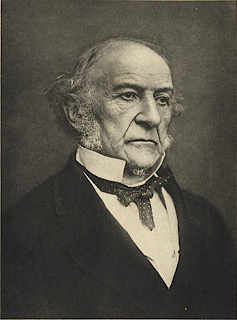
On March 21, 1881, the Peace Preservation (Ireland) Act of 1881, a significant piece of legislation, is enacted by the British Parliament, led by Prime MinisterWilliam Ewart Gladstone, during a period of political turbulence in Ireland.
This act is part of a series of legislative measures introduced by the British government to address the rise of agrarian agitation and unrest in Ireland, particularly in response to the activities of the Irish National Land League. The Act grants extensive powers to the authorities to combat perceived threats to public order and security. It allows for the arrest and detention of individuals suspected of being involved in agrarian crimes, as well as the suppression of public meetings and the imposition of curfews in troubled areas. It is part of the broader response by the British government to the Land War, a period of agrarian agitation and tenant-landlord conflicts in Ireland during the late 19th century. The legislative measures during this time are controversial and lead to increased tensions between the Irish population and the British authorities.
William Ewart Gladstone, a member of the Liberal Party, is the prime minister of the United Kingdom of Great Britain and Ireland on four separate occasions between 1868 and 1894. He is noted for his moralistic leadership and his emphasis on world peace, economical budgets, political reform and efforts to resolve the Irish question.
Gladstone sees himself as a national leader driven by a political and almost religious mission, which he tries to validate through elections and dramatic appeals to the public conscience. His approach sometimes divides the Liberal Party, which he dominates for three decades. Finally, he splits his party on the issue of Irish Home Rule, which he sees as mandated by the true public interest regardless of the political cost.
In 1881, Gladstone is convinced that to pass a Land Bill for Ireland, law and order should be restored. In February 1881, the government therefore passes the Peace Preservation (Ireland) Act 1881 which gives the Lord Lieutenant of Ireland powers to suspend habeas corpus, and gives him in effect the power to lock up anyone he likes for as long as he likes. This is the Act used to arrest Irish Nationalist leader Charles Stewart Parnell.
On August 22, 1881, Parliament passes the Land Law (Ireland) Act 1881 which gives Irish tenants “the three Fs”: fair rent, fixity (security) of tenure, and the right to freely sell their holdings.
Gladstone’s government also passes the Arrears of Rent (Ireland) Act 1882, which cancels rent arrears for Irish tenants occupying land worth less than £30 per annum who were unable to pay.
(From: “The Peace Preservation Act, Controlling Possession and Importation of Arms, Is Enacted,” Today In Celtic History, http://www.todayinceltichistory.com | Pictured: William Ewart Gladstone, Prime Minister of the United Kingdom)


 seamus dubhghaill