seamus dubhghaill

Promoting Irish Culture and History from Little Rock, Arkansas, USA


Leave a comment

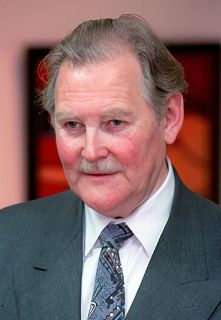
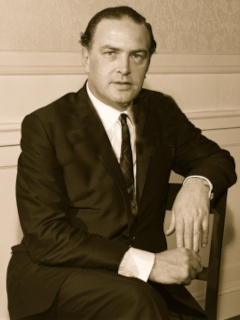
Birth of Donogh O’Malley, Fianna Fáil Politician & Rugby Union Player

Donogh Brendan O’Malley, Irish Fianna Fáil politician and rugby union player, is born on January 18, 1921, in Limerick, County Limerick. He serves as Minister for Education (1966-68), Minister for Health (1965-66) and Parliamentary Secretary to the Minister for Finance (1961-65). He also serves as a Teachta Dála (TD) for the Limerick East constituency (1954-68). He is best remembered as the Minister who introduces free secondary school education in the Republic of Ireland.

O’Malley is one of eight surviving children of Joseph O’Malley, civil engineer, and his wife, Mary “Cis” (née Tooher). Born into a wealthy middle-class family, he is educated by the Jesuits at Crescent College and later at Clongowes Wood College, County Kildare. He later studies at University College Galway (UCG), where he is conferred with a degree in civil engineering in 1943. He later returns to Limerick, where he works as an engineer before becoming involved in politics.

O’Malley plays rugby at provincial level for Munster, Leinster and Connacht and at club level for Bohemians and Shannon RFC. His chances at an international career are ruined by the suspension of international fixtures during World War II. It is at a rugby match in Tralee that he first meets Dr. Hilda Moriarty, who he goes on to marry in August 1947.

Although O’Malley runs as a Fianna Fáil candidate, he is born into a politically active family who supports Cumann na nGaedheal until a falling-out with the party in the early 1930s. He first becomes involved in local politics as a member of Limerick Corporation. He becomes Mayor of Limerick in 1961, the third O’Malley brother to hold the office (Desmond from 1941-43 and Michael from 1948-49). He is a strong electoral performer, topping the poll in every general election he runs in.

O’Malley is first elected to Dáil Éireann as a Fianna Fáil TD for Limerick East at the 1954 Irish general election. Fianna Fáil is not returned to government on that occasion. He spends the rest of the decade on the backbenches. However, his party is returned to power in 1957. Two years later, the modernising process begins when Seán Lemass takes over from Éamon de Valera as Taoiseach. Lemass introduces younger cabinet ministers, as the old guard who has served the party since its foundation in 1926 begin to retire.

In 1961, O’Malley joins the government as Parliamentary Secretary to the Minister for Finance. He is part of a new, brasher style of politician that emerges in the 1960s, sometimes nicknamed “the men in the mohair suits.” It is expected that this generation of politician, born after the Irish Civil War, will be a modernising force in post-de Valera Ireland.

Although his sporting background is in rugby and swimming, it is association football which O’Malley gets involved in at a leadership level, becoming President of the Football Association of Ireland despite never having played the sport.

Following Fianna Fáil’s retention of power in the 1965 Irish general election, O’Malley joins the cabinet as Minister for Health. He spends just over a year in this position before he is appointed Minister for Education, a position in which he displays renowned dynamism. Having succeeded Patrick Hillery, another dynamic young minister, he resolves to act swiftly to introduce the recommendations of an official report on education.

As Minister for Education, O’Malley extends the school transport scheme and commissions the building of new non-denominational comprehensive and community schools in areas where they are needed. He introduces Regional Technical Colleges (RTCs), now called Institutes of Technology, in areas where there is no third level college. The best example of this policy is the University of Limerick, originally an Institute of Higher Education, where O’Malley is credited with taking the steps to ensure that it becomes a university. His plan to merge Trinity College Dublin and University College Dublin arouses huge controversy, and is not successful, despite being supported by his cabinet colleague Brian Lenihan. Access to third-level education is also extended, the old scholarship system being replaced by a system of means-tested grants that give easier access to students without well-off parents.

Mid-twentieth century Ireland experiences significant emigration, especially to the neighbouring United Kingdom where, in addition to employment opportunities, there is a better state provision of education and healthcare. Social change in Ireland and policies intending to correct this deficit are often met with strong resistance, such as Noël Browne‘s proposed Mother and Child Scheme. As a former Health Minister, O’Malley has first-hand experience of running the department which had attempted to introduce this scheme and understood the processes that caused it to fail, such as resistance from Department of Finance and John Charles McQuaid. This influences his strategy in presenting the free-education proposal.

Shortly after O’Malley is appointed, he announces that from 1969 all education up to Intermediate Certificate level will be without cost, and free buses will bring students in rural areas to their nearest school, seemingly making this decision without consulting other ministers. However, he does discuss it with Lemass. Jack Lynch, who, as Minister for Finance, has to find the money to pay for the programme, is not consulted and is dismayed at the announcement.

By announcing the decision first to journalists and on a Saturday (during a month when the Dáil is in recess), the positive public reaction tempers resistance to the idea before the next cabinet meeting. O’Malley’s proposals are hugely popular with the public, and it is impossible for the government to go back on his word.

Some Irish commentators consider that O’Malley’s extension of education, changing Ireland from a land where the majority are schooled only to the age of 14 to a country with universal secondary-school education, indirectly leads to the Celtic Tiger boom of the 1990s-2000s when it is followed for some years by an extension of free education to primary degree level in university, a scheme that is launched in 1996 by the Labour Party and axed in 2009 by Fianna Fáil’s Batt O’Keeffe.

In 1967, O’Malley appoints Justice Eileen Kennedy to chair a committee to carry out a survey and report on the reformatory and industrial school systems. The report, which is published in 1970, is considered ground-breaking in many areas and comes to be known as the Kennedy Report. The Report makes recommendations about a number of matters, including the Magdalene laundries, in relation to which they are not acted upon. The report recommends the closure of a number of reformatories, including the latterly infamous reformatory at Daingean, County Offaly.

O’Malley’s reforms make him one of the most popular members of the government. He is affectionately known as “the School Man” for his work in education. His sudden death in Limerick on March 10, 1968, before his vision for the education system is completed, comes as a shock to the public. He is buried with a full Irish state funeral.

Following O’Malley’s death, his widow, Hilda O’Malley, does not run in the subsequent by-election for the seat he has left vacant. It is won narrowly by their nephew Desmond O’Malley. Hilda seeks the Fianna Fáil nomination for the 1969 Irish general election, but Fianna Fáil gives the party nomination to Desmond, as the sitting TD. Hilda runs as an Independent candidate in that election. After what proves a bitter campaign against her nephew, she fails to get the fourth seat in Limerick East by just 200 votes.
Leave a comment

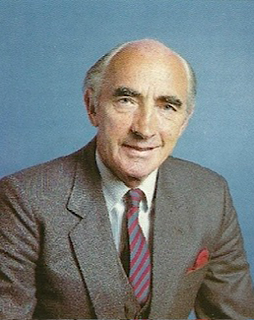
Death of Justin Keating, Politician, Broadcaster & Journalist

Justin Pascal Keating, Irish Labour Party politician, broadcaster, journalist, lecturer and veterinary surgeon, dies at Ballymore Eustace, County Kildare, on December 31, 2009. In later life he is president of the Humanist Association of Ireland.

Keating is twice elected to Dáil Éireann and serves in Liam Cosgrave‘s cabinet as Minister for Industry and Commerce from 1973 to 1977. He also gains election to Seanad Éireann and is a Member of the European Parliament (MEP). He is considered part of a “new wave” of politicians at the time of his entry to the Dáil.

Keating is born in Dublin on January 7, 1930, a son of the noted painter Seán Keating and campaigner May Keating. He is educated at Sandford Park School, and then at University College Dublin (UCD) and the University of London. He becomes a lecturer in anatomy at the UCD veterinary college from 1955 until 1960 and is senior lecturer at Trinity College Dublin from 1960 until 1965. He is RTÉ‘s head of agricultural programmes for two years before returning to Trinity College in 1967. While at RTÉ, he scripts and presents Telefís Feirme, a series for the agricultural community, for which he wins a Jacob’s Award in 1966.

In the 1950s and 1960s Keating is a member of the communist Irish Workers’ Party. He is first elected to the Dáil as a Labour Party Teachta Dála (TD) for the Dublin County North constituency at the 1969 Irish general election. From 1973 to 1977 he serves in the National Coalition government under Liam Cosgrave as Minister for Industry and Commerce. In 1973 he is appointed a Member of the European Parliament from the Oireachtas, serving on the short-lived first delegation.

During 1975 Keating introduces the first substantial legislation for the development of Ireland’s oil and gas. The legislation is modelled on international best practice and intended to ensure the Irish people would gain substantial benefit from their own oil and gas. Under his legislation the state could by right acquire a 50% stake in any viable oil and gas reserves discovered. Production royalties of between 8% and 16% with corporation tax of 50% would accrue to the state. The legislation specifies that energy companies would begin drilling within three years of the date of the issue of an exploration license.

Keating loses his Dáil seat at the 1977 Irish general election but is subsequently elected to Seanad Éireann on the Agricultural Panel, serving there until 1981. He briefly serves again in the European Parliament from February to June 1984 when he replaces Séamus Pattison.

In the aftermath of President of Iran Mahmoud Ahmadinejad‘s “World Without Zionism” speech in 2005, Keating publishes an op-ed in The Dubliner magazine, expressing his views on Israel. The article starts by claiming that “the Zionists have absolutely no right in what they call Israel.” He then proceeds to explain why he thinks Israel has no right to exist, claiming that the Ashkenazi Jews are descended from Khazars.

Keating dies at Ballymore Eustace, County Kildare, on December 31, 2009, at the age of 79, one week before his 80th birthday. Tributes come from the leaders of the Labour Party and Fine Gael at the time of his death, Eamon Gilmore and Enda Kenny, as well as former Fine Gael leader and Taoiseach John Bruton.


Leave a comment

Birth of David Thornley, Irish Labour Party Politician

David Andrew Thornley, Irish Labour Party politician and university professor at Trinity College Dublin, is born in Surrey, England, on July 31, 1935.

Thornley is the youngest child of Welshman Frederick Edward Thornley and Dublin-born Maud Helen Thornley (née Browne). His parents, both civil servants, meet while working in Inland Revenue in Dublin in the 1910s.

Thornley receives a BA and PhD at Trinity College Dublin. His PhD is entitled “Isaac Butt and the creation of an Irish Parliamentary Party (1868–1879)” and is written under the supervision of Theodore William Moody. Working as a presenter on 7 Days since 1963, he is appointed Associate professor of Trinity in 1968. In 1964, he publishes the book Isaac Butt and Home Rule.

After joining Labour in 1969, Thornley is elected to Dáil Éireann as a Labour Party Teachta Dála (TD) for the Dublin North-West constituency at the 1969 Irish general election. He confronts the party leader Brendan Corish, who at the time of the Arms Crisis reportedly rejects out of hand any suggestion of military aid or use of force after the outbreak of violence in Northern Ireland.

Thornley considers himself to be “in the mould of James Connolly,” being a practising Catholic, Marxist and republican.

In December 1972, Thornley calls for the immediate release of Seán Mac Stíofáin, then leader of the Provisional Irish Republican Army. He is re-elected at the 1973 Irish general election. In April 1976, he loses the Labour Party whip after appearing on a Sinn Féin platform during Easter Rising commemorations. In September 1976, he votes for the Criminal Justice (Jurisdiction) Bill despite misgivings. He tells The Irish Times, “When I get very depressed, I drink too much. When I voted for the Criminal Justice (Jurisdiction Bill) I went on the batter for a forthnight [sic].” In February 1977, he is re-admitted to the Labour Parliamentary Party. He loses his seat at the 1977 Irish general election.

In 1978, Thornley joins the newly formed Socialist Labour Party (SLP) stating that he has done so because “There is no man in politics that I respect more than Noël Browne, despite our occasional differences. If the SLP is good for him, it’s good enough for me.”

Overweight, afflicted with undiagnosed diabetes, his judgement increasingly erratic, from the early 1970s Thornley suffers a steady deterioration of health, compounded by his heavy drinking, on which he relies to cope with stress and emotional depression. On one occasion he collapses in the Dáil and is attended by party colleague Dr. John O’Connell. He dies at the age of 42 on June 18, 1978, one week after admission into Jervis Street private nursing home. After a sung Latin Requiem Mass in St. Andrew’s Church, Westland Row, Dublin, he is buried in Bohernabreena Cemetery, County Dublin.

The Trinity College Labour Branch is formerly named the David Thornley Branch in his honour.


Leave a comment

Birth of Proinsias Mac Aonghusa, Journalist, Writer & Presenter

Proinsias Mac Aonghusa (English: Francis McGuinness), Irish journalist, writer, television presenter and campaigner, is born into an Irish-speaking household on June 23, 1933, in Salthill, Galway, County Galway. He becomes one of the most noted Irish language broadcasters and journalists of the 20th century.

Mac Aonghusa is the son of Criostóir Mac Aonghusa, a writer and Irish language activist, and Mairéad Ní Lupain, a nurse and native Irish speaker. The eldest of four siblings, he grows up speaking Irish as his first language and allegedly does not learn English until the age of eleven. His parents are left-wing Irish republicans who support Fianna Fáil and associate with the like-minded Máirtín Ó Cadhain and Peadar O’Donnell. His parents split when he is ten years of age. His mother takes his siblings away to Dublin while he and his father remain in Rosmuc, a remote village and part of the Galway Gaeltacht. As a teenager he is educated at Coláiste Iognáid (also known as St. Ignatius College), a bilingual school in Galway.

Upon leaving school, Mac Aonghusa first works as an actor at the Abbey Theatre in Dublin, performing in Irish language productions. In 1952, he becomes involved in Radio Éireann, first as an actor but later as a reader of short stories before advancing to becoming a newsreader, presenter and interviewer. As he advances his career, he works for RTÉ, UTV and BBC television from the 1960s. In 1962, he begins presenting An Fear agus An Sceal (The Man & his Story) on RTÉ television, an Irish language show which sees him interviewing a different guest of note about their life each episode. That same year he wins a Jacob’s Award for An Fear agus an Sceal, which he continues to host until 1964.

As well as attracting awards, An Fear agus an Sceal also brings controversy. Two interviews, one with Máirtín Ó Cadhain, one with Con Lehane, both criticise the measures practised by the Fianna Fáil government during World War II to suppress and imprison Irish republicans. In response, the Fianna Fáil government intervenes with RTÉ, and those episodes are not aired. This is not to be Mac Aonghusa’s only run-in with the Fianna Fáil government. After he recorded a programme in which he questioned the effectiveness of Ireland’s civil defence measures in the face of nuclear war, then Minister for Defence Kevin Boland has the episode suppressed. He once again runs afoul of the Fianna Fáil government when, after criticising the party in his anonymous weekly political gossip column in the Sunday Independent, then Minister for Agriculture Neil Blaney sees to it that the column is dropped. He is not deterred and returns anonymously as “Gulliver” in The Sunday Press and a gossip column on the back page of The Hibernia Magazine.

The latter half of Mac Aonghusa’s 1960s/70s broadcasting career is primarily associated with the Irish language current events show Féach, which he both presents and edits. He resigns from Féach in 1972 following a bitter dispute with the broadcaster and commentator Eoghan Harris.

Influenced by O’Donnell and Ó Cadhain in his youth, Mac Aonghusa also pursues left-wing republican politics as an adult. In 1958, he becomes, alongside David Thornley, Noël Browne, Owen Sheehy-Skeffington and Desmond Ryan, a member of the “1913 Club,” a group which seeks to ideologically reconcile Irish nationalism and socialism.

In 1959, Mac Aonghusa writes a series of six articles for The Irish Times in which he vehemently opposes the Fianna Fáil government’s proposal to abolish single transferable vote in Ireland in favour of first-past-the-post voting. He contends that first-past-the-post voting gives too much influence to party bosses, while proportional representation gives even small minorities representation, preventing them from feeling excluded by the state such as nationalists in Northern Ireland. In the referendum held on the matter on June 17, 1959, voters reject first past the vote by a margin of 2%. Fianna Fáil attempts to repeal proportional representation again in the late 60s, at which point Mac Aonghusa once again throws himself into the fight, leading a group called “Citizens for PR.” In the referendum of 1968, voters reject the first past the post system by over 20%. He later recalls that his defence of proportional representation his greatest achievement in politics.

In the 1960s, both Mac Aonghusa and his wife, Catherine, join the Sean Connolly branch of the Labour Party in Dublin. The branch had established a reputation as a haven for intellectuals who want a branch to themselves away from the many other Labour branches dominated by trade unionists. The branch comes to advocate for expressly socialist policies combined with on-the-ground grass-roots campaigning. Through the Sean Connolly Branch, both he and his wife begin to develop significant influence over the leader of the Labour party Brendan Corish.

In the 1965 Irish general election, Mac Aonghusa stands on behalf of the Labour party in the Louth constituency but is not elected. In 1966, he publishes a book of speeches by Corish, the speeches themselves mostly having been ghostwritten by his wife Catherine. The introduction of the book proclaims that Corish had developed a “brand of democratic republican socialism … broadened by experience and built firmly on Irish‐Ireland roots” and had rid the party of “do‐nothing backwoodsmen”, thereby becoming the “first plausible and respected Labour leader in Ireland”. It is at this same time that he is elevated to vice-chairman of the party. As vice-chair, he tries to convince Corish to stand in the 1966 Irish presidential election. When he fails to do so, he supports Fine Gael‘s Tom O’Higgins in his bid for the presidency. O’Higgins comes within 0.5% of beating the incumbent, an ageing Éamon de Valera.

It was around this same time that Mac Aonghusa becomes active in the Wolfe Tone Societies, a republican organisation linked almost directly to Sinn Féin. He suggests that republicans with “progressive views” should join the Labour party. In 1966, alongside Máirtín Ó Cadhain and other Gaeilgeoirí, he counter-protests and disrupts the Language Freedom Movement, an organisation seeking the abolition of compulsory Irish in the education system. For this, he and his allies are criticised as acting illiberally, while he maintains that those who oppose the Irish language are “slaves” unworthy of tolerance.

Mac Aonghusa’s open disdain for the conservative and trade union wings of the Labour, as well as his open embrace of republican sensibilities and tendency to make pronouncements on Labour policy without first consulting the party’s structures, bring him many internal enemies. An attempt is made to censure him for backing breakaway trade unions, but he is able to survive this. In 1966, he encourages the formation of the Young Labour League, an unofficial youth wing of the party led by Brian Og O’Higgins, son of former Sinn Féin president Brian O’Higgins. Mirroring his own position, the Youth League are Corish loyalists that openly rebel against the views of Labour’s conservative deputy leader James Tully. When the youth league begins publishing their own weekly newsletter, Labour’s administrative council condemns it after discovering material which is “violently” critical of Tully and other Labour conservatives. An ensuing investigation into the newsletter leads to Mac Aonghusa admitting that he had financed it and written some of the content, but not the anti-Tully material. After he refuses to co-operate with further investigations into the matter, he is expelled on January 12, 1967 for “activities injurious” to the party. In the aftermath, he portrays himself a left-wing martyr purged by a right-wing “Star chamber,” a tactic that garners him sympathy. Nevertheless, his expulsion is confirmed at the October 1967 party conference, despite one last appeal. His wife leaves the party alongside him.

In the aftermath of his expulsion from Labour, Mac Aonghusa expresses an interest in the social democratic wing of Fine Gael, which had been developing under Declan Costello since the mid-1960s. However, he does not join the party and instead runs as an independent candidate in the 1969 Irish general election in Dún Laoghaire–Rathdown. When he is not elected, he begins to refocus on the revival of the Irish language and with nationalist politics rather than being elected himself.

Upon the onset of the Troubles, Mac Aonghusa is initially supportive of Official Sinn Féin, however by 1972 he comes to resent them and, through the Ned Stapleton Cumann, their secret influence over RTÉ. During the Arms Crisis in 1970, he supports Charles Haughey and Neil Blaney, who stand accused of arranging to supply weapons to the Provisional IRA, in the pages of the New Statesman and other left‐wing journals. In this time period, he warns editors not to reprint his material in the Republic of Ireland as there is a de facto ban on him, and indeed, official attempts are made to block the transmission of his telexed reports.

Despite his earlier famed stark criticism of Fianna Fáil, Mac Aonghusa’s defence of Haughey leads to a friendship between the two men which results in him becoming one of Haughey’s loudest defenders throughout the rest of his career. His columns in The Sunday Press and Irish language paper Anois are accused of descending into self-parody in their stringent defences of Haughey.

During the 1970s, Mac Aonghusa writes a number of books covering significant figures in Irish republicanism. In order, he releases books on James Connolly, Patrick Pearse, Wolfe Tone and Éamon de Valera. In his work on De Valera, he emphasises what he perceives as the more radical aspects of the Fianna Fáil founder. During 1974 and 1975, he works as a United Nations Special Representative to the Southern Africa region with Seán MacBride, where they involve themselves in the South African Border War, and during which time Mac Aonghusa becomes involved in setting up a radio station in Namibia, linked to the South West Africa People’s Organisation (SWAPO) nationalist party.

In the 1980s, Haughey twice appoints Mac Aonghusa to the Arts Council as well as naming him president of Bord na Gaeilge (1989-93). This is an issue as Mac Aonghusa is already president of Conradh na Gaeilge. Being head of the main Irish language lobbying body as well as the state body responsible for the Irish language has an obvious conflict of interest. In 1991, following the announcement by Haughey that the government is to fund the creation of an Irish-language television station (launched in 1996 as Teilifís na Gaeilge), an elated Mac Aonghusa suggests that Haughey would be “remembered among the families of the Gael as long as the Gaelic nation shall survive.”

In 1992 there are calls for Mac Aonghusa to step down from Bord na Gaeilge after he pronounces that “every respectable nationalist” in West Belfast should vote for Sinn Féin’s Gerry Adams over the Social Democratic and Labour Party (SDLP) candidate Joe Hendron in the 1992 United Kingdom general election as he considers a defeat for Adams “a victory for British imperialism.” Nevertheless, he simultaneously advises voters in South Down to vote for the SDLP’s Eddie McGrady over Sinn Féin. He rails against his detractors at the Conradh na Gaeilge ardfheis that year, declaring that “The mind of the slave, of the slíomadóir, of the hireling and the vagabond is still fairly dominant in Ireland.”

As of 1995, Mac Aonghusa continues to label himself a socialist. In the foreword to the book, he writes about James Connolly that is released that year, he declares that “the abolition of capitalism is essential if the great mass of the people in all parts of the globe are to be emancipated.”

However, with the recent collapse of the Soviet Union in mind, Mac Aonghusa declares that the Stalinist regimes of Eastern Europe have not been socialist and argues that the social democracies of Scandinavia are what James Connolly had envisioned as the desired socialist society. In the same text, he accuses the Irish education system as well as Ireland’s media of obfuscating Connolly’s views on socialism and nationalism.

Mac Aonghusa battles through ill health in his final years but remains able to continue writing a number of books. His last publication, Súil Tharam (2001), comes just two years before his death in Dublin on September 28, 2003.

In 1955, Mac Aonghusa marries Catherine Ellis, a member of the Church of Ireland from Belfast. For her married name, she chooses to use “McGuinness,” the English language equivalent of Mac Aonghusa. Catherine McGuinness goes on to become a Senator and a Judge of the Circuit Court, High Court and Supreme Court over the course of her legal career. Together they have three children together.


Leave a comment

Birth of John Bruton, Fine Gael Politician & 10th Taoiseach of Ireland

John Gerard Bruton, Irish Fine Gael politician who serves as Taoiseach from 1994 to 1997 and Leader of Fine Gael from 1990 to 2001, is born to a wealthy, Catholic farming family in Dunboyne, County Meath, on May 18, 1947. He plays a crucial role in advancing the process that leads to the Good Friday Agreement in 1998.

Bruton is educated at Clongowes Wood College and then goes on to study economics at University College Dublin (UCD), where he receives an honours Bachelor of Arts degree and qualifies as a barrister from King’s Inns, but never goes on to practice law. He joins the Fine Gael party in 1965 and is narrowly elected to Dáil Éireann in the 1969 Irish general election, as a Fine Gael TD for Meath. At the age of 22, he is one of the youngest ever members of the Dáil at the time. He serves as a parliamentary secretary in the government of Liam Cosgrave (1973–77).

Following Fine Gael’s defeat at the 1977 Irish general election, the new leader, Garret FitzGerald, appoints Bruton to the front bench as Spokesperson on Agriculture. He is later promoted as Spokesperson for Finance. He plays a prominent role in Fine Gael’s campaign in the 1981 Irish general election, which results in another coalition with the Labour Party, with FitzGerald as Taoiseach. He receives a personal vote in Meath of nearly 23%, and at the age of only 34 is appointed Minister for Finance, the most senior position in the cabinet. In light of overwhelming economic realities, the government abandons its election promises to cut taxes. The government collapses unexpectedly on the night of January 27, 1982, when Bruton’s budget, that was to impose an unpopular value-added tax (VAT) on children’s shoes, is defeated in the Dáil.

The minority Fianna Fáil government which follows only lasts until November 1982, when Fine Gael once again returns to power in a coalition government with the Labour Party. However, when the new government is formed, Bruton is moved from Finance to become Minister for Industry and Energy. After a reconfiguration of government departments in 1983, he becomes Minister for Industry, Trade, Commerce and Tourism. In a cabinet reshuffle in February 1986, he is appointed again as Minister for Finance. Although he is Minister for Finance, he never presents his budget. The Labour Party withdraws from the government due to a disagreement over his budget proposals leading to the collapse of the government and another election.

Following the 1987 Irish general election, Fine Gael suffers a heavy defeat. Garret FitzGerald resigns as leader immediately, and a leadership contest ensues between Alan Dukes, Peter Barry and Bruton himself, with Dukes being the ultimate victor. Dukes’s term as leader is lackluster and unpopular. The party’s disastrous performance in the 1990 Irish presidential election, in which the party finishes in a humiliating and then unprecedented third in a national election, proves to be the final straw for the party and Dukes is forced to resign as leader shortly thereafter. Bruton, who is the deputy leader of Fine Gael at the time, is unopposed in the ensuing leadership election.

Bruton’s election is seen as offering Fine Gael a chance to rebuild under a far more politically experienced leader. However, his perceived right-wing persona and his rural background are used against him by critics and particularly by the media. However, to the surprise of critics and of conservatives, in his first policy initiative he calls for a referendum on a Constitutional amendment permitting the enactment of legislation allowing for divorce in Ireland.

By the 1992 Irish general election, the anti-Fianna Fáil mood in the country produces a major swing to the opposition, but that support goes to the Labour Party, not Bruton’s Fine Gael, which actually loses a further 10 seats. Even then, it initially appears that Fine Gael is in a position to form a government. However, negotiations stall in part from Labour’s refusal to be part of a coalition which would include the libertarian Progressive Democrats, as well as Bruton’s unwillingness to take Democratic Left into a prospective coalition. The Labour Party breaks off talks with Fine Gael and opts to enter a new coalition with Fianna Fáil.

In late 1994, the government of Fianna Fáil’s Albert Reynolds collapses. Bruton is able to persuade Labour to end its coalition with Fianna Fáil and enter a new coalition government with Fine Gael and Democratic Left. He faces charges of hypocrisy for agreeing to enter government with Democratic Left, as Fine Gael campaigned in the 1992 Irish general election on a promise not to enter government with the party. Nevertheless, on December 15, 1994, aged 47, he becomes the then youngest ever Taoiseach. This is the first time in the history of the state that a new government is installed without a general election being held.

Bruton’s politics are markedly different from most Irish leaders. Whereas most leaders had come from or identified with the independence movement Sinn Féin (in its 1917–22 phase), Bruton identifies more with the more moderate Irish Parliamentary Party (IPP) tradition that Sinn Féin had eclipsed at the 1918 Irish general election.

Continued developments in the Northern Ireland peace process and Bruton’s attitude to Anglo-Irish relations come to define his tenure as Taoiseach. In February 1995, he launches the Anglo-Irish “Framework Document” with the British prime minister John Major. It foreshadows the 1998 Good Friday Agreement, which, among other things, establishes an elected, power-sharing executive authority to be run by these onetime adversaries, ending 30 years of bloodletting that had claimed more than 3,000 lives. However, he takes a strongly critical position on the British Government‘s reluctance to engage with Sinn Féin during the Irish Republican Army‘s 1994–1997 ceasefire. He also establishes a working relationship with Gerry Adams of Sinn Féin; however, both are mutually distrustful of each other.

Bruton presides over a successful Irish Presidency of the European Union in 1996, and helps finalise the Stability and Growth Pact, which establishes macroeconomic parameters for countries participating in the single European currency, the euro. He is the fifth Irish leader to address a joint session of the United States Congress on September 11, 1996. He presides over the first official visit by a member of the British royal family since 1912, by Charles, Prince of Wales.

The coalition remains in force to contest the 1997 Irish general elections, which are indecisive, and Bruton serves as acting taoiseach until the Dáil convenes in late June and elects a Fianna Fáil–Progressive Democrats government. He retires from Irish politics in 2004 and serves as the European Union Ambassador to the United States (2004–09).

Bruton dies at the age of 76 on February 6, 2024, at the Mater Private Hospital in Dublin, following a long bout with cancer. A state funeral is held on February 10 at St. Peter’s and St. Paul’s Church in Dunboyne.


Leave a comment

Birth of Desmond “Des” O’Malley, Irish Politician

Desmond Joseph “Des” O’Malley, Fianna Fáil and Progressive Democrats politician, is born on February 2, 1939, in Limerick, County Limerick.

O’Malley is born into a storied Limerick political family. His maternal grandfather, Denis O’Donovan, is killed during the Irish War of Independence by the Black and Tans, two of his uncles and his father hold the office of Mayor of Limerick, and his uncle Donogh O’Malley is a Minister for Education. He is educated at the Jesuit Crescent College and at University College Dublin (UCD), from which he graduates with a degree in law in 1962.

In 1968, O’Malley enters politics upon the sudden death of his uncle Donogh who, at that the time, is the sitting Minister for Education. He is chosen after Donogh’s widow, Hilda, still in shock at the sudden death of her husband, turns down the opportunity to contest the by-election necessitated by his death.

O’Malley is subsequently elected as a Fianna Fáil TD for the Limerick East constituency in the by-election. Perhaps the first sign of the defiance that would define his career materialises during the 1969 Irish general election when Hilda asks her nephew to step aside and allow her to contest in the Limerick East constituency as the main Fianna Fáil candidate. He refuses and places third in the four-seat constituency, with his aunt, running as an independent, coming in fifth.

Following the general election, O’Malley is appointed Parliamentary Secretary to both Minister for Defence Jim Gibbons and Taoiseach Jack Lynch and serves as Government Chief Whip. In his role as a confidante of Lynch, the political lines within Fianna Fáil that put him on a collision course of over twenty years with Charles Haughey, are drawn. He plays a central role in the Arms Crisis prosecutions of Haughey and Neil Blaney in 1970. After their acquittals, the stage is set within Fianna Fáil for a long-term power struggle that eventually results in O’Malley’s expulsion from the party in 1984.

In the meantime, O’Malley’s next position within Lynch’s government comes when he is made Minister for Justice after Mícheál Ó Móráin is forced to resign due to ill-health. One of the most significant aspects of his legacy transpires during his tenure as Minister for Justice from 1970 to 1973. In response to the ongoing conflict in Northern Ireland, he tries and fails to introduce internment without trial for republicans within the State. He is, however, successful in reintroducing the Offences Against the State Act, which enables convictions for Irish Republican Amy (IRA) membership on the word of a Garda Superintendent, and the Special Criminal Court, a non-jury court presided over by three judges which tries cases of terrorism and serious organised crime.

When Lynch resigns the Fianna Fáil leadership following electoral defeat in 1979, O’Malley and Martin O’Donoghue manage the leadership campaign of George Colley, who subsequently loses to Haughey. Following Haughey’s ascent to leadership, O’Malley retains the industry and commerce ministerial portfolio he had been appointed to following the 1977 Irish general election.

In 1982, after Fianna Fáil loses its majority but stays in government by virtue of a confidence and supply agreement with Sinn Féin – The Workers Party and two independents, O’Malley is appointed Minister for Trade, Commerce and Tourism, but with the death of Colley and the loss of O’Donoghue’s seat, he becomes increasingly isolated within Fianna Fáil.

After the party whip is removed from him in 1984, amidst inter-party wrangling over the New Ireland Forum, O’Malley is expelled from the party the following year, the final straw being his famous “I stand by the Republic” speech in which he announces his intention to abstain on a vote regarding the liberalisation of the sales of contraceptives, which Fianna Fáil opposes.

O’Malley goes on to establish the Progressive Democrats, joined by Mary Harney (who had also been expelled by Fianna Fáil), and later by Fianna Fáil TDs Bobby Molloy and Pearse Wyse, as well as Fine Gael TD Michael Keating. In the 1987 Irish general election, the Progressive Democrats win fourteen seats, making them the third biggest party in the Dáil. Among those elected are O’Malley, his cousin Patrick O’Malley, Anne Colley, daughter of George Colley, Martin Gibbons, son of Jim Gibbons, Michael McDowell and Martin Cullen.

O’Malley’s animus for Haughey does not stop him from entering coalition with Fianna Fáil after the 1989 Irish general election, with him once again appointed Minister for Industry and Commerce. While in government, he finally witnesses the downfall of Haughey in 1992, when he is forced to resign over the emergence of new evidence concerning his tapping of journalists’ phones in the 1980s. The coalition with Fianna Fáil does not last long under new Taoiseach Albert Reynolds, with the Government collapsing after Reynolds accuses O’Malley of dishonesty during the Beef Tribunal.

O’Malley retires as leader of the Progressive Democrats in 1993, and the party moves into opposition, only to re-enter government with Fianna Fáil in 1997, where it remains upon O’Malley’s retirement from politics in 2002.

While the Progressive Democrats no longer exist, they are generally credited with the breaking up of the Fianna Fáil versus Fine Gael dichotomy of Irish politics that had dominated since the founding of the Free State. Since 1922, Irish governments have tended to be either single-party Fianna Fáil cabinets, be they minority or majority, or Fine Gael-led coalitions, typically involving the Labour Party. A Fine Gael-Labour coalition is in power at the time of the founding of the Progressive Democrats, and a single-party government or clear majority has not been won in Ireland since.

O’Malley dies in Dublin on July 21, 2021, at the age of 82, having been in poor health for some time. He is predeceased by his wife, Pat, and survived by their six children, four daughters including the former TD Fiona O’Malley, and two sons.

Perhaps O’Malley’s greatest legacy is the political reality of Ireland today: the low-tax, pro-business economic policies of the Progressive Democrats have been the dominant ideology in the State since the 1990s. Sinn Féin, the party most affected by his measures as Minister for Justice, no longer vote against the retention of the Offences Against the State Act and Special Criminal Court.

(From: “Desmond O’Malley: 1939-2021,” eolas Magazine, http://www.eolasmagazine.ie, August 2021)


1 Comment

Birth of Ciaran McKeown, Northern Irish Peace Activist

Ciaran McKeown, Northern Irish peace activist, is born into a Roman Catholic family in Derry, County Londonderry, Northern Ireland, on January 19, 1943.

McKeown is born to Sean and Mary (née Shevlin) McKeown. His father is a school principal. He serves as a Dominican novice for eight months in his youth. He attends Queen’s University Belfast (QUB), where he studies philosophy, becoming the first Catholic to be elected president of the university’s student council. He is also elected chair of the National Democrats, a ginger group linked with the National Democratic Party. He becomes president of the Union of Students in Ireland (USI) in 1969, based in Dublin, and stands in Dublin South-West at the 1969 Irish general election, taking last place, with only 154 votes.

In 1970, McKeown becomes a reporter for The Irish Times, then later works for The Irish Press, as their Belfast correspondent. Given his experience of reporting on the emergence of The Troubles, he supports the 1976 creation of “Women for Peace,” a Northern Ireland-based movement, by Betty Williams and Mairead Corrigan. When his involvement becomes more widely known, the movement changes its name to “Community of Peace People,” or simply “Peace People.” After the events of 1976-77, he finds it difficult to return to full-time journalism.

Although McKeown becomes known as a thoughtful and calm presence in the leadership of the organisation, his criticisms of the reluctance of church authorities to speak out on sectarian issues causes some tensions. Corrigan and Williams win the 1976 Nobel Peace Prize, but he is not made a party to it. However, the Ford Foundation makes a grant to the group, which includes a salary for him, enabling him to become full-time editor of Peace by Peace, the group’s newspaper, also completing a year as editor of Fortnight in 1977.

McKeown, Corrigan and Williams all step down from the leadership posts in 1978, although he continues to edit Peace by Peace. His articles bring him into conflict with the group’s new leadership, while financial disagreements massively reduce the group’s membership. Ultimately, his belief that the group should call for special status for paramilitary prisoners leads to a split, with Williams and her leading supporter, Peter McLachlan, resigning in February 1980. He can no longer survive on the group’s salary, nor can he find work as a journalist, so he retrains as a typesetter.

In 1984, McKeown publishes his autobiography, The Passion of Peace. This is almost immediately withdrawn following a claim that it libels a journalist, although it is later reissued with an additional note.

In addition to his activism and his work in journalism, McKeown is deeply involved in the Belfast theater scene. He serves in a number of offices, including executive secretary and chairman, at the city’s renowned Lyric Theatre.

McKeown dies peacefully at his home in Belfast on September 1, 2019, following a battle with cancer.


1 Comment

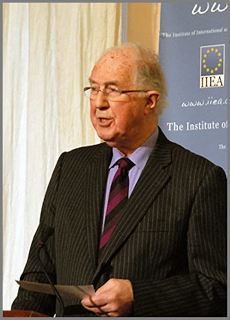
Birth of Brendan Halligan, Economist & Politician

Brendan Halligan, economist and politician, is born in Dublin on July 5, 1936. He is founder and president of the Institute of International and European Affairs (IIEA), a think tank on European and international issues. He is president of the Ireland China Institute, an independent think tank based in Dublin which is officially launched in October 2019. His career spans Irish public sector bodies and work in the private sector. At various times he is General Secretary of the Labour Party, a Teachta Dála (TD), a Senator, and a Member of the European Parliament (MEP).

Halligan grows up in Rialto, Dublin, and is educated at St. James’s Christian Brothers School, Dublin. He studies at Dublin Institute of Technology (DIT) and becomes a chemical analyst in the CIÉ depot in Inchicore. He and three friends decided to go to university and form a co-operative and work at various jobs in London to fund their studies. In 1959, he begins an economics and law degree at University College Dublin (UCD). There he is influenced by lecturers including George O’Brien, Patrick Lynch and Garret FitzGerald. He receives a master’s degree in economics from UCD in 1964.

Following an early career as an economist, working with the Irish Sugar Company until 1967, Halligan becomes involved in politics. In that year, he becomes General Secretary of the Labour Party.

The party leader, Brendan Corish, relies on Halligan’s intellectual and political skills in his new role. Under Halligan, the party undergoes an energetic reorganisation. New structures and policies are put in place, coinciding with the party’s leftward policy shift and an acute anti-coalition stance. He strongly supports both approaches, but is instrumental in securing the party’s eventual, somewhat unwilling, reversal of its anti-coalition stance after its disappointing result in the 1969 Irish general election. The 1973 Irish general election results in a Fine Gael-Labour Party coalition government coming to power.

Halligan is appointed to Seanad Éireann in 1973. Three years later, he wins a by-election in Dublin South-West, and thus becomes a TD. After boundary changes, he stands in the new Dublin Finglas at the 1977 Irish general election but is not elected. He stands again in the revived Dublin North-West constituency at the 1981 and November 1982 Irish general elections, but again is not elected.

Halligan continues to serve as General Secretary of the party until 1980, and is appointed a Member of the European Parliament (MEP) from 1983 until 1984, replacing Frank Cluskey, where he specialises in economic affairs and energy policy.

In 1980, Halligan sets up CIPA, his own public affairs consultancy based in Dublin, and becomes a lecturer in Economics at the University of Limerick. He is also chairman of European Movement Ireland during the late 1980s. In 1985, he is appointed as Chairman of Bord na Móna, the Irish Peat Development Authority, a position he holds for ten years. In 1989 he founds the Institute of European Affairs (IEA), which later becomes the IIEA. He is Director of CIPA until 2014.

Resulting from his keen interest and experience in energy policy and renewable energy, Halligan serves as Chair of the Sustainable Energy Authority of Ireland from 2007 until 2014. He is President of the IIEA, and he is also a Board Member of Mainstream Renewable Energy.

In later years Halligan also works on the foundation and development of the Ireland China Institute (ICI), which, with its maxim bridging the gap between knowledge and understanding, seeks to strengthen Irish-Chinese diplomatic relations, developing cultural links and fostering a deeper understanding of the respective cultural norms and values between the two nations. He is also President of ICI.

Halligan dies on August 9, 2020, after a long illness. On his death, Taoiseach Micheál Martin describes him as “a man who gave his life to politics and the public service with a deep commitment to the institutions of the state.” European Commissioner for Trade Phil Hogan states that “Brendan was a committed European to his fingertips. He was a pragmatic European intellectual, in the tradition of Spinelli, Monnet and Schuman.”


Leave a comment

Birth of Ben Briscoe, Fianna Fáil Politician

Ben Briscoe, former Fianna Fáil politician, is born on March 11, 1934, in Dublin. He is a Teachta Dála (TD) for 37 years, representing constituencies in the south Dublin city area.

Briscoe is first elected to Dáil Éireann as a Fianna Fáil TD for the Dublin South-West constituency at the 1965 Irish general election, succeeding his father, Robert Briscoe, who had been a TD for 38 years. He is elected at the 1969 Irish general election for Dublin South-Central, where he is re-elected in 1973. Following major boundary changes for the 1977 Irish general election, he is elected for the Dublin Rathmines West constituency. A subsequent boundary revision in advance of the 1981 Irish general election abolishes Dublin Rathmines West and divides the area between the neighbouring constituencies. Briscoe is re-elected for the re-established Dublin South-Central constituency, which he holds until he retires at the 2002 Irish general election.

At the 1992 Irish general election Briscoe is involved in a marathon recount battle with Democratic Left‘s Eric Byrne to decide the fate of the final seat in Dublin South-Central. He is declared the victor after ten days of re-counting and re-checking ballot papers, leading to him describing the long count as being like “the agony and the ex-TD.”

Briscoe is sometimes critical of the leader of Fianna Fáil in the 1980s, once describing Charles Haughey‘s leadership as a “Fascist Dictatorship.” He fronts a quietly discontented anti-Haughey faction within the Parliamentary Party, which includes Charlie McCreevy, during Haughey’s time as Taoiseach.

In 1988–1989 Briscoe is Lord Mayor of Dublin, a post previously held by his father. His term covers the second half of Dublin’s Millennium Year 1988. After the Dublin City Council makes him Lord Mayor, he describes his selection for the honour as “one of the proudest moments of my life.”

The Molly Malone statue, previously at the bottom end of Grafton Street and now outside the Dublin Tourist Information Office around the corner, is unveiled by Briscoe during the Dublin Millennium celebrations in 1988, and he declares June 13 as Molly Malone Day in Dublin.

Briscoe is one of Ireland’s most famous Jewish politicians. The small Irish Jewish community have been enthusiastic and active participants in the country’s political and legal world. His father is one of several Jews involved in the Irish War of Independence and Sinn Féin movements. In his time, each of the three main political parties have a Jewish member in Ireland’s 166-member Dáil.


Leave a comment

Birth of Noël Christopher Browne, Irish politician

Noël Christopher Browne, Irish politician who serves as Minister for Health from 1948 to 1951 and Leader of the National Progressive Democrats from 1958 to 1963, is born at Bath Street in Waterford, County Waterford, on December 20, 1915. He holds the distinction of being one of only seven TDs to be appointed to the cabinet on the start of their first term in the Dáil.

Browne grows up in the Bogside area of Derry. The Browne family also lives in Athlone and Ballinrobe for a period of time. His mother Mary Therese (née Cooney) is born in 1885 in Hollymount, County Mayo. His father Joseph Brown, a Royal Irish Constabulary (RIC) sergeant, later works as an inspector for the National Society for the Prevention of Cruelty to Children and, partly as a result of this work, all of the Browne family becomes infected with tuberculosis. Both parents die of the disease during the 1920s. His father is the first to die, leaving only £100 behind to support a wife and seven children. Fearing that if she and the children remain in Ireland they will be forced into a workhouse, Mary sells all their possessions and takes the family to London. Within two days of their arrival, Mary is dead, later buried in a pauper’s grave. Of her seven children, six contract tuberculosis. Noël is only one of two Browne children to survive into adulthood after those bouts with TB.

In 1929, Browne is admitted free of charge to St. Anthony’s, a preparatory school in Eastbourne, England. He then wins a scholarship to Beaumont College, the Jesuit public school near Old Windsor, Berkshire, where he befriends Neville Chance, a wealthy boy from Dublin. Neville’s father, the eminent surgeon Arthur Chance, subsequently pays Browne’s way through medical school at Trinity College Dublin.

In 1940, while still a student, Browne suffers a serious relapse of tuberculosis. His treatment at a sanatorium in Midhurst, Sussex is paid for by the Chance family. He recovers, passes his medical exams in 1942, and starts his career as a medical intern at Dr. Steevens’ Hospital in Dublin, where he works under Bethel Solomons. He subsequently works in numerous sanatoria throughout Ireland and England, witnessing the ravages of the disease. He soon concludes that politics is the only way in which he can make an attack on the scourge of tuberculosis.

The poverty and tragedy that had shaped Browne’s childhood deeply affects him. He considers both his survival and his level of education a complete fluke, a stroke of random chance that saved him when he was seemingly destined to die unknown and in poverty like the rest of his family. He finds this completely distasteful and is moved to enter politics as a means to ensure no one else would suffer the same fate that had befallen his family.

Browne joins the new Irish republican party Clann na Poblachta and is elected to Dáil Éireann for the Dublin South-East constituency at the 1948 Irish general election. To the surprise of many, party leader, Seán MacBride, chooses him to be one of the party’s two ministers in the new government. He becomes one of the few TDs appointed a Minister on their first day in Dáil Éireann, when he is appointed Minister for Health.

A ‘White Paper’ on proposed healthcare reforms had been prepared by the previous government, and results in the 1947 Health Act. In February 1948, Browne becomes Minister for Health and starts the reforms advocated by the Paper and introduced by the Act.

The health reforms coincide with the development of a new vaccine and of new drugs (e.g., BCG and penicillin) that help to treat a previously untreatable group of medical conditions. Browne introduces mass free screening for tuberculosis sufferers and launches a huge construction program to build new hospitals and sanitoria, financed by the income and accumulated investments from the Department of Health-controlled Hospital Sweeps funds. This, along with the introduction of Streptomycin, helps dramatically reduce the incidence of tuberculosis in Ireland.

As Minister for Health Browne comes into conflict with the bishops of the Catholic Church and the medical profession over the Mother and Child Scheme. This plan, also introduced by the 1947 Health Act, provides for free state-funded healthcare for all mothers and children aged under 16, with no means test, a move which is regarded as radical at the time in Ireland, but not in the rest of Europe. Virtually all doctors in private practice oppose the scheme, because it would undermine the “fee for service” model on which their income depended.

The Church hierarchy, which controls many hospitals, vigorously opposes the expansion of “socialised medicine” in the Irish republic. They claim that the Mother and Child Scheme interferes with parental rights, and fear that the provision of non-religious medical advice to mothers will lead to birth control contrary to Catholic teaching. They greatly dislike Browne, seeing him as a “Trinity Catholic,” one who has defied the Church’s ruling that the faithful should not attend Trinity College Dublin, which had been founded by Protestants and for many years did not allow Catholics to study there.

Under pressure from bishops, the coalition government backs away from the Mother and Child Scheme and forces Browne’s resignation as Minister for Health. Following his departure from government, he embarrasses his opponents by arranging for The Irish Times to publish Taoiseach John A. Costello‘s and MacBride’s correspondence with the Catholic hierarchy, which details their capitulation to the bishops.

The controversy over the Mother and Child Scheme leads to the fall of the coalition government in which Browne had served as a Minister. But Church opposition to socialised medicine continues under the subsequent Fianna Fáil-led government. The hierarchy does not accept a no-means-test mother-and-infant scheme even when Fianna Fáil reduces the age limit from sixteen years to six weeks, and the government again backs down.

After his resignation as Minister for Health, Browne leaves Clann na Poblachta, but is re-elected to the Dáil as an Independent TD from Dublin South-East in the subsequent election.

Browne joins Fianna Fáil in 1953 but loses his Dáil seat at the 1954 Irish general election. He fails to be selected as a candidate for the 1957 Irish general election and he resigns from the party. He is re-elected at that election for Dublin South-East as an Independent TD.

In 1958, Browne founds the National Progressive Democrats with Jack McQuillan. He holds onto his seat at the 1961 Irish general election, but in 1963, he and McQuillan join the Labour Party, disbanding the National Progressive Democrats. However, he loses his seat at the 1965 Irish general election.

Browne is re-elected as a Labour Party TD at the 1969 Irish general election, again for Dublin South-East. He does not seek a nomination by the Labour Party for the 1973 Irish general election but instead wins a seat in Seanad Éireann for Dublin University. He remains in the Seanad until the 1977 Irish general election, when he gains the Dublin Artane seat as an Independent Labour TD, having again failed to get the Party nomination.

In 1977 Browne is the first Irish parliamentarian to call for law reforms in regard to homosexuality, which is illegal at the time, and in 1979 is one of the few Irish politicians to attend the opening of the Hirschfeld Centre, Dublin’s first full-time LGBT community space.

Upon its formation, Browne joins the new Socialist Labour Party and is briefly its only TD, securing election for Dublin North-Central at the 1981 Irish general election. He retires from politics at the February 1982 Irish general election.

In 1990, a number of left-wing representatives within the Labour Party, led by Michael D. Higgins, approach Browne and suggest that he should be the party’s candidate in the presidential election due later that year. Though in failing health, Browne agrees. However, the offer horrifies party leader Dick Spring and his close associates for two reasons. Firstly, the leadership had secretly decided to run Mary Robinson, a barrister and former senator. Secondly, many around Spring are “appalled” at the idea of running Browne, believing he has “little or no respect for the party” and is “likely in any event to self-destruct as a candidate.” When Spring informs Browne by telephone that the party’s Administrative Council has chosen Robinson over him, Browne hangs up the telephone.

Browne spends the remaining seven years of his life constantly criticising Robinson who had gone on to win the election, thus becoming the seventh President of Ireland, and who is considered highly popular during her term. During the campaign he also indicates support for the rival Fine Gael candidate, Austin Currie.

After retiring from politics, Browne moves with his wife Phyllis to Baile na hAbhann, County Galway. He dies at the age of 81 in the Regional Hospital, Galway, on May 21, 1997. He is buried in a small graveyard near Baile na hAbhann.