Having begun his career as a freelance musician, playing with the BBC Philharmonic orchestra and English National Opera North, an accident ends Cusack’s career as a musician, resulting in him pursuing a career in arts administration. Initially he focuses on the classical music sector, working at two leading concert venues in London, the Wigmore Hall and the Southbank Centre.
In 1992, Cusack makes his first move into theatre following his appointment as Administrative Director of West Yorkshire Playhouse in Leeds, alongside Jude Kelly, where he produces a number of plays including the touring production of Five Guys Named Moe for Cameron Mackintosh Limited. In 1996, he is appointed Head of Planning of the Royal National Theatre under the outgoing artistic director, Sir Richard Eyre, and subsequently with Sir Trevor Nunn and Sir Nicholas Hytner. In 2009, he becomes the National Theatre’s Associate Producer. During this period, he produces numerous productions for tour both in the UK and internationally, taking the work of the National Theatre to five continents. Alongside this, he works as a touring consultant for the Abbey Theatre in Dublin, the Royal Court Theatre, London, Fiery Angel in London’s West End, Canadian Stage in Toronto, Bangarra Dance Theatre in Sydney, TheEmergencyRoom and Corn Exchange in Dublin and Galway International Arts Festival. In June 2016, he is appointed Executive Producer of Wales Millennium Centre in Cardiff. In addition to this, he is Consultant Producer to the National Centre for the Performing Arts (India) in Mumbai.
As well as his theatre producing work, Cusack offers representation to a number of Irish artists including the director Annie Ryan, the composer Mel Mercier and the British playwrightMatt Wilkinson.
In 2023, Cusack is the recipient of the Olwen Wymark Award from the Writers’ Guild of Great Britain for his championing of new writing which is presented at the 18th Annual Awards Ceremony in London.
Hales is born on a family farm owned by his father, Robert Hales, an activist in the Irish Land War and a reputed member of the Irish Republican Brotherhood (IRB) and his wife, Margaret (née Fitzgerald). He is the sixth of nine children (five sons and four daughters). He is educated at Ballinadee national school and Warner’s Lane school, Bandon. After leaving school he works at Harte’s timber yard, Bandon.
Hales joins and is involved with the Irish Volunteers movement from its inception in November 1913. Elected a delegate at the Volunteer national convention in the Abbey Theatre in 1915, he is among the majority who vote for the election of the national executive.
Hales is a part of a group of volunteers who are mobilised and plan to rise up in Cork during the 1916 Easter Rising. He sends a number of dispatches to Cork requesting further instructions. However, they receive last minute orders to stand down and there is no uprising in Cork to match that in Dublin. The Volunteers give up their arms and are later arrested.
By May 1916, Hales and his brothers, Seán, Bob, and William, are fighting with the IRA in west Cork during the Irish War of Independence. Terence MacSwiney is arrested in Hales’ home on May 3, 1916, and Hales himself escapes and goes on the run. He states that he was listed as “wanted” in the Hue and Cry police gazette.
In 1918, Hales takes part in a raid on a British gunboat and holds 25 armed Royal Irish Constabulary (RIC) members prisoner at Snugmore Castle. He takes part in a decoy in assisting his elder brother, Seán, to escape after his arrest in connection with the German Plot. He is elected Battalion Commandant of the 1st (Bandon) Battalion (1917–19), and Brigade Commandant of Cork 3rd Brigade, IRA, in January 1919.
In December 1919, Hales takes part in an ambush against the RIC at Kilbrittain and Bandon and is involved in the manufacture of gunpowder for IRA munitions. By this point he is the commander of the Third Cork Brigade of the IRA. In July 1920, he along with Harte is arrested by soldiers from the Essex Regiment.
The pair are taken to a nearby military barracks, where they are severely beaten while being interrogated by officers of the regiment. Hales has his fingernails pulled out, an event that later inspires a scene in the film The Wind That Shakes the Barley. However, neither Hales nor Harte give up any information and are eventually sent to a military hospital to recuperate. Hales is tried and is eventually sentenced to two years’ penal servitude, which he serves in Pentonville and Dartmoor prisons in England. He is commander of the Irish prisoners at Pentonville, but is released following a general amnesty after the Anglo-Irish Treaty in December 1921. According to Tom Barry, Harte suffers brain damage and goes insane before dying in Broadmoor Hospital.
A fifth Hales brother, Donal, settles in Genoa from 1913, and is appointed Irish Consular and Commercial Agent for Italy in February 1919. In this capacity he plays a leading propaganda role. Several letters from Michael Collins to Donal Hales still exist which are used by Hales to promote international awareness of the Irish conflict in Italian publications. Donal oversees a failed attempt to import a substantial number of Austrian weapons and ammunition captured from World War I, from Genoa in the spring of 1921, through the person of Gabriele D’Annunzio.
During the Irish Civil War, Tom and Seán Hales fight on opposite sides, with Hales fighting against the Anglo-Irish Treaty with the Anti-Treaty IRA while Seán joins the newly formed National Army of the Irish Free State. While the bothers end up on opposite sides of the war, they never openly criticise one another for their rival political stances.
Hales is elected to the anti-Treaty IRA executive in March 1922, but resigns in June over a proposal to prevent the Free State’s first general election in June 1922. He resumes his old rank during the Irish Civil War as commander of Cork 3 Brigade.
During the Irish Civil War in July 1922, Hales takes part in the raid and capture of Skibbereen Barracks and Ballineen by anti-Treaty forces. He is also involved in a skirmish with Free State troops at Newcestown. He is arrested in November 1922 and imprisoned first in Cork and then at the Curragh. He is released in December 1923, having taken part in a hunger strike for fourteen days. He mentions in his application for a military pension that he was a member of the Supreme Council of the IRB at this time.
In December 1922, Hales’s brother Seán is assassinated by the anti-Treaty IRA in Dublin, in reprisal for the Free State government’s execution of IRA prisoners. Hales later applies to the Irish government for a service pension under the Military Service Pensions Act, 1934 and is awarded nine years’ service in 1935 at Grade B for his service with the Irish Volunteers and the IRA between April 1, 1917, and September 30, 1923.
Hales makes his living as farmer. A member of the Mallow area board of the beet growers’ association from 1934 to 1942, he is also connected with other farming organisations. He marries Ann Lehane from Tirelton, Macroom, on April 30, 1927. They have five children, Seán, Robert, Thomas, Eileen, and Margaret.
Hales dies on April 29, 1966, at St. Finbarr’s Hospital, Cork, and is buried at St. Patrick’s Cemetery, Bandon.
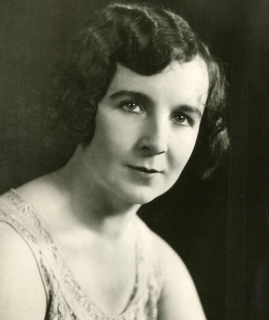
Born Alice Izabella, she is one of ten children born to grocer Moses Crowe and Therese Eglinton. From an early age, she shows an interest in the theatre, and regularly attends productions in both the Gaiety and Abbey theatres. Having completed her education, she joins a convent but soon after abandons the idea of becoming a nun. In October 1921, she enters the Abbey School of Acting. She has a career with the Abbey Theatre from 1921 to 1970.
Upon her entry to the Abbey School of Acting, Crowe makes her debut in 1921 in the play The Revolutionist, taking the lead role of Nora Mangan. She plays her last role of Miss Hatty in Grogan and the Ferret, after which she retires. During nearly five decades, she stars in many plays, some of which include The Marriage of Columbine (1921) and Juno and the Paycock (1924). Between 1931 and 1953, she appears in the Abbey Theatre productions of plays by Irish playwrightTeresa Deevy including A Disciple (1931), Katie Roche (1936, 1937, 1949, 1953), Temporal Powers (1932, 1937) and The Reapers (1930).
Also in 1964, Crowe appears in the Aldwych Theatre‘s production of Juno and the Paycock in London. She works in the Abbey for the vast majority of her career, except for when she is on a six-month tour for Peg O’ My Heart, touring Northern Ireland and England.
In 1924, when the play Grasshopper is being produced, Crowe meets her husband, Peter Judge, also known as F. J. McCormick. They are married in 1925 and the marriage produces a daughter and a son.
In 1990, Cusack, in the role of Masha, joins two of her sisters, Niamh (as Irina) and Sorcha (as Olga), and her father, Cyril Cusack (as Chebutykin) for a well-received production of Anton Chekhov‘s tragicomedy Three Sisters in a new version by Frank McGuinness, directed by Adrian Noble at the Gate Theatre, Dublin, before transferring to the Royal Court Theatre in London. The production also features Niamh’s husband, Finbar Lynch, as Solenyi and Lesley Manville as Natasha. The production wins the three real-life sisters the Irish Life Award in 1992.
One of Cusack’s best known stage roles is Our Lady of Sligo by Sebastian Barry in 1998, in which she plays the principal role of Mai O’Hara in performances in Ireland, on Broadway and at the National Theatre. For this she wins the 1998 Evening Standard Theatre Award for Best Actress, the 1998 Critics’ Circle Theatre Award for Best Actress and her fourth Olivier Award nomination for Best Actress. In 2006-07 she stars with Rufus Sewell in Tom Stoppard‘s Rock ‘n’ Roll at the Royal Court Theatre in London which transfers to the West End and Broadway, winning Cusack her fifth Olivier Award nomination and her second Tony Award nomination.
In 2015, Cusack returns to Ireland’s Abbey Theatre, where she begins her theatre career. She appears in the world première of Mark O’Rowe‘s play Our Few and Evil Days, acting opposite long-time collaborator Ciarán Hinds. She wins the Irish Times Irish Theatre Award for Best Actress.
Cusack stars with Peter Sellers in the film Hoffman (1970). She guest stars in an episode of The Persuaders! (1971), a TV series starring Tony Curtis and Roger Moore, as Jenny Lindley, a wealthy heiress who suspects that a man claiming to be her dead brother is in fact an impostor. In 1975, she makes three appearances in the TV series Quiller as the character Roz.
Further starring roles include lead roles in Oliver’s Travels (1995), Have Your Cake and Eat It (1997) for which Cusack wins the Royal Television Society‘s RTS Award for Best Actress and Frank McGuinness’s The Hen House (1989) for BBC Television. She stars in the title role of George du Maurier‘s Trilby (1976), in an adaptation for the BBC’s Play of the Month, with Alan Badel as Svengali. She also stars in the BBC mini-series North & South (2004, from the novel by Elizabeth Gaskell) as Mrs. Thornton. She stars in the BBC sitcom Home Again (2006) and appears in the TV series Camelot (2011), which runs for one season. She has featured roles in the mini-series The Deep (2014) and the series Marcella (2016), an eight-episode murder mystery.
Along with other actresses, including Paola Dionisotti, Fiona Shaw, Juliet Stevenson and Harriet Walter, Cusack contributes to a book by Carol Rutter called Clamorous Voices: Shakespeare’s Women Today (1994). The book analyses modern acting interpretations of female Shakespearean roles.
Cusack marries British actor Jeremy Irons in 1978, and they have two sons, Samuel James and Maximilian Paul. Prior to marrying Irons, she gives birth to a son in 1967 and places the boy for adoption. In 2007, a journalist for the Irish Sunday Independent, Daniel McConnell, reveals that Cusack is the mother of left-wing general election candidate and now member of Irish parliament Richard Boyd Barrett. The two have since been reunited.
Cusack is a patron of the Burma Campaign UK, the London-based group campaigning for human rights and democracy in Burma. In 1998, she is named, along with her husband, in a list of the biggest private financial donors to the British Labour Party. In August 2010, she signs the “Irish artists’ pledge to boycott Israel” initiated by the Palestine Solidarity Campaign.
(Pictured: Sinéad Cusack reciting poetry for the British Library in October 2021)
Ervine is born in Ballymacarrett, Belfast on December 28, 1883. He is considered to be the founding father of modern Northern Irish drama.
Although accepted to study at Trinity College, Dublin, circumstances force Ervine to leave school at the age of 15 to begin working in an insurance office.
Two years later, Ervine immigrates to London, where he discovers a love for the theatre. He begins his writing career with Mixed Marriage (1911), an Ulster tragedy, and produces three plays between 1911 and 1915. In 1915, after a meeting with William Butler Yeats in London, he becomes the director of the Abbey Theatre in Dublin. It is, however, not a happy appointment as his personality and politics clash with the management of the theatre.
Ervine then joins the Royal Dublin Fusiliers and fights in Flanders, losing a leg in the conflict. Returning home, he feels increasingly alienated by nationalism and more attracted to the unionism of his family background. He becomes a vehement detractor of the south, describing Ireland in a letter to George Bernard Shaw as brimming with “bleating Celtic Twilighters, sex-starved Daughters of the Gael, gangsters and gombeen men.”
Ervine is a distinctively Ulster orientated writer, focusing on a naturalistic portrayal of rural and urban life. His most famous and popular work amongst his Northern Irish audience is Boyd’s Shop (1936), which becomes one of the Ulster Group Theatre’s stalwart productions. The play is a classic of the homely yet sincere Ulster genre and centres around the struggles of the folk that Ervine grew up with in his grandmother’s shop on the Albertbridge Road. Ervine creates in Boyd’s Shop a template for Ulster theatre that is to dominate until the advent of Samuel Thompson‘s Over the Bridge.
Ervine’s reactionary unionism and anti-southern hatred becomes more pronounced as he ages and eclipses his more subtle characteristics and abilities as a writer. Although many of his novels and plays are at times clouded by his prejudices, they are also very often capable of tremendous feeling and humanity showing he is a writer of note.
St. John Greer Ervine dies at the age of 87 at Fitzhall, Ipling, Sussex on January 24, 1971.
Donal Donnelly, Irish theatre and film actor, dies in Chicago, Illinois, on January 4, 2010. Perhaps best known for his work in the plays of Brian Friel, he has a long and varied career in film, on television and in the theatre. He lives in Ireland, the United Kingdom and the United States at various times, and his travels lead him to describe himself as “an itinerant Irish actor.”
Donnelly gets his start in an amateur group calling itself the Globe Theatre Players. It is organised and run by Jim Fitzgerald and Monica Brophy. He then later tours with Anew McMaster‘s Irish repertory company before moving to England where he stars with Rita Tushingham in the film The Knack …and How to Get It.
For many years, Donnelly tours a one-man performance of the writings of George Bernard Shaw, adapted and directed by Michael Voysey and entitled My Astonishing Self.
On television, Donnelly plays the lead role of Matthew Browne in the 1970s ITV sitcom Yes, Honestly, opposite Liza Goddard. But from the late 1950s onwards, he often appears in such British TV programs as The Avengers, Z-Cars and The Wednesday Play.
In 1968, Donnelly records an album of Irish songs, Take the Name of Donnelly, which is arranged, produced and conducted by Tony Meehan formerly of the Shadows.
Donnelly, who is a heavy smoker all his life, dies from cancer at the age of 78 in Chicago, Illinois, on January 4, 2010. He is survived by his wife, Patricia ‘Patsy’ Porter, a former dancer he met working on Finian’s Rainbow, and two sons, Jonathan and Damian. Their only daughter, Maryanne, predeceases him after being killed in a riding accident. A brother, Michael Donnelly, is a Fianna Fáil senator and councillor, and Lord Mayor of Dublin (1990–91).
Michael “Mick” Lally, Irish stage, film and television actor, is born in the Gaeltacht village of Toormakeady, County Mayo, on November 10, 1945. He departs from a teaching career for acting during the 1970s. Though best known in Ireland for his role as Miley Byrne in the television soap Glenroe, his stage career spans several decades, and he is involved in feature films such as Alexander and the Academy Award-nominated The Secret of Kells. Many reports cite him as one of Ireland’s finest and most recognisable actors.
Lally begins his acting career with Taibhdhearc na Gaillimhe, Ireland’s national Irish language theatre, and is a founding member of the Druid Theatre Company. He receives an Irish Times/ESB Theatre Award Nomination for Best Actor for his role in Druid’s production of The Dead School. He also becomes a member of the Field Day Theatre Company, and stars in the company’s 1980 premiere of Brian Friel‘s play Translations. He first plays at the Abbey Theatre in 1977 in a production of Wild Oats and goes on to perform in many other Abbey productions.
In 1982, Lally stars in the TV series The Ballroom of Romance alongside Brenda Fricker. From 1983 he plays the role of Miley Byrne in the RTÉ soap Glenroe, reprising the character that he played earlier in Bracken in 1978. In 1979, he wins a Jacob’s Award for his performance as Miley in Bracken. He also has some musical success when “The By-road to Glenroe” goes to the top of the Irish charts in 1990. He is also involved in voice-over work, including a noted advertisement for Kilmeaden Cheese during the 1990s. Other TV appearances include roles in Tales of Kinvarna, The Year of the French and Ballykissangel.
In 1994, Lally plays the character Hugh in The Secret of Roan Inish, and in 1995 portrays Dan Hogan in the film adaptation of Maeve Binchy‘s Circle of Friends. Other film roles included Poitín, Our Boys, The Outcasts, A Man of No Importance and others. In later years, he provides the voice of Brother Aidan in the Academy Award-nominated The Secret of Kells, an animated film directed by Tomm Moore.
Lally appears in several TV advertisements encouraging elderly people to “release the equity tied up in their homes” during the Celtic Tiger.
Mick Lally dies in Dublin on the morning of August 31, 2010, after a short stay in the hospital. The cause of death is reported as heart failure, arising from an underlying emphysema condition. His funeral takes place in Dublin on September 2, 2010. The Irish Examiner comments that the “nation has lost one of its favourite uncles.” Personalities from TV, film, theatre and politics attend, while President of IrelandMary McAleese sends a letter and Lally receives a standing ovation at the end.
Carroll marries clothing designer Helena Reilly in Glasgow in 1923. They have four children, actress Helena Carroll, musician and producer Theresa Perez, journalist Kathleen Carroll and son Brian Carroll who resides in London. He is grandfather to Helena Perez Reilly and great grandfather to Paul Vincent Reilly. His brother, Niall Carroll, is a film critic.
Carroll founds two theater groups in Glasgow: the Curtain Theatre company, with Grace Ballantine and Molly Urquhart, in 1933 and the Glasgow Citizens Theatre in 1943. He remains the director and playwright in residence of the Citizens Theatre until his death.
The Wayward Saint is made into an opera in Germany in the 1960’s and his daughter Theresa commissions and produces an opera of his Beauty is Fled from the collection Plays for My Children which opens at Phoenix Symphony Hall in the 1970s as part of Theresa’s “Children’s Opera Series.”
Carroll dies at the age of 68 from undisclosed causes in Bromley, Kent, England on October 20, 1968.
When Murphy is six, his family returns to Dublin, settling in the South inner-city district of Islandbridge. He first goes to school in nearby Inchicore, attending the Oblate Fathers’ primary school there, then moves to Ballyfermot, a working-class heartland of suburban Dublin, in his teens. There, he attends secondary school at St. John’s De La Salle College. After failing the Irish Intermediate Certificate he leaves school to pursue an apprenticeship in painting and decorating, taking his Junior and Senior Irish Trade Certificates, and the City and Guilds of London exams at the Dublin Institute of Technology, Bolton Street.
Murphy’s stage plays include Brothers of the Brush (Dublin, The Peacock, Dublin Theatre Festival 1993), which is awarded best new Irish play; A Picture of Paradise (The Peacock, 1997); The Muesli Belt (Dublin, The Abbey Theatre, 2000); Aceldama (1998); The Kings of the Kilburn High Road (Waterford, Red Kettle Theatre Company, 2000); The Castlecomer Jukebox (Red Kettle, 2004); and What’s Left of The Flag (Theatre Upstairs at The Plough, 2010), nominated for The Irish TimesBest New Play Award. His last play, with an all-female cast, The Hen Night Epiphany, premieres at the Focus Theatre, Dublin, in September 2011 and is published by Oberon Books. It has recently been translated into Hebrew.
Plays for radio include Mandarin Lime (BBC Radio 4, 1995), Peel’s Brimstone (BBC Radio 4, 1995), and The Jangle of the Keys (BBC Radio 4 1997). His awards include the Stewart Parker Trust Award in 1994. The play The Kings of the Kilburn High Road is adapted by Tommy Collins as the Irish language film Kings, and is selected as Ireland’s entry for best foreign-language film for the Academy Awards by the Irish Film & Television Academy.
Three of Murphy’s plays have been presented at the Acting Irish International Theatre Festival: Brothers of the Brush (2001 Festival, presented by the Tara Players of Winnipeg), The Kings of the Kilburn High Road (2005 Festival, first North American production, presented by the Irish Players of Rochester), and The Muesli Belt (2008 Festival, presented by the Toronto Irish Players).
A one act play, Perfida, premieres at Theatre Upstairs in July 2012. In October 2012, The Muesli Belt receives its United States premiere at the Banshee Theater, Burbank, California, and in 2013 The Hen Night Epiphany receives its U.S. premiere at the Wade James Theater, Edmonds, Washington. In June 2013 a new production of Perfidia is staged by Red Kettle Theatre Company at their new theatre in Waterford. In May 2017 his second Verabtim piece for the Abbey, looking at police corruption, A Whisper Anywhere Else, is produced at the Peacock theatre. His first Verbatim play for the Abbey, Of This Brave Time, commissioned to commemorate the 1916 Easter Rising, tours the United Kingdom in 2016 and later returns to the Peacock stage for a short run. A new full length play, The Cartographer’s Pen, commissioned to mark the centenary of the drawing of the Irish border, opens at the Town Hall Theatre, Cavan, in May 2022.
Shiels is born on June 24, 1881, in Milltown, Ballybrakes, near Ballymoney, County Antrim, one of seven sons of Robert Shiels, a railway worker, and Eliza Shiels (née Sweeney), who also has one daughter. The family soon moves to Castle Street, Ballymoney, where he attends the local Roman Catholicnational school. His elder brothers emigrate to the United States when young. With there being no chance of further schooling even if he wanted it, he leaves Ireland when he is 19 years old. He works as a casual labourer in many places in western North America: as a farmworker and miner in Idaho and Montana, and as a lumber camp worker in British Columbia, Canada. In 1904 he is employed by the Canadian Pacific Railway to supervise a gang of workers who are building a stretch of railway in Saskatchewan. In a serious accident, he is badly injured. Despite surgery on his back, he is never able to walk again, and he receives a disability pension from the railway company.
After a long convalescence in Canada, Shiels returns to his mother’s house in Ballymoney around 1908. He sets up in business in Main Street as a shipping agent and as an agent for the Canadian Pacific Railway, taking bookings from intending emigrants. He is encouraged by his parish priest, Fr. John Hasson, by a local solicitor, Jack Pinkerton, and by James Pettigrew, a teacher, to write short stories. To try to preserve anonymity in a small community, he at first uses the pseudonym “George Morshiel,” and is successful with Western stories and other short fiction. His friends urge him to try writing dramas, and in 1918 Away from the Moss is produced by the Ulster Literary Theatre in Belfast.
After further success there with two short plays in which Shiels is learning his craft, the Abbey Theatre in Dublin accepts a one-act play, Bedmates, which is performed in January 1921. With great regularity for the next twenty years, he writes twenty-two plays for the Abbey Theatre. His work forms the basis of the repertoire in the 1920s and 1930s and attracts large audiences. Plays such as The New Gossoon (1930) provide Dublin theatregoers with entertainment, but also help form the style of acting and production which for many years characterises the Abbey and its actors. Three of his plays, Paul Twyning (1922), Professor Tim (1925) and The New Gossoon, are later performed in theatres in London and are also published in a 1945 volume, which is twice reprinted. Professor Tim, produced by the touring Abbey Theatre, receives enthusiastic reviews in Philadelphia, and The New Gossoon appears successfully on Broadway in New York City in 1932, 1934, and 1937.
Shiels’s earlier work is perhaps easiest for audiences to enjoy. Comedies such as Moodie in Manitoba (1918) portray characters so realistic that north Antrim people believe with some alarm that it might be possible to identify who Shiels had in mind when he created them, and he is at first somewhat less than popular in Ballymoney. He superbly reproduces local language and thoroughly understands the local way of life. Plays he writes late in his career are first performed by the Group Theatre in Belfast, and in these productions (and in the radio versions broadcast by the BBC) his work becomes widely known, almost beloved, in the north of Ireland. During the first half of the twentieth century amateur drama groups throughout Ireland are much more important in local life than they have been since the advent of television. Probably all such societies have at some time staged a Shiels play, and this tradition continues. His plays contain amusing dialogue, carefully crafted plots, and usually more or less happy endings.
However, Shiels’s later works, notably The Passing Day (1936), first broadcast as a radio play, and The Rugged Path (1940), which breaks all records at the Abbey Theatre in a run of three months, tackle darker subject matter and feature characters still less sympathetic even than the rogues and hypocrites of the earlier work. In The Rugged Path and its sequel, The Summit (1941), he explores the moral crisis facing Ireland after the political changes of the 1920s. One critic sees in it an allegory for the contemporary struggle against Adolf Hitler. His view of life in the small towns and farms of Ireland is never in the slightest rosy-tinted, but in the symbolism of The Passing Day, he achieves “bitter intensity” (The Irish Times review, quoted by Casey).
Shiels’s modesty leads him to refuse an honorary doctorate from Queen’s University Belfast (QUB), in 1931. He is reticent about his experiences and beliefs and does little to foster his own reputation. In one early interview he expresses the belief that Ulster theatre needs dramatic material that reflects the psychology and setting of the region. His own work, at its best, achieves this and more. The very qualities which make his work popular in the north of Ireland permit some metropolitan literary critics to dismiss his plays as “kitchen comedies.” However, with the passage of time, his importance as a chronicler of a vanishing way of life can be set alongside the recognition due to him as a prolific and gifted dramatist.
Shiels suffers from a lengthy illness, and though he undergoes an operation in Ballymoney in 1949, dies soon afterwards at his house, New Lodge, in Carnlough, County Antrim, on September 19, 1949. He is buried in the graveyard of Our Lady and St. Patrick in Ballymoney. In the month that he dies, the Group Theatre and Garvagh Young Farmers’ Club are both rehearsing Shiels plays, and there have since been many productions of his plays in the north and elsewhere. Ballymoney Drama Festival presents a portrait of Shiels to the Abbey Theatre, and a new production of The Passing Day is staged there to celebrate his centenary in 1981.