seamus dubhghaill

Promoting Irish Culture and History from Little Rock, Arkansas, USA


Leave a comment

Birth of Máire Mhac an tSaoi, Diplomat, Poet & Memoirist

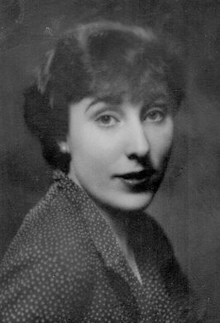
Máire Mhac an tSaoi, Irish civil service diplomat, writer of Modernist poetry in the Dingle Peninsula dialect of Munster Irish, a memoirist, and a highly important figure within modern literature in Irish, is born Máire MacEntee in Dublin on April 4, 1922. Along with Seán Ó Ríordáin and Máirtín Ó Direáin, she is, in the words of Louis de Paor, “one of a trinity of poets who revolutionised Irish language poetry in the 1940s and 50s.” She has a lifelong passion for the Irish language and is one of the leading authorities on Munster Irish.

Mhac an tSaoi’s father, Seán MacEntee, is born in Belfast and is a veteran of the Irish Volunteers during the 1916 Easter Rising and the subsequent Irish War of Independence, and of the Anti-Treaty Irish Republican Army (IRA) during the Irish Civil War. He is also a founding member of Fianna Fáil, a long-serving TD and Tánaiste in the Dáil. Her mother, Margaret Browne (or de Brún) of County Tipperary, is also an Irish republican and a distinguished Celticist who teaches courses in Irish literature in the Irish language at Alexandra College and University College Dublin (UCD).

Mhac an tSaoi is influenced by her stays in the Dingle Peninsula in County Kerry with her uncle, Monsignor De Brún, at his parish of Dún Chaoin. Monsignor de Brún, similarly to his sister, is a distinguished linguist and Celticist, the literary translator of Homer, Dante Alighieri, Sophocles, and Jean Racine into Modern Irish, “and one of the most distinguished literary figures of his time.”

Mhac an tSaoi studies Modern Languages and Celtic Studies at UCD, before going to further research at the Dublin Institute for Advanced Studies and at the University of Paris. She writes the famous work of Christian poetry in Munster Irish, Oíche Nollag (“Christmas Eve”), when she is only 15-years of age.

Mhac an tSaoi spends two years studying in post-war Paris (1945–47) before joining the Irish diplomatic service and is working at the Irish embassy in Madrid when she commits herself to writing poetry in Irish following her discovery of the works of Federico García Lorca.

She remains a prolific poet and is credited, along with Seán Ó Ríordáin and Máirtín Ó Direáin, with reintroducing literary modernism into Irish literature in the Irish language, where it had been dormant since the 1916 execution of Patrick Pearse, in the years and decades following World War II. Her poetry draws on the vernacular spoken by the native Irish speakers of the Munster Gaeltacht of West Kerry during the first half of the twentieth century. Formally, she draws on the song metres of the oral tradition and on older models from the earlier literary tradition. In later work, she explores looser verse forms but continues to draw on the remembered dialect of Dún Chaoin and on a scholarly knowledge of the older literature.

Mhac an tSaoi is elected to Aosdána in 1996 but resigns in 1997 after Francis Stuart is elevated to the position of Saoi. She had voted against Stuart because of his role as an Abwehr spy and in radio propaganda broadcasts from Nazi Germany aimed at neutral Ireland during World War II.

In 2001, she publishes an award-winning novel A Bhean Óg Ón… about the relationship between the 17th-century County Kerry poet and Irish clan chief Piaras Feiritéar and Meg Russell, the woman for whom he composed some of the greatest works of love poetry ever written in the Irish language.

Her poems Jack and An Bhean Óg Ón are both featured on the Leaving Certificate Irish course, at both Higher and Ordinary Levels, from 2006 to 2010. Her literary translation of Rainer Maria Rilke‘s Duino Elegies from Austrian German into the Irish language is published in 2013.

Mhac an tSaoi marries Irish politician, writer, and historian Conor Cruise O’Brien in a Roman Catholic wedding Mass in Dublin in 1962. This makes her the stepmother to O’Brien’s children from his 1939 civil marriage. Her mother is deeply embarrassed by the exposure of the relationship and staunchly opposes the match, as she has long been a close friend of O’Brien’s Presbyterian first wife. Despite their subsequent marriage, the exposure of their extramarital relationship ends Mhac an tSaoi’s diplomatic and civil service career. They later adopted two children, Patrick and Margaret.

She then lives with her husband in New York City, where he becomes a professor at New York University (NYU) after the Congo Crisis destroys O’Brien’s diplomatic career. He is long blamed by the United Nations for the escalation of the Congo Crisis.

Mhac an tSaoi and her husband, who is then serving as Albert Schweitzer Professor of the Humanities at NYU, are both staunchly opposed to the Vietnam War. They are both arrested by the New York City Police Department (NYPD), along with Dr. Benjamin Spock and Beat Generation poet Allen Ginsberg, during an allegedly violent protest outside a United States military induction centre in New York City on December 5, 1967. Afterward, during an interview with The New York Times, she accuses the NYPD of using excessive force both during and after her husband’s arrest.

She later returns with O’Brien to live in Dublin, where she attends another protest rally against the Vietnam War along O’Connell Street in 1969.

Mhac an tSaoi dies peacefully at the age of 99 on October 16, 2021, at home where she has been cared for by her daughter Margaret.


Leave a comment

Death of Katy French, Socialite, Model & TV Personality

Katy Ellen French, Irish socialite, model, writer, television personality and charity worker, dies on December 6, 2007, in Navan, County Meath, after collapsing at a friend’s house on December 2. According to the BBC, “in the space of less than two years, she had become one of Ireland’s best-known models and socialites.” Her cause of death is given as hypoxic ischemic brain injury caused by cocaine and ephedrine.

French is born on October 31, 1983, in Basel, Switzerland, to John and Janet French, from Australia and Britain respectively. At the age of two, she moves with her family to Ireland, briefly living in the Sandyford area before settling in Enniskerry, County Wicklow, and later to Stillorgan, County Dublin. She attends Alexandra College in Milltown, Dublin, from the age of seven. While still in school she works part-time as a hostess at the Dublin branch of the Planet Hollywood restaurant chain.

French studies psychology and marketing before working for the Assets Modelling Agency and later writing articles for several Dublin magazines and newspapers. She represents Sony Ericsson and Suzuki among many other brands, becoming more famous in 2007 as a result of her fiancé, restaurateur Marcus Sweeney, ending their relationship in a very public fashion after she is photographed for a lingerie shoot for the Sunday Independent in his restaurant in January of that year. As a result of this publicity, her image appears more regularly in daily Irish tabloid newspapers, and she makes numerous television appearances on shows such as RTÉ‘s The Podge and Rodge Show in April 2007 and Tubridy Tonight a week before her death.

French is known for deliberately courting controversy to promote her career. On Tubridy Tonight she speaks of her appearance on Celebrities Go Wild as well as her relationship break up with Sweeney. Mention is also made of her birthday party which she is to celebrate the following week, having missed her birthday due to Celebrities Go Wild. Host Ryan Tubridy is invited to the event. Footage is shown of the charity single “Down in the Bog” which is to be released as a Christmas single. She works for several Irish charities including Our Lady’s Children’s Hospital, Crumlin and GOAL in Calcutta, India. She writes a column for Social & Personal magazine.

In an interview with Hot Press‘s Jason O’Toole, French says that she would consider having an abortion if she became pregnant during the peak of her career, a controversial statement in Ireland where abortion is at that time effectively illegal, and that she loves fur despite being a “massive animal lover.” She also airs her religious beliefs, being a member of the Church of England as well as a practising Catholic and speaks highly of Islam and her Muslim friends saying, “When you read the Koran, you realise that Islam is a beautiful religion.” In the same interview she is asked if she has ever used cocaine and denies ever having done so. In November 2007, she tells an Irish tabloid that she has used cocaine but has stopped. A week before she dies, she celebrates her 24th birthday with celebrity and media friends.

French dies on the evening of December 6, 2007, in Our Lady’s Hospital, Navan, County Meath, having collapsed at a house in Kilmessan, County Meath, in the early hours of Sunday, December 2. There is widespread speculation in the media that her death is the result of a drug overdose. A postmortem finds she has suffered brain damage, and that traces of cocaine are found in her body. A senior Garda states, “We strongly suspect that drugs contributed to her death. This was a previously healthy person being brought to hospital in a collapsed state.” In 2010 two people are charged with supplying cocaine to French and in failing to get medical assistance in a timely fashion. She is buried in her hometown of Enniskerry, County Wicklow, on December 10. Taoiseach Bertie Ahern‘s aide de camp, Captain Michael Tracey, attends her funeral.

On November 13, 2012, two friends of French, Kieron Ducie and Ann Corcoran, plead guilty to possession of cocaine with intent to supply on the weekend of French’s death. Trim Circuit Court is told that a second charge against the pair is not being pursued, that they had intentionally or recklessly engaged in behaviour relating to the supply of cocaine to French and failed to get medical assistance in a timely fashion. In July 2013 the pair are sentenced to a 2-1⁄2 year suspended sentence and three-year good behaviour bond, and a two-year suspended sentence and two-year good behaviour bond respectively. At the verdict, French’s cause of death is given as hypoxic ischemic brain injury caused by cocaine and ephedrine.


Leave a comment

Birth of Letitia Marion Hamilton, Landscape Artist

Letitia Marion Hamilton, Irish landscape artist and Olympic bronze medalist, is born on July 30, 1878, in Hamwood House, County Meath.

Hamilton is the daughter of Charles Robert Hamilton and Louisa Caroline Elizabeth Brooke. She attends Alexandra College. She and her sister Eva are great-granddaughters of the artist Marianne-Caroline Hamilton, and cousins of watercolourist Rose Maynard Barton. The sisters’ father can only afford one dowry, so the sisters remain unmarried, with their artistic careers helping to support the household. Both she and her sister study at the Dublin Metropolitan School of Art under William Orpen. She studies enameling there also, winning a silver medal in 1912 by both the School and the Board of Education National Commission. Her work shows elements of Art Nouveau, foreshadowing her later modernist leanings. She also studies in Belgium with Frank Brangwyn and the Slade School of Fine Art.

Hamilton first exhibits in 1902 and goes go on to become a prolific painter of the Irish countryside, exhibiting more than 200 paintings at the Royal Hibernian Academy (RHA). Both sisters travel widely in Europe, with Letitia being influenced by modern European artistic trends of the early 20th-century. She is internationally exhibited, Royal Academy of Arts, Burlington Gallery and Kensington Art Gallery in London, in Scotland, and Paris. Her exposure to impressionism comes from studying with Anne St. John Partridge in France. Her style matures in the 1920s. That year, she is one of the founding members of the Society of Dublin Painters, along with Paul Henry, Grace Henry, Mary Swanzy, and Jack Butler Yeats. It is around this time that she changes her signature from MH (May Hamilton) to LMH, reflecting her full name. She works on small oil sketches, which later develop into finished works. Her style is rapid, with loose, fluid brush strokes. In the early 1920s, she travels to Venice, painting on a gondola studio loaned to her by artist and friend Ada Longfield. The works from this trip are considered among her best, with her exploring light effects, pastel shades, and strong outlines. She later employs these elements into her works on Irish landscapes.

Hamilton becomes a member of the Royal Hibernian Academy in 1943. In 1948, she becomes the last person to win a bronze medal at the art competitions at the London Olympic Games. She serves as president of the Society of Dublin Painters in the late 1950s. Despite her failing eyesight later in life, she continues to paint, mounting her final exhibition in 1963, a year before her death at the age of 86 in Dublin on August 11, 1964. She is also a committee member of the Water Colour Society of Ireland.

Examples of Hamilton’s work are held in a number of collections, including Hugh Lane Gallery, Limerick City Gallery of Art, Crawford Art Gallery, Ulster Museum, National Gallery of Ireland, and Waterford Art Gallery. Her painting Canal Scene in Venice attains the highest price for a Hamilton work in 2004, which sells at Sotheby’s in London, for £33,600.

(Pictured: “Slieve Donard, Co. Down” by Letitia Marion Hamilton, oil on canvas, signed with monogram lower left)


Leave a comment

Death of Muriel Gifford MacDonagh

Muriel MacDonagh (née Gifford), Irish nationalist and member of Inghinidhe na hÉireann, dies in Skerries, Dublin, on July 9, 1917. Her husband, Thomas MacDonagh, is one of the signees of the Proclamation of the Irish Republic, which leads to the Easter Rising of 1916.

Muriel Enid Gifford is born at 12 Cowper Road, Rathmines, on December 18, 1884. She is the fourth daughter and eighth child of twelve of Frederick and Isabella Gifford. As a child, she suffers at different times from rheumatic fever and phlebitis. She attends Alexandra College and spends a brief time in England training to as a poultry instructor. Returning to Ireland, she trains at Sir Patrick Dun’s Hospital, Dublin, as a student nurse, but her health suffers from the work.

Along with her sisters, MacDonagh is active in the Irish Women’s Franchise League and Inghinidhe na hÉireann, a nationalist organisation. She is involved in the school meals programme of 1910 to 1911, takes part in a 1914 Women’s Franchise League fundraiser, appearing in a tableau vivant as Maeve, the Warrior Queen. Less ardently feminist than her sisters, she takes delight in inviting home activists and artists for a “proper meal.” In an outgoing family, she is shy and reserved, known for her gentle manner. In 1908, she is introduced to Thomas MacDonagh by suffragette journalist Nannie Dryhurst along with her sisters, Grace and Sidney, on a visit to St. Enda’s School. Dryhurst advises Thomas to “fall in love with one of these girls and marry her,” to which he replies laughingly, “That would be easy; the only difficulty would be to decide which one.” The Gifford sisters remain acquaintances with Thomas until the autumn of 1911, when the couple has a short and intense courtship. They meet secretly in galleries and museums and have copious correspondence. When he is appointed assistant lecturer to University College Dublin (UCD) in December 1911, they marry on January 3, 1912. They have one son, Donagh MacDonagh, and one daughter, Barbara MacDonagh Redmond. The family lives first at 32 Baggot Street, and later at 29 Oakley Road, Rathmines.

MacDonagh suffers with poor health and depression, which leads to periods of convalescence and confinement. When her husband is arrested after the Easter Rising, she is unable to see him before his execution on May 3, 1916, which heightens the intensity of her bereavement. Devastated by his death and estranged from her parents due to their disapproval of his involvement in the Rising, she briefly lives with the Plunketts at Larkfield, Kimmage, and then with relatives of her husband in Thurles, County Tipperary. She later returns to Dublin to rent rooms in a Plunkett family property, 50 Marlborough Road. With two young children to support, she is nearly destitute, but like the other widows and orphans of the executed leaders of the Rising, they are aided by the Irish Volunteers Dependents’ Fund, in her case with £250. She also serves as an officer and committee member on this aid association. Her husband had named her as his literary executor, and she prepares a collected edition of his poetry that is published in October 1916. The success of this volume, and his bestselling Literature in Ireland, published at the time he is executed, ease her financial difficulties somewhat.

MacDonagh converts to Catholicism on May 3, 1917.

MacDonagh dies while swimming in the sea during a holiday with other 1916 widows and orphans in Skerries, County Dublin, on July 9, 1917. She almost does not attend the holiday, as her son is in hospital having been injured in a fall. It is believed that she is attempting to swim to Shenick Island from Skerries, possibly to place a tricolour flag on the island’s Martello tower. Her body is found near Loughshinny Beach and, as there is no water in her lungs, it is concluded that she died of heart failure and not drowning. As there is great interest in the 1916 widows and their families, her funeral at Glasnevin Cemetery attracts a large crowd of mourners estimated at 5,000 in the funeral procession.

Following MacDonagh’s death, there is a legal custody battle between the Giffords and the MacDonaghs over Donagh and Barbara. Their aunt Mary MacDonagh, a nun known as Sister Francesca and with whom MacDonagh had grown close, wins custody. Even though several of her siblings offer to take the children, she places them in a foster home.

On the centenary of MacDonagh’s death, a festival takes place in Skerries in her memory.


Leave a comment

Death of Helen Maybury Roe, Librarian & Antiquarian

Helen Maybury Roe, Irish librarian and antiquarian and a champion of medieval Irish art and iconography, dies on May 28, 1988, at Grove Nursing Home in Killiney, County Dublin.

Born on December 18, 1895, Roe is the daughter of William Ernest Roe and Anne Lambert Sheilds of Mountrath, County Laois. Her grandfather is Francis Henry Sheilds of Parsonstown (now Birr, County Offaly), owner of the King’s County Chronicle. She is sent first to the local primary school and then to the Preston School in Abbeyleix. Although she attends Trinity College Dublin (TCD), she does not begin her career due to the outbreak of World War I. She joins the St. John’s Ambulance Brigade and serves at the Cambridge Military Hospital and at Aldershot Barracks. In the immediate aftermath, she continues her medical career with the Military Hospital in Bray, County Wicklow. She also spends time touring in Europe visiting museums and beginning her appreciation for medieval art. She is raised Protestant and has done her duty as part of the aristocracy by serving in the war. But the soldiers treat her as Irish and abuse her especially during the Easter Rising of 1916. The result is that she supports nationalism from that point forward. She goes back to TCD and completes her degree in modern languages in 1921. She finally completes her MA in 1924 and begins a teaching career. She spends time working in the Royal School, Dungannon, and Alexandra College, Milltown, Dublin.

In 1926, Roe’s parents need her, and she returns home. She then becomes the County Librarian in Laois. While working as a librarian she is able to study further and, as a rare person with a car, she tours sites and visits schools. One result of her presentations to schools is to inspire Ireland’s first female archaeologist, Ellen Prendergast. In 1940, she retires from the library and moves to Dublin where she is able to buy a house and garden. Apart from her antiquarian work, she is a regular supporter of charities and is honorary secretary of The Queen’s County Protestant Orphan’s Society and actively involved in The Dublin University Mission to Chota Nagpur, India.

Roe becomes a regular contributor to various journals and newspapers including Journal of the Royal Society of Antiquaries of Ireland, An Leabharlann, Béaloideas, Seanchas Ard Mhacha, Carloviana, the The Irish Press and the Leinster Express. From 1965 until 1968 she serves as the president of the Royal Society of Antiquaries of Ireland, the first woman to be elected to the position. She is elected to be a member of the Royal Irish Academy in 1984. She continues touring and lecturing into her nineties.

Roe lives at Santry, Dublin, and later at Oak House, Sussex Road, Dublin. She dies on May 28, 1988, at Grove Nursing Home, Killiney, County Dublin, and is buried beside her parents at St. Peter’s Churchyard, Mountrath, County Laois.

The Royal Society of Antiquaries of Ireland have an annual lecture in her honour and have named one of their lecture rooms after her.


Leave a comment

Death of Actress Betty Chancellor

Betty Chancellor, Irish actress, dies in Dún Laoghaire, County Dublin, at the age of 74 on April 27, 1984.

Chancellor is born at 8 Fitzwilliam Place, Dublin, on January 9, 1910. Her parents are John William Chancellor, a Dublin clockmaker, jeweler, and photographer, and Cicely Chancellor (née Granger). They marry in Billericay, Essex, in 1904. She has an elder sister, Joyce Fanny, who also becomes an actress. She attends Nightingale Hall and Alexandra College, going on to train as a secretary.

Chancellor’s first appearance on stage is as a fairy in a benefit performance at the Gaiety Theatre in 1914. She appears again at the Gaiety in 1922 as Gwennie in F. Anstey‘s The Man from Blankley’s, and then studies drama under Frank Fay. In the 1920s, she acts in the Dublin Drama League’s productions in the Abbey Theatre. Once she joins the Gate Theatre her career progresses, establishing her as one of the principal actresses in the Gate by the early 1930s.

Chancellor plays Naomi alongside Orson Welles in a production of Jud Süss in October 1931. Welles becomes infatuated with her and later describes her as “the sexiest thing that ever lived.” In 1931, she debuts in J. B. Fagan‘s production of The New Gossoon by George Shiels as Biddy Henley at the Apollo Theatre. Her most noted roles are as Toots in Youth’s the Season in 1932 by Mary Manning, Laura in a production of Carmilla in 1932, based on the Gothic novella by Sheridan Le Fanu, Ophelia in 1932 and Cicely in The Importance of Being Earnest in 1933. Touring with the Gate company in 1935, she plays Stella in its production of Lord Longford‘s Yahoo performed in the Westminster Theatre, London. She stars with James Mason in the Gate’s production of Pride and Prejudice in 1937. Disappointed with the parts she is getting at the Gate after that and much to the annoyance of Micheál Mac Liammóir and Hilton Edwards, she joins Lord Longford’s first provincial tour in 1937.

In the late 1930s, Chancellor works more often in London. Following her appearance as Baby Furze in the 1938 production of Spring Meeting by Molly Keane and John Perry, she is nominated as “Star of the Future” by the Daily Mail. She acts alongside Alec Guinness and Peggy Ashcroft in 1940 in Clemence Dane‘s Cousin Muriel at the Globe Theatre, directed by John Gielgud.

Chancellor returns to the Gaiety Theatre in 1941 to act with Hilton Edwards in a production of Caesar and Cleopatra by George Bernard Shaw, a production that marks the 75th anniversary of the Gaiety. The press welcomes her return to the company, but her fellow actors are disturbed by the fact she is then living with Denis Johnston, the husband of fellow actress Shelah Richards. After Johnston’s divorce, they marry in March 1945 in Dungannon, County Tyrone. She partly retires from acting to raise their sons, but also due to her increasing deafness that had begun in her teens.

In 1947, Chancellor appears in Johnston’s The Moon in the Yellow River at the Arts Theatre in London with Jack Hawkins. The family moves to the United States in November 1948, where she has the lead role in Shaw’s Candida at Amherst College, Massachusetts in 1950.

In 1969, Chancellor returns to Ireland with her family and settles in Dalkey, County Dublin. She dies in Dún Laoghaire on April 27, 1984, and is buried in the close of St. Patrick’s Cathedral, Dublin.


Leave a comment

Death of Mary Hayden, Campaigner for Women’s Causes

Mary Teresa Hayden, Irish historian, Irish language activist and campaigner for women’s causes, dies at her residence in Rathmines, Dublin, on July 12, 1942.

Hayden is born on May 19, 1862, in Merrion Square, Dublin, the only daughter of Thomas Hayden, physician and later vice-president of the Royal College of Surgeons in Ireland, and Mary Anne Hayden (née Ryan). Mary Hayden is educated initially at the Dominican College, Eccles Street, Dublin, and then at Alexandra College at Earlsfort Terrace, Dublin. She attends the Royal University of Ireland (RUI) where she graduates with a BA in 1885 and an MA in 1887 in Modern Languages.

She meets the Robertson commission in 1901 on behalf of St. Mary’s Dominican convent, Eccles Street, Dublin, where, as well as presenting the results of a questionnaire survey of women graduates, compiles in conjunction with Agnes O’Farrelly and Hanna Sheehy-Skeffington, she argues for the right of women to receive education on the same terms as men and in the same colleges, and to be employed by the universities on identical conditions (which is not realised until the Irish Universities Act of 1908). Along with Sheehy-Skeffington, she is a key figure in the formation of the Irish Association of Women Graduates in 1902, which concerns itself with various questions regarding women graduates’ employment in government departments, hospitals, and schools, as well as attempting to influence public policy in relation to sex discrimination.

A campaigner for gender equality and noted as a public speaker, Hayden is a prominent member of the Dublin Women’s Suffrage Association. She is a member of the Gaelic League and friends with Patrick Pearse. However, she opposes violence and disapproves of the 1916 Easter Rising.

After the passage of the Irish Universities Act in 1908, Hayden is appointed a member of both the senate of the National University of Ireland (NUI) and the governing body of the new University College Dublin (UCD), the first woman to hold such positions. In November 1909 she is appointed a lecturer in history, and in July 1911 first professor of modern Irish history at UCD, a position she holds until her retirement in 1938.

In 1915, along with Mary Louise Gwynn, Hayden founds the Irish Catholic Women’s Suffrage Association, and is also active in the Irish Women’s Franchise League, which mix campaigning for the vote with a variety of intellectual pursuits. She also becomes involved in the Women’s International League for Peace and Freedom. She is more moderate a nationalist than contemporary feminists such as Constance Markievicz and Hanna Sheehy-Skeffington and supports the Irish Parliamentary Party (IPP) rather than Sinn Féin.

Hayden’s last major public campaign, at the age of 75, is in the lead-up to the referendum on the 1937 Constitution of Ireland, in opposition to articles 40, 41, and 45 concerning the status of women. Reversing her lifelong non-party-political stance, she helps to form the Women’s Social and Progressive League as a political party committed to opposing the constitution and any regressive consequences it would entail.

Hayden receives an honorary doctorate from the NUI in 1935, three years before her retirement. A dedicated cyclist and swimmer, she is fluent in Irish, Greek, and Hindustani, and after retirement devotes her efforts to improving the welfare of Dublin children through her newly formed social club. She dies on July 12, 1942, at her residence in Rathmines, Dublin. Her unpublished diaries are deposited in the NLI.

A biography of Hayden, Mary Hayden: Irish Historian and Feminist, by Joyce Padbury is published by Arlen House in 2020.


Leave a comment

Birth of Kathleen Cox, Artist, Sculptor & Mystic

Kathleen Cox, Irish artist, sculptor, and mystic, is born Christina Mary Kathleen Cox in Wo-Sung, China, on July 2, 1904. Cox is considered a pioneer of contemporary Irish pottery.

Cox is the eldest daughter of Dr. R. H. Cox, originally from Dundalk, County Louth, and the port health officer in Shanghai. He is also an amateur geologist and models in clay. In his retirement, he invents a periscope later used during World War I by the Royal Navy. The years living in China leave an impression on the young Cox, visually and culturally. The family returns to Ireland in 1911, first moving to Listowel, County Kerry, and later to Howth, County Dublin. She attends Alexandra College, and later the Dublin Metropolitan School of Art in 1921. While there she studies sculpture under Oliver Sheppard and is considered one of his most talented students, winning the Royal Dublin Society Taylor prize for modelling in 1925, 1926, and 1927. The money from these prizes allows Cox to travel to Paris in 1929.

Cox exhibits in 1924 at the Tailteann exhibitions, and in 1925 submits textile designs to the Arts and Crafts Society of Ireland. She establishes a pottery studio at 7 Schoolhouse Lane, Dublin, with college friend Stella Rayner in 1929. The studio has the first electric kiln in Ireland. The first exhibited piece by Cox shown by the Royal Hibernian Academy (RHA) is in 1930, with a pair of Madonna bookends, and portrait masks of the daughter of Dermod O’Brien, Brigid O’Brien, and writer Norris Davidson. Davidson is a friend and neighbour, who commissions her to design the poster for his 1929 film, Suicide. She exhibits with the RHA from 1931 to 1933, and the Tailteann 1932, while also holding exhibitions in her studio. During this period Hilda Roberts paints her portrait, Strange Spirit. Kathleen Cox in her studio. The theme of womanhood is prominent in her work, including in the sign of her studio.

In 1932, Cox begins producing a line of more commercial figurines, drawing influence from the Royal Doulton Burslem factory, where she works for a time. One such figurine is The Lavender Man (pictured), modelled on Michael Clifford, a Dublin street trader. In the mid 1930s, she develops a frustration with her work and with her lack of impact on the wider world. In attending the Chinese exhibition in London in 1935, it is confirmed to her that pottery should be practical rather than ornamental. It spurs her to destroy all her moulds and sell her kiln upon her return to Dublin.

Cox marries Alan Palmer in 1937, the couple has two daughters and relocate to England. Palmer is a conscientious objector during World War II, with the couple running a farm at Meopham, Kent, returning to London after the war.

Cox dies in early September 1972 in London. Some of her work is held in the collections of the National Museum of Ireland and with four works featured in the exhibition Not Just Pots: Contemporary Irish Ceramics of the 21st Century.

It is during the 1920s that Cox begins to question mainstream religion and becomes a vegetarian. Finding that her personal philosophy is similar to that of theosophy, she joins the movement and speaks at meetings. She is heavily influenced by the founder of the Order of the Great Companions, the Rev. William Hayes, who is living in Dublin in the 1930s. She writes and illustrates a children’s book on world religions, A story of stories, which she publishes under the pseudonym C.M. Kay in 1970.


Leave a comment

Birth of Mary Manning, Novelist, Playwright & Film Critic

Mary Manning Howe Adams, Irish novelist, playwright and film critic, is born in Dublin on June 30, 1905.

Raised in Dublin, Manning goes to school in Morehampton House and Alexandra College, Dublin. She gets her theatre training in Sara Allgood‘s teaching class in the Abbey Theatre.

Prior to her career as a writer and filmmaker, Manning works as a film critic throughout the 1920s and 30s. She works as a film critic for The Irish Statesman for a year during that time until it goes out of business. She is known to disapprove of Hollywood‘s “unimaginable stories and its stereotypical portrayal of Ireland and the Irish.” She also works as a writer for the Gate Theatre. She adapts the short story “Guests of the Nation” for a film directed by Denis Johnston. She also helps found the Dublin Film Society in 1930 and co-founds the Gate Theatre arts magazine Motley in 1932.

From 1914 to 1926, Ireland experiences a surge of new film styles being produced, consisting of historical melodramas and romantic comedies. Following this, 1930 to 1935 births a second wave of industry produced silent films that are intended to be less cliche compared to the first wave. The films produced under the second wave are much more experimental and deal less with the commercial appeals of the first wave. There’s minimal information on how Manning specifically contributed to the second wave, however, it is stated that she plays an important role producing five out of the six films to come out of that wave.

In 1935, Manning moves to Boston where she marries Harvard Law School professor Mark De Wolfe Howe. They have three daughters, Fanny, Susan and Helen. When her husband dies, she returns to Dublin in 1967 and lives in Monkstown, County Dublin, for another ten years. During this time she writes for various publications such as The Hibernia Magazine, The Irish Times and The Atlantic. She later returns to live in Cambridge, Massachusetts.

Manning is a founder of the Poets’ Theatre in Cambridge, Massachusetts, and works as drama director at Radcliffe College during World War II. She marries Faneuil Adams of Boston, Massachusetts, in 1980.

Manning dies at the age of 93 on June 27, 1999, at Mt. Auburn Hospital in Cambridge, Massachusetts.


Leave a comment

Birth of Shelah Richards, Actress, Manager, Director & Producer

Shelah Geraldine Richards, Irish actress, manager, director and producer, is born in Dublin on May 23, 1903.

Richards is born to John William Richards, a lawyer, and Adelaide Roper, suffragist who had chained herself to the railings in St. Stephen’s Green. She goes to school at Alexandra College, Dublin, and after that she attends a finishing school in Paris. Though her family is not in the arts, her godmother is Beatrice Elvery. Shes attends Elvery’s salons with her parents as a child. She meets W. B. Yeats when she is sixteen. Her niece, Geraldine Fitzgerald, daughter of her sister, Edith Catherine Richards, is also one of Ireland’s pre-eminent actresses.

Richards’s acting career starts while attending the Dublin drama league and she is asked at short notice to replace Eileen Crowe in Juno and the Paycock, playing the role of Mary Boyle in the Abbey Theatre production. Richards gets the role of Nora Clithero in the 1926 production of The Plough and the Stars, Seán O’Casey‘s next production. This role means that she ends up with police protection for the duration of the run due to the disturbances the play engenders. Another important role is to take on playing the lead in The Player Queen by Yeats. Maire O’Neill had previously made the role her own and Yeats had let no one perform the part since then so taking on such a challenge is intimidating. Richards continues to take on leading roles with the Abbey Theatre but in 1926 she also begins to direct.

On December 28, 1928, Richards marries playwright Denis Johnston in St. Anne’s Church in Dublin. She tours the United States with the Abbey players in 1932 and with the Irish Players in the mid 1930s. A role in 1938 in Molly Keane‘s Spring Meeting starring Gladys Cooper and A. E. Matthews takes her to Broadway in New York City. War in Europe breaks out while the run is still going on and Richards is advised to stay in the United States. However, by then she has two children, producer Micheal and novelist Jennifer Johnston, so she returns to Dublin. There she runs her own theater company at the Olympia Theatre with Nigel Heseltine. Her marriage to Johnston, broken in 1938, ends with divorce in February 1945.

Richards next challenge is to take over the Abbey School of Acting. During her time there one of the designers she works with is Louis le Brocquy. With Siobhán McKenna she produces The Playboy of the Western World in Edinburgh to huge success allowing her to stage it in London and Dublin and later in Toronto‘s Library Theater. She brings Marcel Marceau to Dublin for the first time. She continues to act and has some film roles.

In 1961 Ireland launches its first television service, Raidió Teilifís Éireann. Richards is one of the first producers, recommended to the station by Hilton Edwards. She is one of the few women in the new station. The first Irish play produced during the opening week is directed by her and she is nominated for a Best Actress award in another production, Inquiry at Lisieux. She works as producer on a wide number of programs for the station including documentaries, soap operas and religious programming. Both Tolka Row and The Riordans are produced by her as well as Denis Johnston’s The Moon on the Yellow River, George Bernard Shaw‘s Arms and the Man and John Millington Synge‘s Riders to the Sea.

Richards retires from her RTÉ career in the early 1970s though she continues to raise funds for the Gate Theatre through the Edwards–MacLiammóir Playhouse Society. In 1983, for her 80th birthday, the Abbey puts on a party for her which includes a special rendition of “Nora” from The Plough and the Stars. Richards is the last living member of the original 1926 cast. The song is repeated at her funeral in 1985. She died in Ballybrack, County Dublin, on January 19, 1985. Her funeral is held in St. Anne’s Church in Dublin and she is cremated in Glasnevin Cemetery.