seamus dubhghaill

Promoting Irish Culture and History from Little Rock, Arkansas, USA


Leave a comment

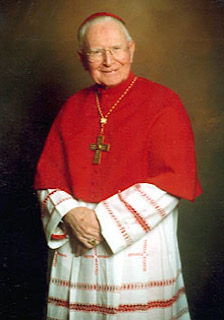
Birth of Cahal Daly, Archbishop of Armagh

Cahal Brendan Daly KGCHS, a Roman Catholic cardinaltheologian and writer, is born Charles Brendan Daly on October 1, 1917, in Ballybraddin, Loughguile, a village near Ballymoney in County Antrim.

Daly serves as the Catholic Primate of All Ireland and Archbishop of Armagh from late 1990 to 1996, the oldest man to take up this role in nearly 200 years. He is later created a Cardinal-Priest of San Patrizio by Pope John Paul II in the papal consistory of June 28, 1991.

Daly is the third child of seven born to Charles Daly and Susan Connolly. His father is a primary school teacher originally from KeadueCounty Roscommon, and his mother a native of Antrim. He is educated at St. Patrick’s National School in Loughguile, and then as a boarder in St. Malachy’s CollegeBelfast, in 1930. The writer Brian Moore is a near contemporary.

Daly studies Classics at Queen’s University Belfast (QUB). He earns his BA with Honours and also the Henry Medal in Latin Studies in 1937 and completes his MA the following year. He enters St. Patrick’s College, Maynooth and is ordained to the priesthood on June 22, 1941. He continues studies in theology in Maynooth, from where he obtains a doctorate in divinity (DD) in 1944. His first appointment is as Classics Master in St. Malachy’s College (1944–45).

In 1945, Daly is appointed Lecturer in Scholastic Philosophy at Queen’s University, Belfast, retaining the post for 21 years. In the academic year 1952–53 QUB grants him sabbatical leave, which he spends studying at the Catholic University of Paris where he receives a licentiate in philosophy. He returns to France at many points, particularly for holidays. He persists with his studies well into his retirement. He is a popular figure with the university and fondly remembered by his students. He is named a Canon of the Cathedral Chapter of Diocese of Down and Connor in 1966.

Daly is a peritus, or theological expert, at the Second Vatican Council (1962–65) to Bishop William Philbin during the first session of the Council and to Cardinal William Conway for the rest of the council. He dedicates himself to scholarship for 30 years, and publishes several books seeking to bring about understanding between the warring factions in Northern Ireland.

Daly is appointed Reader in Scholastic Philosophy at QUB in 1963, a post he holds until 1967, when he is appointed Bishop of Ardagh and Clonmacnoise on May 26.

Daly converts his forename Charles into Cahal ahead of his episcopal consecration in St. Mel’s CathedralLongford, on July 16, 1967, from Cardinal William Conway, with Archbishop Giuseppe Sensi and Bishop Neil Farren serving as co-consecrators.

Daly spends 15 years as bishop in Longford and is diligent about parish visitation and confirmations gradually assume a greater national profile. From 1974 onward, he devotes himself especially to ecumenical activities for the Pontifical Council for Promoting Christian Unity. His pastoral letter to Protestants, written in 1979, pleads for Christian unity.

Daly succeeded William Philbin as the 30th Bishop of Down and Connor when he is installed as bishop of his native diocese at a ceremony in St. Peter’s Cathedral, Belfast, on October 17, 1982.

On November 6, 1990, Daly is appointed Archbishop of Armagh and, as such, Primate of All Ireland. His age makes him an unexpected occupant of the post. Despite this it is requested that he stay in the role for three years before usual age of episcopal retirement at 75. Cardinal Daly takes a notably harder line against the Irish Republican Army (IRA) than his predecessor, Cardinal Tomás Ó Fiaich.

Daly is respectful of Protestant rights and opposes integrated education of Catholics and Protestants. This policy is criticised by those who see segregated education as one of the causes of sectarianism in Northern Ireland, but is seen by the Catholic clergy as important for passing on their faith to future generations. He is utterly orthodox in opposing divorce, contraception, abortion, the ordination of women and any idea of dropping clerical celibacy.

Daly is heckled by the audience on live television during a broadcast of The Late Late Show on RTÉ One on the topic of pedophilia in the 1990s. After his retirement in 1996, he makes no public statement on the issue.

Daly retires as Archbishop of Armagh on his 79th birthday, October 1, 1996, and subsequently suffers ill health. Although it is announced that he will attend the funeral of Pope John Paul II, he stays home on the advice of his doctors. His age makes him ineligible to participate in the 2005 conclave that elects Pope Benedict XVI.

Daly is admitted to the coronary unit of Belfast City Hospital on December 28, 2009. His health has already been declining, leading to prayers being ordered for him. He dies in hospital in Belfast on December 31, 2009, aged 92. His family are at his bedside at the time. His death brings to an end a two-year period during which Ireland has, for the first time in its history, three living Cardinals.

Daly lay in state in Belfast and then his remains are taken to Armagh. Pope Benedict XVI pays tribute at this stage. Large numbers of people travel from as far as County Westmeath to attend Mass at Armagh on January 4, at which Monsignor Liam McEntaggart, the former parish priest of Coalisland, says, “When the history of peace making in Ireland comes to be written, the contribution of Cardinal Daly will be accorded a high place.” Monsignor McEntaggart himself dies on August 22, 2010, aged 81, less than eight months after Cardinal Daly’s passing.

Daly’s funeral is held on January 5, 2010, and is attended by the president Mary McAleese and Taoiseach Brian Cowen. Daly is buried in the grounds of St. Patrick’s Roman Catholic Cathedral, Armagh, next to his three predecessors in the see, Cardinals Ó Fiaich, Conway and D’Alton.


Leave a comment

Death of Joseph Campbell, Poet & Lyricist

Joseph Campbell, Irish poet and lyricist, dies at Lacken Daragh, Enniskerry, County Wicklow, on June 6, 1944. He writes under the Gaelic form of his name Seosamh Mac Cathmhaoil (also Seosamh MacCathmhaoil), as Campbell is a common anglicisation of the old Irish name MacCathmhaoil. He is now remembered best for words he supplied to traditional airs, such as “My Lagan Love” and “Gartan Mother’s Lullaby.” His verse is also set to music by Arnold Bax and Ivor Gurney.

Campbell is born in Belfast on July 15, 1879, into a Catholic and Irish nationalist family from County Down. He is educated at St. Malachy’s College, Belfast. After working for his father he teaches for a while. He travels to Dublin in 1902, meeting leading nationalist figures. His literary activities begin with songs, as a collector in Antrim, County Antrim and working with the composer Herbert Hughes. He is then a founder of the Ulster Literary Theatre in 1904. He contributes a play, The Little Cowherd of Slainge, and several articles to its journal Uladh edited by Bulmer HobsonThe Little Cowherd of Slainge is performed by the Ulster Literary Theatre at the Clarence Place Hall in Belfast on May 4, 1905, along with Lewis Purcell’s The Enthusiast.

Campbell moves to Dublin in 1905 and, failing to find work, moves to London the following year where he is involved in Irish literary activities while working as a teacher. He marries Nancy Maude in 1910, and they move shortly thereafter to Dublin, and then later to County Wicklow. His play Judgement is performed at the Abbey Theatre in April 1912.

Campbell takes part as a supporter in the Easter Rising of 1916, doing rescue work. The following year he publishes a translation from Irish of the short stories of Patrick Pearse, one of the leaders of the Rising.

Campbell becomes a Sinn Féin Councillor in Wicklow in 1921. Later in the Irish Civil War he is on the Republican side, and is interned in 1922-23. His marriage breaks up, and he emigrates to the United States in 1925 where he settles in New York City. He lectures at Fordham University, and works in academic Irish studies, founding the University’s School of Irish Studies in 1928, which lasts four years. He is the editor of The Irish Review (1934), a short lived “magazine of Irish expression.” The business manager is George Lennon, former Officer Commanding of the County Waterford Flying Column during the Irish War of Independence. The managing editor is Lennon’s brother-in-law, George H. Sherwood.

Campbell returns to Ireland in 1939, settling at Glencree, County Wicklow. He dies at Lacken Daragh, Enniskerry, County Wicklow on June 6, 1944.


Leave a comment

Death of Robert Holmes, Lawyer & Nationalist

Robert Holmes, Irish lawyer and nationalist, dies in London on October 7, 1859.

Holmes, the son of parents who are natives of Antrim, County Antrim, and settled in Belfast, is born during a visit by his parents to Dublin in 1765. He enters Trinity College, Dublin in 1782, and graduates B.A. in 1787. He at first devotes himself to medicine, but he soon turns his attention to the law. In 1795, he is called to the bar. He spends a substantial period of his professional life travelling the northeast circuit in Ireland, where he gains a reputation for great ability and legal skill.

Holmes studies law and becomes one of the best-known defenders of the Nationalist leaders in Ireland. He speaks in 1846 in defence of Charles Gavan Duffy, editor of The Nation. Duffy had been indicted over an article written by John Mitchel, which comes to be known as the “Railway Article.” His defence proves successful and his speech on behalf of his client is described by Lord Chief Justice Edward Pennefather as “the most eloquent ever heard in a court of Justice.”

In 1798, during a parade of the lawyer’s corps of yeomanry, of which he is a member, Holmes throws down his arms on learning that the corps is to be placed under the military authorities, dreading that he might have to act against the populace. To one Joy, a barrister, who had used insulting language to him respecting this circumstance, he sends a challenge, for which he suffers three months’ imprisonment. In 1799, he publishes a satirical pamphlet on the projected Acts of Union, entitled A Demonstration of the Necessity of the Legislative Union of Great Britain and Ireland. With the rising of his brother-in-law, Robert Emmet, on July 23, 1803, he has no connection, although he is arrested on suspicion and imprisoned for some months. This retards his advancement. He declines to receive any favours from the government, refusing in succession the offices of Crown prosecutor, King’s Counsel, and Solicitor-General, and to the last he remains a member of the outer bar.

Holmes has for many years the largest practice of any member of the Irish courts, and is listened to with attention by judges, although he is not always very civil to them. His law arguments form an important set of articles in the Irish Law Reports, and he is an impressive advocate, notably in his speeches in Watson v. Dill, in defence of The Nation newspaper, and his oration on behalf of John Mitchel, tried for treason-felony on May 24, 1848. During the course of his practice he makes over £100,000.

Holmes marries, firstly, Mary Anne Emmet, daughter of Dr. Robert Emmet. She is the sister of Robert Emmet, who leads an unsuccessful rebellion in 1803, and whose brother, Thomas Addis Emmet, is a leading member, with Theobald Wolfe Tone, of the Society of United Irishmen. Both take part in the Irish Rebellion of 1798. The marriage produces one surviving child, a daughter, who later marries George William Lenox-Conyngham, chief clerk of the Foreign Office, and in turn has an only daughter who in 1861 marries Viscount Doneraile.

Holmes marries in 1810 at Childwall, Liverpool, as his second wife, the English educator and writer Eliza Lawrence. She dies in 1811.

After his retirement in 1852, Holmes resides in London with his only child Elizabeth. He dies at the age of 94 at her home, 37 Eaton Place, Belgrave Square, London, on October 7, 1859.

During the course of his life, Holmes is the author of three published works. The first, published in 1799, is entitled A Demonstration of the Necessity of the Legislative Union of Great Britain and Ireland, a satirical pamphlet ridiculing the arguments of its supporters. The next is An Address to the Yeomanry of Ireland, demonstrating the necessity of their declaring their opinions upon Political Subjects. His most important work however, according to Peter Aloysius Sillard, is The Case of Ireland Stated, which apparently goes through six editions, the last in 1847.

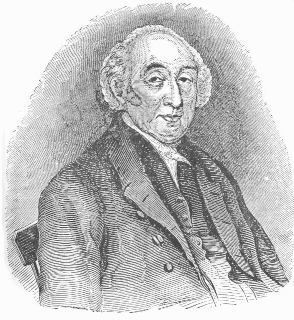
(Pictured: Image of Robert Holmes from Michael Doheny’s “The Felon’s Track”)


Leave a comment

Execution of James Dickey, Member of the Society of United Irishmen

James Dickey, a young barrister from a Presbyterian family in Crumlin, County Antrim, in the north of Ireland, is hanged at Corn Market, Belfast, on June 26, 1798. He is active in the Society of United Irishmen and is hanged with Henry Joy McCracken for leading rebels at the Battle of Antrim.

The Society of United Irishmen is formed in October 1791 by leading citizens in Belfast who seek a representative government in Ireland based on principles they believe have been modelled by the American and French Revolutions. At their first meeting they embrace the argument of Theobald Wolfe Tone for a “brotherhood of affection” between Irishmen of all religious persuasions. Tone argues that in Ireland the landed Anglican Ascendancy and the English appointed Irish executive employ division between Protestants and Catholics to balance “the one party by the other, plunder and laugh at the defeat of both.”

Despairing of reform, and in the hope of French assistance, in May 1798, the United Irishmen take up arms against the Dublin government and the British Crown. Beginning in Kildare, the insurrection spreads to other counties in Leinster before finally reaching the Presbyterian districts surrounding Belfast. On June 5, the Antrim societies of United Irishmen meet in Templepatrick where they elect textile manufacturer Henry Joy McCracken as their General. The next day McCracken issues a proclamation calling for the United army of Ulster to rise. The initial plan meets with success, as the towns of Larne, Ballymena, Maghera and Randalstown are taken and the bridge at Toome is damaged to prevent the government rushing reinforcements into Antrim from west of the River Bann.

According to the memoirs of James Burns from Templepatrick, Dickey commands the insurgents at Randalstown and kills Samuel Parker, a “traitor, with his own hands, while standing at his own door, where he went for the purpose.”

McCracken leads a body of about 6,000 rebels in an attack on Antrim town. As promised, Catholic Defenders turn out, but in the march upon the town tensions with the Presbyterian United Irish causes some desertions and a delay in McCracken’s planned assault. McCracken’s men are defeated, and his army melts away. On June 15, Dickey, together with McCracken, James Hope, James Orr and about fifty other rebel survivors from Antrim, arrive at Slemish, near Ballymena. There they set up camp for three weeks before leaving under threat of attack from Colonel Green of the Tay Fencibles.

Dickey is captured by the Sutherland fencibles on Divis, a hill northwest of Belfast. He is court-martialed and hanged at Corn Market, Belfast on June 26, 1798. Famously, before his hanging he refuses to wear a black hood saying to the hangman, “Sir, don’t cover my face!” According to local legend he shouts, “Don’t think gentlemen, I am ashamed to show my face among you, I am dying for my country!” However, a loyalist source hostile to the United Irish cause, Henry Joy of the Belfast News Letter, has Dickey on the scaffold recanting his commitment to the “brotherhood of affection” between Catholic and Protestant. He supposedly warned the assembled that had “the Presbyterians of the north succeeded in their [republican] designs, they would ultimately have had to contend with the Roman Catholics.” It is testament to the sentiment that in the north is to largely expunge the memory of his, and McCracken’s, sacrifice.

Dickey is 22 years old at the time of his execution. His head is placed on a spike outside the Market House on Belfast’s High Street.

Dickey’s brother, John Dickey of Crumlin, is also implicated in the rebellion. He is informed on by neighbours who had noticed that he was making pikes and attending secret meetings of the United Irishmen late at night. Arrested and court-martialed, he refuses the terms granted by the government to the “State Prisoners” in Dublin. He is transported to the West Indies for penal servitude but manages to escape and makes his way to the United States.


Leave a comment

The Battle of Antrim

The Battle of Antrim is fought on June 7, 1798, in County Antrim during the Irish Rebellion of 1798 between British troops and Irish insurgents led by Henry Joy McCracken. The British win the battle, beating off a rebel attack on Antrim town following the arrival of reinforcements but the county governor, John O’Neill, 1st Viscount O’Neill, is fatally wounded.

The outbreak of the United Irish rebellion in Leinster on May 23 had prompted calls from Ulster United Irishmen to take to the field in support of their southern comrades. However, the organisation in Ulster had been severely damaged in a brutal disarmament campaign the previous year, and the new leadership are less radical and are not willing take to the field without French assistance, which is expected daily.

After waiting for two weeks while the rebellion rages in the south, the grassroots United Irish membership in Antrim decides to hold a number of meetings independent of their leaders. The outcome is the election of Henry Joy McCracken as their adjutant general and the decision to rise immediately. McCracken, together with James Hope, quickly formulate a plan to attack and seize all government outposts in County Antrim and then for the main attack to fall on Antrim town. Then using artillery seized at Antrim, the rebels are to march on Belfast in conjunction with the United Irish rebels in County Down.

McCracken has high hopes that many members of the militia will desert and join him, as disaffection is believed to be widespread, evidenced by the execution of four of the Monaghan militia for treason in Belfast in May.

On 6 June, McCracken and James Hope issue a proclamation calling for the United army of Ulster to rise. The initial plan meets with success, as the towns of Larne, Ballymena, Portaferry and Randalstown are taken and the bridge at Toome damaged to prevent the government from rushing reinforcements into Antrim from west of the River Bann. The rebels then assemble at Donegore Hill in preparation for the march and attack on Antrim town, where an emergency meeting of the county’s magistrates called by the county governor, Lord O’Neill, is due to take place.

Although almost 10,000 rebels assemble at Donegore, many display reluctance for the coming fight and stay on the hill in reserve or desert later so that probably fewer than 4,000 actually take part in the attack. The United Irishmen in Ulster are mostly Presbyterian, but are joined with Catholic Defenders and the tension between the two groups on the march likely causes some desertions. These difficulties lead to a loss of momentum, and the attack is delayed. McCracken is forced to make adjustments to his plan of attack, which had envisaged a simultaneous overwhelming assault on the town from four separate points.

The town is garrisoned by a small force of about 200 yeomen, cavalry under Lt. Col. William Lumley and armed volunteers but they also have four artillery pieces and the delay in the rebel attack allows them to send requests for assistance to Belfast and Lisburn from where reinforcements are already on the way. The garrison forms themselves at the base of the demesne wall of Antrim Castle, with artillery to the front and cavalry to the rear with their flanks anchored by the Market House and Presbyterian Meeting House. A part of the Scottish Quarter in the town is also burned by the garrison as it is perceived to be a stronghold of rebel sympathisers.

The attack finally begins shortly before 3:00 p.m. when the rebels begin a cautious march through the town. As rebel front ranks arrive to face the garrison’s defensive line, artillery opens fire on the rebels, causing them to pull back out of range. Large clouds of dust and smoke are thrown up which, together with the fires from the Scottish Quarter, obscure the garrison’s view of events.

The rebel withdrawal is mistaken for a full retreat and the cavalry moves out to pursue and rout the supposed fleeing rebels. The cavalry effectively runs into a gauntlet of rebels who are protected by a long churchyard wall and stationed in houses along the main street, suffering heavy losses to the gunfire and pikes of the rebels.

After routing the cavalry, the rebels attack the remainder of the garrison, which then begins to pull back to the safety of the castle wall. This is mistaken by a newly arrived rebel column as an attack on them, causing them to flee in panic. In the confusion, the county commander, Lord O’Neill, trapped with his magistrates, is fatally wounded by James Clements who avoids trial by joining the army. A rebel attempt to seize the artillery is only narrowly beaten off by troops stationed behind the demesne wall.

At this critical juncture, British reinforcements from Belfast arrive outside the town and, assuming it to be held by the rebels, begin to shell it with their artillery. This prompts more desertions and the rebel army begins to disintegrate, but their withdrawal is protected by a small band under James Hope which fights a successful rearguard action from the church grounds along the main street. This allows the bulk of the rebels to withdraw safely.

When the military enters the town, they begin a spree of looting, burning and murder, of which the most enthusiastic perpetrators are reported to be the Monaghan militiamen, who are anxious to prove their loyalty and expunge the shame of the recent executions of their comrades for sedition. The town of Templepatrick is burned to the ground and Old Stone Castle is razed to the ground. McCracken, Hope and their remaining supporters withdraw northward, establishing camps of ever dwindling size along the route of their retreat until news of the defeat at Ballynahinch causes their final dispersion. McCracken is arrested by yeomen on July 7 and is hanged in Belfast on July 17, having refused an offer of clemency in return for informing on his comrades.

Commemoration of the centenary of the battle, marked by a nationalist parade in Belfast on June 6, 1898, provokes loyalist riots.


Leave a comment

Birth of Maeve Kyle, Olympic Athlete & Hockey Player

Maeve Esther Enid Kyle, OBE, Irish Olympic athlete and hockey player, is born Maeve Esther Enid Shankey in County Kilkenny on October 6, 1928.

Kyle briefly attends Kilkenny College where her father C.G. Shankey is headmaster, before attending Alexandra College and finally, Trinity College, Dublin. She is the granddaughter of William Thrift.

Kyle competes in the 100m and 200m in the 1956 Summer Olympics in Melbourne, Australia, and subsequently in the 1960 Summer Olympics in Rome, Italy, and the 1964 Summer Olympics in Tokyo, Japan, where she reaches the semi-finals of both the 400m and 800m. She takes the bronze medal in the 400m at the 1966 European Athletics Indoor Championships in Dortmund, Germany. She wins four gold medals in W45 Category at the 1977 World Masters Athletics Championships in Gothenburg, Sweden, in the 100m, 400m, high jump and long jump. She holds World Masters records at W40 for the 100m (12:00 secs) and 400m (55.30 secs) and W45 100m (12.50 secs) and W50 long jump at 5.04m.

In field hockey, Kyle gains 58 Irish caps as well as representing three of the four Irish provinces (Leinster, Munster and Ulster) at different stages of her career. She is named in the World All Star team in 1953 and 1959. She is also a competitor in tennis, swimming, sailing and cricket and works as a coach. She is chair of Coaching NI. In 2006, she is awarded the honorary degree of Doctor of the University (DUniv) from the University of Ulster.

Kyle is awarded the Lifetime Achievement Award at the 2006 Coaching Awards in London in recognition of her work with athletes at the Ballymena and Antrim Athletics Club. Earlier in 2006 she is one of 10 players who are initially installed into Irish hockey’s Hall of Fame. She is appointed Officer of the Order of the British Empire (OBE) in the 2008 New Year Honours.


Leave a comment

First Meeting of the General Synod of Ulster

The first recorded meeting of the Presbyterian General Synod of Ulster is held at Antrim, County Antrim, on September 30, 1691.

The Synod (or General Synod) of Ulster is the forerunner of the General Assembly of the Presbyterian Church in Ireland. It comprises all the clergy of the church elected by their respective local presbyteries (or church elders) and a section of the laity.

In 1726, the Synod expels ministers, grouped together as the Synod of Antrim, who refuse to subscribe to the Westminster Confession of Faith. Later there is a further secession by those who, insisting on the sole kingship of Christ, reject the Confession. In 1763 they organise a distinct Reformed Presbyterian Church, and in 1811 establish their own provincial synod. In 1746, some of the more doctrinaire Calvinists withdraw, forming the Secession Synod.

Within the mainline Synod there is a continuing distinction between ‘Old Light‘ supporters of theological orthodoxy and ‘New Light‘ elements more inclined to defer to conscience rather than doctrine. In the first decades of the 19th century, positions harden with New Light ministers adopting a Unitarian or Arian skepticism regarding the doctrine of the Trinity. In 1829, when the leading conservative evangelical, Henry Cooke, succeeds in pressing the General Synod for a firm declaration of Trinitarian belief they withdraw to form their own Remonstrant Synod.

The departure of the latitudinarian party makes possible a reconciliation with the earlier Seceders. Purged of its heterodox elements, in 1840 the Synod of Ulster joins with the Secession Synod to form the General Assembly of the Presbyterian Church in Ireland.


Leave a comment

Death of Henry Joy McCracken, Founding Member of the United Irishmen

Henry Joy McCracken, Irish Republican, industrialist and a founding member of the Society of United Irishmen, is hanged from gallows erected in front of the Market House on Belfast‘s High Street on July 17, 1798, on land his grandfather had donated to the city.

McCracken is born in Belfast on August 31, 1767, into two of the city’s most prominent Presbyterian industrial families. He is the son of a shipowner, Captain John McCracken and Ann Joy, daughter of Francis Joy, of French Huguenot descent. The Joy family makes their money in linen manufacture and founds the News Letter. He is the older brother of political activist and social reformer Mary Ann McCracken, with whom he shares an interest in Irish traditional culture.

In 1792, McCracken helps organise the Belfast Harp Festival which gathers aged harpists from around Ireland and helps preserve the Irish airs by having them transcribed by Edward Bunting. Bunting, who lodges in the McCracken’s Rosemary Lane home, is a classically trained musician.

McCracken becomes interested in republican politics from an early age and along with other Protestants forms the Society of United Irishmen in 1795 which quickly makes him a target of the authorities. He regularly travels throughout the country using his business as a cover for organising other United Irish societies but is arrested in October 1796 and imprisoned in Kilmainham Gaol in Dublin. While imprisoned with other leaders of the United Irishmen, he falls seriously ill and is released on bail in December 1797.

Following the outbreak of the Irish Rebellion of 1798 in Leinster in May 1798, the County Antrim organisation meets on June 3 to decide on their response. The meeting ends inconclusively with a vote to wait for French aid being passed by a narrow margin. A new meeting of delegates is held in Templepatrick on June 5 where McCracken is elected general for Antrim, and he quickly begins planning military operations.

McCracken formulates a plan for all small towns in Antrim to be seized after which rebels will converge upon Antrim town on June 7 where the county’s magistrates are to hold a crisis meeting. Although the plan meets initial success and McCracken leads the rebels in the attack on Antrim, the Catholic Defenders group whom he expects assistance from are conspicuous by their absence. The mainly Ulster Scots rebels led by McCracken are defeated by the English forces and his army melts away.

Although McCracken initially escapes with James Hope, James Orr, and James Dickey and is supported in his month-long period of hiding by his sister Mary Ann, a chance encounter with men who recognize him from his cotton business leads to his arrest. He is offered clemency if he testifies against other United Irishmen leaders, but he refuses to turn on his compatriots.

McCracken is court martialed and hanged at Corn Market, Belfast, on land his grandfather had donated to the city, on July 17, 1798. According to historian Guy Beiner, his corpse is spared the indignity of decapitation in order not to provoke renewed agitation. He is buried in the Parish Church of St. George in Belfast, but a few years later the grave is demolished.

McCracken’s remains are believed to have been re-interred by Francis Joseph Bigger in 1909 at Clifton Street Cemetery, Belfast, alongside his sister Mary Ann. His illegitimate daughter Maria, whose mother is speculated to have been Mary Bodell, is raised by her aunt Mary Ann McCracken.


Leave a comment

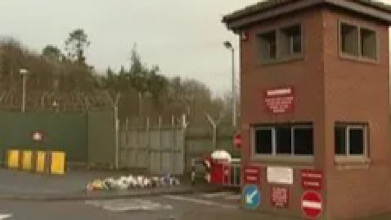
The Moira Car Bomb Attack

Eleven people are injured when a car bomb rocks the centre of Moira, County Down, on the evening of February 20, 1998. The injured include seven Royal Ulster Constabulary (RUC) officers, one a policewoman, and four civilians. The RUC Chief Constable, Ronnie Flanagan, who visits the scene the following morning, says that a warning was issued by a man with a “southern” accent in calls to the Maze and Maghaberry prisons. He adds that a vehicle, possibly the getaway car, was discovered on the southern route of the M1 motorway, suggesting that the attack may have come from south of the Border.

While unionist politicians blame the Irish Republican Army (IRA), this also suggests that the attack could have been the work of the Continuity IRA.

The car bomb, estimated at 500 lbs., is planted outside the local RUC station and explodes at approximately 11:40 PM, about ten minutes after the warnings are issued. Houses and pubs in the vicinity of the RUC station are evacuated. Local people described the explosion as “huge” and “massive.”

The attack comes just hours after Sinn Féin is expelled from the talks about the future of the province by the British Government because of recent IRA killings. By the following morning, no organisation has admitted responsibility for the bombing.

There are reports of the explosion being heard 20 miles away from Moira, which is a picturesque village about 20 miles west of Belfast.

The injured are rushed to Craigavon Area Hospital. None of the injuries are believed to be critical. Flanagan says the damage caused to the local RUC station is significant. A number of nearby houses are also extensively damaged. “One house was virtually demolished in the explosion,” says a police source.

The Democratic Unionist Party (DUP) justice spokesman, Ian Paisley, Jr., who lives nearby, believes that the bomb is initially intended for a specific target in the nearby town of Lisburn, but because of heavy policing the bombers set off the device instead in Moira. “I lay the blame completely at the door of the Provisional IRA,” he says.

In December 2013, a 43-year-old man is arrested in Moy, County Tyrone, and questioned about the attack, but is later released unconditionally. A 47-year-old man is arrested in Dungannon, County Tyrone, on May 7, 2014. He is taken to Antrim police station for questioning but is also released unconditionally.

(From: “11 injured in bomb blast in Co Down,” by Gerry Moriarty, The Irish Times, http://www.irishtimes.com, February 21, 1998)


Leave a comment

The Teebane Bombing

The Teebane bombing takes place on January 17, 1992, at a rural crossroads between Omagh and Cookstown in County Tyrone, Northern Ireland. A roadside bomb destroys a van carrying 14 construction workers who had been repairing a British Army base in Omagh. Eight of the men are killed and the rest are wounded. The Provisional Irish Republican Army (IRA) claims responsibility, saying that the workers were killed because they were “collaborating” with the “forces of occupation.”

Since the beginning of its campaign in 1969, the Provisional IRA has launched frequent attacks on British Army and Royal Ulster Constabulary (RUC) bases in Northern Ireland. In August 1985 it begins targeting civilians who offer services to the security forces, particularly those employed by the security forces to maintain and repair its bases. Between August 1985 and January 1992, the IRA kills 23 people who had been working for (or offering services to) the security forces. The IRA also alleges that some of those targeted had links with Ulster loyalist paramilitaries.

On the evening of January 17, 1992, the 14 construction workers leave work at Lisanelly British Army base in Omagh. They are employees of Karl Construction, based in Antrim. They travel eastward in a Ford Transit van towards Cookstown. When the van reaches the rural Teebane Crossroads, just after 5:00 PM, IRA volunteers detonate a roadside bomb containing an estimated 600 pounds (270 kg) of homemade explosives in two plastic barrels. Later estimates report a 1,500-pound (680 kg) device. The blast is heard from at least ten miles away. It rips through one side of the van, instantly killing the row of passengers seated there. The vehicle’s upper part is torn asunder, and its momentum keeps it tumbling along the road for 30 yards. Some of the bodies of the dead and injured are blown into the adjacent field and ditch. IRA volunteers had detonated the bomb from about 100 yards away using a command wire. A car travelling behind the van is damaged in the explosion, but the driver is not seriously injured. Witnesses report hearing automatic fire immediately prior to the explosion.

Seven of the men are killed outright. They are William Gary Bleeks (25), Cecil James Caldwell (37), Robert Dunseath (25), David Harkness (23), John Richard McConnell (38), Nigel McKee (22) and Robert Irons (61). The van’s driver, Oswald Gilchrist (44), dies of his wounds in hospital four days later. Robert Dunseath is a British soldier serving with the Royal Irish Rangers. The other six workers are badly injured; two of them are members of the Ulster Defence Regiment (UDR). It is the highest death toll from one incident in Northern Ireland since 1988.

The IRA’s East Tyrone Brigade claims responsibility for the bombing soon afterward. It argues that the men were legitimate targets because they were “collaborators engaged in rebuilding Lisanelly barracks” and vowed that attacks on “collaborators” would continue.

Both unionist and Irish nationalist politicians condemn the attack. Sinn Féin president Gerry Adams, however, describes the bombing as “a horrific reminder of the failure of British policy in Ireland.” He adds that it highlights “the urgent need for an inclusive dialogue which can create a genuine peace process.” British Prime Minister John Major visits Northern Ireland within days and promises more troops, pledging that the IRA will not change government policy.

As all of those killed are Protestant, some interpret the bombing as a sectarian attack against their community. Less than three weeks later, the Ulster loyalist Ulster Defence Association (UDA) launches a ‘retaliation’ for the bombing. On February 5, two masked men armed with an automatic rifle and revolver enter Sean Graham’s betting shop on Ormeau Road in an Irish nationalist area of Belfast. The shop is packed with customers at the time. The men fire indiscriminately at the customers, killing five Irish Catholic civilians, before fleeing to a getaway car. The UDA claims responsibility using the cover name “Ulster Freedom Fighters,” ending its statement with “Remember Teebane.” After the shootings, a cousin of one of those killed at Teebane visits the betting shop and says, “I just don’t know what to say but I know one thing – this is the best thing that’s happened for the Provos [Provisional IRA] in this area in years. This is the best recruitment campaign they could wish for.”

The Historical Enquiries Team (HET) conducts an investigation into the bombing and releases its report to the families of the victims. It finds that the IRA unit had initially planned to carry out the attack on the morning of January 17 as the workers made their way to work but, due to fog, it was put off until the afternoon. Although suspects were rounded up and there were arrests in the wake of the attack, nobody has ever been charged or convicted of the bombing.

Karl Construction erects a granite memorial at the site of the attack and a memorial service is held there each year. In January 2012, on the 20th anniversary of the attack, Democratic Unionist Party (DUP) MLA, Trevor Clarke, whose brother-in-law Nigel McKee at age 22 was the youngest person killed in the bombing, demands that republicans provide the names of the IRA bombers.