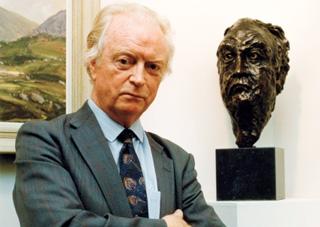
Stewart grows up in Dublin. He begins playing guitar when he is thirteen, influenced by guitarists Les Paul and Barney Kessel. He begins his professional career performing in Dublin showbands. In 1968 he wins an award as best soloist at the Montreux Jazz Festival. Soon after, he spends three years with Benny Goodman.
In 1981, ahead of his debut in the United States as a leader, The New York Times states, “Mr. Stewart seems to have his musical roots in be-bop. He leans toward material associated with Charlie Parker and he spins out single note lines that flow with an unhurried grace, colored by sudden bright, lively chorded phrases. His up-tempo virtuosity is balanced by a laid-back approach to ballads, which catches the mood of the piece without sacrificing the rhythmic emphasis that keeps it moving.” In a review of Stewart’s 1995 album Overdrive, AllMusic states, “Louis Stewart is one of the all-time greats, and it is obvious from the first notes he plays on any occasion.”
Stewart receives an honorary doctorate from Trinity College, Dublin, in 1998. In 2009, he is elected to Aosdána, an Irish affiliation of people engaged in literature, music, and visual arts that was established by the Arts Council of Ireland in 1981 to honour those whose work has made an outstanding contribution to the creative arts in Ireland.
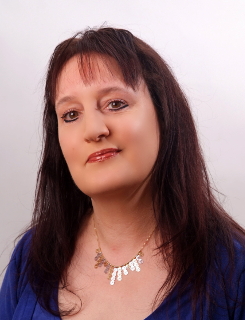
O’Brien is the youngest child of “a strict, religious family.” From 1941 to 1946 she is educated by the Sisters of Mercy, a circumstance that contributes to a “suffocating” childhood. “I rebelled against the coercive and stifling religion into which I was born and bred. It was very frightening and all pervasive. I’m glad it has gone.” She is fond of a nun as she deeply misses her mum and tries to identify the nun with her mother.
In 1950, O’Brien is awarded a licence as a pharmacist. In Ireland, she reads such writers as Leo Tolstoy, William Makepeace Thackeray, and F. Scott Fitzgerald. In 1954, she marries, against her parents’ wishes, the Irish writer Ernest Gébler and the couple moves to London. They have two sons, but the marriage is dissolved in 1964. Gébler dies in 1998.
In London, O’Brien purchases Introducing James Joyce, with an introduction written by T. S. Eliot. When she learns that James Joyce‘s A Portrait of the Artist as a Young Man is autobiographical, it makes her realise where she might turn, should she decide to write herself. In London she starts work as a reader for Hutchinson, where on the basis of her reports she is commissioned, for £50, to write a novel. Her first novel, The Country Girls (1960), is often credited with breaking silence on sexual matters and social issues during a repressive period in Ireland following World War II.
This novel is the first part of a trilogy of novels which includes The Lonely Girl (1962) and Girls in Their Married Bliss (1964). Shortly after their publication, these books are banned and, in some cases burned, in her native country due to their frank portrayals of the sex lives of their characters. Her novel A Pagan Place (1970) is about her repressive childhood. Her parents are vehemently against all things related to literature and her mother strongly disapproves of her daughter’s career as a writer.
O’Brien is a panel member for the first edition of the BBC‘s Question Time in 1979. In 2017, she becomes the sole surviving member.
Other works include a biography of James Joyce, published in 1999, and one of the poet Lord Byron, Byron in Love (2009). House of Splendid Isolation (1994), her novel about a terrorist who goes on the run, marks a new phase in her writing career. Down by the River (1996) concerns an under-age rape victim who seeks an abortion in England, the “Miss X case.” In the Forest (2002) deals with the real-life case of Brendan O’Donnell, who abducts and murders a woman, her three-year-old son, and a priest, in rural Ireland.
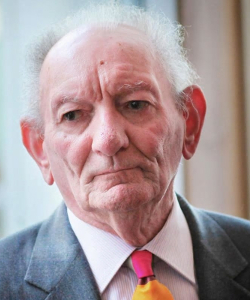
In 1920, the family moves from Dromore to Omagh. After living for a short time in Castle Street and Drumragh, the family finally settles in St. Patrick’s Terrace in the Gallows Hill area of Omagh. This area is to be a lasting inspiration for Kiely.
Kiely begins to feel the urge to become a writer during his teenage years. He has a keen interest in the work of George Bernard Shaw, H. G. Wells and Jonathan Swift. In 1936, after completing his education at Mount St. Columba Christian Brothers School in Omagh, he goes to work as a sorting clerk in the Omagh Post Office.
However, Kiely soon realises that the post office will not provide him with the life of the scholar which he so desires. In the spring of 1937, he leaves Omagh and begins a new life in Emo Park, Portarlington, County Laois, where he decides to train as a Jesuit priest. His life as a Jesuit is not meant to be for, exactly a year later, in the spring of 1938, he suffers a serious spinal injury, which results in a lengthy stay in Cappagh National Orthopaedic Hospital in Finglas, Dublin. During his hospitalisation, he is given plenty of time to think about the course his life has already taken, and about a course it might take. He also realises that he lacks a vocation to the priesthood and abandons his training as a Jesuit.
When Kiely gets out of hospital in 1939, he returns to Omagh to recover from his back problem. The following year, he begins working as a part-time journalist in the weekly Catholic Standard newspaper. In 1943, he graduates from National University of Ireland with a B.A. in History and Letters.
In 1945, Kiely begins working for the Irish Independent, where he is employed as a journalist and critic. In 1950, he joins The Irish Press as a literary editor. In 1964, he moves to the United States where, over a period of four years, he is a Writer-in-Residence at Emory University, visiting professor at the University of Oregon, and Writer-in-Residence at Hollins College (Virginia). In 1968, he returns to Ireland. In the spring of 1976, he is Distinguished Visiting Professor at the University of Delaware. He continues to receive acclaim for his writing and journalism, a career which spans over six decades, receiving the Award for Literature from the Irish Academy of Letters. By now, he is one of Ireland’s best-known writers. In 1996, he is named Saoi of Aosdána, the highest honour given by the Arts Council of Ireland.
Kiely visits Omagh in 2001 which is marked by the unveiling of a plaque outside his childhood home on Gallows Hill by Omagh’s Plain Speaking Community Arts group. Every September an event is held in Omagh called The Benedict Kiely Literary Weekend to celebrate his many achievements.
Mary Josephine Lavin, noted Irish short story writer and novelist, is born in Walpole, Massachusetts on June 10, 1912. She is regarded as a pioneering female author in the traditionally male-dominated world of Irish letters. Her subject matter often deals explicitly with feminist issues and concerns as well as a deep Catholic faith.
Lavin is the only child born to Tom and Nora Lavin, an immigrant Irish couple. She attends primary school in East Walpole until the age of ten, when her mother decides to go back to Ireland. Initially, Mary and Nora live with Nora’s family in Athenry, County Galway. Afterwards, they purchase a house in Dublin, and Mary’s father comes back from the United States to join them.
Lavin attends Loreto College, a convent school in Dublin, before going on to study English and French at University College Dublin (UCD). She teaches French at Loreto College for a while. As a postgraduate student, she publishes her first short story, “Miss Holland,” which appears in the The Dublin Magazine in 1938. Tom Lavin then approaches Edward Plunkett, 18th Baron of Dunsany, the well-known Irish writer, on behalf of his daughter and asks him to read some of Mary’s unpublished work. Suitably impressed, Lord Dunsany becomes her literary mentor.
In 1943, Lavin publishes her first book, Tales from Bective Bridge, a volume of ten short stories about life in rural Ireland. It is a critical success and goes on to win the James Tait Black Memorial Prize for fiction. That same year, she marries William Walsh, a Dublin lawyer. Over the next decade, the couple has three daughters and moves to “abbey farm” which they purchase in County Meath and includes the land around Bective Abbey. Her literary career flourishes. She publishes several novels and collections of short stories during this period. Her first novel, The House in Clewe Street, is serialised in The Atlantic Monthly before its publication in book form in 1945.
In 1954, William Walsh dies. Lavin, her reputation as a major writer already well-established, is left to confront her responsibilities alone. She raises her three daughters and keeps the family farm going at the same time. She also manages to keep her literary career on track, continuing to publish short stories and winning several awards for her work, including the Katherine Mansfield Prize in 1961, Guggenheim Fellowships in 1959 and 1961, and an honorary doctorate from UCD in 1968. Some of her stories written during this period, dealing with the topic of widowhood, are acknowledged to be among her finest.
Lavin remarries in 1969. Michael Scott is an old friend from her student days in University College. He has been a Jesuit priest in Australia but has obtained release from his vows from Rome and returned to Ireland. The two remain together until Scott’s death in 1991.
In 1992, Lavin, by now retired, is elected Saoi by the members of Aosdána for achieving “singular and sustained distinction” in literature. Aosdána is an affiliation of creative artists in Ireland, and the title of Saoi one of the highest honours in Irish culture.
Mary Lavin dies at the age of 83 on March 25, 1996.
James Plunkett Kelly, known by the pen name James Plunkett, Irish novelist, playwright, and short-story writer, dies in Dublin on May 28, 2003. His works, which deal with Ireland’s political and labour problems, contain vivid portraits of working-class and middle-class Dubliners.
Plunkett is born in Sandymount, Dublin on May 21, 1920, and grows up among the Dublin working class and they, along with the petite bourgeoisie and lower intelligentsia, make up the bulk of the dramatis personæ of his oeuvre. He is educated at Synge Street CBS, a Christian Brothers school located on Synge Street in Dublin. He leaves school at the age of seventeen. He later studies violin and viola at the Dublin College of Music and plays professionally in Dublin. He serves for a time as an official in the Workers’ Union of Ireland.
Plunkett’s best-known works are the novel Strumpet City, set in Dublin in the years leading up to the Dublin lock-out of 1913 and during the course of the strike, and the short stories in the collection The Trusting and the Maimed. His other works include a radio play on James Larkin, who figures prominently in his work.
During the 1960s, Plunkett works as a producer at Telefís Éireann. He wins two Jacob’s Awards, in 1965 and 1969, for his TV productions. In 1971 he writes and presents “Inis Fail – Isle of Destiny,” his very personal appreciation of Ireland. It is the final episode of the BBC series Bird’s Eye View, shot entirely from a helicopter, and the first co-production between the BBC and RTÉ. Plunkett is a member of Aosdána.
James Plunkett dies in a Dublin nursing home on May 28, 2003, just a week after his 83rd birthday. He is cremated at Mount Jerome Cemetery and Crematorium in Dublin.
A second-year class, “2 Plunkett” at Synge Street CBS, is named in honour of James Plunkett.
Irish composerGráinne Mulvey is born on March 10, 1966, in Dún Laoghaire, County Dublin. Her music is timbrally and rhythmically complex — a legacy of her work in the electroacoustic field. Her microtonally-inflected language derives ultimately from the natural harmonic series, placing her somewhat in the spectral tradition.
Mulvey is appointed as one of the Course Directors of the IMRO Summer School of Composition in 2014. In 2001, 2010 and 2011, she was on the adjudicator’s panel for the Guido d’Arezzo Composers’ Composition Competition in Italy. She has curated concerts for the Contemporary Music Centre, Ireland in 2011 and 2012, the Association of Irish Composers in May 2016 and a retrospective concert of her work at The Carlow Arts Festival in June 2016.
Mulvey’s music has been widely performed both in Ireland and abroad and her works have been broadcast by radio stations across the globe. One of her earliest works Étude, for piano (1994), is selected for that year’s International Rostrum of Composers in Paris, an honour that is to be repeated with 2004’s orchestral work Scorched Earth, and in 2015 with Diffractions for orchestra, in Slovenia. She is a featured composer in the 2007 Horizons concert series, with the RTÉ National Symphony Orchestra, conductor Robert Houlihan, performing three of her orchestral works. She has the distinction of being selected for the ISCM World Music Days in consecutive years with Akanos (Vilnius, Lithuania, 2008 and Växjö, Sweden, 2009).
In April 2010, Mulvey is elected to membership of Aosdána, the State-recognised affiliation of creative artists in Ireland. A CD Akanos & Other Works, dedicated to her recent work, is released in February 2014 on the Navona label.
Eilís Dillon, Irish author of 50 books, is born in Galway, County Galway on March 7, 1920. Her work has been translated into 14 languages.
Dillon is the third of five children of Professor Thomas Dillon and his wife Geraldine (née Plunkett), who is the sister of Joseph Mary Plunkett. She is raised at Dangan House outside of Galway City before moving to the small fishing village of Barna. She attends the local primary school where she becomes proficient in the Irish language and gains an intimate knowledge of tradition in the Connemara. Her family is involved in Irish revolutionary politics. Her uncle, Joseph Mary Plunkett, is a signatory of the 1916 Proclamation of the Irish Republic and is executed after the Easter Rising.
Educated by the Ursuline nuns in Sligo, she works briefly in the hotel and catering trade. In 1940 she marries Cormac Ó Cuilleanáin, an academic from University College Cork and 17 years her senior. They have at least three children, including the Irish poet and Trinity College Dublin professor Eiléan Ní Chuilleanáin and her brother, Cormac Ó Cuilleanáin, also a Trinity professor, who writes novels as Cormac Millar.
Dillon’s first books are written in Irish including An Choill Bheo, published in 1948, Oscar agus an Cóiste sé nEasóg in 1952 and Ceol na coille in 1955. After the success of The Lost Island, published in 1952, she writes almost exclusively in English. Most of her books are aimed at teen readers with themes of self-discovery and problem solving evident.
Dillon’s adult fiction career begins in 1953 with the publication of the detective novel Death at Crane’s Court. This is followed by Sent to His Account in 1954 and Death in the Quadrangle in 1956. These novels are known for their depiction of contemporary Ireland. Over the following decade Dillon publishes many novels including The Bitter Glass (1959), Across the Bitter Sea (1973) and The Wild Geese (1981).
In 1964 she moves to Rome due to her husband’s poor health. While there she acts as adviser to International Commission on English in the Liturgy. She returns to Cork with her husband in 1969 where he dies the following year. She continues to visit Italy over the next several years, setting some of her stories there including Living in Imperial Rome (1974) and The Five Hundred (1972), though these are not as popular as her Irish books. In 1974 she marries the American-based critic and professor Vivian Mercier, dividing her time between California, Italy and Dublin.
In her later years Dillon plays a prominent role in Irish culture. She is a Fellow of the Royal Society for Literature and a member of Aosdána, serves on the Irish Arts Council 1974–1979, chairs the Irish Writers’ Union and the Irish Writers’ Centre, and founds the Irish Children’s Book Trust. In 1987 she and her husband move permanently to Dublin where she supports up and coming Irish authors. Her last story is Children of Bach published in 1993.
Ó Faoláin writes his first stories in the 1920s, eventually completing 90 stories over a period of 60 years. From 1929 to 1933 he lectures at the Catholic college, St. Mary’s College, at Strawberry Hill in Twickenham, England, during which period he writes his first two books. His first book, Midsummer Night Madness, is published in 1932. It is a collection of stories partly based on his Civil War experiences. He afterwards returns to his native Ireland. He publishes novels, short stories, biographies, travel books, translations, and literary criticism – including one of the rare full-length studies of the short story, The Short Story (1948). He also writes a cultural history, The Irish, in 1947.
Recognised for early works such as Philadelphia, Here I Come! and Faith Healer, Friel has 24 plays published in a career of more than a half-century. He is elected to the honorary position of Saoi of Aosdána. His plays are commonly produced on Broadway in New York City throughout this time, as well as in Ireland and the United Kingdom. In 1980 Friel co-founds Field Day Theatre Company, and his play Translations is the company’s first production. With Field Day, Friel collaborates with Seamus Heaney, 1995 recipient of the Nobel Prize in Literature. Heaney and Friel first become friends after Friel sends the young poet a letter following publication of his book Death of a Naturalist. Friel’s play Dancing at Lughnasa wins three Tony Awards in 1992.
After a long illness Friel dies at the age of 86 in the early morning of Friday, October 2, 2015, in Greencastle, County Donegal. He is survived by his wife Anne and children Mary, Judy, Sally and David. A daughter, Patricia, predeceases him in 2012.
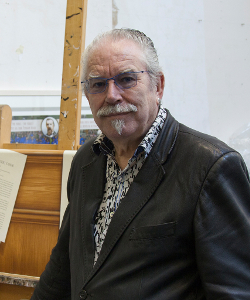
Robert “Bobby” Ballagh, artist, painter and designer, is born in Dublin on September 22, 1943. His painting style is strongly influenced by pop art. He is particularly well known for his hyperealistic renderings of well-known Irish literary, historical or establishment figures.
In 1991, he co-ordinates the 75th anniversary commemoration of the 1916 Easter Rising, during which he claims he is harassed by the Special Branch of the Garda Síochána.
He is the president of the Ireland Institute for Historical and Cultural Studies, which promotes international republicanism. It is based at the new Pearse centre at 27 Pearse Street, Dublin, which is the birthplace of Pádraig Pearse in 1879.
In July 2011 it is reported that he might consider running for the 2011 Irish Presidential election with the backing of Sinn Féin and the United Left Alliance. A Sinn Féin source confirms there has been “very informal discussions” and that Ballagh’s nomination is “a possibility” but “very loose at this stage.” However, on July 25 Ballagh rules out running in the election, saying that he has never considered being a candidate. His discussions with the parties had been about the election “in general” and he has no ambitions to run for political office.
That same month, Ballagh breaks ranks with his colleagues in the travelling production of Riverdance in their decision to perform in Israel. He is an active member of the Ireland Palestine Solidarity Campaign, which insists that artists and academics participate in boycotts of Israeli businesses and cultural institutions.
In July 2012, Ballagh says he is “ashamed and profoundly depressed” at the en masse closure of Irish galleries and museums. He cites an example of some Americans and Canadians on holiday in Ireland. “They described most of the National Gallery as being closed along with several rooms in the Hugh Lane Gallery. I’m glad they didn’t bother going out to the Museum of Modern Art in Kilmainham because that’s closed too. At the point I met them, they were returning from Galway where they had found the Nora Barnacle Museum closed too.” He condemns the hypocrisy of political leaders, saying, “I know arts funding is not a big issue for people struggling to put food on the table, but we are talking about the soul of the nation.”






 seamus dubhghaill