seamus dubhghaill

Promoting Irish Culture and History from Little Rock, Arkansas, USA


Leave a comment

Easter Rising “Remembrance Wall” Unveiled

glasnevin-memorial-wall

A “Remembrance Wall” showing the names of all those who died during the 1916 Easter Rising is unveiled at Glasnevin Cemetery in Dublin on April 3, 2016. The memorial wall bears the names of all those who died, Irish and British, military and civilian, in the rebellion 100 years earlier.

Almost 500 people are killed in the uprising, with 268 of them being civilians caught up in the violence. The names are displayed chronologically without distinction between the different categories. The inclusion of the names of 119 British soldiers on the wall, some of whom are buried in Glasnevin, causes some controversy and a number of protesters gather outside the cemetery to demonstrate as the interfaith service takes place inside. A significant Garda Síochána presence monitors the protest events.

The Glasnevin Trust insists the memorial is an attempt to present the historical facts, without hierarchy or judgement. Chairman of Glasnevin Trust John Green tells the service the wall reflects modern Ireland. “Behind each and every one of these lost lives is a story of heartbreak, no matter what side the person served on or indeed for those innocently caught up in the conflict,” he says. “One hundred years on we believe this memorial reflects the time we live in, with the overwhelming majority of the Irish people wishing to live in peace and in reconciliation. But it is for each visitor to take from the wall what they wish.”

Senior church figures from a range of faiths and humanist representatives are among those to speak at the ceremony. Inspiration for the project is drawn from an international memorial near Arras in France that lists the names of 580,000 people killed in fighting on the western front in World War I. Taoiseach Enda Kenny lays a wreath during the event, which is part of the official State programme commemorating the uprising.

Conradh na Gaeilge expresses its disappointment about a spelling mistake on the new memorial wall. The wall is titled Éirí Amach na Cásca but the word Éirí (meaning Rising) appears with a fada on the first i, instead of on the E. Julian de Spáinn of Conradh na Gaeilge says the mistake illustrates a laziness toward the Irish language and he cannot understand why those involved did not ensure that the Irish is as accurate and correct as the English spelling on the wall.


2 Comments

Death of Francis Arthur Fahy, Songwriter & Poet

francis-arthur-fahy

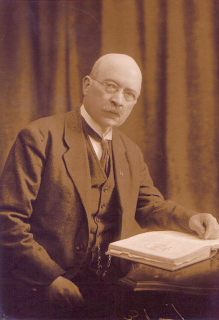
Francis Arthur Fahy, Irish nationalist, songwriter and poet, dies on April 1, 1935. He is probably best remembered as the composer of the evergreen “The Ould Plaid Shawl”. He collaborates with various composers, including Alicia Adélaide Needham, an associate of the Royal Academy of Music.

Fahy is born in Kinvara, County Galway, on September 29, 1854 into a family of seventeen, eight of whom survive. His father, Thomas, comes from the Burren area and his mother, Celia Marlborough, is born near Gort, County Galway.

In 1896, Fahy becomes president of the emerging Conradh na Gaeilge (Gaelic League) in London, a position he holds until 1908. He is also a long time member of the London Irish Literary Society. Described as a small, brisk man, his enthusiasm and energy knows no bounds. His most memorable poems and songs include “The Ould Plaid Shawl,” “The Queen of Connemara,” the original “Galway Bay,” and “The Tide Full In.” His publications include The Child’s Irish Song Book (1881), The Irish Reciter (1882), Irish History in Rhyme (1882) and Irish Songs and Poems (1887).

Fahy retires from the Civil Service at the age of 65. He dies at the age of 81 on April 1, 1935.


Leave a comment

Murder of George Clancy, Mayor of Limerick

george-clancy

George Clancy, Irish nationalist politician and Mayor of Limerick, is shot in his home by Royal Irish Constabulary (RIC) Auxiliaries and dies on March 7, 1921, during the Irish War of Independence.

Clancy is born at Grange, County Limerick in 1881 to a family with a strong republican tradition. He is educated at Crescent College, Limerick, and thereafter at the Catholic University in St. Stephen’s Green, now University College, Dublin. Among his friends at the university are James Joyce, Francis Sheehy-Skeffington, Tomás Mac Curtain and Terence MacSwiney. He helps form a branch of the Gaelic League at college and persuades his friends, including Joyce, to take lessons in the Irish language. He plays hurling and is a good friend of Michael Cusack. With Arthur Griffin he joins the Celtic Literary Society. It is said that he is the model for the character of Michael Davin in Joyce’s A Portrait of the Artist as a Young Man.

Clancy graduates in 1904 and finds a position teaching the Irish language at Clongowes Wood College and is active in the Gaelic Athletic Association. Due to ill health he has to return to his home at Grange. In 1908 he comes to Limerick to teach Irish. In 1913 he joins the Irish Volunteers. In 1915 he marries Máire Killeen, a teacher. After the 1916 Easter Rising, he is arrested and imprisoned in Cork, but is released before he comes to trial following a hunger strike.

Clancy helps in Éamon de Valera‘s election campaign in East Clare. He nearly dies of Spanish flu during the 1918 epidemic but recovers and, in January 1921, he is elected Sinn Féin Mayor of Limerick.

On the night of March 6, 1921, three Auxiliaries come to Clancy’s house and one of them shoots him, injuring him fatally. His wife is also injured in the attack. The previous Mayor, Michael O’Callaghan, is also murdered on the same night by the same group.

Suspicion immediately falls upon members of the Black and Tans, but a British inquiry into the murder, like most such inquiries through the years, absolve Crown forces of any blame. One of Clancy’s killers is later said to be George Nathan who dies in the Spanish Civil War in July 1937.


2 Comments

Death of Republican Activist James Murphy

black-and-tans-and-auxies-dublin-ireland-1921

Republican activist James Murphy dies in Mater Hospital, Dublin on February 11, 1921. Before he dies, he declares that he and Patrick Kennedy had been shot by their Auxiliary captors. A court of inquiry is held, and Captain W. L. King, commanding officer of F Company Auxiliary Division of the Royal Irish Constabulary (ADRIC), is arrested for the killings.

James Murphy and Patrick Kennedy are arrested by Auxiliaries in Dublin on February 9 and are taken into the custody of ‘F’ company. Two hours later, constables of the Dublin Metropolitan Police find the two men lying shot, with pails on their heads, in Clonturk Park, Drumcondra. Kennedy is dead and Murphy is fatally wounded. He dies in Mater Hospital, Dublin two days later.

Just before dying Murphy testifies that King had taken them and stated that they were “just going for a drive.” King is arrested for the killings. King and two of his men, Hinchcliffe and Welsh, are court-martialed on February 13-15, but are acquitted after Murphy’s dying declaration is ruled inadmissible and two officers from ‘F’ Company provide perjured alibis for King at the time of the shootings.

King is implicated and court-martialed for the deaths of Conor Clune, Peadar Clancy, and Dick McKee, the latter two leading lights in the Dublin Irish Republican Army, the former a luckless Gaelic League member, who are all captured in Dublin on November 20, 1920, the day before Bloody Sunday. Clune is caught at Vaughn’s Hotel in Parnell Square, Dublin and the two IRA leaders at Lower Gloucester Street, complete with British Army officer uniforms and detonators.

Sometime between then and the next day, in the Dublin Castle guardroom, as news filters in of the deaths of several British intelligence officers, the prisoners are killed in questionable circumstances. According to an official report from Dublin Castle, they attempted to grab rifles and hurl unfused grenades and are killed in that action. The guards of ‘F’ Company in the room at the time are cleared of wrongdoing by a court inquiry. A Major Reynolds of ‘F’ Company is said to have passed details of the killers to Michael Collins. The Times notes that it seems as if the prisoners had been lined up and shot. In a later novel, a Captain Hardy more or less confesses to the killing of one of the prisoners.

Ironically, Captain King is on Michael Collins’s list of British Intelligence officers to be executed on the morning of November 20, 1920, he is not in his room when the assassins arrive but rather, he is interrogating the prisoners in Dublin Castle.

(Pictured: Mixed gunmen of the Royal Irish Constabulary’s Auxiliary Division and Black and Tans contingents, Stair na hÉireann | History of Ireland)


Leave a comment

Death of Padraic Colum, Poet & Novelist

padraic-colum

Padraic Colum, Irish-born American poet, novelist, biographer, playwright, and children’s author whose lyrics capture the traditions and folklore of rural Ireland, dies in Enfield, Connecticut on January 11, 1972. He is one of the leading figures of the Irish Literary Revival.

Colum was born on December 8, 1881, in Columcille, County Longford, the first of eight children born to Patrick and Susan Columb. In 1892, the family moves to Glasthule, near Dublin and he attends the local national school. He starts writing after he finishes school and meets a number of the leading Irish writers of the time, including W. B. Yeats, Lady Gregory and Æ. He also joins the Gaelic League and is a member of the first board of the Abbey Theatre. He becomes a regular user of the National Library of Ireland, where he meets James Joyce and the two become lifelong friends.

Influenced by the literary activity of the Celtic revival centered in Dublin at the turn of the century, Colum publishes the collection of poetry Wild Earth (1907). He co-founds The Irish Review in 1911, then three years later settles permanently in the United States. His varied literary output includes volumes of poetry including Dramatic Legends (1922) and Creatures (1927), plays such as Broken Soil (first performed 1903) and The Land (1905), novels, anthologies of folklore and children’s books. The reminiscence Our Friend James Joyce (1959) is written with his wife Mary (Maguire), a well-known literary critic.

The Colums spent the years from 1930 to 1933 living in Paris and Nice, where Padraic renews his friendship with James Joyce and becomes involved in the transcription of Finnegans Wake. After their time in France, the couple moves to New York City, where they do some teaching at Columbia University and City College of New York. He is a prolific author and publishes a total of 61 books, not counting his plays. While in New York, he writes the screenplay for the 1954 stop-motion animated film Hansel and Gretel: An Opera Fantasy. It is his only screenplay.

Mary dies in 1957, and Colum completes Our Friend James Joyce, which they had worked on together. It is published in 1958. He divides his later years between the United States and Ireland. In 1961 the Catholic Library Association awards him the Regina Medal.

Padraic Colum dies on January 11, 1972, at the age of 90, in Enfield, Connecticut. He is buried in St. Fintan’s Cemetery in Sutton, Dublin.


Leave a comment

Birth of Irish Language Scholar Osborn Bergin

CREATOR: gd-jpeg v1.0 (using IJG JPEG v62), quality = 100

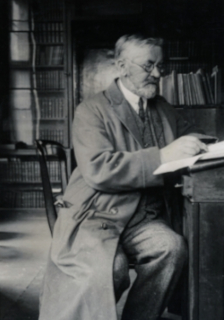
Osborn Joseph Bergin, a scholar of the Irish language and early Irish literature, is born in Cork, County Cork on November 26, 1873.

Bergin is the sixth child and eldest son of Osborn Roberts Bergin and Sarah Reddin, and is educated at Queen’s College Cork, now University College Cork. He then goes to Germany for advanced studies in Celtic languages, working with Heinrich Zimmer at the Friedrich Wilhelm University in Berlin, now the Humboldt University of Berlin, and later with Rudolf Thurneysen at the University of Freiburg, where he writes his dissertation on palatalization in 1906. He then returns to Ireland and teaches at the School of Irish Learning and at University College Dublin.

Within one year of becoming Director of the School of Irish Studies in the Dublin Institute for Advanced Studies, Bergin resigns both the senior professorship and his office of director. The reason for his resignation is never made public.

Bergin, who never uses the name Joseph except when signing with his initials, does not seem to have felt the need of institutional religion, and during his lifetime, he rarely attends religious services. He develops Irish nationalist sympathies and remains a firm nationalist all his life but without party affiliations. From the number of Irish speakers living in Cork, he quickly masters the spoken Irish of West Munster. By 1897, his knowledge of spoken and literary Modern Irish is so strong that he is appointed lecturer in Celtic in Queen’s College, Cork. It is during this time that he becomes an active member of the Gaelic League.

Bergin publishes extensively in the journal for Irish scholarship, Ériu. He is best known for his discovery of Bergin’s Law, which states that while the normal order of a sentence in Old Irish is verb-subject-object, it is permissible for the verb, in the conjunct form, to be placed at the end of the sentence. His friend Frank O’Connor writes humorously that while he discovers the law “he never really believed in it.” He writes poetry in Irish and makes a number of well-received translations of Old Irish love poetry.

Bergin is celebrated in Brian O’Nolan‘s poem Binchy and Bergin and Best, originally printed in the Cruiskeen Lawn column in The Irish Times and now included in The Best of Myles. He is noted for his feuds with George Moore and William Butler Yeats, but he enjoys a lifelong friendship with George William Russell. Frank O’Connor describes Bergin’s eccentricities affectionately in his memoir My Father’s Son.

Osborn Bergin dies in a nursing home in Dublin at the age of 76 on October 6, 1950, having never married.


Leave a comment

Death of Peadar Kearney, Composer & Irish Republican

peadar-kearney

Peadar Kearney, Irish republican and composer of numerous rebel songs, dies in Inchicore, Dublin on November 24, 1942. In 1907 he writes the lyrics to “The Soldier’s Song” (“Amhrán na bhFiann“), now the Irish national anthem. He is the uncle of Irish writers Brendan Behan, Brian Behan, and Dominic Behan.

Kearney was born on December 12, 1883, at 68 Lower Dorset Street, Dublin, above one of the two grocer’s shops owned by his father, John Kearney, originally from Funshog, Collon, County Louth. His mother, Katie (née McGuinness), is from Rathmaiden, Slane, County Meath. He is educated at the Model School, Schoolhouse Lane and St. Joseph’s Secondary C.B.S. in Fairview. He hears Willie Rooney give nationalist lectures on history in the Mechanics’ Institute. For a short time, he attends Belvedere College. Following the death of his father, he is left to support his mother and five younger siblings. He has various menial jobs for three years before being apprenticed to a house painter.

In 1901, the death of Willie Rooney prompts Kearney to join the Willie Rooney Branch of the Gaelic League. He joins the Irish Republican Brotherhood in 1903. He teaches night classes in Irish and numbers Seán O’Casey among his pupils. He finds work with the National Theatre Society and in 1904 is one of the first to inspect the derelict building that becomes the Abbey Theatre. He assists with props and performs occasional walk-on parts at the Abbey until 1916.

Kearney is a co-founder of the Irish Volunteers in 1913 and takes part in the Howth and Kilcoole gun runnings in 1914. In the Easter Rising of 1916 he fights at Jacob’s biscuit factory under Thomas MacDonagh, abandoning an Abbey Theatre tour in England to take part in the Rising. He escapes before the garrison is taken into custody.

Kearney is also active in the Irish War of Independence. On November 25, 1920, he is captured at his home in Summerhill, Dublin and is interned first in Collinstown Camp in Dublin and later in Ballykinler Camp in County Down.

A personal friend of Michael Collins, Kearney at first takes the Free State side in the Irish Civil War but loses faith in the Free State after Collins’s death. He takes no further part in politics, returning to his original trade of house painting.

Kearney’s songs are highly popular with the Irish Volunteers (which later becomes the Irish Republican Army) in the 1913–1922 period. Most popular is “The Soldier’s Song.” He pens the original English lyrics in 1907 and his friend and musical collaborator Patrick Heeney composes the music. The lyrics are published in 1912 and the music in 1916. After 1916 it replaces “God Save Ireland” as the anthem of Irish nationalists. The Irish Free State is established in 1922 and formally adopts the anthem in 1926.

Other well-known songs by Kearney include “Down by the Glenside,” “The Tri-coloured Ribbon,” “Down by the Liffey Side,” “Knockcroghery” (about the village of Knockcroghery) and “Erin Go Bragh” (Erin Go Bragh is the text on the Irish national flag before the adoption of the tricolour).

Peadar Kearney dies in relative poverty in Inchicore on November 24, 1942. He is buried in Glasnevin Cemetery in Dublin.


Leave a comment

Birth of Peadar Toner Mac Fhionnlaoich, Irish Language Writer

peadar-toner-mac-fhionnlaoich

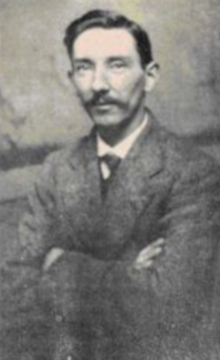
Peadar Toner Mac Fhionnlaoich, Irish language writer during the Gaelic revival known as Cú Uladh (The Hound of Ulster), is born in Allt an Iarainn, County Donegal on October 5, 1857. He writes stories based on Irish folklore, some of the first Irish language plays, and regularly writes articles in most of the Irish language newspapers such as An Claidheamh Soluis.

Mac Fhionnlaoich is the son of Micheal McGinley and Susan Toner. He attends school locally until he is seventeen. He then attends Blackrock College in Dublin for two years. Upon leaving school he enters into the British Civil Service becoming an Inland Revenue Officer. In 1895 he marries Elizabeth Woods (Irish: Sibhéal Ní Uadhaigh) and they have twelve children. He speaks Irish from an early age and keeps an interest in the language throughout his life, first publishing an Irish language short story and poem in The Donegal Christmas Annual 1883. It is not until 1895 while living in Belfast that he becomes involved in the Gaelic Movement.

It is in Mac Fhionnlaoich’s Belfast home that the first meeting of the Ulster branch of the Conradh na Gaeilge takes place in 1895. From this point on he becomes very involved in Conradh na Gaeilge becoming the organisations president on several occasions.

Mac Fhionnlaoich is a member of Seanad Éireann from 1938 to 1942 when he is nominated by Taoiseach Éamon de Valera.

Mac Fhionnlaoich dies at the age of 84 on July 1, 1942, in Dublin. He is buried in Glasnevin Cemetery, Dublin.


Leave a comment

Birth of Michael Cusack, Founder of the Gaelic Athletic Association

michael-cusack

Michael Cusack, teacher and founder of the Gaelic Athletic Association, is born to Irish speaking parents on September 20, 1847 in the parish of Carran on the eastern fringe of the Burren, County Clare during the Great Famine.

Cusack becomes a national school teacher, and after teaching in various parts of Ireland becomes a professor in 1874 at Blackrock College, then known as the French College. In 1877, he establishes his own Civil Service Academy, Cusack’s Academy, in Dublin which proves successful in preparing pupils for the civil service examinations.

A romantic nationalist, Cusack is also “reputed” to have been associated with the Fenian movement. He is active in the Gaelic revival as a member of the Society for the Preservation of the Irish Language which is founded in 1876, and later the Conradh na Gaeilge who in 1879 breaks away from the Society. Also in 1879, he meets Pat Nally, who is a member of the Irish Republican Brotherhood and a leading nationalist and athlete. He finds that Nally’s views on the influence of British landlordism on Irish athletics are the same as his. He recalls how both Nally and himself while walking through the Phoenix Park in Dublin seeing only a handful of people playing sports in the park so depressed them that they agreed it was time to “make an effort to preserve the physical strength of [their] race.” Nally organises a National Athletics Sports meeting in County Mayo in September 1879 which is a success, with Cusack organising a similar event which is open to ‘artisans’ in Dublin the following April.

On November 1, 1884, Cusack, together with Maurice Davin of Carrick-on-Suir, County Tipperary, call a meeting in Hayes’ Commercial Hotel, Thurles, County Tipperary, and found the Gaelic Athletic Association (GAA). Davin is elected president and Cusack becomes its first secretary. Later, Archbishop Thomas William Croke (May 28, 1824 – July 22, 1902), Archbishop of Cashel & Emly, Michael Davitt and Charles Stewart Parnell become patrons. Cusack also becomes involved in the Irish language movement, founding The Celtic Times, a weekly newspaper which focuses on “native games” and Irish culture.

Michael Cusack dies in Dublin at the age of 59 on November 27, 1906.


Leave a comment

Patrick Pearse Arrives in Ros Muc

patrick-pearse-cottage

Patrick Pearse arrives in Ros Muc, County Galway on September 13, 1903, and takes up residence at his cottage in Inbhear.

Born in Dublin on November 10, 1879, Pearse joins the Irish Republican Brotherhood (IRB) in September 1913, becoming Director of Military Organisation of the Irish Volunteers in 1914 and is later co-opted into the IRB’s secretive Military Council, which infiltrates the Volunteers for the Easter Rising.

A writer and Irish language enthusiast long before he becomes a revolutionary, Pearse first comes to Ros Muc in 1903 as a 23-year-old handpicked by Conradh na Gaeilge to act as an Irish examiner.

Pearse develops a strong affinity with the area, buying land on Loch Eileabhrach in 1905, upon which he builds a cottage in 1909. Unusually for a professional at the time, he has it thatched in the style of poor country dwellings and on his regular visits between 1903 and 1915, spends time in the cabins of the poor, soaking up the folklore which finds its way into his writings.

Pearse has a rival for the affections of the locals in the shape of the Lord Lieutenant of Ireland, the Queen’s representative in Ireland. William Ward, 2nd Earl of Dudley also spends summers in the area, where he organises hunts with gentry and children’s fetes.

In response, Pearse organises an evening of Irish festivities for Ros Muc. Pearse gives scholarships to local gaeilgeoiri boys to his St. Enda’s School in Dublin.

Pearse’s last visit to the cottage is in 1915, when he composes the rousing oration for the funeral of Jeremiah O’Donovan Rossa. The following April, he goes one step further, declaring a Republic on the steps of the General Post Office (GPO) in Dublin.

After Pearse’s execution on May 3, 1916, his cottage passes to his mother Margaret. In 1921 it is burned down by the “Black and Tans” and Auxiliaries. Restored by Ó Conghaile and then again by Criostóir Mac Aonghusa, by 1943 Pearse’s sisters Senator Margaret Mary Pearse and Mary Brigid Pearse hand the cottage to the State.

Opened in 2016, a new visitor centre next to Pearse’s Cottage provides an introduction to the Irish language, Gaeltacht culture, and Pearse’s connection to Ros Muc.

(From: “Patrick Pearse’s cottage: a cultural visit to Ros Muc,” Darragh Murphy, The Irish Times, January 13, 2016)