seamus dubhghaill

Promoting Irish Culture and History from Little Rock, Arkansas, USA


Leave a comment

Birth of Jeremiah Joseph “Ginger” O’Connell, Irish Revolutionary

Jeremiah Joseph “Ginger” O’Connell, Irish revolutionary, active in the Irish War of Independence, and later a senior officer in the Defence Forces, is born in Ballina, County Mayo, on December 21, 1887.

O’Connell is born to Jeremiah Ambrose and Winifred O’Connell. He is nicknamed “Ginger” because of his red hair. His father is a national school inspector, so the family lives in Sligo, Derry, Longford and Belfast, and he attends a succession of primary schools. He studies at University College Dublin (UCD) where he receives a BA and a first-class MA. He is a member of the Literary and Historical Society at UCD and has an interest in boxing.

O’Connell is living in Cavan with his father, his sister Mary Margaret, his brother John Aloysius and two servants, Mary Burke and Rose Anne O’Reilly, at the time of the 1911 census, when he is 23. He is working as a Solicitor’s Apprentice, can read and write as well as speak both English and Irish, and is single. His mother is not living as it is recorded that his father is a widower.

O’Connell spends some time in the United States Army, serving with the 69th New York Infantry Regiment between 1912 and 1914. He returns to Ireland in 1914 and joins the Irish Volunteers, becoming Chief of Inspection in 1915. He travels the country organising volunteer corps, as well as contributing to the Irish Volunteer’s journal and delivering lectures on military tactics to both the Volunteers and Fianna Éireann. He also delivers a series of lectures about the famous Irish battles to the Gaelic League in Dublin. He is not a member of the Irish Republican Brotherhood (IRB) as he believes that soldiers should not be a part of secret societies.

At the time the 1916 Easter Rising, O’Connell is operating in Dublin under instruction from Joseph Plunkett. He is dispatched to Cork by Eoin MacNeill to try to prevent the Rising. Following the Rising, he is arrested and held in Frongoch internment camp from April to July 1916. In 1918 he is again arrested and interned, spending time in Wandsworth Prison with Arthur Griffith for the alleged involvement in the fabricated German Plot.

During the Irish War of Independence, O’Connell is a member of the Irish Republican Army (IRA) headquarters staff, as Assistant Director of Training and, after the killing of Dick McKee in 1920, as Director of Training. He coordinates, and is the principal lecturer, for a training course for military officers. The course is run clandestinely in the premises of the Topographical Society on Gardiner Street in Dublin. A sympathetic doorkeeper allows the group in at night when the society is not present. Topics delivered by O’Connell include tactics, ordinance and engineering.

In the IRA split after Dáil Éireann ratifies the Anglo-Irish Treaty, O’Connell takes the pro-Treaty side. He is made Deputy Chief of Staff in the National Army. On June 26, 1922, he is kidnapped by anti-treaty forces in reprisal for the arrest of an anti-treaty officer. His kidnapping is a precipitating factor in the formal outbreak of the Irish Civil War, when government pro-treaty forces two days later attack anti-treaty forces occupying the Four Courts. He survives the fighting and spends the rest of the civil war as General Officer Commanding the Curragh Command.

Following the Irish Civil War, the National Army is reorganised, and as part of that O’Connell is demoted from general to colonel. He subsequently holds a variety of positions: chief lecturer in the army school of instruction (1924–1929); director of no. 2 (intelligence) bureau (1929–1932); OC Irish Army Equitation School (March–June 1932); quartermaster-general (1932–1935) and director of the military archives (1935–1944). He also publishes articles on Irish and foreign military history and tactics in his time as a military historian. He marries Gertrude McGilligan, and they have two children together – one son and one daughter.

O’Connell dies of a heart attack at the age of 56 on February 19, 1944.


Leave a comment

Birth of Richard Barrett, Irish Republican Army Volunteer

Richard Barrett, commonly called Dick Barrett, a prominent Irish Republican Army (IRA) volunteer, is born on December 17, 1889, in Knockacullen (Hollyhill), Ballineen, County Cork. He fights in the Irish War of Independence and on the Anti-Treaty side in the Irish Civil War, during which he is captured and later executed on December 8, 1922.

Barrett is the son of Richard Barrett, farmer, and Ellen Barrett (née Henigan). Educated at Knocks and Knockskagh national schools, he enters the De La Salle College, Waterford, where he trains to be a teacher. Obtaining a first-class diploma, he first teaches at Ballinamult, County Waterford but then returns to Cork in early 1914 to take up a position at the St. Patrick’s Industrial School, Upton. Within months he is appointed principal of Gurrane National School. Devoted to the Irish language and honorary secretary of Knockavilla GAA club, he does much to popularise both movements in the southern and western districts of Cork. He appears to have been a member of the Cork Young Ireland Society.

From 1917, inspired by the Easter Rising, Barrett takes a prominent part in the organisation and operation of the Irish Volunteers and Irish Republican Brotherhood (IRB). By this time, he is also involved with Sinn Féin, in which role he attends the ardfheis at the Mansion House in October 1917 and the convention of the Irish Volunteers at Croke Park immediately afterwards.

Through planning and participating in raids and gunrunning episodes, Barrett comes into close contact with many GHQ staff during the Irish War of Independence, thereby ensuring his own rapid promotion. He is an active Irish Republican Army (IRA) brigade staff officer and occasionally acts as commandant of the West Cork III Brigade. He also organises fundraising activities for the purchase of weapons and for comrades on the run. In July 1920, following the arrest of the Cork III Brigade commander Tom Hales and quartermaster Pat Harte, he is appointed its quartermaster. He is arrested on March 22, 1921, and imprisoned in Cork jail, later being sent to Spike Island, County Cork.

As one of the senior officers held in Spike Island, Barrett is involved in many of the incidents that occur during his time there. After the truce is declared on July 11, 1921, some prisoners go on hunger strike, but he calls it off after a number of days on instructions from outside as a decision had been made that able-bodied men are more important to the cause. In November, Barrett escapes by rowboat alongside Moss (Maurice) Twomey, Henry O’Mahoney, Tom Crofts, Bill Quirke, Dick Eddy and Paddy Buckley.

Following the Irish War of Independence, Barrett supports the Anti-Treaty IRA‘s refusal to submit to the authority of Dáil Éireann (civil government of the Irish Republic declared in 1919). He is opposed to the Anglo-Irish Treaty and calls for the total elimination of English influence in Ireland. In April 1922, under the command of Rory O’Connor, he, along with 200 other hardline anti-treaty men, take over the Four Courts building in the centre of Dublin in defiance of the new Irish government. They want to provoke British troops, who are still in the country, into attacking them. They hope this will restart the war with Britain and reunite the IRA against their common enemy. Michael Collins tries desperately to persuade O’Connor and his men to vacate the building. However, on June 28, 1922, after the Four Courts garrison had kidnapped J. J. O’Connell, a general in the new National Army, Collins’s soldiers shell the Four Courts with British artillery to spark off what becomes known as the Battle of Dublin. O’Connor surrenders following two days of fighting, and Barrett, with most of his comrades, is arrested and held in Mountjoy Gaol. This incident marks the official outbreak of the Irish Civil War, as fighting escalates around the country between pro- and anti-treaty factions.

After the death of Michael Collins in an ambush, a period of tit-for-tat revenge killings ensues. The government implements martial law and enacts the necessary legislation to set up military courts. In November, the government begins to execute Anti-Treaty prisoners, including Erskine Childers. In response, Liam Lynch, the Anti-Treaty Chief of Staff, gives an order that any member of the Dáil who had voted for the ‘murder legislation’ is to be shot on sight.

On December 7, 1922, Teachta Dála (TD) Sean Hales is killed by anti-Treaty IRA men as he leaves the Dáil. Another TD, Pádraic Ó Máille, is also shot and badly wounded in the incident. An emergency cabinet meeting is allegedly held the next day to discuss the assassination of Hales. It is proposed that four prominent members of the Anti-Treaty side currently held as prisoners be executed as a reprisal and deterrent. The names put forward were Barrett, O’Connor, Liam Mellows and Joe McKelvey. It is alleged that the four are chosen to represent each of the four provinces – Munster, Connacht, Leinster and Ulster respectively, but none of the four is actually from Connacht. The executions are ordered by Minister for Justice Kevin O’Higgins. At 2:00 AM on the morning of December 8, 1922, Barrett is awoken along with the other three and informed that they are all to be executed at 8:00 that morning.

Ironies stack one upon the other. Barrett is a member of the same IRA brigade as Hales during the Anglo-Irish War, and they were childhood friends. O’Connor had been best man at O’Higgins’ wedding a year earlier. The rest of Sean Hales’ family remains staunchly anti-Treaty, and publicly denounces the executions. In reprisal for O’Higgins’ role in the executions, the Anti-Treaty IRA kills his father and burns his family home in Stradbally, County Laois. O’Higgins himself dies by an assassin’s hand on July 10, 1927.

The executions stun Ireland, but in terms of halting the Anti-Treaty assassination policy, they have the desired effect. The Free State government continues to execute enemy prisoners, and 77 official executions take place by the end of the war.

Barrett is now buried in his home county, Cork, following exhumation and reinternment by a later government. A monument is erected by old comrades of the West Cork Brigade, the First Southern Division, IRA, and of the Four Courts, Dublin, garrison in 1922 which is unveiled on December 13, 1952, by the Tánaiste Seán Lemass.

A poem about the execution is written by County Galway clergyman Pádraig de Brún.


Leave a comment

Death of Confederate General Patrick Cleburne at the Battle of Franklin

Patrick Ronayne Cleburne, native Irishman called the “Stonewall of the West” and one of the finest generals produced by either side during the American Civil War, is killed at the Battle of Franklin on November 30, 1864.

Cleburne is born on March 17, 1828 at Bride Park Cottage in Ovens, County Cork, just outside Cork city. He is extremely loyal to his adopted country, saying, “if this [Confederacy] that is so dear to my heart is doomed to fail, I pray heaven may let me fall with it, while my face is toward the enemy and my arm battling for that which I know to be right.” Sadly, he ultimately receives his wish.

Cleburne begins his military career in an unlikely manner. When he fails the entrance exam at Trinity College, Dublin, he cannot face his family. He enlists in the 41st Regiment of Foot in the British Army. In 1849 he purchases his discharge and leaves for the United States, eventually settling in Helena, Arkansas in June 1850 and earning his citizenship in 1855. He loves his new country, taking part in many community projects, and even being one of the few volunteers to care for the sick during a yellow fever outbreak.

In January 1861 Cleburne joins the local militia company, the Yell Rifles.  He leads the company in the seizure of the U.S. Arsenal in Little Rock in January 1861. When Arkansas secedes from the Union, the Yell Rifles become part of the 1st Arkansas Infantry Regiment. By fall of 1861 he has risen to command the 2nd Brigade, Hardee’s Division, in the Army of Central Kentucky. His first major battle is at the Battle of Shiloh, April 6-7, 1862. At the Battle of Richmond (Kentucky) in August 1862, he is wounded in the mouth and loses several of his teeth. Still, he earns the thanks of the Confederate States Congress for his actions there. During the October 1862 Battle of Perryville he is wounded again – twice, yet stays in command during the battle. In December 1862 he is promoted to Major General.

At the December 1862 Battle of Stones River, Cleburne and his division earn the praise of General Braxton Bragg for their incredible skill and valor. Cleburne’s actions and character play a large role in his men’s determination during battle.

In 1863 Cleburne faces off against Union General George Henry Thomas at the Battle of Chickamauga. His and General John C. Breckinridge’s assaults force General Thomas to call repeatedly for reinforcements. In November 1863 the Confederate army is forced to retreat after the Chattanooga Campaign. However, Cleburne has defeated every assault against his men eventually charging his attackers. After the battle, he and his men are charged with covering the retreat.

On January 2, 1864, Cleburne makes his most controversial decision ever. He gathers the corps and division commanders in the Army of Tennessee to present his proposal. The Confederacy is unable to fill its ranks due to a lack of manpower. He states that slavery is their “most vulnerable point, a continued embarrassment, and in some respects an insidious weakness.” His proposed solution is for the Confederacy to arm slaves to fight in the army. In time, these soldiers would receive their freedom. The proposal is not well received at all. In fact, Jefferson Davis, President of the Confederate States of America, directs that the proposal be suppressed.

In the spring of 1864 the Army of Tennessee moves towards Atlanta, Georgia. Cleburne and his men fight at Dalton, Tunnel Hill, Resaca, Pickett’s Mill, Ringgold and Kennesaw. The Atlanta Campaign begins in the summer and lasts until September, when General John Bell Hood evacuates Atlanta. Hood had taken command from General Joseph E. Johnston, which Cleburne felt to be a disaster for the Confederacy.

General Hood hopes to stop Union General John Schofield and his men before they can reach Nashville to reinforce General Thomas. Due to poor communications and nightfall, Schofield slips past the Army of Tennessee into Franklin.

The November 30, 1864 Battle of Franklin is a tragic loss for the Confederacy. Hood throws his men into well-fortified Union troops. The results are disastrous. About 6,000 men are killed or wounded including six generals who are killed or mortally wounded. Cleburne is one of these six, killed while attacking Union breastworks. He is last seen advancing on foot toward the Union line with his sword raised, after his horse had been shot out from under him. Accounts later say that he is found just inside the Federal line and his body is carried back to an aid station along the Columbia Turnpike. Confederate war records indicate he died of a shot to the abdomen, or possibly a bullet that went through his heart. When Confederates find his body, he has been picked clean of any valuable items, including his sword, boots and pocket watch.

Cleburne’s remains are first laid to rest at Rose Hill Cemetery in Columbia, Tennessee. At the urging of Army Chaplain Bishop Quintard, Judge Mangum, staff officer to Cleburne and his law partner in Helena, his remains are moved to St. John’s Episcopal Church near Mount Pleasant, Tennessee, where they remain for six years. In 1870, he is disinterred and returned to his adopted hometown of Helena, Arkansas, with much fanfare, and buried in the Helena Confederate Cemetery located in the southwest corner of the Maple Hill Cemetery, overlooking the Mississippi River.

Several geographic features are named after Patrick Cleburne, including Cleburne County in Alabama and Arkansas, and the city of Cleburne, Texas. The Patrick R. Cleburne Confederate Cemetery is a memorial cemetery in Jonesboro, Georgia that is named in honor of General Patrick Cleburne.


Leave a comment

The Battle of Knocknanauss

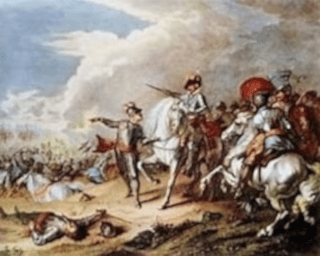
The Battle of Knocknanauss is fought on November 13, 1647, during the Irish Confederate Wars, part of the Wars of the Three Kingdoms, between Confederate Ireland’s Munster army and an English Parliamentarian army under Murrough O’Brien, 1st Earl of Inchiquin. The battle results in a crushing defeat for the Irish Confederates.

In the summer of 1647, Murrough O’Brien (later created the Earl of Inchiquin), commander of the English Parliamentarian forces in Cork, ravages and burns the Confederate territory in Munster. This causes severe food shortages and earns O’Brien the Irish nickname, Murchadh na d’Tóiteán (Murrough the Burner). In addition, Inchiquinn takes the Rock of Cashel, which is garrisoned by Confederate troops and rich in emotive religious symbolism. In the sack of the castle, O’Brien’s troops massacre the garrison and all the clergy they find there.

The Confederates’ Munster army is incapable of stopping O’Brien because of political infighting between officers who support a deal with the English Royalists and those who reject such a deal. Eventually, in reaction to the sack of Cashel and famine conditions, the Confederate Supreme Council replaces Donough MacCarthy, 2nd Viscount Muskerry, as commander of the Munster army with Theobald Taaffe, 1st Earl of Carlingford, and order him to bring O’Brien to battle.

Taaffe is an English Catholic and not an experienced soldier. Although he has an excellent contingent of veteran troops under Alasdair Mac Colla, most of his men are similarly inexperienced. Furthermore, the Irish troops are demoralised by the internal factionalism in their ranks and most of them have little loyalty to Taafe. O’Brien, on the other hand, has been commanding his force since 1642 and is well experienced in battle. His troops are a mixture of well trained Parliamentarian soldiers from England and British settlers who have been driven from their homes in the Irish Rebellion of 1641. The two armies meet at Knocknanuss near Mallow, approximately 29 kilometers north of Cork.

The battle that follows is essentially an uncoordinated rout of the Irish forces. Taaffe positions his men on either side of a hill, so that they cannot see one another. The result is that one wing of the Confederate army has no idea of what the other wing is doing. Mac Colla’s men charge the Parliamentarians opposite them putting them to flight and killing a large number of them. Thinking the battle is over, they then take to looting the enemy’s baggage train.

However, on the other wing, O’Brien’s cavalry has charged the raw Irish horsemen, causing them to run away. Despite Taaffe’s desperate attempt to rally them, the Irish infantry follow suit, many of them being cut down by the pursuing roundheads. The pursuit continues for miles and not only results in heavy casualties among the Irish, but also in the loss of most of their equipment and supplies. Inchiquin loses several senior officers, including the Judge-Advocate, Sir Robert Travers. Mac Colla and his men surrender when they realise what has happened but are subsequently killed by their captors. Around 3,000 Confederates die at Knocknanauss, and up to 1,000 English Parliamentarians. The carnage does not stop after the fighting is finished. The next day a couple of hundred Irish soldiers are found sheltering in a nearby wood. These are promptly put to the sword.

When combined with the Battle of Dungans Hill in County Meath, the defeat leads to the collapse of the Confederate Catholic cause and forces them to make a deal with the English Royalists.


Leave a comment

Death of Sister Catherine McAuley, Founder of the Sisters of Mercy

Catherine Elizabeth McAuley, Irish religious sister who founds the Sisters of Mercy in 1831, dies in Dublin on November 11, 1841. The Sisters of Mercy has always been associated with teaching, especially in Ireland, where the sisters teach Catholics, and at times Protestants, at a time when education is mainly reserved for members of the established Church of Ireland.

McAuley is born on September 29, 1778, at Stormestown House in Dublin to James and Elinor (née Conway) McAuley. Her father dies in 1783 when she is five and her mother dies in 1798. She first goes to live with a maternal uncle, Owen Conway, and later joins her brother James and sister Mary at the home of William Armstrong, a Protestant relative on her mother’s side. In 1803, she becomes the household manager and companion of William and Catherine Callaghan, an elderly, childless, and wealthy Protestant couple and friends of the Armstrongs, at their estate in Coolock, a village northeast of Dublin. For 20 years she gives catechetical instruction to the household servants and the poor village children. Catherine Callaghan, who is raised in the Quaker tradition, dies in 1819. When William Callaghan dies in 1822, McAuley becomes the sole residuary legatee of their estate.

McAuley inherits a considerable fortune and chooses to use it to build a house where she and other compassionate women can take in homeless women and children to provide care and education for them. A location is selected at the junction of Lower Baggot Street and Herbert Street in Dublin, and in June 1824, the cornerstone is laid by the Rev. Dr Blake. As it is being refurbished, she studies current educational methods in preparation for her new endeavour. On the feast of Our Lady of Mercy, September 24, 1827, the new institution for destitute women, orphans, and schools for the poor is opened and McAuley, with two companions, undertake its management.

For three years, McAuley and her companions continue their work as lay women. She never intends to found a community of religious women. Her initial intention is to assemble a lay corps of Catholic social workers. In 1828 Archbishop of Dublin Daniel Murray permits the staff of the institute to assume a distinctive dress and to publicly visit the sick. The uniform adopted is a black dress and cape of the same material reaching to the belt, a white collar and a lace cap and veil – such a costume as is now worn by the postulants of the congregation. In the same year the archbishop desires McAuley to choose some name by which the little community might be known, and she chooses that of “Sisters of Mercy,” having the design of making the works of mercy the distinctive feature of the institute.

McAuley is desirous that the members should combine with the silence and prayer of the Carmelites, with the active labours of a Sister of Charity. The position of the institute is anomalous, its members are not bound by vows nor are they restrained by rules. The clergy and people of the church of the time, however, are not supportive of groups of laywomen working independently of church structures. The main concern is for the stability and continuity of the works of mercy which the women had taken on. Should any of them get married or lose interest, the poor and the orphans whom they are caring for would then be at a loss.

McAuley’s clerical mentor urges her to form a religious institute. Along with two other women, Mary Ann Doyle and Mary Elizabeth Harley, she enters the novitiate of the Presentation Sisters to formally prepare for life as women religious in September 1830. On December 12, 1831, they profess vows and return to the House of Mercy. The Sisters of Mercy consider December 12, 1831, as the day of their founding as a religious community. Archbishop Murray assists McAuley in founding the Sisters of Mercy and professes the first three members. He then appoints her Mother Superior.

Between 1831 and 1841 McAuley founds additional Convents in Tullamore, Charleville, Cork, Carlow, Galway, Limerick, Birr, Bermondsey and Birmingham and branch houses in Kingstown and Booterstown. A cholera epidemic hits Dublin in 1832, and she agrees to staff a cholera hospital on Townsend Street.

The rule of the Sisters of Mercy is formally confirmed by Pope Gregory XVI on June 6, 1841. McAuley lives only ten years as a Sister of Mercy, Sister Mary Catherine.

McAuley dies of tuberculosis at the age of sixty-three on November 11, 1841, at Baggot Street. She is buried at Baggot Street Cemetery. At the time of her death, there are 100 Sisters of Mercy in ten foundations. Shortly thereafter, small groups of sisters leave Ireland to establish new foundations on the east and west coasts of the United States, in Newfoundland, Australia, New Zealand, and Argentina.

Total worldwide membership consists of about 5,500 Sisters of Mercy, 5,000 Associates, and close to half a million partners in ministry. The Mercy International Centre in Dublin is the international “home” of Mercy worldwide and the mercyworld.org website is the virtual home.

In 1978, the cause for the beatification of the Servant of God Catherine McAuley is opened by Pope Paul VI. In 1990, upon recognition of her heroic virtues, Pope John Paul II declares her Venerable.


Leave a comment

Death of Tom Clancy of the Irish Folk Group The Clancy Brothers

Thomas Joseph Clancy, a member of the Irish folk group the Clancy Brothers, dies in Cork, County Cork, on November 7, 1990. He has the most powerful voice of the brothers and has previously been an actor in numerous stage productions, appearing with Orson Welles in King Lear. He also performs often on television and occasionally in the movies.

Clancy is born on October 29, 1924, one of eleven children born to Johanna McGrath and Bob Clancy in Carrick-on-Suir, County Tipperary. After being apprenticed as a baker, he follows his older brother Patrick “Paddy” Clancy into the Royal Air Force (RAF) in 1943 during World War II, despite both having been members of the Irish Republican Army. In the RAF, he works as a radio operator on bombing runs over Germany.

Discharged from the RAF at the end of the war, Clancy tours with a British repertory company. In 1947 he and his brother Paddy emigrate to Canada. They then move to New York where he meets his first wife and his oldest daughter is born in 1950. They then soon move to Cleveland, Ohio, to live with relatives. He works for a while as a repertory actor at the Cleveland Play House, before returning temporarily to Ireland. While in Ireland, Clancy works for the Shakespeareana Internationale company run by English actor and manager Geoffrey Kendal. After Paddy sends him extra money, he returns to the United States. The brothers plan to move to California, but their car breaks down. They decide to try New York City instead and find work as actors, both on and off Broadway.

In 1956 their brother Liam Clancy joins them, accompanied by his friend Tommy Makem. Liam and Tommy begin singing together, and in 1959 are joined by the older Clancy brothers as The Clancy Brothers and Tommy Makem. The group performs together until Liam leaves in 1976. Makem had left in 1969 to be replaced for a brief time by Bobby Clancy and later Louis Killen.

Clancy continues singing with The Clancy Brothers until 1976, when the group is disbanded. The group reforms in 1977 with a new line-up. Clancy performs with his brothers Paddy and Bobby and their nephew Robbie O’Connell until his death. He also performs with Paddy, Liam, and Tommy Makem during their reunion tour from 1984 to 1985.

Clancy takes the lead vocals on many of the group’s songs, such as “The Rising of the Moon,” “The Moonshiner,” “Haul Away Joe,” “Red Haired Mary,” “The Barnyards of Delgaty,” “Carrickfergus,” “I Once Loved a Lass,” “The Bold Fenian Men,” among others.

Clancy continues to act during his singing career, appearing in the movies The Killer Elite (1975) and Swashbuckler (1976). He also appears on episodes of Little House on the Prairie, Starsky and Hutch, and The Incredible Hulk, among others. He acts in several TV movies as well.

After an absence of fifteen years, Clancy returns to Broadway in May 1974 in Eugene O’Neill‘s A Moon for the Misbegotten. The Irish Times reviews his performance of Phil Hogan: “In ‘Moon’ he deftly measures up to the formidable company in which he finds himself – a wily, sly rogue with a whimsical humour and a genuine concern for his daughter.” The play is a hit and wins three Tony Awards.

Clancy dies from stomach cancer at the age of 66 on November 7, 1990 at Mercy University Hospital in Cork, County Cork. He is survived by his wife Joan and their three daughters, Rayleen, Blawneen and Rosie. Prior to his marriage to Joan, he has children, Eileen and Thomas, with Yvonne Marcus, in Cleveland, Ohio. He also has a daughter, Cait, with his second wife Laine, in the mid-1950s.

Clancy’s last recording is made in 1988 with Robbie O’Connell, Bobby Clancy, and Paddy Clancy at Saint Anselm College in Goffstown, New Hampshire. Unfortunately, the recording is marred by unevenly mixed instruments and voices. After his death, Liam returns to the Clancy Brothers to fill in his place.


Leave a comment

Birth of Sir William Basil Goulding, Art Collector, Businessman & Cricketer

Sir William Basil Goulding, Irish cricketer, squash player, art collector and prominent businessman, is born in Dublin on November 4, 1909. He is an important art collector of contemporary art in Ireland and is renowned for his extensive collection which is dispersed posthumously. He is an adept businessman and sits on the boards of many companies.

Goulding is educated at Winchester College and Christ Church, Oxford. He inherits the family business W & HM Goulding Ltd. and succeeds his father as Chairperson in 1935. Goulding Ltd. is a well-established fertiliser manufacturer based in Dublin and Cork. The factory closes and is demolished in the mid-20th century and very little of it remains today. The land is donated to the people of Cork by Goulding in the late 1960s and is subsequently developed as an amenity park.

In 1939 Goulding marries Valerie Hamilton Monckton, daughter of Sir Walter Monckton, a lawyer, the UK Attorney General during the Edward VIII abdication crisis, and later a Member of Parliament (MP) for Bristol West. She is an Irish campaigner for disabled people, founder of the Central Remedial Clinic and senator. Together, they have three sons, Hamilton, Timothy and Lingard. The family lives in Enniskerry, County Wicklow, where he has the significant ‘Goulding Summer House’ built by Scott Tallon Walker architects.

During World War II, Goulding is commissioned as a pilot officer in the Royal Air Force. By the end of 1942 he has reached the rank of wing commander.

The Arts Act of 1951 establishes the Arts Council in response to the Bodkin Report which outlines the sad condition of the arts in Ireland. Goulding is a co-opted member of the Council from its formative years and is instrumental in acting on many of its policies.

Goulding is the founding Chairperson of the Contemporary Irish Art Society in 1962, along with Gordon Lambert, Cecil King, Stanley Mosse, James White and Michael Scott. The enthusiasm and vision of these founding members of the society is the catalyst which leads to the development of many important art collections in Ireland. The purpose of the society is to encourage a greater level of patronage of living Irish artists which, at the time, is extremely low. This is mainly achieved by raising funds to purchase artworks by living artists, which are then donated to public collections. The first purchase in 1962 is an important painting by Patrick Scott, donated to the Municipal Gallery of Modern Art (now the Hugh Lane Gallery). Over the following 12 years the society purchases 37 works for the gallery, until in 1974, Dublin Corporation starts to provide an annual purchasing fund for the gallery.

Following completion of the report ‘Design in Ireland,’ the Kilkenny Design Workshops (KDW) is set up in 1963. It endeavours to nurture native Irish crafts particularly textiles, metalwork, ceramics, glass and furniture to have a modern yet distinctly Irish sensibility. The KDW is the first State sponsored design agency in the world and is held as a model of governmental intervention in design. Goulding sits on the board of the KDW from its origination and occupies the role of Chairperson from 1977 until 1981.

A right-handed batsman and wicket-keeper, Goulding plays twice for the Ireland cricket team against the Marylebone Cricket Club (MCC) in 1934, the year in which his father is president of the Irish Cricket Union. He makes his debut in July in a two-day match, scoring seven runs in the Ireland second innings and taking one catch in the MCC first innings. The following month, he plays his only first-class match, not scoring in either inning. In addition to playing cricket, he also represents Ireland at squash, and captains Oxford University at football.

(Photo: Basil Goulding from Tim Goulding’s website, http://www.timgoulding.com)


Leave a comment

Ulster Rebels Take Dundalk During the Irish Rebellion of 1641

Ulster rebels take Dundalk on October 31, 1641 during the Irish Rebellion of 1641. The rebellion is an uprising by Irish Catholics in the Kingdom of Ireland, who want an end to anti-Catholic discrimination, greater Irish self-governance, and to partially or fully reverse the plantations of Ireland. They also want to prevent a possible invasion or takeover by anti-Catholic English Parliamentarians and Scottish Covenanters, who are defying the king, Charles I.

The rebellion begins on October 23, 1641 as an attempted coup d’état by Catholic gentry and military officers, who try to seize control of the English administration in Ireland. However, it develops into a widespread rebellion and ethnic conflict with English and Scottish Protestant settlers, leading to Scottish military intervention. The rebels eventually found the Irish Catholic Confederacy.

The plan to seize Dublin Castle is foiled, but the rebels swiftly capture numerous towns (including Dundalk), forts and fortified houses in the northern province of Ulster. Within days they hold most of the province. Rebel leader Felim O’Neill of Kinard issues a forged proclamation, the Proclamation of Dungannon, claiming he has the king’s blessing to secure Ireland against the king’s opponents. The uprising spreads southward and soon most of Ireland is in rebellion. In November, rebels besiege Drogheda and defeat an English relief force at Julianstown. The following month, many Anglo-Irish Catholic lords join the rebellion. In these first months, especially in Ulster, some Catholic rebels drive out or kill thousands of Protestant settlers (most notably the Portadown massacre), and settlers respond in kind. Reports of rebel massacres outrage Protestants in Britain, and leave a lasting impact on the Ulster Protestant community.

King Charles and the English parliament both seek to quell the rebellion, but parliament does not trust the king with command of any army raised to do so. This is one of the issues that lead to the English Civil War. Charles orders forces to be raised in Ireland, and the English parliament drafts a bill to give itself the power to raise armed forces. Eventually, in April 1642, following negotiations between the English and Scottish parliaments, the Scots send a Covenanter army to Ireland. It swiftly captures most of eastern Ulster, while a Protestant settler army holds northwestern Ulster. Government forces meanwhile recapture much of the Pale, and hold the region around Cork. Most of the rest of Ireland is under rebel control.

In May 1642, Ireland’s Catholic bishops meet at Kilkenny, declare the rebellion to be a just war and take steps to control it. With representatives of the Catholic nobility in attendance, they agree to set up an alternative government known as the Irish Catholic Confederacy and draw up the Confederate Oath of Association. The rebels, now known as Confederates, hold most of Ireland against the Protestant Royalists, Scottish Covenanters and English Parliamentarians. The rebellion is thus the first stage of the Irish Confederate Wars and part of the wider Wars of the Three Kingdoms, which lasts for the next ten years.

(Pictured: Depiction of the massacre of Ulster Protestants during the 1641 rebellion, the LIFE Picture Collection via Getty Images)


2 Comments

IRA Volunteer Mick Fitzgerald Dies on Hunger Strike

Michael Fitzgerald also known as Mick Fitzgerald, dies on hunger strike in Cork County Gaol on October 17, 1920. He is among the first members of the Irish Republican Army and plays an important role in organizing it. His death is credited with bringing world-wide attention to the Irish cause for independence.

Born in December 1881 in Ballyoran, Fermoy, County Cork, Fitzgerald is educated at the Christian Brothers School in the town and subsequently finds work as a mill worker in the locality. He joins the Irish Volunteers in 1914 and plays an important role in building the local organisation which is soon to become the Irish Republican Army (IRA). He soon rises to the rank of Battalion Commandant, 1st Battalion, Cork No.2 Brigade.

On Easter Sunday, April 20, 1919, Fitzgerald leads a small group of IRA volunteers who capture Araglin, Cork Royal Irish Constabulary Barracks located on the border with County Tipperary. He is subsequently arrested and sentenced to three months imprisonment at Cork County Gaol. He is released from prison in August 1919 and immediately returns to active IRA duty. He is involved in the holding up of a party of British Army troops at the Wesleyan Church in Fermoy. The troops are disarmed although one of them is killed. Arrested and held on remand, Fitzgerald feels that the only chance he has for release is via a hunger strike.

Fitzgerald, along with Terence MacSwiney and nine other IRA volunteers, are arrested on August 8, 1920. On August 11, MacSwiney begins a hunger strike in Brixton Gaol. Fitzgerald and the other nine volunteers at Cork County Gaol join in. At the age of 24, he is the first to die on October 17, 1920 as a result of his sixty-seven day fast. His death is followed by the deaths of Joe Murphy and Terence MacSwiney. Their deaths are credited with bringing world-wide attention to the Irish cause for independence.

Fitzgerald is buried at Kilcrumper Cemetery, on the outskirts of Fermoy, County Cork. In addition, a road is named after him in Togher, Cork.

During a November 2008 visit to Fermoy, Sinn Féin Vice-President Pat Doherty lays a wreath at Fitzgerald’s grave. Doherty says Fitzgerald’s sacrifice was like that of the hunger strikers in 1981. He says it is a great honour for him to pay homage to a man “to whom we owe so much.” Also buried in the Republican Plot in Fermoy is General Liam Lynch, who was Chief of Staff of the IRA when he was shot dead by Irish Free State troops in the Knockmealdown Mountains on April 12, 1923. His last wish was to be buried with his great friend and comrade, Mick Fitzgerald.


Leave a comment

Irish Businessman Ben Dunne Kidnapped by the IRA

Ben Dunne, an Irish businessman, is kidnapped by the Provisional Irish Republican Army (IRA) on October 16, 1981. Former director of his family firm, Dunnes Stores, one of the largest chains of department stores in Ireland, he now owns a chain of fitness centres established by his company Barkisland Developments Limited.

Dunne is born in Cork, County Cork on March 3, 1949 to Nora Maloney and Ben Dunne, a business man who founded Dunnes Stores. He is the last of six children.

In 1981, he is kidnapped by the IRA and held for seven days. He is released unharmed after his friend and fellow businessman, Patrick Gallagher, pays his £1 million ransom.

In 1992, Dunne is arrested for cocaine possession and soliciting while on a golf holiday in Florida. His arrest triggers the end of his leadership of Dunnes Stores, as family turmoil leads to control falling to his sister Margaret Heffernan and the company paying IR£100 million for his share of the business.

Dunne is again embroiled in scandal in the mid-1990s when it emerges he had given large amounts of money to a number of Irish politicians, mainly from the Fianna Fáil party including the then Taoiseach, Charles Haughey. He also gave money to Michael Lowry of Fine Gael. Justice Brian McCracken, sole member of The McCracken Tribunal which is established by the Irish Government in 1997, finds that Dunne knowingly assisted Lowry in evading his tax obligations. On March 22, 2011, the Moriarty Tribunal concludes of Ben Dunne’s dealings with Michael Lowry that “What was contemplated and attempted on the part of Mr. Dunne and Mr. Lowry was profoundly corrupt to a degree that was nothing short of breathtaking.” The report refers to its finding Lowry sought to influence a rent review of a building part-owned by Dunne.

Dunne now owns a chain of fitness centres called Ben Dunne Gyms located in Dublin and Liverpool, which he personally promotes on radio, using recent Irish advertising legislation which allows direct comparisons to named competitors. He was working on a new health club, to open in Dún Laoghaire in Dublin, but abandons the project due to complaints from local residents.

In April 2005 Dunne pays £3,000,000 for a 21-acre site in Motspur Park, New Malden (South London), former home of BBC Football Club and other BBC sports facilities. His intent is to apply for planning permission to build a leisure and fitness centre, but he does not do so. Instead, in February 2008, his company Barkisland Developments Limited submits a planning application to the Kingston upon Thames London Borough Council for change of use of the sports ground to a cemetery. The application to change the former BBC Sports Ground into a cemetery is withdrawn on October 3, 2008 after it had become clear that planning permission was likely to be refused. Objections are lodged by many local residents, sports clubs, Sport England and the Mayor of London.