seamus dubhghaill

Promoting Irish Culture and History from Little Rock, Arkansas, USA


Leave a comment

Birth of William O’Brien, Journalist & Politician

william-o-brien

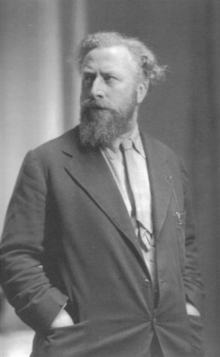
William O’Brien, journalist and politician who is for several years second only to Charles Stewart Parnell among Irish Nationalist leaders, is born on October 2, 1852, in Mallow, County Cork. He is perhaps most important for his Plan of Campaign (1886), by which Irish tenant farmers withhold all rent payments from landlords who refuse to lower their rents and instead pay the money into a mutual defense fund on which evicted tenants can draw.

O’Brien shares his primary education with a townsman with whom he is later to have a close political connection, Canon Patrick Augustine Sheehan of Doneraile. He enjoys his secondary education at the Cloyne diocesan college, which results in his being brought up in an environment noted for its religious tolerance. He greatly values having had this experience from an early age, which strongly influences his later views for the need of such tolerance in Irish national life.

A journalist from 1869, O’Brien is appointed editor of the Irish Land League’s weekly United Ireland by Parnell in 1881. In October of that year the British authorities suppress the paper and put O’Brien in Kilmainham Gaol in Dublin, along with Parnell and others. There he draws up a No Rent Manifesto, which, when read at a Land League meeting, results in the outlawing of the League. Released from prison in 1882, he resumes the editorship of United Ireland, and in 1883 he is elected to the British House of Commons, remaining there until 1895. His “plan of campaign” is disavowed by Parnell but nonetheless stirs up fierce agitation. To suppress the movement, the British government passes the Criminal Law and Procedure (Ireland) Act 1887, under which O’Brien is jailed again.

For some time following the O’Shea divorce case (1889–90), in which Parnell is corespondent, O’Brien attempts to mediate between the Parnellites and their opponents, although he sides with the majority in rejecting Parnell’s continued leadership of the Irish Home Rule struggle. In 1902 he supports the Land Conference, which secures agreement between landlords and tenants’ representatives and results in George Wyndham‘s Land Purchase Act (1903), which is designed to turn Irish tenant farmers into occupying owners.

In 1898 O’Brien founds the United Irish League, and in 1910, after control of that group passes to the Parnellite John Redmond, he establishes the All-for-Ireland League in opposition to the older organization. Most of his personal following, however, join Arthur Griffith’s Sinn Féin party by the end of World War I.

Retiring from political life, O’Brien contents himself with writing and declines Éamon de Valera‘s offer to stand for Fianna Fáil in the 1927 general election. He dies suddenly at the age of 75 on February 25, 1928, while on a visit to London with his wife. His remains rest in Mallow, and one of the principal streets in the town bears his name to this day. His head-bust overlooks the town Council’s Chamber Room and one of his finest portraits hangs in University College Cork.


Leave a comment

State Funeral for Thomas Kent

thomas-kent-funeral

A state funeral for Thomas Kent takes place on September 18, 2015, 99 years after his execution following the 1916 Easter Rising. Thousands of people line the route from Collins Barracks in Cork to the Church of Saint Nicholas, Castlelyons, County Cork for the funeral mass.

Kent is executed after a gun battle with members of the Royal Irish Constabulary (RIC) who come to arrest him and his brothers on May 2, 1916, during the aftermath of the Easter Rising. During the ensuing fight, head constable William Rowe is killed, and Kent’s brother Richard later dies of his wounds. He is executed by firing squad on May 9, 1916, in the Military Detention Barracks, Cork and is buried in an unmarked grave on the grounds.

Apart from Roger Casement, Kent is the only one of the sixteen men executed after the Easter Rising to be executed outside Dublin. In June 2015, his remains are exhumed, and DNA testing confirms their identity.

A ripple of applause breaks through the crowd when the funeral cortege arrives at the church near where Kent was born and raised. The church is unable to accommodate all the visitors, so a marquee is set up on the grounds of the church.

President Michael D. Higgins is in attendance along with Taoiseach Enda Kenny, Tánaiste Joan Burton, Fianna Fáil leader Michéal Martin and Sinn Féin President Gerry Adams. The diplomatic corps is represented by British ambassador Dominick Chilcott, U.S. ambassador Kevin O’Malley and the Papal Nuncio Archbishop Charles Brown. The extended Kent family is represented mostly by the relatives of Edmund and William Kent, Thomas Kent’s brothers.

Kent’s funeral “writes the final chapter in a long ordeal for the Kent family,” the Bishop of Cloyne William Crean tells the congregation. Delivering the funeral eulogy, Cmdt. Gerry White says Thomas Kent was once known only for being the man who gave his name to Kent Station in Cork. “Today, however, all that is changed. Today, because of the recent discovery of his remains, Thomas Kent has once again become someone who is very much in the present. Today, members of Óglaigh na hÉireann, the Irish Defence Forces, will render the military honours that were denied him 99 years ago. Today, he will no longer be the ‘Forgotten Volunteer.’ Today, after 99 years, Thomas Kent is finally coming home.”

Thomas Kent’s life is represented by a picture of the family home, rosary beads, a pioneer pin and a leabhair gaeilge representing his interests in life. He is buried in the graveyard at Castlelyons. Taoiseach Enda Kenny gives the funeral oration.

(From: “State funeral for executed 1916 rebel Thomas Kent” by Ronan McGreevy and Éanna Ó Caollaí, The Irish Times, September 18, 2015 | Pictured: The remains of Thomas Kent as they are carried into St. Nicholas’ Church, Castlelyons, County Cork, photograph by Alan Betson)


Leave a comment

Death of Richard Boyle, 1st Earl of Cork

richard-boyle-1st-earl-of-cork

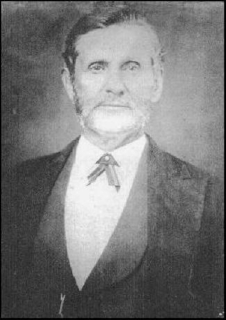
Richard Boyle, 1st Earl of Cork, English-born politician who serves as Lord Treasurer of the Kingdom of Ireland and is also known as the Great Earl of Cork, dies on September 15, 1643 in Youghal, County Cork. He is an important figure in the continuing English colonisation of Ireland in the 16th and 17th centuries, as he acquires large tracts of land in plantations in Munster in southern Ireland.

Boyle is born at Canterbury, Kent, England on October 3, 1566, the second son of Roger Boyle, a descendant of an ancient landed Herefordshire family, and of Joan, daughter of John Naylor. He goes to The King’s School, Canterbury, at the same time as Christopher Marlowe. His university education begins at Corpus Christi College, Cambridge, England, in 1583. After this he studies law at the Middle Temple in London and becomes a clerk to Sir Roger Manwood, who is then Chief Baron of the Exchequer.

Boyle goes to Ireland in 1588. He becomes deputy Escheator under Ireland’s Escheator General John Crofton and uses his office to enrich himself, only to lose his property in the Munster rebellion in 1598. Returning to England, he is imprisoned on charges of embezzlement arising from his activities in Ireland. He is acquitted by a royal court, however, and in 1600 Elizabeth I of England appoints him clerk of the council of Munster.

Two years later, Boyle purchases Sir Walter Raleigh’s estates in the Irish counties of Cork, Waterford, and Tipperary. By employing settlers imported from England, he develops his lands and founds ironworks and other industries. The enormous wealth he accumulates brings him honours and political influence. Created Earl of Cork in 1620, he is appointed a Lord Justice of Appeal in 1629 and Lord High Treasurer in 1631. Nevertheless, soon after Sir Thomas Wentworth (afterward Earl of Strafford) goes to Ireland as lord deputy in 1633, Boyle is fined heavily for possessing defective titles to some of his estates. Thereafter his political influence declines.

Boyle dies at Youghal on September 15, 1643, having been chased off his lands in the Irish Rebellion of 1641. His sons, however, recover the family estates after the suppression of the rebellion.

Boyle’s first wife, Joan Apsley, the daughter and co-heiress of William Apsley of Limerick, whom he marries on November 6, 1595, dies at Mallow, County Cork on December 14, 1599 during childbirth. By his second wife, Catherine Fenton, daughter of Sir Geoffrey Fenton, he has eight daughters and seven sons, including the renowned chemist Robert Boyle and the statesman-dramatist Roger Boyle, 1st Earl of Orrery.


Leave a comment

Death of Noel Cantwell, Soccer Player & Cricketer

noel-cantwell

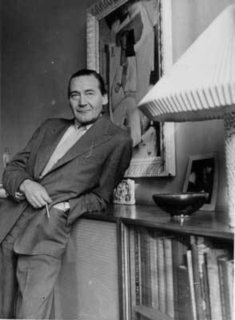
Noel Euchuria Cornelius Cantwell, soccer player and sometime cricketer, dies of cancer on September 8, 2005. Born in Cork, County Cork on February 28, 1932, he is educated at the Roman Catholic Presentation Brothers College there.

Cantwell plays as a full-back for Western Rovers, Cork Athletic F.C., West Ham United F.C. and Manchester United F.C. While at West Ham, he features in the London XI side that competes in the 1955–58 Inter-Cities Fairs Cup final on May 1, 1958. He captains the Hammers to winning the Division Two championship in the 1957–58 season and thereby leads the club into the topflight for the first time since 1932.

In November 1960, Cantwell joins Manchester United for £29,500 which at the time is a record for a full-back. He helps the club win the 1965 and 1967 league titles and captains United when winning the 1963 FA Cup Final, just as his fellow countryman Johnny Carey had done in United’s previous FA Cup win 15 years earlier. He also serves as Chairman of the Professional Footballers’ Association.

Cantwell wins 36 full International caps for the Republic of Ireland national football team, typically playing at left full-back and on several occasions at centre-forward. He makes his debut against Luxembourg in October 1953 with his final appearance coming away to Turkey in February 1967. He scores 14 goals including 5 from penalties and also captains the Republic on several occasions including a match against England at Wembley Stadium.

In his first managerial role at Coventry City F.C. he has the onerous task of following Jimmy Hill who had taken the club into the Football League First Division for the first time in their history. He narrowly keeps the Sky Blues in the top in his first two seasons before taking them to a sixth-place finish in 1969–70, earning them qualification for the Inter-Cities Fairs Cup, a year before it was replaced by the UEFA Cup.

Cantwell departs from Highfield Road on March 12, 1972, to take charge of the New England Tea Men in the United States, but within seven months is back in English football as manager of Peterborough United F.C. He helps Peterborough win the Football League Fourth Division title in his first full season as manager, before leaving on May 10, 1977, for a second spell with the Tea Men. This time he spends a year in the United States.

Cantwell returns to Peterborough on November 19, 1986, for a second spell as manager, remaining in this role until he becomes general manager on July 12, 1988. He is general manager at London Road for a year until he quits football to become licensee of the New Inn at Peterborough, where he remains for 10 years until he retires in 1999. He also is landlord of the Bull and Swan in Stamford, Lincolnshire.

Cantwell also plays cricket for Cork Bohemians Cricket Club and Ireland as a left-handed batsman and a right-arm medium bowler. He plays five times for Ireland making his debut in what is his sole first-class match versus Scotland at Edinburgh in 1956, scoring 31 and 17. His last match for Ireland is against Lancashire in July 1959.

Cantwell dies on September 8, 2005, from cancer at the age of 73, leaving a widow and two children. His former teams each hold a minute of silence for him before their next matches.


Leave a comment

Birth of Isaac Butt, Barrister & Politician

File source: http://commons.wikimedia.org/wiki/File:Portrait_of_Isaac_Butt.jpg

Isaac Butt, barrister and politician, is born in Glenfin, County Donegal on September 6, 1813. If not the originator of the term Home Rule, he is the first to make it an effective political slogan. He is the founder (1870) and first chief of the Home Government Association and president (1873–77) of the Home Rule League of Great Britain, but he is superseded in 1878 as head of the Home Rule movement by the younger and more forceful Charles Stewart Parnell.

Butt is the son of a Church of Ireland rector and is descended from the O’Donnells of Tyrconnell, through the Ramsays. He receives his secondary school education at The Royal School in Raphoe, County Donegal, and at Midleton College in County Cork, before going to Trinity College Dublin at the age of fifteen, where he is elected a Scholar. While there he co-founds the Dublin University Magazine and edits it for four years. For much of his life he is a member of the Irish Conservative Party. He becomes Whately Chair of Political Economy at Trinity in 1836 and holds that position until 1841.

Butt is called to the Irish bar in 1838 and the English bar in 1859. Intermittently from 1852 he represents, successively, one English and two Irish constituencies in the House of Commons. In 1848 he undertakes the defense of the Young Ireland leaders, who are charged with high treason for their abortive insurrection that year. From 1865 to 1869 he is the principal defense counsel for the imprisoned leaders of the Fenians (Irish Republican, or Revolutionary, Brotherhood).

Despite his legal work for the Fenians, Butt, who is basically a conservative, fears the consequences of a successful Fenian revolt. Disillusioned, however, by the British government’s failure to relieve the Irish Great Famine of the late 1840s, he becomes convinced that a native parliament is required for Irish land reform and other needs. In May 1870 he calls for an Irish Parliament subordinate to the imperial Parliament at Westminster, and later that year he forms the Home Government Association. From 1871 he quickens the Irish nationalist agitation in the House of Commons but gradually loses his leadership, partly because he disapproves of Parnell’s tactics of obstructing routine parliamentary business.

Butt amasses debts and pursues romances. It is said that at meetings he is occasionally heckled by women with whom he had fathered children. He is also involved in a financial scandal when it is revealed that he had taken money from several Indian princes to represent their interests in parliament.

Isaac Butt dies on May 5, 1879, in Clonskeagh in Dublin. His remains are brought by train to Stranorlar, County Donegal, where he is buried in a corner of the Church of Ireland cemetery beneath a tree by which he used to sit and dream as a boy. His grave has been restored and the memorial now includes a wreath.

Despite his chaotic lifestyle and political limitations, Butt is capable of inspiring deep personal loyalty. Some of his friends, such as John Butler Yeats and the future Catholic Bishop of Limerick, Edward Thomas O’Dwyer, retain a lasting hostility towards Parnell for his role in Butt’s downfall.

In May 2010 the Church of Ireland parishes of Stranorlar, Meenglass and Kilteevogue instigate an annual memorial Service and Lecture in Butt’s honour, inviting members of the professions of law, politics and journalism to reflect aspects of his life. Speakers have included Dr. Joe Mulholland, Senator David Norris, Dr. Chris McGimpsey and Prof. Brian Walker.

(Pictured: Isaac Butt, portrait by John Butler Yeats)


Leave a comment

Death of John Hely-Hutchinson, Lawyer & Statesman

CH35304

John Hely (later Hely-Hutchinson), Irish lawyer, statesman, and Provost of Trinity College Dublin, dies on September 4, 1794, at Buxton, Derbyshire, England.

Hely is born in 1724 at Gortroe, Mallow, son of Francis Hely, a gentleman of County Cork. He is educated at Trinity College Dublin (BA 1744) and is called to the Irish bar in 1748. He takes the additional name of Hutchinson upon his marriage in 1751 to Christiana Nixon, heiress of her uncle, Richard Hutchinson.

Hely-Hutchinson is elected member of the Irish House of Commons for the borough of Lanesborough in 1759, but from 1761 to 1790 he represents Cork City. He at first attaches himself to the patriotic party in opposition to the government, and although he afterwards joins the administration, he never abandons his advocacy of popular measures.

After a session or two in parliament he is made a privy councillor and prime Serjeant-at-law. From this time, he gives a general, though by no means invariable, support to the government. In 1767 the ministry contemplates an increase of the army establishment in Ireland from 12,000 to 15,000 men, but the Augmentation Bill meets with strenuous opposition, not only from Henry Flood, John Ponsonby and the habitual opponents of the government, but from the Undertakers, or proprietors of boroughs, on whom the government has hitherto relied on to secure them a majority in the House of Commons.

It therefore becomes necessary for Lord Townshend to turn to other methods for procuring support. Early in 1768 an English Act is passed for the increase of the army, and a message from King George III setting forth the necessity for the measure is laid before the House of Commons in Dublin. An address favourable to the government policy is, however, rejected as Hely-Hutchinson, together with the speaker and the attorney general, do their utmost both in public and private to obstruct the bill. Parliament is dissolved in May 1768, and the lord lieutenant sets about the task of purchasing or otherwise securing a majority in the new parliament. Peerages, pensions and places are bestowed lavishly on those whose support could be thus secured. Hely-Hutchinson is won over by the concession that the Irish army should be established by the authority of an Irish act of parliament instead of an English one.

The Augmentation Bill is carried in the session of 1769 by a large majority. Hely-Hutchinson’s support had been so valuable that he receives as reward an addition of £1,000 a year to the salary of his sinecure of alnager, a major’s commission in a cavalry regiment, and a promise of the Secretaryship of State. He is at this time one of the most brilliant debaters in the Irish parliament and is enjoying an exceedingly lucrative practice at the bar. This income, however, together with his well-salaried sinecure, and his place as prime serjeant, he surrenders in 1774 to become provost of Trinity College, although the statute requiring the provost to be in holy orders has to be dispensed with in his favour.

For this great academic position Hely-Hutchinson is in no way qualified and his appointment to it for purely political service to the government is justly criticised with much asperity. His conduct in using his position as provost to secure the parliamentary representation of the university for his eldest son brings him into conflict with Patrick Duigenan, while a similar attempt on behalf of his second son in 1790 leads to his being accused before a select committee of the House of Commons of impropriety as returning officer. But although without scholarship Hely-Hutchinson is an efficient provost, during whose rule material benefits are conferred on Trinity College.

Hely-Hutchinson continues to occupy a prominent place in parliament, where he advocates free trade, the relief of the Catholics from penal legislation, and the reform of parliament. He is one of the very earliest politicians to recognise the soundness of Adam Smith‘s views on trade and he quotes from the Wealth of Nations, adopting some of its principles, in his Commercial Restraints of Ireland, published in 1779, which William Edward Hartpole Lecky pronounces one of the best specimens of political literature produced in Ireland in the latter half of the 18th century.

In the same year, the economic condition of Ireland being the cause of great anxiety, the government solicits from several leading politicians their opinion on the state of the country with suggestions for a remedy. Hely-Hutchinson’s response is a remarkably able state paper, which also shows clear traces of the influence of Adam Smith. The Commercial Restraints, condemned by the authorities as seditious, goes far to restore Hely-Hutchinson’s popularity which has been damaged by his greed of office. Not less enlightened are his views on the Catholic question. In a speech in parliament on Catholic education in 1782 the provost declares that Catholic students are in fact to be found at Trinity College, but that he desires their presence there to be legalised on the largest scale.

In 1777 Hely-Hutchinson becomes Secretary of State. When Henry Grattan in 1782 moves an address to the king containing a declaration of Irish legislative independence, he supports the attorney general’s motion postponing the question. On April 16, however, after the Easter recess, he reads a message from the Lord Lieutenant, the William Cavendish-Bentinck, 3rd Duke of Portland, giving the king’s permission for the House to take the matter into consideration, and he expresses his personal sympathy with the popular cause which Grattan on the same day brings to a triumphant issue. Hely-Hutchinson supports the opposition on the regency question in 1788, and one of his last votes in the House is in favour of parliamentary reform. In 1790 he exchanges the constituency of Cork for that of Taghmon in County Wexford, for which borough he remains member until his death at Buxton, Derbyshire on September 4, 1794.

(Pictured: Portrait, oil on canvas, of John Hely-Hutchinson (1724–1794) by Sir Joshua Reynolds (1723–1792))


Leave a comment

Birth of The Reverend Edward Hincks

edward-hincks

The Reverend Edward Hincks, Anglo-Irish clergyman best remembered as an Assyriologist and one of the decipherers of Mesopotamian cuneiform, is born in Cork, County Cork on August 19, 1792. He is one of the three men known as the “holy trinity of cuneiform,” with Sir Henry Creswicke Rawlinson and Jules Oppert.

Hincks is the eldest son of the Rev. Thomas Dix Hincks, a distinguished Protestant minister, orientalist and naturalist. He is an elder brother of Sir Francis Hincks, a prominent Canadian politician who is also sometime Governor of Barbados, and William Hincks, the first Professor of Natural History at Queen’s College, Cork and afterwards University College, Toronto.

Hincks is educated at home by his father and at Midleton College before entering Trinity College Dublin. He is elected a Scholar of the College in 1810, and in 1812 wins the Gold Medal and Bishop Law‘s Prize for Mathematics. He is elected a Fellow of the College in 1813 and four years later takes his M.A. In 1819, following the death of Thomas Meredith, he is presented to the Rectory of Ardtrea in County Tyrone. Though Ardtrea is a valuable and highly prized Rectory, it is also isolated for a young bachelor, and he resigns the position in 1826, taking up the Rectory in nearby Killyleagh, County Down, an office he holds for the remainder of his life.

The undemanding nature of his clerical duties leave him with more than enough time to pursue his interest in ancient languages. His first love is for the hieroglyphic writing of ancient Egypt. His greatest achievement is the decipherment of the ancient language and writing of Babylon and Assyria: Akkadian cuneiform.

Hincks deduces correctly that cuneiform writing had been invented by one of the earliest civilisations of Mesopotamia, who then bequeathed it to later states such as Babylon, Assyria and Elam. In 1848 he is awarded the Cunningham Medal of the Royal Irish Academy for his achievements.

By 1850 Hincks comes to a number of important conclusions regarding the nature of Assyro-Babylonian cuneiform. He also discovers that cuneiform characters are “polyphonic,” by which he means that a single sign can have several different readings depending on the context in which it occurs. However, not everyone is convinced by the claims being made by the Irishman and his distinguished colleagues. Some philologists even suggest that they are simply inventing multiple readings of the signs to suit their own translations.

In 1857 the versatile English Orientalist William Henry Fox Talbot suggests that an undeciphered cuneiform text be given to several different Assyriologists to translate. If, working independently of one another, they come up with reasonably similar translations, it will surely dispel the doubts surrounding their claims.

As it happens, Talbot, Hincks, Rawlinson and Oppert, are in London in 1857. Edwin Norris, secretary of the Royal Asiatic Society, gives each of them a copy of a recently discovered inscription from the reign of the Assyrian emperor Tiglath-Pileser I. A jury of experts is impaneled to examine the resulting translations and assess their accuracy.

In all essential points the translations produced by the four scholars are found to be in close agreement with one another. There are of course some slight discrepancies. The inexperienced Talbot makes a number of mistakes, and Oppert’s translation contains a few doubtful passages due to his unfamiliarity with the English language. But Hincks’ and Rawlinson’s versions are virtually identical. The jury declares itself satisfied, and the decipherment of cuneiform is adjudged a fait accompli.

Hincks devotes the remaining years of his life to the study of cuneiform and makes further significant contributions to its decipherment. He dies at his rectory in Killyleagh on December 3, 1866, at the age of 74. He is survived by a wife and four daughters.


Leave a comment

Birth of Irish American Painter William Harnett

william-michael-harnett

William Michael Harnett, Irish American painter known for his trompe-l’œil still lifes of ordinary objects, is born in Clonakilty, County Cork on August 10, 1848, during the time of the Great Famine.

Shortly after his birth Harnett’s family emigrates to the United States, settling in Philadelphia. Becoming a United States citizen in 1868, he makes a living as a young man by engraving designs on table silver, while also taking night classes at the Pennsylvania Academy of the Fine Arts and later, in New York City, at Cooper Union and at the National Academy of Design. His first known oil painting, a still life, dates from 1874.

The style of trompe-l’œil painting that Harnett develops is distinctive and inspired many imitators, but it is not without precedent. A number of Dutch Golden Age painters, Pieter Claesz for instance, had specialized in tabletop still life of astonishing verisimilitude. Raphaelle Peale, working in Philadelphia in the early 19th century, pioneers the form in America. What sets Harnett’s work apart, besides his enormous skill, is his interest in depicting objects not usually made the subject of a painting.

Harnett paints musical instruments, hanging game, and tankards, but also paints the unconventional Golden Horseshoe (1886), a single rusted horseshoe shown nailed to a board. He paints a casual jumble of second-hand books set on top of a crate, Job Lot, Cheap (1878), as well as firearms and even paper currency. His works sell well, but they are more likely to be found hanging in a tavern or a business office than in a museum, as they did not conform to contemporary notions of high art.

still-life-violin-and-music

Harnett spent the years 1880–1886 in Europe, staying in Munich from 1881 until early 1885. His best-known paintings, the four versions of After the Hunt, are painted between 1883 and 1885. Each is an imposing composition of hunting equipment and dead game, hanging on a door with ornate hinges at the right and keyhole plate at the left. These paintings, like the horseshoe or currency depictions mentioned earlier, are especially effective as trompe-l’œil because the objects occupy a shallow space, meaning that the illusion is not spoiled by parallax shift if the viewer moves.

Overall, Harnett’s work is most comparable to that of the slightly younger John F. Peto. The two artists know each other, and a comparison can be made between two paintings featuring violins. Harnett’s Music and Good Luck from 1888 shows the violin hanging upright on a door with ornate hinges and with a slightly torn piece of sheet music behind it. The elements are arranged in a stable, deliberate manner. Peto’s 1890 painting shows the violin hanging askew, as well as chipped and worn, with one broken string. The sheet music is dog-eared and torn around the edges and placed haphazardly behind the instrument. The hinges are less ornate, and one is broken. Harnett’s objects show signs of use but are well preserved, while Peto’s more humble objects are nearly used up.

Crippling rheumatism plagues Harnett in his last years, reducing the number but not the quality of his paintings. He dies in New York City on October 29, 1892. Other artists who paint similar compositions in Harnett’s wake include his contemporary John Haberle and successors such as Otis Kaye and Jefferson David Chalfant.

Harnett’s work is in collections in the Albright-Knox Art Gallery (Buffalo, New York), the Amon Carter Museum of American Art (Fort Worth, Texas), the Dallas Museum of Art, the Art Institute of Chicago, the Brooklyn Museum, the Carnegie Museum of Art (Pittsburgh, Pennsylvania), the Cincinnati Art Museum, the Cleveland Museum of Art, the Detroit Institute of Arts, the Fine Arts Museums of San Francisco, Harvard Art Museums, the High Museum of Art (Atlanta, Georgia), the Honolulu Museum of Art, the Joslyn Art Museum (Omaha, Nebraska), the Los Angeles County Museum of Art, the Metropolitan Museum of Art (New York, New York), the National Gallery of Art (Washington D.C.), the National Gallery of Canada (Ottawa, Ontario), the Philadelphia Museum of Art, the San Diego Museum of Art, Thyssen-Bornemisza Museum (Madrid, Spain), the Toledo Museum of Art (Toledo, Ohio), the Wadsworth Atheneum (Hartford, Connecticut), and the Wichita Art Museum (Wichita, Kansas) among others.

(Pictured: Music and Good Luck, oil on canvas by William Michael Harnett, 1888, Metropolitan Museum of Art)


Leave a comment

Birth of Thomas Brodrick, Politician

CREATOR: gd-jpeg v1.0 (using IJG JPEG v80), quality = 60

Thomas Brodrick, Irish politician who sits in the Irish House of Commons between 1692 and 1727 and in the British House of Commons from 1713 to 1727 and leads the inquiry into the “South Sea Bubble,” is born in Midleton, County Cork on August 4, 1654.

Brodrick is the eldest son of Sir St. John Brodrick and his wife Alice Clayton, daughter of Laurence Clayton of Mallow, County Cork. He is brother of Alan Brodrick, 1st Viscount Midleton. He is admitted at Trinity Hall, Cambridge and also at Middle Temple in 1670. He marries Anne Piggott, daughter of Alexander Piggott of Innishannon and they have one son Laurence, who is appointed Register of Deeds and Conveyances in Ireland in 1735.

Broderick sits in the Irish House of Commons for Midleton from 1692 to 1693, for County Cork from 1695 to 1699 and again from 1703 to 1713, and for Midleton again from 1715 to 1727. He is appointed to the Privy Council of Ireland on May 10, 1695. He is removed on July 17, 1711, but reappointed on September 30, 1714.

Broderick has contacts with Whig politicians in England and is appointed comptroller of the salt in 1706 and joint comptroller of army accounts from 1708 to 1711. He is elected as Member of Parliament (MP) for Stockbridge at the 1713 general election and again at the 1715 general election. At the 1722 general election, he is elected as MP for Guildford. He does not stand in the 1727 general election.

Thomas Brodrick dies on October 3, 1730, at Wandsworth where he is buried.


Leave a comment

The Buttevant Rail Disaster

buttevant-rail-disaster

The Buttevant Rail Disaster, a train crash that occurs at Buttevant Railway Station, County Cork, takes place on August 1, 1980. More than 70 people are injured, and 18 die, resulting as one of Ireland’s worst rail disasters to ever occur and the country’s worst rail disaster during peacetime history.

At 12:45 the 10:00 am Dublin (Heuston) to Cork (Kent) express train enters Buttevant Railway Station carrying some 230 bank holiday passengers. The train is diverted off the main line across a 1:8 temporary set of points into a siding. The locomotive remains upright but carriages immediately behind the engine and generator van jack-knife and are thrown across four sets of rail lines. Two coaches and the dining car are totally demolished by the impact. It results in the deaths of 18 people and over 70 people being injured.

The accident happens because a set of manual facing points are set to direct the train into the siding. These points are installed about four months previously and have not yet been connected to the signal cabin. The permanent way maintenance staff are expecting a stationary locomotive at the Up platform to move into the siding, and set the points for the diversion to the siding, without obtaining permission from the signalman. Upon seeing that this has been done, the signalman at Buttevant manually sets the signals to the Danger aspect and informs the pointsman to reset the points. The train is traveling too fast to stop in time. The train is moving at approximately 60 mph when the derailment occurs.

The train consists of one locomotive, a generator van and eleven coaches. Six of the coaches consist of wooden bodies on steel underframes. Four of these are either destroyed or badly damaged in the impact, the two which survive being at the rear of the train. The remainder of the coaches are light alloy Cravens stock and most survive the crash.

This event, and the subsequent Cherryville junction accident, which kills a further seven people, account for 70% of all Irish rail deaths over a 28-year period. CIÉ and the Government come under severe public pressure to improve safety and to modernise the fleet. A major review of the national rail safety policy is held and results in the rapid elimination of the wooden-bodied coaches that had formed part of the train.

The passengers who are most severely injured or killed are seated in coaches with wooden frames. This structure is incapable of surviving a high speed crash and does not come near to the safety standards provided by modern (post-1950s) metal-body coaches. The expert bodies that review the accident discover that the old timber-frame carriage bodies mounted on a steel frame are totally inadequate as they are prone to complete collapse under the enormous compression forces of a high-speed collision.

The more modern steel-framed carriage bodies survive due to their greater structural rigidity. On this basis the decision to purchase a new fleet of modern intercity coaches based on the British Rail Mark 3 design is quickly made. The Mark 3’s longitudinally corrugated roof can survive compression forces of over 300 tonnes. These coaches, an already well proven design, are built by British Rail Engineering Limited (BREL) in Derby, England and, under licence, at CIÉ’s own workshops at Inchicore Railway Works in Dublin between 1983 and 1989.