seamus dubhghaill

Promoting Irish Culture and History from Little Rock, Arkansas, USA


Leave a comment

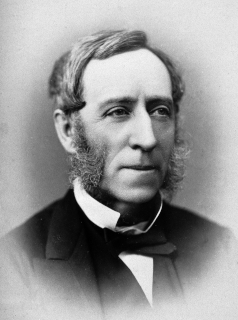
Birth of Chartist Leader Feargus O’Connor

feargus-edward-o-connor

Feargus Edward O’Connor, advocate of the Land Plan and prominent Chartist leader who succeeds in making Chartism the first specifically working-class national movement in Great Britain, is born near Castletown-Kinneigh, County Cork on July 18, 1796.

O’Connor is born into a prominent Irish Protestant family who claims to be the descendants of the 12th-century king Ruaidrí Ua Conchobair. He is educated mainly at Portarlington Grammar School and has some elementary schooling in England.

O’Connor practices law but exchanges law for politics when he enters the British Parliament in 1832 as a member for County Cork. Unseated in 1835, he turns to radical agitation in England, although he continues to press Irish grievances and to seek Irish support. As a result of his humour, invective, and energy, he becomes the best-known Chartist leader and the movement’s most popular speaker. His journal, the Northern Star (founded in 1837), gains a wide circulation.

O’Connor’s methods and views alienate other Chartist leaders, particularly William Lovett, but in 1841, after spending a year in prison for seditious libel, he acquires undisputed leadership of the Chartists. Failing to lead the movement to victory and vacillating in his attitude toward the middle class and toward the People’s Charter, a six-point bill drafted and published in May 1838, he begins to lose power, although he is elected to Parliament for Nottingham in 1847. The failure of the People’s Charter in 1848 marks the beginning of the end for O’Connor, whose egocentricity is already bordering on madness.

The circulation of the Northern Star falls steadily, and it loses money. O’Connor’s health is failing, and reports of his mental breakdown regularly appear in the newspapers. In the spring of 1852, he visits the United States, where his behaviour leaves no doubt that he is not a well man.

In 1852 in the House of Commons O’Connor strikes three fellow MPs, one of them Sir Benjamin Hall, a vocal critic of the Land Plan. Arrested by the Deputy Sergeant-at-Arms, he is sent by his sister to Dr. Thomas Harrington Tuke‘s private Manor House Asylum in Chiswick, where he remains until 1854, when he is moved to his sister’s house. He dies on August 30, 1855, at 18 Albert Terrace, Notting Hill Gate and is buried on September 10 in Kensal Green Cemetery. No fewer than 40,000 people witness the funeral procession. Most Chartists preferred to remember O’Connor’s strengths rather than his shortcomings.


Leave a comment

Birth of Fiona Shaw, Actress & Director

fiona-shaw

Fiona Mary Shaw, accomplished classical actress and theatre and opera director, is born in Farranree, County Cork on July 10, 1958. She is best known for her role as Petunia Dursley in the Harry Potter films and her role portraying Marnie Stonebrook in the HBO series True Blood.

Shaw attends secondary school at Scoil Mhuire in Cork. She receives her degree at University College Cork. She trains at the Royal Academy of Dramatic Art (RADA) in London and is part of a ‘new wave’ of actors to emerge from the Academy. She receives much acclaim as Julia in the Royal National Theatre production of Richard Sheridan‘s The Rivals (1983).

Shaw’s theatrical roles include Celia in As You Like It (1984), Madame de Volanges in Les Liaisons Dangereuses (1985), Katherine in The Taming of the Shrew (1987), Lady Franjul in The New Inn (1987), Young Woman in Machinal (1993), for which she wins the Laurence Olivier Award for Best Actress, Winnie in Happy Days (2007), and the title roles in Electra (1988), The Good Person of Sechuan (1989), Hedda Gabler (1991), The Prime of Miss Jean Brodie (1998) and Medea (2000). She performs T. S. Eliot‘s poem The Waste Land as a one-person show at the Liberty Theatre in New York City to great acclaim in 1996, winning the Drama Desk Award for Outstanding One-Person Show for her performance.

Shaw plays Miss Morrison in the 1984 The Adventures of Sherlock Holmes episode “The Adventure of the Crooked Man” and Catherine Greenshaw in Agatha Christie’s Marple episode “Greenshaw’s Folly” in 2013.

Shaw notably plays the male lead in Richard II, directed by Deborah Warner in 1995. She has collaborated with Warner on a number of occasions, on both stage and screen. She has also worked in film and television, including My Left Foot (1989), Mountains of the Moon (1990), Three Men and a Little Lady (1990), Super Mario Bros. (1993), Undercover Blues (1993), Persuasion (1995), Jane Eyre (1996), The Butcher Boy (1997), The Avengers (1998), Gormenghast (2000), and five of the Harry Potter films in which she plays Harry Potter‘s aunt Petunia Dursley. She has a brief but key role in Brian DePalma‘s The Black Dahlia (2006).

In 2009, Shaw collaborates with Deborah Warner again, taking the lead role in Tony Kushner‘s translation of Bertolt Brecht‘s Mother Courage and Her Children. In a 2002 article for The Daily Telegraph, Rupert Christiansen describes their professional relationship as “surely one of the most richly creative partnerships in theatrical history.” Other collaborations between the two women include productions of Brecht’s The Good Woman of Szechuan and Henrik Ibsen‘s Hedda Gabler, the latter adapted for television.

Shaw appears in The Waste Land at Wilton’s Music Hall in January 2010 and in a Royal National Theatre revival of London Assurance in March 2010. In November 2010, she stars in Ibsen’s John Gabriel Borkman at the Abbey Theatre, Dublin alongside Alan Rickman and Lindsay Duncan. The play is also staged in New York’s Brooklyn Academy of Music in 2011.

Shaw appears in season four of American TV show True Blood. Her character, Marnie Stonebrook, has been described as an underachieving palm reader who is spiritually possessed by an actual witch. Her character leads a coven of necromancer witches who threaten the status quo in Bon Temps, erasing most of Eric Northman‘s memories and leaving him almost helpless when he tries to kill her and break up their coven.

In 2012, Shaw appears in the Royal National Theatre revival of Scenes from an Execution by Howard Barker.

The world’s largest solo theatre festival, United Solo Theatre Festival, recognizes her performance in The Testament of Mary on Broadway with the 2013 United Solo Special Award.

In 2018 Shaw begins portraying Carolyn Martens, head of the MI6 Russian Desk, in BBC America‘s Killing Eve, for which she wins the BAFTA Award for Best Actress in a Supporting Role in a Television Series. Later the same year, she plays a senior MI6 officer in Mrs. Wilson.


Leave a comment

Paintings Again Stolen from Russborough House

russborough-house-theft-2001A pair of paintings valued at more than £3,000,000 are stolen by an armed gang from Russborough House in County Wicklow on June 26, 2001. The stolen paintings are Thomas Gainsborough‘s Madame Baccelli, the more valuable of the pair, and Bernardo Belotto‘s Scene of Florence.

Three masked men burst their way into the house after ramming the front door with a Mitsubishi at midday. After grabbing the paintings the men set fire to their getaway vehicle and attempt to hijack a car at gunpoint but its driver refuses to give it up. They are last seen running from the scene.

Chief Superintendent Sean Feely says that there were people in the house at the time of the robbery but no one was hurt. He adds that, because they are so well known, the paintings will be near impossible to sell. Raymond Keaveney, the Director of the National Gallery of Ireland, describes the theft as “an outrage.”

The robbery is a case of history repeating itself for Russborough House, twenty miles from Dublin, which has been the scene of two previous major art thefts.

In 1974, an Irish Republican Army (IRA) gang which includes Dr. Rose Dugdale, the British heiress, steal 19 paintings, valued at IR£8 million, from Russborough House which, at the time, is the home of the late Sir Alfred Beit, a member of the De Beers diamond family, and his wife. The couple are bound and gagged during the raid. The paintings are later found in County Cork. Dugdale and the others involved are ultimately jailed.

In 1986, a 13-strong gang headed by Martin Cahill, the Dublin crime chief who is later shot dead by the IRA, steals 18 works including some of those taken and recovered in the earlier raid. The paintings taken on this occasion include those by Johannes Vermeer, Gabriël Metsu, Francisco Goya, Thomas Gainsborough and Peter Paul Rubens. All but three of the paintings are recovered over a period of years at a number of locations, including London, Belgium, Holland and Turkey, after apparent unsuccessful attempts to sell them. The Gainsborough painting stolen on June 26 was also taken in the 1986 raid.

The Beit collection is made over to the Irish nation and many of the works are still on display at Russborough House.

(Pictured: The Mitsubishi used to ram the entrance of Russborough House sits near the front steps. The thieves torch this car before fleeing in another car. Note the gas can to the right of the car.)


Leave a comment

The Sack of Baltimore

sack-of-baltimore

The Sack of Baltimore takes place on June 20, 1631, when the village of Baltimore, County Cork is attacked by the Ottoman Algeria and Republic of Salé slavers from the Barbary Coast of North Africa. The attack is the largest by Barbary pirates on either Ireland or Great Britain.

The attack is led by a Dutch captain, Jan Janszoon van Haarlem, also known as Murad Reis the Younger. Murad’s force is led to the village by a man called Hackett, the captain of a fishing boat he had captured earlier, in exchange for his freedom. Hackett is subsequently hanged from the clifftop outside the village for conspiracy.

Murad’s crew, made up of Dutchmen, Moroccans, Algerians and Ottoman Turks, launches their covert attack on the remote village on June 20, 1631. They capture 107 villagers, mostly English settlers along with some local Irish people (some reports put the number as high as 237). The attack is focused on the area of the village known to this day as the Cove. The villagers are put in irons and taken to a life of slavery in North Africa.

There are conspiracy theories relating to the raid. It has been suggested that Sir Walter Coppinger, a prominent Catholic lawyer and member of the leading Cork family, who had become the dominant power in the area after the death of Sir Thomas Crooke, 1st Baronet, the founder of the English colony, orchestrates the raid to gain control of the village from the local Gaelic chieftain, Sir Fineen O’Driscoll. It is O’Driscoll who had licensed the lucrative pilchard fishery in Baltimore to the English settlers. Suspicion also points to O’Driscoll’s exiled relatives, who had fled to Spain after the Battle of Kinsale and had no hope of inheriting Baltimore by legal means. On the other hand, Murad may have planned the raid without any help. It is known that the authorities had advance intelligence of a planned raid on the Cork coast, although Kinsale is thought to be a more likely target than Baltimore.

Some prisoners are destined to live out their days as galley slaves, rowing for decades without ever setting foot on shore while others spend long years in harem or as labourers. At most, only three of them ever return to Ireland. One is ransomed almost at once and two others in 1646.

In the aftermath of the raid, the remaining villagers move to Skibbereen, and Baltimore is virtually deserted for generations.

(Pictured: “The sack of Baltimore (West Cork), ca. 1890-1891” pen and ink by Jack Butler Yeats)


Leave a comment

The Battle of Waterloo

battle-of-waterloo

The Battle of Waterloo is fought on Sunday, June 18, 1815, near Waterloo, Belgium, which is part of the United Kingdom of the Netherlands at the time. The battle marks the end of the Napoleonic Wars.

A French army under the command of Napoleon Bonaparte is defeated by British forces under the command of Arthur Wellesley, 1st Duke of Wellington of Dublin and a Prussian army under the command of Field Marshal Gebhard Leberecht von Blücher. The Iron Duke is not the only Irish presence on the battlefield that day. Napoleon’s horse, Marengo, is reared in County Wexford, and the Duke of Wellington’s mount is from County Cork.

Upon Napoleon’s return to power in March 1815, many states that have opposed him form the Seventh Coalition and begin to mobilise armies. Wellington and Blücher’s armies are cantoned close to the northeastern border of France. Napoleon chooses to attack them separately in the hope of destroying them before they can join in a coordinated invasion of France with other members of the coalition. On June 16, he successfully attacks the bulk of the Prussian army at the Battle of Ligny with his main force, while a portion of the French army simultaneously attacks the Anglo-allied army at the Battle of Quatre Bras. Despite holding his ground at Quatre Bras, the defeat of the Prussians forces Wellington to withdraw north to Waterloo on June 17. Napoleon sends a third of his forces to pursue the Prussians, who have withdrawn parallel to Wellington in good order. This results in the separate and simultaneous Battle of Wavre with the Prussian rear-guard.

Upon learning that the Prussian army is able to support him, Wellington decides to offer battle on the Mont-Saint-Jean escarpment across the Brussels road. Here he withstands repeated attacks by the French throughout the afternoon of June 18, aided by the progressively arriving Prussians. In the evening, Napoleon commits his last reserves, the senior battalions of the French Imperial Guard infantry. The desperate final attack of the Guard is narrowly beaten back. With the Prussians breaking through on the French right flank, Wellington’s Anglo-allied army counterattacks in the centre, and the French army is routed.

Waterloo is the decisive engagement of the Waterloo Campaign and Napoleon’s last. Napoleon abdicates four days later, and coalition forces enter Paris on July 7. The defeat at Waterloo ends Napoleon’s rule as Emperor of the French and marks the end of his Hundred Days return from exile. This ends the First French Empire and sets a chronological milestone between serial European wars and decades of relative peace.

The battlefield is located in the municipalities of Braine-l’Alleud and Lasne, about 15 kilometres south of Brussels, and about 2 kilometres from the town of Waterloo. The site of the battlefield today is dominated by the monument of the Lion’s Mound, constructed from earth taken from the battlefield itself. The topography of the battlefield near the mound has not been preserved.


1 Comment

The Rathcoole Ambush

rathcoole-ambush-monument

The Rathcoole Ambush, one of the largest ambushes of the Irish War of Independence, takes place at Rathcoole, County Cork on June 16, 1921.

The railway line between Banteer and Millstreet had been cut in several places so the British Auxiliary forces based at Millstreet have to travel to Banteer by road for their supplies twice a week. As a result, a combined force of 130 Irish Republican Army (IRA) volunteers from the Millstreet, Kanturk, Newmarket, Charleville and Mallow battalion columns are mobilised to attack the Auxiliaries as they return from Banteer. The volunteers are under the command of Paddy O’Brien from Liscarroll.

On the night before the ambush the IRA volunteers sleep at Rathcoole Wood, which overlooks the planned ambush position. Shortly after sunrise the following morning, Captain Dan Vaughan lays six land mines on the untarred road and covers them with dust. After a wait of several hours a convoy of four armour-plated lorries, each mounted with a machine gun and carrying ten men, is observed heading for Banteer.

The volunteers prepare themselves and at 6:20 in the evening, as the lorries pass through the ambush area on their return journey, three of the land mines explode with devastating results. One mine detonates as the last of the four lorries drives over it and another explodes under the leading lorry in the convoy. Both vehicles are out of action with the two other lorries trapped between them. A third mine explodes amid a party of Auxiliaries as they attempted to outflank the position. A bitter firefight develops. Each time Auxiliaries attempt to outflank the IRA they are driven back, suffering losses of more than twenty dead and over a dozen wounded.

When it becomes clear that the IRA cannot achieve a complete victory because of their limited ammunition supply, the order for withdrawal is given and the whole force retires without a single casualty. Although no arms are captured during the action, a reconnaissance party from the column returns the next day to search the ambush position and recovers 1,350 rounds of ammunition which the Auxiliaries had left behind them as they removed their dead and wounded.

The ambush at Rathcoole is one of the Irish Republican Army’s most successful actions during the War of Independence. A week after the ambush, British Forces from Kanturk, Buttevant, Ballyvonaire, Macroom, Ballincollig, Killarney and Tralee carry out a widespread search throughout the Rathcoole area. Michael Dineen, a Volunteer in Kilcorney Company is taken from his brother’s house at Ivale by a party of Auxiliaries and shot dead. On the evening of July 1, the Auxiliaries set fire to and destroy the wood at Rathcoole from where the ambush had been launched. That same day that they shoot and kill a local man, Bernard Moynihan, as he is out cutting hay.

(Pictured: Monument at the site of the Rathcoole Ambush)


1 Comment

Assassination of RIC Inspector Percival Lea-Wilson

percival-lea-wilson

Percival Lea-Wilson, a District Inspector in the Royal Irish Constabulary (RIC) who is stationed at Gorey, County Wexford, is shot dead on June 15, 1920, by the Irish Republican Army (IRA) outside his Gorey home on the orders of Michael Collins.

Lea-Wilson is born in Kensington, London and is educated at the University of Oxford but his route into the British Army begins with a stint as a RIC constable in Charleville, County Cork in the early 20th century.

When World War I breaks out in 1914 Lea-Wilson joins the British army where he reaches the rank of captain in the 18th Royal Irish Regiment. An injury during the war forces him back to Ireland where he is stationed in Dublin, just in time for the Easter Rising in 1916.

When the weeklong rising ends, the rebels who had fought in the Four Courts and the GPO are marched to the Rotunda Hospital where they are kept overnight under the glare of British troops. Among those detained are leaders of the rebellion such as Sean Mac Diarmada and Tom Clarke. Clarke is singled out and subjected to public humiliation by 28-year-old British army Captain Percival Lea-Wilson.

Lea-Wilson and his soldiers walk among the captured rebels, and he picks the 58-year-old Clarke out of the group. He marches Clarke to the steps of the hospital where he orders soldiers to strip him bare as nurses look on in horror from the windows above. Clarke is beaten and left there overnight in his tattered clothes. One of the prisoners, Michael Collins, who witnesses Clarke’s mistreatment at the hands of the British captain vows vengeance.

In the years following the Easter Rising, Lea-Wilson settles in Wexford where he attains the role of RIC district inspector.

On the morning of June 15, 1920, Lea-Wilson is walking back home after paying a visit to the RIC barracks in Gorey. Dressed in his civilian clothes, he stops at the local railway station where he purchases a newspaper and meets Constable Alexander O’Donnell, who accompanies him on part of his walk home.

O’Donnell and Lea-Wilson part company at the railway bridge on Ballycanew Road while further up that very same stretch of road there is a number of men standing around a parked car with its hood raised. Michael Collins had sent Liam Tobin and Frank Thornton from Dublin to meet with Joe McMahon, Michael McGrath and Michael Sinnott in Enniscorthy. They were then driven by Jack Whelan to Ballycanew Road to carry out the assassination of Lea-Wilson.

Unaware of his assassins lying in wait, Lea-Wilson is reading his paper while strolling along the road. The men by the parked car pull out revolvers when their target comes into range and two bullets strike him down. He manages to quickly get back on his feet and attempts to make an escape, but his six assassins run after him and finally bring him down in a hail of bullets. A coroner’s report later states that Lea-Wilson had been shot seven times.

When the shooting ends, one of Lea-Wilson’s executioners calmly walks up to the body to make sure he is dead. He then picks up the newspaper from the ground and takes it with him. Later that evening Michael Collins is in the Wicklow Hotel in Dublin when word reaches him from Wexford of the shooting death of Lea-Wilson. Collins greets the news with glee and mentions to one of his comrades, “Well we finally got him!”

Percival Lea-Wilson is buried in Putney Vale Cemetery in southwest London. His grave is marked by a plaque which mentions his assassination in Gorey in 1920, a death which has its roots in the Easter Rising four years previously.


Leave a comment

Birth of Author Violet Florence Martin

violet-florence-martin

Violet Florence Martin, Irish author, is born at Ross House in Connemara, County Galway on June 11, 1862. She is the co-author of a series of novels with her cousin Edith Somerville under the pen name of Martin Ross in the late nineteenth and early twentieth centuries.

Martin is the youngest of sixteen children of James Martin of Ross (1804–1872). The Martin family, a branch of the Martyn family – one of the Tribes of Galway – had settled at Ross by the early seventeenth century, having previously inhabited the town of Galway for some three hundred years. Her father is a Protestant, his grandfather having converted from the Catholic faith in order to retain the family estates under the Penal Laws. Nevertheless, each child of the family is secretly ‘baptised’ by the family servants.

Martin is a kinswoman of Richard Martin and her contemporary, Edward Martyn, two other notable members of the tribe. Her older brother, Robert Jasper Martin, is a noted songwriter and a well-regarded member of the Tory party in London. She shares a great-grandmother with the writer Maria Edgeworth, whose use of Irish vernacular speech she follows in her work.

Martin’s father manages to save both his estate and his tenants during the Great Famine boasting that not one of his people died during the disaster, but at the cost of bankruptcy. Following his death in 1872, the family moves to Dublin and only returns to Ross in 1888 following revelations of financial fraud of the estate by their agent.

Martin and Edith Somerville are second cousins. They originally meet on January 17, 1886, at Castletownshend, after which they become lifelong companions and literary partners. They come to share a home in Drishane, County Cork. In 1889, Violet adopts the pseudonym Martin Ross, which comprises her surname and the name of her ancestral home. Thus, the authors are called Somerville and Ross. Their works include The Real Charlotte (1889), Some Reminiscences of an Irish R.M. and In the Vine Country.

Martin is a convinced Irish Unionist, in opposition to Somerville’s open nationalism. Both she and her brother Robert are well-regarded members of the literary circle in Irish unionism. However, unlike her brother, Martin is a convinced suffragette, becoming vice-president of the Munster Women’s Franchise League. While on friendly terms with the leading members of the Gaelic literary revival such as W.B. Yeats and Lady Gregory, she objects to their romantic version of Irish peasantry. She is on good terms with Edward Martyn, partner of Gregory and Yeats – and her kinsman – and shares his love of the Irish language and culture.

Martin is seriously injured in a riding accident in November 1898, from which she never fully recovers. This is a contributing factor to her death in Drishane, County Cork, on December 21, 1915. Edith Somerville continues to write under their joint literary names, claiming that they are still in contact. The two women leave thousands of letters and 116 volumes of diaries, detailing their lives, much of them yet unpublished. Edith dies at Castletownshend in October 1949, aged 91, and is buried alongside Violet Florence Martin at Saint Barrahane’s Church, Castletownsend, County Cork.


Leave a comment

Birth of Creighton Hale, Irish American Actor

creighton-hale

Creighton Hale, Irish American theatre, film, and television actor, is born Patrick Fitzgerald on May 24, 1882, in County Cork. His career extends more than a half-century, from the early 1900s to the end of the 1950s.

Hale is educated in Dublin and London, and later attends Ardingly College in Sussex. He immigrates to the United States in his early twenties, traveling with a troupe of actors. While starring in Charles Frohman‘s Broadway theatre production of Indian Summer, he is spotted by a representative of the Pathé film company. He eventually becomes known professionally as Creighton Hale, although the derivation of those names remains unknown. His first movie is The Exploits of Elaine in 1914. He stars in hit films such as Way Down East, Orphans of the Storm, and The Cat and the Canary.

Some believe that in 1923 Hale stars in an early pornographic “stag” film On the Beach (a.k.a. Getting His Goat and The Goat Man). In the film, three nude women agree to have sex with him, but only through a hole in a fence. Photographs of the scene clearly show that the man in the film is not Hale but is another actor who also wears glasses.

When talkies come about, Hale’s career declines. He makes several appearances in Hal Roach‘s Our Gang series including School’s Out, Big Ears and Free Wheeling, and also plays uncredited bits in major talking films such as Larceny, Inc., The Maltese Falcon, and Casablanca.

Hale’s two sons, Creighton Hale, Jr. and Robert Lowe Hale, from his first marriage to Victoire Lowe, are adopted by Lowe’s second husband, actor John Miljan. After his divorce, Hale marries Kathleen Bering in Los Angeles in 1931.

Creighton Hale dies in South Pasadena at the age of 83 on August 9, 1965. He is buried at Duncans Mills Cemetery in Duncan Mills, Sonoma County, California.


Leave a comment

Opening of the Jack Lynch Tunnel

jack-lynch-tunnel

The Jack Lynch Tunnel, described as the most challenging civil engineering project in the history of the state, is unveiled on May 21, 1999 by Taoiseach Bertie Ahern at the entrance of the tunnel in Mahon, County Cork.

The Jack Lynch Tunnel is an immersed tube tunnel and an integral part of the N40 southern ring road of Cork. It is named after former Taoiseach Jack Lynch, a native of Cork. Construction involves the excavation of a large casting basin where the tunnel elements or pieces are constructed. After construction of elements is complete, the casting basin is filled with water and joined to the adjacent River Lee, each element is floated out and sunk into position into a carefully dredged river bed.

The tunnel takes the road under the River Lee. North of the tunnel, the ring-road joins the M8 motorway to Dublin and N8 road to the city centre, with the N25 road commencing east to Waterford. The tunnel is completed in May 1999, and carries nearly 40,000 vehicles per day as of 2005. This number rises further as the N40 ring-road’s upgrades progress, with the opening of the Kinsale Road Roundabout flyover in 2006 and subsequent upgrades to the Sarsfield Road and Bandon Road Roundabouts. Traffic in 2015 is 63,000 vehicles a day up from 59,000 in 2013.

The tunnel has two cells, each with two traffic lanes and two footpaths, and a central bore for use in an emergency only. Pedestrians and cyclists are expressly forbidden from using the tunnel. The exclusion of cyclists has been somewhat controversial as the feeder road is a dual-carriageway and so is open to cyclists, but the by-law is applied because of space limitations and the obvious danger of cyclists in an enclosed tunnel.