seamus dubhghaill

Promoting Irish Culture and History from Little Rock, Arkansas, USA


Leave a comment

Death of Margaret Clarke, Portrait Painter

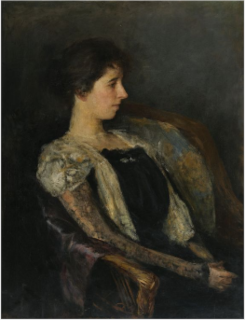
Margaret Clarke RHA (née Crilley), Irish portrait painter, dies in Dublin on October 31, 1961.

Crilley is born in Newry, County Down, (present-day Northern Ireland), on August 1, 1884, one of six children of Patrick Crilley. Her date of birth is often given as July 29, 1888, though local records do not support this, suggesting she is born four years earlier. Having initially trained at Newry technical school with her sister Mary, intending to become a teacher, in 1905, she wins a scholarship to attend the Dublin Metropolitan School of Art. There she studies under William Orpen, who regards her as one of his most promising students. She completes her studies in 1911 attaining an Art Teacher’s Certificate and begins working as Orpen’s assistant.

In 1914, Crilley marries her fellow student Harry Clarke, much to the surprise of their family and acquaintances. The couple moves into a flat at 33 North Frederick Street. They have three children, Michael, David and Ann. Harry’s brother, Walter, marries Margaret’s sister, Mary, in 1915.

Clarke first exhibits with the Royal Hibernian Academy in 1913 and goes on to exhibit over 60 artworks in the forty years until 1953, the majority being portraits. Among the portrait commissions she receives are ones for Dermod O’Brien, President Éamon de Valera, Archbishop John Charles McQuaid, and Lennox Robinson. She spends a great deal of time on the Aran Islands with fellow artist Seán Keating and her husband, from which she produces a number of landscapes and smaller studies.

Clarke becomes the director of the Harry Clarke Stained Glass Studios following the death of her husband in 1931.

A critic notes in 1939 that Clarke produces “remarkable drawings in which individuality is caught in a few swift economical lines.” Over her lifetime she wins many awards including the Tailteann gold, silver and bronze medals in 1924, and another Tailteann bronze in both 1928 and 1932. She is elected an Associate of the Royal Hibernian Academy (ARHA) in 1926, and a full RHA member in 1927. Upon the founding of the Irish Exhibition of Living Art in 1943, she is appointed a member of the executive committee.

Clarke dies in Dublin on 31 October 31, 1961, and is buried in the Redford Cemetery, Greystones, County Wicklow. She is commemorated with a blue plaque at her birthplace in Newry.

Clarke’s work can be found in the collections of the National Gallery of Ireland, the Hugh Lane Gallery, the Crawford Art Gallery, the Ulster Museum, Limerick City Gallery of Art, The National Self-Portrait Collection of Ireland, and the Pontifical Irish College in Rome.

The exhibition at National Gallery of Ireland in 2017 reevaluates Margaret Clarke’s great artistic reputation.

(Pictured: “Self-portrait,” 1914, by Margaret Clarke, © Artist’s Estate)

Leave a comment

Birth of Cecil Ffrench Salkeld, Painter, Critic & Writer

Cecil Ffrench Salkeld, Irish painter, printmaker, critic and writer, is born in Assam, India on July 9, 1904.

Salkeld’s parents are Henry Lyde Salkeld, a member of the Indian Civil Service (ICS), and Blanaid Salkeld (née Mullen), a poet. He returns to Ireland with his mother in 1910 following the death of his father in 1909. He attends Mount St. Benedict’s, Gorey, County Wexford, and the Dragon School in Oxford, England. He wins a scholarship to Oundle School in Oundle, North Northhamptonshire, but returns to Dublin where he enters the Dublin Metropolitan School of Art in 1919 to study under Seán Keating and James Sleator. He marries Irma Taesler in Germany in 1922. They have two daughters, Celia and Beatrice. The latter marries Brendan Behan in 1954.

Salkeld works in tempera and oil, as well as etching and wood engraving. In 1921 he travels to Germany to study under Ewald Dulberg at the Kassell Kunstschule. He attends the Union of Progressive International Artists in Düsseldorf in May 1922, and is exhibited at the Internationale Kunstausstellung. Upon his return to Dublin in 1924, he holds his first solo exhibition in the Society of Dublin Painters gallery. He becomes a member of the Dublin Painters in 1927. With Francis Stuart, he co-edits the first two issues of To-morrow in 1924. His studio is in a converted labourer’s cottage at Glencree, County Wicklow. He also exhibits with the New Irish Salon and the Radical Painters’ Group.

Salkeld wins the 1926 Royal Dublin Society‘s Taylor scholarship, and has his first exhibited work with the Royal Hibernian Academy (RHA) in 1929. He lives in Berlin for a year in 1932. He exhibits in Daniel Egan’s Gallery in Dublin in 1935. He has a wide circle of literary friends, including Samuel Beckett and Flann O’Brien. In O’Brien’s At Swim-Two-Birds, the character of Michael Byrne is designed for Salkeld, reflecting his debilitating alcoholism. He also teaches at the Dublin Metropolitan School of Art, teaching artists such as Reginald Gray.

From 1937 to 1946 Salkeld runs a private press called Gayfield Press. This is co-founded with his mother, and operates from a garden shed at their home, 43 Morehampton Road. The press is a small Adana wooden hand press. He illustrates her 1938 The Engine Left Running, as well as Ewart Milne‘s Forty North Fifty West (1938) and Liam O’Flaherty‘s Red Barbara and Other Stories (1928). In 1951, he loans the press to Liam and Josephine Miller to found the Dolmen Press.

Salkeld’s most famous public work is his 1942 three-part mural in Davy Byrne’s pub. He is a co-founder of the Irish National Ballet School in the 1940s in his capacity as a pianist. In 1946 he is appointed an associate member of the RHA. In 1953 his play Berlin Dusk is staged at 37 Theatre Club, Dublin. During the 1950s he is a broadcaster with Radio Éireann as well as a director of cultural events for An Tóstal. He dies on May 11, 1969, in St. Laurence’s Hospital, Dublin.

The National Gallery of Ireland holds a portrait by Salkeld of his daughter, Celia.

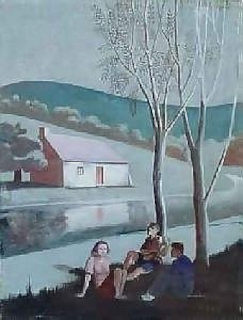
(Pictured: “Figures In Moonlight” by Cecil Ffrench Salkeld, oil on canvas)


Leave a comment

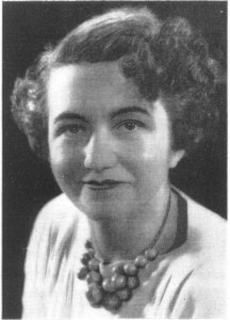
Birth of Kathleen Cox, Artist, Sculptor & Mystic

Kathleen Cox, Irish artist, sculptor, and mystic, is born Christina Mary Kathleen Cox in Wo-Sung, China, on July 2, 1904. Cox is considered a pioneer of contemporary Irish pottery.

Cox is the eldest daughter of Dr. R. H. Cox, originally from Dundalk, County Louth, and the port health officer in Shanghai. He is also an amateur geologist and models in clay. In his retirement, he invents a periscope later used during World War I by the Royal Navy. The years living in China leave an impression on the young Cox, visually and culturally. The family returns to Ireland in 1911, first moving to Listowel, County Kerry, and later to Howth, County Dublin. She attends Alexandra College, and later the Dublin Metropolitan School of Art in 1921. While there she studies sculpture under Oliver Sheppard and is considered one of his most talented students, winning the Royal Dublin Society Taylor prize for modelling in 1925, 1926, and 1927. The money from these prizes allows Cox to travel to Paris in 1929.

Cox exhibits in 1924 at the Tailteann exhibitions, and in 1925 submits textile designs to the Arts and Crafts Society of Ireland. She establishes a pottery studio at 7 Schoolhouse Lane, Dublin, with college friend Stella Rayner in 1929. The studio has the first electric kiln in Ireland. The first exhibited piece by Cox shown by the Royal Hibernian Academy (RHA) is in 1930, with a pair of Madonna bookends, and portrait masks of the daughter of Dermod O’Brien, Brigid O’Brien, and writer Norris Davidson. Davidson is a friend and neighbour, who commissions her to design the poster for his 1929 film, Suicide. She exhibits with the RHA from 1931 to 1933, and the Tailteann 1932, while also holding exhibitions in her studio. During this period Hilda Roberts paints her portrait, Strange Spirit. Kathleen Cox in her studio. The theme of womanhood is prominent in her work, including in the sign of her studio.

In 1932, Cox begins producing a line of more commercial figurines, drawing influence from the Royal Doulton Burslem factory, where she works for a time. One such figurine is The Lavender Man (pictured), modelled on Michael Clifford, a Dublin street trader. In the mid 1930s, she develops a frustration with her work and with her lack of impact on the wider world. In attending the Chinese exhibition in London in 1935, it is confirmed to her that pottery should be practical rather than ornamental. It spurs her to destroy all her moulds and sell her kiln upon her return to Dublin.

Cox marries Alan Palmer in 1937, the couple has two daughters and relocate to England. Palmer is a conscientious objector during World War II, with the couple running a farm at Meopham, Kent, returning to London after the war.

Cox dies in early September 1972 in London. Some of her work is held in the collections of the National Museum of Ireland and with four works featured in the exhibition Not Just Pots: Contemporary Irish Ceramics of the 21st Century.

It is during the 1920s that Cox begins to question mainstream religion and becomes a vegetarian. Finding that her personal philosophy is similar to that of theosophy, she joins the movement and speaks at meetings. She is heavily influenced by the founder of the Order of the Great Companions, the Rev. William Hayes, who is living in Dublin in the 1930s. She writes and illustrates a children’s book on world religions, A story of stories, which she publishes under the pseudonym C.M. Kay in 1970.


Leave a comment

Death of Elizabeth Corbet Yeats, Educator & Publisher

Elizabeth Corbet Yeats, known as Lolly, Anglo-Irish educator and publisher, dies on January 16, 1940. She works as an art teacher and publishes several books on art and is a founder of Dun Emer Press which publishes several works by her brother, W. B. Yeats. She is the first commercial printer in Ireland to work exclusively with hand presses.

Yeats is born at 23 Fitzroy Road, London, on March 11, 1868. She is the daughter of the Irish artist John Butler Yeats and Susan Yeats (née Pollexfen). She is sister to W. B., Jack and Susan Mary “Lily” Yeats. From the age of four she lives in Merville, Sligo, at the home of her grandfather William Pollexfen. In November 1874 her family moves to 14 Edith Villas, West Kensington, London. Her governess is Martha Jowitt from 1876 until 1879 before the family moves to Bedford Park, Chiswick, in 1878.

Yeats returns to Howth, County Dublin, in 1881. She enrolls, with her sister Susan, in the Dublin Metropolitan School of Art in 1883 and takes classes at the Royal Dublin Society.

The family moves to Eardley Crescent, South Kensington, London, in 1886. While there Yeats starts to write fiction and publishes a homemade magazine, The Pleiades, with six friends, contributing “Story without a plot” to the Christmas 1888 issue. In addition, she publishes “Scamp and three friends” in The Vegetarian.

Yeats also attends the Chiswick School of Art with her sister Susan and brother Jack Butler Yeats, learning “Freehand drawing in all its branches, practical Geometry and perspective, pottery and tile painting, design for decorative purposes.”

In the 1890s Yeats lives at 3 Blenheim Road, Bedford Park, London, and trains as a kindergarten teacher at the Froebel College in Bedford, Bedfordshire. She undertakes her teaching practice at the Bedford Park High School. In 1892, when her training is completed, she teaches as a visiting art mistress at the Froebel Society, Chiswick High School and the Central Foundation School.

Yeats earns a good income from lecturing and publication of four popular painting manuals: Brushwork (1896), Brushwork Studies of Flowers, Fruits and Animals (1898), Brushwork Copy Book (1899), and Elementary Brushwork Studies (1900).

Yeats trains and works as an art teacher and is a member of William Morris‘s circle in London before her family returns to Dublin in 1900. She writes and creates the artwork for Elementary Brush-Work Studies (1900), an educational book that teaches young children the technique of painting flowers and plants using her simple method. At the suggestion of Emery Walker, who works with Morris on the Kelmscott Press, she studies printing with the Women’s Printing Society in London.

In Dublin, Yeats accepts the invitation to join Evelyn Gleeson to form the Dun Emer Guild along with Lily, who is an embroiderer. She manages the Dun Emer Press from 1902 with a printing press acquired from a provincial newspaper. The Press is located at Runnymede, the house of Evelyn Gleeson. This is set up with the intention of training young women in bookbinding and printing as well as embroidery and weaving. In 1903 she starts printing and Dun Emer’s first book is W. B. Yeats’s In the Seven Woods (1903).

Despite being a gifted printer, the costings exceed the quality of work that Yeats produces with the result that the press is often at risk financially. Eleven books, decorated with pastels by George William Russell, appear under the Dun Emer imprint produced from a first-floor room. She has several disagreements with her brother William over his directions as literary editor. She also dislikes Evelyn Gleeson. In October 1906 she travels to New York to advertise her products but publishes Dun Emer’s last book, William’s Discoveries (1907), in late November when she returns to Dublin.

After many years of strained relations between the Yeats sisters and Evelyn Gleeson, their business relationship is finally ended. Subsequently, in 1908, Lolly and her brother William start the Cuala Press, publishing over 70 books including 48 by the poet. Yeats manages the press while her sister Lily controls the embroidery section. Cuala continues to be a family strain. Their father, John Butler Yeats, has to castigate his son William for sending overtly critical letters to his sisters about the press. However, Cuala produces magnificent books: W. B. Yeats’ The Green Helmet and Other Poems (1910) and a series of Broadsides (published 1908–15, with illustrations from Jack Yeats).

Yeats works with Cuala Press until just before her death in Dublin on January 16, 1940, after a diagnosis of high blood pressure and heart trouble.

(Pictured: “Elizabeth Corbet Yeats” by Jack Butler Yeats, oil on canvas, circa 1899, National Gallery of Ireland)


Leave a comment

Death of Cecil Ffrench Salkeld, Painter, Printmaker, Critic & Writer

Cecil Ffrench Salkeld, Irish painter, printmaker, critic and writer dies in Dublin on May 11, 1969.

Salkeld is born in Assam, India on July 9, 1904. His parents are Henry Lyde Salkeld, a member of the Indian Civil Service (ICS), and Blanaid Salkeld (née Mullen), a poet. He returns to Ireland with his mother in 1910 following the death of his father in 1909. He attends Mount St. Benedict’s, Gorey, County Wexford, and the Dragon School in Oxford, England. He wins a scholarship to Oundle School in Oundle, North Northhamptonshire, but returns to Dublin where he enters the Dublin Metropolitan School of Art in 1919 to study under Seán Keating and James Sleator. He marries Irma Taesler in Germany in 1922. They have two daughters, Celia and Beatrice. The latter marries Brendan Behan in 1954.

Salkeld works in tempera and oil, as well as etching and wood engraving. In 1921 he travels to Germany to study under Ewald Dulberg at the Kassell Kunstschule. He attends the Union of Progressive International Artists in Düsseldorf in May 1922, and is exhibited at the Internationale Kunstausstellung. Upon his return to Dublin in 1924, he holds his first solo exhibition in the Society of Dublin Painters gallery. He becomes a member of the Dublin Painters in 1927. With Francis Stuart, he co-edits the first two issues of To-morrow in 1924. His studio is in a converted labourer’s cottage at Glencree, County Wicklow. He also exhibits with the New Irish Salon and the Radical Painters’ Group.

Salkeld wins the 1926 Royal Dublin Society‘s Taylor scholarship, and has his first exhibited work with the Royal Hibernian Academy (RHA) in 1929. He lives in Berlin for a year in 1932. He exhibits in Daniel Egan’s Gallery in Dublin in 1935. He has a wide circle of literary friends, including Samuel Beckett and Flann O’Brien. In O’Brien’s At Swim-Two-Birds, the character of Michael Byrne is designed for Salkeld, reflecting his debilitating alcoholism. He also teaches at the Dublin Metropolitan School of Art, teaching artists such as Reginald Gray.

From 1937 to 1946 Salkeld runs a private press called Gayfield Press. This is co-founded with his mother, and operates from a garden shed at their home, 43 Morehampton Road. The press is a small Adana wooden hand press. He illustrates her 1938 The Engine Left Running, as well as Ewart Milne‘s Forty North Fifty West (1938) and Liam O’Flaherty‘s Red Barbara and Other Stories (1928). In 1951, he loans the press to Liam and Josephine Miller to found the Dolmen Press.

Salkeld’s most famous public work is his 1942 three-part mural in Davy Byrne’s pub. He is a co-founder of the Irish National Ballet School in the 1940s in his capacity as a pianist. In 1946 he is appointed an associate member of the RHA. In 1953 his play Berlin Dusk is staged at 37 Theatre Club, Dublin. During the 1950s he is a broadcaster with Radio Éireann as well as a director of cultural events for An Tóstal. He dies on May 11, 1969 in St. Laurence’s Hospital, Dublin.

The National Gallery of Ireland holds a portrait by Salkeld of his daughter, Celia.

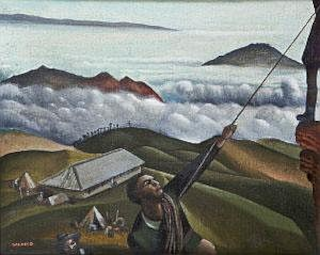
(Pictured: “The Climber” by Cecil Ffrench Salkeld, oil on canvas)


Leave a comment

Birth of George William Russell, Writer, Poet & Nationalist

George William Russell, Irish writer, editor, critic, poet, painter and Irish nationalist, is born on April 10, 1867, in Lurgan, County Armagh, in what is now Northern Ireland. He writes with the pseudonym Æ (often written AE or A.E.). He is also a writer on mysticism, and a central figure in the group of devotees of theosophy which meets in Dublin for many years. He takes his pseudonym from a proofreader’s query about his earlier pseudonym, “AEon.”

Russell is the second son of Thomas Russell and Mary Armstrong. His father, the son of a small farmer, becomes an employee of Thomas Bell and Co., a prosperous firm of linen drapers. The family relocates to Dublin, where his father has a new offer of employment, when he is eleven years old.

Russell is educated at Rathmines School and the Metropolitan School of Art, where he begins a lifelong, if sometimes contentious, friendship with W. B. Yeats. In the 1880s, he lives at the Theosophical Society lodge at 3 Upper Ely Place, sharing rooms with Hamilton Malcolm Magee, the brother of William Kirkpatrick Magee.

Following his time at the Metropolitan School of Art, Russell becomes an accounts clerk in a drapery store but leaves in 1897 to organize agricultural cooperatives. Eventually he becomes editor of the periodicals Irish Homestead (1905–23) and The Irish Statesman (1923–30). In 1894 he publishes the first of many books of verse, Homeward: Songs by the Way, which establishes him in what is known as the Irish Literary Revival. His first volume of Collected Poems appears in 1913 and a second in 1926. He maintains a lifelong interest in theosophy, the origins of religion, and mystical experience. Candle of Vision: Autobiography of a Mystic (1918) is the best guide to his religious beliefs.

At the turn of the 20th century, Russell is considered by many to be the equal of Yeats, but he does not continue to grow and develop as Yeats does. He is prolific and versatile, but many critics find his poetry facile, vague, and monotonous, with “rather too much of the Celtic Twilight” in it.

Russell designs the famous Starry Plough flag for the Irish Citizen Army, which is unveiled on April 5, 1914, and flown during the Easter Rising in April 1916.

Russell, who had become increasingly unhappy in the Irish Free State which, according to Yeats, he called “a country given over to the Devil,” moves to England soon after his wife’s death in 1932. Despite his failing health he goes on a final lecture tour in the United States but returns home utterly exhausted. He dies of cancer in Bournemouth, England, on July 17, 1935. His body is brought back to Ireland, and he is interred in Mount Jerome Cemetery, Dublin.


Leave a comment

Birth of Anne Butler Yeats, Painter and Costume and Stage Designer

Anne Butler Yeats, Irish painter, costume and stage designer, is born in Dublin on February 26, 1919.

Yeats is the daughter of the poet William Butler Yeats and Georgie Hyde-Lees, a niece of the painter Jack B. Yeats, and of Lily Yeats and of Elizabeth Corbet Yeats. Her birth is commemorated by her father with the poem A Prayer for My Daughter. Her aunts are associated with the arts and crafts movement in Ireland and are associated with the Dun Emer Press, Cuala Press, and Dun Emer industries. Her brother Michael Yeats is a politician. She is known as “feathers” by her family.

Yeats spends her first three years between Ballylee, County Galway, and Oxford before her family moves to 82 Merrion Square, Dublin in 1922. She is very sick as a child and spends three years in two different hospitals, St. Margaret’s Hall, 50 Mespil Road, and Nightingale Hall, Morehampton Road, Dublin. She then goes to the Pension Henriette, a boarding school in Villars-sur-Bex, Switzerland from 1928–30. In 1923 her Aunt Elizabeth “Lolly” gives her brush drawing lessons which aid her in winning first prize in the Royal Dublin Society (RDS) National Art competition for children under eight years old in 1925 and 1926.

Yeats trains in the Royal Hibernian Academy school from 1933 to 1936 and works as a stage designer with the Abbey Theatre in Dublin. In 1936, at the age of 16, she is hired by the Abbey Theatre as assistant to Tanya Moiseiwitsch. She studies for four months at the School of Theatrical Design in Paris with Paul Colin in 1937. At 18, she begins her costume career on sets with Ria Mooney‘s company. At the Abbey, she designs the sets and costumes for revivals of W.B. Yeats’ plays The Resurrection and On Baile’s Strand (1938).

In 1938 Yeats designs the first production of W.B. Yeats’ play Purgatory. The designs for Purgatory are her most successful achievement. Purgatory is the last play that W.B Yeats sees on stage, and when it is performed it is a full house. When working on Purgatory, Hugh Hunt wants to have a moon on the back cloth of the production, but she refuses. “If she does not win, she is going to say that she doesn’t wish to have her name on the programme as a designer of the setting.” This could be the main reason why her name is not on many productions that she worked on. She also designs the first play of her uncle Jack Yeats to receive professional production, Harlequin’s Positions.

In 1939 Yeats is promoted to head of design at the Abbey until her departure in May 1941. In 1939 it is commented that her designs are “getting arty” and not in keeping with style of the Abbey. One of her last designs is her father’s last play, The Death of Cuchulain, for the Lyric Theatre on the Abbey stage in 1949. She designs and stage-manages for the Peacock Theatre, the Cork Opera House, the Olympia Theatre, the Gaiety Theatre, the Lyric Theatre, the Abbey Theatre and the Players Theatre.

Among the work Yeats is credited with in the Abbey Theatre, she also works on five productions in the Peacock Theatre with the Theatre Company: Alarm Among the Clerks (1937), The Phoenix (1937), Harlequin’s Positions (1939), The Wild Cat (1940), and Cavaliero (The Life of a Hawk) (1948).

Yeats chooses to move towards painting full-time beginning a brief study at the Dublin Metropolitan School of Art in 1941. She experiments with watercolour and wax. She has a touching naive expressionist style and is interested in representing domestic humanity. She designs many of the covers for the books of Irish language publisher Sáirséal agus Dill over a twenty-year period from 1958. She does illustrations for books by Denis Devlin, Thomas Kinsella and Louis MacNeice, and works with many young designers, such as Louis le Brocquy.

Yeats participates in group exhibitions in the United States, Canada, Germany, the Netherlands, Monaco, and Scotland, along with the Irish Exhibition of Living Art and Taispeántas an Oireachtas.

Yeats dies at the age of 82 on July 4, 2001, and is buried in Shanganagh Cemetery, south Dublin.

The Royal Hibernian Academy holds a retrospective of her work in 1995, as does the National Gallery of Ireland in 2002. She donates her collection of Jack B. Yeats’ sketch books to the National Gallery of Ireland, leading to the creation of the Yeats Museum within the Gallery. Her brother, Michael, in turn, donates her sketchbooks to the Museum.

(Pictured: “Coole Park,” oil on board by Anne Butler Yeats, Duke Street Gallery, Dublin)


Leave a comment

Death of Ria Mooney, Stage & Screen Actress

Ria Mooney, Irish stage and screen actress, artistic director of the Abbey Theatre (1948-1963) and director of the Gaiety School of Acting, dies in Dublin on January 3, 1973. She is the first female producer at the Abbey Theatre.

Mooney is born in 1903 in Rathmines, a suburb of Dublin. She starts acting as a child, sings with the Rathmines and Rathgar Musical Society as a teenager, and studies art at the Dublin Metropolitan School of Art. She is invited to join the Abbey Theatre in 1924 and acts alongside some of the great names of the day, such as Cyril Cusack, Maire O’Neill and F. J. McCormick in numerous plays. She plays the part of Rosie Redmond in The Plough and the Stars on February 8, 1926, when the players are attacked during a riot in the theatre. She goes on to play prominent roles in the period’s most important Irish plays by Sean O’Casey, Teresa Deevy, Paul Vincent Carroll, George Shiels, Lennox Robinson, Lady Gregory and John Millington Synge.

After spells abroad and at the Gate Theatre, Mooney is put in charge of the new Peacock Theatre and the Abbey Experimental Theatre Company at the Abbey in 1937. Her memoirs allude to an affair with the poet F. R. Higgins who is on the board of the Abbey. Ria and Higgins discover they are related, as third cousins, due to a chance conversation when they are both travelling to the United States together. She is shocked at his sudden death of a heart attack on January 6, 1941.

After Higgins’ death Ernest Blythe is named managing director. Mooney leaves the Abbey in 1944 to direct the Gaiety School of Acting. In January 1948 she becomes resident producer at the Abbey. It is a difficult time for the Abbey, and she has to contend with Blythe, a demanding manager with whom she does not see eye-to-eye. An unexpected blow is the death of F. J. McCormick on April 24, 1947. On July 17, 1951, fire destroys the Abbey Theatre. The company leases the old Queen’s Theatre in September and continues in residence there until 1966. She takes the opportunity to employ younger actors, many of whom she knows from her time teaching at the Gaiety. Among them are Ronnie Masterson, Joan O’Hara, Ray McAnally, Philip O’Flynn, Angela Newman, Bill Foley and Doreen Madden. Between 1948 and 1963, seventy-five new plays are produced at the two Abbey locations, with most of these directed by Mooney, and most receive excellent reviews from the Dublin critics.

In 1947 Mooney helps with the setting up of the Radio Éireann Players.


Leave a comment

Birth of William James “Willie” Pearse

William James “Willie” Pearse, Irish republican executed for his part in the 1916 Easter Rising, is born in Dublin on November 15, 1881. He is a younger brother of Patrick Pearse, a leader of the rising.

Throughout Pearse’s life he lives in the shadow of his brother to whom he is devoted and with whom he forms a particularly close relationship.

Pearse inherits his father’s artistic abilities and becomes a sculptor. He is educated at the Christian Brothers School, Westland Row. He studies at the Dublin Metropolitan School of Art under Oliver Sheppard. He also studies art in Paris. While attending the Royal College of Art in London he gains notice for several of his artworks. Some of his sculptures are to be found in St. John’s Cathedral in Limerick, the Cathedral of St. Eunan and St. Columba in Letterkenny and several Dublin churches. He is trained to take over his father’s stonemason business but gives it up to help Patrick run St. Enda’s School which he founds in 1908. He is involved in the arts and theatre at St. Enda’s and aids the overall running of the school.

Pearse follows his brother into the Irish Volunteers and the republican movement. He takes part in the Easter Rising in 1916, always staying at his brother’s side at the General Post Office. Following the surrender, he is court-martialed and sentenced to death. It has been said that as he is only a minor player in the struggle it is his surname that condemns him. However, at his court martial he emphasizes his involvement.

On May 3, 1916, Pearse is granted permission to visit his brother in Kilmainham Gaol, to see him for the final time. However, while he is en route, Patrick is executed. He is executed on May 4. He and his brother are the only two brothers to be executed after the Easter Rising.

There are many more public commemorations of Patrick Pearse than of William. In 1966, Dublin’s Westland Row railway station is renamed Dublin Pearse railway station to honour both brothers. Pearse Square and Pearse Street in Dublin are renamed in honour of both, Pearse Street (then Great Brunswick Street) having been their birthplace. Many streets and roads in Ireland bear the name Pearse. Few name William, but there is a Pearse Brothers Park in Rathfarnham. The bridge over the River Dodder on the Rathfarnham Road, between Terenure and Rathfarnham is named after them and carries a plaque depicting the brothers in profile.

Brothers Pearse Athletic Club, founded in Rathfarnham, is named after the two brothers. A number of Gaelic Athletic Association clubs and playing fields are named after both Pearses, and at least one after William.


Leave a comment

Death of Anne Butler Yeats, Painter, Costume & Stage Designer

Anne Butler Yeats, Irish painter, costume and stage designer, dies in Dublin on July 4, 2001.

Born in Dublin on February 26, 1919, Yeats is the daughter of the poet William Butler Yeats and Georgie Hyde-Lees, a niece of the painter Jack B. Yeats, and of Lily Yeats and of Elizabeth Corbet Yeats. Her aunts are associated with the Arts and Crafts movement in Ireland and are associated with the Dun Emer Press, Cuala Press, and Dun Emer industries. Her brother Michael Yeats is a politician. She is known as “feathers” by her family. Her birth is commemorated by her father with the poem “A Prayer for My Daughter.” She spends her first three years between Ballylee, County Galway and Oxford before her family moves to 82 Merrion Square, Dublin in 1922.

Yeats is very sick as a child, spending three years in two different hospitals. She then goes to the Pension Henriette, a boarding school in Villars-sur-Bex, Switzerland from 1928–1930. In 1923 her Aunt Elizabeth “Lolly” gives her brush drawing lessons which aids her in winning first prize in the RDS National Art competition for children under eight years old in 1925 and 1926.

Yeats trains in the Royal Hibernian Academy school from 1933 to 1936 and works as a stage designer with the Abbey Theatre in Dublin. In 1936, at the age of 16, she is hired by the Abbey Theatre as assistant to Tanya Moiseiwitsch. She studies for four months at the School of Theatrical Design in Paris with Paul Colin in 1937. At 18, she begins her costume career on sets with Ria Mooney‘s company. At the Abbey, she designs the sets and costumes for revivals of W.B. Yeats’ plays The Resurrection and On Baile’s Strand (1938).

In 1938 Yeats designs the first production of W.B. Yeats’ play Purgatory, which is her most successful achievement. Purgatory is the last play that W.B Yeats sees on stage, and when it is performed it is a full house. When working on Purgatory, Hugh Hunt wants to have a moon on the back cloth of the production but Yeats refuses. “If she does not win, she is going to say that she doesn’t wish to have her name on the programme as a designer of the setting.” This could be the main reason why her name is not on many productions that she works on. She also designs the first play of her uncle Jack Yeats to receive professional production, Harlequin’s Positions.

In 1939 Yeats is promoted to head of design at the Abbey until her departure in May 1941. In 1939 it is commented that her designs are “getting arty” and not in keeping with the style of the Abbey. One of her last designs is her father’s last play, The Death of Cuchulain, for the Lyric Theatre on the Abbey stage, in 1949. She designs and stage-manages for the Peacock Theatre, the Cork Opera House, the Olympia Theatre, the Gaiety Theatre, the Austin Clarke Lyric Theatre, the Abbey Theatre and Players’ Theatre.

Among the work Yeats is credited with in the Abbey Theatre, she is also recorded as having worked on five productions in the Peacock Theatre with the Theatre Company: Alarm Among the Clerks (1937), The Phoenix (1937), Harlequin’s Positions (1939), The Wild Cat (1940), and Cavaliero (The Life of a Hawk) (1948).

Yeats chooses to move towards painting full-time beginning a brief study at the Dublin Metropolitan School of Art in 1941. She experiments with watercolour and wax. She has a touching naive expressionist style and is interested in representing domestic humanity. She designs many of the covers for the books of Irish-language publisher Sáirséal agus Dill over a twenty-year period from 1958. She does illustrations for books by Denis Devlin, Thomas Kinsella and Louis MacNeice, and works with many young designers, such as Louis le Brocquy.

Yeats dies at the age of 82 in Dublin on July 4, 2001. She is buried near her brother, Michael Butler Yeats, at Shanganagh Cemetery in Shankill, County Dublin.

The Royal Hibernian Academy holds a retrospective of her work in 1995, as does the National Gallery of Ireland in 2002. She donates her collection of Jack B. Yeats’ sketch books to the National Gallery of Ireland, leading to the creation of the Yeats Museum within the Gallery. Her brother, Michael, in turn, donates her sketchbooks to the Museum.

(Pictured: “Gossip & Scandal,” 1943 oil on canvas, by Anne Butler Yeats)