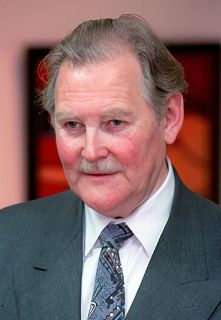
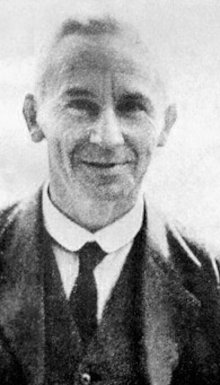
The 1916 Easter Rising is a watershed in O’Donoghue’s life. In December 1916, he joins the Cork branch of the Irish Volunteers. In early 1917, he is elected unanimously First Lieutenant of the Cyclist Company and as a result devotes all his spare time to Volunteer work. He begins writing weekly for two years for TheIrish World newspaper. By May 1917, he is sworn into the Irish Republican Brotherhood (IRB) and in October, Tomás Mac Curtain appoints him head of communications of the Cork Brigade. He replaces Pat Higgins as Brigade Adjutant in February 1917. He is a key organiser in the sensational jailbreak of Captain Donnchadh Mac Niallghuis on Armistice Day 1918 and takes personal responsibility for his protection. Michael Collins is the last officer from Volunteers General Headquarters to visit Cork shortly after Christmas 1919, until the truce in 1921.
O’Donoghue builds up an intelligence network and agents which includes his future wife, Josephine Marchment. She is head female clerk at the 6th Division Headquarters at Victoria Barracks, Cork, and passes on secret British Army correspondence to him. He recruits people to open letters, tap phone lines and intercept telegrams. The Irish Republican Army has 2,000 active members in Cork which are also used for intelligence gathering. By March 1920, after killing a Royal Irish Constabulary (RIC) Inspector, he is on the run and serving full-time in the IRA. In November of that year, the Cork Brigade kills six British Army officers and executes five Cork civilians on suspicion of spying.
After two and a half years of fighting, a truce is agreed upon on July 11, 1921. When the Dáil approves the Anglo-Irish Treaty, in January 1922, the IRA splits into pro- and anti-Treaty camps. Over the coming months and after being elected to the army’s executive as Adjutant General, O’Donoghue warns of the dangers of an Irish Civil War. In June 1922, he resigns from the army’s national executive and a month later, on July 3, 1922, from the army. Civil war does break out on June 28, 1922, between pro- and anti-Treaty factions, much to his dismay.
During the Irish Civil War, O’Donoghue remains neutral and tries to organise a truce to end the fighting. In December 1922, he forms a group called the “Neutral IRA”, along with Seán O’Hegarty, composed of pro-truce IRA men. He claims he has 20,000 members in this group. He campaigns for a month’s truce between the two sides, so that a political compromise could be reached. However, his efforts come to nothing and in March 1923, he winds up the “Neutral IRA,” judging that its objectives cannot be achieved. The Irish Civil War ends on May 24, 1923.
O’Donoghue serves as major in the Irish Army from 1939-1946. He forms a Supplementary Intelligence Service that is to remain behind enemy lines in the event of an invasion. He also teaches guerrilla warfare tactics to new army recruits.
O’Donoghue marries Josephine Brown (née Marchment) in April 1921, and they have four children. The couple also adopts two children from Josephine’s first marriage, including Reggie Brown, whom O’Donoghue kidnaps from his grandparents in Wales in 1920. He becomes a rate collector and remains outside politics.
In later years O’Donoghue becomes a respected historian. While in the army he edits An Cosantóir, the Irish Army’s magazine. He convinces Éamon de Valera to establish the Bureau of Military History to record personal accounts from the Irish War of Independence. He is a recording officer until 1948. His most famous work is his biography on Liam Lynch, entitled No Other Law.
Mac Aonghusa is the son of Criostóir Mac Aonghusa, a writer and Irish language activist, and Mairéad Ní Lupain, a nurse and native Irish speaker. The eldest of four siblings, he grows up speaking Irish as his first language and allegedly does not learn English until the age of eleven. His parents are left-wing Irish republicans who support Fianna Fáil and associate with the like-minded Máirtín Ó Cadhain and Peadar O’Donnell. His parents split when he is ten years of age. His mother takes his siblings away to Dublin while he and his father remain in Rosmuc, a remote village and part of the Galway Gaeltacht. As a teenager he is educated at Coláiste Iognáid (also known as St. Ignatius College), a bilingual school in Galway.
Upon leaving school, Mac Aonghusa first works as an actor at the Abbey Theatre in Dublin, performing in Irish language productions. In 1952, he becomes involved in Radio Éireann, first as an actor but later as a reader of short stories before advancing to becoming a newsreader, presenter and interviewer. As he advances his career, he works for RTÉ, UTV and BBC television from the 1960s. In 1962, he begins presenting An Fear agus An Sceal (The Man & his Story) on RTÉ television, an Irish language show which sees him interviewing a different guest of note about their life each episode. That same year he wins a Jacob’s Award for An Fear agus an Sceal, which he continues to host until 1964.
As well as attracting awards, An Fear agus an Sceal also brings controversy. Two interviews, one with Máirtín Ó Cadhain, one with Con Lehane, both criticise the measures practised by the Fianna Fáil government during World War II to suppress and imprison Irish republicans. In response, the Fianna Fáil government intervenes with RTÉ, and those episodes are not aired. This is not to be Mac Aonghusa’s only run-in with the Fianna Fáil government. After he recorded a programme in which he questioned the effectiveness of Ireland’s civil defence measures in the face of nuclear war, then Minister for DefenceKevin Boland has the episode suppressed. He once again runs afoul of the Fianna Fáil government when, after criticising the party in his anonymous weekly political gossip column in the Sunday Independent, then Minister for AgricultureNeil Blaney sees to it that the column is dropped. He is not deterred and returns anonymously as “Gulliver” in The Sunday Press and a gossip column on the back page of The Hibernia Magazine.
The latter half of Mac Aonghusa’s 1960s/70s broadcasting career is primarily associated with the Irish language current events show Féach, which he both presents and edits. He resigns from Féach in 1972 following a bitter dispute with the broadcaster and commentator Eoghan Harris.
In 1959, Mac Aonghusa writes a series of six articles for The Irish Times in which he vehemently opposes the Fianna Fáil government’s proposal to abolish single transferable vote in Ireland in favour of first-past-the-post voting. He contends that first-past-the-post voting gives too much influence to party bosses, while proportional representation gives even small minorities representation, preventing them from feeling excluded by the state such as nationalists in Northern Ireland. In the referendum held on the matter on June 17, 1959, voters reject first past the vote by a margin of 2%. Fianna Fáil attempts to repeal proportional representation again in the late 60s, at which point Mac Aonghusa once again throws himself into the fight, leading a group called “Citizens for PR.” In the referendum of 1968, voters reject the first past the post system by over 20%. He later recalls that his defence of proportional representation his greatest achievement in politics.
In the 1960s, both Mac Aonghusa and his wife, Catherine, join the Sean Connolly branch of the Labour Party in Dublin. The branch had established a reputation as a haven for intellectuals who want a branch to themselves away from the many other Labour branches dominated by trade unionists. The branch comes to advocate for expressly socialist policies combined with on-the-ground grass-roots campaigning. Through the Sean Connolly Branch, both he and his wife begin to develop significant influence over the leader of the Labour party Brendan Corish.
In the 1965 Irish general election, Mac Aonghusa stands on behalf of the Labour party in the Louth constituency but is not elected. In 1966, he publishes a book of speeches by Corish, the speeches themselves mostly having been ghostwritten by his wife Catherine. The introduction of the book proclaims that Corish had developed a “brand of democratic republican socialism … broadened by experience and built firmly on Irish‐Ireland roots” and had rid the party of “do‐nothing backwoodsmen”, thereby becoming the “first plausible and respected Labour leader in Ireland”. It is at this same time that he is elevated to vice-chairman of the party. As vice-chair, he tries to convince Corish to stand in the 1966 Irish presidential election. When he fails to do so, he supports Fine Gael‘s Tom O’Higgins in his bid for the presidency. O’Higgins comes within 0.5% of beating the incumbent, an ageing Éamon de Valera.
It was around this same time that Mac Aonghusa becomes active in the Wolfe Tone Societies, a republican organisation linked almost directly to Sinn Féin. He suggests that republicans with “progressive views” should join the Labour party. In 1966, alongside Máirtín Ó Cadhain and other Gaeilgeoirí, he counter-protests and disrupts the Language Freedom Movement, an organisation seeking the abolition of compulsory Irish in the education system. For this, he and his allies are criticised as acting illiberally, while he maintains that those who oppose the Irish language are “slaves” unworthy of tolerance.
Mac Aonghusa’s open disdain for the conservative and trade union wings of the Labour, as well as his open embrace of republican sensibilities and tendency to make pronouncements on Labour policy without first consulting the party’s structures, bring him many internal enemies. An attempt is made to censure him for backing breakaway trade unions, but he is able to survive this. In 1966, he encourages the formation of the Young Labour League, an unofficial youth wing of the party led by Brian Og O’Higgins, son of former Sinn Féin president Brian O’Higgins. Mirroring his own position, the Youth League are Corish loyalists that openly rebel against the views of Labour’s conservative deputy leader James Tully. When the youth league begins publishing their own weekly newsletter, Labour’s administrative council condemns it after discovering material which is “violently” critical of Tully and other Labour conservatives. An ensuing investigation into the newsletter leads to Mac Aonghusa admitting that he had financed it and written some of the content, but not the anti-Tully material. After he refuses to co-operate with further investigations into the matter, he is expelled on January 12, 1967 for “activities injurious” to the party. In the aftermath, he portrays himself a left-wing martyr purged by a right-wing “Star chamber,” a tactic that garners him sympathy. Nevertheless, his expulsion is confirmed at the October 1967 party conference, despite one last appeal. His wife leaves the party alongside him.
In the aftermath of his expulsion from Labour, Mac Aonghusa expresses an interest in the social democratic wing of Fine Gael, which had been developing under Declan Costello since the mid-1960s. However, he does not join the party and instead runs as an independent candidate in the 1969 Irish general election in Dún Laoghaire–Rathdown. When he is not elected, he begins to refocus on the revival of the Irish language and with nationalist politics rather than being elected himself.
Upon the onset of the Troubles, Mac Aonghusa is initially supportive of Official Sinn Féin, however by 1972 he comes to resent them and, through the Ned Stapleton Cumann, their secret influence over RTÉ. During the Arms Crisis in 1970, he supports Charles Haughey and Neil Blaney, who stand accused of arranging to supply weapons to the Provisional IRA, in the pages of the New Statesman and other left‐wing journals. In this time period, he warns editors not to reprint his material in the Republic of Ireland as there is a de facto ban on him, and indeed, official attempts are made to block the transmission of his telexed reports.
Despite his earlier famed stark criticism of Fianna Fáil, Mac Aonghusa’s defence of Haughey leads to a friendship between the two men which results in him becoming one of Haughey’s loudest defenders throughout the rest of his career. His columns in The Sunday Press and Irish language paper Anois are accused of descending into self-parody in their stringent defences of Haughey.
During the 1970s, Mac Aonghusa writes a number of books covering significant figures in Irish republicanism. In order, he releases books on James Connolly, Patrick Pearse, Wolfe Tone and Éamon de Valera. In his work on De Valera, he emphasises what he perceives as the more radical aspects of the Fianna Fáil founder. During 1974 and 1975, he works as a United Nations Special Representative to the Southern Africa region with Seán MacBride, where they involve themselves in the South African Border War, and during which time Mac Aonghusa becomes involved in setting up a radio station in Namibia, linked to the South West Africa People’s Organisation (SWAPO) nationalist party.
In the 1980s, Haughey twice appoints Mac Aonghusa to the Arts Council as well as naming him president of Bord na Gaeilge (1989-93). This is an issue as Mac Aonghusa is already president of Conradh na Gaeilge. Being head of the main Irish language lobbying body as well as the state body responsible for the Irish language has an obvious conflict of interest. In 1991, following the announcement by Haughey that the government is to fund the creation of an Irish-language television station (launched in 1996 as Teilifís na Gaeilge), an elated Mac Aonghusa suggests that Haughey would be “remembered among the families of the Gael as long as the Gaelic nation shall survive.”
In 1992 there are calls for Mac Aonghusa to step down from Bord na Gaeilge after he pronounces that “every respectable nationalist” in West Belfast should vote for Sinn Féin’s Gerry Adams over the Social Democratic and Labour Party (SDLP) candidate Joe Hendron in the 1992 United Kingdom general election as he considers a defeat for Adams “a victory for British imperialism.” Nevertheless, he simultaneously advises voters in South Down to vote for the SDLP’s Eddie McGrady over Sinn Féin. He rails against his detractors at the Conradh na Gaeilge ardfheis that year, declaring that “The mind of the slave, of the slíomadóir, of the hireling and the vagabond is still fairly dominant in Ireland.”
As of 1995, Mac Aonghusa continues to label himself a socialist. In the foreword to the book, he writes about James Connolly that is released that year, he declares that “the abolition of capitalism is essential if the great mass of the people in all parts of the globe are to be emancipated.”
However, with the recent collapse of the Soviet Union in mind, Mac Aonghusa declares that the Stalinist regimes of Eastern Europe have not been socialist and argues that the social democracies of Scandinavia are what James Connolly had envisioned as the desired socialist society. In the same text, he accuses the Irish education system as well as Ireland’s media of obfuscating Connolly’s views on socialism and nationalism.
Mac Aonghusa battles through ill health in his final years but remains able to continue writing a number of books. His last publication, Súil Tharam (2001), comes just two years before his death in Dublin on September 28, 2003.
In 1955, Mac Aonghusa marries Catherine Ellis, a member of the Church of Ireland from Belfast. For her married name, she chooses to use “McGuinness,” the English language equivalent of Mac Aonghusa. Catherine McGuinness goes on to become a Senator and a Judge of the Circuit Court, High Court and Supreme Court over the course of her legal career. Together they have three children together.
The senior surviving leader of the 1916 Easter Rising, de Valera is jailed by the British after his death sentence for his participation in the Rising is reduced to life imprisonment. He likes to tell the story that his life was spared because of his American birth, a story he tells the visiting United States presidentJohn F. Kennedy at a State reception in 1963. However, it is most likely that his court-martial is scheduled too late after the public and popular pressure becomes too much on the British Government who call a stop to the executions. British prison authorities are surely glad to see him go. He had led Irish prisoners in acts of defiance in several different prisons.
At Dartmoor Prison, de Valera goes on hunger strike and gets a fellow prisoner off bread and water. When all the Irish prisoners are transferred to Lewes Jail, he organizes a work stoppage and gets another man off bread and water. The exasperated British then split up the Irish prisoners, sending de Valera to Maidstone Prison, whose governor has a reputation for breaking men. De Valera meets him head on, refusing to stand at attention or button his jacket as required in his presence, then piercing his pride by wondering aloud, to the delight of the British prison guards, why a military-age man such as he is not at the front. The governor avoids him after that.
Soon after this, de Valera is transferred to Pentonville Prison for early release. Most of the notable leaders of the 1916 Rising, including Dr. Kathleen Lynn, Thomas Ashe and others, had been released from various British prisons. Before his release, they congregate at Pentonville and say a prayer over the grave of Roger Casement, who had been hanged there.
As a free man, de Valera continues to plague Ireland’s foreign rulers. He is handed a telegram saying that he is going to stand as the Sinn Féin candidate in the East Clare by-election. This is the start of a political career that extends over fifty years.
Talbot is born on May 2, 1856, at 13 Aldborough Court, Dublin, the second eldest of twelve children of Charles and Elizabeth Talbot, a poor family in the North Strand area. He is baptized in St. Mary’s Pro-Cathedral on May 5. His father and all but the oldest of his brothers is heavy drinkers. In 1868, he leaves school at the age of twelve and goes to work in a wine merchant’s store. He very soon begins “sampling their wares,” and is considered a hopeless alcoholic by age thirteen. He then goes to the Port & Docks Board where he works in the whiskey stores. He frequents pubs in the city with his brothers and friends, spending most or all of his wages and running up debts. When his wages are spent, he borrows and scrounges for money. He pawns his clothes and boots to get money for alcohol. On one occasion, he steals a fiddle from a street entertainer and sells it to buy drink.
One evening in 1884, 28-year-old Talbot, who is penniless and out of credit, waits outside a pub in the hope that somebody will invite him in for a drink. After several friends had passed him without offering to treat him, he goes home in disgust and announces to his mother that he is going to “take the pledge” (renounce drink). He goes to Holy Cross College, Clonliffe, where he takes the pledge for three months. At the end of the three months, he takes the pledge for six months, then for life.
Having drunk excessively for 16 years, Talbot maintains sobriety for the following forty years of his life. There is evidence that his first seven years after taking the pledge are especially difficult. He finds strength in prayer, begins to attend daily Mass, and reads religious books and pamphlets. He repays all his debts scrupulously. Having searched for the fiddler whose instrument he had stolen, and having failed to find him, he gives the money to the church to have Mass said for him.
Even when his drinking is at its worst, Talbot is a hard worker. When he joins Pembertons, the building contractors, as a hod-carrier, his work-rate is such that he is put first on the line of hodmen to set the pace. Later, in Martin’s timber yard, he takes on the meanest and hardest jobs. He is respectful to his bosses but not obsequious, and on occasion stands up for a fellow worker. On September 22, 1911, he joins the builder’s labourers branch of the Irish Transport and General Workers Union (ITGWU). When the Dublin Lockout of 1913 leads to sympathy strikes throughout the city, the men of Martin’s, including Talbot, come out. At first, he refuses his strike pay, saying that he had not earned it. Later he accepts it but asks that it be shared out among the other strikers. After his death a rumour is put about that he was a strike-breaker in 1913, but all the evidence contradicts this.
From being an indifferent Catholic in his drinking days, Talbot becomes increasingly devout. He lives a life of prayer, fasting, and service, trying to model himself on the sixth century Irish monks. He is guided for most of his life by Michael Hickey, Professor of Philosophy at Holy Cross College. Under Hickey’s guidance his reading becomes wider. He laboriously reads scripture, the lives of saints, the Confessions of Saint Augustine, and the writings of Francis de Sales and others. When he finds a part difficult to understand, he asks a priest to clarify it.
Hickey also gives Talbot a light chain, much like a clock chain, to wear as a form of penance. He becomes a Third Order Franciscan in 1890 and is a member of several other associations and sodalities. He is a generous man. Although poor himself, he gives unstintingly to neighbours and fellow workers, to charitable institutions and the Church. He eats very little. After his mother’s death in 1915, he lives in a small flat with very little furniture. He sleeps on a plank bed with a piece of timber for a pillow. He rises at 5:00 a.m. every day so as to attend Mass before work. At work, whenever he has spare time, he finds a quiet place to pray. He spends most of every evening on his knees. On Sundays he attends several Masses. He walks quickly, with his head down, so that he appears to be hurrying from one Mass to another.
Talbot is on his way to Mass on Trinity Sunday, June 7, 1925, when he collapses and dies of heart failure on Granby Lane in Dublin. Nobody at the scene is able to identify him. His body is taken to Jervis Street Hospital, where he is undressed, revealing the extent of his austerities. A chain had been wound around his waist, with more chains around an arm and a leg, and cords around the other arm and leg. The chains found on his body at death are not some extreme penitential regimes but a symbol of his devotion to Mary, Mother of God, that he wished to give himself to her totally as a slave. His story quickly filters through the community, and there are many spectators when his funeral takes place at Glasnevin Cemetery on June 11, 1925. In 1972, his remains are removed to a tomb in Our Lady of Lourdes Church in Seán McDermott Street, Dublin, in the area where he spent his life.
There is a small plaque in Granby Lane at the site of Talbot’s death. Prior to the current plaque on the Eastern side of the lane, a small brass cross was inlaid in a stone wall on the Western side of the lane.
The Custom House in Dublin is occupied and then burned in an operation by the Irish Republican Army (IRA) on May 25, 1921, during the Irish War of Independence. At the time, the Custom House is the headquarters of the Local Government Board for Ireland, an agency of the British administration in Ireland, against which the IRA is fighting in the name of the self-proclaimed Irish Republic. The operation, involving over 100 IRA volunteers, is a propaganda coup for the republicans but a military disaster for the IRA in the Irish capital. A force of British Auxiliaries quickly arrives, and a gun battle erupts. Five IRA volunteers, John Doyle, Edward Dorins, Daniel Head, Captain Patrick and Lieutenant Stephen O’Reilly, are killed, along with three civilians. Approximately 80 volunteers are captured.
The operation is the largest action in Dublin by rebels since the Easter Rising of April 1916.
The Irish War of Independence is a guerrilla campaign by the IRA in support of the Irish Republic. The conflict enters its bloodiest phase in the first six months of 1921. In Dublin, a total of 309 people are killed in the conflict and several hundred more wounded.
Dublin is garrisoned by over 10,000 British troops and 1,600 police including 400 men of the Royal Irish Constabulary (RIC) Auxiliary Division. Most IRA actions in the city consist either of assassinations of selected police, military or administration figures by the Squad, or ambushes on British forces by one of the four Active Service Units (ASU) of the IRA’s Dublin Brigade, together comprising about 100 men. These are usually rapid and fleeting attacks using grenades and handguns, followed by a quick getaway. There are strict orders given to IRA units to avoid prolonged engagements with the better-armed British forces.
However, this policy is reversed after a meeting of the Ministry of Dáil Éireann in May 1921 where the President of the Republic, Éamon de Valera, calls for a spectacular public show of force by the IRA, to reinforce the idea that it is an army representing an Irish government. For this reason, it is decided to attack and burn the Custom House, which, although an important government building, is not defended by the British military. Michael Collins is against the attack but is overruled.
Michael O’Kelly, Lieutenant E Company, 2nd Battalion, Dublin Brigade, recalls plans to “deliver a smashing blow to England.” Two large scale operations – to capture Beggars Bush Barracks, or to destroy the Customs House are initially considered. The Custom House is eventually chosen. IRA member Vincent Byrne says that the operation is “one of many under review.”
In the early afternoon of May 25, 1921, roughly 120 non-uniformed IRA Volunteers begin to gather around the Custom House in groups of two or three. Three quarter of those involved belonged to the 2nd Battalion of the Dublin Brigade under Tom Ennis. Only a minority of them are experienced guerrilla fighters and they are armed only with pistols and a limited amount of ammunition. At 1:00 p.m., they rush the Custom House and overpower the police guard. A lorry pulls up outside the building with tins of petrol and bales of cotton, which are then sprinkled throughout the building. The IRA Volunteers herd all the staff into the main hall. The caretaker of the building, Francis Davis, is shot dead when he tries to call the police.
However, at about 1:10 p.m., a watching policeman notifies British forces and 60 Auxiliaries in three lorries and an armored car quickly arrive on the scene. IRA Volunteers from the 1st, 3rd and 4th battalions are positioned outside the building to stop the enemy from approaching.
Four Auxiliaries are wounded in a gun battle with one of these IRA protection teams outside the building. Other Auxiliaries fire into the building with rifles and Lewis machine guns, exchanging fire with the IRA fighters inside. A number of IRA Volunteers and civilians are killed or wounded by the Auxiliaries. As fighting rages outside, IRA Volunteers inside the building are ordered to set it alight.
The ammunition of the IRA Volunteers quickly runs out and the firefight ends within 30 minutes. Some Volunteers are shot as they try to run away. Tom Ennis, in command of the operation, escapes but is hit twice in the leg. Many others are arrested along with civilians as they come out of the now burning Custom House with their hands up. The Fire Brigade, which had been delayed from responding by other IRA companies in the city, arrives too late to put out the fire.
British military forces composed of units from the Wiltshire Regiment arrive and take over the operation from the Auxiliaries at this point. A total of 111 people are arrested, of whom 70–80 are IRA volunteers.
The Custom House burns for five days and is all but completely destroyed by the fire. With it are destroyed many centuries of local government records. The Irish Bulletin, official gazette of the Irish Republic, reports:
“A detachment of the Dublin Brigade of the Irish Army was ordered to carry out the destruction of the Custom House in accordance with a decision arrived at after due deliberation of the ministry of Dáil Éireann. We in common with the rest of the nation regret the destruction of historical buildings. But the lives of four million people are a more cherished charge than any architectural masterpiece. The Custom House was the seat of an alien tyranny.”
From the republican point of view, the operation is successful for its propaganda value, but it is a heavy blow in terms of the numbers lost, both killed and arrested. Following the operation, the Dublin Brigade and The Squad are amalgamated into the Dublin Guard. However, the operation does not totally impede the IRA’s campaign in Dublin. The Dublin Brigade carries out 107 attacks in the city in May and 93 in June, showing a decline but not a dramatic one.
The memoir of Harry Colley, Adjutant of the Dublin IRA, estimates the numbers in the five Dublin battalions at 1,400 in early 1921.
The armed conflict is brought to an end on July 11, 1921, and negotiations are opened which produces the Anglo-Irish Treaty in December of that year. The Custom House is re-built after the end of the war.
Irish local government records from the 1600s had been brought from rural parts of Ireland to the Custom House for safekeeping, and these are lost in the blaze. At the time, The New York Times subtitles their report on the fire as “Priceless Records Lost.” Some genealogists still lament the loss of these historical records.
(Pictured: The Custom House in flames, taken on May 25, 1921)
On Friday, May 17, 1918, the British government orders the arrest and imprisonment of all leading members of Sinn Féin, claiming they were involved in a plan to import arms from Germany. The British cover for these arrests is a bogus “German Plot,” which has since been thoroughly discredited.
The “German Plot” is a spurious conspiracy that the Dublin Castle administration in Ireland claims to exist between the Sinn Féin movement and the German Empire in May 1918. Allegedly, the two factions conspire to start an armed insurrection in Ireland during World War I, which would divert the British war effort. The administration uses these claims to justify the internment of Sinn Féin leaders, who are actively opposing attempts to introduce conscription in Ireland and more Irishmen being used as cannon fodder in service to their oppressors.
Historian Paul McMahon characterises the “Plot” as “a striking illustration of the apparent manipulation of intelligence in order to prod the Irish authorities into more forceful action.” Republicans are tipped off about the impending arrests, allowing some to escape capture while others choose to be taken in order to secure a propaganda victory. The internment is counterproductive for the British, imprisoning the more accommodating Sinn Féin leadership while failing to capture members of the Irish Republican Brotherhood who are more committed to physical force republicanism.
The British live to regret one man who slips through their fingers that spring. Michael Collins uses the months he might have spent in an English prison assembling and consolidating his control of an intelligence organisation and putting it on a more focused military footing that soon makes the Empire squeal.
Even at the time, the proposition that the Sinn Féin leadership are directly planning with the German authorities to open another military front in Ireland is largely seen as spurious. Irish nationalists generally view the “German Plot” not as an intelligence failure but as a black propaganda project to discredit the Sinn Féin movement, particularly to an uninformed public in the United States. McMahon comments that this belief is mistaken, and that the authorities acted honestly but on the basis of faulty intelligence. It is still a matter of study and conjecture what impact it had on U.S. foreign policy regarding the 1919 bid for international recognition of the Irish Republic.
In April 1916, Germany offers the Irish 20,000 Mosin–Nagant 1891 rifles, ten machine guns and accompanying ammunition, but no German officers. It is a fraction of the quantity of the arms Casement had hoped for, with no military expertise on offer. The weapons leave Germany bound for Ireland on a German cargo vessel named the SS Libau, disguised as a Norwegian vessel, Aud-Norge.
Casement confides his personal papers to Dr. Charles Curry, with whom he has stayed at Riederau on the Ammersee, before leaving Germany. He departs with Robert Monteith and Sergeant Daniel Beverley (Bailey) of the Irish Brigade in a submarine, initially the SM U-20, which develops engine trouble, and then the SM U-19, shortly after the Aud sails. According to Monteith, Casement believes the Germans are toying with him from the start and providing inadequate aid that will doom a rising to failure. He wants to reach Ireland before the shipment of arms and to convince Eoin MacNeill, who he believes is still in control, to cancel the rising.
Casement sends John McGoey, a recently arrived Irish American, through Denmark to Dublin, ostensibly to advise what military aid is coming from Germany and when, but with Casement’s orders “to get the Heads in Ireland to call off the rising and merely try to land the arms and distribute them.” McGoey does not reach Dublin, nor does his message. His fate is unknown until recently. Evidently abandoning the Irish Nationalist cause, he joins the Royal Navy in 1916, survives the war, and later returns to the United States, where he dies in an accident on a building site in 1925.
About 2:00 a.m. on the morning of April 21, 1916, three days before the rising begins, Robert Monteith, Daniel Bailey (calling himself Beverly), and Casement climb into a small boat for the trip to shore at Banna Strand in Tralee Bay, County Kerry. Their boat, now in the Imperial War Museum in London, capsizes before they reach shore.
Monteith helps an exhausted Casement to safety on shore. Casement is convinced that the Rising cannot be successful without a large number of German troops, and the best he has been able to obtain is one boatload of arms. Suffering from a recurrence of the malaria that had plagued him since his days in the Congo, and too weak to travel, Monteith and Bailey leave Casement at the ruins of McKenna’s Fort, an ancient ring fort in Rahoneen, Ardfert, now renamed Casement’s Fort, and head for Tralee.
About 1:30 p.m., Casement is discovered by two Royal Irish Constabulary (RIC) officers. He nearly talks his way out of being arrested, but a 12-year-old boy at the scene points out a piece of paper Casement had tossed away as the police approach. On that paper is a German code list. He is arrested on charges of high treason, sabotage and espionage against the Crown. He manages to send word to Dublin about the inadequate German assistance.
The Kerry Brigade of the Irish Volunteers might have tried to rescue Casement over the next three days, but its leadership in Dublin holds that not a shot is to be fired in Ireland before the Easter Rising is in train and therefore orders the Brigade to “do nothing.” A subsequent internal inquiry attaches “no blame whatsoever” to the local Volunteers for failing to attempt a rescue. Casement is taken to Brixton Prison and placed under special observation for fear of an attempt of suicide as there is no staff at the Tower of London to guard suicidal cases.
On the day of his execution by hanging at Pentonville Prison, August 3, 1916, Casement is received into the Catholic Church at his request. He is attended by two Catholic priests, Dean Timothy Ring and Father James Carey, from the East London parish of SS Mary and Michael. The latter, also known as James McCarroll, says of Casement that he was “a saint … we should be praying to him [Casement] instead of for him.” At the time of his death he is 51 years old.
Casement’s body is buried in quicklime in the prison cemetery at the rear of Pentonville Prison, though his last wish was to be buried at Murlough Bay on the north coast of County Antrim, in present-day Northern Ireland. Finally, in 1965, his remains are repatriated to Ireland. His remains lay in state at the Garrison Church, Arbour Hill (now Arbour Hill Prison) in Dublin for five days, close to the graves of other leaders of the 1916 Easter Rising, although he would not be buried beside them. After a state funeral, the remains are buried with full military honours in the republican plot in Glasnevin Cemetery in Dublin, alongside other Irish republicans and nationalists. The President of Ireland, Éamon de Valera, who is then in his mid-eighties and the last surviving leader of the Easter Rising, attends the ceremony, along with an estimated 30,000 others.
Josephine McNeill, Irish diplomat, is born on March 31, 1895, in Fermoy, County Cork. She is the first Irish female diplomat appointed to represent Ireland abroad in a ministerial capacity.
McNeill is born Josephine Ahearne, the daughter of shopkeeper and hotelier, James Ahearne, and his wife Ellen Ahearne (née O’Brien). She attends the Loretto Convent, Fermoy, and goes on to graduate from University College Dublin (UCD) with a BA, H.Dip.Ed. in French and German. With this she begins a teaching career, at St. Louis’ Convent, Kiltimagh, at the Ursuline Convent, Thurles, and at Scoil Íde. Scoil Íde, the female counterpart to St. Enda’s School, had been established by her friend, Louise Gavan Duffy. She is fluent in the Irish language and takes an active part in the cultural elements of the Irish independence movement, such as literature and music. She is a member of Cumann na mBan, serving as a member of the executive committee in 1921.
After the death of her husband in 1938, McNeill becomes the honorary secretary of the council of the Friends of the National Collections, as well as serving as chair of the executive committee of the Irish Countrywomen’s Association until 1950. As a member of the Department of External Affairs advisory committee on cultural relations, she writes on economic, social and cultural issues. She represents Ireland at the UNESCO general assembly in Paris in 1949.
McNeill is an active member of Clann na Poblachta from its foundation in 1946. She is appointed the minister to the Netherlands in 1950 by Seán MacBride, making her the first Irish female diplomat to represent the Republic of Ireland abroad in a ministerial capacity. This appointment is not well received by diplomats in the Department of External Affairs. Her reports from The Hague focus on the issues the Netherlands faces with decolonisation. In 1955, she becomes the minister to Sweden, going on to hold the joint appointment to Austria and Switzerland from 1956 to 1960, after which she retires. While serving in Switzerland she puts aside the resentment she feels towards Éamon de Valera based on how he had treated her husband, to sit with him during a convalescence while de Valera recovers from an eye operation.
McNeill is an amateur pianist and collects paintings and porcelains. In 1933, she publishes the Irish language book, Finnsgéalta ó India.
O’Hegarty comes from a family with strong nationalist roots. His parents are John, a plasterer and stucco worker, and Katherine (née Hallahan) Hegarty. His elder brother is Patrick Sarsfield O’Hegarty, the writer. His parents’ families emigrated to the United States after the Great Famine, and his parents married in Boston. His father is a member of the Irish Republican Brotherhood (IRB). In 1888, his father dies of tuberculosis at the age of 42, and his mother has to work to support the family.
O’Hegarty is educated at the Christian BrothersNorth Monastery school in Cork. By 1902, he has left school to work as a sorter in the local post office, rising to post office clerk. He is a supporter of the Gaelic revival, Irish traditional music, and Gaelic games. A committed sportsman, in his twenties he is captain of the Post Office HQ’s hurling team. He follows his brother Patrick into Conradh na Gaeilge and eventually the Irish Volunteers and the Irish Republican Brotherhood. He is a member of the Celtic Literary Society by 1905 and founds the Growney branch of Conradh na Gaeilge in 1907. A puritanical character by nature, he is a non-smoker and never drinks.
O’Hegarty is a founder of the local branch of the Irish Volunteers in Cork in December 1913. In June of the following year, he is appointed to the Cork section of the Volunteer Executive, and then to the Military Council. In October, the Dublin government discovers his illegal activities, and he is dismissed. Excluded from Cork under the Defence of the Realm Act (DORA) regulations, he moves to Ballingeary, where he works as a labourer. From there he moves to Enniscorthy, County Wexford, where he lives with Larry de Lacy. On February 24, 1915, he is arrested and tried under the Defence of the Realm Act for putting up seditious posters. But for this and a second charge of “possession of explosives” he is discharged. The explosives belonged to de Lacy.
The Volunteers appoint O’Hegarty as Commandant of Ballingeary and Bandon. During the Easter Rising, he is stationed in Ballingeary when visited by Michael McCarthy of Dunmanway to propose an attack on a Royal Irish Constabulary (RIC) post at Macroom. But their strength is fatally weakened and, having no reserves, they call off the attempt. In 1917, he becomes Vice-commandant of No.1 Cork Brigade. He works as a storekeeper at the workhouse but is intimidating, and clashes with the Poor Law Guardians.
During the Irish War of Independence, O’Hegarty is one of the most active in County Cork. Like others, he is exasperated with Tomás Mac Curtain’s inactivity and refusal to be more bellicose. One such is battalion commander Richard Langford, who joins with O’Hegarty’s unit to make an unauthorized raid on the RIC post at Macroom. Langford is court-martialed, but O’Hegarty continues to rise in the ranks. When a RIC Inspector is murdered, Mac Curtain condemns the shootings and calls for their end. On March 19, 1920, Mac Curtain is shot and killed in his home in Cork. The coroner blames the British establishment in Dublin, but the police never make any attempt to investigate the killings. Shortly after these events General Hugh Tudor begins the policy of official reprisals.
In January 1920, an inquiry is held into corruption alleged against “Hegarty’s Mob” or “Hegarty’s Crowd” running Cork City. O’Hegarty blames the former mayors for the charges of incompetence but remains on good terms with them.
In a raid on Cork City Hall on August 12, 1920, the British manage to net all the top brass of the IRA in Cork. In an incredible failure of intelligence, they do not identify the leadership as their prisoners. They are all released, including Liam Lynch, and O’Hegarty. Only Terence MacSwiney, the new Lord Mayor of Cork, is kept in custody and sent to England.
On February 25, 1921, the Coolavokig ambush is carried out by the 1st Cork Brigade under O’Hegarty at Ballyvourney village, on the road between Macroom and Ballyvourney. The IRA suffers no casualties; however, the number of British casualties has been disputed to this day.
The brigade commanders in the southern division retain a residual lingering resentment of Dublin GHQ’s lack of leadership and supplies. Seán Moylan, commandant of No. 2 Cork Brigade, thinks good communications with No.1 Brigade are to be vital, but little of this is seen via the organizer, Ernie O’Malley, at GHQ. At a meeting set up for April 26, 1921, when the manual of Infantry Training 1914 is produced, the document raises great anger. The meeting ends in uproar when O’Hegarty, who is “a master of invective, tore the communication and its authors to ribbons.”
O’Malley and Liam Lynch, the general, meet with O’Hegarty in the mountains of West Cork, near a deserted farmhouse, just off the main road. In the retreat that follows, the Irish take heavy casualties and leave their wounded to the good care of the British. These are the “Round-ups” in which the Irish sleep outside in order to avoid being at home when the Army calls. They are told by the Brigade to learn the national anthem of England to avoid arrest.
In East Cork brigade, O’Hegarty uncovers a spy ring. He is ruthless in the treatment of Georgina Lindsay and her chauffeur, who give away information to the Catholic clergy, but is remarkably lenient on brigade traitors within. He is allegedly not too bothered about evidence but is reminded that all executions of a traitor have to be approved by Dublin first.
O’Hegarty becomes more and more aggressive toward the establishment, using tough language to impose his will over the area. He attempts to force the civilian Teachtai Dála (TDs) for Cork to stand down, to give way to military candidates, telling the Dáil in December 1921, that any TD voting for the treaty will be guilty of treason. But Éamon de Valera is decided and overrules any interference with the Civil Government. Like the commanders, de Valera rejects the treaty but has already been defeated in the Dáil on a vote by W. T. Cosgrave‘s majority.
On February 1, 1922, O’Hegarty marries Maghdalen Ni Laoghaire, a prominent member of Cumann na mBan.
O’Hegarty is on the IRA’s Executive Council, but when there is a meeting on April 9, 1922, it is proposed that the Army should oppose the elections by force. As a result, Florence O’Donoghue and Tom Hales join him in resigning. In May, he and Dan Breen enter into negotiations with Free Stater Richard Mulcahy. A statement is published in the press asking for unity and acceptance of the Treaty. During this time, the republicans become very demoralized and ill-disciplined, but they have to gain strength before announcing independence from Dublin. The debate amongst the anti-Treaty IRA command is increasingly rancorous.
The bitter divisions split the anti-treatyites into two camps. Two motions are debated at the Army Convention on June 18, 1922. At first, the motion to oppose the treaty by force is passed. These men include Tom Barry, Liam Mellows, and Rory O’Connor, who are all in favour of continuing the fight until the British are driven out of Ireland altogether. However, one brigade’s votes have to be recounted, and then the motion is narrowly defeated. Joe McKelvey is appointed the new chief of staff, but the IRA is in chaos. While he strongly opposes the Anglo-Irish Treaty, O’Hegarty takes a neutral role in the Irish Civil War and tries to avert hostilities breaking out into full-scale civil war. He emerges as a leader of the “Neutral IRA” with O’Donoghue. This is a “loose” confederation of 20,000 men who have taken part in the pre-truce wars but have remained neutral during the Civil War from January 1923. Over 150 persons attend its convention in Dublin on February 4, 1923. By April 1923, O’Malley is imprisoned in Mountjoy Prison. In a letter to Seamus O’Donovan on April 7, he blames Hegarty for all this compromise and “peace talk.”
It has been alleged by the author Gerard Murphy that O’Hegarty had a role in the assassination of the Commander-in-Chief, Michael Collins, in August 1922, along with Florrie O’Donoghue and Joe O’Connor. It is alleged that as members of the 1st Southern Division Cork, they are actually feigning claims of neutrality but remain part of the IRB in order to set up talks towards peace and the cessation of hostilities at the start of the Irish Civil War.
Although probably an atheist during the Irish War of Independence, O’Hegarty returns to the Catholic church later in life. On forming the Neutral Group of the IRA in December 1922, he tries to unify differences in the volunteers between Republicans and the Free Staters. He communicates with the Papal Nuncio during the inter-war years in an attempt to have Bishop of CorkDaniel Cohalan‘s excommunication bill lifted. Instead, he turns to commemoration as a way to earn favour in Rome, with the dedication of a Catholic church at St. Finbarr’s Cemetery. After his wife’s passing, he becomes a close friend with Florence O’Donoghue until his own death.
The Organisation’s aims are to “encourage and assist any movement that will tend to bring about the National Independence of Ireland.” Among the first members of the Executive Committee are Victor Herbert (President), Thomas Hughes Kelly (Treasurer) and John D. Moore (Secretary). An office is set up in Sweden and relations are established with Imperial Germany. The Friends of Irish Freedom support the 1916 Easter Rising and, in the months following, raise $350,000 through the Irish Relief Fund to assist dependents of many who fought in the Rising.
In 1917, the Executive Committee of the Friends of Irish Freedom circulates a petition calling for the independence of Ireland throughout the United States and secures several hundred thousand signatures. PresidentWoodrow Wilson in turn directs Secret Service agents to examine the membership and funding of the organisation. In May 1918, the Friends of Irish Freedom organises the fourth Irish Race Convention during which Diarmuid Lynch becomes National Secretary holding the post until his return to Ireland in 1932.
By 1920, there is a Regular membership of 100,000 and 484 Associate Branches with an Associate membership of 175,000. During the Irish War of Independence, the Friends of Irish Freedom raise over $5,000,000 in Dáil loans for the newly declared Irish Republic through the promotion of Bond Certificates. Legal advisor to the organisation for the Bond Drive is Franklin Delano Roosevelt. In October 1920, a rift develops between the Irish American leaders and Éamon de Valera which results in a split between the Friends of Irish Freedom in the United States and the Irish Republican Brotherhood in Ireland. Prior to his departure from the United States, de Valera founds a rival organisation — the American Association for the Recognition of the Irish Republic — to take over the activities of the Friends.
The public dispute between the Friends of Irish Freedom and Sinn Féin representatives damages the effectiveness and credibility of the Irish American organisation. While the Executive largely remains loyal to Daniel F. Cohalan, many rank-and-file members do not renew their subscriptions. By mid-1921 membership has fallen to 20,000 and is further reduced after the outbreak of Irish Civil War in 1922. By 1928, the Friends of Irish Freedom has virtually ceased to exist as a viable Irish American organisation.
The Friends of Irish Freedom is wound up in 1932 following extensive litigation concerning the funds raised for the Irish Republic which were claimed by de Valera. Most of the funds are returned to the original donors.
(Pictured: Éamon de Valera and Friends of Irish Freedom members Daniel Cohalan, John Goff and James Devoy)