The Royalist rebellion that breaks out in Ireland against the new English republic in 1649 is met by a prompt English response. On August 15 Oliver Cromwell and 15,000 troops land in Dublin. His merciless policy toward the Irish Royalists becomes brutally clear within a month.
The defeat of the Irish Royalists in the Battle of Rathmines in early August is fortuitous for Cromwell, for without it, the English would have held only the small port of Derry (known as Londonderry from 1662) in the north, making his invasion almost impossible to effect. Cromwell quickly finds that the Irish Royalists have retreated into fortified towns. He therefore prepares for a series of sieges.
The first such siege occurs at Drogheda, 28 miles north of Dublin. Cromwell arrives at Drogheda on September 3. His siege guns, brought up by sea, arrive two days later. He finds the town surrounded by high but relatively thin walls and its governor, Sir Arthur Ashton, is confident of his defenses and refuses an order to surrender. On September 10 Cromwell begins an artillery bombardment of the walls. These are breached the following day, but the gap created is too small to allow troops to enter the city. Twice they are repelled until Cromwell himself leads an assault and overwhelms the defenders on September 11.
The carnage inside the city is appalling. Cromwell’s troops kill priests and monks on sight and set fire to a Catholic church sheltering some soldiers. Civilians as well as soldiers are massacred, and Ashton is bludgeoned to death with his own wooden leg. The few Royalist soldiers who survive are transported to Barbados. What happens at Drogheda is replicated at Wexford the following month and Clonmel the next May. By the time Cromwell has put down the rebellion and returned to England in that same month, he has become forever hated by Irish Catholics.
During the eight day siege the British lose 150 of their 12,000 men while 2,800 Irish are killed and 200 captured of the 3,100 at Drogheda.
(Pictured: St Laurence’s Gate – the last remaining of the ten original defensive gates at Drogheda)
McNamara retains his seat at the 1966 general election, and at subsequent elections until the constituency is abolished for the February 1974 general election, when he transfers to the new Kingston upon Hull Central constituency. When that constituency is abolished for the 1983 election, he is re-elected for the re-created Kingston upon Hull North constituency.
During the 2005 general election campaign McNamara claims some of the policies regarding illegal travelers’ sites of the leader of the Conservative Party, Michael Howard, had a “whiff of the gas chambers” about them. Howard’s grandmother died at Auschwitz.
McNamara is known throughout his parliamentary career as a supporter of Irish nationalism and favours a United Ireland. After entering parliament, he soon becomes interested in reports of discrimination against the Catholic minority in Northern Ireland and supports the Campaign for Democracy in Ulster (CDU). He serves as a frontbench spokesman for the Labour Party, including Shadow Secretary of State for Northern Ireland under Neil Kinnock, 1987–94, an appointment that is widely criticised by Unionists.
After Tony Blair becomes Labour leader, he replaces McNamara as Northern Ireland spokesman with Mo Mowlam. In 1997, he helps persuade the newly elected Labour government to donate £5,000 (thereby matching the contribution of the Irish government) for the erection of a memorial in Liverpool to the victims of the Great Irish Famine. He also supports Republicanism in the United Kingdom and joins the All-Party Parliamentary Republic Group.
McNamara is a Roman Catholic and a Knight of the Pontifical Order of Saint Gregory the Great. He is married to Nora McNamara, and is the father of four sons and a daughter.
In 2006, McNamara receives the honorary degree of Doctor of Laws from the University of Hull in recognition of his long service in politics. He graduates with a Ph.D from the University of Liverpool in 2007 having completed a thesis on the MacBride Principles at the Institute of Irish Studies, where he gives the 2008 John Kennedy Lecture in Irish Studies, Perhaps It Will All Go Away – an Examination of the British Response to the Civil Rights Movement in Northern Ireland.
In 2017, McNamara is diagnosed with pancreatic cancer while on holiday in Spain. He dies on August 6, 2017 at Formby, England, at the age of 82.
After the Desmond defeat at Battle of Affane in 1565, the 14th Earl and his brother, John of Desmond, are detained in England. During their absence, FitzMaurice becomes captain general of County Desmond with the warrant of the Earl. This means he has authority over the soldiers retained in the service of the Desmond Fitzgeralds. In July 1568, he enters Clanmaurice, the territory of the lord of Lixnaw, to distrain for rent and assert the Desmond authority. Having seized 200 head of cattle and wasted the country, he is confronted by Lixnaw on the way home and utterly defeated.
At the end of 1568, the absent Earl of Desmond grants Sir Warham St. Leger a lease of the barony of Kerricurrihy, which cast FitzMaurice’s inheritance into confusion. In 1569 the Lord Deputy of Ireland, Sir Henry Sidney, is informed by FitzMaurice that he has assembled the people of Desmond to tell them that the Lord Deputy was unable to procure the release of the captive earl, who would be executed or perpetually imprisoned, and that the people should proclaim a new earl or captain. With one voice, the people cry out for FitzMaurice to be captain. The earl’s wife, Eleanor Butler, writes to her husband in November that FitzMaurice is seeking to bring the earl into further disrepute and to usurp his inheritance, “by the example of his father.”
To reassert Geraldine authority, FitzMaurice then launches what becomes known as the first of the Desmond Rebellions. The southern part of Ireland erupts into a general rebellion, owing in part to attempts at establishing plantations. In June 1569, FitzMaurice and the Earl of Clancarty (MacCarthy Mor) invade Kerrycurrihy, spoil the inhabitants, take the castle-abbey of Tracton, hang the garrison, and refuse to depart without the surrender to them of the custody of Lady St. Leger and Lady Grenville, the wives of the principal English colonists. FitzMaurice then joins in league with the turbulent brothers of the Earl of Ormond and enters a bond with the Earl of Thomond and John Burke, son of the Earl of Clanricard. He writes to the mayor and corporation of Cork in July ordering the abolition of the new heresy of Protestantism, at a time when he appears to have been taking instruction from Irish Jesuits.
By September 1569, Sidney has broken the back of the rebellion and leaves Sir Humphrey Gilbert behind to suppress FitzMaurice, who seeks refuge in the woods of Aherlow, and after Gilbert’s departure FitzMaurice raises a new force in February 1570 and by a surprise night attack, takes Kilmallock and after hanging the chief townsmen at the market cross, plunders its wealth and burns the town. In February 1571, Sir John Perrot lands at Waterford as Lord President of Munster and challenges FitzMaurice to a duel, which FitzMaurice declines with the remark, “For if I should kill Sir John Perrot the Queen of England can send another president into this province; but if he do kill me there is none other to succeed me or to command as I do.”
FitzMaurice attacks Perrot but retires on mistaking a small cavalry company for the advance party of a larger force. After a second and successful siege by Perrot of the Geraldine stronghold of Castlemaine, FitzMaurice sues for pardon, which is granted in February 1573, after he prostrates himself in Kilmallock church with the president’s sword point next to his heart. He swears fealty to the crown and gives up his son as hostage.
On the return to Ireland of the Earl of Desmond in 1573, FitzMaurice leaves for the continent, offering his reasons variously as a desire to gain pardon from the Queen through the French court, and the unkindness of the earl. In March 1575 he and his family, along with the Geraldine Seneschal of Imokilly, James Fitzedmund Fitzgerald, and the White Knight, Edmund FitzGibbon, sail on the La Arganys for Saint-Malo, Brittany where they are received by the governor. He has several interviews with Catherine de’ Medici in Paris, offering to help make Henry III of France king of Ireland, and is granted a pension of 5,000 crowns in 1576.
Early in the following year FitzMaurice leaves for the Spanish court, where he offers the crown to the brother of King Philip II, Don John. The king is cautious, however. FitzMaurice leaves his sons Maurice and Gerald with Cardinal Antoine Perrenot de Granvelle, and travels to Italy to meet Pope Gregory XIII.
At the papal court FitzMaurice meets adventurer Captain Thomas Stukley, and together they persuade the pope to underwrite the cost of 1,000 troops to invade Ireland, most of whom, according to Philip O’Sullivan Beare, are desperadoes the pope wishes to get out of Italy. Fitzmaurice and Stukley are to rendezvous in Lisbon and proceed to Ireland, however, Stukley decides to throw his troops and support to King Sebastian‘s expedition to Morocco, where he dies.
Following the diversion of Stukley to Morocco, FitzMaurice sets out with the nuncioNicholas Sanders, and Matthew de Oviedo from Ferrol in Galicia, Spain on June 17, 1579, with a few troops on his vessel and three Spanish shallops. They capture two English vessels in the channel and arrive at Dingle on July 16, 1579, launching the Second Desmond Rebellion.
On July 18 they cast anchor in Ard na Caithne, where they garrison at Dún an Óir (Fort of Gold), and are joined on July 25 by two galleys with 100 troops. Four days later their ships are captured by the English fleet under the command of Sir William Wynter. Having exhorted the Earl of Desmond and the Earl of Kildare, as Geraldine leaders, to fight the heretics, FitzMaurice leaves the fort to await the arrival of Stukley who, unknown to him, had been killed at the Battle of Alcácer Quibir in the previous year, during a campaign by King Sebastian of Portugal.
FitzMaurice goes to make a vow at the monastery of the Holy Cross in County Tipperary but becomes caught in a skirmish with the forces of his cousin, Theobald Burke, during which he is shot with a ball in the hollow of the chest, but cuts his way through to Burke and his brother William, both of whom he kills with single strokes of his sword.
The battle is won, but close to the scene his injuries overcome him. He makes his will and orders his friends to cut off his head after death in order that his enemies might not mutilate his body. He begs his attendants to attest that he had not turned tail on the enemy. They assure him and wish him to be quiet because hostile soldiers are closing in, but he insists, “My wounds are clear, my wounds are clear.” Upon his death, a kinsman orders the decapitation and then wraps the head in cloth. An attempt is made to conceal his trunk under a tree, but it is discovered by a hunter and brought to the town of Kilmallock. For weeks, the trunk is nailed to the gallows, until it is shattered by musket fire and collapses.
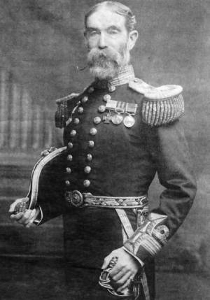
On June 21, 1854, in the Baltic Sea during the Crimean War, HMS Hecla, along with two other ships, is bombarding Bomarsund, a fort in the Åland Islands off Finland. The fire is returned from the fort, and, at the height of the action, a live shell lands on HMS Hecla‘s upper deck with its fuse still hissing. All hands are ordered to fling themselves flat on the deck, but 20-year-old Lucas with great presence of mind runs forward and hurls the shell into the sea where it explodes with a tremendous roar before it hits the water. Thanks to his action no one on board is killed or seriously wounded by the shell and, accordingly, he is immediately promoted to lieutenant by his commanding officer. His act of bravery is the first to be rewarded with the Victoria Cross in 1857.
In 1879 Lucas marries Frances Russell Hall, daughter of Admiral William Hutcheon Hall, who had been captain of HMS Hecla in 1854. The couple has three daughters together. Lucas serves for a time as Justice of the Peace for both Kent and Argyllshire.
Lucas’s campaign medals, including his Victoria Cross, are displayed at the National Maritime Museum in Greenwich, London. They are not the original medals, which were left on a train and never recovered. Replacement copies were made, though the reverse of the Victoria Cross copy is uninscribed.
As the eldest living son, he is the heir apparent and is styled with the corresponding courtesy title, which at first is Viscount Thurles but changed to Earl of Ossory when his father becomes marquess in 1642. His early years are spent in Ireland until 1647 when he accompanies his father to England. In 1648 his father renews his support for the royalist cause and he and his son have to flee to France, arriving in Caen in February 1648. Lady Ormond also moves to Caen, where she arrives on June 23, 1648, with his siblings.
Butler is an accomplished athlete and a good scholar. Having come to London in 1652 he is rightly suspected of sympathising with the exiled royalists, and in 1655 is jailed by Oliver Cromwell. After his release about a year later he goes into exile to the Netherlands where Charles II has his exile court at the time.
In 1662 Butler is called to the Irish House of Lords under a writ of acceleration as the Earl of Ossory. His father holds the title “5th Earl of Ossory” as one of his subsidiary titles. The acceleration makes Thomas Butler the 6th Earl of Ossory. This is the only substantive title he ever holds, as he predeceases his father and therefore never succeeds to his father’s titles.
Butler holds several military appointments including lieutenant-general of the army in Ireland, created an English peer as Lord Butler in 1666, and Lord of the Bedchamber to Charles II (appointed in 1660 and held until his death).
In 1665 a fortunate accident allows Butler to take part in the Battle of Lowestoft against the Dutch, and in May 1672, being now in command of a ship, he fights against the same enemies in the Battle of Solebay, serving with great distinction on both occasions. While visiting France in 1672 he rejects the liberal offers made by Louis XIV to induce him to enter the service of France and returning to England he adds to his high reputation by his conduct during the Battle of Texel in August 1673. From 1677 until 1679, he serves alongside his father as a Lord of the Admiralty.
Butler is intimate with William II, Prince of Orange, and in 1677 he joins the allied army in the Netherlands, commanding the British contingent and winning great fame at the siege of Mons in 1678. He acts as deputy for his father, who is Lord Lieutenant of Ireland. In 1680 he is appointed governor of English Tangier, but his death prevents him from taking up his new duties.
Butler dies on July 30, 1680, at Arlington House in London. He is buried provisionally in Westminster Abbey on July 31, 1680. The ceremony of burial is performed belatedly on November 13, 1680. Some say his body is later taken to Ireland and reburied in the family vault in St. Canice’s Cathedral, Kilkenny. James, his eldest son, succeeds him as the 7th Earl of Ossory and becomes the 2nd Duke of Ormond in 1688.
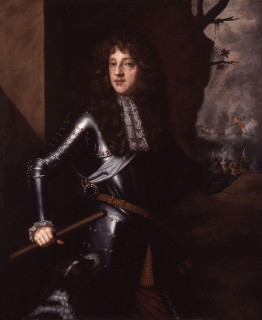
(Pictured: “Thomas Butler, Earl of Ossory,” painting by Peter Lely, circa 1678, Source: National Portrait Gallery)
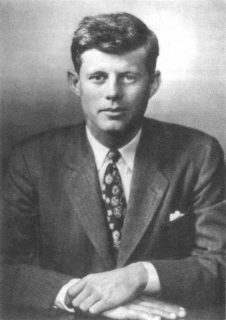
A fascinating article entitled “Ireland Seething Again Over Partition” is published by John F. Kennedy for the Hearst Newspaper group on July 29, 1945.
Kennedy’s comments about “the brilliant, austere (Éamon) De Valera” are particularly astute who is still “fighting politically the same relentless battle, that was fought in the field during the uprising of 1916, in the war of independence and later in the civil war.”
Kennedy is not always given credit for his writing abilities, with the majority of credit for speech writing given rightly to his White House CounselTed Sorenson), but some elements of this article are lyrical.
Commenting on De Valera’s debate elaboration, “he left the situation to many observers as misty as this island on an early winter’s morning.” And on De Valera’s Fianna Fáil colleagues, “All have been in both England and Ireland prisons, and many have wounds which still ache when the cold winds come in from the west.”
When visiting Ireland in 1963, Kennedy makes humorous reference to the respective birth places of the Kennedy and De Valera clan.
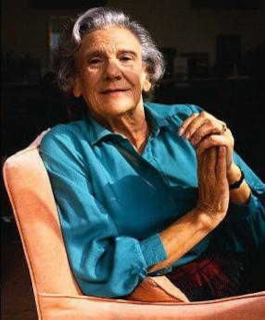
Valerie Hamilton, Hon. Lady Goulding, Irish senator and campaigner for disabled people, dies in a Dublin nursing home on July 28, 2003. She, alongside Kathleen O’Rourke, sets up the Central Remedial Clinic (CRC) in 1951 which is now the largest organisation in Ireland looking after people with physical disabilities. She served as a member of Seanad Éireann from 1977 to 1981.
Hamilton’s father is a British lawyer and politician, and becomes chief legal adviser to Edward VIII during the Abdication Crisis in 1936. She acts as her father’s secretary and courier during the crisis, carrying letters between the King and Prime MinisterStanley Baldwin.
In 1951, Lady Goulding co-founds, with Kathleen O’Rourke, the Central Remedial Clinic located in a couple of rooms in central Dublin to provide non-residential care for disabled people. The Clinic later moves to a purpose building in Clontarf in 1968, where it is located today. The Clinic’s foundation initiates a revolution in the treatment of physical disability and rapidly grows to by far the largest centre dealing with the needs of disabled people. She remains chairman and managing director of the CRC until 1984.
Lady Goulding dies at the age of 84 in a nursing home in Dublin on July 28, 2003. She is predeceased by her husband in 1982, but is survived by her sons, the eldest of whom, Sir William Goulding, known as Lingard Goulding, serves as Headmaster of Headfort School in County Meath. The other sons are Hamilton and Timothy, who is a founding member of the experimental Irish folk group Dr. Strangely Strange.
In addition to Beckett’s activity as a music critic for The Irish Times, he also writes biographical articles for dictionaries, in particular for the first edition of Die Musik in Geschichte und Gegenwart. His books include studies on Franz Liszt and ballet music.
Beckett’s more ambitious musical works from the 1940s and 1950s are a Suite for Orchestra (1945), Four Higgins Songs (1946), The Falaingin Dances (1958) and a Suite of Planxties (1960) for harp and orchestra.
In 1963 Beckett moves to England, where he teaches music at various schools before returning to Ireland in 1970 to succeed A. J. Potter at the RIAM as professor of harmony and counterpoint. In the 1980s he produces a number of remarkable works such as Quartet for Strings (1980) and Dublin Symphony (1989) for narrator, chamber choir and large orchestra. While he is never a modernist, his later works nevertheless contain some advanced harmony, particularly in the quartet.
Beckett is forced to retire from the RIAM in 1985 after suffering a stroke. In 1986 he is elected a member of Aosdána and an Honorary Fellow of the RIAM in 1990. He dies in Dublin on April 3, 1996.
O’Donoghue is born to Irish parents and grows up in the Hans Town area of Chelsea. He is the son of John O’Donoghue, a bricklayer from Kilworth, County Cork, and Bridget Griffin, who is from County Tipperary. He is the third of nine children, and has four brothers, Thomas, John, James, and Edmund, and four sisters, Mary, Ellen, Katherine, and Agnes. He is first an upholsterer‘s apprentice from the age of sixteen before becoming a journalist and author.
O’Donoghue attends a Catholic school and furthers his education at the British Museum. He begins his journalistic work by writing for the Dublin papers upon subjects relating to Irish music, art, and literature. A founder-member of the Irish Literary Society in London, he is also vice president of the National Literary Society, Dublin, and the compiler of a biographical dictionary, The Poets of Ireland (1891–93; revised edition, 1912), with entries on 2,000 authors. His published works also include Irish Poetry of the Nineteenth Century (1894), Humor of Ireland (1894), List of 1300 Irish Artists (1894), The Life and Writings of James Clarence Mangan (1897), Bibliographical Catalogue of Collections of Irish Music (1899), and Geographical Distribution of Irish Ability (1906).
In 1896 O’Donoghue moves to Dublin. In 1909 he becomes librarian of University College Dublin. He is co-editor of Catalogue of the Gilbert Library (in Dublin; 1918). William Butler Yeats writes of him in his Autobiographies of William Butler Yeats (1938).
Dillon comes from an area steeped in Irish traditional music. Since she was a schoolgirl she has sung and performed. She learns local folk songs from teachers and workshops held in the town. She can also play the fiddle and whistles. At the age of 14 she wins the All-Ireland Singing Trophy at Fleadh Cheoil.
In 1991 Dillon forms a band called Óige (an Irish word meaning ‘youth’) with school friends Murrough and Ruadhrai O’Kane, bringing her take on Irish traditional songs to Ireland, Scotland and further afield. During this time she also performs with big names such as De Dannan and Phil Coulter. Óige records two albums with Dillon, a studio and a live album. Inspiration is recorded in 1992 to sell at concerts in Europe. The live album, simply called Live, is recorded at a concert in Glasgow on August 15, 1993.
Dillon leaves Óige in 1995 and joins the folk supergroup Equation, replacing Kate Rusby, and signs a record deal with Warner Music Group. She leaves Equation with original band member Sam Lakeman because of musical differences and together they immediately signed a separate deal with the same label as a duo named Polar Star. In 2001, she releases her first solo album, Cara Dillon, which features traditional songs and two original Dillon/Lakeman compositions. The album is an unexpected hit in the folk world, with Dillon receiving four nominations at the 2002 BBC Radio 2 Folk Awards. Lakeman and Dillon marry in December 2002.
In 2009, Dillon releases her fourth album, the award-winning Hill of Thieves. The record marks a return to Dillon’s traditional roots with a purer production and arrangement style. The titular track “Hill of Thieves,” a Dillon\Lakeman original, is voted by BBC listeners as one of the “Top 10” original songs to have come out of Northern Ireland. In 2012, she performs two concerts with the Ulster Orchestra.
Dillon’s fifth solo album, A Thousand Hearts, is released in 2014. Prior to the album’s release, she discovers that her music enjoys a dedicated following in China, where her first album is featured in English curriculums. She has since embarked on several popular Chinese tours. As of 2017, she continues to tour regularly and work with her husband, who backs her on piano and guitar. Her most recent release is the album, Wanderer (2017).
Dillon is the sister of fellow folk singer Mary Dillon, formerly of Déanta. Dillon and Lakeman live in Frome, Somerset, England with their three children, twin sons born in 2006 and a daughter born in 2010.


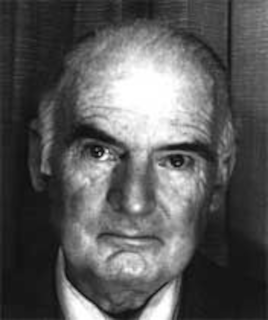


 seamus dubhghaill