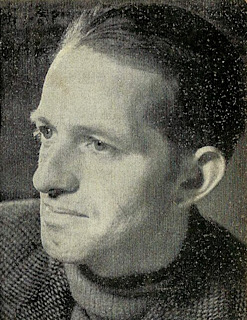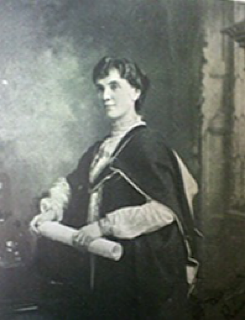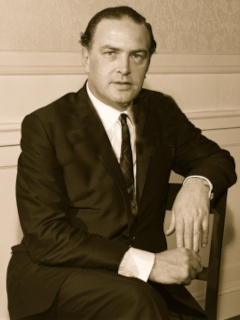
Traynor is born in Dublin on March 21, 1886, into a strongly nationalist family. He is educated by the Christian Brothers. In 1899, he is apprenticed to John Long, a famous woodcarver. As a young man he is a noted footballer and tours Europe as a goalkeeper with Belfast Celtic F.C. whom he plays with from 1910 to 1912. He rejects claims soccer is a foreign sport calling it “a Celtic game, pure and simple, having its roots in the Highlands of Scotland.”
When the Irish Civil War breaks out in June 1922, Traynor takes the Anti-Treaty IRA side. The Dublin Brigade is split, however, with many of its members following Michael Collins in taking the pro-Treaty side. During the Battle of Dublin, he is in charge of the Barry’s Hotel garrison, before making their escape. He organises guerilla activity in south Dublin and County Wicklow, before being captured by Free State troops in September. He is then imprisoned for the remainder of the war.
In 1936, Traynor is first appointed to the Cabinet as Minister for Posts and Telegraphs. In September 1939, he is appointed Minister for Defence and holds the portfolio to February 1948. In 1948, he becomes President of the Football Association of Ireland, a position he holds until his death. He serves as Minister for Defence in several Fianna Fáil governments and as Minister for Justice, where he is undermined by his junior minister, and later Taoiseach, Charles Haughey, before he retires in 1961.
Traynor dies in Dublin at the age of 77 on December 14, 1963. He has a road named in his memory, running from the Malahide Road through Coolock to Santry in Dublin’s northern suburbs.
Plunkett is educated expensively: at a primary school in Nice, making him fluent in French and Italian, then at Clongowes Wood College, and, from 1872, at Trinity College Dublin (TCD), where his generous allowance allows him to study renaissance and medieval art. He enrolls at King’s Inns in 1870 and the Middle Temple in 1874, but is not called to the bar until 1886. While there he befriends Oscar Wilde and Jeremiah O’Donovan Rossa. In 1877, he endows a university gold medal for Irish speakers and publishes a book of poems, God’s Chosen Festival, and the following year he issues a pamphlet, The Early Life of Henry Grattan. He also writes articles for magazines, editing a short-lived one, Hibernia, for eighteen months from 1882. In 1883, he donates funds and property to the nursing order of the Little Company of Mary (Blue Sisters), and on April 4, 1884, Pope Leo XIII makes him a count.
On June 26, 1884, Plunkett marries Mary Josephine Cranny (1858–1944). The couple has seven children: Philomena (Mimi) (b. 1886), Joseph (b. 1887), Mary Josephine (Moya) (b. 1889), Geraldine (b. 1891), George Oliver (b. 1894), Fiona (b. 1896), and Eoin (Jack) (b. 1897).
In 1894, Plunkett part-edits Charles O’Kelly‘s memoir The Jacobite War in Ireland. By 1900, when he publishes the standard biography Sandro Botticelli, he is supplementing his income by renewed artistic studies, which until 1923 finances his lease of Kilternan Abbey, County Dublin. His Pinelli (1908) is followed by Architecture of Dublin, and, in 1911, by his revised edition of Margaret McNair Stokes‘s Early Christian Art in Ireland. In 1907, he becomes director of the National Museum of Ireland, where he increases annual visits from 100 to 3,000.
Joseph Plunkett swears his father into the Irish Republican Brotherhood (IRB) in April 1916, sending him secretly to seek German aid and a papal blessing for the projected Easter rising. After its defeat, Plunkett is sacked by the National Museum of Ireland and deported with the countess to Oxford, and the following January he is expelled by the Royal Dublin Society (RDS). This earns him nomination as the surviving rebels’ candidate in the North Roscommon by-election. He returns to Ireland illegally on January 31, 1917, and wins the seat easily three days later. Pledging abstention from attendance at Westminster in accordance with Sinn Féin policy, he initiates a Republican Liberty League, which coalesces with similar groups such as Sinn Féin. In October this front becomes the new Sinn Féin, committed to Plunkett’s republic rather than to the “king, lords and commons“ of Arthur Griffith. Plunkett and Griffith become the new party’s vice-presidents, under Éamon de Valera.
On May 18, 1918, Plunkett is interned again. Released after Sinn Féin’s general election landslide (in which he is returned unopposed), he presides, Sinn Féin’s oldest MP, at the planning meeting for Dáil Éireann on January 17, 1919, and at its opening session on January 21. On the 22nd he is made foreign affairs minister by Cathal Brugha, an appointment reaffirmed by de Valera on April 10. He criticises his president for advocating a continuing Irish external relationship with Britain, and fails to organise an Irish foreign service. In February 1921, de Valera makes Robert Brennan his departmental secretary and a ministry takes shape, while Plunkett publishes a book of poems, Ariel. After uncontested “southern Irish“ elections to the Second Dáil, de Valera moves his implacable foreign minister from the cabinet to a tailor-made portfolio of fine arts. Plunkett’s Dante sexcentenary commemoration is overshadowed by news of the Anglo–Irish Treaty. Opposing this, Plunkett cites his oath to the republic and its martyrs including his son. He leaves his ministry on January 9, 1922.
Plunkett chairs the anti-treaty Cumann na Poblachta, which loses the June general election, though he is returned again unopposed. In the Irish Civil War the treatyites intern him and the republicans appoint him to their council of state. In the August 1923 Irish general election, his first electoral contest since 1917, the interned count tops the poll in County Roscommon. He is released in December.
When de Valera forms Fianna Fáil in 1926, Plunkett stays with Sinn Féin, and loses his deposit in the June 1927 Irish general election. A year later he publishes his last poetry collection, Eros. He runs for a new Cumann Poblachta na hÉireann in a County Galway by-election in 1936, but loses his deposit again. On December 8, 1938, with the other six surviving abstentionist Second Dáil TDs, he transfers republican sovereignty to the IRA Army Council.
Plunkett is a big man with a black beard which whitens steadily after his fiftieth birthday. He is always formally pleasant and courteous. His oratory is described by M. J. MacManus as “level, cultured tones . . . [more] used to addressing the members of a learned society than to the rough and tumble of the hustings” (The Irish Press, March 15, 1948). Theoretically and practically, he is more scholar than politician. His portrait is on display at the Royal Society of Antiquaries of Ireland (RSAI).
Plunkett dies from cancer on March 12, 1948, and is buried in Glasnevin Cemetery, survived by his children Geraldine (wife of Thomas Dillon), Fiona, and Jack. His grandson Joseph (1928–66), son of George Oliver Plunkett, inherits the title.
(From: “Plunkett, Count George Noble” by D. R. O’Connor Lysaght, Dictionary of Irish Biography, http://www.dib.ie, October 2009)
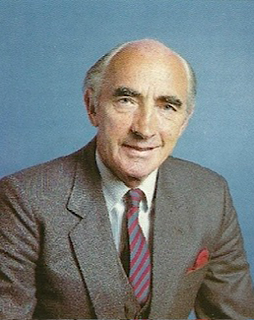
A chartered accountant by profession, Ardagh obtains his qualification in Canada in the 1970s and returns to Ireland to practice. He is first elected to Dáil Éireann at the 1997 Irish general election and retains his seat at the 2002 and 2007 general elections. He replaces Ben Briscoe as the TD and main candidate for Fianna Fáil in Dublin South-Central in 2002. He serves as chairman of a number of Dáil committees during his time as a TD.
Ardagh is first elected to Dublin County Council in 1985 and remains a member until 1999. He is elected to Dublin City Council in 1999 and remains a councillor until 2003.
On December 9, 2010, Ardagh announces he will not be standing at the 2011 Irish general election. He resigns as a TD on January 28, 2011, in advance of the 2011 general election.
Ardagh’s daughter is Fianna Fáil TD Catherine Ardagh. He dies on May 17, 2016, after a long illness.
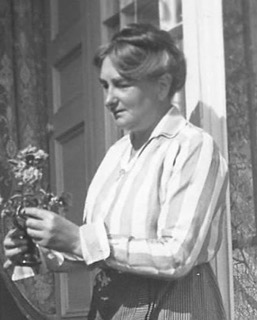
Concannon is educated by the Loreto nuns in Coleraine, County Londonderry. In 1897, she studies modern languages at the Royal University of Ireland on a three-year scholarship. She studies abroad during these years as in 1899, she travels to Germany and studies German in Berlin University accompanied by her friend, Mary Macken. She then travels to France to study French at Sorbonne University. In 1900, she graduates Bachelor of Arts with first class honours and goes on to study Master of Arts in 1902 at the Royal University of Ireland. She is fortunate to being one of the first generation of educated women.
In 1906, Concannon marries Tomás Bán Ó Conceanainn, who she met in 1900 when he arrived home from the United States. They settle down in County Galway where they share the same love for the Irish language and write many Irish texts. They have no children. In Galway, she is a professor at University College Galway where she teaches history, which mainly involves the history of Irish women. In 1909, she is offered a lectureship at University College Dublin, in Italian, but the offer is then withdrawn before she can accept it, so she decides to pursue a writing career.
Concannon produces over twenty books, including works on religion, the history of Ireland and Irish women’s history. Her works are highly impacted by her political and nationalist views. Her analyses of Irish history is based on Catholicism and patriotism. She is also an advocate of Irish language restoration. Her first writings are love poems to her husband. These poems are ”simple, sensuous and passionate.”
Concannon also produces a number of imaginative historical text for children. She uses her married name for her publications and her first book, entitled A Garden of girls, or the famous schoolgirls of former days, is published in 1914. It is about “school life and education of real little girls” Her next well known piece is the Life of St. Columban in 1915, which is a study about the Irish ancient monastic life and a biography of a sixth-century saint.
Two of Concannon’s books, Daughters of Banba (1922) and St. Patrick (1932), receive the Tailteann Medal for Literature, and The Poor Clares in Ireland (1929) wins the National University Prize, a D.Litt. higher doctorate degree for historical research.
Concannon’s most common publication, Women of ‘Ninety Eight, is dedicated to all the dead women and all the living ones who have given their loved ones. This book emerges on the ideologies of Catholicism and patriotism “praising the devotion of Irish nationalist women while emphasising the centrality of women’s spiritual and domestic role in the home to the well-being of the nation.” As this work is written during the time of the Irish War of Independence, she stresses the importance of women help during the rebellion as “they acted as messengers and intelligence officers,” and in some cases, they fought as any men.
Concerning the Land Purchase (Guarantee Fund) Bill 1935, which according to George Cecil Bennett will negatively impact the rural middle class of which he is a representative, Bennett accuses Concannon and her fellow Dublin men of not caring about the people of the country. Concannon goes on to vote that the Dáil should disagree with the Seanad Éireann-proposed bill with 71 others.
Though Concannon is a TD as a university representative, she votes with her party to remove university representation from the Dáil, leading one TD to say, “I am very much surprised to see such a distinguished scholar and such a great contributor to Irish literature as Deputy Mrs. Concannon voting for the disfranchisement of the University that she has so well and so ably represented.”
Concannon speaks on behalf of Irish women in the Dáil in 1936. She speaks on how Irish women play a fundamental role in Ireland’s agricultural economy and therefore more money should be put toward educating these women.
Concannon is one of the minority voices against the role appointed to women in Éamon de Valera‘s constitution. She does not contest the Dáil election of 1937.
After the adoption of the Constitution of Ireland in 1937, the National University of Ireland constituency is reconstituted in the new Seanad Éireann. The first election takes place in 1938, and Concannon is elected. She is a popular figure and is re-elected each election in the Seanad until she dies in office on February 27, 1952.
In the 1916 Easter Rising in Dublin, de Valera commands an occupied building and is the last commander to surrender. Because of his American birth, he escapes execution by the British but is sentenced to penal servitude. Released in 1917 but arrested again and deported in May 1918 to England, where he is imprisoned, he is acclaimed by the Irish as the chief survivor of the uprising and in October 1917 is elected president of the Irish republican and democratic socialistSinn Féin political party, which wins three-fourths of all the Irish constituencies in December 1918.
After Dáil Éireann ratifies the treaty by a small majority in 1922, de Valera supports the republican resistance in the ensuing Irish Civil War. W. T. Cosgrave’s Irish Free State ministry imprisons him, but he is released in 1924 and then organizes a republican opposition party that does not sit in Dáil Éireann. In 1927, however, he persuades his followers to sign the oath of allegiance as “an empty political formula,” and his new Fianna Fáil (“Soldiers of Destiny”) party then enters the Dáil, demanding abolition of the oath of allegiance, of the governor-general, of the Seanad Éireann (senate) as then constituted, and of land-purchase annuities payable to Great Britain. The Cosgrave ministry is defeated by Fianna Fáil in 1932, and de Valera, as head of the new ministry, embarks quickly on severing connections with Great Britain. He withholds payment of the land annuities, and an “economic war” results. Increasing retaliation by both sides enables de Valera to develop his program of austere national self-sufficiency in an Irish-speaking Ireland while building up industries behind protective tariffs. In the new Constitution of Ireland, ratified by referendum in 1937, the Irish Free State becomes Ireland, a sovereign, independent democracy tenuously linked with the British Commonwealth (under the Executive Authority (External Relations) Act 1936) only for purposes of diplomatic representation.
De Valera’s prestige is enhanced by his success as president of the council of the League of Nations in 1932 and of its assembly in 1938. He also enters negotiations with British Prime MinisterNeville Chamberlain in which he guarantees that he will never allow Ireland to be used as a base for attacking Britain in the event of war. This culminates in the Anglo-Irish defense agreement of April 1938, whereby Britain relinquishes the naval bases of Cobh, Berehaven, and Lough Swilly (retained in a defense annex to the 1921 treaty), and in complementary finance and trade treaties that end the economic war. This makes possible de Valera’s proclamation in September 1939, upon the outbreak of World War II, that Ireland will remain neutral and will resist attack from any quarter. In secret, however, de Valera also authorizes significant military and intelligence assistance to both the British and the Americans throughout the war. He realizes that a German victory will imperil Ireland’s independence, of which neutrality is the ultimate expression. By avoiding the burdens and destruction of the war, de Valera achieves a relative prosperity for Ireland in comparison with the war-torn countries of Europe, and he retains office in subsequent elections.
In 1948, a reaction against the long monopoly of power and patronage held by de Valera’s party enables the opposition, with the help of smaller parties, to form an interparty government under John A. Costello. Ironically, this precarious coalition collapses within three years after Ireland becomes a republic by means of the repeal of the Executive Authority (External Relations) Act 1936 and the severance of all ties with the British Commonwealth, an act de Valera had avoided. De Valera resumes office until 1954, when he appeals unsuccessfully for a fresh mandate, and Costello forms his second interparty ministry. No clearly defined difference now exists between the opposing parties in face of rising prices, continued emigration, and a backward agriculture. De Valera claims, however, that a strong single-party government is indispensable and that all coalitions must be weak and insecure. On this plea he obtains, in March 1957, the overall majority that he demands.
In 1959, de Valera agrees to stand as a candidate for the presidency. He resigns his position as Taoiseach and leader of the Fianna Fáil party. In June he is elected president, and is reelected in 1966. He retires to a nursing home near Dublin in 1973 and dies there on August 29, 1975.
De Valera’s career spans the dramatic period of Ireland’s modern cultural and national revolution. As an anticolonial leader, a skillful constitutionalist, and a symbol of national liberation, he dominates Ireland in the half century following the country’s independence.
(From: “Éamon de Valera, president of Ireland,” Encyclopedia Britannica, http://www.britannica.com, last updated August 14, 2025)
In March 1917, Ryan passes his final medical examinations. That June he sets up medical practice in Wexford. In 1921, he moves to Dublin where he opens a doctor’s practice at Harcourt Street, specialising in skin diseases at the Skin and Cancer Hospital on Holles Street. He leaves medicine in 1925, after he purchases Kindlestown, a large farm near Delgany, County Wicklow. He lives there and it remains a working farm until his death.
In July 1919, Ryan marries Máirín Cregan, originally from County Kerry and a close friend of Sinéad de Valera throughout her life. Cregan, like her husband, also fought in the Easter Rising and is subsequently an author of children’s stories in Irish. They have three children together.
While studying at university in 1913, Ryan joins the Gaelic League at Clonmel. The company commander recruits the young Catholicnationalist, who becomes a founder-member of the Irish Volunteers and is sworn into the Irish Republican Brotherhood (IRB) the following year. In 1916, he goes first to Cork to deliver a message from Seán Mac Diarmada to Tomás Mac Curtain that the Easter Rising is due to happen on Easter Sunday, then to Cork again in a 12-hour journey in a car to deliver Eoin MacNeill‘s cancellation order, which attempts to stop the rising. When he arrives back on Tuesday, he serves as the medical officer in the General Post Office (GPO) and treats many wounds, including James Connolly‘s shattered ankle, a wound which gradually turns gangrenous. He is, along with Connolly, one of the last people to leave the GPO when the evacuation takes place. Following the surrender of the garrison, he is deported to HM Prison Stafford in England and subsequently Frongoch internment camp. He is released in August 1916.
Ryan rejoins the Volunteers immediately after his release from prison, and in June 1917, he is elected Commandant of the Wexford Battalion. His political career begins the following year when he is elected as a Sinn Féin candidate for the constituency of South Wexford in the 1918 United Kingdom general election in Ireland. Like his fellow Sinn Féin MPs, he refuses to attend the Westminster Parliament. Instead he attends the proceedings of the First Dáil on January 21, 1919. As the Irish War of Independence goes on, he becomes Brigade Commandant of South Wexford and is also elected to Wexford County Council, serving as chairman on one occasion. In September 1919, he is arrested by the British and interned on Spike Island and later Bere Island. In February 1921, he is imprisoned at Kilworth Internment Camp, County Cork. He is later moved on Ballykinlar Barracks in County Down and released in August 1921.
In 1926, Ryan is among the Sinn Féin TDs who follow leader Éamon de Valera out of the party to found Fianna Fáil. They enter the Dáil in 1927 and spend five years on the opposition benches.
In 1947, after spending fifteen years as Minister for Agriculture, Ryan is appointed to the newly created positions of Minister for Health and Minister for Social Welfare. Following Fianna Fáil’s return to power at the 1951 Irish general election, he returns as Minister for Health and Social Welfare. Following the 1954 Irish general election, Fianna Fáil loses power and he moves to the backbenches once again.
Following the 1957 Irish general election, Fianna Fáil are back in office and de Valera’s cabinet has a new look to it. In a clear message that there will be a change to economic policy, Ryan, a close ally of Seán Lemass, is appointed Minister for Finance, replacing the conservative Seán MacEntee. The first sign of a new economic approach comes in 1958, when Ryan brings the First Programme for Economic Development to the cabinet table. This plan, the brainchild of T. K. Whitaker, recognises that Ireland will have to move away from self-sufficiency toward free trade. It also proposes that foreign firms should be given grants and tax breaks to set up in Ireland.
When Lemass succeeds de Valera as Taoiseach in 1959, Ryan is re-appointed as Minister for Finance. Lemass wants to reward him for his loyalty by also naming him Tánaiste. However, the new leader feels obliged to appoint MacEntee, one of the party elders to the position. Ryan continues to implement the First Programme throughout the early 1960s, achieving a record growth rate of 4 percent by 1963. That year an even more ambitious Second Programme is introduced. However, it overreaches and has to be abandoned. In spite of this, the annual growth rate averages five percent, the highest achieved since independence.
Ryan does not stand in the 1965 Irish general election, after which he is nominated by the Taoiseach to Seanad Éireann, where he joins his son, Eoin Ryan Snr. At the 1969 dissolution he retires to his farm at Kindlestown, County Wicklow, where he dies at age 77 on September 25, 1970. He is buried at Redford Cemetery, Greystones, County Wicklow. His grandson, Eoin Ryan Jnr, serves in the Oireachtas from 1989 to 2007 and later in the European Parliament from 2004 to 2009.
Smyllie is born on March 20, 1893, at Hill Street, Shettleston, Glasgow, Scotland. He is the eldest of four sons and one daughter of Robert Smyllie, a Presbyterian printer originally from Scotland who is working in Sligo, County Sligo, at the time, and Elisabeth Follis, originally from Cork, County Cork. His father marries in Sligo on July 20, 1892, and later becomes proprietor and editor of the unionistSligo Times. Smyllie attends Sligo Grammar School in 1906 and enrolls at Trinity College Dublin (TCD) in 1911.
After two years at TCD, Smyllie’s desire for adventure leads him to leave university in 1913. Working as a vacation tutor to an American boy in Germany at the start of World War I, he is detained in Ruhleben internment camp, near Berlin, during the war. As an internee, he is involved in drama productions with other internees. Following his release at the end of the war, he witnesses the German revolution of 1918–1919. During this period, he encounters revolutionary sailors from Kiel who temporarily make him a representative of the Workers’ and Soldiers’ Council, and he observes key events including the looting of the Kaiser’s Palace and violent clashes between rival factions in Berlin. It is also during this period that he secures a personal interview with David Lloyd George at the Paris Convention of 1919. This helps Smyllie gain a permanent position with TheIrish Times in 1920, where he quickly earns the confidence of editor John Healy. Together, they take part in secret but unsuccessful attempts to resolve the Irish War of Independence.
Smyllie contributes to the Irishman’s Diary column of the paper from 1927. In 1927, he publishes an exclusive report outlining a draft government including both Labour Party and Fianna FáilTDs, signaling the volatile politics of the early state years.
Smyllie’s knowledge of languages (particularly the German he had learned during his internment) led to numerous foreign assignments. His reports on the rise of National Socialism in 1930s Germany are notably prescient and instill in him a lasting antipathy towards the movement.
When Healy dies in 1934, Smyllie becomes editor of TheIrish Times and also takes on the role of Irish correspondent for The Times (London), a position that brings significant additional income. Under Healy’s leadership, The Irish Times shifted from representing the Anglo-Irish ascendancy to becoming an organ of liberal, southern unionism, and eventually becomes a critical legitimising force in the Irish Free State. Smyllie enthusiastically supports this change. He establishes a non-partisan profile and a modern Irish character for the erstwhile ascendancy paper. For example, he drops “Kingstown Harbour” for “Dún Laoghaire.” He also introduces the paper’s first-ever Irish-language columnist. He is assisted by Alec Newman and Lionel Fleming, recruits Patrick Campbell and enlists Flann O’Brien to write his thrice-weekly column “Cruiskeen Lawn” as Myles na gCopaleen. As editor, he introduces a more Bohemian and informal style, establishing a semi-permanent salon in Fleet Street’s Palace Bar. This becomes a hub for journalists and literary figures and a source of material for his weekly column, Nichevo.
One of Smyllie’s early political challenges as editor concerns the Spanish Civil War. At a time when Irish Catholic opinion is strongly pro-Franco, he ensures TheIrish Times coverage is balanced and fair, though advertiser pressure eventually forces the withdrawal of the paper’s young reporter, Lionel Fleming, from the conflict. His awareness of the looming European crisis earns him the Order of the White Lion of Czechoslovakia in 1939. However, during World War II, he clashes with Ireland’s censorship authorities, especially under Minister Frank Aiken. He challenges their views both publicly and privately, though his relationship with the editor of the Irish Independent, Frank Geary, is cold, reducing the effectiveness of their joint opposition to censorship.
During the 1943 Irish general election, Smyllie uses the paper to promote the idea of a national government that could represent Ireland with authority in the postwar world. He praises Fine Gael’s proposal for such a government and criticises Éamon de Valera for dismissing it as unrealistic. This leads to a public exchange between de Valera and Smyllie, with the latter defending The Irish Times’s role as a constructive voice for Ireland’s future rather than a partisan interest.
Following the war, Smyllie’s editorial stance shifts toward defending Ireland’s neutrality and diplomatic position. When Winston Churchill accuses de Valera of fraternising with Axis powers, Smyllie counters by revealing Ireland’s covert collaboration with the Allies, such as military and intelligence cooperation, despite official neutrality. In the same period, he continues to oppose censorship, particularly the frequent banning of Irish writers by the Censorship of Publications Board. This opposition features prominently in a controversy on TheIrish Times letters page in 1950, later published as the liberal ethic. The paper also adopts a critical stance toward the Catholic Church, notably during the 1951 resignation of Minister for HealthNoël Browne amid opposition from bishops and doctors to a national Mother and Child Scheme. His editorials suggest the Catholic Church is effectively the government of Ireland, though he maintains a cordial relationship with Archbishop of Dublin, John Charles McQuaid, who invites him annually for dinner.
Smyllie is also wary of American foreign policy, showing hostility particularly during the Korean War. American diplomats in Dublin allege that Smyllie is “pro-communist“. Despite growing readership among an educated Catholic middle class, TheIrish Times’s circulation in 1950 remains under 50,000, far below the Irish Independent and the Fianna Fáil-aligned The Irish Press.
In later years, Smyllie’s health declines, prompting a quieter lifestyle. He moves from his large house in Pembroke Park, Dublin, to Delgany, County Wicklow. As he does not drive, he becomes less present in the newspaper office in D’Olier Street, contributing to a decline in the paper’s dynamism. His health deteriorates further, resulting in frequent absences from his editorial duties, though he retains his position despite management attempts to limit his authority, especially over finances. He dies of heart failure on September 11, 1954.
In 1925, Smyllie marries Kathlyn Reid, eldest daughter of a County Meath landowner. They have no children.
Smyllie is an eccentric: he hits his tee shots with a nine iron, speaks in a curious mix of Latin phrases and everyday Dublin slang, and weighs 22 stone (308 lbs.; 140 kg) yet still cycles to work wearing a green sombrero.
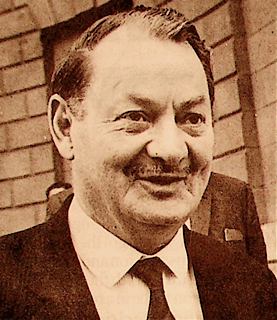
Hanafin marries Mona Brady, daughter of J. P. Brady, on August 2, 1958, in Clonmel, County Tipperary. The wedding is followed by a reception at the Galtee Hotel, Cahir, which is attended by various notables including Rev. Father J. J. Hampson, president of Blackrock College. Their first child, Mary Hanafin, is born in June 1959, followed by John Hanafin in September 1960. Mary Hanafin is a former Fianna Fáil TD and government minister, and John Hanafin is a former Fianna Fáil senator.
Hanafin operates the Anner Hotel, located in Thurles during the 1960s. Initially successful, the business fails in 1967, which Mary Hanafin later blames on her father’s excess drinking. Subsequently, Hanafin is a director of the Transinternational Oil Company.
Hanafin’s first attempt for election to public office proves unsuccessful. In 1953, he seeks to be co-opted to fill the vacancy on North Tipperary County Council created by the death of his father. In the event councillors co-opt a Labour Party nominee, Michael Treacy, by eleven votes to seven.
Hanafin is elected a member of North Tipperary County Council in 1955, polling 934 first preference votes. Subsequently, in 1956, drawing support from the Clann na Poblachta representatives, he is elected Chairman of the County Council.
Hanafin is re-elected to North Tipperary County Council in 1960, polling 797 first preference votes. In 1961, he votes against the Fianna Fáil nominee for Chair of the County Council, Thomas F. Meagher, and in favour of the Clann na Poblachta nominee, Michael F. Cronin, who is elected by 10 votes to 9. In 1964, he controversially votes in favour of Jeremiah Mockler, “a former school mate,” who is elected by 10 votes to 9 to the office of Rate Collector for Borrisokane, County Tipperary.
Hanafin holds the seat until 1985. He is first elected to Seanad Éireann in 1969 and retains his seat until the 1993 Seanad election at which he loses his seat by one vote. He regains his seat in the 1997 elections, and in 2002 announces his retirement from politics. He unsuccessfully contests the 1977 and 1981 Irish general elections for the Tipperary North constituency. He is a chief fundraiser of the Fianna Fáil party for many years.
In May 2015, Hanafin accuses “Yes” campaigners in the same-sex marriage referendum of spreading a “palpable climate of fear,” and calls for a “No” vote.
Hanafin opposes the legalisation of divorce, which is introduced in 1995, and attempts to overturn the referendum result in the Supreme Court, but is refused by the court.
An opponent of abortion, Hanafin is one of the promoters of the constitutional amendment that enshrines the legal ban on abortion in the Constitution of Ireland. He is co-founder, chairman and later honorary president of the Pro Life Campaign.
Hanafin dies in County Tipperary at the age of 86 on June 22, 2017. A Requiem Mass is held at the Cathedral of the Assumption, Thurles, on June 25, with burial afterward in St. Patrick’s Cemetery.
The Copley Street riot occurs on August 13, 1934, at the Copley Street Repository, Cork, County Cork, after Blueshirts opposed to the collection of annuities from auctioned cattle ram a truck through the gate of an ongoing cattle auction. The Broy Harriers open fire and one man, 22 year old Michael Lynch, is killed and several others injured.
Following the Irish War of Independence (1919–21), Britain relinquishes its control over much of Ireland. However, aspects of the Anglo-Irish Treaty, which had marked the end of the war, lead to the Irish Civil War (1922–23). The aftermath leaves Ireland with damaged infrastructure and hinders its early development.
Éamon de Valera, who had voted against the Anglo-Irish treaty and headed the Anti-Treaty movement during the civil war, comes to power following the 1932 Irish general election and is re-elected in 1933. While the treaty stipulates that the Irish Free State should pay £3.1 million in land annuities to Great Britain, and despite advice that an economic war with Britain could have catastrophic consequences for Ireland (as 96% of exports are to Britain), de Valera’s new Irish government refuses to pay these annuities – though they continue to collect and retain them in the Irish exchequer.
This refusal leads to the Anglo-Irish trade war (also known as the “Economic War”), which persists until 1935, when a new treaty, the Anglo-Irish Trade Agreement, is negotiated in 1938. During this period, a 20% duty is imposed on animals and agricultural goods, resulting in significant losses for Ireland. Specifically, poultry trade declines by 80%, butter trade by 50% and cattle prices drop by 50%. Some farmers are forced to kill and bury animals because they cannot afford to maintain them.
In 1933, Fine Gael emerges as a political party—a merger of Cumann na nGaedheal and the National Centre Party. Fine Gael garners substantial support from rural farmers who are particularly affected by the Economic War. They strongly object to the collection of land annuities by the Fianna Fáil government. The Blueshirts, a paramilitary organisation founded as the Army Comrades Association in 1932 and led by former Garda CommissionerEoin O’Duffy, transforms into an agrarian protest organisation, mobilising against seizures, cattle auctions, and those tasked with collecting annuities.
O’Duffy, a key figure in Irish politics, encourages farmers to withhold payment of land annuities to the government. Arising from this stance, Gardaí start to seize animals and farm equipment, auctioning them to recover the outstanding funds. While seized cattle are auctioned, local farmers rarely participate. Instead, Northern Ireland dealers, often associated with the name O’Neill, are the primary buyers. These auctions are protected by the Broy Harriers, an armed auxiliary group linked to the police.
By 1934, tensions escalate, and a series of anti-establishment incidents are attributed to the Blueshirts. These incidents range from minor acts of violence, such as breaking windows, to more serious offenses like assault and shootings.
On August 13, 1934, an auction takes place at Marsh’s Yard on Copley Street in Cork, featuring cattle seized from farms in Bishopstown and Ballincollig. The police establish a cordon by 10:00 a.m., with 300 officers on duty. Lorries arrived at 11:00 a.m.
Around noon, three thousand protestors assemble. Within twenty-five minutes, an attempt is made to breach the yard gate by ramming it with a truck. According to Oireachtas records, there are approximately 20 men in the truck which they run against the gate. The Minister for JusticeP. J. Ruttledge, says that the truck “with those people in it charged through those cordons of Guards; that several Guards jumped on to the lorry and tried to divert the driver by catching hold of the steering wheel and trying to twist it.” Some contemporary news sources suggest that the ramming truck knocked down the surrounding police cordon “like ninepins and crush[ed] a police inspector against a gate.” Later sources suggest that the senior officer (a superintendent) was injured in a fall, while attempting to avoid being struck, rather than being hit directly by the truck.
A man named Michael Lynch, wearing the distinctive blue shirt, and approximately 20 others reportedly manage to enter the yard. As soon as they enter the yard they are fired upon by armed “special branch” police detectives who are in the yard. Lynch later succumbs to his injuries at the South Infirmary. Thirty-six others are wounded. Despite the violence, the auction proceeds after a one-hour delay.
Following the shooting, a riot ensues, but when news of Lynch’s death reaches the participants, they cease rioting, kneel, and recited a Rosary.
The funeral of Michael Lynch occurs on August 15, 1934. The funeral procession is planned to depart from Saints Peter and Paul’s Church, Cork at 2:30 PM.
The occasion allows for a significant show of force for Eoin O’Duffy and the Blueshirts, and features Roman salutes and military drills. Farmers in Munster reportedly stop work for an hour, and Blueshirt members ask shopkeepers to close their businesses, as a show of respect for the “martyr.” Lynch is afforded a “full Blueshirt burial,” and the coffin is adorned with the flag of the Blueshirts (the Army Comrades Association).
According to the Minister for Justice, at the funeral W. T. Cosgrave stands beside O’Duffy as the Blueshirt leader gives an oration saying, “We are going to carry on until our mission is accomplished […] those 20 brave men, whose deed will live for ever, not only in Cork but in every county in Ireland, broke through in the lorry […] all Blueshirts should try to emulate his bravery and nobleness. Every Blueshirt is prepared to go the way of Michael for his principles.”
The court grants the family £300 in 1935. This is appealed to the High Court, followed by the Supreme Court, which dismisses the case. In the Supreme Court, Henry Hanna describes the Broy Harriers as “an excrescence” upon the Garda Síochána.
When the matter is discussed in the Seanad in September 1934, and before a vote is taken to “[condemn] the action of the members of the special branch of the Gárda Síochána […] on Monday, the 13th August 1934,” the senators who support Éamon de Valera’s government walk out.
In August 1940, a memorial is unveiled on the tomb of Lynch in Dunbulloge Cemetery in Carrignavar, County Cork, consisting of a limestone Celtic cross and pedestal. The pedestal is engraved with a quote from the American orator, William Jennings Bryan: “The humblest citizen of all the land, when clad in the armour of a righteous cause is stronger than all the hosts of error.”
(Pictured: Aftermath of the ramming of Marsh’s Yard, Copley Street, that leads to the death of Michael Lynch and the Copley Street Riot on August 13, 1934)
Horan is born in Partry, County Mayo, on May 5, 1911. Educated at St. Jarlath’s College, Tuam, he trains for the priesthood in St. Patrick’s College, Maynooth. He is ordained in 1936, and his first post is in Glasgow, where he remains for three years. Having served as chaplain on an ocean liner and briefly in Ballyglunin, County Galway, he becomes curate in Tooreen, a small townland close to Ballyhaunis, County Mayo. While there, he organises the construction of a dance hall, which becomes a popular local amenity. He secures financing for the project by collecting £8,000 on a tour of American cities. After also serving in Cloonfad, County Roscommon, he is transferred to Knock in 1963, where he becomes parish priest in 1967. He is troubled by the struggles of daily life and mass emigration in the west of Ireland, and he works to improve the living standards of the local community.
While stationed at Knock, Horan oversees the building of a new church for Knock Shrine, which is dedicated in 1976. The shrine is the stated goal of Pope John Paul II’s visit in 1979. The pope travels to Knock as part of a state visit to Ireland, marking the centenary of the famous Knock apparitions. Horan works with Judy Coyne to organise the papal visit. He is responsible for the refurbishment of the church grounds, along with the construction of a huge church, with a capacity of 15,000. This newly constructed church is given the status of basilica by the pope. The day after the papal visit, Horan begins his campaign to build an international airport in Barnacuige, a small village near Charlestown, County Mayo.
Critics regard the idea of an airport on a “foggy, boggy site” in Mayo as unrealistic, but funding is approved by then TaoiseachCharles Haughey, who performs the official opening in May 1986, five years after work commenced. Although Horan had secured IR£10,000,000 in funding from Haughey, following the Fianna Fáil party’s defeat in the general election of 1982, his funding is cut, with the airport unfinished. He raises the IR£4,000,000 shortfall by holding a “Jumbo Draw.” This large lottery succeeds in raising the required revenue, but only after a painstaking tour of several countries, including Australia and the United States. This takes its toll on the ageing Horan and leads to his death shortly after the completion of the airport. The airport is originally known as Horan International Airport but is now officially referred to as Ireland West Airport Knock.
Horan dies on August 1, 1986, while on a pilgrimage to Lourdes, just a few months after the official opening of the airport. His remains are flown into Knock, the first funeral to fly into the airport he had campaigned for. He is buried in the grounds of the Knock Basilica. His life and work are chronicled in a musical written by Terry Reilly and local broadcaster Tommy Marren, entitled A Wing and a Prayer. It premières in The Royal Theatre in Castlebar, County Mayo, on November 25, 2010.