seamus dubhghaill

Promoting Irish Culture and History from Little Rock, Arkansas, USA


Leave a comment

Birth of Arthur Clery, Politician & University Professor

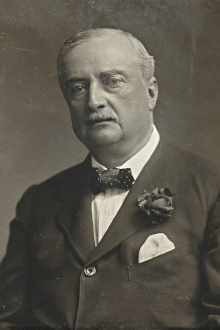
Arthur Edward CleryIrish republican politician and university professor, is born at 46 Lower Leeson Street in Dublin on October 25, 1879.

Clery is the son of Arthur Clery (who also uses the names Arthur Patrick O’Clery and Arthur Ua Cléirigh), a barrister, and Catherine Moylan. His father, who practises in India, publishes books on early Irish history.

Clery is brought up to a considerable extent by a relative, Charles Dawson. A cousin, William Dawson, who uses the pen-name “Avis,” becomes his closest friend and associate. He is educated at the Catholic University School on Leeson Street (where he acquires the confirmation name “Chanel” in honour of the Marist martyr Peter Chanel, which he often uses as a pseudonym), at Clongowes Wood College, and University College Dublin in St. Stephen’s Green. He is a university contemporary of James Joyce.

Clery’s principal themes include the difficulties of Roman Catholic graduates seeking professional employment, dramatic criticism (he hails Lady Gregory‘s play Kincora as the Abbey Theatre‘s first masterpiece but is repulsed by the works of John Millington Synge), Catholic-Protestant rivalry, tension within the Dublin professional class, and the vagaries of the Gaelic revival movement.

Clery advocates partition on the basis of a two nations theory, first advanced in 1904–1905, possibly in response to William O’Brien‘s advocacy of securing Home Rule through compromise with moderate Unionists. Several of his articles on the subject are reprinted in his 1907 essay collection, The Idea of a Nation.

Clery derives this unusual view for a nationalist from several motives, including a belief that arguments for Irish nationalists’ right to self-determination can be used to justify Ulster Unionists’ right to secede from Ireland, fear that it might be impossible to obtain Home Rule unless Ulster is excluded, and distaste for both Ulster Protestants and Ulster Catholics, whom he sees as deplorably anglicised. He remains a partitionist for the rest of his life. He is not particularly successful as a barrister, but on the establishment of University College Dublin (UCD) in 1909, he is appointed to the part-time post of Professor of the Law of Property.

After 1914, Clery moves from unenthusiastic support for John Redmond‘s Irish Parliamentary Party to separatism. Before the 1916 Easter Rising he is an inactive member of the Irish Volunteers, and is defence counsel at the court-martial of Eoin MacNeill. During the 1918 United Kingdom general election in Ireland he campaigns for Sinn Féin. As one of the few barristers prepared to assist the Sinn Féin Court system, he is appointed to the Dáil Supreme Court in 1920.

Clery opposes the Anglo-Irish Treaty because he believes it will lead to re-Anglicisation and the eventual return of the Union. He is elected to Dáil Éireann as an abstentionist independent Teachta Dála (TD) for the National University of Ireland constituency at the June 1927 Irish general election.

Clery does not take his seat and does not contest the September 1927 Irish general election since new legislation obliges candidates to pledge in advance that they will take their seat. He is one of the lawyers who advises Éamon de Valera that the Irish Free State is not legally obliged to pay the Land Annuities which had been agreed in the Anglo-Irish Treaty of 1922.

Clery was a close friend of Tom Kettle, with whom he founds a dining club, the “Cui Bono.” Hugh Kennedy is also a lifelong friend. As Auditor of the L & H, he tries to prevent James Joyce from reading a paper praising Henrik Ibsen, asserting that “the effect of Henrik Ibsen is evil,” but Joyce succeeds in reading it after he argues his case with the college president. The principal influence on Clery is the Irish Ireland editor D. P. Moran, to whose weekly paper, The Leader, Clery becomes a frequent contributor. In addition to The Idea of a Nation, he publishes Dublin Essays (1920) and (as Arthur Synan) The coming of the king.

Clery dies, unmarried, on November 20, 1932, in Dublin from heart failure caused by pneumonia. He is buried in Dean’s Grange Cemetery, Deansgrange, County Dublin.
Leave a comment

Death of R. M. “Bertie” Smyllie, Editor of “The Irish Times”

Robert Maire Smyllie, known as Bertie Smyllie, editor of The Irish Times for twenty years, dies on September 11, 1954.

Smyllie is born on March 20, 1893, at Hill Street, ShettlestonGlasgowScotland. He is the eldest of four sons and one daughter of Robert Smyllie, a Presbyterian printer originally from Scotland who is working in Sligo, County Sligo, at the time, and Elisabeth Follis, originally from Cork, County Cork. His father marries in Sligo on July 20, 1892, and later becomes proprietor and editor of the unionist Sligo Times. Smyllie attends Sligo Grammar School in 1906 and enrolls at Trinity College Dublin (TCD) in 1911.

After two years at TCD, Smyllie’s desire for adventure leads him to leave university in 1913. Working as a vacation tutor to an American boy in Germany at the start of World War I, he is detained in Ruhleben internment camp, near Berlin, during the war. As an internee, he is involved in drama productions with other internees. Following his release at the end of the war, he witnesses the German revolution of 1918–1919. During this period, he encounters revolutionary sailors from Kiel who temporarily make him a representative of the Workers’ and Soldiers’ Council, and he observes key events including the looting of the Kaiser’s Palace and violent clashes between rival factions in Berlin. It is also during this period that he secures a personal interview with David Lloyd George at the Paris Convention of 1919. This helps Smyllie gain a permanent position with The Irish Times in 1920, where he quickly earns the confidence of editor John Healy. Together, they take part in secret but unsuccessful attempts to resolve the Irish War of Independence.

Smyllie contributes to the Irishman’s Diary column of the paper from 1927. In 1927, he publishes an exclusive report outlining a draft government including both Labour Party and Fianna Fáil TDs, signaling the volatile politics of the early state years.

Smyllie’s knowledge of languages (particularly the German he had learned during his internment) led to numerous foreign assignments. His reports on the rise of National Socialism in 1930s Germany are notably prescient and instill in him a lasting antipathy towards the movement.

When Healy dies in 1934, Smyllie becomes editor of The Irish Times and also takes on the role of Irish correspondent for The Times (London), a position that brings significant additional income. Under Healy’s leadership, The Irish Times shifted from representing the Anglo-Irish ascendancy to becoming an organ of liberal, southern unionism, and eventually becomes a critical legitimising force in the Irish Free State. Smyllie enthusiastically supports this change. He establishes a non-partisan profile and a modern Irish character for the erstwhile ascendancy paper. For example, he drops “Kingstown Harbour” for “Dún Laoghaire.” He also introduces the paper’s first-ever Irish-language columnist. He is assisted by Alec Newman and Lionel Fleming, recruits Patrick Campbell and enlists Flann O’Brien to write his thrice-weekly column “Cruiskeen Lawn” as Myles na gCopaleen. As editor, he introduces a more Bohemian and informal style, establishing a semi-permanent salon in Fleet Street’s Palace Bar. This becomes a hub for journalists and literary figures and a source of material for his weekly column, Nichevo.

One of Smyllie’s early political challenges as editor concerns the Spanish Civil War. At a time when Irish Catholic opinion is strongly pro-Franco, he ensures The Irish Times coverage is balanced and fair, though advertiser pressure eventually forces the withdrawal of the paper’s young reporter, Lionel Fleming, from the conflict. His awareness of the looming European crisis earns him the Order of the White Lion of Czechoslovakia in 1939. However, during World War II, he clashes with Ireland’s censorship authorities, especially under Minister Frank Aiken. He challenges their views both publicly and privately, though his relationship with the editor of the Irish Independent, Frank Geary, is cold, reducing the effectiveness of their joint opposition to censorship.

During the 1943 Irish general election, Smyllie uses the paper to promote the idea of a national government that could represent Ireland with authority in the postwar world. He praises Fine Gael’s proposal for such a government and criticises Éamon de Valera for dismissing it as unrealistic. This leads to a public exchange between de Valera and Smyllie, with the latter defending The Irish Times’s role as a constructive voice for Ireland’s future rather than a partisan interest.

Following the war, Smyllie’s editorial stance shifts toward defending Ireland’s neutrality and diplomatic position. When Winston Churchill accuses de Valera of fraternising with Axis powers, Smyllie counters by revealing Ireland’s covert collaboration with the Allies, such as military and intelligence cooperation, despite official neutrality. In the same period, he continues to oppose censorship, particularly the frequent banning of Irish writers by the Censorship of Publications Board. This opposition features prominently in a controversy on The Irish Times letters page in 1950, later published as the liberal ethic. The paper also adopts a critical stance toward the Catholic Church, notably during the 1951 resignation of Minister for Health Noël Browne amid opposition from bishops and doctors to a national Mother and Child Scheme. His editorials suggest the Catholic Church is effectively the government of Ireland, though he maintains a cordial relationship with Archbishop of DublinJohn Charles McQuaid, who invites him annually for dinner.

Smyllie is also wary of American foreign policy, showing hostility particularly during the Korean War. American diplomats in Dublin allege that Smyllie is “pro-communist“. Despite growing readership among an educated Catholic middle class, The Irish Times’s circulation in 1950 remains under 50,000, far below the Irish Independent and the Fianna Fáil-aligned The Irish Press.

In later years, Smyllie’s health declines, prompting a quieter lifestyle. He moves from his large house in Pembroke Park, Dublin, to DelganyCounty Wicklow. As he does not drive, he becomes less present in the newspaper office in D’Olier Street, contributing to a decline in the paper’s dynamism. His health deteriorates further, resulting in frequent absences from his editorial duties, though he retains his position despite management attempts to limit his authority, especially over finances. He dies of heart failure on September 11, 1954.

In 1925, Smyllie marries Kathlyn Reid, eldest daughter of a County Meath landowner. They have no children.

Smyllie is an eccentric: he hits his tee shots with a nine iron, speaks in a curious mix of Latin phrases and everyday Dublin slang, and weighs 22 stone (308 lbs.; 140 kg) yet still cycles to work wearing a green sombrero.


Leave a comment

Birth of William Orpen, Irish-born Artist

Major Sir William Newenham Montague Orpen, KBE, RA, RHA, Irish artist who mainly works in London and is best known for his vigorously characterized portraits, is born on November 27, 1878, at Oriel, Grove Avenue, Stillorgan, County Dublin. He also works as an official war artist during World War I.

Orpen is the fourth and youngest son of Arthur Herbert Orpen (1830–1926), a solicitor, and his wife, Anne Caulfield (1834–1912), the eldest daughter of the Right Rev. Charles Caulfield (1804–1862), the Bishop of Nassau. Both his parents are amateur painters, and his eldest brother, Richard Caulfield Orpen, becomes a notable architect. His nieces are Bea Orpen and Kathleen Delap. The historian Goddard Henry Orpen is his second cousin. The family lives at “Oriel,” a large house with extensive grounds containing stables and a tennis court. He appears to have a happy childhood there.

Orpen is a naturally talented painter, and six weeks before his thirteenth birthday is enrolled at the Dublin Metropolitan School of Art. During his six years at the college, he wins every major prize there, plus the British Isles gold medal for life drawing, before leaving to study at the Slade School of Fine Art in London between 1897 and 1899. At the Slade he masters oil painting and begins to experiment with different painting techniques and effects.

While at the Slade, Orpen becomes engaged to Emily Scobel, a model and the subject of his painting The Mirror (1900). She ends their relationship in 1901, and he marries Grace Knewstub, the sister-in-law of Sir William Rothenstein. He and Knewstub have three daughters together, but the marriage is not a happy one. By 1908, he has begun a long-running affair with Evelyn Saint-George, a well-connected American millionairess based in London, with whom he also has a child.

Orpen first exhibits at the New English Art Club (NEAC) in 1899, becoming a member in 1900. In 1901, he holds a solo exhibition at the Carfax Gallery in central London. His portraits, which establish his reputation, show the influence of the Realist artist Édouard Manet. He also becomes known as a painter of group portraits such as Homage to Manet (1909), in which he portrays members of the contemporary English art world sitting in conversation beneath a famous portrait by that artist.

At the start of World War I, a number of Irish people living in England return to Ireland to avoid conscription. Among them is Orpen’s studio assistant and former pupil, Seán Keating. Keating encourages him to do likewise, but he refuses and commits himself to supporting the British war effort. In December 1915, he is commissioned into the Royal Army Service Corps and reports for clerical duty at London’s Kensington Barracks in March 1916. Throughout 1916 he continues painting portraits, most notably one of a despondent Winston Churchill, but soon starts using both his own contacts and those of Evelyn Saint-George, to secure a war artist posting.

He is the official painter of the Paris Peace Conference after World War I. Throughout 1919 he paints individual portraits of the delegates to the Conference and these form the basis of his two large paintings, A Peace Conference at the Quai d’Orsay and The Signing of Peace in the Hall of Mirrors. In both pictures, the architecture overwhelms the gathered politicians and statesmen who’s political wranglings and vainglory diminish them in Orpen’s eyes.

Orpen is appointed Knight Commander of the Order of the British Empire in 1918 and is elected an associate of the Royal Academy of Arts in 1919.

Orpen becomes seriously ill in May 1931, and, after suffering periods of memory loss, dies at the age of 52 on September 29, 1931, in South Kensington, London, of liver and heart failure. He is buried at Putney Vale Cemetery in southwest London. A stone tablet in the Island of Ireland Peace Park Memorial at Mesen, Belgium, commemorates him. He is posthumously regarded as a facile and prolific, but somewhat superficial, artist who nevertheless achieves great popularity in his day.

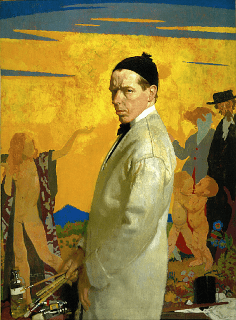
(Pictured: “Self-portrait” (1913), oil on canvas by William Orpen, Saint Louis Art Museum)


Leave a comment

Birth of John Redmond, Irish Nationalist Politician

John Edward Redmond, Irish nationalist politician, barrister, and Member of Parliament (MP) in the House of Commons of the United Kingdom, is born to an old prominent Catholic family in Kilrane, County Wexford on September 1, 1856. He is best known as leader of the moderate Irish Parliamentary Party (IPP) from 1900 until his death. He is also leader of the paramilitary organisation the National Volunteers.

Several of Redmond’s relatives are politicians. He takes over control of the minority IPP faction loyal to Charles Stewart Parnell after Parnell dies in 1891. He is a conciliatory politician who achieves the two main objectives of his political life: party unity and, in September 1914, the passing of the Irish Home Rule Act.

The Irish Home Rule Act grants limited self-government to Ireland, within the United Kingdom. However, implementation of Home Rule is suspended by the outbreak of the World War I. Redmond calls on the National Volunteers to join Irish regiments of the New British Army and support the British and Allied war effort to restore the “freedom of small nations” on the European continent, thereby to also ensure the implementation of Home Rule after a war that is expected to be of short duration. However, after the Easter Rising of 1916, Irish public opinion shifts in favour of militant republicanism and full Irish independence, resulting in his party losing its dominance in Irish politics.

In sharp contrast to Parnell, Redmond lacks charisma. He works well in small committees but has little success in arousing large audiences. Parnell had always chosen the nominees to Parliament. Now they are selected by the local party organisations, giving Redmond numerous weak MPs over whom he has little control. He is an excellent representative of the old Ireland but grows increasingly old-fashioned because he pays little attention to the new forces attracting younger Irishmen, such as Sinn Féin in politics, the Gaelic Athletic Association in sports, and the Gaelic League in cultural affairs.

Redmond never tries to understand the unionist forces emerging in Ulster. He is further weakened in 1914 by the formation of the Irish Volunteers by Sinn Féin members. His enthusiastic support for the British war effort alienates many Irish nationalists. His party has been increasingly hollowed out, and a major crisis, notably the Easter Rising, is enough to destroy it.

Redmond is increasingly eclipsed by ill-health after 1916. An operation in March 1918 to remove an intestinal obstruction appears to progress well initially, but he then suffers heart failure. He dies a few hours later at a London nursing home on March 6, 1918.

Condolences and expressions of sympathy are widely expressed. After a funeral service in Westminster Cathedral his remains are interred, as requested in a manner characteristic of the man, in the family vault at the old Knights Templars‘ chapel yard of Saint John’s Cemetery, Wexford, amongst his own people rather than in the traditional burial place for Irish statesmen and heroes in Glasnevin Cemetery. The small, neglected cemetery near the town centre is kept locked to the public. His vault, which has been in a dilapidated state, has been only partially restored by Wexford County Council.


Leave a comment

Death of Muriel Gifford MacDonagh

Muriel MacDonagh (née Gifford), Irish nationalist and member of Inghinidhe na hÉireann, dies in Skerries, Dublin, on July 9, 1917. Her husband, Thomas MacDonagh, is one of the signees of the Proclamation of the Irish Republic, which leads to the Easter Rising of 1916.

Muriel Enid Gifford is born at 12 Cowper Road, Rathmines, on December 18, 1884. She is the fourth daughter and eighth child of twelve of Frederick and Isabella Gifford. As a child, she suffers at different times from rheumatic fever and phlebitis. She attends Alexandra College and spends a brief time in England training to as a poultry instructor. Returning to Ireland, she trains at Sir Patrick Dun’s Hospital, Dublin, as a student nurse, but her health suffers from the work.

Along with her sisters, MacDonagh is active in the Irish Women’s Franchise League and Inghinidhe na hÉireann, a nationalist organisation. She is involved in the school meals programme of 1910 to 1911, takes part in a 1914 Women’s Franchise League fundraiser, appearing in a tableau vivant as Maeve, the Warrior Queen. Less ardently feminist than her sisters, she takes delight in inviting home activists and artists for a “proper meal.” In an outgoing family, she is shy and reserved, known for her gentle manner. In 1908, she is introduced to Thomas MacDonagh by suffragette journalist Nannie Dryhurst along with her sisters, Grace and Sidney, on a visit to St. Enda’s School. Dryhurst advises Thomas to “fall in love with one of these girls and marry her,” to which he replies laughingly, “That would be easy; the only difficulty would be to decide which one.” The Gifford sisters remain acquaintances with Thomas until the autumn of 1911, when the couple has a short and intense courtship. They meet secretly in galleries and museums and have copious correspondence. When he is appointed assistant lecturer to University College Dublin (UCD) in December 1911, they marry on January 3, 1912. They have one son, Donagh MacDonagh, and one daughter, Barbara MacDonagh Redmond. The family lives first at 32 Baggot Street, and later at 29 Oakley Road, Rathmines.

MacDonagh suffers with poor health and depression, which leads to periods of convalescence and confinement. When her husband is arrested after the Easter Rising, she is unable to see him before his execution on May 3, 1916, which heightens the intensity of her bereavement. Devastated by his death and estranged from her parents due to their disapproval of his involvement in the Rising, she briefly lives with the Plunketts at Larkfield, Kimmage, and then with relatives of her husband in Thurles, County Tipperary. She later returns to Dublin to rent rooms in a Plunkett family property, 50 Marlborough Road. With two young children to support, she is nearly destitute, but like the other widows and orphans of the executed leaders of the Rising, they are aided by the Irish Volunteers Dependents’ Fund, in her case with £250. She also serves as an officer and committee member on this aid association. Her husband had named her as his literary executor, and she prepares a collected edition of his poetry that is published in October 1916. The success of this volume, and his bestselling Literature in Ireland, published at the time he is executed, ease her financial difficulties somewhat.

MacDonagh converts to Catholicism on May 3, 1917.

MacDonagh dies while swimming in the sea during a holiday with other 1916 widows and orphans in Skerries, County Dublin, on July 9, 1917. She almost does not attend the holiday, as her son is in hospital having been injured in a fall. It is believed that she is attempting to swim to Shenick Island from Skerries, possibly to place a tricolour flag on the island’s Martello tower. Her body is found near Loughshinny Beach and, as there is no water in her lungs, it is concluded that she died of heart failure and not drowning. As there is great interest in the 1916 widows and their families, her funeral at Glasnevin Cemetery attracts a large crowd of mourners estimated at 5,000 in the funeral procession.

Following MacDonagh’s death, there is a legal custody battle between the Giffords and the MacDonaghs over Donagh and Barbara. Their aunt Mary MacDonagh, a nun known as Sister Francesca and with whom MacDonagh had grown close, wins custody. Even though several of her siblings offer to take the children, she places them in a foster home.

On the centenary of MacDonagh’s death, a festival takes place in Skerries in her memory.


Leave a comment

Birth of Pauline Flanagan, Stage & Television Actress

Pauline Flanagan, Irish-born actress who has a long career on stage, is born in Sligo, County Sligo, on June 29, 1925. She is best known in the United States for her role as Annie Colleary, on the television soap opera Ryan’s Hope in 1979 and again in 1981. She later returns to the show as Sister Mary Joel.

Flanagan is born to Patrick and Elizabeth (née Mulligan) Flanagan, who are strongly nationalist and republican, and support the Republican Anti-Treaty during the Irish Civil War, both serving as Lord Mayor of Sligo. Her paternal family, originally from County Fermanagh, are driven out by anti‐Catholic pogroms and resettle in Sligo, where her parents manage a retail business. She is good friends with fellow Irish actresses Joan O’Hara and Paddy Croft. She spends much of the early 1950s touring with Anew McMaster, where she meets Harold Pinter at the Gate’s Pinter Festival.

Flanagan appears in many Broadway plays, making her debut in 1957 in the first Main Stem production of Dylan Thomas‘s Under Milk Wood. She stars as Mrs. Grose in the 1976 Broadway revival of the William Archibald play The Innocents. She also appears on Broadway in Brian Friel‘s play Philadelphia, Here I Come! in 1994.

Flanagan also acts in Off-Broadway productions on several occasions with the Irish Repertory Theatre, including Harold Prince‘s Grandchild of Kings (1992), Seán O’Casey‘s Juno and the Paycock (1995). and Hugh Leonard‘s A Life (2001). For her performance in Grandchild of Kings, she receives the 1992 Outer Critics Circle Awards nomination for Best Actress. Other Off-Broadway work includes Yeats! A Celebration by William Butler Yeats.

Flanagan appears as Myra White in Hugh Leonard’s play Summer (1974), both in the original production at the Olney Theatre Center in Olney, Maryland, and at the Olympia Theatre in the Dublin Theatre Festival.

Flanagan is nominated for the 1982 Drama Desk Award for Outstanding Featured Actress in a Play for Medea in which she performs on Broadway in 1982.

In 1997, Flanagan wins the Barclays Theatre Awards for Best Actress in a Supporting Role for her role in Jennifer Johnston‘s The Desert Lullaby: A Play in Two Acts, at the Lyric Theatre, Belfast. The Barclays Theatre Awards are for outstanding regional theatre (including opera and dance) in the United Kingdom.

In 2001, Flanagan wins a Laurence Olivier Award for Best Actress in a Supporting Role, for her performance in Frank McGuinness‘s Dolly West’s Kitchen at The Old Vic in Waterloo, London.

A resident of Glen Rock, New Jersey, Flanagan dies at The Valley Hospital in Ridgewood, New Jersey, on June 28, 2003, one day before her 78th birthday, of heart failure following a battle with lung cancer. She is survived by her husband, George Vogel (whom she married in 1958), a sister, Maura McNally, and her daughters Melissa Brown and Jane Holtzen.


Leave a comment

Death of Matt Talbot

Matthew Talbot, an Irish ascetic revered by many Catholics for his piety, charity and mortification of the flesh, suddenly dies on a Dublin street on June 7, 1925. Though he has not yet been formally recognized as a saint, he has been declared Venerable and is considered a patron of those struggling with alcoholism. He is commemorated on 19 June.

Talbot is born on May 2, 1856, at 13 Aldborough Court, Dublin, the second eldest of twelve children of Charles and Elizabeth Talbot, a poor family in the North Strand area. He is baptized in St. Mary’s Pro-Cathedral on May 5. His father and all but the oldest of his brothers is heavy drinkers. In 1868, he leaves school at the age of twelve and goes to work in a wine merchant’s store. He very soon begins “sampling their wares,” and is considered a hopeless alcoholic by age thirteen. He then goes to the Port & Docks Board where he works in the whiskey stores. He frequents pubs in the city with his brothers and friends, spending most or all of his wages and running up debts. When his wages are spent, he borrows and scrounges for money. He pawns his clothes and boots to get money for alcohol. On one occasion, he steals a fiddle from a street entertainer and sells it to buy drink.

One evening in 1884, 28-year-old Talbot, who is penniless and out of credit, waits outside a pub in the hope that somebody will invite him in for a drink. After several friends had passed him without offering to treat him, he goes home in disgust and announces to his mother that he is going to “take the pledge” (renounce drink). He goes to Holy Cross College, Clonliffe, where he takes the pledge for three months. At the end of the three months, he takes the pledge for six months, then for life.

Having drunk excessively for 16 years, Talbot maintains sobriety for the following forty years of his life. There is evidence that his first seven years after taking the pledge are especially difficult. He finds strength in prayer, begins to attend daily Mass, and reads religious books and pamphlets. He repays all his debts scrupulously. Having searched for the fiddler whose instrument he had stolen, and having failed to find him, he gives the money to the church to have Mass said for him.

Even when his drinking is at its worst, Talbot is a hard worker. When he joins Pembertons, the building contractors, as a hod-carrier, his work-rate is such that he is put first on the line of hodmen to set the pace. Later, in Martin’s timber yard, he takes on the meanest and hardest jobs. He is respectful to his bosses but not obsequious, and on occasion stands up for a fellow worker. On September 22, 1911, he joins the builder’s labourers branch of the Irish Transport and General Workers Union (ITGWU). When the Dublin Lockout of 1913 leads to sympathy strikes throughout the city, the men of Martin’s, including Talbot, come out. At first, he refuses his strike pay, saying that he had not earned it. Later he accepts it but asks that it be shared out among the other strikers. After his death a rumour is put about that he was a strike-breaker in 1913, but all the evidence contradicts this.

From being an indifferent Catholic in his drinking days, Talbot becomes increasingly devout. He lives a life of prayer, fasting, and service, trying to model himself on the sixth century Irish monks. He is guided for most of his life by Michael Hickey, Professor of Philosophy at Holy Cross College. Under Hickey’s guidance his reading becomes wider. He laboriously reads scripture, the lives of saints, the Confessions of Saint Augustine, and the writings of Francis de Sales and others. When he finds a part difficult to understand, he asks a priest to clarify it.

Hickey also gives Talbot a light chain, much like a clock chain, to wear as a form of penance. He becomes a Third Order Franciscan in 1890 and is a member of several other associations and sodalities. He is a generous man. Although poor himself, he gives unstintingly to neighbours and fellow workers, to charitable institutions and the Church. He eats very little. After his mother’s death in 1915, he lives in a small flat with very little furniture. He sleeps on a plank bed with a piece of timber for a pillow. He rises at 5:00 a.m. every day so as to attend Mass before work. At work, whenever he has spare time, he finds a quiet place to pray. He spends most of every evening on his knees. On Sundays he attends several Masses. He walks quickly, with his head down, so that he appears to be hurrying from one Mass to another.

Talbot is on his way to Mass on Trinity Sunday, June 7, 1925, when he collapses and dies of heart failure on Granby Lane in Dublin. Nobody at the scene is able to identify him. His body is taken to Jervis Street Hospital, where he is undressed, revealing the extent of his austerities. A chain had been wound around his waist, with more chains around an arm and a leg, and cords around the other arm and leg. The chains found on his body at death are not some extreme penitential regimes but a symbol of his devotion to Mary, Mother of God, that he wished to give himself to her totally as a slave. His story quickly filters through the community, and there are many spectators when his funeral takes place at Glasnevin Cemetery on June 11, 1925. In 1972, his remains are removed to a tomb in Our Lady of Lourdes Church in Seán McDermott Street, Dublin, in the area where he spent his life.

As word of Talbot spreads, he rapidly becomes an icon for Ireland’s Catholic temperance movement, the Pioneer Total Abstinence Association. His story soon becomes known to the large Irish diaspora communities. Many addiction clinics, youth hostels and statues have been named after him throughout the world. One of Dublin’s main bridges is also named after him. A statue of Talbot is erected at Sir John Rogerson’s Quay in 1988. Pope John Paul II, as a young man, wrote a paper on him.

There is a small plaque in Granby Lane at the site of Talbot’s death. Prior to the current plaque on the Eastern side of the lane, a small brass cross was inlaid in a stone wall on the Western side of the lane.

In August 1971, Archbishop of Dublin John Charles McQuaid unveils a plaque to Talbot at a block of flats known as “Matt Talbot Court” due to it being on the same site as one of Talbot’s residences. President Éamon de Valera and Fine Gael leader Liam Cosgrave attend the ceremony.

(Pictured: Portrait of Matt Talbot, near the end of his life, taken from the only photograph known to exist)


2 Comments

Monument Honouring Francis O’Neill Unveiled in Trawlebane, County Cork

Francis O’Neill (Irish: Proinsias Ó Néill), an Irish-born American police officer and collector of Irish traditional music, is honoured in his native West Cork on March 11, 2000, where Garda Commissioner Patrick Byrne unveils a life-size monument of O’Neill playing a flute adjacent to the O’Neill family homestead in Trawlebane, County Cork. The monument, made by sculptor Jeanne Rynhart, and a commemorative wall are erected through the efforts of the Captain Francis O’Neill Memorial Company.

O’Neill is born in Trawlebane, near Bantry, County Cork, on August 28, 1848. At an early age he hears the music of local musicians, among them Peter Hagarty, Cormac Murphy and Timothy Dowling. At the age of 16, he becomes a cabin boy on an English merchant ship and remains a seaman until 1869. On a voyage to New York City, he meets Anna Rogers, a young emigrant whom he later marries in Bloomington, Illinois. They move to Chicago, and he becomes a Chicago policeman in 1873. He rises through the ranks quickly, eventually succeeding Joseph Kipley as the Chief of Police from 1901 to 1905. He has the rare distinction, in a time when political “pull” counts for more than competence, of being re-appointed three times to the position by two different mayors.

O’Neill is a flautist, fiddler and piper and is part of the vibrant Irish community in Chicago at the time. During his time as chief, he recruits many traditional Irish musicians into the police force, including Patrick O’Mahony, James O’Neill, Bernard Delaney, John McFadden and James Early. He also collects tunes from some of the major performers of the time including Patsy Touhey, who regularly sends him wax cylinders and visits him in Chicago. He also collects tunes from a wide variety of printed sources.

O’Neill retires from the police force in 1905. After that, he devotes much of his energy to publishing the music he has collected. His musical works include:

  • O’Neill’s Music of Ireland (1903), containing 1,850 pieces of music.
  • The Dance Music of Ireland (1907), sometimes called, “O’Neill’s 1001,” because of the number of tunes included.
  • 400 tunes arranged for piano and violin (1915).
  • Waifs and Strays of Gaelic Melody (1922), 365 pieces.
  • Irish Folk Music: A Fascinating Hobby (1910). Appendix A contains O’Farrells Treatise and Instructions on the Irish Pipes, published 1797-1800; appendix B is Hints to Amateur Pipers by Patrick J. Touhy.
  • Irish Minstrels and Musicians (1913), biographies of musicians, including those from whom he collected tunes in Chicago.

O’Neill dies of heart failure at his home in Chicago at the age of 87 on January 26, 1936. He is buried at Mount Olivet Cemetery.

In 2008, Northwestern University Press issues Chief O’Neill’s Sketchy Recollections of an Eventful Life in Chicago, a non-musical memoir edited by Ellen Skerrett and Mary Lesch, a descendant of O’Neill, with a foreword by Nicholas Carolan of the Irish Traditional Music Archive. Carolan himself writes a musical biography of O’Neill, A Harvest Saved: Francis O’Neill and Irish Music in Chicago, which is published in Ireland by Ossian in 1997. An historical biography of O’Neill, The Beat Cop: Chicago’s Chief O’Neill and the Creation of Irish Music, by Michael O’Malley, is published by the University of Chicago Press in 2022.

Chief O’Neill’s life is memorialized in the musical play Music Mad: How Chief O’Neill Saved the Soul of Ireland, which premieres in Chicago in 2012. Written by Adam B. Whiteman with the approval and acceptance of Francis O’Neill’s great-granddaughter, Mary Lesch, the show contains both dramatized content and material from O’Neill’s own writings.

Peter Hagarty and Francis O’Neill are memorialized in the song, Píobaire Bán, written by Tim O’Riordan. It is recorded by Patrick O’Sullivan on the CD One More Time and on O’Riordan’s own CD Taibhse.

In August 2013, the inaugural Chief O’Neill Traditional Music Festival takes place in Bantry, County Cork, just a few miles from Trawlebane. The 2013 event marks the centenary of the publication of O’Neill’s Irish Minstrels and Musicians. The event has taken place annually since.

Chief O’Neill’s Pub and Restaurant in Chicago’s Avondale neighborhood bears his name and displays related memorabilia.

O’Neill’s biographer, Nicholas Carolan, refers to him as “the greatest individual influence on the evolution of Irish traditional dance music in the twentieth century.”


Leave a comment

Birth of Mick Lally, Stage, Film & Television Actor

Michael “Mick” Lally, Irish stage, film and television actor, is born in the Gaeltacht village of Toormakeady, County Mayo, on November 10, 1945. He departs from a teaching career for acting during the 1970s. Though best known in Ireland for his role as Miley Byrne in the television soap Glenroe, his stage career spans several decades, and he is involved in feature films such as Alexander and the Academy Award-nominated The Secret of Kells. Many reports cite him as one of Ireland’s finest and most recognisable actors.

Lally is the eldest of a family of seven children. He goes to the local national school in Toormakeady and then to St. Mary’s College, Galway. After studying at University College Galway, he teaches history and the Irish language for six years in Archbishop McHale College in Tuam from 1969 to 1975 but quits teaching to pursue his career as a stage actor.

Lally begins his acting career with Taibhdhearc na Gaillimhe, Ireland’s national Irish language theatre, and is a founding member of the Druid Theatre Company. He receives an Irish Times/ESB Theatre Award Nomination for Best Actor for his role in Druid’s production of The Dead School. He also becomes a member of the Field Day Theatre Company, and stars in the company’s 1980 premiere of Brian Friel‘s play Translations. He first plays at the Abbey Theatre in 1977 in a production of Wild Oats and goes on to perform in many other Abbey productions.

In 1982, Lally stars in the TV series The Ballroom of Romance alongside Brenda Fricker. From 1983 he plays the role of Miley Byrne in the RTÉ soap Glenroe, reprising the character that he played earlier in Bracken in 1978. In 1979, he wins a Jacob’s Award for his performance as Miley in Bracken. He also has some musical success when “The By-road to Glenroe” goes to the top of the Irish charts in 1990. He is also involved in voice-over work, including a noted advertisement for Kilmeaden Cheese during the 1990s. Other TV appearances include roles in Tales of Kinvarna, The Year of the French and Ballykissangel.

In 1994, Lally plays the character Hugh in The Secret of Roan Inish, and in 1995 portrays Dan Hogan in the film adaptation of Maeve Binchy‘s Circle of Friends. Other film roles included Poitín, Our Boys, The Outcasts, A Man of No Importance and others. In later years, he provides the voice of Brother Aidan in the Academy Award-nominated The Secret of Kells, an animated film directed by Tomm Moore.

Lally appears in several TV advertisements encouraging elderly people to “release the equity tied up in their homes” during the Celtic Tiger.

Mick Lally dies in Dublin on the morning of August 31, 2010, after a short stay in the hospital. The cause of death is reported as heart failure, arising from an underlying emphysema condition. His funeral takes place in Dublin on September 2, 2010. The Irish Examiner comments that the “nation has lost one of its favourite uncles.” Personalities from TV, film, theatre and politics attend, while President of Ireland Mary McAleese sends a letter and Lally receives a standing ovation at the end.


Leave a comment

Birth of Novelist & Poet Annie M. P. Smithson

Annie Mary Patricia Smithson, Irish novelist, poet and Nationalist, is born into a Protestant family in Sandymount, Dublin, on September 26, 1873.

Smithson is christened Margaret Anne Jane but takes the names Anne Mary Patricia on her conversion to Catholicism. Her mother and father are first cousins, and her father dies when she is young. About 1881 her mother marries her second husband, Peter Longshaw, who owns a chemical factory in Warrington, Lancashire, England. She dislikes her stepfather and refers to him always as Mr. Longshaw. There are five children of the second marriage.

Smithson abandons her ambition to become a journalist in order to train as a nurse and a midwife. She trains in London and Edinburgh, before returning to Dublin in 1900. In 1901 she takes up a post as district nurse in Millton, County Down. There she falls in love with her colleague Dr. James Manton, a married man. Deciding that a relationship is impossible, she leaves Millton in 1906. They keep up a correspondence until her conversion, when she burns his letters.

Smithson converts to Catholicism in March 1907 and becomes a fervent Republican and Nationalist. She becomes a member of Cumann na mBan and campaigns for Sinn Féin in the 1918 Irish general election.

Smithson takes the Republican side in the Irish Civil War and nurses participants in the siege at Moran’s Hotel. In 1922 she is imprisoned by Irish Free State forces and is rescued from Mullingar prison by Linda Kearns McWhinney and Muriel MacSwiney, posing as a Red Cross delegation. Her political views lead to her resignation from the Queen’s Nurses Committee and a move into private nursing. In 1924 she writes a series of articles on child welfare work for the Evening Mail newspaper, based on her work in tenements in the Dublin Liberties, one of the poorest areas of the city, where she continues to work until 1929.

Smithson is Secretary and Organiser of the Irish Nurse Organisation from 1929 to 1942. She writes for the Irish Nurses’ Magazine and edits the Irish Nurses Union Gazette.

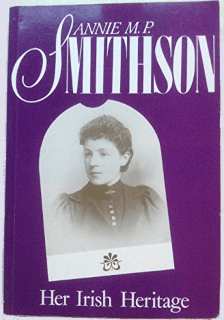
In 1917 Smithson publishes her first novel, Her Irish Heritage, which becomes a best-seller. It is dedicated to those who died in the Easter Rising of 1916. In all, she publishes twenty novels and two short story collections. Other successful novels include By Strange Paths and The Walk of a Queen. Many of her works are highly romantic and draw on her own life experiences, with nationalism and Catholicism featured as recurrent themes. In 1944 she publishes her autobiography, Myself – and Others.

From 1932 onwards Smithson shares a house in Rathmines, Dublin, with her stepsister and her stepsister’s family. She dies of heart failure on February 21, 1948, at 12 Richmond Hill, Dublin, and is buried in Whitechurch, Dublin.

Smithson’s novels are featured in Brian Friel‘s 1990 play Dancing at Lughnasa. Between 1989 and 1990 the Mercier Press reprints several of her works.