seamus dubhghaill

Promoting Irish Culture and History from Little Rock, Arkansas, USA


Leave a comment

2012 North Belfast Riots

belfast-violence-july-2012

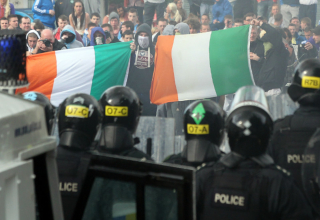
The first incident of the 2012 North Belfast Riots occurs on July 12, 2012, during “The TwelfthLoyalist celebrations. The sectarian disorder and rioting between loyalists and republicans take place when rival parades, authorised by the Parades Commission, take place.

Catholic rioting has been common in recent years when the parades are forced through the mostly Irish nationalist Ardoyne in north Belfast. The local Orangemen parade down the predominantly Ulster loyalist Crumlin Road towards the loyalist Woodvale area. Before turning into the Woodvale, they are met by Irish republican protesters and a nearby counter-parade organised by the Greater Ardoyne Residents Association (GARC). Nationalists then attack the Police Service of Northern Ireland (PSNI) and the parade with bricks, bottles and petrol bombs.

There is also violence in the Bogside area of Derry, where petrol bombs are thrown at police and a car is set afire. In south and east Belfast there are five arrests for a variety of offences including disorderly behaviour.

Prolonged attacks on the PSNI by Catholics follow the parades with missiles being thrown at police lines. Three cars are hijacked and pushed at police lines with at least one of them being set on fire, and at night ten shots are fired at police by a nationalist gunman who intends to kill police officers. On July 18, 2012, a 47-year-old man is charged with attempted murder of the police officers. The PSNI blames the violence on “thugs” and makes a further 26 arrests across Northern Ireland relating to the trouble.

In another incident during a different parade, a Shankill Road-based loyalist band “The Young Conway Volunteers” is filmed by a Sinn Féin activist playing The Famine Song outside St. Patrick’s Catholic Church in Ardoyne. The activist filming the incident is attacked by band members who try to snatch the phone from him. The incident brings condemnation, with Sinn Féin declaring it “provocative.” Protestant church leaders also condemn the incident as “blatantly sectarian.” It is this incident that is believed to ignite tensions in the area which continue over the next few months.

In the days that follow strong loyalist criticism is levelled at the Parades Commission blaming them for the violence. Nigel Dodds of the Democratic Unionist Party (DUP) accuses the Parades Commission of making a “bizarre, crazy, and mad decision” to allow the nationalist parade to coincide with the Orange parade while Sinn Féin’s Gerry Kelly blames the Orangemen for violating regulations set out by the Parades Commission. The Parades Commission denies responsibility, explaining “We have to balance the rights of everybody concerned in parades, not just the rights of paraders, but the rights of people who live in the areas and the rights of police officers.”


Leave a comment

Birth of George M. Cohan

george-m-cohan

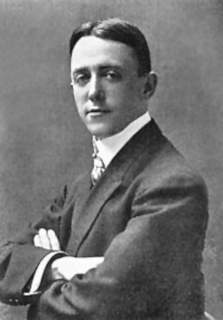
George Michael Cohan, legendary song and dance man, is born to Irish Catholic parents in Providence, Rhode Island on July 3, 1878.

A baptismal certificate from St. Joseph’s Roman Catholic Church indicates that Cohan was born on July 3, but Cohan and his family always insist that he had been “born on the Fourth of July!” His parents are traveling vaudeville performers, and he joins them on stage while still an infant, first as a prop, learning to dance and sing soon after he could walk and talk. As a child, he and his family tour most of the year and spend summer vacations from the vaudeville circuit at his grandmother’s home in North Brookfield, Massachusetts.

In 1904 Cohan produces his first successful musical play, Little Johnny Jones, in which he plays the character The Yankee Doodle Boy. As a songwriter, he is a charter member of the American Society of Composers, Authors and Publishers (ASCAP). His popular song catalog includes “The Yankee Doodle Boy,” “Venus, My Shining Love,” “I Guess I’ll Have to Telegraph My Baby,” “My Musical Comedy Maid,” “Revolutionary Rag,” “Give My Regards to Broadway,” “You Remind Me of My Mother,” “Life’s a Funny Proposition After All,” “Mary’s a Grand Old Name,” “So Long, Mary,” “Forty-Five Minutes from Broadway,” “I Was Born in Virginia,” “Harrigan,” “Over There” (the song of World War I which earns Cohan the Congressional Medal of Honor), “In the Kingdom of Our Own,” “Nellie Kelly, I Love You,” “When June Comes Along With a Song,” “Molly Malone,” “Where Were You, Where Was I?,” “The Song and Dance Man,” “Billie” and the patriotic theme song and 2002 Towering Song Award winner, “You’re a Grand Old Flag.”

The more than 40 musical dramas Cohan writes, produces, directs and stars in on Broadway include The Governor’s Son, Forty-Five Minutes from Broadway, Little Johnny, George Washington, Jr., The Honeymooners, The Yankee Prince, The Little Millionaire, Hello, Broadway, The Talk of New York, Fifty Miles From Boston, The American Idea, The Man Who Owns Broadway, The Cohan Revue (1916, 1918), The Royal Vagabond, The Merry Malones, Little Nellie Kelly, The Rise of Rosie O’Reilly, Get-Rich-Quick Wallingford, Seven Keys to Baldpate, The Miracle Man, Hit the Trail Hailday, Broadway Jones, A Prince There Was, The Song and Dance Man, American Born, Gambling, Dear Old Darling, The Return of the Vagabond, The Tavern, Elmer the Great, The O’Brien Girl, Ah, Wilderness! and I’d Rather Be Right.

In 1942, Cohan’s life is documented in the film Yankee Doodle Dandy.

George M. Cohan dies of cancer at his Manhattan apartment on Fifth Avenue on November 5, 1942, surrounded by family and friends. His funeral is held at St. Patrick’s Cathedral in New York and is attended by thousands of people, including five governors of New York, two mayors of New York City and the Postmaster General. The honorary pallbearers included Irving Berlin, Eddie Cantor, Frank Crowninshield, Sol Bloom, Brooks Atkinson, Rube Goldberg, Walter Huston, George Jessel, Connie Mack, Joseph McCarthy, Eugene O’Neill, Sigmund Romberg, Lee Shubert and Fred Waring. He is interred at Woodlawn Cemetery in The Bronx, New York City, in a private family mausoleum he had erected a quarter century earlier for his sister and parents.

On September 11, 1959, Oscar Hammerstein II presents an eight-foot high, bronze statue of Cohan in the heart of Times Square on Broadway.


Leave a comment

The Roman Catholic Relief Act 1829 Receives Royal Assent

coat-of-arms-of-the-united-kingdom

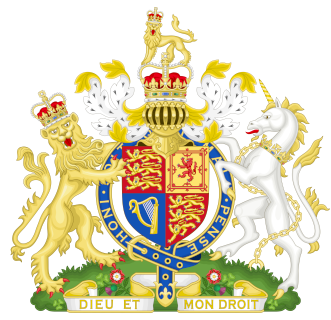
The Roman Catholic Relief Act 1829, the culmination of the process of Catholic emancipation throughout the United Kingdom, receives royal assent on April 13, 1829. In Ireland it repeals the Test Act 1673 and the remaining Penal Laws which had been in force since the passing of the Disenfranchising Act of the Parliament of Ireland of 1728. Its passage follows a vigorous campaign that threatens insurrection led by Irish lawyer Daniel O’Connell. The British leaders, starting with the Prime MinisterArthur Wellesley, 1st Duke of Wellington, and his top aide Robert Peel, although personally opposed, give in to avoid civil strife. Ireland is quiet after the passage.

In 1778, English Catholics are relieved of the restrictions on land inheritance and purchase. A savage reaction to these concessions produces the Gordon Riots of 1780, and the whole history of Catholic Emancipation is one of struggle against great resistance. In 1791 the Roman Catholic Relief Act repeals most of the disabilities in Great Britain, provided Catholics take an oath of loyalty. In 1793 the army, the navy, the universities, and the judiciary are opened to Catholics, although seats in Parliament and some offices are still denied. These reforms are sponsored by William Pitt the Younger, who hopes thereby to split the alliance of Irish Catholics and Protestants. But Pitt’s attempt to secure a general repeal of the Penal Laws is thwarted by George III. Pope Pius VII consents to a royal veto on episcopal nominations if the Penal Laws are repealed, but the move fails. In Ireland the repeal of Poynings’ Law in 1782 is followed by an act (1792) of the Irish Parliament relaxing the marriage and education laws and an act (1793) allowing Catholics to vote and hold most offices.

The Roman Catholic Relief Act 1829 permits members of the Catholic Church to sit in the parliament at Westminster and to hold all but a handful of public offices. O’Connell had won a seat in a by-election for Clare in 1828 against an Anglican. Under the then extant penal law, O’Connell as a Catholic, is forbidden to take his seat in Parliament. Peel, the Home Secretary, until then is called “Orange Peel” because he always supports the Orange (anti-Catholic) position. Peel now concludes, “Though emancipation was a great danger, civil strife was a greater danger.” Fearing a revolution in Ireland, Peel draws up the Catholic Relief Bill and guides it through the House of Commons. To overcome the vehement opposition of both the House of Lords and King George IV, the Duke of Wellington works tirelessly to ensure passage in the House of Lords and threatens to resign as Prime Minister if the King does not give Royal Assent.

With the Universities Tests Act 1871, which opens the universities to Roman Catholics, Catholic Emancipation in the United Kingdom is virtually complete.


Leave a comment

Launch of “The Irish Times”

the-irish-times

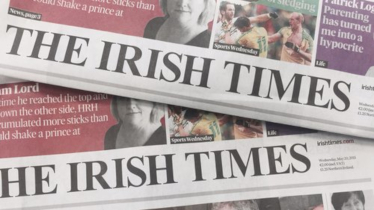
The Irish Times, an Irish daily broadsheet newspaper, is launched at 4 Lower Abbey Street in Dublin on March 29, 1859. The first appearance of a newspaper using the name The Irish Times occurs in 1823 but it closes in 1825. The title is revived as a thrice weekly publication by Major Lawrence E. Knox. It is originally founded as a moderate Protestant Irish nationalist newspaper, reflecting the politics of Knox, who stands unsuccessfully as a parliamentary candidate for Isaac Butt’s Home Rule League. In its early days, its main competitor is the Dublin Daily Express.

Though formed as a Protestant nationalist paper, within two decades and under new owners it becomes the voice of British unionism in Ireland. It is no longer marketed as a unionist paper, but rather presents itself politically as “liberal and progressive,” as well as promoting neoliberalism on economic issues. The editorship of the newspaper from 1859 until 1986 is controlled by the Anglo-Irish Protestant minority, only gaining its first nominal Irish Catholic editor 127 years into its existence.

The paper’s most prominent columnists include writer and arts commentator Fintan O’Toole and satirist Miriam Lord. The late Taoiseach Garret FitzGerald is once a columnist. Senior international figures, including Tony Blair and Bill Clinton, have written for its op-ed page. Its most prominent columns have included the political column Backbencher, by John Healy, Drapier, an anonymous piece produced weekly by a politician giving the ‘insider’ view of politics, Rite and Reason, a weekly religious column edited by ‘religious affairs’ editor Patsy McGarry, and the long running An Irishman’s Diary. An Irishman’s Diary is written by Patrick Campbell in the forties (under the pseudonym ‘Quidnunc’), by Seamus Kelly from 1949 to 1979 (also writing as ‘Quidnunc’) and more recently by Kevin Myers. After Myers’ move to the rival Irish Independent, An Irishman’s Diary has usually been the work of Frank McNally. On the sports pages, Philip Reid is the paper’s golf correspondent.

One of its most popular columns is the biting and humorous Cruiskeen Lawn satire column written, originally in Irish, later in English, by Myles na gCopaleen, the pen name of Brian O’Nolan who also writes books using the name Flann O’Brien. Cruiskeen Lawn is an anglicised spelling of the Irish words crúiscín lán, meaning “full little jug.” Cruiskeen Lawn makes its debut in October 1940, and appears with varying regularity until O’Nolan’s death in 1966.

The editor is Paul O’Neill who succeeds Kevin O’Sullivan on April 5, 2017. The deputy editor is Deirdre Veldon. The Irish Times is published every day except Sundays and employs 420 people.


Leave a comment

Birth of Lady Gregory, Writer & Playwright

lady-gregory

Isabella Augusta, Lady Gregory (née Isabella Augusta), Irish playwright, folklorist and theatre manager, is born on March 15, 1852, at Roxborough, County Galway. Her translations of Irish legends, her peasant comedies and fantasies based on folklore, and her work for the Abbey Theatre, play a considerable part in the late 19th-century Irish Literary Revival.

Augusta is the youngest daughter of the Anglo-Irish gentry family Persse. Her mother, Frances Barry, is related to Standish O’Grady, 1st Viscount Guillamore, and her family home, Roxborough, is a 6,000-acre estate located between Gort and Loughrea, the main house of which is later burned down during the Irish Civil War. She is educated at home, and her future career is strongly influenced by the family nanny, Mary Sheridan, a Catholic and a native speaker of the Irish language, who introduces the young Augusta to the history and legends of the local area.

In 1880 Augusta marries Sir William Henry Gregory, a neighbouring landowner who had previously served as a Member of Parliament and as governor of Ceylon. He is a well-educated man with many literary and artistic interests, and his estate at Coole Park houses a large library and extensive art collection, both of which Lady Gregory is eager to explore. He also has a house in London, where the couple spends a considerable amount of time.

Lady Gregory’s literary career does not begin until after Sir Gregory’s death in 1892. In 1896 she meets William Butler Yeats and becomes his lifelong friend and patron. She takes part in the foundation of the Irish Literary Theatre in 1899 and becomes a director of the Abbey Theatre in 1904, which owes much of its success to her skill at smoothing the disputes among its highly individualistic Irish nationalist founders. As a playwright, she writes pleasant comedies based on Irish folkways and picturesque peasant speech, offsetting the more tragic tones of the dramas of Yeats and John Millington Synge.

Lady Gregory writes or translates nearly forty plays. Seven Short Plays (1909), her first dramatic works, are among her best, vivid in dialogue and characterization. The longer comedies, The Image and Damer’s Gold, are published in 1910 and 1913 and her strange realistic fantasies, The Golden Apple and The Dragon, in 1916 and 1920. She also arranges and makes continuous narratives out of the various versions of Irish sagas, translating them into an Anglo-Irish peasant dialect that she labels “Kiltartan.” These are published as Cuchulain of Muirthemne (1902) and Gods and Fighting Men (1904).

Lady Gregory returns to live in Galway after ill health forces her retirement from the Abbey Theatre board in 1928, although she continues to visit Dublin regularly. The house and demesne at Coole Park are sold to the Irish Forestry Commission in 1927, with Lady Gregory retaining life tenancy. Her Galway home had long been a focal point for the writers associated with the Irish Literary Revival, and this continues after her retirement. On a tree in what were the grounds of the house, one can still see the carved initials of Synge, Æ, Yeats and his artist brother Jack, George Moore, Seán O’Casey, George Bernard Shaw, Katharine Tynan and Violet Martin.

Lady Gregory, whom Shaw once described as “the greatest living Irishwoman,” dies at the age of 80 on May 22, 1932, at home from breast cancer. She is buried in the New Cemetery in Bohermore, County Galway. The entire contents of Coole Park are auctioned three months after her death, and the house is demolished in 1941.


Leave a comment

Birth of Fr. Michael Patrick O’Hickey

michael-patrick-o-hickey

Michael Patrick O’Hickey, Irish Catholic priest and professor of Irish at St. Patrick’s College, Maynooth and an Irish language campaigner, is born in Carrickbeg, County Waterford on March 12, 1860. Sometimes his name appears as Michael Hickey rather than Micheal O’Hickey, or even in Irish as An tAthair Micheál Ó hIcí.

O’Hickey’s mother dies at an early age and his father remarries. He has an older brother Martin, and a younger half-brother Maurice. He studies for the priesthood in St. John’s College, Waterford, and is ordained a priest in 1884. He is an active member of the Conradh na Gaeilge and studies under the noted Irish scholar Sean Plemion.

In 1896 O’Hickey is appointed Professor of Irish in Maynooth College, succeeding Fr. Eugene O’Growney. After clashing with the bishops and establishment, he is dismissed in 1909 from his position as Professor of Irish, for his conduct in the controversy over Irish as a matriculation subject for the new National University of Ireland.

O’Hickey receives support from many Irish nationalists (including Patrick Pearse whom he earlier had disagreements with), Irish language activists, and some of his colleagues including Maynooth’s Theology Professor, Walter McDonald. He appeals his dismissal to the Vatican, but his appeal is refused.

Michael O’Hickey dies in Portlaw, County Waterford on November 19, 1916, and is buried in the Hickey family plot in the Friary Cemetery in Carrickbeg, County Waterford.


Leave a comment

Birth of Daniel Mannix, Archbishop of Melbourne

daniel-mannix

Daniel Mannix, Archbishop of Melbourne, advocate of Irish independence, and one of the most influential and controversial public figures in 20th-century Australia, is born near Charleville, County Cork on March 4, 1864.

Mannix is the son of a tenant farmer, Timothy Mannix, and his wife Ellen (née Cagney). He is educated at Congregation of Christian Brothers schools and at St. Patrick’s College, Maynooth, County Kildare, where he is ordained priest in 1890. He teaches philosophy (1891) and theology (1894) at St. Patrick’s and from 1903 to 1912 he serves as president of the college. During his presidency, he welcomes both King Edward VII in 1905 and King George V in 1911 with loyal displays, which attract criticism by supporters of the Irish Home Rule movement.

Consecrated titular archbishop of Pharsalus in 1912, Mannix arrives in Melbourne in the following year as coadjutor archbishop, becoming archbishop of Melbourne in 1917.

Mannix’s forthright demands for state aid for the education of Roman Catholics in return for their taxes and his opposition to drafting soldiers for World War I make him the subject of controversy. A zealous supporter of Irish independence, he makes an official journey to Rome in 1920 via the United States, where his lengthy speech making attracts enthusiastic crowds. His campaign on behalf of the Irish, however, causes the British government to prevent him from landing in Ireland, which he finally visits in 1925.

After World War II Mannix seeks to stop Communist infiltration of the Australian trade unions. He plays a controversial part in the dissensions within the Australian Labor Party and backs the largely right-wing Catholic Democratic Labor Party, which breaks away. A promoter of Catholic Action (i.e., lay apostolic activity in the temporal society) and of the Catholic social movement, he is responsible for the establishment of 181 schools, including Newman College and St. Mary’s College at the University of Melbourne, and 108 parishes.

By the 1960s the distinct identity of the Irish community in Melbourne is fading, and Irish Catholics are increasingly outnumbered by Italians, Maltese and other postwar immigrant Catholic communities. Mannix, who turned 90 in 1954, remains active and in full authority, but he is no longer a central figure in the city’s politics. He dies suddenly on November 6, 1963, aged 99, while the Archdiocese of Melbourne is preparing to celebrate his 100th birthday. He is buried in the crypt of St. Patrick’s Cathedral, Melbourne.


Leave a comment

Birth of George Moore, Writer, Poet & Dramatist

george-augustus-moore

George Augustus Moore, novelist, short story writer, poet, art critic, memoirist, and dramatist, is born in Moore Hall, near Lough Carra, County Mayo on February 24, 1852. He is considered an innovator in fiction in his day.

Moore comes from a distinguished Catholic family of Irish landholders. When he is 21, he leaves Ireland for Paris to become a painter. His Reminiscences of the Impressionist Painters (1906) vividly describes the Café Nouvelle-Athènes and the circle of Impressionist painters who frequent it. He is particularly friendly with Édouard Manet, who sketches three portraits of him. Another account of the years in Paris, in which he introduces the younger generation in England to his version of fin de siècle decadence, is his first autobiography, Confessions of a Young Man (1888).

Deciding that he has no talent for painting, Moore returns to London in 1882 to write. His first novels, A Modern Lover (1883) and A Mummer’s Wife (1885), introduce a new note of French Naturalism into the English scene, and he later adopts the realistic techniques of Gustave Flaubert and Honoré de Balzac. Esther Waters (1894), his best novel, deals with the plight of a servant girl who has a baby out of wedlock. It is a story of hardship and humiliation illumined by the novelist’s compassion. It is an immediate success, and he follows it with works in a similar vein: Evelyn Innes (1898) and Sister Teresa (1901).

In 1901 Moore moves to Dublin, partly because of his loathing for the South African War and partly because of the Irish Literary Revival spearheaded by his friend, the poet William Butler Yeats. In Dublin he contributes notably to the planning of the Abbey Theatre. He also produces The Untilled Field (1903), a volume of fine short stories reminiscent of Ivan Turgenev’s writing that focuses on the drudgery of Irish rural life, and a short poetic novel, The Lake (1905). The real fruits of his life in Ireland, however, come with the trilogy Hail and Farewell (Ave, 1911; Salve, 1912; Vale, 1914). Discursive, affectionate, and satirical by turns, it reads like a sustained monologue that is both a carefully studied piece of self-revelation and an acute, though not always reliable, portrait gallery of his Irish acquaintance, which included Yeats, George William Russell, and Lady Gregory. Above all it is a perfectly modulated display of the comic spirit.

The increasing narrowness of the Irish mind, politics, and clericalism sends Moore back to England in 1911. After Hail and Farewell, he makes another literary departure. Aiming at epic effect he produces The Brook Kerith (1916), an elaborate and stylish retelling of the Gospel story that is surprisingly effective despite some dull patches. He continues his attempts to find a prose style worthy of epic theme in Héloïse and Abélard (1921). His other works include A Story-Teller’s Holiday (1918), a blend of autobiography, anecdote, Irish legend, and satire, Conversations in Ebury Street (1924), autobiography, The Pastoral Loves of Daphnis and Chloe (1924) and Ulick and Soracha (1926), an Irish legendary romance.

George Moore dies at his home at Ebury Street in the London district of Belgravia on January 21, 1933, leaving a fortune of £70,000. He is cremated in London at a service attended by Ramsay MacDonald among others. An urn containing his ashes is interred on Castle Island in Lough Carra in view of the ruins of Moore Hall, which had been burned by anti-treaty forces in 1923, during the final months of the Irish Civil War.


Leave a comment

Assassination of Billy “King Rat” Wright

billy-wright

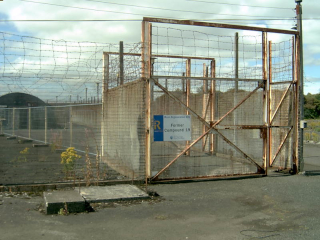
Billy “King Rat” Wright, prominent Ulster loyalist death squad leader during the ethno-nationalist conflict in Northern Ireland known as the Troubles, is murdered on December 27, 1997, in HM Prison Maze by three members of the Irish National Liberation Army (INLA) who manage to smuggle guns into the prison.

William Stephen “Billy” Wright, named after his grandfather, is born in Wolverhampton, England on July 7, 1960, to David Wright and Sarah McKinley, Ulster Protestants from Portadown, Northern Ireland. The family returns to Northern Ireland in 1964. While attending Markethill High School, Wright takes a part-time job as a farm labourer where he comes into contact with a number of staunchly unionist and loyalist farmers who serve with the Royal Ulster Constabulary (RUC) Reserve or the Ulster Defence Regiment (UDR). The conflict known as the Troubles has been raging across Northern Ireland for about five years by this stage, and many young men such as Wright are swept up in the maelstrom of violence as the Provisional Irish Republican Army ramps up its bombing campaign and sectarian killings of Catholics by loyalists continue to escalate. During this time his opinions move towards loyalism and soon he gets into trouble for writing the initials “UVF” on a local Catholic primary school wall. When he refuses to clean off the vandalism, he is transferred from the area and sent to live with an aunt in Portadown.

Wright joins the Ulster Volunteer Force (UVF) in 1975. After spending several years in prison and becoming a born-again Christian, he resumes his UVF activities and becomes commander of its Mid-Ulster Brigade in the early 1990s, taking over from Robin “the Jackal” Jackson. According to the Royal Ulster Constabulary, he is involved in the sectarian killings of up to 20 Catholics, although he is never convicted for any. It is alleged that Wright, like his predecessor, is an agent of the RUC Special Branch.

Wright attracts considerable media attention during the Drumcree standoff, when he supports the Protestant Orange Order‘s desire to march its traditional route through the Catholic/Irish nationalist area of his hometown of Portadown. In 1994, the UVF and other paramilitary groups call ceasefires. However, in July 1996, Wright’s unit breaks the ceasefire and carries out a number of attacks, including a sectarian killing. For this, Wright and his Portadown unit of the Mid-Ulster Brigade are stood down by the UVF leadership. He is expelled from the UVF and threatened with execution if he does not leave Northern Ireland. He ignores the threats and, along with many of his followers, defiantly forms the breakaway Loyalist Volunteer Force (LVF), becoming its leader.

The LVF carries out a string of killings of Catholic civilians. In March 1997 Wright is sent to the HM Prison Maze for having threatened the life of a woman. While imprisoned, Wright continues to direct the LVF’s activities. On the morning of December 27, 1997, he is assassinated inside the prison by three INLA volunteers – Christopher “Crip” McWilliams, John “Sonny” Glennon and John Kennaway – armed with two smuggled pistols, a FEG PA-63 semi-automatic and a .22 Derringer. The LVF carries out a wave of sectarian attacks in retaliation. There is speculation that the authorities collude in his killing as he is a threat to the peace process. An inquiry finds no evidence of this but concludes there are serious failings by the prison authorities.

Owing to his uncompromising stance as an upholder of Ulster loyalism and opposition to the Northern Ireland peace process, Wright is regarded as a cult hero, icon, and martyr by hardline loyalists. His image adorns murals in loyalist housing estates and many of his devotees have tattoos bearing his likeness. His death is greeted with relief and no little satisfaction, however, from the Irish nationalist community.


Leave a comment

Birth of Sir John Parnell, 2nd Baronet

john-parnell

Sir John Parnell, 2nd Baronet, an Anglo-Irish Member of Parliament, is born on December 25, 1744.

A Church of Ireland landowner, his family had originally migrated to Ireland from Congleton in Cheshire. Although not from an Irish Roman Catholic background, Parnell, the only son of Sir John Parnell, 1st Baronet, is renowned in Irish history for his efforts to bring about a more emancipated country. He is the great-grandfather of Charles Stewart Parnell, known as the uncrowned king of Ireland and best known for opposing the Acts of Union 1800 between the two kingdoms of Great Britain and Ireland.

From a line of politically astute ancestors who had moved to Ireland in the 17th century, Parnell rises to the highest positions in Irish politics as Commissioner of the Revenue (1780), Chancellor of the Exchequer of Ireland (1787), and Lord of the Treasury (1793).

Parnell first serves in the Parliament of Ireland as one of the members for Bangor, from 1767 to 1768. He later sits for Queen’s County from 1783 until the Union with Great Britain creates the United Kingdom of Great Britain and Ireland in 1801. After the Union, he gains a seat in the Parliament of the United Kingdom for a short time as member for Queen’s County but dies suddenly in London in December 1801.

Henry Grattan describes Parnell as “an honest, straightforward, independent man, possessed of considerable ability and much public spirit; as Chancellor of the Exchequer, he was not deficient, and he served his country by his plan to reduce the interest of money. He was amiable in private, mild in disposition, but firm in mind and purpose. His conduct at the Union did him honour, and proved how warmly he was attached to the interests of his country, and on this account, he was dismissed.”

(Pictured: Oil painting on canvas, The Right Hon. Sir John Parnell, 2nd Bt (1744–1801) by Pompeo Girolamo Batoni (Lucca 1708 – Rome 1787))