seamus dubhghaill

Promoting Irish Culture and History from Little Rock, Arkansas, USA


Leave a comment

The Bottle Riot

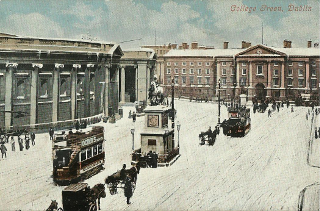
king-william-of-orange-monument

On December 14, 1822, a “bottle riot” takes place at a performance of Oliver Goldsmith’s She Stoops to Conquer at the Theatre Royal in Dublin. Among those in attendance is the Lord Lieutenant of Ireland, Richard Wellesley, the brother of the Duke of Wellington. Wellesley is quite unpopular at the time among Orange Order members in the city, owing to what they perceive as his role in stopping an annual ceremony at the statue of King William of Orange on College Green, and other perceived concessions to the Catholic population.

The statue is the location for annual rituals organised by loyalist elements in the city, with events held in July and November being flashpoints on the Dublin calendar. Heavily criticised by Daniel O’Connell and other nationalist voices, Dublin Castle distances itself from the ceremonies, but it is the eventual banning of the November ceremony which infuriates the Orange Order into action.

Following clashes at the event in July 1822, a decision is made by Marquess Wellesley, in his capacity as Lord Lieutenant, to seek a ban against the November event. A heavy military presence prevents the traditional loyalist display. This decision causes great resentment towards Wellesley from loyalists in the city, as would other actions such as appointing a Catholic lawyer to a position of importance in the courts. A visit by him to the Theatre Royal is seen as an opportunity to show that discontent. The Theatre Royal on Hawkins Street is relatively new at the time, having only opened the previous year. The announcement that the Lord Lieutenant would be attending the theatre causes considerable excitement in the city.

Six men meet in a tavern on Wednesday, December 11, all members of the Orange Order. John and George Atkinson, James Forbes, William Graham and Henry and Matthew Handwith drink to “the glorious, immortal and pious memory” of King William of Orange, plotting a protest against the Lord Lieutenant which would grab the attention of the city. On December 13, a meeting of Lodge 1612 of the Orange Order on Werburgh Street decides to fund the purchase of twelve pit tickets for the upcoming play, with the aim of creating a scene which would embarrass the Lord Lieutenant.

The trouble begins inside the theatre with the tossing of pamphlets with the slogan “No Popery” upon them, most of which drift towards the stage. There are some cries of “No Popish Lord Lieutenant,” and the Lord Mayor of Dublin is also subject to ridicule. The play begins as planned, only to be interrupted throughout. A series of items are thrown in the direction of the Lord Lieutenant. The event comes to be known as “The Bottle Riot” in Dublin, owing to the missiles thrown. While the Lord Lieutenant is never in any real physical danger, the incident is hugely embarrassing for the authorities, with mob rule taking centre stage at one of Dublin’s most prestigious venues.

Several days later, the behaviour of the Orangemen is the subject of a protest meeting in Dublin. This meeting is significant as it is addressed by some hugely influential figures, including the Duke of Leinster, Daniel O’Connell, Henry Grattan, Jr. and Arthur Guinness II, son of the famous brewer. Guinness denounces the men as a “mischievous faction” and calls for them to be opposed “by the severe but wholesome discipline of the laws.”

While the instigators of the affair are brought in front of the courts on two separate occasions, both cases collapse causing much anger. Lord Chief Justice of Ireland Charles Kendal Bushe remarks to the jury in his summation that “an audience may cry down a play, or hiss, or hoot an actor,” but that riotous behaviour is not permitted. One effect of the mini riot is the outlawing of the Orange Order for a period, when the Unlawful Societies Act of 1825 comes into being.

(Pictured: Undated postcard showing the monument of King William of Orange on College Green)


Leave a comment

The Execution of Rory O’Connor

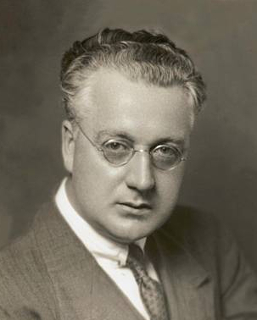
rory-o-connor

Rory O’Connor, Irish republican revolutionary, is executed by firing squad on December 8, 1922, in reprisal for the anti-treaty Irish Republican Army‘s (IRA) killing of Irish Free State member of parliament Sean Hales.

O’Connor is born in Kildare Street, Dublin on November 28, 1883. He is educated at St. Mary’s College, Dublin and then in Clongowes Wood College, a public school run by the Jesuit order and also attended by James Joyce, and his close friend Kevin O’Higgins, the man who later condemns him to death.

In 1910 O’Connor takes his Bachelor of Engineering and Bachelor of Arts degrees in University College Dublin, then known as the National University. He goes to work as a railway engineer in Ireland, then moves to Canada, where he is an engineer in the Canadian Pacific Railway and Canadian Northern Railway, being responsible for the construction of 1,500 miles of railroad.

After his return to Ireland, O’Connor becomes involved in Irish nationalist politics, joins the Ancient Order of Hibernians and is interned after the Easter Rising in 1916.

During the subsequent Irish War of Independence (1919-1921) O’Connor is made Director of Engineering of the Irish Republican Army (IRA) – a military organisation descended from the Irish Volunteers.

O’Connor does not accept the Anglo-Irish Treaty of 1921, which establishes the Irish Free State and abolishes the Irish Republic declared in 1916, which he and his comrades had sworn to uphold. On March 26, 1922, the anti-treaty officers of the IRA hold a convention in Dublin in which they reject the Treaty compromise and repudiate the authority of the Dáil, the elected Irish Parliament. Asked by a journalist if this means they are proposing a military dictatorship in Ireland, O’Connor replies, “you can take it that way if you want.”

On April 14, 1922, O’Connor, with 200 other hardline anti-treaty IRA men under his command, takes over the Four Courts building in the centre of Dublin in defiance of the new Irish government. They want to provoke the British troops, who are still in the country, into attacking them, which they believe will restart the war with Britain and re-unite the IRA against their common enemy. Michael Collins tries desperately to persuade O’Connor and his men to leave the building before fighting breaks out.

On June 28, 1922, after the Four Courts garrison has kidnapped JJ “Ginger” O’Connell, a general in the new Free State Army, Collins shells the Four Courts with borrowed British artillery. O’Connor surrenders after two days of fighting and is arrested and held in Mountjoy Prison. This incident sparks the Irish Civil War as fighting breaks out around the country between pro and anti-treaty factions.

On December 8, 1922, along with Liam Mellows, Richard Barrett and Joe McKelvey, three other republicans captured with the fall of the Four Courts, Rory O’Connor is executed by firing squad in reprisal for the anti-treaty IRA’s killing of Free State member of parliament Sean Hales. The execution order is given by Kevin O’Higgins, who less than a year earlier had appointed O’Connor to be best man at his wedding, symbolising the bitterness of the division that the Treaty has caused. O’Connor, one of 77 republicans executed by the Cumann na nGaedheal government of the Irish Free State, is seen as a martyr by the Republican movement in Ireland.


Leave a comment

Death of Michael Cusack, Founder of the GAA

michael-cusack

Michael Cusack, teacher and founder of the Gaelic Athletic Association, dies in Dublin on November 25, 1906.

Cusack is born on the eastern fringe of the Burren to Irish speaking parents in Carran, County Clare on September 20, 1847, during the Great Famine. He becomes a national school teacher and in 1874, after teaching in various parts of Ireland, becomes a professor at Blackrock College, then known as the French College. In 1877, he establishes his own civil service academy, Cusack’s Academy, in Dublin which proves successful in preparing pupils for the civil service examinations.

A romantic nationalist, Cusack is also reputed to have been associated with the Fenian movement. He is active in the Gaelic revival, initially as a member of the Society for the Preservation of the Irish Language which is founded in 1876, and later the Gaelic League who in 1879 breaks away from the Society. Also in 1879, he meets Pat Nally, who is a member of the Irish Republican Brotherhood and a leading nationalist and athlete. He finds that he and Nally agree on the influence of British landlordism on Irish athletics.

He would recall how both Nally and himself, While walking through Phoenix Park in Dublin and seeing only a handful of people playing sports in the park so depresses Cusack and Nally that they agree it is time to “make an effort to preserve the physical strength of [their] race.” Nally organises a National Athletics Sports meeting in County Mayo in September 1879 which is a success, with Cusack organising a similar event which is open to artisans in Dublin the following April.

On November 1, 1884, Cusack together with Maurice Davin, of Carrick-on-Suir, County Tipperary, calls a meeting in Hayes’ Commercial Hotel, Thurles, County Tipperary, and founds the Gaelic Athletic Association (GAA). Davin is elected president and Cusack becomes its first secretary. Later, Archbishop Thomas William Croke, Archbishop of Cashel & Emly, Michael Davitt and Charles Stewart Parnell become patrons. Cusack also becomes involved in the Irish language movement, founding The Celtic Times, a weekly newspaper which focuses on “native games” and Irish culture.

Michael Cusack dies in Dublin on November 27, 1906, at the age of 59. He is buried in Dublin’s Glasnevin Cemetery.


Leave a comment

Birth of Charlotte Grace O’Brien

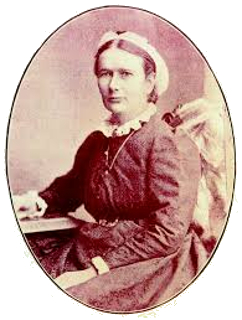
charlotte-grace-obrien

Charlotte Grace O’Brien, author, philanthropist, plant collector, and activist in nationalist causes and the protection of female emigrants, is born on November 23, 1845, at Cahirmoyle, County Limerick.

O’Brien is the younger daughter in a family of five sons and two daughters of William Smith O’Brien, Irish nationalist, and his wife Lucy Caroline, eldest daughter of Joseph Gabbett, of High Park, County Limerick. Upon her father’s return in 1854 from the penal colony in Tasmania, she rejoins him in Brussels and stays there until his removal to Cahirmoyle in 1856. Upon her mother’s death in 1861 she moves with her father to Killiney, near Dublin, and is his constant companion until his death at Bangor, Gwynedd in 1864.

From 1864 O’Brien lives at Cahirmoyle with her brother Edward, tending his motherless children, until his remarriage in 1880. She then goes to live at Foynes on the River Shannon and there devotes herself to literary pursuits. She has already published in 1878 her first novel, Light and Shade, a tale of the Fenian rising of 1867, the material for which had been gathered from Fenian leaders. A Tale of Venice, a drama, and Lyrics appear in 1880.

By 1881 her interests and pen are absorbed in Irish political affairs, in which she shares her father’s opinions. She contributes articles to the Nineteenth Century on The Irish Poor Man (December 1880) and Eighty Years (March 1881). In the spring of 1881, the attitude of the liberal government towards Ireland leads her to address many fiery letters to The Pall Mall Gazette, then edited by John Morley.

Another interest, however, soon absorbs O’Brien’s activities. The disastrous harvest in Ireland in 1879, combined with Irish political turmoil, leads to much emigration to the United States. At Queenstown, the port of embarkation, female emigrants suffer much from overcrowded lodgings and robbery. She not only induces the board of trade to exercise greater vigilance but also founds in 1881 a large boarding-house at Queenstown for the reception and protection of girls on the point of emigrating.

In order to improve the steamship accommodations for female emigrants, and to study their prospects in America, O’Brien makes several steerage passages to America. She also establishes in New York a similar institution to that in Queenstown for the protection of girls. Many experiences during this period find expression in her Lyrics (Dublin, 1886), a small volume of poems, which gives simple pictures of the emigrants and contains some stirring nationalist ballads.

On her retirement from active public work in 1886, O’Brien returns to Ardanoir, Foynes, on the bank of the Shannon, devoting her leisure to writing and to study of plant life. She contributes much on the flora of the Shannon district to the Irish Naturalist and joins the Roman communion in 1887.

Charlotte Grace O’Brien dies on June 3, 1909, at Foynes, and is buried at Knockpatrick. Selections from her Writings and Correspondence is published at Dublin in 1909. Her verses have dignity and grace, her polemical essays are vigorous and direct, and her essays on nature charm by their simple style.


Leave a comment

Birth of Donagh MacDonagh, Playwright & Writer

donagh-macdonagh

Donagh MacDonagh, Irish writer, judge, presenter, broadcaster, and playwright, is born in Dublin on November 22, 1912. He is the son of Irish nationalist and poet Thomas MacDonagh.

MacDonagh is still a young child when his father is executed in 1916 for his part in the Easter Rising. Tragedy strikes again when his mother dies of a heart attack a year afterwards while swimming at Skerries to Lambay Island, County Dublin on July 9, 1917. He and his sister are then cared for by their maternal aunts, in particular Catherine Wilson.

His parents’ families then engage in a series of child custody lawsuits as the MacDonaghs are Roman Catholic and the Giffords are Protestant. In the climate of Ne Temere, the MacDonaghs are successful.

He and his sister Barbara, who later marries actor Liam Redmond, live briefly with their paternal aunt Eleanor Bingham in County Clare before being put into the custody of strangers until their late teens when they are taken in by Jack MacDonagh.

MacDonagh is educated at Belvedere College and University College Dublin (UCD) with contemporaries Cyril Cusack, Denis Devlin, Charles Donnelly, Brian O’Nolan, Niall Sheridan and Mervyn Wall. In 1935 he is called to the Bar and practises on the Western Circuit. In 1941 he is appointed a District Justice in County Mayo. To date, he remains the youngest person appointed as a judge in Ireland. He is Justice for the Dublin Metropolitan Courts at the time of his death.

MacDonagh publishes three volumes of poetry: Veterans and Other Poems (1941), The Hungry Grass (1947) and A Warning to Conquerors (1968). He also edits the Oxford Book of Irish Verse (1958) with Lennox Robinson. He also writes poetic dramas and ballad operas. One play, Happy As Larry, is translated into a number of languages. He has three other plays produced: God’s Gentry (1951), Lady Spider (1959) and Step in the Hollow, a piece of situation comedy nonsense.

MacDonagh also writes short stories. He publishes Twenty Poems with Niall Sheridan, stages the first Irish production of “Murder in the Cathedral” with Liam Redmond, later his brother-in-law, and is a popular broadcaster on Radio Éireann.

MacDonagh is married twice, to Maura Smyth and, following her death after she drowns in a bath whilst having an epileptic seizure, to her sister, Nuala Smyth. He has four children, Iseult and Breifne by Maura and Niall and Barbara by Nuala.

Donagh MacDonagh dies in Dublin on January 1, 1968, and is buried at Dean’s Grange Cemetery.


Leave a comment

Signing of the Anglo-Irish Agreement

anglo-irish-agreement

The Anglo-Irish Agreement, an accord that gives the government of Ireland an official consultative role in the affairs of Northern Ireland, is signed by Taoiseach Garret FitzGerald and British Prime Minister Margaret Thatcher on November 15, 1985, at Hillsborough Castle in County Down, Northern Ireland. Considered one of the most significant developments in British-Irish relations since the establishment of the Irish Free State in 1922, the agreement provides for regular meetings between ministers in the Irish and British governments on matters affecting Northern Ireland. It outlines cooperation in four areas: political matters, security and related issues, legal matters, including the administration of justice, and the promotion of cross-border cooperation.

The agreement is negotiated as a move toward easing long-standing tension between Britain and Ireland on the subject of Northern Ireland, although Northern Irish unionists, who are in favour of remaining part of the United Kingdom, are themselves strongly opposed to giving their southern neighbour a say in domestic matters. Many political leaders, including Thatcher, who has been strongly committed to British sovereignty in Northern Ireland, have come to believe that a solution to years of sectarian violence in Northern Ireland can only be achieved by means of an all-Ireland arrangement.

Such an attempt had previously been made in 1973. A power-sharing executive, composed of Irish nationalists as well as unionists, was set up in Northern Ireland, and Taoiseach Liam Cosgrave participated in talks with British Prime Minister Edward Heath that resulted in the Sunningdale Agreement. That accord recognized that Northern Ireland’s relationship with Britain could not be changed without the agreement of a majority of its population, and it provided for the establishment of a Council of Ireland composed of members from both the Dáil Éireann (the lower chamber of the Oireachtas) and the Northern Ireland Assembly. That agreement collapsed in May 1974 because of a general strike inspired by unionist opponents of power sharing.

In 1981 FitzGerald launches a constitutional crusade to make the reunification of Ireland more attractive to Northern Ireland’s Protestants. At the end of the year, the Irish and British governments set up an Anglo-Irish intergovernmental council to discuss matters of common concern, especially security. In 1984 the report of the New Ireland Forum, a discussion group that includes representatives of political parties in Ireland and Northern Ireland, sets out three possible frameworks for political development in Ireland: a unitary state, a federal state, and joint sovereignty. Of Ireland’s major political parties, Fianna Fáil prefers a unitary state, which Fine Gael and the Irish Labour Party regard as unrealistic. They prefer the federal option.

Also in the early 1980s, in Northern Ireland, John Hume, the leader of the Social Democratic and Labour Party (SDLP) and a member of the British Parliament, gathers the support of prominent Irish American political leaders in condemning the use of violence and urging Irish Americans not to support the Irish Republican Army (IRA), a paramilitary organization that often uses violent means to bring an end to British rule in Northern Ireland. Hume’s group also encourages United States President Ronald Reagan to persuade Thatcher to pursue closer relations with Ireland.

In the improved political climate between Britain and Ireland, leaders of the two countries sit down to negotiations. Ireland and Britain agree that any change in the status of Northern Ireland would come about only with the consent of the majority of the people of Northern Ireland, and an intergovernmental conference is established to deal with political, security, and legal relations between the two parts of the island. The agreement is a blow to Northern Ireland’s unionists, because it establishes a consultative role for the government of Ireland in the affairs of Northern Ireland through the Anglo-Irish Secretariat. The Ulster Unionist Party (UUP) and other unionists denounce the agreement, and UUP members of Parliament resign their seats over the issue, although 14 are returned in by-elections in 1986. The party organizes mass protests and boycotts of local councils and files a lawsuit challenging the legality of the agreement. However, these efforts, which are joined by the Democratic Unionist Party, fail to force abrogation of the agreement.

Contacts between the Irish and British governments continue after February 1987 within the formal structure of the intergovernmental conference. Fears that the violence in Northern Ireland would spill into Ireland as a consequence of closer Anglo-Irish cooperation in the wake of the agreement proves unfounded, and the UUP decides to participate in new negotiations on the constitutional future of Northern Ireland in 1990–93. After republican and unionist forces declare cease-fires in 1994, the UUP reluctantly joins discussions with the British and Irish governments and other political parties of Northern Ireland. No deal accepted by all sides is reached until the Good Friday Agreement in April 1998, which creates the Northern Ireland Assembly and new cross-border institutions.

(From: “Anglo-Irish Agreement,” Lorraine Murray, Encyclopaedia Britannica, http://www.britannica.com, November 12, 2010)


Leave a comment

Birth of Rose Maud Young, Writer & Scholar

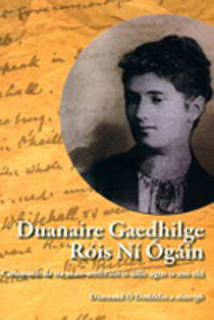
rose-maud-young

Rose Maud Young (Irish: Róis Ní Ógáin), writer, scholar and collector of Irish songs, is born in Galgorm Castle, Ballymena, County Antrim, in what is now Northern Ireland, on October 30, 1866. She is best known for her work to preserve the Irish language. Her books make lyrics from the Gaelic tradition accessible to the general public and are used in the Irish classroom for several decades.

Young is the daughter and seventh of twelve children born to Grace Charlotte Savage and John Young, who is a prosperous unionist and high sheriff. Despite his position he is a believer in tenant rights. Her younger sister is the writer Ella Young and her brother Willie Young is secretary of the Ulster Unionist League.

Young is educated by governesses until 1884 before completing training as a teacher through the University of Cambridge. She also attends Gaelic League classes in 1903 in London while visiting her sister who is living in the city at the time. After visiting the Bodleian Library she becomes committed to the study of the Irish language.

In the early 1900s Young returns to Ireland and continues her study of the Irish language in Belfast at Seán Ó Catháin‘s Irish College and in Donegal at Coláiste Uladh in Gort an Choirce. She also stays in Dublin and becomes friends with members of the Gaelic League and meets Margaret Dobbs. She works with Dobbs on the Feis na nGleann (The Glens Festival), a gathering dedicated to the Irish language.

Young is not involved in nationalism though she is strongly supportive of creating and maintaining a sense of “Irishness” through language and culture. She is also a friend and patron of Roger Casement. She also works with Ellen O’Brien and contributes to O’Brien’s book, The Gaelic Church. She keeps meticulous diaries and becomes interested in Rathlin Island and the Gaelic spoken there.

Rose Young dies on May 28, 1947 in Cushendun, County Antrim, where she resides with Dobbs. She is buried in the Presbyterian churchyard at Ahoghill, County Antrim.


Leave a comment

IRA Refuses to Disband in Response to Ultimatums

gerry-adams-2002

On October 27, 2002, after comments by the British prime minister Tony Blair that the continued existence of the Irish Republican Army (IRA) is an obstacle to rescuing the Northern Ireland peace process, Sinn Féin leader Gerry Adams says the IRA is never going to disband in response to ultimatums from the British government and from unionists.

Nationalists throughout Ireland wish to see the end of the IRA. In a response to a major speech by Adams, Mark Durkan, leader of the Social Democratic and Labour Party (SDLP), says IRA activity is playing into the hands of anti-Agreement unionists and calls on the IRA to cease all activity.

Adams tells elected Sinn Féin representatives from both sides of the Irish border in Monaghan that he can envision a future without the IRA. He also admits that “alleged” IRA activities are boosting the cause of those opposing the Northern Ireland peace process. However, he also tells Tony Blair that the IRA will never disband in response to ultimatums.

“He needs to recognise, however, that the Agreement requires an end to paramilitarism and that nationalists throughout this island fervently want one. It is time that republicans took heed of their call.”

The former Deputy First Minister in the devolved administration at Stormont says he welcomes Adams’ recognition that IRA activity is exacerbating the difficulties within unionism. “The reality is that IRA activity is playing right into the hands of anti-Agreement unionists. And letting the nationalist community badly down,” he said.

“It is also welcome that Gerry Adams has begun to recognise Sinn Féin’s credibility crisis. Too often republican denials have proved to be false in the past – be it over Colombia or Florida. This too has served only to create distrust and destabilise the Good Friday Agreement,” he adds.

In a major speech billed by his party as a considered response to the Prime Minister’s demand for an end to Republican-linked violence, Adams declares “Our view is that the IRA cessations effectively moved the army out of the picture – and allowed the rest of us to begin an entirely new process.” His speech is understood to have been handed in advance to both the British and Irish governments.

Adams says the continued IRA ceasefire and decommissioning initiatives demonstrated the organisation’s commitment to the peace process. “I do not pretend to speak for the army (IRA) on these matters, but I do believe that they are serious about their support for a genuine peace process. They have said so. I believe them,” he said. He adds, “The IRA is never going to respond to ultimatums from the British government or David Trimble.”

Fianna Fáil leader Bertie Ahern later says he welcomes and is encouraged by many aspects of Adams’ speech. He says the Sinn Féin leader’s strong statement of determination to keep the peace process intact and the recognition of the need to bring closure to all the key issues is a positive contribution at this difficult time in the Northern Ireland peace process.

(From the Irish Examiner, October 27, 2002)


2 Comments

Birth of Activist Mary Ellen Spring Rice

mary-ellen-spring-rice

Mary Ellen Spring Rice, Irish nationalist activist during the early 20th century, is born into an aristocratic Anglo-Irish family in London, England on October 14, 1880.

Spring Rice is the daughter of Thomas Spring Rice, 2nd Baron Monteagle of Brandon, and a great-granddaughter of the British Chancellor of the Exchequer, Thomas Spring Rice, 1st Baron Monteagle of Brandon. Her maternal grandfather is the bishop, Samuel Butcher. She is brought up on the family’s Mount Trenchard estate overlooking the River Shannon. It is a progressive, liberal household and independence of thought is encouraged. So too is the Gaelic culture and, at home, she and her brothers are taught how to fluently speak the Irish language.

Before World War I, Spring Rice hosts many Irish nationalist and Conradh na Gaeilge meetings at her home, and she becomes a close friend of Douglas Hyde and her cousin Nelly O’Brien. During 1913 and 1914, she is actively involved in gun-running, most notably the Howth gun-running.

This involves helping to ship weapons to be used in an Irish uprising from Germany into Ireland. Together with Molly Childers, she raises £2,000 towards the purchase of 900 Mauser rifles from Germany, many of which are used in the 1916 Easter Rising. She sails on the Asgard to collect the guns and helps to unload them in Ireland.

During the Irish War of Independence, Spring Rice allows her Mount Trenchard home to be used as a safe house by Irish Republican Army fighters and the family boat is used to carry men and arms over the Shannon Estuary.

Con Collins stays with Spring Rice regularly. She helps train local women as nurses to tend to wounded nationalists and acts as an IRA message carrier between Limerick and Dublin. Throughout this time, she maintains her aristocratic façade and society connections, inviting senior Liberal Party politicians to Mount Trenchard to pressure them to support Irish independence.

Spring Rice starts to suffer from tuberculosis in 1923, and dies unmarried in a sanatorium in Clwyd, Wales, on December 1, 1924. She is buried in Ireland, where her coffin is draped in the Irish tricolour and escorted by an IRA guard of honour.

(Pictured: Mary Ellen Spring-Rice and Molly Childers with the German guns on board Asgard, 1914.)


Leave a comment

Death of Charles Stewart Parnell

charles-stewart-parnell

Charles Stewart Parnell, Irish nationalist politician and one of the most powerful figures in the British House of Commons in the 1880s, dies of pneumonia at age 45 in Hove, East Sussex, England on October 6, 1891.

Born into a wealthy and powerful Anglo-Irish Protestant landowning family in County Wicklow on June 27, 1846, Parnell enters the House of Commons in 1875. He is a land reform agitator and becomes leader of the Home Rule League in 1880, insisting on operating independently of the Liberals, and winning great influence by his balancing of constitutional, radical, and economic issues, and by his skillful use of parliamentary procedure. He is imprisoned in Kilmainham Gaol in 1882 but, being a very capable negotiator, is released when he renounces violent extra-Parliamentary action in an informal agreement, the Kilmainham Treaty, with British Prime Minister William Ewart Gladstone. That same year he reforms the Home Rule League as the Irish Parliamentary Party, which he controls minutely as Britain’s first disciplined democratic party.

The hung Parliament of 1885 sees him hold the balance of power between Gladstone’s Liberals and Robert Gascoyne-Cecil, 3rd Marquess of Salisbury‘s Conservatives. His power is one factor in Gladstone’s adoption of Home Rule as the central tenet of the Liberal Party. His reputation peaks in 1889-1890 when letters published in The Times linking him to the Phoenix Park murders of 1882 are shown to have been forged by Richard Pigott. However, the Irish Parliamentary Party splits in 1890 after the revelation of Parnell’s long adulterous love affair, causing many English Liberals, many of them nonconformists, to refuse to work with him, and strong opposition from Catholic bishops. He heads a small minority faction until his death in 1891.

parnell-marker

In describing Parnell, Gladstone says, “I do not say the ablest man; I say the most remarkable and the most interesting. He was an intellectual phenomenon.” Liberal leader H. H. Asquith calls him as one of the three or four greatest men of the 19th century, while Richard Haldane, 1st Viscount Haldane describes him as the strongest man the House of Commons has seen in 150 years. Historian A.J.P. Taylor says, “More than any other man he gave Ireland the sense of being an independent nation.”

Charles Stewart Parnell dies of pneumonia at age 45 in his home at 10 Walsingham Terrace, Hove, England on October 6, 1891, in the arms of his wife Katharine. Though an Anglican, his funeral on October 11 is at the Irish National nondenominational Glasnevin Cemetery in Dublin and is attended by more than 200,000 people. His notability is such that his gravestone of unhewn Wicklow granite, erected in 1940, reads only “Parnell.”