seamus dubhghaill

Promoting Irish Culture and History from Little Rock, Arkansas, USA


Leave a comment

Birth of Robert Erskine Childers, Writer & Fenian

Robert Erskine Childers, British writer universally known as Erskine Childers and whose mother is from County Clare, is born on June 25, 1870, in Mayfair, London, England. His works include the influential novel The Riddle of the Sands. He is the second son of Robert Caesar Childers, a translator and oriental scholar from an ecclesiastical family, and Anna Mary Henrietta, née Barton, from an Anglo-Irish landowning family of Glendalough House, Annamoe, County Wicklow. He is also the cousin of Hugh Childers and Robert Barton, and the father of the fourth President of Ireland, Erskine Hamilton Childers.

Childers is raised at the home of family members at Glendalough, County Wicklow. At the recommendation of his grandfather, Canon Charles Childers, he is sent to Haileybury College. There he wins an exhibition to Trinity College, Cambridge, where he studies the classical tripos and then law. He distinguishes himself as the editor of Cambridge Review, the university magazine.

Childers’s first published work is some light detective stories he contributes to the Cambridge Review while he is editor. His first book is In the Ranks of the C. I. V., an account of his experiences in the Boer War, but he writes it without any thought of publication.

After serving in the British army during the Boer War he becomes an Irish nationalist. In 1914, Childers smuggles a cargo of 900 Mauser Model 1871 rifles and 29,000 black powder cartridges to the Irish Volunteers movement at the fishing village of Howth, County Dublin on his yacht, Asgard.

Though he serves as the principal secretary to Michael Collins and Arthur Griffith at the Anglo-Irish Treaty negotiations, Childers opposes the treaty, supporting the anti-treaty forces during the Irish Civil War. Childers is captured with a pistol by Free Staters in November 1922 shortly after the Free State has passed legislation making such possession a capital offence. Ironically, the revolver Childers possesses is a gift from former comrade Michael Collins, who led the Free State until his death in an ambush three months earlier.

Childers is put on trial by a military court on the charge of possessing a small Spanish-made Gaztanaga Destroyer .32 calibre semi-automatic pistol on his person in violation of the Emergency Powers Resolution. Childers is convicted by the military court and sentenced to death on November 20, 1922.

While his appeal against the sentence is still pending, Childers is executed on November 24, 1922, by firing squad at the Beggar’s Bush Barracks in Dublin. Before his execution he shakes hands with each member of the firing squad. He also obtains a promise from his then 16-year-old son, the future President Erskine Hamilton Childers, to seek out and shake the hand of every man who has signed his death sentence. His final words, spoken to the firing squad, are, “Take a step or two forward, lads, it will be easier that way.”

Robert Erskine Childers is buried at Beggar’s Bush Barracks until 1923, when his body is exhumed and reburied in the republican plot at Glasnevin Cemetery, Dublin.
Leave a comment

Birth of Stage & Screen Actress Siobhán McKenna

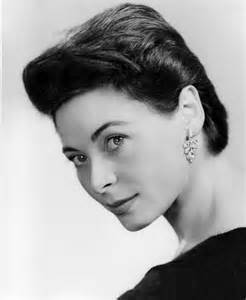
Siobhán McKenna, Irish stage and screen actress, is born Siobhán Giollamhuire Nic Cionnaith into a Catholic and nationalist family in Belfast on May 24, 1923.

McKenna grows up in Galway, where her father is Professor of Mathematics at University College Galway, and in County Monaghan, speaking fluent Irish. She is still in her teens when she becomes a member of an amateur Gaelic theatre group and makes her stage debut at Galway’s Gaelic theatre, the Taibhdhearc na Gaillimhe, in 1940.

McKenna is remembered for her English language performances at the Abbey Theatre in Dublin where she eventually stars in what many consider her finest role in the George Bernard Shaw play, Saint Joan.

While performing at the Abbey Theatre in the 1940s, she meets actor Denis O’Dea, whom she marries in 1946. Until 1970 they live in Richmond Street South, Dublin. They have one child, a son Donnacha O’Dea, who swims for Ireland at the 1968 Summer Olympics and later wins a World Series of Poker bracelet in 1998.

In 1947, McKenna makes her debut on the London stage in The Chalk Garden. She reprises the role on Broadway in 1955, for which she receives a Tony Award nomination for “Best Actress in a Leading Role, Drama.” In 1956, she appears in the Cambridge Drama Festival production of Saint Joan at the Off-Broadway Phoenix Theatre. Theatre critic Elliot Norton calls her performance the finest portrayal of Joan of Arc in memory. Siobhán McKenna’s popularity earns her the cover of Life magazine. She receives a second Tony Best Actress nomination for her role in the 1958 play, The Rope Dancers, in which she stars with Art Carney and Joan Blondell.

Although primarily a stage actress, McKenna appears in a number of made-for-television films and dramas. She also appears in several motion pictures such as King of Kings in 1961, as the Virgin Mary. In 1964, she performs in Of Human Bondage and the following year in Doctor Zhivago. She also appears in the miniseries The Last Days of Pompeii as Fortunata, wife of Gaius, played by Laurence Olivier. She stars in the title role of the Tales of the Unexpected episode “The Landlady.”

McKenna is awarded the Gold Medal of the Éire Society of Boston, for having “significantly fulfilled the ideals of the Éire Society, in particular, spreading awareness of the cultural achievements of the Irish people.”

McKenna’s final stage appearance comes in the 1985 play Bailegangaire for the Druid Theatre Company. Despite surgery, she dies of lung cancer on November 16, 1986, in Dublin, at 63 years of age. She is buried at Rahoon Cemetery in County Galway.

In 1988, two years after her death, McKenna is inducted into the American Theater Hall of Fame. The Siobhán McKenna Theatre in Cultúrlann McAdam Ó Fiaich, in her native Belfast is named in her honour.


Leave a comment

Bobby Sands Dies on Hunger Strike

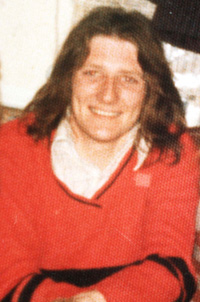
Robert Gerard Sands, commonly known as Bobby SandsIrish nationalist and member of the Provisional Irish Republican Army, dies on hunger strike while imprisoned at Long Kesh Prison on May 5, 1981.

Born in Belfast on March 9, 1954, Sands is the oldest of four children born to John and Rosaleen Sands, and the couple’s first son. Sands grows up in Belfast under the cloud of nationalist and loyalist divisions. At an early age, Sands’s life is affected by the sharp divisions that shape Northern Ireland. At the age of ten, he is forced to move with his family out of their neighborhood due to repeated intimidation by loyalists.

“I was only a working-class boy from a Nationalist ghetto,” Sands later writes about his childhood. “But it is repression that creates the revolutionary spirit of freedom.” Loyalist intimidation proves to be a theme throughout Sands’ life. At the age of 18, he is forced out of his job as an apprentice car builder. Not long afterwards, he and his family have to move again, as a result of political trouble.

The steady number of conflicts pushes Sands to join the republican movement in 1972. His ties to the movement soon capture the attention of the authorities, and later that year, he is arrested and charged with possessing firearms in his house. He spends the next three years of his life in prison. Upon his release, Sands immediately returns to the Republican Movement. He signs on as a community activist in Belfast’s rough Twinbrook area, quickly becoming a popular go-to person for a range of issues affecting the neighborhood.

In late 1976, authorities arrest Sands again, this time in connection with the bombing of a large furniture company and an ensuing gun battle. After weathering a brutal interrogation and then a court proceeding that offers up questionable evidence connecting Sands and three others to the attack, a judge sentences Sands to 14 years in prison at Long Kesh Prison, a facility used to house Republican prisoners from 1971 until 2000, located just outside of Belfast.

As a prisoner, Sands’s stature only grows. He pushes hard for prison reforms, confronting authorities, and for his outspoken ways he is frequently given solitary confinement sentences. Sands contention is that he and others like him, who are serving prison sentences, are actually prisoners of war, not criminals as the British government insists.

Beginning on March 1, 1981, Sands leads nine other Republican prisoners in the H Block section of the Maze prison on a hunger strike that lasts until death. Their demands range from allowing prisoners to wear their own clothes to permitting visits and mail, all of which are central in improving the inmates’ way of life.

Unable to move authorities to give in to his requests, and unwilling himself to end his hunger strike, Sands’s health begins to deteriorate. During the first seventeen days of the strike alone, he loses 16 pounds. A hero among his fellow nationalists, Sands is elected as a Member of Parliament (MP) for Fermanagh and South Tyrone while in prison. Sands becomes the youngest MP at the time. However, he dies less than one month later without ever having taken his seat in the House of Commons.

Only days after slipping into a coma, on the morning of May 5, 1981, Sands dies from malnutrition due to starvation. He is 27 years old and has refused to eat for 66 days. He becomes so fragile over his final weeks that he spends his final days on a waterbed to protect his deteriorating and fragile body. At time of his death, Sands is married to Geraldine Noade, with whom he has one son, Gerard.

The announcement of Sands’s death prompts several days of rioting in nationalist areas of Northern Ireland. Over 100,000 people line the route of Sands’s funeral. He is buried in the ‘New Republican Plot’ alongside 76 others. Their graves are maintained by the National Graves Association, Belfast.

While loyalists dismiss Sands’s death, others are quick to recognize its significance. Over the next seven months, nine other IRA supporters die on hunger strike. Eventually, the British government gives proper political recognition to the prisoners, many of them earning their release under the 1998 Good Friday Agreement.

Bobby Sands’ final days are depicted in the 2008 Steve McQueen film Hunger, with actor Michael Fassbender portraying Sands.


Leave a comment

Birth of Novelist Edith Anna Œnone Somerville

Edith Anna Œnone Somerville, Irish novelist who habitually signs herself as “E. Œ. Somerville,” is born on May 2, 1858, on the island of Corfu, then part of the United States of the Ionian Islands, a British protectorate where her father is stationed. She writes in collaboration with her cousin “Martin Ross” (Violet Martin) under the pseudonym “Somerville and Ross.” Together they publish a series of fourteen stories and novels, the most popular of which are The Real Charlotte, and The Experiences of an Irish R. M., published in 1899.

A year after her birth, her father retires to Drishane, Castletownshend,  County Cork, where Somerville grows up. She receives her primary education at home, and then attends Alexandra College in Dublin. In 1884 she studies art in Paris, and then spends a term at the Westminster School of Art in Dean’s YardWestminster. At home, riding and painting are her absorbing interests.

In January 1886 she meets her cousin Violet Martin, and their literary partnership begins the following year. Their first book, An Irish Cousin, appears in 1889, under the names Geilles Herring (from the maiden name of her ancestor, the wife of Sir Walter de Somerville of Linton and Carnwath) and Martin Ross, though the pen names are dropped after the first edition. In 1898, Somerville goes to paint at the Etaples art colony, accompanied by Violet. There they profit from their stay by conceiving together the stories later gathered in Some Experiences of an Irish R. M., completed the following year. By the time Violet dies in 1915, they have published fourteen books together. Her cousin’s death stuns Somerville, who continues to write as “Somerville and Ross,” claiming that they keep in contact through spiritualist séances.

Somerville is a devoted sportswoman who in 1903 becomes master of the Carbery West Foxhounds. She is also active in the suffrage movement, corresponding with Dame Ethel Smyth. She is in London still recovering from the shock of Violet’s death when the Easter Rising of 1916 breaks out. On May 9, 1916, she writes a letter to The Times, blaming the British government for the state of affairs in Ireland. After that she tends towards Nationalism, and as an adept musician at parties, she specializes in Irish tunes and Nationalist songs.

She has exhibitions of her pictures in Dublin and in London between 1920 and 1938 and is active as an illustrator of children’s picture books and sporting picture books.

In 1936 her brother, Henry Boyle Townsend Somerville, a retired Vice-Admiral in the Royal Navy, is killed by the Irish Republican Army (IRA) at the family home of Castletownshend. She finishes his book “Will Mariner” after his death.

Edith Somerville dies at Castletownshend on October 8, 1949, at the age of 91. She is buried alongside Violet Florence Martin at Saint Barrahane’s Church, Castletownsend, County Cork.


Leave a comment

Birth of Northern Ireland Politician Gerry Fitt

Gerard FittNorthern Ireland politician, is born in Belfast on April 9, 1926. He is a founder and the first leader of the Social Democratic and Labour Party (SDLP), a social democratic and Irish nationalist party.

Fitt is educated at a local Christian Brothers school in Belfast. He joins the Merchant Navy in 1941 and serves on convoy duty during World War II. His elder brother Geordie, an Irish Guardsman, is killed at the Battle of Normandy.

Living in the nationalist Beechmount neighbourhood of the Falls, he stands for the Falls as a candidate for the Dock Labour Party in a city council by-election in 1956, but loses to Paddy Devlin of the Irish Labour Party, who later becomes his close ally. In 1958, he is elected to Belfast City Council as a member of the Irish Labour Party.

In 1962, he wins a seat in the Parliament of Northern Ireland from the Ulster Unionist Party, becoming the only Irish Labour member. Two years later, he left Irish Labour and joined with Harry Diamond, the sole Socialist Republican Party Stormont MP, to form the Republican Labour Party. At the 1966 general election, Fitt won the Belfast West seat in the Westminster parliament.

Many sympathetic British Members of Parliament (MPs) are present at a civil rights march in Derry on October 5, 1968, when Fitt and others are beaten by the Royal Ulster Constabulary. Fitt also supports the 1969 candidacy of Bernadette Devlin in the Mid Ulster by-election who runs as an anti-abstentionist ‘Unity‘ candidate. Devlin’s success greatly increases the authority of Fitt in the eyes of many British commentators, particularly as it produces a second voice on the floor of the British House of Commons who challenge the Unionist viewpoint at a time when Harold Wilson and other British ministers are beginning to take notice.

In August 1970, Fitt becomes the first leader of a coalition of civil rights and nationalist leaders who create the Social Democratic and Labour Party (SDLP). By this time Northern Ireland is charging headlong towards near-civil war and the majority of unionists remain hostile.

After the collapse of Stormont in 1972 and the establishment of the Northern Ireland Assembly in 1973 Fitt becomes deputy chief executive of the short-lived Power-Sharing Executive created by the Sunningdale Agreement.

Fitt becomes increasingly detached from both his own party and also becomes more outspoken in his condemnation of the Provisional Irish Republican Army. He becomes a target for republican sympathisers in 1976 when they attack his home. He becomes disillusioned with the handling of Northern Ireland by the British government. In 1979, he abstains from a crucial vote in the House of Commons which brings down the Labour government, citing the way that the government had failed to help the nationalist population and tried to form a deal with the Ulster Unionist Party.

In 1979, Fitt is replaced by John Hume as leader of the SDLP and he leaves the party altogether after he agrees to constitutional talks with British Secretary of State Humphrey Atkins without any provision for an ‘Irish dimension’ and then sees his decision overturned by the SDLP party conference. Like Paddy Devlin before him, he claims the SDLP has ceased to be a socialist force.

In 1981, he opposes the hunger strikes in the Maze prison in Belfast. His seat in Westminster is targeted by Sinn Féin as well as by the SDLP. In June 1983, he loses his seat in Belfast West to Gerry Adams, in part due to competition from an SDLP candidate. The following month, on October 14, 1983, he is created a UK life peer as Baron Fitt, of Bell’s Hill in County Down. His Belfast home is firebombed a month later and he moves to London.

Gerry Fitt dies in London on August 26, 2005, at the age of 79, after a long history of heart disease.


Leave a comment

The Flags and Emblems (Display) Act (Northern Ireland) 1954

The Flags and Emblems (Display) Act (Northern Ireland) 1954, an Act of the Parliament of Northern Ireland, receives royal assent on April 6, 1954. It is repealed under the direct rule of the Government of the United Kingdom, by the Public Order (Northern Ireland) Order 1987.

The Act is bitterly resented by nationalists who see it as being deliberately designed to suppress their identity. Although it does not refer explicitly to the Irish tricolour, it does the Union Flag. The Act gives the Royal Ulster Constabulary a positive duty to remove any flag or emblem from public or private property which is considered to be likely to cause a breach of the peace, but legally exempts the Union Flag from ever being considered a breach of the peace. As a result, of all the flags likely to be displayed in Northern Ireland, almost exclusively the Irish tricolour would be deemed a breach of the peace. However, the Act is not a wholesale ban on the Irish flag, and it is often allowed to remain flying, especially at Gaelic Athletic Association (GAA) grounds.

The Act is introduced at a time of some turmoil within unionism in Northern Ireland, dissent that is viewed with alarm by the Ulster Unionist government, and the legislation is initiated amid the pressure emanating from that dissent. Hard line unionists accuse the government of appeasing nationalists. A more lenient approach by government to some nationalist parades leads to an increase in the flying of the Irish Tricolour. Likewise, the Coronation celebrations lead to the erection of Union Flags, not only in unionist enclaves, but in nationalist areas where disputes erupt and where some Union Flags are taken down and replaced with the Tricolour. Nationalists also organise boycotts of shops which openly celebrate the coronation with the display of the Union Flag, increasing tension and unionist fears. The Act takes over some of the powers of the Civil Authorities (Special Powers) Act (Northern Ireland) 1922.

Violations of the Act are punishable by a fine of up to £500 or up to five years in prison. The enforcement of the Act on occasion leads to rioting, most notoriously during the UK General Election of 1964 on the lower Falls Road in Belfast.

(Pictured: Coat of Arms of the Parliament of Northern Ireland)


Leave a comment

Richard Pigott Exposed as Forger of Phoenix Park Letters

richard-pigott

Richard Pigott, an Irish journalist, is exposed as the forger of The Times Phoenix Park letters on February 10, 1889.

Pigott is born in 1835 in Ratoath, County Meath. As a young man he supports Irish nationalism and works for The Nation and The Tablet before acting as manager of The Irishman, a newspaper founded by Denis Holland. James O’Connor later claims Pigott embezzled funds from the paper and covered his tracks by not keeping written records. Pigott also works for the Irish National Land League, departing in 1883 after accusing its treasurer, Mr. Fagan, of being unable to account for £100,000 of its funds, and for keeping inadequate records. Nothing is done about his accusation, which is publicised in the newspapers, and he turns against the League, which is allied to several Irish nationalist groups including the Irish Parliamentary Party led by Charles Stewart Parnell.

In 1879 Pigott is proprietor of three newspapers, which he soon sells to the Irish Land League, of which Charles Stewart Parnell is president. Hitherto a violent Nationalist, from 1884 Pigott begins to vilify his former associates and to sell information to their political opponents. In an effort to destroy Parnell’s career, Pigott produces fake letters, which purports that Parnell had supported one of the Phoenix Park murders.

The Times purchases Pigott’s forgeries for £1,780 and publishes the most damning letter on April 18, 1887. Parnell immediately denounces it as “a villainous and barefaced forgery.” In February 1889, the Parnell Commission vindicates him by proving that the letters are forgeries. They include misspellings which Pigott has written elsewhere. A libel action instituted by Parnell also vindicates him and his parliamentary career survives the Pigott accusations.

The Commission eventually produces 37 volumes in evidence, covering not just the forgeries but also the surrounding violence that follows from the Plan of Campaign.

After admitting his forgeries to Henry Labouchère, Pigott flees to Spain, and shoots himself in a Madrid hotel room. Parnell then sues The Times for libel, and the newspaper pays him £5,000 in an out-of-court settlement, as well as considerably more in legal fees. When Parnell next enters the House of Commons, he receives a hero’s reception from his fellow Members of Parliament.

(Pictured: Pigott as caricatured by Spy (Leslie Ward) in Vanity Fair, March 1889)


Leave a comment

Death of Jane Francesca Agnes, Lady Wilde

jane-wilde

Jane Francesca Agnes, Lady Wilde, Irish poet who writes under the pen name “Speranza” and supporter of the nationalist movement, dies at her home, 146 Oakley Street, Chelsea, London, of bronchitis on February 3, 1896.

Jane is the last of the four children of Charles Elgee, a Wexford solicitor, and his wife Sarah. Her great-grandfather is an Italian who had come to Wexford in the 18th century. She has a special interest in Irish folktales, which she helps to gather. She marries Sir William Wilde on November 12, 1851, and they have three children, William Charles Kingsbury Wilde (1852–1899), Oscar Fingal O’Flahertie Wills Wilde (1854–1900), and Isola Francesca Emily Wilde (1857–1867).

Jane, who is the niece of Charles Maturin, writes for the Young Ireland movement of the 1840s, publishing poems in The Nation under the pseudonym of “Speranza.” Her works include pro-Irish independence and anti-British writing. She is sometimes known as “Speranza of the Nation.” Charles Gavan Duffy is the editor when “Speranza” writes commentary calling for armed revolution in Ireland. The authorities at Dublin Castle shut down the paper and bring the editor to court. Duffy refuses to name who has written the offending article. “Speranza” reputedly stands up in court and claims responsibility for the article. The confession is ignored by the authorities. But in any event the newspaper is permanently shut down by the authorities.

She is an early advocate of women’s rights, and campaigns for better education for women. She invites the suffragist Millicent Fawcett to her home to speak on female liberty. She praises the passing of the Married Women’s Property Act of 1883, preventing women from having to enter marriage “as a bond slave, disenfranchised of all rights over her fortune.”

William Wilde is knighted in January 1864, but the family celebrations are short-lived, for in the same year Sir William and Lady Wilde are at the centre of a sensational Dublin court case regarding a young woman called Mary Travers, the daughter of a colleague of Sir William’s, who claims that he had seduced her and who then brings an action against Lady Wilde for libel. Mary Travers wins the case and costs of £2,000 are awarded against Lady Wilde. Then, in 1867, their daughter Isola dies of fever at the age of nine. In 1871 the two illegitimate daughters of Sir William are burned to death and in 1876 Sir William himself dies. The family discovers that he is virtually bankrupt.

Lady Wilde leaves Dublin for London in 1879, where she joins her two sons, Willie, a journalist, and Oscar, who is making a name for himself in literary circles. She lives with her older son in poverty, supplementing their meagre income by writing for fashionable magazines and producing books based on the researches of her late husband into Irish folklore.

Lady Wilde contracts bronchitis in January 1896 and, dying, asks for permission to see Oscar, who is in prison. Her request is refused. It is claimed that her “fetch” appears in Oscar’s prison cell as she dies at her home, 146 Oakley Street, Chelsea, on February 3, 1896. Willie Wilde, her older son, is penniless, so Oscar pays for her funeral, which is held on February 5, at Kensal Green Cemetery in London. A headstone proved too expensive and she is buried anonymously in common ground. A monument to her, in the form of a Celtic cross, is erected at Kensal Green Cemetery by the Oscar Wilde Society in 1999.


Leave a comment

Dáil Éireann Approves the Anglo-Irish Treaty

second-all-ireland-dail

Dáil Éireann votes to approve the Anglo-Irish Treaty on January 7, 1922, following a debate through late December 1921 and into January 1922. The vote is 64 in favour, 57 against, with the Ceann Comhairle and three others not voting. The Sinn Féin party splits into opposing sides in the aftermath of the Treaty vote, which leads to the Irish Civil War from June 1922 until May 1923. The treaty is signed in London on December 6, 1921.

Two elections take place in Ireland in 1921, as a result of the Government of Ireland Act 1920 to establish the House of Commons of Northern Ireland and the House of Commons of Southern Ireland. The election is used by the Irish Republic as the basis of membership of the Second Dáil. The general election to the Northern Ireland House of Commons occurs on May 24, 1921. Of 52 seats, forty are won by unionists, six by moderate Irish nationalists, and six by Sinn Féin. No actual polling takes place in the Southern Ireland constituencies, as all 128 candidates are returned unopposed. Given the backdrop of the increasingly violent War of Independence, any candidates opposed to Sinn Féin, and their supporters can expect to be harassed by the Irish Republican Army (IRA). Supporters of the Irish Labour Party stand aside to allow the constitutional situation to run its course. Of these 128, 124 are won by Sinn Féin, and four by independent unionists representing the University of Dublin constituency. Only the Sinn Féin candidates recognise the Second Dáil and five of these have been elected in two constituencies, one in each part of Ireland, so the total number of members who assemble in the Second Dáil is 125.

During the Second Dáil, the government of the Irish Republic and the British government of David Lloyd George agree to hold peace negotiations. On September 14, 1921, the Dáil ratifies the appointment of Arthur Griffith, Michael Collins, Robert Barton, Eamonn Duggan, and George Gavan Duffy as envoys plenipotentiary for the peace conference in England. These envoys eventually sign the Anglo-Irish Treaty on December 6. After almost a month of acrimonious debate the treaty is formally ratified by Dáil Éireann on January 7, 1922.

To satisfy the requirements of the British constitution, the treaty also has to be ratified by the House of Commons of Southern Ireland. Thus, Irish nationalists end their boycott of the home rule parliament to attend the southern House of Commons as MPs. This they do alongside the four Unionist MPs who had refused to recognise the Dáil. In this way the treaty is ratified a second time in Dublin, this time unanimously as the anti-Treaty TDs refuse to attend.

Under the terms of the Anglo-Irish Treaty a provisional parliament, considered by nationalists to be the Third Dáil, is elected in the 1922 general election on June 16. Collins and Éamon de Valera agree a pact between the pro- and anti-Treaty wings of Sinn Féin, and this pact and the elections are endorsed by the Second Dáil. The new assembly is recognised both by nationalists and the British Government and so replaces both the Parliament of Southern Ireland and the Second Dáil with a single body. The anti-Treaty groups of IRA members, TDs, and their supporters are still bitterly opposed the settlement, despite the election result, and this leads to the Irish Civil War.

(Pictured: Second All-Ireland Dáil Éireann, elected in 1921)


Leave a comment

Birth of Shane MacGowan, Lead Singer of The Pogues

shane-macgowan

Shane Patrick Lysaght MacGowan, Anglo-Irish musician and singer, best known as the lead singer and songwriter of Celtic trad punk band The Pogues, is born to Irish parents in Pembury, Kent, England, on December 25, 1957.

MacGowan spends his early childhood in County Tipperary, before his family moves back to England when he is six years old. He lives in many parts of the southeast of England, including Brighton and London.

MacGowan’s father, Maurice, works for a department store. MacGowan’s mother, Therese, is a singer and traditional Irish dancer, and has worked as a model in Dublin. In 1971, after attending Holmewood House School at Langton Green, Tunbridge Wells, MacGowan earns a literature scholarship and is accepted into Westminster School. He is found in possession of drugs and is expelled in his second year.

MacGowan gets his first taste of fame in 1976 at a concert by British punk band The Clash, when his earlobe is damaged by Jane Crockford, later to be a member of Mo-dettes. A photographer snaps a picture of him covered in blood and it makes the papers, with the headline “Cannibalism at Clash Gig.” Shortly after this, he forms his own punk rock band, The Nipple Erectors, later renamed The Nips.

MacGowan draws upon his Irish heritage when founding The Pogues and changes his early “punk” voice for a more authentic sound with tutoring from his extended family. Many of his songs are influenced by Irish nationalism, Irish history, the experiences of the Irish in London and the United States, and London life in general.

Between 1985 and 1987, he co-writes “Fairytale of New York,” which he performs with Kirsty MacColl. In the coming years MacGowan and The Pogues release several albums.

After The Pogues throw MacGowan out for unprofessional behaviour, he forms a new band, Shane MacGowan & The Popes, recording two studio albums, a live album, three tracks on The Popes Outlaw Heaven (2010) and a live DVD, and touring internationally. From December 2003 until May 2005, Shane MacGowan & The Popes tour extensively in the UK, Ireland, and Europe.

The Pogues and MacGowan reform for a sell-out tour in 2001 and each year from 2004 to 2009 for further tours, including headline slots at GuilFest in England and the Azkena Rock Festival in Basque Country. In May 2005, he rejoins The Pogues permanently.

The Pogues’ last performance on British soil occurs on July 5, 2014 at the British Summer Time festival in London’s Hyde Park.

For many years MacGowan suffers from binge drinking and heroin use. In 2001, Sinéad O’Connor reports MacGowan to the police in London for drug possession in what she says is an attempt to discourage him from using heroin. Initially furious, MacGowan later expresses gratitude towards O’Connor and claims that the incident helped him kick his heroin habit.

MacGowan has long been known for having very bad teeth. He loses the last of his natural teeth around 2008. In 2015, he has 28 new dentures on a titanium frame fitted in a nine-hour procedure which is the subject of an hour-long television programme. Dr. Darragh Mulrooney, the dental surgeon who carries out the procedure, comments that MacGowan recorded most of his great works while he still had some teeth: “We’ve effectively re-tuned his instrument and that will be an ongoing process.”

In the summer of 2015, MacGowan falls as he is leaving a Dublin studio, fracturing his pelvis. He is seen in public on crutches by December 2015, and continues to experience difficulty with general mobility.