seamus dubhghaill

Promoting Irish Culture and History from Little Rock, Arkansas, USA


Leave a comment

Birth of Anna Manahan, Stage, Film & Television Actress

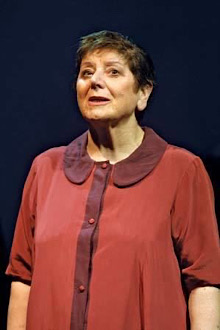
Anna Maria Manahan, Irish stage, film and television actress, is born on October 18, 1924, in County Waterford in what is at the time the Irish Free State (now the Republic of Ireland).

Manahan receives two Tony Award for Best Featured Actress in a Play nominations for her performances in the 1968 production of Lovers and the 1998 production of The Beauty Queen of Leenane, the latter for which she wins at the 52nd Tony Awards.

Manahan is also nominated for two Drama Desk Awards, a Laurence Olivier Award, and an Outer Critics Circle Award in a career that spans more than 60 years. She interprets the works of, among others, Seán O’CaseyJohn B. KeaneJohn Millington SyngeOscar WildeJames JoyceMartin McDonaghChristy Brown, and Brian Friel.

Manahan’s career begins when, as a young woman, she is recruited by the legendary Irish impresarios and theatrical directors Micheál Mac Liammóir and Hilton Edwards. She later marries stage director Colm O’Kelly, who dies not long afterward of polio, which he contracts after swimming in the Nile during a theatre tour of Egypt. They have no children and she never remarries. She is known professionally by her maiden name. In 1946 she appears in a production by Irish playwright Teresa DeevyThe Wild Goose, where she plays the part of Eileen Connolly. This is performed by Equity Productions in the Theatre Royal, Waterford.

In 1957, Manahan plays Serafina in the first Irish production of Tennessee Williams‘s The Rose Tattoo and achieves unexpected notoriety when she and several other members of the cast are arrested for the possession of a condom on stage.

Manahan plays a minor role in the Irish cult soap opera The Riordans (1960s), and as Mrs. Mary Kenefick in the TV comedy Me Mammy (1970s). She also plays the lead in the Irish comedy series, Leave It To Mrs O’Brien (1980s) and Mrs. Cadogan in The Irish R.M. (1980s). Most recently she plays Ursula in Fair City, for which her niece, Michele Manahan (daughter of Michael Manahan), is a writer.

Manahan has an extensive theatre portfolio having played at theatres throughout Ireland including the Abbey Theatre, the United Kingdom, continental Europe, the United States and Australia. She wins the Tony Award for Best Featured Actress in a Play for her role as Mag in Martin McDonagh’s The Beauty Queen of Leenane on Broadway. She previously receives a Tony nomination in 1969 for Brian Friel’s Lovers.

The Irish playwright John B. Keane writes the play Big Maggie specifically for Manahan. In 2001 she stars in Keane’s The Matchmaker with veteran Irish actor Des Keogh. In 2005 she stars in Sisters, a new play by Declan Hassett that is also written for her and for which she is nominated for a Drama Desk Award in the category of Outstanding Solo Performance. The production tours Ireland and is staged at the International Festival of World Theatre in Colorado and also plays at the 59E59 Theater in New York City in 2006.

Manahan appears in films starring, among others, Laurence OlivierPeter CushingKenneth MoreChristopher WalkenMaggie SmithAlbert Finney and Brenda Fricker, and with John Gielgud in A Portrait of the Artist as a Young Man (1977).

Manahan receives the Gold Medal of the Éire Society of Boston in 1984 and thus joins the company of past recipients such as John F. Kennedy, and film makers John Ford and John Huston. She receives an honorary doctorate in letters from the University of Limerick in 2003. She is granted the freedom of the city of Waterford in 2002 in recognition of her life’s achievement in the arts. She thus becomes the 28th Freeman of Waterford since Isaac Butt in 1877.

In 2004 Manahan starts to play the role of Ursula in Fair CityAll About Anna (2005), a documentary on her life and work is made by Charlie Mc Carthy/Icebox Films for RTÉ Television. In 2008, she becomes the first ever patron of the Active Retirement Ireland organization.

Manahan dies of multiple organ failure on March 8, 2009 in Waterford. She had suffered from a longterm illness.

Her funeral is held on March 11, officiated by her “longtime friend” the psychoanalyst, poet, and priest Bernard Kennedy. “As the final curtain falls, the lights dim, the auditorium becomes silent, we remember her” he says. Describing her as a woman of faith (who “sought to bring the word of God alive”), he says she had brought everyone together to be present at “her last great exit from this great stage of life,” saying her life’s work had drawn people from all over the world. “Anna believed in the empty tomb of the Resurrection and she believed the empty tomb could be filled by hearing the word take the place of the emptiness,” he says. “She knew the bedsits which preceded the Tony nomination.”

Manahan is buried in Ballygunner Cemetery, Knockboy, County Waterford.

Leave a comment

Birth of Andrew Kettle, Agrarian Reformer & Nationalist Politician

Andrew Joseph Kettle, a leading Irish nationalist politician, progressive farmer, agrarian agitator and founding member of the Irish National Land League, is born on September 26, 1833, in Drynam House, Swords, County Dublin.

Kettle is one among six children of Thomas Kettle, a prosperous farmer, and his wife, Alice (née Kavanagh). His maternal grandmother, Mary O’Brien, had smuggled arms to United Irishmen in the district in 1798, while her future husband, Billy Kavanagh, had been a senior figure in the movement. He is educated at Ireland’s most prestigious Catholic boarding schoolClongowes Wood College. His education is cut short when he is called to help full-time on the farm. Though an autodidact and always a forceful writer, he is beset later by an exaggerated sense of his “defective education and want of talking powers.” Fascinated by politics, he enjoys the repeal excitement of 1841–44 and in his late teens speaks once or twice at Tenant Right League meetings in Swords. Through the 1850s and most of the 1860s he sets about expanding the family farm into a composite of fertile holdings in Swords, St. Margaret’s, Artane, and Malahide (c.150 acres). Getting on well with the Russell-Cruise family of Swords, his first landlords, he benefits from a favourable leasehold arrangement on their demesne in the early 1860s. The farm is mostly in tillage, though Kettle also raises some fat cattle and Clydesdale horses, which he eventually sells to Guinness’s.

Kettle first enters politics in 1867, when he disagrees with John Paul Byrne of Dublin Corporation in public and in print over the right of graziers to state aid during an outbreak of cattle distemper. In 1868, he joins an agricultural reform group initiated by Isaac Butt. He becomes friendly with Butt and later claims to have converted him to support tenant-right. His memoirs, which are somewhat egocentric, contain a number of such questionable claims. It is, however, the case that he habitually writes up, for his own use, cogent summaries of the direction of current political tendencies, which sometimes become useful confidential briefs for Butt and later Charles Stewart Parnell. He is among the published list of subscribers to the Home Rule League in July 1870.

In 1872, disappointed by the Landlord and Tenant (Ireland) Act 1870, Kettle organises a Tenants’ Defence Association (TDA) in north County Dublin, soon sensing the need for a central body to coordinate the grievances of similar groups around the country. The Dublin TDA effectively acts as this central body, under his guidance as honorary secretary. At the 1874 United Kingdom general election in Ireland, the Dublin TDA decides to challenge the electoral control of certain corporation interests in County Dublin. Kettle secures the cautious approval of Cardinal Paul Cullen for any candidate supporting the principle of denominational education. He is also one of a deputation to ask Parnell to fight the constituency, which the latter loses. He becomes closely acquainted with Parnell, who frequently attends Dublin TDA meetings after his election for Meath in April 1875.

Taking a sombre view of the threat of famine in the west of Ireland after evidence of crop failure appears in early summer 1879, Kettle calls a conference of TDA delegates at the European Hotel in Bolton Street, Dublin, in late May. After a heated debate in which a proposal for a rent strike is greatly modified, Parnell comes to seek Kettle’s advice on whether to become involved in the evolving land agitation in County Mayo. Kettle urges him to go to the Westport meeting set for June 8, 1879, and claims later to have stressed in passing that “if you keep in the open you can scarcely go too far or be too extreme on the land question.” If the incident is correctly recounted, this is a most important statement, which virtually defines Parnell’s oratorical strategy throughout the land war. In October 1879, Kettle agrees to merge the TDA with a new Irish National Land League, set up at a meeting in the Imperial Hotel, Dublin, chaired by Kettle. As honorary secretary of the Land League, Kettle frankly admits that he is able to attend meetings without “the necessity of working.” His attendance is, however, among the most regular of all League officers, with him taking part in 73 of 107 meetings scheduled between December 1879 and October 1881.

In March 1880, Kettle disputes Michael Davitt‘s reluctance to use League funds in the general election. He canvasses vigorously together with Parnell in Kildare, Carlow, and Wicklow and is later pressed by his party leader into standing for election in County Cork, though aware that the local tenant movement has already prepared their own candidates. His association with Parnell antagonises the catholic hierarchy in Munster, who issues a condemnation of his candidacy. The hurly-burly of this election creates the persistent impression that Kettle is anti-clerical in politics, and he is defeated by 151 votes.

On a train journey to Ballinasloe in early April 1880, Kettle confides to Parnell his idea that land purchase can be facilitated by the recovery of tax allegedly charged in excess on Ireland by the British government since the act of union. At League meetings in June and July 1880, he advances his “catastrophist” plan: to cease attempts to prevent the development of an irresistible crisis among the Irish smallholding population, by diverting the application of League funds from general relief solely to the aid of evicted tenants, who might be temporarily housed “encamped like gypsies and the land lying idle,” in the belief that the British government will thereby be compelled to introduce radical remedial legislation. Smallholders do not have enough faith in either League or parliamentary politicians to listen.

At a meeting of the League executive in London and in Paris, before and after Davitt’s arrest on February 3, 1881, Kettle presents his plan that the parliamentary party should, if faced with coercive legislation, withdraw from Westminster, “concentrate” in Ireland, and call a general rent strike. Republicans on the League executive continually find themselves embarrassed by Kettle’s radical calls to action motivated solely by the project of agrarian reform. Parnell is later supposed to have lamented party failure to execute the plan at this juncture.

Kettle is arrested in June 1881 for calling for a collective refusal of rent. After two weeks in Naas jail he is transferred to Kilmainham Gaol, where in October he is, with some misgivings, one of the signatories to the No Rent Manifesto. Discharged from Kilmainham in late December 1881 owing to poor health, he returns principally to work on the family farm for most of the 1880s, though he claims to have formulated a draft solution for the plight of the agricultural labourer and “pushed it through” in correspondence with Parnell. He reemerges in 1890 to defend Parnell after the divorce scandal breaks. Attempting to establish a new ”centre” party independent of extreme Catholic and Protestant interests, he stands for election as a Parnellite at the 1891 County Carlow by-election, where he is comprehensively beaten, having endured weeks of insinuating harangues by Tim Healy, and raucous mob insults to the din of tin kettles bashed by women and children at meetings around the county. He is intermittently involved in County Dublin politics in the 1890s and 1900s and maintains a brusque correspondence on matters of the day in the national press.

Kettle dies on September 22, 1916, at his residence, St. Margaret’s, County Dublin, anguished by the death on September 9 of his brilliant son, Tom Kettle, near the village of Ginchy during the Battle of the Somme. He is buried at St. Colmcille’s cemetery, Swords.

Kettle marries Margaret McCourt, daughter of Laurence McCourt of Newtown, St. Margaret’s, County Dublin, farmer and agricultural commodity factor. They have five sons and six daughters.


Leave a comment

Birth of Timothy McCarthy Downing, Solicitor & Politician

Timothy McCarthy Downing, solicitor and an Irish Liberal Party and Home Rule League politician, is born at Kenmare, County Kerry, on May 11, 1814.

Downing is the second son of Eugene Downing, a local merchant, and his wife, Helena, daughter of Timothy McCarthy of Kilfadamore, County Kerry. They have two other sons and two daughters. He is apprenticed in 1830 to his elder brother, Francis Henry, who practises as a solicitor at Killarney. Once admitted as a solicitor himself in 1836, he moves to Skibbereen, County Cork, where he practises until the mid-1860s, making from his practice a large fortune. By the mid-1870s he owns 4,067 acres in Cork and Kerry valued at £1,413.

Downing is prominent locally in public affairs, supporting the repeal campaign of Daniel O’Connell and the temperance campaign of Fr. Theobald Mathew. He is the first chairman of Skibbereen town commissioners, from 1862 to 1879. He later helps James Stephens and Michael Doheny escape to France in 1849. After Jeremiah O’Donovan Rossa and other members of the Phoenix National and Literary Society are arrested on December 5, 1858, he acts as their solicitor. His chief clerk, Mortimer Moynahan, a member of the society, unwittingly takes on as an assistant a man who proves to be an informer.

Downing involves himself in the National Association of Ireland, the political pressure group formed by the Catholic Archbishop of Dublin, Paul Cullen, and succeeds in getting tenant-right added to its demands in March 1865. He is elected as one of the two MPs for County Cork on November 30, 1868, and is reelected without a contest on February 5, 1874. Nominally a liberal, he draws his main support from the Catholic bishops and most of the parish clergy and, more significantly, from the tenant farmer class. The farmers’ interests he vigorously pursues in parliament and outside.

After the passing of William Ewart Gladstone‘s first land act, Downing plays a prominent part in the formation of the Home Rule League under the leadership of Isaac Butt. He is always a moderate on the home-rule issue – he opposes the pledging of home-rule MPs always to act together and later the obstructive tactics of fellow home-rulers Joseph Gillis Biggar and Charles Stewart Parnell. He is one of the nine members of the standing committee of Butt’s Irish Parliamentary Party (1874–79) and proves a stalwart of Butt particularly in disputes with Parnell. It is he who draws to the attention of the House of Commons the condition of tenants on the Buckley estate in the foothills of the Galtee Mountains at Skeheenarinky in County Tipperary in March 1877. In Butt’s absence Downing introduces an Irish land tenure bill on February 6, 1878, which is, however, quickly defeated.

Downing dies January 10, 1879, at his residence, Prospect House, Skibbereen, a deputy lieutenant of County Cork. The cortège that follows his body to the Old Caheragh Graveyard, Skibbereen, for burial is said to be four miles long. In Emmet Larkin‘s judgement, “it was not altogether unlikely, if he had survived, that he would have eventually succeeded Butt as chairman of the Irish party.”

In 1837, Downing marries Jane, youngest daughter of Daniel McCarthy of Ave Hill, Dromore, County Cork, and with her has four sons and three daughters. His younger brother, Washington, is a parliamentary reporter and later the Rome correspondent for The Daily News of London, and husband of Mary McCarthy Downing.

(From: “Downing, Timothy McCarthy” by C.J. Woods, Dictionary of Irish Biography, http://www.dib.ie, October 2009)


Leave a comment

Death of Alexander Sullivan, Politician, Barrister & Journalist

Alexander Martin Sullivan, Irish Nationalist politician, barrister, and journalist, dies in Rathmines, Dublin, on October 17, 1884.

Sullivan, the second of six sons of Daniel Sullivan, house painter, and his wife, Catherine (née Baylor), a teacher, is born on May 15, 1829, in Bantry, County Cork. A popular date for Sullivan’s birth appears in many histories as 1830, but his gravestone reads 1829. He is educated in the local national school. One of his brothers is Timothy Daniel Sullivan, the Lord Mayor of Dublin from 1886 to 1888.

During the Great Famine of 1845 to 1847, Sullivan is employed as a clerk in connection with the relief works started by the government. Deeply influenced by the distress he witnesses, he afterward joins the Confederate Club formed in Bantry in support of the revolutionary movement of the Young Irelanders and is the organiser of the enthusiastic reception given by the town to William Smith O’Brien in July 1848 during the insurgent leader’s tour of the southern counties. Early in 1853, he goes to Dublin to seek employment as an artist. An exhibition of the arts and industries of Ireland is held in Dublin that year, and he is engaged to supply pencil sketches to the Dublin Expositor, a journal issued in connection with the exhibition. Subsequently, he obtains a post as a draughtsman in the Irish valuation office, and afterward as a reporter on the Liverpool Daily Post.

In 1855, Sullivan becomes assistant editor of The Nation, and subsequently editor and proprietor. From 1861 to 1884, in conjunction with his elder brother, T. D. Sullivan, he makes The Nation one of the most potent factors in the Irish Nationalist cause and also issues the Weekly News and Zozimus. Called to the Irish bar in 1876, he is a “special call” of the Inner Temple in 1877 and is made QC in 1881. He mainly practices at the English bar, though he acts in some political cases in Ireland.

At the 1874 United Kingdom general election Sullivan is elected as Member of Parliament (MP) for County Louth, but although he does not formally resign, he does not take his seat. At the general election in April 1880, he is again returned for County Louth, but this time formally resigns from the Commons on May 18, 1880. However, Charles Stewart Parnell is elected for both Cork City and for Meath and chooses to sit for Cork City. At the resulting by-election on May 20, 1880, Sullivan is returned unopposed to fill the vacancy in Meath. Following the development of a severe heart condition, he nearly dies after a heart attack in mid-August 1881. He holds his seat until his resignation on February 3, 1882. He then concentrates on his work at the parliamentary bar.

As a member of the Dublin Corporation, Sullivan secures a magnificent site for the Grattan Monument, toward which he donates £400, the amount of a subscription by his admirers while he is undergoing imprisonment for a political offence in 1868. The monument is formally unveiled in January 1876. Between 1878 and 1882 he is engaged in many notable trials. His last great case is on November 30, 1883, when he is a colleague of Lord Russell in the defence of Patrick O’Donnell for the murder of James Carey, an informer.

Sullivan suffers another heart attack while on holiday in Bantry in September 1884 and spends his last days with William Martin Murphy at Dartry, County Dublin. Murphy regards him as a father figure, attributing his success to Sullivan’s early advice and journalistic training. Sullivan dies on October 17, 1884, at Dartry Lodge, Rathmines, Dublin. He is buried at Glasnevin Cemetery. With his wife, Frances Genevieve Donovan, whom he marries on April 27, 1861, and who outlives him by nearly forty years, he has a family of three sons and five daughters. His second son and namesake, Alexander Martin Sullivan, is the last to hold the rank of Serjeant-at-law (Ireland).

In addition to his labours, Sullivan is a great temperance reformer. He also writes two notable books, The Story of Ireland and New Ireland and contributes many sketches (including some verse) to Irish Penny Readings (1879–85). Some of his correspondence is located in the Isaac Butt papers in the National Library of Ireland.


Leave a comment

Birth of David Thornley, Irish Labour Party Politician

David Andrew Thornley, Irish Labour Party politician and university professor at Trinity College Dublin, is born in Surrey, England, on July 31, 1935.

Thornley is the youngest child of Welshman Frederick Edward Thornley and Dublin-born Maud Helen Thornley (née Browne). His parents, both civil servants, meet while working in Inland Revenue in Dublin in the 1910s.

Thornley receives a BA and PhD at Trinity College Dublin. His PhD is entitled “Isaac Butt and the creation of an Irish Parliamentary Party (1868–1879)” and is written under the supervision of Theodore William Moody. Working as a presenter on 7 Days since 1963, he is appointed Associate professor of Trinity in 1968. In 1964, he publishes the book Isaac Butt and Home Rule.

After joining Labour in 1969, Thornley is elected to Dáil Éireann as a Labour Party Teachta Dála (TD) for the Dublin North-West constituency at the 1969 Irish general election. He confronts the party leader Brendan Corish, who at the time of the Arms Crisis reportedly rejects out of hand any suggestion of military aid or use of force after the outbreak of violence in Northern Ireland.

Thornley considers himself to be “in the mould of James Connolly,” being a practising Catholic, Marxist and republican.

In December 1972, Thornley calls for the immediate release of Seán Mac Stíofáin, then leader of the Provisional Irish Republican Army. He is re-elected at the 1973 Irish general election. In April 1976, he loses the Labour Party whip after appearing on a Sinn Féin platform during Easter Rising commemorations. In September 1976, he votes for the Criminal Justice (Jurisdiction) Bill despite misgivings. He tells The Irish Times, “When I get very depressed, I drink too much. When I voted for the Criminal Justice (Jurisdiction Bill) I went on the batter for a forthnight [sic].” In February 1977, he is re-admitted to the Labour Parliamentary Party. He loses his seat at the 1977 Irish general election.

In 1978, Thornley joins the newly formed Socialist Labour Party (SLP) stating that he has done so because “There is no man in politics that I respect more than Noël Browne, despite our occasional differences. If the SLP is good for him, it’s good enough for me.”

Overweight, afflicted with undiagnosed diabetes, his judgement increasingly erratic, from the early 1970s Thornley suffers a steady deterioration of health, compounded by his heavy drinking, on which he relies to cope with stress and emotional depression. On one occasion he collapses in the Dáil and is attended by party colleague Dr. John O’Connell. He dies at the age of 42 on June 18, 1978, one week after admission into Jervis Street private nursing home. After a sung Latin Requiem Mass in St. Andrew’s Church, Westland Row, Dublin, he is buried in Bohernabreena Cemetery, County Dublin.

The Trinity College Labour Branch is formerly named the David Thornley Branch in his honour.


2 Comments

Death of Brian Dillon, Republican Leader & IRB Member

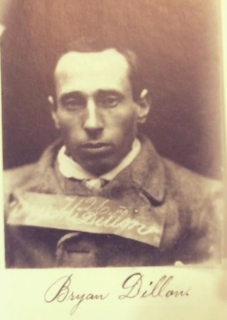
Brian Dillon, Irish republican leader and a member of the Irish Republican Brotherhood (IRB), dies at his home in Cork, County Cork, on August 17, 1872. He is a central figure in the Cork Fenian movement.

Dillon is born in Glanmire, County Cork, in 1830. As a child, he is injured in a heavy fall which results in curvature of the spine and general ill health. His family moves to a house near the corner of Old Youghal Road and Ballyhooly Road. He attends the School of Art for several years and becomes quite talented with brush and pencil. He lives through the Great Famine and becomes an ardent nationalist.

Dillon is appointed a Fenian leader in Cork by James Stephens, the head of the Irish Republican Brotherhood. Under his supervision the Fenian recruits drill on the Fair Field and at Rathpeacon and are hoping for a rebellion in 1865 when the Fenians are at their strongest. He often associates with other Cork Fenians such as John J. Geary, James Mountaine and John Lynch. He chairs the Fenian meetings at Geary’s pub.

In September 1865, police arrest Fenian leaders James Stephens and Jeremiah O’Donovan Rossa in Dublin, and Dillon in Cork. The police search his home and find a pair of field glasses, some drawings and some incriminating letters sewn into the mattress of his bed. He is remanded in Cork City Gaol until his trial.

On December 18, Dillon and another Cork Fenian, John Lynch, are tried together in the dock in Cork Courthouse by Judge Keogh. The charges are primarily based on information provided by an informer named John Warner, an ex-military pensioner. Isaac Butt and Mr. Waters represent the defendants. The charges are “in one indictment with having conspired to depose the Queen, &c., and with illegally drilling and being drilled in furtherance of that design.” Both are found guilty, based primarily on the testimony of informants, although John Warner’s account is very weak and unsatisfactory under cross-examination. The defendants are sentenced to ten years’ penal servitude.

Dillon is brought under armed guard by train from Cork to Dublin and then thrown into Mountjoy Gaol. He spends nearly a month there and suffers from lack of sleep. In January 1866, he and John Sarsfield Casey are handcuffed together on the tough and rough sea crossing between Kingstown and Holyhead. On arrival at Holyhead, they are then taken by train to Pentonville Prison. This is a very cold prison, and he becomes seriously ill in May 1866. He is transferred to the hospital wing of Woking Convict Invalid Prison, and this is to be his home for the next four-and-a-half years. Here he becomes Convict Number 2658.

In 1870, after five years imprisonment, a commission is set up to investigate the Fenian prisoners, and on account of his bad health, this commission recommends that Dillon be allowed home to Cork. In January 1871 he is transferred to Millbank Prison London and is set free two weeks later on February 8. The following day he arrives in Dublin and after a few days’ rest, he returns to Cork by train. All along the route thousands of people wait on the platforms to greet him and read special addresses of welcome. The train reaches Cork at 8:00 p.m. and even though a carriage and pair are waiting, he is glad to seek refuge in the first covered car he can find, so dense is the crowd all around him wanting to shake his hand. The triumphal procession from the station to his home then begins and the hills all along the route are lighted with tar barrels.

Amid emotional scenes Dillon meets his family and afterwards appears at one of the windows of the house and thanks the people of Ireland for the great reception he has received everywhere on his journey home to Cork. He is now in very poor health and his mother begins the task of nursing him back to health. Everything that loving care and money could do is done, and from New York comes a cheque for £50 from the generous-hearted O’Donovan Rossa. Other friends also contribute, but all to no avail. On Saturday, August 17, 1872, he dies at his home surrounded by his sorrowing relatives.

Dillon’s funeral is one of the biggest ever seen in Cork. The cortege is headed by the Barrack Street Band, and at least ten other bands take part. All have their instruments dressed in sombre black. On Monday, August 18, his remains are privately borne to St. Joseph’s cemetery, to a temporary resting place, as it has been decided to build a vault in the family burial ground in Rathcooney which will not be ready for a few days. Later the funeral route travels from Turners Cross along Anglesea Street, South Mall, Grand Parade, Patrick Street, McCurtain Street and St. Luke’s. The funeral procession stops outside his home and prayers are recited for the repose of his soul. The procession then moves on toward Ballyvolane and up the steep hill toward the graveyard at Rathcooney. On arrival at the newly built tomb, so dense is the crowd milling around the hearse that considerable difficulty is experienced in getting the coffin to the grave. The priests then read the burial service, and, in a hushed silence, Canon Freeman asks the entire assembly to kneel and recite the Lord’s Prayer aloud. He blesses the grave, and the mortal remains of Brian Dillon are lowered to rest. The coffin is then covered, and after Colonel Ricard O’Sullivan Burke‘s oration, the crowd quietly disperses.

Today Dillon’s name is inscribed in the National Monument on the Grand Parade and in street names like Dillon’s Cross, Brian Dillon Park and Brian Dillon Crescent. The Brian Dillons GAA club in the same area of Cork city is also named after him.

(Pictured: A mug shot of Brian Dillon)


Leave a comment

Birth of John Martin, Irish Nationalist Activist

John Martin, Irish nationalist activist, is born on September 8, 1812, into a landed Presbyterian family, the son of Samuel and Jane (née Harshaw) Martin, in Newry, County Down, in what is now Northern Ireland. He shifts from early militant support for Young Ireland and the Repeal Association, to non-violent alternatives such as support for tenant farmers’ rights and eventually as the first Home Rule MP, for Meath (1871–75).

Martin first meets John Mitchel while attending Dr. Henderson’s private school in Newry. He receives an Arts degree at Trinity College Dublin in 1832 and proceeds to study medicine but has to abandon this in 1835 when his uncle dies, and he has to return to manage the family landholding.

In 1847 Martin is moved by the Great Famine to join Mitchel in the Repeal Association but subsequently leaves it with Mitchel. He contributes to Mitchel’s journal, United Irishman, and then following Mitchel’s arrest on May 27, 1848, he continues with his own anti-British journal, The Irish Felon, and establishes “The Felon Club.” This leads to a warrant for his arrest, and he turns himself in on July 8, 1848. He is sentenced on August 18, 1848, to ten years transportation to Van Diemen’s Land.

Martin arrives on the Elphinstone with Kevin Izod O’Doherty in Hobart, Tasmania, in November 1849. He accepts a “ticket of leave” which allows him to live in relative freedom at Bothwell, provided he promises not to escape.

While in Tasmania, Martin continues to meet in secret with his fellow exiles Kevin Izod O’Doherty, Thomas Francis Meagher, William Smith O’Brien, and John Mitchel. He and Mitchel live together before the arrival of Mitchel’s wife, Jenny. He chooses not to join Mitchel when Mitchel revokes his ticket of leave and escapes. Instead, he remains in Tasmania until he is granted a “conditional pardon” in 1854. This allows him to leave for Paris, and he returns to Ireland on being granted a full pardon in 1856.

On return to Ireland Martin becomes a national organiser for the Tenant Right League. He begins to write for The Nation in 1860. He forms the National League with others in January 1864 – it is mainly an educational organisation but Fenians disrupt its meetings. He remains in contact with Mitchel in Paris through 1866. He opposes the Fenians’ support of armed violence, yet, together with Alexander Martin Sullivan in December 1867, he heads the symbolic funeral march honouring the Manchester Martyrs as it follows the MacManus route to Glasnevin Cemetery, Dublin. He is briefly arrested for these activities, but the charges are dropped.

Martin is in the United States in December 1869 when he is nominated by Isaac Butt and his nationalists as the Irish nationalist Home Rule candidate to oppose Reginald Greville-Nugent, who is supported by the Catholic clergy, in the Longford by-election. Greville-Nugent initially wins the vote, but the result is nullified by Judge Fitzgerald on the grounds that voters had been illegally influenced in the non-secret voting process. In the May 1870 re-run, Butt’s second candidate, Edward Robert King-Harman, like Martin a Protestant landlord, is also defeated, but this time legally.

Contradictions and factionalism are symptomatic of the struggle for influence and leadership at the time between the waning Church of Ireland and the rising Irish Catholic Church. Hence a secular Protestant land-owning, non-violent elite reformist nationalist who desires Home Rule like Martin, can find himself both sympathetic to and at odds with a militant organisation like the Fenians with their Jacobin– and American-influenced ideas of revolutionary republicanism and different social roots. Until Charles Stewart Parnell, the Isaac Butt-originated Home Rule forces could not obtain the support of the Catholic Church under the anti-Fenian Cardinal Paul Cullen or manage to achieve more than short-term tactical alliances with Fenians, leading to a split and uncoordinated opposition to British rule. Protestants such as Martin and John Mitchel, with their early political roots in Young Ireland, are, whatever their political ideals, not part of the majority Catholic mainstream, which consists largely of tenants rather than landlords.

In the January 1871 by-election, Martin is elected by a margin of 2–1 to the seat of Meath in the British parliament as the first Home Rule MP, representing first Isaac Butt’s Home Government Association and from November 1873 the Home Rule League. This is unusual for a Protestant in a Catholic constituency, and is a measure of the popular esteem Martin is held in. He retains his seat in the 1874 United Kingdom general election as one of 60 Home Rule members. He is commonly known as “Honest John Martin.” In parliament he speaks strongly for Home Rule for Ireland and opposes Coercion Bills.

Martin dies in Newry, County Down, on March 29, 1875, homeless and in relative poverty, having forgiven tenant fees during preceding years of inflation and low farm prices. His parliamentary seat of County Meath is taken up by Charles Stewart Parnell.

Martin marries Henrietta Mitchel, the youngest sister of John Mitchel, on November 25, 1868, after twenty years of courtship. She shares her husband’s politics, and after his death campaigns for home rule believing this to be a continuation of the Young Ireland mandate. After the split in the party, she sides with Charles Stewart Parnell. She dies at her home in Dublin on July 11, 1913, and is buried in Newry.


Leave a comment

Birth of Alfred John Webb, Politician & Member of Parliament

Alfred John Webb, Irish Quaker from a family of activist printers, is born in Dublin on June 10, 1834. He becomes an Irish Parliamentary Party (IPP) politician and Member of Parliament (MP), as well as a participant in nationalist movements around the world. He supports Isaac Butt‘s Home Government Association and the United Irish League. At Madras in 1894, he becomes the third non-Indian (after George Yule and William Wedderburn) to preside over the Indian National Congress.

Webb is the first child and only son of the three children of Richard Davis Webb (1805-1872) and Hannah Waring Webb (1810-1862). The family runs a printing shop in Dublin and belongs to a Quaker group that supports reforms such as suffrage, the abolition of slavery and anti-imperialism. The family press prints booklets for many of these causes and, in turn, their regular customers grow to include other similar organisations, including the Irish Protestant Home Rule Association and the Ladies’ Land League, an organisation founded by Fanny and Anna Parnell in 1880 that advocates on behalf of poor tenant farmers.

Webb is interested in literature and history and begins to write A Compendium of Irish Biography. In 1865, he begins to take a more active interest in Irish politics. He is inspired by the Fenians, although he believes in non-violence and the Fenians of that time believe that Ireland can only gain independence through an armed revolution. He is first elected to the House of Commons of the United Kingdom on February 24, 1890, when he wins a by-election for the West Waterford constituency. He is again returned for West Waterford in the 1892 United Kingdom general election, this time as an anti-Parnellite MP. In December 1883, he resigns from the position of Land League treasurer, complaining of Parnell’s “autocratic management of funds.”

Webb’s family takes an interest in the welfare of British colonies and are outspoken opponents of the opium traffic into China. He is a close friend of Dadabhai Naoroji, a key member of the Indian National Congress, who is also a friend of other Irish nationalists including Michael Davitt and Frank Hugh O’Donnell. Naoroji is elected, as a member of the Liberal Party, in 1892, the year of the Liberal landslide to the Finsbury Central Westminster seat. While O’Donnell attempts to involve Naoroji in Irish politics, Webb is invited by Naoroji to preside over the Indian National Congress in 1894.

Webb is a supporter of Anti-Caste, Britain’s first anti-racism journal which fellow Quaker activist Catherine Impey founds in 1888. He is able to rally subscribers and activists for the journal around the world. For example, although he is not a regular subscriber, he and Dadabhai Naoroji co-sign a letter with others to request support for a new association, The Society for the Furtherance of Human Brotherhood.

Webb dies on July 30, 1908, and is laid to rest in the Quaker Friends Burial Ground in Temple Hill, Blackrock, Dublin.


Leave a comment

Birth of John Dillon, Last Leader of the Irish Parliamentary Party

John Dillon, a Member of Parliament (MP) for over 35 years and the last leader of the Irish Parliamentary Party (IPP) in the struggle to secure Home Rule by parliamentary means, is born in Blackrock, Dublin on September 4, 1851. Through the 1880s he is perhaps the most important ally of the greatest 19th-century Irish nationalist, Charles Stewart Parnell, but, following Parnell’s involvement as co-respondent in a divorce case, he repudiates Parnell for reasons of political prudence.

Dillon is the son of the former “Young IrelanderJohn Blake Dillon (1814–1866). Following the premature death of both his parents, he is partly raised by his father’s niece, Anne Deane. He is educated at Catholic University School, at Trinity College, Dublin and at the Catholic University of Leuven in Belgium. He afterwards studies medicine at the Royal College of Surgeons in Dublin, then ceases active involvement in medicine after he joins Isaac Butt‘s Home Rule League in 1873

Dillon is a member of the British House of Commons during 1880–1883 and 1885–1918. For his vigorous work in the Irish National Land League, which seeks fixed tenure, fair rents, and free sale of Irish land, he is imprisoned twice between May 1881 and May 1882. He is Parnell’s fellow inmate in Kilmainham Gaol in Dublin from October 1881. For six months in 1888 he is imprisoned for aiding William O’Brien, author of the “plan of campaign” against high rent charges by English absentee landlords in Irish farming districts.

When Parnell is named co-respondent in Captain William Henry O’Shea’s divorce suit in 1890, Dillon and O’Brien at first affirm their support of him, but they finally decide that he will thenceforth be a liability as party leader. The party then splits, the anti-Parnellite majority forming the Irish National Federation, of which Dillon serves as chairman from 1896. In 1900, however, he agrees to join a reunited party under the Parnellite John Redmond.

During the prime ministry of Arthur James Balfour (1902–1905), Dillon comes to believe that the British Conservative government intends to grant Irish reforms without independence, thereby “killing Home Rule by kindness.” In 1905 he advises Irishmen to vote for Liberal Party candidates for Parliament, and, after the Liberals had taken office that year, he supports their reform program.

Throughout World War I Dillon vehemently opposes the extension of British military conscription to Ireland, both because that measure would strengthen the agitation by the more extreme nationalist Sinn Féin party and because he never accepted the view that British imperial interests necessarily coincided with those of Ireland. After the Easter Rising in Dublin in 1916, he protests against the harsh measures that ensue and, in the House of Commons, makes a passionate speech in defense of the Irish rebels.

Upon Redmond’s death on March 6, 1918, Dillon, who had broken with him over Irish support for the British war effort, succeeds him as Irish Parliamentary Party leader. By that time, however, the party has been discredited and in the 1918 Irish general election Sinn Féin wins easily. On losing his House of Commons seat to Éamon de Valera, the future president of the Republic of Ireland, he retires from politics.

Dillon dies in a London nursing home at the age of 76, on August 4, 1927. He is buried four days later in Glasnevin Cemetery in Dublin. There is a street named after him in Dublin’s Liberties area, beside the old Iveagh Markets. One of his six children is James Mathew Dillon (1902–1986), a prominent Irish politician and leader of the National Centre Party and of Fine Gael (1957–1966) and also serves as Minister for Agriculture (1954-1957).


Leave a comment

Birth of Charles Owen O’Conor, Irish Politician

Charles Owen O’Conor, Irish politician, is born on May 7, 1838 in Dublin.

O’Conor is eldest son in the Roman Catholic family of Denis O’Conor of Bellanagare and Clonallis, County Roscommon, and Mary, daughter of Major Blake of Towerhill, County Mayo. A younger brother, Denis Maurice O’Conor (1840-1883), is a Liberal Party MP in the Home Rule interest for Sligo County (1868-83).

After his education at Downside School in England, O’Conor enters London University in 1855, but does not graduate. He enters public life at an early age, being elected MP for Roscommon as a Liberal Party candidate at a by-election in 1860. In 1874 he is returned as a home ruler but, refusing to take the party pledge exacted by Charles Stewart Parnell, is ousted by Irish nationalist journalist James O’Kelly in 1880. In 1883, he is defeated by William Redmond in a contest for MP representing Wexford Borough.

An active member of parliament, O’Conor is an effective though not an eloquent speaker and a leading exponent of Roman Catholic opinion. He frequently speaks on Irish education and land tenure. He criticises unfavourably the Queen’s Colleges established in 1845 and the model schools, and advocates separate education for Roman Catholics. In 1867 he introduces a measure to extend the Industrial Schools Act to Ireland, which becomes law the following year.

O’Conor opposes William Ewart Gladstone‘s Irish University Bill of 1873, and in May 1879 brings forward a measure, which has the support of almost every section of Irish political opinion, for the creation of a new examining university, St. Patrick’s, with power to make grants based on the results of examination to students of denominational colleges affiliated to it. This is withdrawn on July 23 on the announcement of the University Education (Ireland) Act 1879 creating the Royal University of Ireland.

O’Conor steadily lurges a reform of the Irish land laws. On social and industrial questions he also speaks with authority. From 1872 onwards he professes his adherence to home rule and supports Isaac Butt in his motion for inquiry into the parliamentary relations of Great Britain and Ireland in 1874. He also acts with the Irish leader in his endeavours to mitigate the severity of coercive legislation, though declaring himself not in all circumstances opposed to exceptional laws.

Following his parliamentary career in 1880, O’Conor is a member of the Registration of Deeds Commission of 1880, and takes an active part in the Bessborough land commission of the same year. He is a member of both the parliamentary committee of 1885 and the royal commission of 1894 on the financial relations between Great Britain and Ireland, and becomes chairman of the commission on the death of Hugh Culling Eardley Childers in 1896. He is also active in local government, presiding over parliamentary committees on Irish grand jury laws and land valuation in 1868 and 1869, and being elected to the first county council of Roscommon in 1898. He is Lord-Lieutenant of the county from 1888 until his death.

O’Conor is much interested in antiquarian studies. He serves for many years as president of the Antiquarian Society of Ireland, as well as of the Royal Irish Academy. He is president of the Irish Language Society, and procures the insertion of Irish language into the curriculum of the intermediate education board.

O’Conor dies at Clonalis House, Castlerea, County Roscommon, on June 30, 1906, and is buried in the new cemetery, Castlerea.