seamus dubhghaill

Promoting Irish Culture and History from Little Rock, Arkansas, USA


Leave a comment

Birth of Arthur Clery, Politician & University Professor

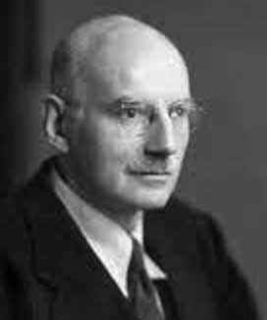
Arthur Edward CleryIrish republican politician and university professor, is born at 46 Lower Leeson Street in Dublin on October 25, 1879.

Clery is the son of Arthur Clery (who also uses the names Arthur Patrick O’Clery and Arthur Ua Cléirigh), a barrister, and Catherine Moylan. His father, who practises in India, publishes books on early Irish history.

Clery is brought up to a considerable extent by a relative, Charles Dawson. A cousin, William Dawson, who uses the pen-name “Avis,” becomes his closest friend and associate. He is educated at the Catholic University School on Leeson Street (where he acquires the confirmation name “Chanel” in honour of the Marist martyr Peter Chanel, which he often uses as a pseudonym), at Clongowes Wood College, and University College Dublin in St. Stephen’s Green. He is a university contemporary of James Joyce.

Clery’s principal themes include the difficulties of Roman Catholic graduates seeking professional employment, dramatic criticism (he hails Lady Gregory‘s play Kincora as the Abbey Theatre‘s first masterpiece but is repulsed by the works of John Millington Synge), Catholic-Protestant rivalry, tension within the Dublin professional class, and the vagaries of the Gaelic revival movement.

Clery advocates partition on the basis of a two nations theory, first advanced in 1904–1905, possibly in response to William O’Brien‘s advocacy of securing Home Rule through compromise with moderate Unionists. Several of his articles on the subject are reprinted in his 1907 essay collection, The Idea of a Nation.

Clery derives this unusual view for a nationalist from several motives, including a belief that arguments for Irish nationalists’ right to self-determination can be used to justify Ulster Unionists’ right to secede from Ireland, fear that it might be impossible to obtain Home Rule unless Ulster is excluded, and distaste for both Ulster Protestants and Ulster Catholics, whom he sees as deplorably anglicised. He remains a partitionist for the rest of his life. He is not particularly successful as a barrister, but on the establishment of University College Dublin (UCD) in 1909, he is appointed to the part-time post of Professor of the Law of Property.

After 1914, Clery moves from unenthusiastic support for John Redmond‘s Irish Parliamentary Party to separatism. Before the 1916 Easter Rising he is an inactive member of the Irish Volunteers, and is defence counsel at the court-martial of Eoin MacNeill. During the 1918 United Kingdom general election in Ireland he campaigns for Sinn Féin. As one of the few barristers prepared to assist the Sinn Féin Court system, he is appointed to the Dáil Supreme Court in 1920.

Clery opposes the Anglo-Irish Treaty because he believes it will lead to re-Anglicisation and the eventual return of the Union. He is elected to Dáil Éireann as an abstentionist independent Teachta Dála (TD) for the National University of Ireland constituency at the June 1927 Irish general election.

Clery does not take his seat and does not contest the September 1927 Irish general election since new legislation obliges candidates to pledge in advance that they will take their seat. He is one of the lawyers who advises Éamon de Valera that the Irish Free State is not legally obliged to pay the Land Annuities which had been agreed in the Anglo-Irish Treaty of 1922.

Clery was a close friend of Tom Kettle, with whom he founds a dining club, the “Cui Bono.” Hugh Kennedy is also a lifelong friend. As Auditor of the L & H, he tries to prevent James Joyce from reading a paper praising Henrik Ibsen, asserting that “the effect of Henrik Ibsen is evil,” but Joyce succeeds in reading it after he argues his case with the college president. The principal influence on Clery is the Irish Ireland editor D. P. Moran, to whose weekly paper, The Leader, Clery becomes a frequent contributor. In addition to The Idea of a Nation, he publishes Dublin Essays (1920) and (as Arthur Synan) The coming of the king.

Clery dies, unmarried, on November 20, 1932, in Dublin from heart failure caused by pneumonia. He is buried in Dean’s Grange Cemetery, Deansgrange, County Dublin.
Leave a comment

Birth of Anna Manahan, Stage, Film & Television Actress

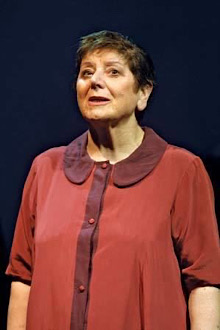
Anna Maria Manahan, Irish stage, film and television actress, is born on October 18, 1924, in County Waterford in what is at the time the Irish Free State (now the Republic of Ireland).

Manahan receives two Tony Award for Best Featured Actress in a Play nominations for her performances in the 1968 production of Lovers and the 1998 production of The Beauty Queen of Leenane, the latter for which she wins at the 52nd Tony Awards.

Manahan is also nominated for two Drama Desk Awards, a Laurence Olivier Award, and an Outer Critics Circle Award in a career that spans more than 60 years. She interprets the works of, among others, Seán O’CaseyJohn B. KeaneJohn Millington SyngeOscar WildeJames JoyceMartin McDonaghChristy Brown, and Brian Friel.

Manahan’s career begins when, as a young woman, she is recruited by the legendary Irish impresarios and theatrical directors Micheál Mac Liammóir and Hilton Edwards. She later marries stage director Colm O’Kelly, who dies not long afterward of polio, which he contracts after swimming in the Nile during a theatre tour of Egypt. They have no children and she never remarries. She is known professionally by her maiden name. In 1946 she appears in a production by Irish playwright Teresa DeevyThe Wild Goose, where she plays the part of Eileen Connolly. This is performed by Equity Productions in the Theatre Royal, Waterford.

In 1957, Manahan plays Serafina in the first Irish production of Tennessee Williams‘s The Rose Tattoo and achieves unexpected notoriety when she and several other members of the cast are arrested for the possession of a condom on stage.

Manahan plays a minor role in the Irish cult soap opera The Riordans (1960s), and as Mrs. Mary Kenefick in the TV comedy Me Mammy (1970s). She also plays the lead in the Irish comedy series, Leave It To Mrs O’Brien (1980s) and Mrs. Cadogan in The Irish R.M. (1980s). Most recently she plays Ursula in Fair City, for which her niece, Michele Manahan (daughter of Michael Manahan), is a writer.

Manahan has an extensive theatre portfolio having played at theatres throughout Ireland including the Abbey Theatre, the United Kingdom, continental Europe, the United States and Australia. She wins the Tony Award for Best Featured Actress in a Play for her role as Mag in Martin McDonagh’s The Beauty Queen of Leenane on Broadway. She previously receives a Tony nomination in 1969 for Brian Friel’s Lovers.

The Irish playwright John B. Keane writes the play Big Maggie specifically for Manahan. In 2001 she stars in Keane’s The Matchmaker with veteran Irish actor Des Keogh. In 2005 she stars in Sisters, a new play by Declan Hassett that is also written for her and for which she is nominated for a Drama Desk Award in the category of Outstanding Solo Performance. The production tours Ireland and is staged at the International Festival of World Theatre in Colorado and also plays at the 59E59 Theater in New York City in 2006.

Manahan appears in films starring, among others, Laurence OlivierPeter CushingKenneth MoreChristopher WalkenMaggie SmithAlbert Finney and Brenda Fricker, and with John Gielgud in A Portrait of the Artist as a Young Man (1977).

Manahan receives the Gold Medal of the Éire Society of Boston in 1984 and thus joins the company of past recipients such as John F. Kennedy, and film makers John Ford and John Huston. She receives an honorary doctorate in letters from the University of Limerick in 2003. She is granted the freedom of the city of Waterford in 2002 in recognition of her life’s achievement in the arts. She thus becomes the 28th Freeman of Waterford since Isaac Butt in 1877.

In 2004 Manahan starts to play the role of Ursula in Fair CityAll About Anna (2005), a documentary on her life and work is made by Charlie Mc Carthy/Icebox Films for RTÉ Television. In 2008, she becomes the first ever patron of the Active Retirement Ireland organization.

Manahan dies of multiple organ failure on March 8, 2009 in Waterford. She had suffered from a longterm illness.

Her funeral is held on March 11, officiated by her “longtime friend” the psychoanalyst, poet, and priest Bernard Kennedy. “As the final curtain falls, the lights dim, the auditorium becomes silent, we remember her” he says. Describing her as a woman of faith (who “sought to bring the word of God alive”), he says she had brought everyone together to be present at “her last great exit from this great stage of life,” saying her life’s work had drawn people from all over the world. “Anna believed in the empty tomb of the Resurrection and she believed the empty tomb could be filled by hearing the word take the place of the emptiness,” he says. “She knew the bedsits which preceded the Tony nomination.”

Manahan is buried in Ballygunner Cemetery, Knockboy, County Waterford.


Leave a comment

Birth of Irish Novelist Joseph O’Connor

Joseph Victor O’Connor, an Irish novelist, is born in Dublin on September 20, 1963. His 2002 historical novel Star of the Sea is an international number one bestseller. Before success as an author, he is a journalist with the Sunday Tribune newspaper and Esquire. He is a regular contributor to RTÉ and a member of the Irish artists’ association Aosdána.

O’Connor is the eldest of five children and brother of singer Sinéad O’Connor. He is from the Glenageary area of south Dublin. His parents are Sean O’Connor, a structural engineer who later turns barrister, and Marie O’Connor.

Educated at Blackrock College, O’Connor graduates from University College Dublin (UCD)with an MA in Anglo-Irish literature. He does post-graduate work at Oxford University and receives a second MA from Leeds Metropolitan University‘s Northern School of Film and Television in screenwriting. In the late 1980s, he works for the British Nicaragua Solidarity Campaign. His second novel, Desperadoes (1993), draws on his experiences in revolutionary Nicaragua.

O’Connor’s novel Cowboys and Indians (1991) is on the shortlist for the Whitbread Book Award.

On February 10, 1985, O’Connor’s mother is killed in a car accident. The mother of his character Sweeney in The Salesman (1998) dies in the same manner.

In 2002, O’Connor writes the novel Star of the Sea, which The Economist lists as one of the top books of 2003. His 2010 novel Ghost Light is loosely based on the life of the actress Maire O’Neill, born Mary “Molly” Allgood, and her relationship with the Irish playwright John Millington Synge. It is published by Harvill Secker of London in 2010.

O’Connor is a Research Fellow at the New York Public Library and Visiting Professor of Creative Writing/Writer in Residence at Baruch College, the City University of New York.

In 2014, O’Connor is announced as the inaugural Frank McCourt Chair in Creative Writing at the University of Limerick, where he teaches on the MA in Creative Writing.

O’Connor is a regular contributor to Drivetime, an evening news and current affairs programme on RTÉ Radio 1.

O’Connor’s Shadowplay, published in 2019, is shortlisted for the2019 Costa Book Award in the Novel category.

O’Connor is married to television and film writer Anne-Marie Casey. They have two sons. He and his family have lived in London and Dublin, and occasionally reside in New York City.


Leave a comment

Death of Frank Fay, Actor & Co-founder of the Abbey Theatre

Frank J. (Francis John) Fay, actor, theatrical producer and co-founder of the Abbey Theatre in Dublin, dies on January 2, 1931.

Fay is born on August 30, 1870, at 10 Lower Dorset Street, Dublin, the eldest son of four children of William Patrick Fay, a government clerk, and his wife, Martha Fay (née Dowling). He is educated at Belvedere College, Dublin, where he learns shorthand and typing, before leaving to become a secretary for an accountancy firm in Dublin. From an early age he has a passion for the theatre and immerses himself in books on the subject, becoming a drama expert. His brother, William George Fay, shares his enthusiasm and they take part in many amateur productions, setting up the Ormonde Dramatic Company in 1891.

Fay is an ardent nationalist, and Arthur Griffith appoints him drama critic for his newspaper, the United Irishman (1899–1902), where he develops his ideas on how the theatre should be run. Initially in favour of plays in the Irish language, he soon abandons this as unworkable. In May 1901 he attacks W. B. Yeats for his faulty notions about theatre and even his work as a dramatist, ending with the fiercely nationalistic assertion that “there is a herd of Saxon and other swine fattening on us. They must be swept into the sea with the pestilent breed of West Britons with which we are troubled, or they will sweep us there.” Yeats’s and Lady Gregory‘s next play is Cathleen ni Houlihan.

In 1902, Fay writes a famous article advocating a national theatre company that will “be the nursery of an Irish dramatic literature which, while making a world-wide appeal, would see life through Irish eyes.” He is a member of his brother’s National Dramatic Society, which merges with the Irish Literary Theatre in 1902 to form the Irish National Theatre Society, the originating body of the Abbey Theatre. The following year Yeats declares that the national theatre owes its existence to the two Fay brothers. Fay soon abandons Griffith and begins to champion the cause of Yeats.

An excellent tragic actor, Fay can make audiences forget his less than five feet six-inch stature through the power of his voice. When the Abbey Theatre opens on December 27, 1904, he stars in Yeats’s On Baile’s Strand as Cú Chulainn, a role he makes his own. He spends much time training the other actors. As an elocution teacher he has no equal. One play has Yeats leaving with his “head on fire” because of the quality of the voices on stage. Yeats dedicates his play The King’s Threshold (1904) with the words: “In memory of Frank Fay and his beautiful speaking in the character of Seanchan.”

Fay has a close but turbulent relationship with his brother William, whom he defers to in all theatrical matters except acting. Their heated arguments sometimes lead to blows. His temper is always volatile, and he is prone to histrionics and fits of depression. After 1905, the Abbey Theatre becomes a limited company owing to the patronage of Annie Horniman, and the Fays lose most of their control, which results in much tension and bitterness. In 1907, Fay plays Shawn Keogh in the first production of The Playboy of the Western World by John Millington Synge.

Disagreements with Yeats over the approach to choosing and staging of plays comes to a head late in late 1907 and the Fays resign on January 13, 1908. On March 13 they are suspended from the Irish National Theatre Society. They tour the United States with Charles Frohman before separating. Fay then tours England in minor Shakespearean roles and melodrama. Between 1912 and 1914, Thomas MacDonagh and Joseph Mary Plunkett attempt to persuade him to become actor-manager of an Irish theatre. In 1918 he returns to the Abbey Theatre in two short-lived revivals of Yeats’s The Hour Glass and The King’s Threshold. He retires to Dublin permanently in 1921, teaching elocution and directing plays in local colleges.

Fay marries, in 1912, Freda, known as “Bird.” They live at Upper Mount Street, Dublin, and have one son, Gerard, who becomes a popular writer and memoirist. Fay dies on January 2, 1931, having never really recovered from the death of his wife, and is buried at Glasnevin Cemetery. He is credited with creating the Abbey Theatre style of acting, which becomes internationally known, and influences many other schools of acting. He wanted actors to behave as naturally as possible and to speak the lines as people would in real life, rather than with an exaggerated stage delivery. His training is a major influence on subsequent generations, as actors learned to “speak words with quiet force, like feathers borne on puffs of wind.”

(From: “Fay, Frank J. (Francis John)” by Patrick M. Geoghegan, Dictionary of Irish Biography, http://www.dib.ie, October 2009) | Pictured: Portrait of Frank Fay by John Butler Yeats, commissioned by Annie Horniman for the opening of the Abbey Theatre, December 27, 1904)


Leave a comment

Birth of Richard Irvine Best, Philologist & Bibliographer

Richard Irvine Best, Irish scholar, specifically a philologist and bibliographer, who specialises in Celtic Studies, is born at 3 Bishop Street in Derry, County Londonderry, on January 17, 1872. He is often known as R. I. Best, or simply Best to his close friends and family.

Best’s parents are Henry Best and Margaret Jane Best (née Irvine). His father is an excise officer working in Paisley, Renfrewshire, Scotland, at the time of his birth.

Best’s education takes place locally at Foyle College, a grammar school in County Londonderry which dates back to 1617, schooling children ages eleven to eighteen. Following his time at Foyle College, he does not attend university, however he is a member of the Irish Literary Society in London. Instead of attending university he works as a banking assistant for a time before an inheritance allows him to travel to Paris, France.

It is in Paris that Best meets, and becomes friends with, John Millington Synge, who recommends the lectures of Marie Henri d’Arbois de Jubainville at the Collège de France. He later goes on to translate and annotate Henri d’Arbois de Jubainville’s work, Le cycle mythologique irlandais et la mythologie celtique into The Irish Mythological Cycle and Celtic Mythology.

Upon returning to Dublin from Paris, Best becomes Honorary Secretary of the School of Irish Learning from its inception in 1903. It is incorporated into the Royal Irish Academy in 1926. He acts as joint editor of the school’s journal Ériu, and continues after the transfer of the journal to the Academy. In 1904, he joins the staff of the National Library of Ireland as an assistant director. He succeeds as Chief Librarian in 1924, and subsequently Library Director, a post he holds until 1940. Throughout his career, he becomes a prolific expert on Celtic studies, and is widely attributed to the survival and success of the subject as it is known today.

Best’s work earns him several accolades. He receives the Leibniz Medal of the Royal Prussian Academy in 1914, an honorary D.Litt. by the National University of Ireland in 1920, and an Honorary D.Litt. by Trinity College Dublin in 1923. In 1936, he is awarded the Medal of the Pontifical Academy of Sciences by Pope Pius XI for his facsimile edition of the Milan codex. He is elected as President of the Royal Irish Academy in 1942. His works, Bibliography of Irish Philology and of Irish Printed Literature (1913) and Bibliography of Irish Philology and Manuscript Literature, 1913-41 (1942), are considered to be some of his most important scholarly outputs.

Best is also known for his appearances in famous works of Irish literature. He appears in James Joyce‘s Ulysses. He is drawn by John Butler Yeats, father of William Butler Yeats, and his portrait now hangs in the National Gallery of Ireland.

Upon his retirement from the National Library, Best becomes a Senior Professor at the Dublin Institute for Advanced Studies (DIAS). He retires from the DIAS in 1947 at the age of seventy-five. From 1948 to 1956, he becomes chairman of the Irish Manuscripts Commission, a position previously held by Eoin MacNeill. While in this role, he supervises several facsimiles, including RIA MS 23 N 10, later renamed the Book of Ballycummin in 2019.

Following his retirement from the Irish Manuscripts Commission, Best spends much of the final three years of his life “sorting out his large correspondence,” much of which is currently held in the National Library. He also continues to publish new work throughout his later life. He works on a translation of the Book of Leinster alongside Osborn Bergin and Professor M. A. O’Brien, who takes over after Bergin’s death in 1950. The first fasciculus is published in 1954, the second in 1956 and the third in 1959. His work also appears in multiple academic journals, including Éiriu, and the Zeitschrift für celtische Philologie, Revue Celtique, Études Celtiques, Hermathena, The Dublin Magazine, and The Proceedings of the Royal Irish Academy. He also continues with his work in palaeography, including the last paper he completes on the Book of Armagh in 1958, which appeared in Éiriu vol. xviii. His aid in the writing of others is particularly visible in his surviving correspondence with George Moore.

Best marries his wife, Edith Best (née Oldham), in 1906, he being seven years her junior. She is the older sister of Charles Hubert Oldham, who goes on to become Professor of Economics at University College Dublin. She herself is a musician, a pianist, who had studied at the Royal College of Music in London. The couple has no children, and also claims to have no affiliation with any religion. Edith passes away at their home on March 9, 1950.

Best dies on September 25, 1959, at his home on 57 Upper Leeson Street in Dublin. The Richard I. Best Papers are currently held at the National Archives of Ireland and have been instrumental in the foundation of The Richard Irvine Best Memorial lecture. This discussion and celebration of Best’s work, organised by Richard Irvine Best Memorial Lecture Trust, has taken place since 1969.


Leave a comment

Birth of Frank Fay, Actor, Producer and Co-founder of the Abbey Theatre

Frank J. (Francis John) Fay, actor, theatrical producer and co-founder of the Abbey Theatre in Dublin, is born on August 30, 1870, at 10 Lower Dorset Street, Dublin.

Fay is the eldest son of four children of William Patrick Fay, a government clerk, and his wife, Martha Fay (née Dowling). He is educated at Belvedere College, Dublin, where he learns shorthand and typing, before leaving to become a secretary for an accountancy firm in Dublin. From an early age he has a passion for the theatre and immerses himself in books on the subject, becoming a drama expert. His brother, William George Fay, shares his enthusiasm and they take part in many amateur productions, setting up the Ormonde Dramatic Company in 1891.

Fay is an ardent nationalist and Arthur Griffith appoints him drama critic for his newspaper, the United Irishman (1899–1902), where he develops his ideas on how the theatre should be run. Initially in favour of plays in the Irish language, he soon abandons this as unworkable. In May 1901 he attacks W. B. Yeats for his faulty notions about theatre and even his work as a dramatist, ending with the fiercely nationalistic assertion that “there is a herd of Saxon and other swine fattening on us. They must be swept into the sea with the pestilent breed of West Britons with which we are troubled, or they will sweep us there.” Yeats’s and Lady Gregory‘s next play is Cathleen ni Houlihan.

In 1902, Fay writes a famous article advocating a national theatre company that will “be the nursery of an Irish dramatic literature which, while making a world-wide appeal, would see life through Irish eyes.” He is a member of his brother’s National Dramatic Society, which merges with the Irish Literary Theatre in 1902 to form the Irish National Theatre Society, the originating body of the Abbey Theatre. The following year Yeats declares that the national theatre owes its existence to the two Fay brothers. Fay soon abandons Griffith and begins to champion the cause of Yeats.

An excellent tragic actor, Fay can make audiences forget his less than five feet six inch stature through the power of his voice. When the Abbey Theatre opens on December 27, 1904, he stars in Yeats’s On Baile’s Strand as Cú Chulainn, a role he makes his own. He spends much time training the other actors. As an elocution teacher he has no equal. One play has Yeats leaving with his “head on fire” because of the quality of the voices on stage. Yeats dedicates his play The King’s Threshold (1904) with the words: “In memory of Frank Fay and his beautiful speaking in the character of Seanchan.”

Fay has a close but turbulent relationship with his brother William, whom he defers to in all theatrical matters except acting. Their heated arguments sometimes lead to blows. His temper is always volatile and he is prone to histrionics and fits of depression. After 1905, the Abbey Theatre becomes a limited company owing to the patronage of Annie Horniman, and the Fays lose most of their control, which results in much tension and bitterness. In 1907, Fay plays Shawn Keogh in the first production of The Playboy of the Western World by John Millington Synge.

Disagreements with Yeats over the approach to choosing and staging of plays comes to a head late in late 1907 and the Fays resign on January 13, 1908. On March 13 they are suspended from the Irish National Theatre Society. They tour the United States with Charles Frohman before separating. Fay then tours England in minor Shakespearean roles and melodrama. Between 1912 and 1914, Thomas MacDonagh and Joseph Mary Plunkett attempt to persuade him to become actor-manager of an Irish theatre. In 1918 he returns to the Abbey Theatre in two short-lived revivals of Yeats’s The Hour Glass and The King’s Threshold. He retires to Dublin permanently in 1921, teaching elocution and directing plays in local colleges.

Fay marries, in 1912, Freda, known as “Bird.” They live at Upper Mount Street, Dublin, and have one son, Gerard, who becomes a popular writer and memoirist. Fay dies on January 2, 1931, having never really recovered from the death of his wife, and is buried at Glasnevin Cemetery. He is credited with creating the Abbey Theatre style of acting, which becomes internationally known, and influences many other schools of acting. He wanted actors to behave as naturally as possible and to speak the lines as people would in real life, rather than with an exaggerated stage delivery. His training is a major influence on subsequent generations, as actors learned to “speak words with quiet force, like feathers borne on puffs of wind.”

(From: “Fay, Frank J. (Francis John)” by Patrick M. Geoghegan, Dictionary of Irish Biography, http://www.dib.ie, October 2009) | Pictured: Portrait of Frank Fay by John Butler Yeats, commissioned by Annie Horniman for the opening of the Abbey Theatre, December 27, 1904)


Leave a comment

Birth of Shelah Richards, Actress, Manager, Director & Producer

Shelah Geraldine Richards, Irish actress, manager, director and producer, is born in Dublin on May 23, 1903.

Richards is born to John William Richards, a lawyer, and Adelaide Roper, suffragist who had chained herself to the railings in St. Stephen’s Green. She goes to school at Alexandra College, Dublin, and after that she attends a finishing school in Paris. Though her family is not in the arts, her godmother is Beatrice Elvery. Shes attends Elvery’s salons with her parents as a child. She meets W. B. Yeats when she is sixteen. Her niece, Geraldine Fitzgerald, daughter of her sister, Edith Catherine Richards, is also one of Ireland’s pre-eminent actresses.

Richards’s acting career starts while attending the Dublin drama league and she is asked at short notice to replace Eileen Crowe in Juno and the Paycock, playing the role of Mary Boyle in the Abbey Theatre production. Richards gets the role of Nora Clithero in the 1926 production of The Plough and the Stars, Seán O’Casey‘s next production. This role means that she ends up with police protection for the duration of the run due to the disturbances the play engenders. Another important role is to take on playing the lead in The Player Queen by Yeats. Maire O’Neill had previously made the role her own and Yeats had let no one perform the part since then so taking on such a challenge is intimidating. Richards continues to take on leading roles with the Abbey Theatre but in 1926 she also begins to direct.

On December 28, 1928, Richards marries playwright Denis Johnston in St. Anne’s Church in Dublin. She tours the United States with the Abbey players in 1932 and with the Irish Players in the mid 1930s. A role in 1938 in Molly Keane‘s Spring Meeting starring Gladys Cooper and A. E. Matthews takes her to Broadway in New York City. War in Europe breaks out while the run is still going on and Richards is advised to stay in the United States. However, by then she has two children, producer Micheal and novelist Jennifer Johnston, so she returns to Dublin. There she runs her own theater company at the Olympia Theatre with Nigel Heseltine. Her marriage to Johnston, broken in 1938, ends with divorce in February 1945.

Richards next challenge is to take over the Abbey School of Acting. During her time there one of the designers she works with is Louis le Brocquy. With Siobhán McKenna she produces The Playboy of the Western World in Edinburgh to huge success allowing her to stage it in London and Dublin and later in Toronto‘s Library Theater. She brings Marcel Marceau to Dublin for the first time. She continues to act and has some film roles.

In 1961 Ireland launches its first television service, Raidió Teilifís Éireann. Richards is one of the first producers, recommended to the station by Hilton Edwards. She is one of the few women in the new station. The first Irish play produced during the opening week is directed by her and she is nominated for a Best Actress award in another production, Inquiry at Lisieux. She works as producer on a wide number of programs for the station including documentaries, soap operas and religious programming. Both Tolka Row and The Riordans are produced by her as well as Denis Johnston’s The Moon on the Yellow River, George Bernard Shaw‘s Arms and the Man and John Millington Synge‘s Riders to the Sea.

Richards retires from her RTÉ career in the early 1970s though she continues to raise funds for the Gate Theatre through the Edwards–MacLiammóir Playhouse Society. In 1983, for her 80th birthday, the Abbey puts on a party for her which includes a special rendition of “Nora” from The Plough and the Stars. Richards is the last living member of the original 1926 cast. The song is repeated at her funeral in 1985. She died in Ballybrack, County Dublin, on January 19, 1985. Her funeral is held in St. Anne’s Church in Dublin and she is cremated in Glasnevin Cemetery.


Leave a comment

Birth of John Lighton Synge, Mathematician & Physicist

John Lighton Synge FRSC FRS, mathematician and physicist, whose seven-decade career includes significant periods in Ireland, Canada, and the United States, is born in Dublin on March 23, 1897. He is a prolific author and influential mentor and is credited with the introduction of a new geometrical approach to the theory of relativity.

Synge is born into a prominent Church of Ireland family. His uncle, John Millington Synge, is a famous playwright. He is more distantly related to the winner of the 1952 Nobel Prize in Chemistry, Richard Laurence Millington Synge. He is a great-great-great-grandson of the mathematician and bishop Hugh Hamilton.

Synge attends St. Andrew’s College, Dublin and in 1915 enters Trinity College Dublin (TCD). He is elected a Foundation Scholar his first year, which is unusual as it is normally won by more advanced students. While an undergraduate at TCD, he spots a non-trivial error in Analytical Dynamics of Particles and Rigid Bodies, a textbook by E. T. Whittaker, who had recently taught there, and notifies Whittaker of the error. In 1919 he is awarded a BA in Mathematics and Experimental Physics, and also a gold medal for outstanding merit. In 1922 he is awarded an MA, and in 1926 a Sc.D., the latter upon submission of his published papers up to then.

In 1918, Synge marries Elizabeth Eleanor Mabel Allen. She is also a student at TCD, first of mathematics, then of history, but family finances forced her to leave without graduating. Their daughters Margaret (Pegeen), Cathleen and Isabel are born in 1921, 1923 and 1930 respectively. The middle girl grows up to become the distinguished Canadian mathematician Cathleen Synge Morawetz.

Synge is appointed to the position of lecturer at Trinity College, and then accepts a position at the University of Toronto in 1920, where he is an assistant professor of mathematics until 1925. There he attends lectures by Ludwik Silberstein on the theory of relativity, stimulating him to contribute “A system of space-time co-ordinates,” a letter in Nature in 1921.

Synge returns to Trinity College Dublin, in 1925, where he is elected to a fellowship and is appointed the University Professor of Natural Philosophy (later to be known as “physics”). He is a member of the American Mathematical Society and the London Mathematical Society. He is treasurer of the Royal Irish Academy in 1929. He goes back to Toronto in 1930, where he is appointed Professor of Applied Mathematics and becomes Head of the Department of Applied Mathematics. In 1940, he supervises three Chinese students, Guo Yonghuai, Qian Weichang and Chia-Chiao Lin, who later become leading applied mathematicians in China and the United States.

Synge spends some of 1939 at Princeton University, and in 1941, he is a visiting professor at Brown University. In 1943 he is appointed as Chairman of the Mathematics Department of Ohio State University. Three years later he becomes Head of the Mathematics Department of the Carnegie Institute of Technology in Pittsburgh, where John Nash, Jr. is one of his students. He spends a short time as a ballistic mathematician in the United States Air Force between 1944 and 1945.

Synge returns to Ireland in 1948, accepting the position of Senior Professor in the School of Theoretical Physics at the Dublin Institute for Advanced Studies. This school had been set up in 1940, and had several outstanding members, including Erwin Schrödinger, a contributor to quantum mechanics, who is also a Senior Professor.

Synge makes outstanding contributions to different fields of work including classical mechanics, general mechanics and geometrical optics, gas dynamics, hydrodynamics, elasticity, electrical networks, mathematical methods, differential geometry, and Albert Einstein‘s theory of relativity. He studies an extensive range of mathematical physics problems, but his best-known work revolves around using geometrical methods in general relativity.

Synge is one of the first physicists to seriously study the interior of a black hole, and his early work is cited by both Martin David Kruskal and George Szekeres in their independent discoveries of the true structure of the Schwarzschild black hole. Synge’s later derivation of the Szekeres-Kruskal metric solution, which is motivated by a desire to avoid “using ‘bad’ coordinates to obtain ‘good’ coordinates,” has been generally under-appreciated in the literature, but is adopted by Chandrasekhar in his black hole monograph.

In pure mathematics, Synge is perhaps best known for Synge’s theorem, which concerns the topology of closed orientable Riemannian manifold of positive sectional curvature. When such a space is even-dimensional and orientable, the theorem says it must be simply connected. In odd dimensions, it instead says that such a space is necessarily orientable.

Synge also creates the game of Vish in which players compete to find circularity (vicious circles) in dictionary definitions.

Synge retires in 1972. He receives many honours for his works. He is elected as a fellow of the Royal Society of London in 1943. He is elected as a fellow of the Royal Society of Canada, and in 1943 is the first recipient of the society’s Henry Marshall Tory Medal, as one of the first mathematicians working in Canada to be internationally recognised for his research in mathematics. In 1954 he is elected an honorary fellow of Trinity College Dublin. He is president of the Royal Irish Academy from 1961 until 1964. The Royal Society of Canada establishes the John L. Synge Award in his honour in 1986.

Synge dies on March 30, 1995, in Dublin, exactly one week after his ninety-eighth birthday.


Leave a comment

Birth of Playwright Michael Joseph Molloy

Michael Joseph Molloy, Irish playwright, is born March 3, 1914, in Milltown, County Galway, the son of William Molloy, originally of Glenamaddy, County Galway, who runs a shop at Milltown, and Maria Molloy (née Tucker), a native of Claremorris, County Mayo, and a teacher at Milltown girls’ school.

Molloy is the fifth in a family of five boys and three girls. Two other children die at birth. He is educated at Milltown national school and St. Jarlath’s College, Tuam, County Galway, from 1927 to 1931. His father dies when he is six years old and his uncle, Sonny Tucker, becomes an important influence, encouraging his life-long habit of extensive reading. In 1931 he goes to St. Columba’s Seminary at Dalgan Park, Shrule, County Mayo, but discontinues his studies for the priesthood when he contracts tuberculosis. He undergoes several operations, has to use crutches for three years, and is left with a permanent limp. While under the care of the sanatorium in Newcastle, County Wicklow, in the late 1930s, he is encouraged by a friend to attend a performance of two plays by George Bernard Shaw, Candida and Village Wooing, at the Abbey Theatre, Dublin. He becomes a regular playgoer and is inspired to begin a career as a dramatist.

Having lived in the family home at Milltown until 1955, he takes up residence at a nearby farmhouse on the marriage of his brother Christy. Despite his handicap, he works the small farm for the rest of his life to supplement the irregular income from his plays. He never marries and is attended by his housekeeper, Agnes Johnston. He is a familiar sight as he travels around his local area on the high bicycle he had fitted with one fixed pedal. The purpose of these journeys is to collect folklore, which provides a rich body of material for his plays and which he gathers into a prose volume, though this remains unpublished and privately held.

Molloy has nine of his thirteen plays produced at the Abbey Theatre, from Old Road in 1943 to Petticoat Loose in 1979. His plays reveal him as a folklorist in the line of John Millington Synge and draw on the same mixture of Christian and pagan beliefs, but with a more sympathetic understanding of his characters’ Catholicism. There is also the same strong vein of grotesque physical humour. His accomplished one-act play The Paddy Pedlar (1953) is based on a folk tale about a man carrying the body of his dead mother around in a sack and takes its bearings from an extraordinary amalgam of beliefs about the afterlife.

Molloy’s history plays re-create a world that shows the oppressions of colonialism on a subject race who respond with a wild anarchy mixed with subdued acceptance. His plays with a contemporary setting most often take emigration as their theme and are prophetic of later work by John B. Keane and Brian Friel. He writes in a heightened folk idiom, which only rarely loses touch with natural speech. Old Road wins an Abbey Prize and is staged in 1943 with Cyril Cusack as the young farm labourer trying to decide whether to emigrate to England or to stay in Ireland. Joseph Holloway gives a touching account of the shy author taking his curtain at this first production, who, though his lips move, is unable to say anything. The Visiting House follows in 1946, and dramatises a night of singing, dancing, and storytelling, peopled by a richly diverse cast of characters.

Molloy’s first masterpiece, The King of Friday’s Men, is launched in 1948. It takes the uncompromising theme of the droit du seigneur exercised by an eighteenth-century Anglo-Irish landlord on the most beautiful young women on his estate. His latest prey seeks to evade her fate by enticing the aged faction fighter, Bartley Dowd, to fight the landlord on her behalf. The play recreates that eighteenth-century world with colour, immediacy, and a strong sense of how the colonial system envelops all of the characters save the marginalised Bartley, who in the first production is played by the actor and author Walter Macken.

Molloy’s even greater The Wood of the Whispering follows in 1953 at the Queen’s Theatre, where the Abbey company is now playing. It is his most probing treatment of the effects of emigration, an issue of which Molloy, living in Galway, is only too aware. It is the most Beckettian of Irish plays, with its old tramp, Sanbatch Daly, and a host of older characters who are not so much eccentric as damaged in some profound way. At the play’s close Sanbatch feigns madness to gain entry to the asylum, though he is not in truth far from genuine madness. The various younger couples agree to stay and marry in Ireland rather than go their separate ways back to England. This idea of cultural renewal also underscores the importance Molloy places on the staging of his plays by amateur drama companies.

From the 1960s onwards Molloy’s plays are less readily accepted by the Abbey Theatre and a Dublin audience, but they still find a ready reception in his native place. In later works, such as Daughter from Over the Water (1963), the older characters retain their exuberance, but the younger ones seem beyond his reach. His last play, The Bachelor’s Daughter, is given its first performance by the Tuam Theatre Guild on March 3, 1985. The revival by Galway’s Druid Theatre of The Wood of the Whispering in 1983, which Molloy lives to see, is a revelation, and a reminder to the wider theatrical and academic world of the continuing importance of this playwright, not just as the ‘missing link’ between Synge and Keane but as an original in his own right.

In later years Molloy is a member of Aosdána. He dies of aortic aneurysms at Galway Hospital on May 27, 1994. He remains a committed Catholic all his life and his tombstone reads: “Woe to those who call evil good and who call good evil” (Isaiah, 5: 20).

(From: “Molloy, Michael Joseph” by Anthony Roche, Dictionary of Irish Biography, http://www.dib.ie, October 2009)


Leave a comment

Death of John Cowley, Actor & Animal Welfare Activist

John Ultan Cowley, actor and animal welfare activist, dies on February 13, 1998, in Navan, County Meath. He is best known for his role as pater familias, Tom Riordan, in the long-running RTÉ Television drama series, The Riordans.

Cowley is born September 8, 1923, in Ardbraccan, Navan, County Meath, the third child of Patrick Cowley, a small farmer, and his wife Margaret. Educated at the local national school, he leaves at the age of thirteen to work on the family farm. He also works with a horse and cart drawing stones from a local quarry. He is an enthusiastic amateur actor and learns his trade in the fit ups of the forties and fifties. Moving to England, he gets parts in television shows such as Z-Cars and No Hiding Place. During the 1950s and 60s, he is also very active in theatre, and has a long association with the Globe theatre company in Dún Laoghaire, which he joins in 1956. He also plays in the Abbey, Gate and Olympia theatres, travels Europe in 1960–61 with John Millington Synge‘s The Playboy of the Western World, and stars in the early Hugh Leonard play I Loved You Last Summer.

Cowley is best known for his portrayal of the bluff countryman Tom Riordan in RTÉ’s rural drama, The Riordans. First airing on January 4, 1965, it runs until May 28, 1979. One of RTÉ’s most successful programmes, it has a huge audience and a considerable social impact through its treatment of controversial topics such as divorce, contraception, and mixed marriages. When it ends in 1979 Cowley is bitterly disappointed and accuses RTÉ of throwing him on the scrap heap. After this he continues to work in theatre and has occasional appearances on screen, including a part in Jim Sheridan‘s The Field (1991) and the British espionage television series, The Avengers.

Cowley also writes poetry and a play, A Fool and His Money. His other hobbies include a passion for history (particularly the 1798 period), hurling, Gaelic football, boxing, and swimming. A patron and a founder member of the Irish Council Against Blood Sports in 1967, he is a leading opponent of hare coursing, popularising the cause through an appearance on The Late Late Show in 1967.

In 1953 Cowley marries Annie D’Alton, an actor who later appears with him in The Riordans, two years after the death of her first husband, the dramatist Louis D’Alton. They have one son.

Cowley dies in Navan on February 13, 1998. His wife precedes him in death in March 1983.