seamus dubhghaill

Promoting Irish Culture and History from Little Rock, Arkansas, USA


Leave a comment

Birth of Frank Ryan, Politician, Journalist & Paramilitary Activist

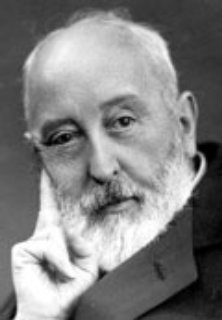
Frank Ryan, politician, journalist, intelligence agent and paramilitary activist, is born in the townland of Bottomstown, Elton, County Limerick, on September 11, 1902. A fascinating, somewhat mythical figure, he lives during turbulent times when Ireland finally disposes of tyrannical British rule in Ireland and becomes an icon for socialist republicans in Europe during the 1930s and 40s.

Ryan’s parents, Vere Foster Ryan and Annie Slattery, are National School teachers at Bottomstown with a taste for Irish traditional music, and they live in a house full of books. He attends St. Colman’s College, Fermoy. From then on, he is devoted to the restoration of the Irish language. He studies Celtic Studies at University College Dublin (UCD), where he is a member of the Irish Republican Army (IRA) training corps. He serves as a flying column member during the murderous Irish War of Independence (1919-21), thereby interrupting his studies. He leaves UCD before graduating to join the IRA’s East Limerick Brigade in 1922.

Ryan fights on the Anti-Treaty side in the Irish Civil War (1922-23) and is wounded and interned. In November 1923 he is released and returns to UCD. He secures his degree in Celtic Studies and further secures the editorship of An Phoblacht (The Republic), the newspaper of the anti-Treaty Irish Republican Army (IRA).

The split in the Irish independence party, Sinn Féin, results in regular fist fights between pro and anti-Treaty forces. Cumann na nGaedhael, the pro-Treaty political party in government, recruits the Army Comrades Association (Blueshirts) under former Garda Commissioner Eoin O’Duffy to protect their members from anti-Treaty IRA protesters at annual Armistice Day and Wolfe Tone commemorations. Ryan is a forceful orator at these events and is frequently arrested and beaten up by the Gardai. The fractious politics results in Dáil members Sean Hales and Kevin O’Higgins being shot dead in public.

Ryan resigns from the IRA and founds the Republican Congress with Peadar O’Donnell and George Gilmore. Worker’s strikes unite Northern Protestant and Southern Catholic workers protesting against low wages and long hours.

The outbreak of the Spanish Civil War (1936-39) inspires Ryan to lead the first contingent of Irish volunteers to support the Popular Front government of Republican Spain. A brave and inspiring leader, he serves with Italian and German Republican divisions. He is seriously wounded at the Battle of Jarama in February 1937. Following recuperation in Ireland, he is appointed adjutant to republican General José Miaja. During the Aragon Offensive he is captured with 150 of his men in April 1938 and sentenced to death. Irish President, Éamon de Valera, intervenes with General Francisco Franco and Ryan’s sentence is commuted to thirty years. His health suffers severely in Burgos Prison, Spain during his two-year incarceration.

Franco refuses to release Ryan because he is considered his most dangerous prisoner. In August 1940 he is transferred to Berlin, where he is re-united with IRA Chief of Staff Seán Russell. An attempt to return both men to Ireland by U-boat ends with Russell dying from a perforated ulcer. Ryan voluntarily returns to Germany where he serves as the unofficial IRA ambassador for German intelligence. Irishman Francis Stuart, son-in-law of Maud Gonne, who writes some of William Joyce’s propaganda, takes good care of Ryan until his untimely death at a hospital in Loschwitz in Dresden on June 10, 1944.

Ryan’s funeral in Dresden is attended by Elizabeth Clissmann, wife of Helmut Clissmann, and Francis Stuart. Clissmann eventually forwards details of Ryan’s fate to Leopold Kerney in Madrid. According to Stuart and Clissmann, the cause of death is pleurisy and pneumonia.

In 1963, historian Enno Stephan locates Ryan’s grave in Dresden. Three volunteers of the International Brigades, Frank Edwards, Peter O’Connor and Michael O’Riordan travel to East Germany as a guard of honour to repatriate Ryan’s remains in 1979. On June 21, 1979, his remains arrive in Whitefriar Street Carmelite Church, his local church when he lived in Dublin. The church is packed with all shades of Republican and left-wing opinion, as well as those from his past such as the Stuarts, the Clissmanns, Peadar O’Donnell, George Gilmore, and ex-comrades and sympathizers from all over the world. The cortège on its way to Glasnevin Cemetery halts at the GPO in memory of the dead of the 1916 Easter Rising. His coffin is borne to the grave in Glasnevin Cemetery by Irish veterans of the Spanish Civil War, Frank Edwards, Peter O’Connor, Michael O’Riordan and Terry Flanagan. Con Lehane delivers the funeral oration while a piper plays “Limerick’s Lamentation.” He is buried next to Éamonn Mac Thomáis.

Ryan leads a vicarious life in pursuit of human rights, socialism and republicanism. His life story remains more colourful than fiction.

Leave a comment

Birth of Bill Graham, Rock Journalist & Author

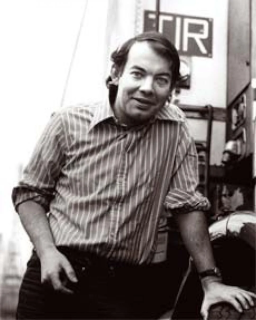
Bill Graham, Irish rock journalist and author, is born in Belfast, Northern Ireland, on August 29, 1951. He attends Blackrock College and Trinity College, Dublin. In addition to authoring several books, he writes for Hot Press magazine from its founding.

Graham’s long time colleague and Hot Press editor Niall Stokes describes him, “In many ways, he was a founding father of modern Irish music. He inspired a whole generation of Irish fans and musicians to look at the world in a different and broader light. And he was good on more than music too. He felt a kinship with Northern Ireland and the people on both sides of the sectarian and political divide there that was unusual in those who were brought up within the narrow confines of the culture of Ireland in the ‘60s and ‘70s – and his political writing reflected this. And he was also ahead of the game in terms of his appreciation of the importance of the politics of food and the position of the developing world in the new era.”

Graham is instrumental in the formation of Irish rock band U2, having brought them to the attention of their manager Paul McGuinness. At an exhibition of early group photos, McGuinness remembers the role Graham played by introducing him to the band. Despite being widely known as the man who “discovered” U2, it is a title he disavowed. He writes enthusiastically about the band, giving them their first exposure. Both guitarist The Edge and Bono have explained Graham’s role in the band’s development.

John Waters observes that “It is often said that Bill ‘discovered’ U2. This is untrue. Bill created U2, through his enthusiasm for them. He gave them a reflection of their own possibilities and they only looked back that once.” Graham has a deep knowledge of virtually every form of popular and roots music. Waters goes on to credit him as “the first Irish writer to write about the connection between Irish political culture and Irish rock ‘n’ roll.”

A number of music critics/journalists have cited Graham as a primary influence, in some cases suggesting they got into the field as a direct result of his writing.

Graham dies of a heart attack at the age of 44 at his home in Howth, County Dublin, on May 11, 1996. His funeral draws many of the biggest bands from the world of Irish music including Clannad, Altan, U2, and Hothouse Flowers, along with singers Simon Carmody and Gavin Friday.


Leave a comment

Birth of Cathal O’Shannon, Journalist & Television Presenter

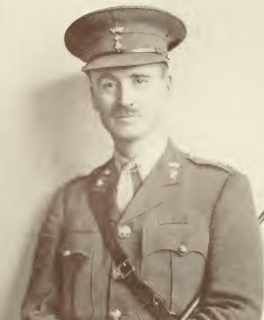
Cathal O’Shannon, Irish journalist and television presenter, is born in Marino, Dublin, on August 23, 1928. He is a reporter with The Irish Times, and television reporter/presenter and documentary film maker with RTÉ. The Irish radio and television broadcaster Terry Wogan describes O’Shannon as possibly the greatest Irish television journalist of the 20th century.

O’Shannon is the son of Cathal O’Shannon (Sr.), a Socialist and Irish Republican. He receives his formal education at Colaiste Mhuire School, in Parnell Square, Dublin. Despite his father’s politics, as a 16-year-old he volunteeres for war time service with the Royal Air Force (RAF) in Belfast in 1945 during World War II. He utilizes a forged birth certificate to disguise being underage for enlistment with the British Armed Forces. After air crew training, he is posted to the Far East, as a tail gunner in an Avro Lancaster bomber to take part in the Burma campaign, but the war ends with the downfall of the Japanese Empire before he is required to fly combat sorties.

O’Shannon first becomes a journalist with The Irish Times on leaving the RAF in 1947. Later he joins the Irish state broadcasting service Raidió Teilifís Éireann (RTÉ).

In July 1972 O’Shannon records a notable television interview with 31-year-old Muhammad Ali, when Ali is in Dublin to compete at Croke Park in a bout with Alvin Lewis.

O’Shannon receives a Jacob’s Award for his 1976 TV documentary, Even the Olives are Bleeding, which details the activities of the “Connolly Column” in the Spanish Civil War. Two years later he is honoured with a second Jacob’s Award for his television biography Emmet Dalton Remembers (1978).

In 1978, O’Shannon leaves RTÉ to join Canadian company Alcan, which is setting up an aluminum plant at Aughinish, County Limerick, in 1978. He is head-hunted to become its Director of Public Affairs, an important post at a time when there are environmental concerns about the effects of aluminium production. He admits that he was attracted by the salary, “five times what RTÉ were paying me,” but he also later says that one of the reasons for the move is that he had become unhappy with working at RTÉ, stating in an interview that “The real reason I got out of RTÉ was that they wouldn’t let me do what I wanted to do journalistically.” He had submitted proposals to the station’s editors for a television documentary series on the Irish Civil War, and also one on the wartime Emergency period, but they had been rejected. While he enjoys the social life with lavish expenses which his public relations duties involve, his friends believe that he missed the varied life and travel of journalism. He retires early from Aughinish in 1992 and returns to making television documentaries with RTÉ.

In January 2007, O’Shannon’s last documentary, Hidden History: Ireland’s Nazis, is broadcast by RTÉ as a two-part series. It explores how a number of former Nazis and Nazi collaborators from German-occupied Europe go to live in the Republic of Ireland after World War II — the best known of whom is Otto Skorzeny, who lives for a period in County Kildare. Others include such Breton nationalists as Alan Heusaff, Yann Fouéré and Yann Goulet, as well as two Belgians, Albert Folens and Albert Luykx.

O’Shannon announces his retirement at the age of 80 on January 12, 2007.

O’Shannon is awarded lifetime membership in the Irish Film & Television Academy in 2010, to which he says is “particularly gratifying that it occurs before I pop my clogs.”

After weakening health for two years, and spending his last days in hospice at Blackrock, O’Shannon dies at the Beacon Hospital in Dublin on October 22, 2011. His body is reposed at Fanagans Funeral Home in Dublin on October 25, 2011, followed by a funeral the following day at Glasnevin Cemetery Chapel, where it is afterwards cremated.

O’Shannon’s wife, Patsy, whom he met while they were working for The Irish Times office in London, dies in 2006. They are married for more than 50 years. In a 2008 television documentary O’Shannon admits that throughout his marriage he had been a serial womaniser, who had repeatedly engaged in extra-marital affairs unbeknownst to his wife.

Director-General of RTÉ Noel Curran says O’Shannon had brought into being “some of the great moments in the RTÉ documentary and factual schedule over the past five decades.” In tribute, RTÉ One shows the documentary Cathal O’Shannon: Telling Tales on November 10, 2011. It had originally aired in 2008 to mark his 80th birthday.


Leave a comment

Death of John Henry Patterson, Army Officer, Hunter, Author & Zionist

John Henry Patterson, known as J. H. Patterson, Irish officer in the British Army, game hunter, author and Christian Zionist, dies in Bel Air, California, on June 18, 1947.

Patterson is born on November 10, 1867, at Forgney, Ballymahon, County Longford, the son of a Protestant father and a Roman Catholic mother. He joins the British Army at Dublin in 1885 and is posted with the 3rd Dragoon Guards to India. In 1892 he is seconded to the Indian military works department as a supervisor of civil engineering projects. In 1894 he marries Frances Helena Gray, daughter of William Gray of Cork and Belfast, a building surveyor who founded the free library movement in Belfast. She goes on to earn science and law degrees.

In 1898 Patterson is sent to British East Africa to supervise 3,000 Indian and African labourers who are building a railway bridge spanning the Tsavo River as part of the Mombasa to Lake Victoria line. Construction is interrupted when two man-eating lions repeatedly attack the labourers’ camp at night. He embarks on a lion hunt, but by the time he shoots the two lions they have mauled and mutilated between 130 and 140 labourers.

Patterson volunteers for service in the South African War in 1900. He is mentioned in dispatches by Lord Frederick Roberts and Lord Herbert Kitchener and is awarded the Distinguished Service Order (DSO). In 1902 he is appointed lieutenant colonel commanding the 33rd Battalion Imperial Yeomanry. While on a shooting trip in east Africa in 1906, he discovers a new species of eland, which is named Taurotragus oryx pattersonianus after him. His account of his adventures in Africa, The Man-Eaters of Tsavo, is published in 1907 to instant international acclaim. His exploits are twice made the subject of films: Bwana Devil (1952) and The Ghost and the Darkness (1996). In 1907 he is seconded as chief game warden, British East Africa Protectorate (Kenya), and he combines his work of conducting surveys with escorting private safari parties.

The following year Patterson leads a safari trip in the protectorate accompanied by Audley James Blyth, a son of James Blyth, 1st Baron Blyth, and his wife, Ethel Jane. During the expedition Blyth shoots himself in the head with a revolver and dies. Patterson claims that Blyth was suffering from heat stroke, but there are rumours of a romantic attachment between Patterson and Mrs. Blyth. The colonial secretary Lord Crewe exonerates Patterson in return for his resignation as chief game warden. The incident serves as the plot for Ernest Hemingway‘s short story “The Short Happy Life of Francis Macomber.”

In 1913 Patterson commands the West Belfast division of the Ulster Volunteer Force (UVF) and sees service in Flanders before being sent to Egypt in early 1915. In Alexandria, two Russian Jewish Zionists, the journalist Ze’ev Jabotinsky and veteran of the Russo–Japanese War Joseph Trumpeldor, ask General John Maxwell, commander of the British forces in Egypt, to establish a Jewish legion that will liberate the Holy Land from the Turks. Maxwell refuses, proposing instead that the Jews form a volunteer transport unit to serve in Gallipoli. Patterson, who is imbued with a deep knowledge of the Old Testament and draws spiritual sustenance from biblical heroes such as Joshua and Gideon, is appointed commander of the Assyrian Jewish refugee mule corps, a colonial corps of the Egyptian expeditionary force. He sails with the Zion Mule Corps, as it is popularly known, to Gallipoli in April 1915, where the corps serves with distinction, carrying water and ammunition to the Allied troops on the peninsula. He falls ill in November 1915 and is sent to convalesce in London. The Zion Mule Corps is evacuated from Gallipoli in December and disbanded in March 1916.

When manpower and political considerations persuade the British authorities to create the Jewish Legion in 1917, Patterson is appointed its commander. He marches his 38th Battalion Royal Fusiliers through the City of London and Whitechapel, cheered by a crowd of several thousand Jews. The Jewish Legion participates in General Edmund Allenby‘s sustained attack, which successfully pushes the Turks out of Palestine. His experiences with his Jewish soldiers turn him into a committed Zionist. In 1916 he writes With the Zionists in Gallipoli, and in 1922 With the Judaeans in the Palestine Campaign, which contain a scathing attack on Britain’s policy towards the Jews during and after World War I.

Throughout the 1920s and 1930s, Patterson increasingly allies himself with the revisionist Zionist agenda espoused by Jabotinsky’s New Zionist Organisation. When World War II breaks out, he travels with Jabotinsky to the United States, moving permanently to La Jolla, California, in 1940. With others, including the Irish Jew and later Lord Mayor of Dublin Robert Briscoe, he agitates for the formation of a large Jewish army that would fight with the Allies against Nazi Germany. After Jabotinsky’s death in 1940, he works with Benzion Netanyahu, the Palestinian Jewish executive director of the American revisionist Zionists. In 1946 he becomes godfather to Netanyahu’s first son, who is named Yonatan (the closest Hebrew name to John) in Patterson’s honour. Yonatan later leads Operation Entebbe, the successful 1976 Israeli raid on Entebbe Airport to free Israeli hostages.

On June 18, 1947, just a year before the establishment of the Zionist state of Israel, for which he had worked so hard, Patterson dies at Bel Air, California. A week later, the United Zionist Revisionists of Great Britain hold a memorial meeting at the Anglo–Palestinian Club near Piccadilly Circus in Patterson’s memory. His documents and personal effects are held at the Jabotinsky Institute and Museum in Tel Aviv. His uniform and other memorabilia are on display in Beit Hagdudim, the Jewish Legions Museum at Netanya, Israel. His two man-eating lions are on display in Chicago’s Field Museum of Natural History, where his son Bryan Patterson later serves as curator.

(From: “Patterson, John Henry” by Yanky Fachler, Dictionary of Irish Biography, http://www.dib.ie)


Leave a comment

The Fenian Invasion of Canada

On June 1, 1866, a group of Fenian soldiers cross the border from the United States into Canadian territory. The events of the so-called Fenian invasion of Canada leave the organisation utterly discredited and cause much dismay among Irish American communities.

The roots of the invasion go back to 1865 when the Fenians in the United States break into two factions, one headed by William Roberts and the other by John O’Mahony, a founding member of the Fenian Brotherhood in the United States. It is the Roberts wing which proposes a Fenian invasion of Canada. A number of facts are put forward by Roberts and others in support of this plan. In 1865 there are tens of thousands of battle-hardened Irish veterans of the American Civil War, as well as many officers from both the Union and Confederate armies. It is initially proposed to utilise these soldiers for an incursion into Canada that would be timed to coincide with a revolution in Ireland, thus causing Great Britain to be engaged in two widely separated theatres of war.

When it becomes apparent that the hoped-for rising in Ireland is not going to take place, the goal of the invasion is changed. The Fenians now hope that they can engineer a border incident that will entangle British forces in a war with the United States.

At the time the U.S. Government has a fractious relationship with their British counterparts, a remnant of the British Empire‘s partiality towards the Confederacy during the American Civil War. During the war the British Government comes close to granting diplomatic recognition to the Confederacy and British shipyards provide raiding vessels such as the notorious USS Alabama to the South. While this ill-feeling is unlikely to lead to full-scale conflict, the U.S. Government is in no mood to provide any aid to the British in Canada. President Andrew Johnson is aware of the Fenian’s plans but does little to hinder them.

The two competing Fenian factions launch separate operations. In April 1866, the O’Mahony wing attempts to seize Campobello Island near New Brunswick but the Fenian attackers are easily dispersed by U.S. naval forces. The Roberts wing launches its attack on Canada under the command of a civil war veteran, General John Charles O’Neill, on June 1, 1866.

General O’Neill leads a force of over one thousand men into Canadian territory near Fort Erie, Ontario. His invading army has some initial success, winning two engagements including the so-called Battle of Ridgeway with around ten fatalities (with a similar number on the Canadian side). O’Neill’s troops keep their discipline and local civilians are respected, as are Canadian prisoners of war. One soldier, Lance Corporal William Ellis, later writes, “the Fenians treatment of myself and the other prisoners was kind and considerate in the extreme.”

Yet, O’Neill is aware that far larger Canadian forces are approaching and on June 3 feels it prudent to take his army back to American territory, while they await reinforcements. However, the U.S. government is now fearful that events are spiralling out of control. Once back across the border, O’Neill’s army is met by American troops who intervene to prevent the Fenians from making any further attacks. Over the following days the Fenian army is broken up by American forces. O’Neill is arrested by U.S. Marshals and temporarily incarcerated. A second, smaller, incursion into Canada follows on June 6 but this, too, makes little headway. This second Fenian army is also broken up by U.S. forces when back on American soil. By June 8 the Fenian invasion of Canada is over.

The whole invasion demonstrates the futility of the Fenian strategy. It proves that the Canadians would fight to preserve their territory and that they could mobilise thousands of their population to do so. There is little hope that the Fenians could muster the required number of troops necessary to seize and then to hold Canadian territory. Most importantly, there could be no doubt now that the U.S. Government would not, despite its tempestuous relationship with the British Empire, offer any support to a Fenian invasion. Nor would the U.S. Government allow itself to be embroiled in a border war with British or Canadian forces. Nevertheless, these lessons are ignored by some Fenians for whom the idea of attacking Canada is a worthwhile objective over the following few years.

In 1870 another convention takes place amid more internal wrangling within the Brotherhood. There, a decision is made to launch a new attack on Canada. Once again John O’Neill commands the Fenians, among whose army is John Boyle O’Reilly, a young journalist. O’Reilly makes detailed reports on the invasion, an event that proves disastrous for Fenianism in the United States.

(From: “The Fenian Invasion Of Canada, 1866” by Ian Kenneally, The Irish Story, http://www.theirishstory.com)


Leave a comment

Birth of Timothy Michael Healy, Politician, Journalist, Author & Barrister

Timothy Michael “Tim” Healy, Irish nationalist politician, journalist, author, barrister, and one of the most controversial Irish Members of Parliament (MPs) in the House of Commons of the United Kingdom of Great Britain and Ireland, is born in Bantry, County Cork on May 17, 1855.

Healy is the second son of Maurice Healy, clerk of the Bantry Poor Law Union, and Eliza Healy (née Sullivan). His elder brother, Thomas Healy (1854–1924), is a solicitor and Member of Parliament (MP) for North Wexford and his younger brother, Maurice Healy (1859–1923), with whom he holds a lifelong close relationship, is a solicitor and MP for Cork City.

Healy’s father is transferred in 1862 to a similar position in Lismore, County Waterford. He is educated at the Christian Brothers school in Fermoy, and is otherwise largely self-educated, in 1869, at the age of fourteen, he goes to live with his uncle Timothy Daniel Sullivan in Dublin.

Healy then moves to England in 1871, working first as a railway clerk and then from 1878 in London as parliamentary correspondent of The Nation, writing numerous articles in support of Charles Stewart Parnell, the newly emergent and more militant home rule leader, and his policy of parliamentary obstructionism. Healy takes part in Irish politics and becomes associated with Parnell and the Irish Parliamentary Party. After being arrested for intimidation in connection with the Irish National Land League, he is promptly elected as member of Parliament for Wexford Borough in 1880.

In Parliament, Healy becomes an authority on the Irish land question. The “Healy Clause” of the Land Law (Ireland) Act 1881, which protects tenant farmers’ agrarian improvements from rent increases imposed by landlords, not only makes him popular throughout nationalist Ireland but also wins his cause seats in Protestant Ulster. He breaks with Parnell in 1886 and generally remains at odds with subsequent leaders of the Irish Parliamentary Party, though he is a strong supporter of proposals for Irish Home Rule. Meanwhile, he is called to the Irish bar in 1884 and becomes a queen’s counsel in 1899.

Dissatisfied with both the Liberals and the Irish Nationalists after the Easter Rising in 1916, Healy supports Sinn Féin after 1917. He returns to considerable prominence in 1922 when, on the urging of the soon-to-be Irish Free State‘s Provisional Government of W.T. Cosgrave, the British government recommends to King George V that Healy be appointed the first “Governor-General of the Irish Free State,” a new office of representative of the Crown created in the 1921 Anglo-Irish Treaty and introduced by a combination of the Irish Free State Constitution and Letters Patent from the King.

Healy believes that he has been awarded the Governor-Generalship for life. However, the Executive Council of the Irish Free State decides in 1927 that the term of office of Governors-General will be five years. As a result, he retires from the office and public life in January 1928 and publishes his extensive two volume memoirs later in that year. Throughout his life he is formidable because he is ferociously quick-witted, because he is unworried by social or political convention, and because he knows no party discipline. Towards the end of his life, he becomes more mellowed and otherwise more diplomatic.

Healy dies on March 26, 1931, at the age of 75, in Chapelizod, County Dublin. He is buried in Glasnevin Cemetery in Dublin.


Leave a comment

Death of Clare Boylan, Author, Journalist & Critic

Clare Boylan, Irish author, journalist and critic for newspapers, magazines and many international broadcast media, dies in Dublin at Our Lady’s Hospice, Harold’s Cross, on May 16, 2006.

Boylan is born in Dublin on April 21, 1948, the youngest of three daughters of Patrick Boylan, a clerk, and his wife Evelyn (née Selby). Her mother feels trapped by the limitations that domesticity imposes on women in 1950s Ireland, and had wanted to have a writing career. She encourages her daughter to send off stories and poems to newspapers. The first piece is published when she is 14, and she wins a prize in the national Texaco Children’s Art Competition when she is about 10 years old.

The family lives in the Dublin suburb of Terenure. Boylan goes to school in the Presentation convent, then St. Louis convent in Rathmines, and does her leaving certificate in Rathmines College.

After leaving St. Louis convent, Boylan takes a job as a sales assistant in a bookshop before beginning her career as a journalist at The Irish Press, now defunct. She marries Alan Wilkes, a journalist who is a colleague at The Irish Press, in St. Patrick’s Church in Straffan, County Kildare, on September 18, 1970. In 1974 she wins the Journalist of the Year award when working in the city for the Evening Press. Later in her career she edits the glossy magazine Image, before largely giving up journalism to focus on a career as an author.

Boylan’s novels are Holy Pictures (1983), Last Resorts (1984), Black Baby (1988), Home Rule (1992), Beloved Stranger (1999), Room for a Single Lady (1997), which wins the Spirit of Light Award and is optioned for a film, and Emma Brown (2003). The latter work is a continuation of a 20-page fragment written by Charlotte Brontë before her death.

Boylan’s short stories are collected in A Nail on the Head (1983), Concerning Virgins (1990) and That Bad Woman (1995). The film Making Waves, based on her short story “Some Ladies on a Tour”, is nominated for an Oscar in 1988.

Boylan’s non-fiction includes The Agony and the Ego (1994) and The Literary Companion to Cats (1994). She writes introductions to the novels of Kate O’Brien and Molly Keane and adapts Keane’s novel Good Behaviour as the classic serial for BBC Radio 4 (2004). Her work has been translated as far afield as Russia and Hong Kong.

In later life, Boylan lives in County Wicklow with her husband. When she is diagnosed with ovarian cancer, she faces her illness with characteristic strength. She takes up kickboxing and spends time in France, shopping, cooking and entertaining friends. She succumbs to cancer at the age of 58 on May 16, 2006.


Leave a comment

Birth of T. W. Rolleston, Poet, Critic & Journalist

Thomas William Hazen Rolleston, poet, critic, and journalist, is born on May 1, 1857, at Glasshouse, near Shinrone, King’s County (now County Offaly).

Rolleston is the youngest child among three sons and a daughter of Charles Rolleston-Spunner, barrister and county court judge for Tipperary, and his wife Elizabeth, daughter of John Richards, judge and baron of the Court of Exchequer, Ireland. He attends St. Columba’s College, Rathfarnham, where he is head boy, and Trinity College Dublin (TCD), graduating with an MA in 1878. His literary ambitions first emerge at university, where he wins the vice-chancellor’s prize for English verse in 1876.

In 1879 Rolleston marries Edith Caroline, daughter of Rev. William de Burgh of Naas, County Kildare. She suffers from rheumatism, and this encourages the couple to live in Germany from 1879 to 1883. During this period, he develops a fascination for German philosophy and literature and begins a correspondence with the American poet Walt Whitman, whose work he knows through Edward Dowden. In 1881 he offers to translate into German, with S. K. Knortz, Whitman’s Leaves of Grass. This is published as Grashalme in 1889. In that year he also publishes a biography of the German philosopher Gotthold Lessing, and in 1892 delivers the Taylorian Lectures at the University of Oxford on this subject.

In the meantime, Rolleston has returned to Ireland and co-founds the Dublin University Review (DUR) with Charles Hubert Oldham in February 1885. In March 1885, under their stewardship the DUR is the first to publish W. B. Yeats. The poetry of Katharine Tynan and the first English translations of Ivan Turgenev also appear in the magazine. He has a fondness for clubs and at this time is associated with the Contemporary Club, where he becomes friendly with fellow member Douglas Hyde, and the Young Ireland Society, where he is vice-president and a disciple of John O’Leary. He writes the dedication to O’Leary in Poems and ballads of Young Ireland (1888) and is encouraged by the older man in his editing of The prose writing of Thomas Davis (1890). Under O’Leary’s influence he flirts with Fenianism, perhaps even joining the Irish Republican Brotherhood (IRB) for a time and is strongly critical of the prominent involvement of Catholic clergy in the home rule movement.

After the demise of the DUR in December 1886 Rolleston moves to London but remains involved in Irish literary activity. Although unenthusiastic in his assessment of The Wanderings of Oisín (1889), he is friendly with Yeats, and they instigate the Rhymers’ Club (1890). He is a much better critic and organiser than poet but contributes to The Book of the Rhymers’ Club (1892) and The Second Book of the Rhymers’ Club (1894). His work appears in a number of contemporary journals and anthologies, and he has one collection published, Sea Spray (1909).

Rolleston is first secretary of the Irish Literary Society (1892) and attends the foundation of its sister organisation in Dublin, the National Literary Society. These societies are soon riven by a dispute for control between Yeats and Charles Gavan Duffy, centred on the political and literary agenda of the movement. Rolleston at least acquiesces in, if not actively contributes to, Yeats’s defeat. They remain on reasonable terms, but Yeats is resentful. Rolleston edits the famous anthology, Treasury of Irish Poetry (1900), with the Rev. Stopford Augustus Brooke, whose daughter, Maud, he had married in October 1897. They have four children. His first marriage also produces four children, and he is godfather to Robert Graves, whose father, Alfred Perceval Graves, is a friend.

In 1894 Rolleston returns to Dublin, becoming managing director and secretary of the Irish Industries Association (1894–7) and honorary secretary of the Arts and Crafts Society of Ireland (1898–1908). A central figure in the latter as an organiser, propagandist, and critic rather than a practitioner, lecturing regularly and editing the journal of the society, he seeks to integrate the arts and crafts revival with other contemporary developments, cooperating with the Congested Districts Board for Ireland to organise classes. He is a supporter of the co-operative movement of Horace Plunkett, and a member of the Recess Committee. On the foundation of the Department of Agriculture and Technical Instruction (DATI), he is employed by Plunkett and T. P. Gill as organiser of lectures (1900–05). In this capacity he manages the Irish historic collection at the St. Louis exhibition of 1904 and publicly supports Plunkett in his dispute with the DATI in 1908. Convinced that the development of Irish industry is central to national progress, he believes that the Irish Parliamentary Party (IPP) failed to offer a clear practical programme for Irish nationalism. By 1900, however, his own nationalism is tempered by a belief in the importance of the imperial connection, and he opposes the pro-Boer stance taken by many Irish nationalists. In later years he publishes pamphlets urging economic development as a means of quelling Irish demands for home rule.

Rolleston is a sporadic member of the Gaelic League, writing the lyrics for the ‘Deirdre cantata,’ which wins first prize at the first Feis Ceoil in Dublin in 1897. At one point he suggests the foundation of a separate Gaelic League for Protestants and provokes controversy in 1896 by suggesting that scientific ideas cannot be represented in the Irish language. Later, he concedes that he is wrong. In 1909 he settles in London when offered the job of editor of the German language and literature section of The Times Literary Supplement, a position he holds until his death. He reinvolves himself in the Irish Literary Society and publishes a number of volumes based on Irish myth, including the influential Myths and Legends of the Celtic Race (1911), and Richard Wagner‘s Der Ring des Nibelungen. He is a founder of the India Society of London (1910). During the World War I he is librarian for the ministry of information and utilises his knowledge of Irish in the Obscure Languages section of the censor’s department.

Like many involved in cultural activities at this time Rolleston is satirised by George Moore in Hail and Farewell, but he remains very friendly with Moore, who dedicates the 1920 edition of Esther Waters to him. Rolleston dies suddenly on December 5, 1920, at his home in Hampstead, London. His widow donates many of his books to Cork Public Library.

(From: “Rolleston, Thomas William Hazen (T. W.)” contributed by William Murphy, Dictionary of Irish Biography, http://www.dib.ie)


Leave a comment

Birth of Kevin Myers, Journalist & Writer

Kevin Myers, English-born Irish journalist and writer, is born in Leicester, England on March 30, 1947. He has contributed to the Irish Independent, the Irish edition of The Sunday Times, and The Irish Times‘s column An Irishman’s Diary. He is known for his controversial views on a number of topics, including single mothers, aid for Africa, and the Holocaust.

Myers grows up in England. His father, an Irish GP, dies when he is 15 and away at Ratcliffe College, a Catholic boarding school. His father’s early death creates financial difficulties, though he manages to stay at the school with the help of both the school and the Local Education Authority (LEA). He moves to Ireland to go to university, and graduates from University College Dublin (UCD) in 1969.

Myers subsequently works as a journalist for Irish broadcaster RTÉ, and reports from Northern Ireland during the height of the Troubles. He later works for three of Ireland’s major newspapers, The Irish Times, the Irish Independent, and the Irish edition of The Sunday Times. In 2000, a collection of his An Irishman’s Diary columns is published, with a second volume following in 2007. He is also a presenter of the Challenging Times television quiz show on RTÉ during the 1990s.

In 2001, Myers publishes Banks of Green Willow, a novel, which is met with negative reviews. In 2006, he publishes Watching the Door, about his time as a journalist in Northern Ireland during the 1970s. The book receives positive reviews in The Times, The Guardian, and the New Statesman, while The Independent publishes a more mixed review that wonders whether there is “an element of hyperbole” in Myers’ account.

Myers is a regular contributor to radio programmes on News Talk 106, particularly Lunchtime with Eamon Keane and The Right Hook. He regularly appears on The Last Word on Today FM. He is also a member of the Film Classification Appeals Board, formerly known as the Censorship Board.

Myers is a fervent critic of physical-force Irish republicanism. In 2008, he writes a column condemning the anniversary commemorations of the 1916 Easter Rising. He describes the Larne gun-running by Ulster Volunteers in 1914 as “high treason, done in collaboration with senior figures in the British army and the Conservative Party.” He has also written that it is a “myth” to say, when discussing Irish republicanism and Ulster loyalism, that “one side is as bad as the other.”

In 2005, Myers attracts considerable criticism for his column, An Irishman’s Diary, in which he refers to children of unmarried mothers as “bastards.” Former Minister of State Nuala Fennell describes the column as “particularly sad.” She says the word “bastard” is an example of pejorative language that is totally unacceptable. Myers issues an unconditional apology two days later. The Irish Times editor, Geraldine Kennedy, also apologises for having agreed to publish the article.

In July 2008, Myers writes an article arguing that providing aid to Africa only results in increasing its population, and its problems. This produces strong reactions, with the Immigrant Council of Ireland making an official complaint to the Garda Síochána alleging incitement to hatred. Hans Zomer of Dóchas, an association of NGOs, and another complainant, take a complaint to the Press Council on the grounds that it breaches four principles of the Council’s Code of Practice: accuracy, fairness and honesty, respect for rights, and incitement to hatred.

At the end of July 2017, Myers contributes an article entitled “Sorry, ladies – equal pay has to be earned” to the Irish edition of The Sunday Times about the BBC gender-pay-gap controversy. He further alleges that Claudia Winkleman and Vanessa Feltz are higher paid than other female presenters because they are Jewish. The editor of the Irish edition, Frank Fitzgibbon, issues a statement saying in part “This newspaper abhors anti-Semitism and did not intend to cause offence to Jewish people.” Martin Ivens, editor of The Sunday Times, says the article should not have been published. Ivens and Fitzgibbon apologise for publishing it. After complaints from readers and the Campaign Against Antisemitism, the article is removed from the website. The newspaper announces that Myers will not write for The Sunday Times again. Myers is defended by the chair of the Jewish Representative Council of Ireland, Maurice Cohen, who states, “Branding Kevin Myers as either an antisemite or a Holocaust denier is an absolute distortion of the facts.”

Myers is married to Rachel Nolan and lives in County Kildare. He is the brother-in-law of TV presenter, producer and UK Big Brother housemate Anna Nolan.


Leave a comment

Birth of Máirín Cregan, Nationalist, Playwright, & Novelist

Máirín Cregan, Irish nationalist who is involved in the 1916 Easter Rising and Irish War of Independence, is born in Killorglin, County Kerry, on March 27, 1891. She later makes her name writing for children, as well as writing plays and novels for adults.

Mary Ellen Cregan is born to Morgan Cregan and Ellen O’Shea. Her father is a stonemason from Limerick. The family are strong believers in the Gaelic revival movement and Cregan herself learns the Irish language and performs songs at Gaelic League concerts. Although she goes to primary school locally, she goes away to secondary school to St. Louis Convent in Carrickmacross, County Monaghan. After finishing school, she becomes a teacher, working in Goresbridge, County Kilkenny from 1911 to 1914.

In September 1914 Cregan goes to Dublin to study music in the Leinster School of Music, under Madame Coslett Heller. It is while she is in Dublin that she becomes friends with the Ryan family, who are strong nationalists as well as interested in the Gaelic League and Sinn Féin. She begins to sing for concerts which are fundraisers for the Irish Volunteers. The last concert is just two weeks before the Easter Rising.

During Easter week Cregan is sent to Tralee with “automatics and ammunition” by Seán Mac Diarmada. While she is carrying a violin case of munitions, she is also carrying details for the wireless technology needed for communicating with the SS Aud, the boat which is carrying more weapons for the rebellion. The communications with the SS Aud go wrong when the car carrying the Volunteers goes off a pier and the occupants are drowned. She is still in the area to assist with the surviving Volunteer, who unfortunately knows nothing of the details for the SS Aud. She is not easily able to get back to Dublin, because owing to the Rising the city is cut off. By the time she gets back, her friends have been arrested.

When Cregan is going to school in Dublin she is also working in a school in Rathmines. Like many of the teachers, she loses her job after the rising because of her connection to the rebels. However, she is able to get new positions over the next few years in both Ballyshannon and Portstewart until she marries. In Ballyshannon she experiences the early expressions of support and sympathy, but Portstewart is a Unionist enclave with many houses flying union flags on polling day in 1918.

Cregan is a member of Cumann na mBan and with them is active during the Irish War of Independence. She is given a medal for her participation. On July 23, 1919, she marries Dr. James Ryan in Athenry, County Galway. His entire family had been deeply involved in the Easter Rising, as well as the Irish War of Independence and the Irish Civil War. They have three children, Eoin, who becomes a Senator, Nuala (Colgan) and Seamus.

The family is initially based in Wexford during the War. The house is often raided when the British soldiers are looking for her husband and Cregan herself is arrested in February 1921 for refusing to put up martial law posters. Later the family sells the house and remains mobile while she works for the Sinn Féin government, and her husband is in prison. It is during this time that she works as a courier to the continent and to London. After the war, they purchase Kindlestown House in Delgany, County Wicklow, where they remain for the rest of their lives.

Cregan works as a journalist for The Irish Press and The Sunday Press. Her political awareness and involvement mean that her work there is on political articles.

Cregan’s first book for children is Old John and gains her considerable international success and attention. Sean Eoin is also published in Irish and is illustrated by Jack Butler Yeats. Her work is also aired on the BBC and RTÉ. Rathina wins the Downey Award in the United States in 1943. She also writes two plays: Hunger strike (1933), based on experience of her husband’s involvement in such a strike, which is broadcast on Radio Éireann on May 5, 1936, and Curlew’s call (1940).

Cregan dies on November 9, 1975, in St. Vincent’s Hospital, Dublin, and is buried in Redford cemetery near her home in County Wicklow.

(Pictured: Máirín Cregan and her husband, Dr. James Ryan)