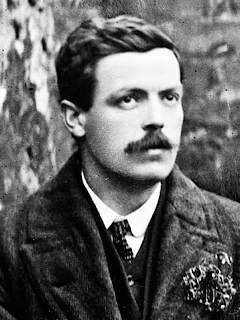
O’Hanrahan is the son of Richard Hanrahan, a cork cutter, and Mary Williams. His father appears to have been involved in the 1867 Fenian rising. The family moves to Carlow, County Carlow, where he is educated at Carlow Christian Brothers School and Carlow College Academy. On leaving school he works various jobs including a period alongside his father in the cork-cutting business. In 1898, he joins the Gaelic League and in 1899 founds the League’s first Carlow branch and becomes its secretary. Also in 1899 he helps found a working men’s club in Carlow. By 1903 he is in Dublin, where he is working as a proofreader for the Gaelic League printer An Cló Cumann. He publishes journalism under the by-lines “Art” and “Irish Reader” in several nationalist newspapers, including Sinn Féin and the Irish Volunteer. He is the author of two novels, A Swordsman of the Brigade (1914) and When the Norman Came (published posthumously in 1918).
In 1903, O’Hanrahan becomes involved in Maud Gonne’s and Arthur Griffith‘s campaign against the visit of King Edward VII to Ireland. The encounter with Griffith leads O’Hanrahan to join the newly formed Sinn Féin. He also becomes a member of the Irish Republican Brotherhood (IRB). In November 1913, he joins the Irish Volunteers. He is later employed as an administrator on the Volunteers headquarters staff. He is made quartermaster general of the 2nd Battalion. He and the commandant of the 2nd Battalion, Thomas MacDonagh, become close friends.
During the Easter Rising O’Hanrahan is second in command of Dublin’s 2nd Battalion under MacDonagh. He fights at Jacob’s Biscuit Factory, though the battalion sees little action other than intense sniping throughout Easter week, as the British Army largely stays clear of the impregnable factory dominating the road from Portobello Barracks on one side and Dublin Castle on the other. When the situation becomes desperate O’Hanrahan tells MacDonagh they “were inviting destruction of the factory by incendiary shells, and also of the surrounding thickly populated area.” MacDonagh orders a break-out amidst the chaos and confusion. O’Hanrahan leads “with some difficulty” the garrison out of the factory through New Bride Street gate.
O’Hanrahan is executed by firing squad on May 4, 1916 at Kilmainham Gaol. His brother, Henry O’Hanrahan, is sentenced to penal servitude for life for his role in the Easter Rising. After his execution, his mother and three sisters open a shop near Mountjoy Prison where they develop a secret line of communications between prisoners and their visitors.
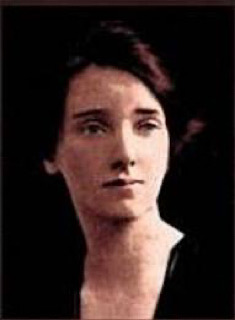
Macardle is born in Dundalk, County Louth, on March 7, 1889, into a wealthy brewing family famous for producing Macardle’s Ale. Her father, Sir Thomas Callan Macardle, is a Catholic who supports John Redmond and the Irish Home Rule movement, while her mother, Lucy “Minnie” Macardle, comes from an English Anglican background and is politically a unionist. Lucy converts to Catholicism upon her marriage to Thomas. Macardle and her siblings are raised as Catholics, but Lucy, who is politically isolated in Ireland, “inculcated in her children an idealised view of England and an enthusiasm for the British empire“. She receives her secondary education in Alexandra College, Dublin—a school under the management of the Church of Ireland—and later attends University College Dublin (UCD). Upon graduating, she returns to teach English at Alexandra where she had first encountered Irish nationalism as a student. This is further developed by her first experiences of Dublin’s slums, which “convinced her that an autonomous Ireland might be better able to look after its own affairs” than the Dublin Castle administration could.
Between 1914 and 1916, Macardle lives and works in Stratford-upon-Avon in Warwickshire, England. There, her encounters with upper-class English people who express anti-Irish sentiment and support keeping Ireland in the British Empire by force further weakens her Anglophilia. Upon the outbreak of World War I, she supports the Allies, as does the rest of her family. Her father leads the County Louth recruiting committee while two of her brothers volunteer for the British Army. Her brother, Lieutenant Kenneth Callan Macardle, is killed at the Battle of the Somme, while another brother, Major John Ross Macardle, survives the war and earns the Military Cross. While Macardle is a student, the Easter Rising occurs, an experience credited for a further divergence of her views regarding republicanism and her family.
On January 19, 1919, Macardle is in the public gallery for the inaugural meeting of the First Dáil and witnesses it declare unilateral independence from the United Kingdom, which is ultimately the catalyst for the Irish War of Independence.
By 1919 Macardle has befriended Maud Gonne MacBride, the widow of the 1916 Easter Rising participant John MacBride, and together the two work at the Irish White Cross, attending to those injured in the war. It is during this period she also becomes a propagandist for the nationalist side.
Following the signing of the Anglo-Irish Treaty in December 1921, Macardle takes the anti-treaty side in the ensuing Irish Civil War. Alongside Gonne MacBride and Despard, she helps found the Women Prisoners’ Defence League, which campaigns and advocates for republicans imprisoned by the newly established Irish Free State government. It is also during this same time that she begins working alongside Erskine Childers in writing for anti-treaty publications An Phoblacht and Irish Freedom.
In October 1922, Despard, Gonne MacBride and Macardle are speaking at a protest on O’Connell Street, Dublin against the arrest of Mary MacSwiney, a sitting Teachta Dála, by the Free State when Free State authorities move to break it up. Rioting follows and Free State forces open fire, resulting in 14 people being seriously wounded while hundreds of others are harmed in the subsequent stampede to flee. Following the event, Macardle announces she is going to pursue support of the Anti-treaty side full-time in a letter to Alexandra College, which ultimately leads to her dismissal on November 15, 1922. In the following days Macardle is captured and imprisoned by the Free State government and subsequently serves time in both Mountjoy Prison and Kilmainham Gaol, with Rosamond Jacob as her cellmate. During one point at her time in Kilmainham, Macardle is beaten unconscious by male wardens. She becomes close friends with Jacob and shares a flat with her in Rathmines later in the 1920s.
The Irish Civil War concludes in the spring of 1923, and Macardle is released from prison on May 9.
Following the Irish Civil War, Macardle remains active in Sinn Féin and is drawn into the camp of its leader Éamon de Valera and his wife Sinéad. She travels alongside the de Valeras as they tour the country and she is a frequent visitor to their home. As the trust between Macardle and de Valera develops, de Valera asks her to travel to County Kerry to investigate and document what later becomes known as the Ballyseedy massacre of March 1923, in which a number of unarmed republican prisoners are reportedly killed in reprisals. She obliges, and by May 1924 she has compiled a report that is released under the title of The Tragedies of Kerry.” Immediately upon the release of the report, the Minister for DefenceRichard Mulcahy sets up an inquiry in June 1924 to carry out a separate investigation by the government. However, the government’s inquiry comes to the conclusion there had been no wrongdoing committed. Her book The Tragedies of Kerry remains in print and is the first journalistic historical account of the Irish Civil War from those on the republican side detailing Ballyseedy, Countess Bridge and various other incidents that occur in Kerry during this time.
In 1926, Éamon de Valera resigns as President of Sinn Féin and walks out of the party following a vote against his motion that members of the party should end their policy of abstentionism against Dáil Éireann. De Valera and his supporters, including Macardle, form the new political party Fianna Fáil in May 1926, with Macardle immediately elected to the party’s National Executive|Ard Chomhairle, one of six female members out of twelve on the original party National Executive, the others being Hanna Sheehy-Skeffington, Kathleen Clarke, Countess Constance Markievicz and Linda Kearns. Macardle is made the party’s director of publicity. However, she resigns from Fianna Fáil in 1927 when the new party endorses taking their seats in Dáil Eireann. Nevertheless, her views remain relatively pro-Fianna Fáil and pro-de Valera.
Macardle recounts her civil war experiences in Earthbound: Nine Stories of Ireland (1924). She continues as a playwright for the next two decades. In her dramatic writing, she uses the pseudonymMargaret Callan. In many of her plays a domineering female character is always present. This is thought to be symbolic of her own relationship with her own mother. Her parents’ marriage had broken up as her mother returned to England and her father raised the children with servants in Cambrickville and they were sent away for school. This female character holds back the growth and development of the younger female character in Dorothy’s plays and writings.
By 1931, Macardle takes up work as a writer for The Irish Press, which is owned by de Valera and leans heavily toward supporting Fianna Fáil and Irish republicanism in general. In addition to being a theatre and literary critic for the paper, she also occasionally writes pieces of investigative journalism such as reports on Dublin’s slums. In the mid-1930s she also becomes a broadcaster for the newly created national radio station Radio Éireann.
In 1937, Macardle writes and publishes the work by which she is best known, The Irish Republic, an in-depth account of the history of Ireland between 1919 until 1923. Because of the book, political opponents and some modern historians consider her to have been a hagiographer toward de Valera’s political views. In 1939 she admits, “I am a propagandist, unrepentant and unashamed.” Overall, however, the book is well-received, with reviews ranging from “glowing” to measured praise. She is widely praised for her research, thorough documentation, range of sources and narration of dramatic events, alongside reservations about the book’s political slant. The book is reprinted several times, most recently in 2005. Éamon de Valera considers The Irish Republic the only authoritative account of the period from 1916 to 1926, and the book is widely used by de Valera and Fianna Fáil over the years and by history and political students. She spends seven years writing the book in a cottage in Delgany, County Wicklow, and it is a day-by-day account of the history of the events in Ireland from 1919 to 1923 recorded in painstaking detail together with voluminous source material.
In 1937, de Valera’s Fianna Fáil government is able to create a new Constitution of Ireland following a successful referendum. However, there is widespread criticism of the new Constitution from women, particularly republican women, as the language of the new Constitution emphasises that a woman’s place should be in the home. Macardle is among them, deploring what she sees as the reduced status of women in this new Constitution. Furthermore, she notes that the new Constitution drops the commitment of the 1916 Proclamation of the Irish Republic to guarantee equal rights and opportunities “without distinction of sex” and writes to de Valera questioning how anyone “with advanced views on the rights of women” can support it. DeValera also finds her criticising compulsory Irish language teaching in schools.
While working as a journalist with the League of Nations in the late 1930s, Macardle acquires a considerable affinity with the plight of Czechoslovakia being pressed to make territorial concessions to Nazi Germany. Believing that “Hitler‘s war should be everybody’s war,” she disagrees with de Valera’s policy of neutrality. She goes to work for the BBC in London, develops her fiction and, in the war’s aftermath, campaigns for refugee children – a crisis described in her book Children of Europe (1949). In 1951, she becomes the first president of the Irish Society of Civil Liberties.
Macardle dies of cancer on December 23, 1958, in a hospital in Drogheda, at the age of 69. Though she is somewhat disillusioned with the new Irish State, she leaves the royalties from The Irish Republic to her close friend Éamon de Valera, who had written the foreword to the book. De Valera visits her when she is dying. She is accorded a state funeral, with de Valera giving the oration. She is buried in Sutton, Dublin.
She is the eldest daughter of John and Anne Gaynor, of Athlone. At the age of fifteen she moves with her family to Dublin where her education is completed. Two of her sisters, Anna and Marcella, become nuns with Religious Sisters of Charity. At twenty-five, she marries the much older George Atkinson, a medical doctor and, with Sir John Gray, joint proprietor of the Freeman’s Journal. They are both interested in art and she accompanies her husband on many trips abroad, taking in the cultural centres of Europe. At home they make the acquaintance of prominent politicians, journalists and musicians. Regular guests at their house are Dr. John Shaw, editor of the Evening Mail, Rosa Mulholland and Katharine Tynan.
The loss of her only child in his fourth year deeply affected Atkinson and she throws herself into charitable and other good works. She moves with her husband to Drumcondra in Dublin, where she makes the acquaintance of Ellen Woodlock. Woodlock, a sister of Francis Sylvester Mahony, is born in Cork, County Cork, in 1811 and is married in 1830 and widowed quite young, just before the birth of her only son. Woodlock is the sister-in-law of Rev. Dr. Bartholomew Woodlock, who is President of All Hallows College. She intends to join a religious community in France but after spending a few years in that country (with her son in a nearby school) returns to Cork and then moves to Dublin. At this time the post-famine city is inundated with poverty-stricken families and abandoned children. Fever and disease are rife, and the Poor Law of the day is insufficient to meet the needs of the starving population. Many evictions are taking place in deplorable circumstances, which force the poor, however reluctantly, to seek refuge in the workhouses. The most vulnerable sections of the community are single women (including widows) and children. Woodlock is totally against placing children in workhouses and founds St. Joseph’s Industrial Institute in 1855 to rescue girls from that situation. With her, Atkinson interests herself in the female paupers of the South Dublin Union. With much difficulty in the 1860s, she gains permission for ladies like herself to enter and inspect the condition of young girls in the North and South Dublin Unions, after which she opens a better home to which many were transferred. She campaigns for years to improve the state of the workhouses and provide better conditions for the poverty-stricken. One of her sisters runs the Our Lady’s Hospice in Dublin, to which she donates funds. She helps Woodlock establish the Children’s Health Ireland at 9 Buckingham Street in 1872, which later moves to Temple Street, which she visits every day. Every week she visits hospitals and prisons, in the 1880s accompanying Katharine Tynan to visit the last of the Land Leaguers incarcerated in Kilmainham Gaol.
From the 1850s Atkinson contributes a large number of historical and biographical articles and essays to several publications, including Duffy’s Hibernian Magazine, The Month, The Nation and the Freeman’s Journal. She later writes for the Irish Monthly after it is established, and for the Irish Quarterly Review. Her Life of Mary Aikenhead is published in 1875 and is very well received. She follows this with biographies of the Irish sculptors John Henry Foley and John Hogan and also a life of Catherine of Siena. A collection of her essays, with a preface and biography by Rosa Mulholland, is published posthumously in 1895.
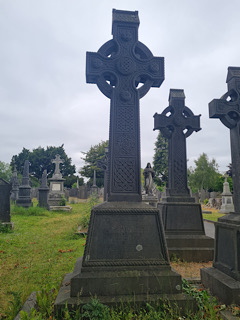
Atkinson dies in County Dublin on July 8, 1893, and is buried in Glasnevin Cemetery, Dublin, where the cemetery committee places a Celtic cross as a monument to her and her husband after his death on December 8, 1893.
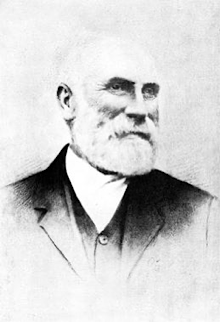
Kettle is one among six children of Thomas Kettle, a prosperous farmer, and his wife, Alice (née Kavanagh). His maternal grandmother, Mary O’Brien, had smuggled arms to United Irishmen in the district in 1798, while her future husband, Billy Kavanagh, had been a senior figure in the movement. He is educated at Ireland’s most prestigious Catholicboarding school, Clongowes Wood College. His education is cut short when he is called to help full-time on the farm. Though an autodidact and always a forceful writer, he is beset later by an exaggerated sense of his “defective education and want of talking powers.” Fascinated by politics, he enjoys the repeal excitement of 1841–44 and in his late teens speaks once or twice at Tenant Right League meetings in Swords. Through the 1850s and most of the 1860s he sets about expanding the family farm into a composite of fertile holdings in Swords, St. Margaret’s, Artane, and Malahide (c.150 acres). Getting on well with the Russell-Cruise family of Swords, his first landlords, he benefits from a favourable leasehold arrangement on their demesne in the early 1860s. The farm is mostly in tillage, though Kettle also raises some fat cattle and Clydesdale horses, which he eventually sells to Guinness’s.
Kettle first enters politics in 1867, when he disagrees with John Paul Byrne of Dublin Corporation in public and in print over the right of graziers to state aid during an outbreak of cattle distemper. In 1868, he joins an agricultural reform group initiated by Isaac Butt. He becomes friendly with Butt and later claims to have converted him to support tenant-right. His memoirs, which are somewhat egocentric, contain a number of such questionable claims. It is, however, the case that he habitually writes up, for his own use, cogent summaries of the direction of current political tendencies, which sometimes become useful confidential briefs for Butt and later Charles Stewart Parnell. He is among the published list of subscribers to the Home Rule League in July 1870.
In 1872, disappointed by the Landlord and Tenant (Ireland) Act 1870, Kettle organises a Tenants’ Defence Association (TDA) in north County Dublin, soon sensing the need for a central body to coordinate the grievances of similar groups around the country. The Dublin TDA effectively acts as this central body, under his guidance as honorary secretary. At the 1874 United Kingdom general election in Ireland, the Dublin TDA decides to challenge the electoral control of certain corporation interests in County Dublin. Kettle secures the cautious approval of CardinalPaul Cullen for any candidate supporting the principle of denominational education. He is also one of a deputation to ask Parnell to fight the constituency, which the latter loses. He becomes closely acquainted with Parnell, who frequently attends Dublin TDA meetings after his election for Meath in April 1875.
Taking a sombre view of the threat of famine in the west of Ireland after evidence of crop failure appears in early summer 1879, Kettle calls a conference of TDA delegates at the European Hotel in Bolton Street, Dublin, in late May. After a heated debate in which a proposal for a rent strike is greatly modified, Parnell comes to seek Kettle’s advice on whether to become involved in the evolving land agitation in County Mayo. Kettle urges him to go to the Westport meeting set for June 8, 1879, and claims later to have stressed in passing that “if you keep in the open you can scarcely go too far or be too extreme on the land question.” If the incident is correctly recounted, this is a most important statement, which virtually defines Parnell’s oratorical strategy throughout the land war. In October 1879, Kettle agrees to merge the TDA with a new Irish National Land League, set up at a meeting in the Imperial Hotel, Dublin, chaired by Kettle. As honorary secretary of the Land League, Kettle frankly admits that he is able to attend meetings without “the necessity of working.” His attendance is, however, among the most regular of all League officers, with him taking part in 73 of 107 meetings scheduled between December 1879 and October 1881.
In March 1880, Kettle disputes Michael Davitt‘s reluctance to use League funds in the general election. He canvasses vigorously together with Parnell in Kildare, Carlow, and Wicklow and is later pressed by his party leader into standing for election in County Cork, though aware that the local tenant movement has already prepared their own candidates. His association with Parnell antagonises the catholic hierarchy in Munster, who issues a condemnation of his candidacy. The hurly-burly of this election creates the persistent impression that Kettle is anti-clerical in politics, and he is defeated by 151 votes.
On a train journey to Ballinasloe in early April 1880, Kettle confides to Parnell his idea that land purchase can be facilitated by the recovery of tax allegedly charged in excess on Ireland by the British government since the act of union. At League meetings in June and July 1880, he advances his “catastrophist” plan: to cease attempts to prevent the development of an irresistible crisis among the Irish smallholding population, by diverting the application of League funds from general relief solely to the aid of evicted tenants, who might be temporarily housed “encamped like gypsies and the land lying idle,” in the belief that the British government will thereby be compelled to introduce radical remedial legislation. Smallholders do not have enough faith in either League or parliamentary politicians to listen.
At a meeting of the League executive in London and in Paris, before and after Davitt’s arrest on February 3, 1881, Kettle presents his plan that the parliamentary party should, if faced with coercive legislation, withdraw from Westminster, “concentrate” in Ireland, and call a general rent strike. Republicans on the League executive continually find themselves embarrassed by Kettle’s radical calls to action motivated solely by the project of agrarian reform. Parnell is later supposed to have lamented party failure to execute the plan at this juncture.
Kettle is arrested in June 1881 for calling for a collective refusal of rent. After two weeks in Naas jail he is transferred to Kilmainham Gaol, where in October he is, with some misgivings, one of the signatories to the No Rent Manifesto. Discharged from Kilmainham in late December 1881 owing to poor health, he returns principally to work on the family farm for most of the 1880s, though he claims to have formulated a draft solution for the plight of the agricultural labourer and “pushed it through” in correspondence with Parnell. He reemerges in 1890 to defend Parnell after the divorce scandal breaks. Attempting to establish a new ”centre” party independent of extreme Catholic and Protestant interests, he stands for election as a Parnellite at the 1891 County Carlow by-election, where he is comprehensively beaten, having endured weeks of insinuating harangues by Tim Healy, and raucous mob insults to the din of tin kettles bashed by women and children at meetings around the county. He is intermittently involved in County Dublin politics in the 1890s and 1900s and maintains a brusque correspondence on matters of the day in the national press.
Kettle dies on September 22, 1916, at his residence, St. Margaret’s, County Dublin, anguished by the death on September 9 of his brilliant son, Tom Kettle, near the village of Ginchy during the Battle of the Somme. He is buried at St. Colmcille’s cemetery, Swords.
Kettle marries Margaret McCourt, daughter of Laurence McCourt of Newtown, St. Margaret’s, County Dublin, farmer and agricultural commodity factor. They have five sons and six daughters.
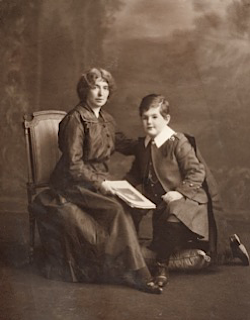
Newly widowed, Ceannt continues her republican activism, serving as Vice-President of Cumann na mBan and as a member of the Sinn Féin Standing Committee. She also plays a role in the development of the Sinn Féin Courts, a parallel legal system designed to offer an alternative to the British courts.
Ceannt is ardently opposed to the signature of the Anglo-Irish Treaty in December 1921. She is imprisoned by the Irish Free State government during the Irish Civil War in Mountjoy Prison for her anti-Treaty activity. Throughout the war, she serves at the highest levels within anti-Treaty Sinn Féin. In the years that follow, she spearheads efforts to secure state compensation for the widows and the children of those who had died in 1916 and in the Irish War of Independence. She serves as the head of the Children’s Fund of the Irish White Cross, an American-funded humanitarian organisation founded to assist victims of unrest in Ireland. She is a member of the Executive Committee of the Irish Red Cross.
(Pictured: Photograph, circa 1917, of Áine and Ronan Ceannt, the family of Éamonn Ceannt, who is executed for his participation in the 1916 Easter Rising)
Ffrench-Mullen is born on December 30, 1880, in Malta, where her father, St. Lawrence ffrench-Mullen, a Royal Navy surgeon, is stationed. She has two brothers, St. Lawrence Patrick Joseph (1890–1891) and Douglas (1893–1943).
Ffrench-Mullen’s interest in politics starts young. Her father is a committed Parnellite and their Dundrum home is a campaign headquarters. She is a radical feminist and republican during her life. Like many others of the time, she regards it as a woman’s right to vote. She joins the suffrage movement, and meets women with a similar worldview and values. The women’s suffrage movement is included in the Movements of Extremists reports of the Dublin Metropolitan Police. Ffrench-Mullen goes on to join Inghinidhe na hÉireann, a radical nationalist women’s group founded by Maud Gonne in 1900. The organisation develops into Cumann na mBan in 1913. Suffragist values are central to Cumann na mBan’s goal of standing side-by-side with men in the fight for the Irish Republic. Some members see this as women regaining the rights that had belonged to them in pre-invasion Gaelic civilisation. She is on the socialist wing of the moment, holding to the ideals of universal social equality of the syndicalist James Connolly and the Irish Citizen Army (ICA).
During the 1916 Easter Rising, ffrench-Mullen serves as a lieutenant in the Irish Citizen Army. She sees action with the St. Stephen’s Green and Royal College of Surgeons garrison. In St. Stephen’s Green she is in command of the 15 Citizen Army women who set up a medical station and field kitchen. While occupying St. Stephen’s Green, she and her comrades come under sustained heavy fire from the Shelbourne Hotel and buildings on the north side of the Green. After the surrender of the College of Surgeons garrison, ffrench-Mullen is one of the 77 women who had fought in the Rising who are imprisoned, among them her life partner Kathleen Lynn. While in captivity ffrench Mullen is moved three times, spending time in Richmond Barracks, Kilmainham Gaol and Mountjoy Prison. She is released on June 5, 1916.
Ffrench-Mullen meets Kathleen Lynn through Inghinidhe na h-Éireann. In 1915, she moves into Lynn’s home in Belgrave Road, Rathmines, where they live together for thirty years, until ffrench-Mullen’s death in 1944.
Ffrench-Mullen records in her prison diary in 1916 that she can face prison without fear once Lynn (whom she refers to as “the Doctor”) and she are together. Katherine Lynch of the Women’s Studies Centre at University College Dublin (UCD) describes them as partners, calling them part of a network of lesbians living in Dublin—which includes Helena Molony, Louie Bennett and Elizabeth O’Farrell—who meet through the suffrage movement and later become involved with the national and trade union movement. These women are featured, along with Eva Gore-Booth and others, in a 2023 TG4 documentary about “the radical queer women at the very heart of the Irish Revolution”: Croíthe Radacacha (Radical Hearts).
In 1919, Madeleine ffrench-Mullen and Kathleen Lynn establish Saint Ultan’s Children’s Hospital, also known as Teach Ultan, which is a female-run hospital for infants at 37 Charlemont Street, Dublin. The hospital focuses on children’s health and wellbeing, an area that is perceived at the time as women’s concern. In the aftermath of World War I many health problems have arisen including a rise in venereal diseases such as syphilis, carried from soldiers returning home from war. Many of Ireland’s infants of the time suffer from congenital syphilis (inherited disease from mother at birth), and this is a driving factor in the opening of St Ultan’s hospital. Tuberculosis is endemic in Ireland during its time as a British colony. Against steadfast opposition by the State and the Catholic Church, Lynn and ffrench-Mullen establish a vaccination project, vaccinating thousands of impoverished children who would have died of tuberculosis without their vaccines. Their success leads to the foundation of Ireland’s BCG vaccine programme, which has vaccinated all babies since the 1950s.
Ffrench-Mullen dies at the age of 63 in a Dublin nursing home on May 26, 1944. She is interred with her parents as well as her younger brothers (whom she outlives) in the ffrench-Mullen family plot in Glasnevin Cemetery. Her funeral takes place on the same day as the 1944 Irish general election.
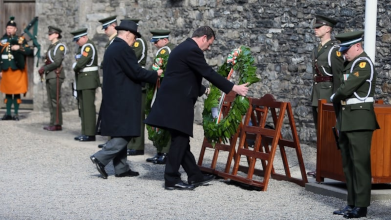
On Tuesday, May 3, 2016, ceremonies to mark the 100th anniversary of the executions of Tom Clarke, Patrick Pearse and Thomas MacDonagh are held in the Stonebreakers’ Yard in Kilmainham Gaol, the first executions of the leaders of the Easter Rising. Pearse, Clarke and MacDonagh are remembered in similar but distinct commemorations which take place on the spot where they died on May 3, 1916.
The transcripts of the short courts-martial are read aloud. In the case of Tom Clarke, who offered no defence and made no statement prior to his execution, the proceedings take only a few minutes to recount.
The presence of Capuchin friars from Church Street lends a sense of continuity to proceedings. Their predecessors had been there for the men in their final hours and their testimony is read aloud by their contemporaries.
Capuchin friar Adrian Kearns recalls the testimony of Fr. Columbus Murphy, who ministered to Pearse in his final hours. He did not “quail before the possibility of death . . . but faced his last moments with dignity and with grace.” Fr. Murphy remembered Pearse being a “sad, forlorn figure weighed down by the sense of responsibility” who lamented the loss of life and hoped it would not be in vain.
A wreath is laid on behalf of the Pearse family by his namesake Patrick Pearse, a great grandnephew.
Brother Peter Rogers recalls that Clarke was defiant rather than melancholic in his last hours. Fr. Murphy visited him as well. Clarke, the friar recalls, was “relieved that he was to be executed. His one dread was that he would be sent to prison again.” There is no member of Clarke’s family present to represent him at the commemorations, so a wreath is laid on behalf of the family by the staff of Kilmainham Gaol.
Several of MacDonagh’s surviving grandchildren are present. His granddaughter, Barbara Cashin, lays a wreath on behalf of the family. Her father Donagh and her aunt Barbara are left orphans a year after the Easter Rising when MacDonagh’s wife Muriel drowns off the coast of Skerries in July 1917. Cashin says her father had mixed feelings about the Rising, given the double tragedy that befell him and his sister a short time afterwards. “He had a horrendous childhood. He had a strange upbringing and hated to talk about it,” she says. “He had a split mind about it. I remember asking him as a child about it and saying he must be proud. Weren’t they wonderful. He said, ‘they may have been fools as well.’”
The commemorations are repeated the following day for the next four to have been executed: Joseph Plunkett, Edward Daly, Michael O’Hanrahan and Willie Pearse. Similar events are scheduled through May 12 to mark the exact centenary of the executions of the remaining eight men killed by a British Armyfiring squad at the Stonebreakers’ Yard.
In a letter to his family written on April 30, 1916, Thomas MacDonagh recalls “I was astonished to receive by a messenger from P.H. Pearse, Commandant General of the Army of the Irish Republic, an order to surrender unconditionality to the British General. I did not obey the order as it came from a prisoner. I as then in supreme command of the Irish Army, consulted with my second in command and decided to confirm the order. I knew that it would involve my death and the deaths of other leaders. I hoped that it would save many true men among our followers, good lives for Ireland. God grant it has done so and God approve our deed. For my self I have no regret. The one bitterness that death has for me is the separation it brings from my beloved wife Muriel, and my beloved children, Donagh and Barbara. My country will then treat them as wards, I hope. I have devoted myself too much to National work and too little to the making of money to leave them a competence. God help them and support them, and give them a happy and prosperous life. Never was there a better, truer, purer woman than my wife Muriel, or more adorable children than Don and Barbara. It breaks my heart that I shall never see my children again, but I have not wept or murmured. I counted the cost of this and am ready to pay it. Muriel has been sent for here. I do not know if she can come. She may have no one to take the children while she is coming. If she does.”
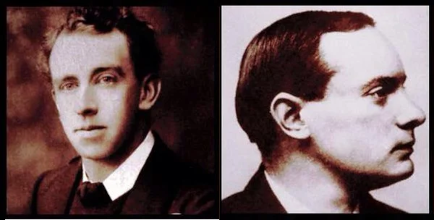
MacDonagh and Pearse are contemporaries of one another: poets, progressive educators, Gaelic revivalists. They are men who gird for battle “with a revolver in one hand and a copy of Sophocles in the other.” Each man commands a unit of Irish Volunteers during the Easter Rising, which takes place the week of April 24-30,1916. MacDonagh occupies Jacob’s biscuit factory and Pearse the General Post Office (GPO), from which he issues the surrender at the end of the week.
McDonagh and Pearse are signatories of the Proclamation of the Irish Republic, a document issued by the Irish Volunteers and the Irish Citizen Army at the beginning of the Easter Rising, proclaiming Ireland’s independence from the United Kingdom. The reading of the proclamation by Pearse outside the General Post Office (GPO) on Sackville Street (now O’Connell Street), Dublin‘s main thoroughfare, marks the beginning of the Rising.
Pearse’s and MacDonagh’s signatures on the Proclamation are a fatal endorsement for them and for each of the other five men to lend it their signatures. After being court-martialed, both Pearse and MacDonagh, along with Thomas Clarke, are executed by firing squad at Kilmainham Gaol in Dublin on May 3, 1916, the first of the rebels to be executed.
(Pictured: Thomas McDonagh (left) and Patrick Pearse)
Donnelly is the son of Timothy Donnelly, a master plumber, and Mary Brennan. He is the sixth of eight surviving children. The 1911 Census lists him living with his family at 34 Wexford Street. Apprenticed as a plumber, he becomes involved in the Irish Volunteers. During the Easter Rising of 1916 he is the commander of C Company of Éamon de Valera‘s command in Boland’s Mill.
Donnelly is Vice-Commandant of the 3rd Battalion of the Dublin Brigade of the IRA during the Irish War of Independence. On February 10, 1921, he is arrested. Four days later he escapes from Kilmainham Gaol along with Ernie O’Malley and Frank Teeling. Returning to his command in the IRA, he is appointed chief of the Irish Republican Police (IRP) in mid-1921 as part of an attempt to enforce law and order in those areas of the country where the Royal Irish Constabulary (RIC) have been forced out.
Donnelly founds the National Association of the Old IRA in an attempt to mend some of the rifts in the Republican Movement. He is a member of the provisional National Executive of the Republican Prisoners’ Release Association.
On March 2, 1940, Donnelly is one of the founders of Córas na Poblachta and serves as its president. He becomes a founding member of Clann na Poblachta in 1946.
As one of the most senior surviving veterans of the Easter Rising, Donnelly plays a prominent role in the 50th anniversary commemorations in 1966. He dies in Dublin on December 7 of that year.
Emmett is born in the Hammond’s Marsh area of Cork, County Cork, on April 24, 1764, the son of Dr. Robert Emmet from County Tipperary (later to become State Physician of Ireland) and Elizabeth Mason of County Kerry, both of whose portraits are today displayed at Cork’s Crawford Art Gallery. He is the elder brother of Robert Emmet, who is executed for leading the Irish Rebellion of 1803, becoming one of Ireland’s most famous republican martyrs. His sister, Mary Anne Holmes, holds similar political beliefs.
Emmet is a man of liberal political sympathies and becomes involved with a campaign to extend the democratic franchise for the Irish Parliament and to end discrimination against Catholics. He is called to the Irish bar in 1790 and quickly obtains a practice, principally as counsel for prisoners charged with political offenses. He also becomes the legal adviser of the Society of the United Irishmen.
When the Dublin Corporation issues a declaration of support of the Protestant Ascendancy in 1792, the response of the United Irishmen is their nonsectarian manifesto which is largely drawn up by Emmet. In 1795 he formally takes the oath of the United Irishmen, becoming secretary in the same year and a member of the executive in 1797. As by this time the United Irishmen had been declared illegal and driven underground, any efforts at peaceful reform of government and Catholic emancipation in Ireland are abandoned as futile, and their goal is now the creation of a non-sectarian Irish republic, independent from Britain and to be achieved by armed rebellion. Although Emmet supports this policy, he believes that the rebellion should not commence until French aid has arrived, differing from more radical members such as Lord Edward FitzGerald.
British intelligence infiltrates the United Irishmen and manages to arrest most of their leaders on the eve of the rebellion. Though not among those taken at the house of Oliver Bond on March 12, 1798, Emmet is arrested about the same time and is one of the leaders imprisoned initially at Kilmainham Gaol and later in Scotland at Fort George until 1802. Upon his release he goes to Brussels where he is visited by his brother Robert in October 1802 and is informed of the preparations for a fresh rising in Ireland in conjunction with French aid. However, at that stage France and Britain are briefly at peace, and the Emmets’ pleas for help are turned down by Napoleon.
Emmet receives news of the failure of his brother’s rising in July 1803 in Paris, where he is in communication with Napoleon. He then emigrates to the United States and joins the New York bar where he obtains a lucrative practice.
After the death of Matthias B. Hildreth, Emmet is appointed New York State Attorney General in August 1812 but is removed from office in February 1813 when the opposing Federalist Party obtains a majority in the Council of Appointment.



 seamus dubhghaill