seamus dubhghaill

Promoting Irish Culture and History from Little Rock, Arkansas, USA


Leave a comment

Birth of William O’Brien, Journalist & Politician

william-o-brien

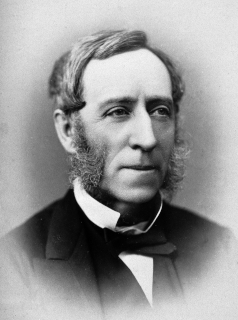
William O’Brien, journalist and politician who is for several years second only to Charles Stewart Parnell among Irish Nationalist leaders, is born on October 2, 1852, in Mallow, County Cork. He is perhaps most important for his Plan of Campaign (1886), by which Irish tenant farmers withhold all rent payments from landlords who refuse to lower their rents and instead pay the money into a mutual defense fund on which evicted tenants can draw.

O’Brien shares his primary education with a townsman with whom he is later to have a close political connection, Canon Patrick Augustine Sheehan of Doneraile. He enjoys his secondary education at the Cloyne diocesan college, which results in his being brought up in an environment noted for its religious tolerance. He greatly values having had this experience from an early age, which strongly influences his later views for the need of such tolerance in Irish national life.

A journalist from 1869, O’Brien is appointed editor of the Irish Land League’s weekly United Ireland by Parnell in 1881. In October of that year the British authorities suppress the paper and put O’Brien in Kilmainham Gaol in Dublin, along with Parnell and others. There he draws up a No Rent Manifesto, which, when read at a Land League meeting, results in the outlawing of the League. Released from prison in 1882, he resumes the editorship of United Ireland, and in 1883 he is elected to the British House of Commons, remaining there until 1895. His “plan of campaign” is disavowed by Parnell but nonetheless stirs up fierce agitation. To suppress the movement, the British government passes the Criminal Law and Procedure (Ireland) Act 1887, under which O’Brien is jailed again.

For some time following the O’Shea divorce case (1889–90), in which Parnell is corespondent, O’Brien attempts to mediate between the Parnellites and their opponents, although he sides with the majority in rejecting Parnell’s continued leadership of the Irish Home Rule struggle. In 1902 he supports the Land Conference, which secures agreement between landlords and tenants’ representatives and results in George Wyndham‘s Land Purchase Act (1903), which is designed to turn Irish tenant farmers into occupying owners.

In 1898 O’Brien founds the United Irish League, and in 1910, after control of that group passes to the Parnellite John Redmond, he establishes the All-for-Ireland League in opposition to the older organization. Most of his personal following, however, join Arthur Griffith’s Sinn Féin party by the end of World War I.

Retiring from political life, O’Brien contents himself with writing and declines Éamon de Valera‘s offer to stand for Fianna Fáil in the 1927 general election. He dies suddenly at the age of 75 on February 25, 1928, while on a visit to London with his wife. His remains rest in Mallow, and one of the principal streets in the town bears his name to this day. His head-bust overlooks the town Council’s Chamber Room and one of his finest portraits hangs in University College Cork.


Leave a comment

Birth of Motion Picture Actress Greer Garson

greer-garson

Eileen Evelyn Greer Garson, motion picture actress best known as Greer Garson, is born on September 29, 1904, in Manor Park, London, England. Her classic beauty and screen persona of elegance, poise, and maternal virtue make her one of the most popular and admired Hollywood stars of the World War II era.

Garson often claims to have been born in County Down, Ireland, where her grandparents lived and which she happily visited as a child, but she is, in fact, born and raised in London. Although she wanted to study acting, she wins a scholarship to the University of London and her practical-minded family encourage her to pursue a teaching career. After graduating with honours, she works briefly for Encyclopædia Britannica and a London advertising firm but continually tries to get her foot into a backstage door.

In 1932 Garson makes her debut with the Birmingham Repertory Theatre, playing a middle-aged schoolteacher in Elmer Rice’s Street Scene. Later that year she tours in George Bernard Shaw’s Too True to Be Good, billing herself as Greer, a maternal family name, for the first time. She soon establishes herself as a popular ingenue and leading lady in London’s West End. In 1938 Louis B. Mayer, head of Metro-Goldwyn-Mayer (MGM), catches her performance in Old Music and signs her to a contract with his studio.

After suffering through a discouraging first year in Hollywood, Garson returns to England to film the small role of Mrs. Chips in MGM’s Goodbye, Mr. Chips (1939). She receives her first Oscar nomination for the role but loses to Vivien Leigh for Gone with the Wind. Her portrayal of the beloved schoolteacher’s charming wife endears her to the American public and sets her career in motion. It is the first in a series of roles in which she plays women of great loyalty, refinement, and wifely or motherly strength.

Garson’s other significant films of the period include Pride and Prejudice (1940), Blossoms in the Dust (1941), her first appearance with her frequent costar Walter Pidgeon, Random Harvest (1942), and Madame Curie (1943). The film that cements her reputation and image, however, is Mrs. Miniver (1942). Filmed during World War II and tailor-made for the times, Mrs. Miniver extolls the strength and spirit of the British home front and is one of the year’s biggest hits. Her grace-under-pressure portrayal of a courageous wife and mother, the personification of British fortitude, not only wins her an Academy Award but is credited with bolstering American support for the war.

Following the war Garson’s career falters. The public rejects her attempts to reforge her image to that of a more fun-loving, less noble heroine in such films as Adventure (1945) and Julia Misbehaves (1948). During the 1950s she appears in several unexceptional films and television dramas and stars on Broadway in Auntie Mame. Her remarkably convincing portrayal of Eleanor Roosevelt in Sunrise at Campobello (1960) is widely praised and earns her a seventh Oscar nomination, but she performs only occasionally thereafter, devoting most of her time to philanthropic causes, including the endowment of scholarships for theatre students at Southern Methodist University in University Park, Texas and the construction of a campus theatre.

Garson spends her final years occupying a penthouse suite at the Presbyterian Hospital of Dallas. She dies there from heart failure on April 6, 1996, at the age of 91. She is interred beside her husband in the Sparkman-Hillcrest Memorial Park Cemetery in Dallas.


Leave a comment

Birth of James Dillon, Fine Gael Leader

james-dillon

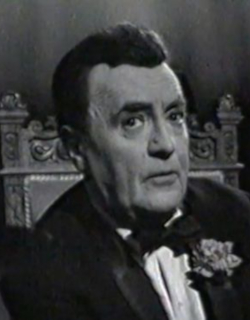
James Matthew Dillon, politician and Fine Gael leader, is born in Drumcondra, Dublin on September 26, 1902. He serves as Leader of the Opposition and Leader of Fine Gael from 1959 to 1965 and Minister for Agriculture from 1948 to 1951 and from 1954 to 1957. He serves as a Teachta Dála (TD) from 1932 to 1969.

Dillon is the son of John Dillon, the last leader of the Irish Parliamentary Party, which had been swept away by Sinn Féin at the 1918 general election. He is educated at Mount St. Benedict’s, in Gorey, County Wexford, University College Galway and King’s Inns. He qualifies as a barrister and is called to the Bar in 1931. He studies business methods at Selfridges in London. After some time at Marshall Field’s in Chicago he returns to Ireland where he becomes manager of the family business known as Monica Duff’s in Ballaghaderreen, County Roscommon.

Between 1932 and 1937 Dillon serves as Teachta Dála (TD) for the Donegal constituency for the National Centre Party and after its merger with Cumann na nGaedheal, for the new party of Fine Gael. He plays a key role in instigating the creation of Fine Gael and becomes a key member of the party in later years. He remains as TD for Monaghan from 1937 to 1969. He becomes deputy leader of Fine Gael under W. T. Cosgrave.

Dillon resigns from Fine Gael in 1942 over its stance on Irish neutrality during World War II. While Fine Gael supports the government’s decision to stay out of the war, he urges the government to side with the Allies. He is a rabid anti-Nazi, proclaiming the Nazi ideology is “the devil himself with twentieth-century efficiency.” His zealousness against the Nazis draws him the ire of the German minister to Ireland, Eduard Hempel, who denounces him as a “Jew” and “German-hater.”

Dillon has a personally eventful 1942. While holidaying in Carna, County Galway he meets Maura Phelan of Clonmel on a Friday. By that Monday the two are engaged and six weeks after that they are married.

Dillon is one of the independents who supports the first inter-party government (1948–1951) and is appointed Minister for Agriculture. As Minister, he is responsible for huge improvements in Irish agriculture. Money is spent on land reclamation projects in the areas of less fertile land while the overall quality of Irish agricultural produce increases.

Dillon rejoins Fine Gael in 1953. He becomes Minister for Agriculture again in the second inter-party government (1954–1957). In 1959 he becomes leader of Fine Gael, succeeding Richard Mulcahy. He becomes president of the party in 1960. In 1965 Fine Gael loses the general election to Seán Lemass and Fianna Fáil. The non-Fianna Fáil parties win 69 seats to Fianna Fáil’s 72. Had the other parties been able to win four more seats between them, they would have been able to form a government. Having narrowly failed to become Taoiseach, Dillon stands down as Fine Gael leader after the election.

Dillon is a colourful contributor to Dáil proceedings and is noted for his high standard of oratory. He remains a TD until 1969, when he retires from politics. He died in Malahide, Dublin on February 10, 1986, at the age of 83.


Leave a comment

Birth of John Holwell, Black Hole of Calcutta Survivor

CREATOR: gd-jpeg v1.0 (using IJG JPEG v62), quality = 100

John Zephaniah Holwell, surgeon, an employee of the English East India Company, and a temporary Governor of Bengal (1760), is born in Dublin on September 17, 1711. He is also one of the first Europeans to study Indian antiquities.

Holwell grows up in London and studies medicine at Guy’s Hospital. He gains employment as a surgeon in the East India Company and is sent to India in 1732. He serves in this capacity until 1749. In 1751, he is appointed as zamindar of the 24 Parganas district of Bengal. He then serves as a member of the Council of Fort William (Calcutta) and defends the settlement against Siraj ud-Daulah in 1756.

In June 1756, Holwell is a survivor of the Black Hole of Calcutta, the incident in which British subjects and others are crammed into a small poorly ventilated chamber overnight, resulting in many deaths. His 1758 account of this incident obtains wide circulation in England and some claim this gains support for the East India Company’s conquest of India. His account of the incident is not publicly questioned during his lifetime nor for more than a century after his death. However, in recent years, his version of the event has been called into question by many historians.

Holwell succeeds Robert Clive as temporary Governor of Bengal in 1760, but is dismissed from the Council in 1761 for remonstrating against the appointment of Henry Vansittart as Governor of Bengal. He is elected Fellow of the Royal Society (FRS) in 1767.

Holwell has also become an important source for modern historians of medicine, as a result of his description of the practice of smallpox variolation in eighteenth-century Bengal, An Account of the Manner of Inoculating for the Small Pox in the East Indies with Some Observations on the Practice and Mode of Treating that Disease in those Parts (London, 1767).

Holwell dies on November 5, 1798 in Pinner, United Kingdom.


Leave a comment

Death of Richard Boyle, 1st Earl of Cork

richard-boyle-1st-earl-of-cork

Richard Boyle, 1st Earl of Cork, English-born politician who serves as Lord Treasurer of the Kingdom of Ireland and is also known as the Great Earl of Cork, dies on September 15, 1643 in Youghal, County Cork. He is an important figure in the continuing English colonisation of Ireland in the 16th and 17th centuries, as he acquires large tracts of land in plantations in Munster in southern Ireland.

Boyle is born at Canterbury, Kent, England on October 3, 1566, the second son of Roger Boyle, a descendant of an ancient landed Herefordshire family, and of Joan, daughter of John Naylor. He goes to The King’s School, Canterbury, at the same time as Christopher Marlowe. His university education begins at Corpus Christi College, Cambridge, England, in 1583. After this he studies law at the Middle Temple in London and becomes a clerk to Sir Roger Manwood, who is then Chief Baron of the Exchequer.

Boyle goes to Ireland in 1588. He becomes deputy Escheator under Ireland’s Escheator General John Crofton and uses his office to enrich himself, only to lose his property in the Munster rebellion in 1598. Returning to England, he is imprisoned on charges of embezzlement arising from his activities in Ireland. He is acquitted by a royal court, however, and in 1600 Elizabeth I of England appoints him clerk of the council of Munster.

Two years later, Boyle purchases Sir Walter Raleigh’s estates in the Irish counties of Cork, Waterford, and Tipperary. By employing settlers imported from England, he develops his lands and founds ironworks and other industries. The enormous wealth he accumulates brings him honours and political influence. Created Earl of Cork in 1620, he is appointed a Lord Justice of Appeal in 1629 and Lord High Treasurer in 1631. Nevertheless, soon after Sir Thomas Wentworth (afterward Earl of Strafford) goes to Ireland as lord deputy in 1633, Boyle is fined heavily for possessing defective titles to some of his estates. Thereafter his political influence declines.

Boyle dies at Youghal on September 15, 1643, having been chased off his lands in the Irish Rebellion of 1641. His sons, however, recover the family estates after the suppression of the rebellion.

Boyle’s first wife, Joan Apsley, the daughter and co-heiress of William Apsley of Limerick, whom he marries on November 6, 1595, dies at Mallow, County Cork on December 14, 1599 during childbirth. By his second wife, Catherine Fenton, daughter of Sir Geoffrey Fenton, he has eight daughters and seven sons, including the renowned chemist Robert Boyle and the statesman-dramatist Roger Boyle, 1st Earl of Orrery.


Leave a comment

Birth of Louis MacNeice, Poet & Playwright

louis-macneice

Louis MacNeice, British poet and playwright, is born in Belfast on September 12, 1907. He is a member, along with Wystan Hugh Auden, Cecil Day-Lewis, and Stephen Spender, of a group whose low-keyed, unpoetic, socially committed, and topical verse is the “new poetry” of the 1930s. His body of work is widely appreciated by the public during his lifetime, due in part to his relaxed but socially and emotionally aware style.

MacNeice is the youngest son of John Frederick MacNeice and Elizabeth Margaret (“Lily”) MacNeice. His father, a Protestant minister, goes go on to become a bishop of the Anglican Church of Ireland. The family moves to Carrickfergus, County Antrim, soon after MacNeice’s birth. His mother dies of tuberculosis in December 1914. In 1917, his father remarries to Georgina Greer and his sister Elizabeth is sent to board at a preparatory school at Sherborne, England. MacNeice joins her at Sherborne Preparatory School later in the year.

After studying at the University of Oxford (1926–30), MacNeice becomes a lecturer in classics at the University of Birmingham (1930–36) and later in the Department of Greek at the Bedford College for Women, London (1936–40). In 1941 he begins to write and produce radio plays for the British Broadcasting Corporation. Foremost among his fine radio verse plays is the dramatic fantasy The Dark Tower (1947), with music by Benjamin Britten.

MacNeice’s first book of poetry, Blind Fireworks, appears in 1929, followed by more than a dozen other volumes, such as Poems (1935), Autumn Journal (1939), Collected Poems, 1925–1948 (1949), and, posthumously, The Burning Perch (1963). An intellectual honesty, Celtic exuberance, and sardonic humour characterize his poetry, which combines a charming natural lyricism with the mundane patterns of colloquial speech. His most characteristic mood is that of the slightly detached, wryly observant, ironic and witty commentator. Among MacNeice’s prose works are Letters from Iceland (with W.H. Auden, 1937) and The Poetry of W.B. Yeats (1941). He is also a skilled translator, particularly of Horace and Aeschylus (The Agamemnon of Aeschylus, 1936).

By the early 1960s, MacNeice is “living on alcohol,” and eating very little, but still writing. In August 1963 he goes caving in Yorkshire to gather sound effects for his final radio play, Persons from Porlock. Caught in a storm on the moors, he does not change out of his wet clothes until he is home in Hertfordshire. Bronchitis evolves into viral pneumonia and he is admitted to hospital in London on August, 27. He dies there on September 3, 1963 at the age of 55. He is buried in Carrowdore churchyard in County Down, alongside his mother.

MacNeice’s final book of poems, The Burning Perch, is published a few days after his funeral. His life-long friend from Oxford, W.H. Auden, who gives a reading at MacNeice’s memorial service, describes the poems of his last two years as “among his very best.”


Leave a comment

Death of Christy Brown, Writer & Painter

christy-brown

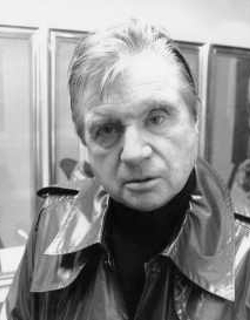
Christy Brown, Irish writer and painter who has cerebral palsy and is able to write or type only with the toes of one foot, dies on September 7, 1981, in Parbrook, Somerset, England. His most recognized work is his autobiography, My Left Foot (1954).

Brown is born into a working-class Irish family at the Rotunda Hospital in Dublin on June 5, 1932. He is one of 22 siblings of parents Bridget Fagan and Patrick Brown. After his birth, doctors discover that he has severe cerebral palsy, a neurological disorder which leaves him almost entirely spastic in his limbs. Though urged to commit him to a hospital, his parents are unswayed and subsequently determined to raise him at home with their other children. During his adolescence, social worker Katriona Delahunt becomes aware of his story and begins to visit the Brown family regularly. She brings him books and painting materials as, over the years, he has shown a keen interest in the arts and literature. He has also demonstrated extremely impressive physical dexterity since, soon after discovering several household books, he had learned to both write and draw himself with his left leg, the only limb over which he has unequivocal control.

Brown quickly matures into a serious artist. Although he famously receives almost no formal schooling during his youth, he does attend St. Brendan’s School-Clinic in Sandymount intermittently. At St. Brendan’s he comes in contact with Dr. Robert Collis, a noted author. Collis discovers that Brown is also a natural novelist and, later, helps use his own connections to publish My Left Foot, by then a long-gestating autobiographical account of Brown’s struggle with everyday life amidst the vibrant culture of Dublin.

When My Left Foot becomes a literary sensation, one of the many people who write letters to Brown is married American woman Beth Moore. Brown and Moore become regular correspondents and, in 1960, he holidays in North America and stays with Moore at her home in Connecticut. When they meet again in 1965, they began an affair. Brown journeys to Connecticut once more to finish his magnum opus, which he had been developing for years. He finally does so in 1967 with help from Moore, who introduces and administers a strict working regimen, mostly by denying him alcohol until a day’s work is completed. The book, Down All the Days, is published in 1970. It is an ambitious project drawn largely from a playful expansion of My Left Foot. It becomes an international best-seller, translated into fourteen languages. The Irish Times reviewer Bernard Share claims the work is “the most important Irish novel since Ulysses.”

Down All the Days is followed by a series of other novels, including A Shadow on Summer (1972), Wild Grow the Lilies (1976) and A Promising Career (published posthumously in 1982). He also publishes three poetry collections: Come Softly to My Wake, Background Music and Of Snails and Skylarks. All the poems are included in The Collected Poems of Christy Brown.

Brown’s fame continues to spread internationally, and he becomes a prominent celebrity. Upon his return to Ireland, he is able to use proceeds from the sales of his books to design and move into a specially constructed home outside Dublin with his sister’s family. Though he and Beth had planned to marry and live together at the new home, and though Moore had informed her husband of these plans, it is around this time that he begins an affair with Englishwoman Mary Carr, whom he meets at a party in London. He then terminates his affair with Moore and marries Carr at the Registry Office, Dublin, in 1972. They move to Stoney Lane, Rathcoole, County Dublin, to Ballyheigue, County Kerry and then to Somerset. He continues to paint, write novels, poetry and plays. His 1974 novel, A Shadow on Summer, is based on his relationship with Moore, whom he still considers a friend.

Brown’s health deteriorates after marrying Carr. He becomes mainly a recluse in his last years, which is thought to be a direct result of Carr’s influence and perhaps abusive nature. He dies at the age of 49 on September 7, 1981, after choking during a lamb chop dinner. His body is found to have significant bruising, which leads many to believe that Carr had physically abused him. Further suspicions arise after Georgina Hambleton’s biography, The Life That Inspired My Left Foot, reveals a supposedly more accurate and unhealthier version of their relationship. The book portrays Carr as an abusive alcoholic and habitually unfaithful. He is buried in the Glasnevin Cemetery in Dublin.

A film adaptation of My Left Foot directed by Jim Sheridan is produced in 1989 from a screenplay by Shane Connaughton. Daniel Day-Lewis stars as Brown and Brenda Fricker as his mother. Both win Academy Awards for their performances. The film also receives Academy Award nominations for Best Picture, Best Director, and Best Adapted Screenplay.

The Anglo-Irish rock band The Pogues pay tribute to Christy Brown with a song titled “Down All the Days.” It is the seventh track on their 1989 recording Peace and Love. Similarly, U2 releases a song titled “Down All the Days” with the 20th anniversary edition of Achtung Baby. The Men They Couldn’t Hang also writes a song “Down All the Days” which appears on their Silver Town album also released in 1989.


Leave a comment

Death of Sir Richard Steele, Writer, Playwright & Politician

richard-steele

Sir Richard Steele, writer, playwright, and politician, remembered as co-founder, with his friend Joseph Addison, of the magazine Tatler, dies in Carmarthen, Wales on September 1, 1729.

Steele is born in Dublin on March 12, 1672, to Richard Steele, an attorney, and Elinor Symes (née Sheyles). He is largely raised by his uncle and aunt, Henry Gascoigne and Lady Katherine Mildmay. A member of the Protestant gentry, he is educated at Charterhouse School, where he first meets Addison. After starting at Christ Church, Oxford, he goes on to Merton College, Oxford, then joins the Life Guards of the Household Cavalry in order to support King William‘s wars against France. He is commissioned in 1697 and rises to the rank of captain within two years. He leaves the army in 1705, perhaps due to the death of the 34th Foot’s commanding officer, Robert Lucas, 3rd Baron Lucas, which limits his opportunities of promotion.

Steele is a member of the Kit-Kat Club. Both Steele and Addison become closely associated with Child’s Coffee-house in St. Paul’s Churchyard.

Steele’s first published work, The Christian Hero (1701), attempts to point out the differences between perceived and actual masculinity. Written while he is serving in the army, it expresses his idea of a pamphlet of moral instruction.

Steele writes a comedy that same year titled The Funeral. This play meets with wide success and is performed at Theatre Royal, Drury Lane, bringing him to the attention of the King and the Whig party. Next, he writes The Lying Lover, one of the first sentimental comedies, but a failure on stage. In 1705, he writes The Tender Husband with contributions from Addison, and later that year writes the prologue to The Mistake, by John Vanbrugh, also an important member of the Whig Kit-Kat Club with Addison and Steele.

In 1706 Steele is appointed to a position in the household of Prince George of Denmark, consort of Anne, Queen of Great Britain. He also gains the favour of Robert Harley, 1st Earl of Oxford and Earl Mortimer.

The Tatler, Steele’s first journal, first appears on April 12, 1709, and appears three times a week. He writes this periodical under the pseudonym Isaac Bickerstaff and gives Bickerstaff an entire, fully developed personality. The Tatler is closed down to avoid the complications of running a Whig publication that had come under Tory attack.

Steele becomes a Whig Member of Parliament in 1713, for Stockbridge. He is soon expelled for issuing a pamphlet in favor of the Hanoverian succession. When George I of Great Britain comes to the throne in the following year, Steele is knighted and given responsibility for the Theatre Royal, Drury Lane in London. He returns to parliament in 1715, for Boroughbridge.

While at Drury Lane, Steele writes and directs the sentimental comedy The Conscious Lovers, which is an immediate hit. However, he falls out with Addison and with the administration over the Peerage Bill (1719), and in 1724 he retires to his second wife’s homeland of Wales. He remains in Carmarthen after his wife’s death, dying there on September 1, 1729. He is buried there at St. Peter’s Church. During restoration of the church in 2000, his skull is discovered in a lead casket, having previously been accidentally disinterred during the 1870s.

(Pictured: Portrait of Sir Richard Steele by Jonathan Richardson)


Leave a comment

Birth of James Molyneaux, Northern Irish Politician

james-molyneaux

James Henry Molyneaux, Baron Molyneaux of Killead, Northern Irish unionist politician and leader of the Ulster Unionist Party (UUP) from 1979 to 1995, is born in Killead, County Antrim on August 27, 1920. He is a leading member and sometime Vice-President of the Conservative Monday Club. An Orangeman, he is also Sovereign Grand Master of the Royal Black Institution from 1971 to 1995. He is an unrelenting though peaceful supporter of the Protestant cause during the factional conflict that divides Northern Ireland from the 1960s until the early 21st century.

Molyneaux is educated at nearby Aldergrove School. Although he is raised an Anglican, as a child he briefly attends a local Catholic primary school. He leaves school at age 15 and works on his father’s poultry farm. When a Catholic church near his home is burned down by Ulster loyalist arsonists in the late 1990s, he helps to raise funds for its rebuilding.

In World War II Molyneaux serves in the Royal Air Force between 1941 and 1946. He participates in the D-Day landings in FranceFrance and in the liberation of the Belsen-Belsen concentration camp, and occasionally gives interviews about what he sees there. On April 1, 1947, he is promoted to flying officer.

After demobilization Molyneaux establishes a printing business with his uncle, and in 1946 he joins the UUP. He is first elected to local government in 1964 and enters Parliament six years later. He staunchly opposes all power-sharing deals, notably the Anglo-Irish Agreement (1985) between British Prime Minister Margaret Thatcher and Irish Taoiseach Garret FitzGerald, which gives Dublin an official consultative role in the affairs of Northern Ireland and paves the way for devolution.

Molyneaux lacks the firebrand public image of his longtime rival Ian Paisley, who in 1971 breaks with the UUP to form the Democratic Unionist Party (DUP). He never acquiesces to the Good Friday Agreement, which calls for the devolution of Northern Ireland’s government from London to Belfast, however, unlike Paisley and David Trimble, who in 1997 succeeds Molyneaux as the UUP leader and in April 1998 signs the devolution accord.

On retiring as UUP leader, Molyneaux is knighted as a Knight Commander of the Order of the British Empire (KBE) in 1996. The following year, after standing down as an MP at the 1997 general election, he is created a life peer on June 10, 1997, as Baron Molyneaux of Killead, of Killead in the County of Antrim.

James Molyneaux dies at the age of 94 in Antrim, County Antrim, Northern Ireland on March 9, 2015, Commonwealth Day.


Leave a comment

Death of English Actress Ellen Kean

LEAD Technologies Inc. V1.01

Ellen Kean, one of the finest English actresses of her day, dies in Bayswater, City of Westminster, England on August 20, 1880. She is known as Ellen Tree until her marriage in 1842, after which she is known both privately and professionally as Mrs. Charles Kean and always appears in productions together with her husband.

Kean is born Eleanora Tree in Ireland on December 12, 1805, the third of four daughters of Cornelius Tree, an official of the East India Company in London. Her three sisters become actresses, but, unlike Ellen, retire from the stage when they marry. Her professional stage debut is in a musical version of Twelfth Night in London in 1822 as Olivia alongside her sister Maria as Viola. She gains experience touring in the provinces, and from 1826 is a regular member of the companies at the Theatre Royal, Drury Lane and Theatre Royal Haymarket, making a success in The Wonder and The Youthful Queen. At the Royal Opera House at Covent Garden, she takes on the roles of William Shakespeare‘s Romeo to the Juliet of Fanny Kemble, Françoise de Foix in Francis I, and Lady Townley in The Provoked Husband.

In 1832, by now established as a leading actress, Tree accepts an engagement in Hamburg, Germany, where a junior member of the company is Charles Kean. He had made an undistinguished debut at Drury Lane in 1827, and he and Tree had acted together in 1828 in a play called Lovers’ Vows and later in Othello. In the German season they fall in love but are persuaded by family and friends not to marry in haste. Tree returns to London and resumes her successful West End career, including a considerable success in Ion in another breeches role. At the end of 1836, Tree goes to the United States, where she tours in Shakespeare for more than three years, playing heroines such as Rosalind, Viola and Beatrice, among other roles. By the time of her return to England in 1839, she has made a profit of £12,000 on the tour, equivalent to at least £1 million in modern terms.

By 1841 Charles Kean has established himself as a successful actor, and he and Tree appear together in Romeo and Juliet at the Theatre Royal Haymarket. They are married the next year, and she at once switches her professional name from Ellen Tree to Mrs. Charles Kean. For the next nine years they appear together at the Haymarket, making a joint visit to the United States in 1846. In 1850, Kean takes over the management of the Princess’s Theatre in London. The Times called this “the most important period of Mrs. Kean’s career…. Hitherto she had been the Rosalind and the Viola of the stage; henceforward her name was to be associated with characters of a more matronly type” in roles including Lady Macbeth and Gertrude in Hamlet. The same writer also credits her for “the good taste and artistic completeness” of Kean’s productions. Ellen Terry, who makes her first stage appearance as the boy Mamillius in The Winter’s Tale, remembers Kean “as Hermione wearing a Greek wreath round her head and a crinoline with many layers of petticoats.”

Charles Kean dies in 1868, and his widow retires from the stage, living quietly in Bayswater, in the City of Westminster, where she dies at the age of 73 on August 20, 1880. The Times in its obituary says, “Mrs. Kean is not to be numbered with the greatest votaries of the English stage, but her acting was distinguished by considerable power, tenderness and refinement.” She is buried in a vault alongside her husband at Catherington, Hampshire.

(Pictured: “Charles Kean and Wife Ellen Tree” by Mathew Brady Studio (1844-1894), modern albumen print from wet plate collodion negative, National Portrait Gallery, Smithsonian Institution)