seamus dubhghaill

Promoting Irish Culture and History from Little Rock, Arkansas, USA


Leave a comment

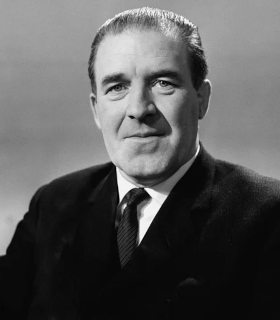
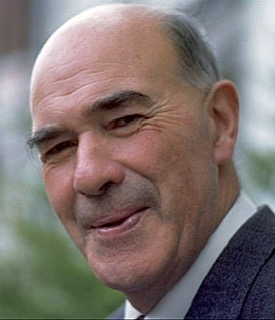
Death of Conor Cruise O’Brien, Politician, Writer & Historian

Conor Cruise O’Brien, politician, writer, historian and academic often nicknamed “The Cruiser,” dies in Howth, Dublin, on December 18, 2008.

Cruise O’Brien is born in Rathmines, Dublin on November 3, 1917. He serves as Minister for Posts and Telegraphs from 1973 to 1977, a Senator for Dublin University from 1977 to 1979, a Teachta Dála (TD) for the Dublin North-East constituency from 1969 to 1977 and a Member of the European Parliament (MEP) from January 1973 to March 1973.

Cruise O’Brien follows his cousin Owen into Sandford Park School, which has a predominantly Protestant ethos despite objections from Catholic clergy. He subsequently attends Trinity College Dublin (TCD) before joining the Irish diplomatic corps.

Although he is a fierce advocate of his homeland, Cruise O’Brien is a strong critic of Irish Republican Army (IRA) violence and of what he considers the romanticized desire for reunification with Northern Ireland. His collection of essays Maria Cross: Imaginative Patterns in a Group of Modern Catholic Writers (1952; written under the pseudonym Donat O’Donnell) impresses UN Secretary-General Dag Hammarskjöld, who in 1961 appoints him UN special representative in the Congo, later the Democratic Republic of the Congo. He orders UN peacekeeping forces into the breakaway Katanga province, and the resulting scandal forces him out of office. Despite UN objections, he writes To Katanga and Back (1963) to explain his actions.

After serving as vice-chancellor of the University of Ghana (1962–65) and Albert Schweitzer Professor of Humanities at New York University (1965–69), Cruise O’Brien enters Irish politics. He holds a Labour Party seat in Dáil Éireann from 1969 to 1977 and then in the Senate from 1977 to 1979, representing Trinity College, of which he is pro-chancellor (1973–2008).

In 1979, Cruise O’Brien is named editor in chief of the British Sunday newspaper The Observer, but he leaves after three tumultuous years. He remains an active newspaper columnist, especially for the Irish Independent until 2007. His books include States of Ireland (1972) and On the Eve of the Millennium (1995), as well as perceptive studies of Charles Stewart ParnellEdmund Burke, and Thomas Jefferson.

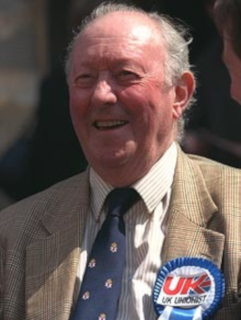
In early July 1996, in the period of Cruise O’Brien’s involvement as a UK Unionist Party (UKUP) representative in talks at Stormont, he suffers a mild stroke. He recovers well, but is left with anxiety about his recall of names. His last public appearance is on September 7, 2006, to deliver an address on the ninetieth anniversary of the death of Tom Kettle, in the old House of Lords chamber of the Bank of Ireland on College Green.

Cruise O’Brien dies at the age of 91 on December 18, 2008, in Howth, Dublin. His funeral is at the Church of the Assumption, Howth, and he is interred in Glasnevin Cemetery.


Leave a comment

Death of Oscar Traynor, Fianna Fáil Politician & Republican

Oscar TraynorFianna Fáil politician and republican, dies in Dublin on December 14, 1963. He serves as Minister for Justice from 1957 to 1961, Minister for Defence from 1939 to 1948 and 1951 to 1954, Minister for Posts and Telegraphs from 1936 to 1939 and Parliamentary Secretary to the Minister for Defence from June 1936 to November 1936. He serves as a Teachta Dála (TD) from 1925 to 1927 and 1932 to 1961. He is also involved with association football, being the President of the Football Association of Ireland (FAI) from 1948 until 1963.

Traynor is born in Dublin on March 21, 1886, into a strongly nationalist family. He is educated by the Christian Brothers. In 1899, he is apprenticed to John Long, a famous woodcarver. As a young man he is a noted footballer and tours Europe as a goalkeeper with Belfast Celtic F.C. whom he plays with from 1910 to 1912. He rejects claims soccer is a foreign sport calling it “a Celtic game, pure and simple, having its roots in the Highlands of Scotland.”

Traynor joins the Irish Volunteers and takes part in the Easter Rising in 1916, being the leader of the Hotel Metropole garrison. Following this he is interned in Wales. During the Irish War of Independence, he is brigadier of the Dublin Brigade of the Irish Republican Army and leads the disastrous attack on the Custom House in 1921 and an ambush on the West Kent Regiment at Claude Road, Drumcondra on June 16, 1921, when the Thompson submachine gun is fired for the first time in action.

When the Irish Civil War breaks out in June 1922, Traynor takes the Anti-Treaty IRA side. The Dublin Brigade is split, however, with many of its members following Michael Collins in taking the pro-Treaty side. During the Battle of Dublin, he is in charge of the Barry’s Hotel garrison, before making their escape. He organises guerilla activity in south Dublin and County Wicklow, before being captured by Free State troops in September. He is then imprisoned for the remainder of the war.

On March 11, 1925, Traynor is elected to Dáil Éireann in a by-election as a Sinn Féin TD for the Dublin North constituency, though he does not take his seat due to the abstentionist policy of Sinn Féin. He is re-elected as one of eight members for Dublin North in the June 1927 Irish general election but just one of six Sinn Féin TDs. Once again, he does not take his seat. He does not contest the September 1927 Irish general election but declares his support for Fianna Fáil. He stands again in the 1932 Irish general election and is elected as a Fianna Fáil TD for Dublin North.

In 1936, Traynor is first appointed to the Cabinet as Minister for Posts and Telegraphs. In September 1939, he is appointed Minister for Defence and holds the portfolio to February 1948. In 1948, he becomes President of the Football Association of Ireland, a position he holds until his death. He serves as Minister for Defence in several Fianna Fáil governments and as Minister for Justice, where he is undermined by his junior minister, and later TaoiseachCharles Haughey, before he retires in 1961.

Traynor dies in Dublin at the age of 77 on December 14, 1963. He has a road named in his memory, running from the Malahide Road through Coolock to Santry in Dublin’s northern suburbs.


Leave a comment

Death of J. J. Walsh, Politician & Businessman

James Joseph Walsh, generally referred to as J. J. Walsh, Postmaster General (later Minister for Posts and Telegraphs) of the Irish Free State from 1922 to 1927, dies in Dublin on February 3, 1948. He is also a senior Gaelic Athletic Association (GAA) organiser and Cumann na nGaedheal politician. Later, he has heavy connections with fascism, including his association with Ailtirí na hAiséirghe.

Walsh is born in the townland of Rathroon, near Bandon, County Cork, on February 20, 1880. His family comes from a farming background, “working a substantial holding of medium but well-cultivated land.” Until the age of fifteen, he attends a local school in Bandon, but by his own account “as far as learning went, I may as well have been at home.” Together with his school friend P. S. O’Hegarty, he passes the Civil Service exams for the Postal service. He later works locally as a clerk in the Post Office. Like O’Hegarty, he spends three years in London at King’s College, studying for the Secretary’s Office “a syllabus (which) differed little from the Indian Civil Service.” While O’Hegarty succeeds in his studies, Walsh does not, and returns to Cork where a friend, Sir Edward Fitzgerald, arranges work for him on the Entertainments Committee of the Cork International Exhibition.

Walsh is active in the GAA, promoting Gaelic games in many areas, but particularly in Cork city and county. His interest in organised sports has a strong political dimension.

“I happened to be one of those who realised the potentialities of the GAA as a training ground for Physical Force. Contamination with the alien and all his works was taboo. I gathered around me a force of youthful enthusiasts from the University, Civil Service and Business. With this intensely organised instrument, war was declared on foreign games which were made to feel the shock so heavily that one by one, Soccer and Rugby Clubs began to disappear.”

Walsh is also instrumental in establishing the “revived” Tailteann Games. He is Chairman of the Cork County Council GAA and is involved in the founding of the Cork City Irish Volunteers.

Walsh participates in the Easter Rising in 1916 in the General Post Office (GPO). He claims he is responsible for mobilising 20 members of the Hibernian Rifles and takes them to the GPO. However, Rifles commandant John J. Scollan contradicts this account. He is promoted from Rifleman to Vice-Commandant of the Hibernian Rifles in 1915.

Walsh is arrested following the general surrender and sentenced to death after a court-martial at Richmond Barracks. This is almost immediately commuted to life imprisonment, but he is released the following year under a general amnesty.

In later 1917 Walsh is arrested and imprisoned after making a speech declaring “the only way to address John Bull is through the barrel of a rifle.”

In the autumn of 1919 Walsh is involved in a failed assassination attempt on John French, 1st Earl of Ypres.

Walsh is elected as a Sinn Féin Member of Parliament (MP) in the 1918 United Kingdom general election for the Cork City constituency. As a member of the First Dáil he is arrested for partaking in an illegal government. He is released in 1921 and supports the Anglo-Irish Treaty and goes on to become a founding member of the new political party, Cumann na nGaedheal. He serves as Postmaster General from 1922 until 1924 and joins the cabinet of W. T. Cosgrave between 1924 and 1927, after the office is reconstituted as the Department of Posts and Telegraphs. He is elected at every election for the Cork Borough constituency until 1927 when he retires from government.

In August 1922 Walsh is part of a government committee which is intended to consider what the Irish Free State’s policy towards north-east Ulster will be.

During World War II, known at the time in Ireland as “the Emergency,” Walsh’s connections with fascism, including his association with Ailtirí na hAiséirghe, bring him to the attention of the Directorate of Military Intelligence, the Intelligence branch of the Irish Army. Their request to the Minister for Justice, Gerald Boland, to place a tap on Walsh’s phone is, however, refused. He is closely associated with Irish-based pro-Nazi initiatives through his association with Ailtirí na hAiséirghe, frequently expressing his views with anti-semitic rhetoric.

After leaving politics Walsh founds a bus company which operates with great success between the city centre and south Dublin. When private bus services are bought out by the Dublin Tramway Co., he invests his profits in other Irish companies including Clondalkin Paper Mills, Solus Teoranta and Benbulben Barytes. He is also a director of Killeen and Newbrook Paper Mills, timber exporters Dinan Dowds, the Moore Clothing Co., and Fancy Goods. In 1937 he is elected president of the Federation of Irish Manufacturers, having previously held the vice-presidency. His businesses benefit greatly from the protectionist measures introduced by Fianna Fáil after 1932. Nonetheless, he complains that not enough has been done to make capital available to native entrepreneurs, and that “alien” interests are allowed too much scope to penetrate the Irish market.

In 1944 Walsh publishes a short memoir, Recollections of a Rebel. In his later years he suffers from deteriorating health, leading to his resignation from the presidency of the Federation of Irish Manufacturers in 1946. He dies in Dublin on February 3, 1948. He is buried in St. Finbarr’s Cemetery, Cork, County Cork.

On April 24, 2016, a plaque commemorating Walsh is unveiled in Kilbrittain, County Cork.


Leave a comment

Death of P. S. O’Hegarty, Writer, Editor & Historian

Patrick Sarsfield O’Hegarty (Irish: Pádraig Sáirséal Ó hÉigeartaigh), Irish writer, editor and historian and a member of the Supreme Council of the Irish Republican Brotherhood, dies on December 17, 1955.

O’Hegarty is born on December 29, 1879, at Carrignavar, County Cork, to John and Katherine (née Hallahan) Hegarty. His parents’ families emigrate to the United States after the Great Famine, and his parents are married in Boston, Massachusetts. His father is a member of the Irish Republican Brotherhood (IRB).

He is educated at North Monastery CBS, where he forms an enduring friendship with Terence MacSwiney. In 1888, his father dies of tuberculosis at the age of 42. Left destitute, his mother pawns her wedding ring to pay for an advertisement looking for work, and eventually becomes a cook.

He joins the postal service in Cork in 1897. Along with J. J. Walsh, he plays on the Head Post Office hurling team. He joins the IRB and represents Munster on the IRB Supreme Council. He starts writing for Arthur Griffith‘s United Irishman and the Shan van Vocht, a periodical established by Alice Milligan and Ethna Carbery.

He serves at the main Postal Sorting Office in Mount Pleasant, London, from 1902 to 1913. Along with J. J. Walsh, he spends three years at King’s College London, studying for the Secretary’s Office. While he succeeds in his studies, Walsh does not and returns to Ireland. O’Hegarty becomes the IRB representative for South East England and joins the Gaelic League and Sinn Féin and becomes a strong advocate of the Irish language. In 1905, he is elected secretary of the local Dungannon Club, which draws in as members Robert Lynd, Herbert Hughes and George Cavan. In 1907, as Sinn Féin’s London Secretary, he approves and signs the membership card of Michael Collins, later becoming friend and mentor to Collins.

He has to return to Ireland for a break due to overwork in 1909 and gives up some of his work for the Gaelic League. However, he takes over as editor of the IRB publication, Irish Freedom. It is in this publication that he famously writes, concerning the visit of King George V to Ireland in 1911: “Damn your concessions, England: we want our country!” In 1912, at the height of the Playboy riots, he writes four articles entitled “Art and the Nation” in Irish Freedom, which take a very liberal and inclusionist approach to Anglo-Irish literature and art in general but invokes the wrath of many of the paper’s readers.

In 1913, he is re-posted to Queenstown (present-day Cobh) as postmaster. He continues editing nationalist newspapers such as Irish Freedom (founded in 1910 and suppressed in December 1914 on account of its seditious content) and An tÉireannach and joins the Irish Volunteers. At the outbreak of war he is moved to Shrewsbury, probably on account of his political activities. In 1915, he marries Wilhelmina “Mina” Smyth, a schoolteacher and suffragist, and is then moved to Welshpool, Montgomeryshire. In the aftermath of the 1916 Easter Rising, he is opposed to physical force. In 1918, he refuses to take the British Oath of Allegiance and resigns his position in the Post Office.

O’Hegarty feels that the Abbey Theatre is “doing good for Ireland” and supports W. B. Yeats against attacks from Arthur Griffith and like-minded Nationalists. He opposes the extremist views of D. P. Moran, who seeks a Roman Catholic Irish-speaking Ireland.

He is Secretary of the Irish Department of Post and Telegraphs from 1922 to 1945. He is elected a member of the Irish Academy of Letters in 1954.

His son, Seán Ó hÉigeartaigh, is a founder of the Irish-language publishing house Sáirséal agus Dill. His daughter Gráinne, a harpist, marries Senator Michael Yeats, son of W. B. Yeats.

O’Hegarty’s papers are acquired by the Kenneth Spencer Research Library at the University of Kansas. This includes an outstanding collection of books, pamphlets and periodicals of W. B. Yeats.

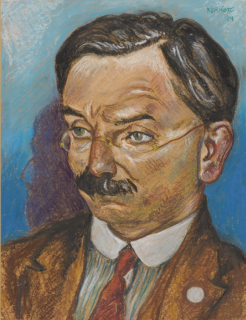
(Pictured: “P. S. O’Hegarty, 1929,” pastel on paper by Harry Kernoff, RHA, property from the Yeats family)


Leave a comment

Birth of J. B. Malone, Hillwalking Enthusiast

John James Bernard (J. B.) Malone, an Irish hillwalking enthusiast who popularises the pastime through his television programmes and books, is born on December 13, 1913, in Leeds, West Yorkshire, England. He is responsible for the establishment of the Wicklow Way as a recognised walking trail, having first proposed it in 1966.

Malone is born to James Bernard Malone and his wife, Agnes (née Kenny), both from Dublin. He is raised mainly in England and completes his secondary education at the Marist Brothers College, Grove Ferry, Kent.

Malone moves to Ireland in 1931 where he finds employment in a builders’ providers firm and an insurance company before joining the Irish Army in 1940. There he becomes a cartographer in the intelligence section. In 1947, having left the army, he goes to work at the Department of Posts and Telegraphs as a draughtsman. He remains employed in the Irish civil service until his retirement in 1979. Also in 1947, he marries Margaret Garry, and they have three children.

Malone starts hillwalking in 1931 when he climbs Montpelier Hill to visit the ruins of the Hell Fire Club. Later, while on leave during his military career, he develops a detailed knowledge of walking routes throughout the hills of County Wicklow. He sits on the Board of An Taisce in Ireland from 1970 to 1974.

Following his retirement from the civil service, Malone is appointed as a field officer with the Long-Distance Walking Routes Committee of Cospóir, the Irish Sports Council. There, he negotiates rights of way with landowners to enable his vision of the Wicklow Way to become a reality. He first proposes a guided walking route through the Wicklow hills in 1966, although he had first raised the idea as early as 1942.

From 1938 to 1975 Malone contributes a regular column to the Evening Herald entitled Over the Hills. Between 1967 and 1968 he writes the column Know your Dublin, illustrated by Liam C. Martin. The column features information on a Dublin landmark and is later compiled into a book published in 1969.

During the 1960s, Malone presents a television documentary series on RTÉ entitled Mountain and Meadow, in which, accompanied by a cameraman, he introduces viewers to a variety of hill walks in Wicklow and surrounding counties. In 1980, he presents a one-hour TV programme on the newly opened Wicklow Way.

From 1950 to 1988, Malone writes several books on hillwalking in the Dublin Mountains and the Wicklow Mountains.

In 1980, Malone is made an honorary life member of An Óige, the Irish Youth Hostel Association (IYHA), in recognition of his contribution to promoting the Irish countryside.

Malone dies at the age of 75 on October 17, 1989, at St. James’s Hospital in Dublin. He is buried in Bohernabreena Cemetery, Tallaght, County Dublin.

Following his death in 1989, Malone’s contribution to hillwalking in Ireland is marked by the erection of the J.B. Malone Memorial Stone plaque in his honour on a section of the Wicklow Way overlooking Lough Tay.

In October 2014, on the 25th anniversary of Malone’s death, the South Dublin Libraries hold an exhibition on his life and work.

(Pictured: The John James Bernard Malone memorial, on the Wicklow Way overlooking Lough Tay and Luggala)


Leave a comment

The Fianna Fáil Government Fires the RTÉ Authority

On November 24, 1972, the Fianna Fáil government fires the RTÉ Authority after it broadcast a recorded radio interview on November 19 by Kevin O’Kelly with Seán Mac Stíofáin, then Chief of Staff of the Provisional Irish Republican Army, on the RTÉ This Week radio programme. Mac Stíofáin is arrested on the same day, charged with IRA membership, and the interview is used as evidence against him. He is sentenced to six months imprisonment on November 25 by the Special Criminal Court in Dublin.

The announcement of dismissal comes shortly before 10:00 p.m. in a statement from Gerry Collins, Minister for Posts and Telegraphs. It is an abrupt but not unexpected climax to a week of conflict and speculation after the broadcast of the Mac Stíofáin interview.

Collins reads the announcement on RTÉ but does not make any further comments. He also announces the appointment of the new Authority. The Taoiseach, Jack Lynch, who is in London for his meeting with British Prime Minister Edward Heath, is kept fully informed of developments during the day.

Lynch says at the London airport before his departure for Dublin that the dismissal is an exercise in democracy. The action is taken because the Government sees the need for “protecting our community.”

Lynch speaks to reporters just after midnight after arriving at the airport from his dinner with the Prime Minister at 10 Downing Street. He says that the Cabinet had decided its course of action in regard to RTÉ on Tuesday, November 21, and that he had been in touch by phone throughout the day with his colleagues in Dublin.

The RTÉ Authority, the Taoiseach says, is controlled by Acts of Parliament and is subject to the democratic process.

It is the obligation of the Government to ensure that their terms of reference are adhered to. The Authority breached a directive given under the Broadcasting Act, ordering them “not to project people who put forward violent means for achieving their purpose.”

In the opinion of the Government, the interview with Mac Stíofáin is a breach of that directive. When Lynch is asked by a reporter how the Government knew that the RTÉ interview with Mac Stíofáin was taking place, he says that they have their own way of knowing things.

The comments of the members of the dismissed Authority reflect indignation, hurt and relief.

Phyllis O’Kelly, widow of the late Seán T. O’Kelly, former President of Ireland, says that it was “a strange thing to happen.” She does not accept that the station was deliberately trying to outwit the Government. The interviewer, Kevin O’Kelly, had listed various people that he wished to interview, and they seemed all right to her.

The Authority’s letter to the Minister makes it abundantly clear that the Authority appreciates his right to issue the direction. It also makes clear its anxiety to abide by that direction.

(From: The Irish Times Archives, http://www.irishtimes.com, November 25, 2010)


Leave a comment

Death of Neil Blaney, Fianna Fáil Politician

Neil Terence Columba Blaney, Irish politician first elected to Dáil Éireann in 1948 as a Fianna Fáil Teachta Dála (TD) representing Donegal East, dies in Dublin of cancer at the age of 73 on November 8, 1995. He serves as Minister for Posts and Telegraphs (1957), Minister for Local Government (1957–1966) and Minister for Agriculture and Fisheries (1966–1970). He is Father of the Dáil from 1987 until his death.

Blaney is born on October 1, 1922, in Fanad, County Donegal, the second eldest of a family of eleven. His father, from whom he got his strong republican views and his first introduction to politics, had been a commander in the Irish Republican Army (IRA) in Donegal during the Irish War of Independence and the Irish Civil War. He is educated locally at Tamney on the rugged Fanad Peninsula and later attends St. Eunan’s College in Letterkenny. He later works as an organiser with the Irish National Vintners and Grocers Association.

Blaney is first elected to Dáil Éireann for the Donegal East constituency in a by-election in December 1948, following the death of his father from cancer. He also becomes a member of the Donegal County Council. He remains on the backbenches for a number of years before he is one of a group of young party members handpicked by Seán Lemass to begin a re-organisation drive for the party following the defeat at the 1954 Irish general election. Within the party he gains fame by running the party’s by-election campaigns throughout the 1950s and 1960s. His dedicated bands of supporters earn the sobriquet “the Donegal Mafia,” and succeed in getting Desmond O’Malley and Gerry Collins elected to the Dáil.

Following Fianna Fáil’s victory at the 1957 Irish general election, Éamon de Valera, as Taoiseach, brings new blood into the Cabinet in the shape of Blaney, Jack Lynch, Kevin Boland and Mícheál Ó Móráin. Blaney is appointed Minister for Posts and Telegraphs however he moves to the position of Minister for Local Government at the end of 1957 following the death of Seán Moylan. He retains the post when Lemass succeeds de Valera as Taoiseach in 1959. During his tenure it becomes possible to pay rates by installment and he also introduces legislation which entitles non-nationals to vote in local elections.

In 1966 Lemass resigns as Taoiseach and Fianna Fáil leader. The subsequent leadership election sees Cork politician Jack Lynch become party leader and Taoiseach. In the subsequent cabinet reshuffle Blaney is appointed Minister for Agriculture and Fisheries.

In 1969, when conflict breaks out in Northern Ireland, Blaney is one of the first to express strong Irish republican views, views which contradict the policy of the Irish Government, in support of Northern nationalists. From around late 1968 onwards, he forms and presides over an unofficial Nationalist group in Leinster House popularly known as “the Letterkenny Table.” The group is dominated by Blaney up until his death.

There is general surprise when, in an incident known as the Arms Crisis, Blaney, along with Charles Haughey, is sacked from Lynch’s cabinet amid allegations of the use of the funds to import arms for use by the IRA. Lynch asks for their resignations but both men refuse, saying they did nothing illegal. Lynch then advises President de Valera to sack Haughey and Blaney from the government. Haughey and Blaney are subsequently tried in court but are acquitted. However, many of their critics refuse to recognise the verdict of the courts. Although Blaney is cleared of wrongdoing, his ministerial career is brought to an end.

Lynch subsequently moves against Blaney so as to isolate him in the party. When Blaney and his supporters try to organise the party’s national collection independently, Lynch acts and in 1972 Blaney is expelled from Fianna Fáil for “conduct unbecoming.”

Following his expulsion from Fianna Fáil, Kevin Boland tries to persuade Blaney to join the Aontacht Éireann party he is creating but Blaney declines. Instead, he contests all subsequent elections for Independent Fianna Fáil – The Republican Party, an organisation that he built up. Throughout the 1970s there are frequent calls for his re-admittance to Fianna Fáil but the most vocal opponents of this move are Fianna Fáil delegates from County Donegal.

At the 1979 European Parliament elections Blaney tops the poll in the Connacht–Ulster constituency to the annoyance of Fianna Fáil. He narrowly loses the seat at the 1984 election but is returned to serve as a Member of the European Parliament (MEP) in the 1989 election where he sits with the regionalist Rainbow Group. He also canvasses for IRA hunger striker Bobby Sands in the Fermanagh and South Tyrone by-election, in which Sands is elected to Westminster.

Blaney holds his Dáil seat until his death from cancer at the age of 73 on November 8, 1995, in Dublin.


Leave a comment

Albert Reynolds Succeeds Charles Haughey as Taoiseach

Albert Reynolds, Fianna Fáil politician and businessman, succeeds Charles Haughey as Taoiseach on February 11, 1992, following Haughey’s retirement as leader of Fianna Fáil.

Reynolds is born in Rooskey, County Roscommon on November 3, 1932. He serves as a Teachta Dála (TD) from 1977 to 2002, Minister for Posts and Telegraphs from 1979 to 1981, Minister for Transport from 1980 to 1981, Minister for Industry and Energy from March 1982 to December 1982, Minister for Industry and Commerce from 1987 to 1988, Minister for Finance from 1988 to 1991, Leader of Fianna Fáil from 1992 to 1994 and as Taoiseach from 1992 to 1994.

Reynolds is educated at Summerhill College in Sligo, County Sligo and works for a state transport company before succeeding at a variety of entrepreneurial ventures, including promoting dances and owning ballrooms, a pet-food factory, and newspapers. In 1974 he is elected to the Longford County Council as a member of Fianna Fáil. He enters Dáil Éireann, lower house of the Oireachtas, the Irish parliament, in 1977 as a member representing the Longford-Westmeath parliamentary constituency and becomes Minister for Posts and Telegraphs in Haughey’s Fianna Fáil government (1979–81). He is subsequently Minister of Industry and Commerce (1987–88) and Minister for Finance (1988–91) in Haughey’s third and fourth governments. He breaks with Haughey in December 1991. On January 30, 1992, Haughey retires as leader of Fianna Fáil at a parliamentary party meeting. Reynolds easily defeats his rivals Mary O’Rourke and Michael Woods in the party leadership election and succeeds Haughey as Taoiseach on February 11, 1992.

The Fianna Fáil–Progressive Democrats coalition that Reynolds inherits breaks up in November 1992 but, after the general election later that month, he surprises many observers by forming a new coalition government with the Labour Party in January 1993. He plays a significant part in bringing about a ceasefire between the Irish Republican Army (IRA) and unionist paramilitary groups in Northern Ireland in 1994, but he is less effective in maintaining his governing coalition. When this government founders in November 1994, he resigns as Taoiseach and as leader of Fianna Fáil, though he remains acting prime minister until a new government is formed the following month. He unsuccessfully seeks his party’s nomination as a candidate for the presidency of Ireland in 1997. He retires from public life in 2002.

In December 2013, it is revealed by his son that Reynolds is in the final stages of Alzheimer’s disease. Reynolds dies on August 21, 2014. The last politician to visit him is former British Prime Minister John Major. His funeral is held at Church of the Sacred Heart, in Donnybrook on August 25, 2014. Attendees include President Michael D. Higgins, Taoiseach Enda Kenny, former British Prime Minister John Major, former Social Democratic and Labour Party (SDLP) leader and Nobel Prize winner John Hume, Sinn Féin President Gerry Adams, Secretary of State for Northern Ireland Theresa Villiers, former President of Ireland Mary McAleese, former Taoiseach Liam Cosgrave, Archbishop of Dublin Diarmuid Martin and the Lord Mayor of Dublin Christy Burke. An unexpected visitor from overseas is the frail but vigorous Jean Kennedy Smith, former United States Ambassador to Ireland, who is the last surviving sibling of John Fitzgerald Kennedy. Reynolds is buried at Shanganagh Cemetery with full military honours.


Leave a comment

Birth of Con Collins, Sinn Féin Politician

Cornelius Collins (Irish: Conchobhar Ó Coileáin), Irish Sinn Féin politician known as Con Collins, is born in Arranagh, Monagea, Newcastle West, County Limerick, on November 13, 1881.

Collins has joined the Gaelic League by 1910 when working in London for the civil service, as had Michael Collins the previous year. He is a member of the Irish Volunteers and the Irish Republican Brotherhood (IRB). He and Austin Stack are on their way to meet Sir Roger Casement at Banna Strand in County Kerry in 1916 during a failed attempt to land arms for Irish Republicans from the German vessel Aud, when they are arrested by the British authorities on Easter Saturday. They spend Easter Week in Tralee Barracks and in solitary confinement on Spike Island, County Cork. They are then held with Terence MacSwiney, Arthur Griffith and others in Richmond Barracks before being sentenced to penal servitude for life. He is deported to Frongoch internment camp in Wales where he spends the rest of the year and much of 1917.

Collins is elected as a Sinn Féin MP for West Limerick at the 1918 Irish general election. In January 1919, Sinn Féin MPs who had been elected in the Westminster elections of 1918 refuse to recognise the Parliament of the United Kingdom and instead assemble at the Mansion House in Dublin as a revolutionary parliament called Dáil Éireann. At the 1921 Irish elections he is elected for the constituency of Kerry–Limerick West. He opposes the Anglo-Irish Treaty and votes against it.

Collins refuses an offer of the Ministry for Posts and Telegraphs provided he switch to the pro-Treaty side. Having been sworn to non-violence – together with Richard Mulcahy – by the Augustinians, he does not join the anti-Treaty forces. He is again re-elected for Kerry–Limerick West at the 1922 Irish general election, this time as anti-Treaty Sinn Féin Teachta Dála (TD). He does not contest the 1923 Irish general election and retires from politics.

Collins dies in Dublin on November 23, 1937, at the age of 56, and is buried in Mount St. Lawrence cemetery, Limerick.

He and Piaras Béaslaí share a distinction in that they contest and are elected in three Irish general elections unopposed by any other candidates.

(Pictured: Wedding photo of Sinn Féin politician Con Collins, September 12, 1923)


Leave a comment

Birth of Ruairí Ó Brádaigh, Republican Political & Military Leader

Ruairí Ó Brádaigh, Irish republican political and military leader, is born Peter Roger Casement Brady on October 2, 1932, in Longford, County Longford. He is Chief of Staff of the Irish Republican Army (IRA) from 1958 to 1959 and again from 1960 to 1962, president of Sinn Féin from 1970 to 1983, and president of Republican Sinn Féin from 1987 to 2009.

Ó Brádaigh is born into a middle-class republican family. His father, Matt Brady, is an IRA volunteer who is severely wounded in an encounter with the Royal Irish Constabulary (RIC) in 1919. His mother, May Caffrey, is a Cumann na mBan volunteer and a 1922 graduate of University College Dublin (UCD). His father dies when he is ten and is given a paramilitary funeral led by his former IRA colleagues. His mother, prominent as the Secretary for the County Longford Board of Health, lives until 1974. He is educated at Melview National School at primary level and attends secondary school at St. Mel’s College, leaving in 1950, and graduates from University College Dublin in 1954. That year he takes a job teaching Irish language at Roscommon Vocational School in Roscommon. He is a deeply religious Catholic who refrains from smoking or drinking.

Ó Brádaigh joins Sinn Féin in 1950. While at university, in 1951, he joins the Irish Republican Army. In September 1951, he marches with the IRA at the unveiling of the Seán Russell monument in Fairview Park, Dublin. A teacher by profession, he is also a Training Officer for the IRA. In 1954, he is appointed to the Military Council of the IRA, a subcommittee set up by the IRA Army Council in 1950 to plan a military campaign against Royal Ulster Constabulary (RUC) barracks in Northern Ireland.

On August 13, 1955, Ó Brádaigh leads a ten-member IRA group in an arms raid on Hazebrouck Barracks, near Arborfield, Berkshire, England, a depot for the No. 5 Radar Training Battalion of the Royal Electrical and Mechanical Engineers. It is the biggest IRA arms raid in Britain. Most, if not all, of the weapons are recovered in a relatively short period of time. A van, traveling too fast, is stopped by the police and IRA personnel are arrested. Careful police work leads to weapons that had been transported in a second van and stored in London.

The IRA Border Campaign commences on December 12, 1956. As an IRA General Headquarters Staff (GHQ) officer, Ó Brádaigh is responsible for training the Teeling Column in the west of Ireland. During the Campaign, he serves as second-in-command of the Teeling Column. On December 30, 1956, he partakes in the Teeling Column attack on RUC barracks in Derrylin, County Fermanagh. RUC Constable John Scally is killed in the attack and is the first fatality of the new IRA campaign. Ó Brádaigh and others are arrested by the Garda Síochána across the border in County Cavan the day after the attack. They are tried and jailed for six months in Mountjoy Prison. A leading abstentionist, upon his arrest he refuses to recognize the authority of the Irish government and refuses to renounce violence in exchange for his release.

Although a prisoner, Ó Brádaigh is elected a Sinn Féin Teachta Dála (TD) for the Longford–Westmeath constituency at the 1957 Irish general election. Running on an abstentionist ticket, Sinn Féin wins four seats which go to Ó Brádaigh, Eighneachán Ó hAnnluain, John Joe McGirl and John Joe Rice. They refuse to recognise the authority of Dáil Éireann and state they will only take a seat in an all-Ireland parliament. He does not retain his seat at the 1961 Irish general election.

Upon completing his prison sentence, Ó Brádaigh is immediately interned at the Curragh Camp along with other republicans. On September 27, 1958, he escapes from the camp along with Dáithí Ó Conaill. While a football match is in progress, the pair cuts through a wire fence and escapes from the camp under a camouflage grass blanket. This is an official escape, authorised by the officer commanding (OC) of the IRA internees, Tomás Óg Mac Curtain. He is the first Sinn Féin TD on the run since the 1920s.

In October 1958, Ó Brádaigh becomes the IRA Chief of Staff, a position he holds until May 1959, when Seán Cronin is elected as his replacement. He is arrested in November 1959, refuses to answer questions, and is jailed in Mountjoy Prison under the Offences against the State Act. He is released in May 1960 and, after Cronin is arrested, again becomes Chief of Staff. Although he always emphasises that it is a collective declaration, he is the primary author of the statement ending the IRA Border Campaign in 1962. At the IRA 1962 Convention he indicates that he is not interested in continuing as Chief of Staff.

After Ó Brádaigh’s arrest in December 1956, he takes a leave from teaching at Roscommon Vocational School. He is re-instated and begins teaching again in late 1962, just after he is succeeded by Cathal Goulding in the position of Chief of Staff of the IRA. He remains an active member of Sinn Féin and is also a member of the IRA Army Council throughout the decade.

In the 1966 United Kingdom general election, Ó Brádaigh runs unsuccessfully as an Independent Republican candidate in the Fermanagh and South Tyrone constituency.

Ó Brádaigh opposes the decision of the IRA and Sinn Féin to drop abstentionism and to recognise the Westminster parliament in London, the Stormont parliament in Belfast and the Leinster House parliament in 1969/1970. On January 11, 1970, along with Seán Mac Stíofáin, he leads the walkout from the 1970 Sinn Féin Ard Fheis after the majority votes to end the policy of abstentionism, although the vote to change the Sinn Féin constitution fails to receive the required two-thirds majority. The delegates who walk out reconvene at the Kevin Barry Hall in Parnell Square, Dublin, and establish Provisional Sinn Féin.

Ó Brádaigh is voted chairman of the Caretaker Executive of Provisional Sinn Féin. That October, he formally becomes president of the party. He holds this position until 1983. In his presidential address to the 1971 Provisional Sinn Féin Ard Fheis, he says that the first step to achieving a United Ireland is to make Northern Ireland ungovernable. He apparently also serves on the Army Council or the executive of the Provisional Irish Republican Army until he is seriously injured in a car accident on January 1, 1984.

On May 31, 1972, Ó Brádaigh is arrested under the Offences Against the State Act and immediately commences a hunger strike. A fortnight later the charges against him are dropped and he is released. With Dáithí Ó Conaill he develops the Éire Nua policy, which is launched on June 28, 1972. The policy calls for a federal Ireland.

On December 3, 1972, Ó Brádaigh appears on the London Weekend Television Weekend World programme. He is arrested by the Gardaí again on December 29, 1972, and charged in the newly established Special Criminal Court with Provisional IRA membership. In January 1973 he is the first person convicted under the Offences Against the State (Amendment) Act 1972 and is sentenced to six months in the Curragh Camp.

In 1974, Ó Brádaigh testifies in person before the United States Senate Committee on Foreign Relations regarding the treatment of IRA prisoners in Ireland. He also has a meeting with prominent Irish American congressman Tip O’Neill. The same year, the State Department revokes his multiple entry visa. Federal Bureau of Investigation documents in 1975 describe him as a “national security threat” and a “dedicated revolutionary undeterred by threat or personal risk” and show that the visa ban was requested by the British Foreign Office and supported by the Dublin government.

On December 10, 1974, Ó Brádaigh participates in the Feakle talks between the IRA Army Council and Sinn Féin leadership and the leaders of the Protestant churches in Ireland. Although the meeting is raided and broken up by the Gardaí, the Protestant churchmen pass on proposals from the IRA leadership to the British government. These proposals call on the British government to declare a commitment to withdraw, the election of an all-Ireland assembly to draft a new constitution and an amnesty for political prisoners.

The IRA subsequently calls a “total and complete” ceasefire intended to last from December 22, 1974, to January 2, 1975, to allow the British government to respond to proposals. British government officials also hold talks with Ó Brádaigh in his position as president of Sinn Féin from late December to January 17, 1975.

On February 10, 1975, the IRA Army Council, unanimously endorses an open-ended cessation of IRA “hostilities against Crown forces,” which becomes known as the 1975 truce. The IRA Chief of Staff at the time is Seamus Twomey of Belfast. It is reported in some quarters that the IRA leaders mistakenly believe they had persuaded the British Government to withdraw from Ireland and the protracted negotiations between themselves and British officials are the preamble to a public declaration of intent to withdraw. In fact, as British government papers now show, the British entertain talks with the IRA in the hope that this would fragment the movement further and score several intelligence coups during the talks. This bad faith embitters many in the republican movement, and another ceasefire does not happen until 1994.

In late December 1976, along with Joe Cahill, Ó Brádaigh meets two representatives of the Ulster Loyalist Central Co-ordinating Committee (ULCCC), John McKeague and John McClure, at the request of the latter body. Their purpose is to try to find a way to accommodate the ULCCC proposals for an independent Northern Ireland with the Sinn Féin’s Éire Nua programme. It is agreed that if this can be done, a joint Loyalist-Republican approach can then be made to request the British government to leave Ireland. Desmond Boal QC and Seán MacBride SC are requested and accepted to represent the loyalist and republican positions. For months they have meetings in various places including Paris. The dialogue eventually collapses when Conor Cruise O’Brien, then Minister for Posts and Telegraphs and vociferous opponent of the Provisional IRA, becomes aware of it and condemns it on RTÉ Radio. As the loyalists had insisted on absolute secrecy, they feel unable to continue with the talks as a result.

In the aftermath of the 1975 truce, the Ó Brádaigh/Ó Conaill leadership comes under severe criticism from a younger generation of activists from Northern Ireland, headed by Gerry Adams, who becomes a vice-president of Sinn Féin in 1978. By the early 1980s, Ó Brádaigh’s position as president of Sinn Féin is openly under challenge and the Éire Nua policy is targeted in an effort to oust him. The policy is rejected at the 1981 Sinn Féin Ard Fheis and finally removed from the Sinn Féin constitution at the 1982 Ard Fheis. At the following year’s Ard Fheis, Ó Brádaigh and Ó Conaill resign from their leadership positions, voicing opposition to the dropping of the Éire Nua policy by the party.

On November 2, 1986, the majority of delegates to the Sinn Féin Ard Fheis vote to drop the policy of abstentionism if elected to Dáil Éireann, but not the British House of Commons or the Northern Ireland parliament at Stormont, thus ending the self-imposed ban on Sinn Féin elected representatives from taking seats at Leinster House. Ó Brádaigh and several supporters walk out and immediately assemble at Dublin’s West County Hotel and set up Republican Sinn Féin (RSF). As an ordinary member, he had earlier spoken out against the motion (resolution 162) in an impassioned speech. The Continuity IRA becomes publicly known in 1996. Republican Sinn Féin’s relationship with the Continuity IRA is similar to the relationship between Sinn Féin and the Provisional IRA when Ó Brádaigh was Sinn Féin’s president.

Ó Brádaigh believes RSF to be the sole legitimate continuation of the pre-1986 Sinn Féin, arguing that RSF has kept the original Sinn Féin constitution. RSF readopts and enhances his Éire Nua policy. His party has electoral success in only a few local elections.

Ó Brádaigh remains a vociferous opponent of the Good Friday Agreement, viewing it as a programme to copperfasten Irish partition and entrench sectarian divisions in the north. He condemns his erstwhile comrades in Provisional Sinn Féin and the Provisional IRA for decommissioning weapons while British troops remain in the country. In his opinion, “the Provo sell-out is the worst yet – unprecedented in Irish history.” He condemns the Provisional IRA’s decision to seal off a number of its arms dumps as “an overt act of treachery,” “treachery punishable by death” under IRA General Army Order Number 11.

In July 2005, Ó Brádaigh hands over a portion of his personal political papers detailing discussions between Irish Republican leaders and representatives of the British Government during 1974–1975 to the James Hardiman Library, National University of Ireland, Galway.

In September 2009, Ó Brádaigh announces his retirement as leader of Republican Sinn Féin. His successor is Des Dalton. He is also a long-standing member of the Celtic League, an organization which fosters cooperation between the Celtic people and promotes the culture, identity and eventual self-determination for the people, in the form of six sovereign states, for the Celtic nationsWales, Cornwall, Brittany, Scotland, Isle of Man and Ireland.

After suffering a period of ill-health, Ó Brádaigh dies on June 5, 2013, at Roscommon County Hospital. His funeral is attended by 1,800 mourners including Fine Gael TD Frank Feighan and is policed by the Garda Emergency Response Unit and Gardaí in riot gear, for “operational reasons,” a show of force believed to have been to deter the republican tradition of firing a three-volley salute of shots over the final place of rest during the graveyard oration. As a result, there are some minor scuffles between gardai and mourners.