seamus dubhghaill

Promoting Irish Culture and History from Little Rock, Arkansas, USA


Leave a comment

Birth of Peadar O’Donnell, Irish Republican Politician & Writer

Peadar O’Donnell, Irish republican, socialist activist, politician, writer and one of the foremost radicals of 20th-century Ireland, is born on February 22, 1893, in Meenmore, near Dungloe, County Donegal.

O’Donnell is the youngest among six sons and three daughters of Biddy and James O’Donnell. He is greatly influenced by his upbringing in the Rosses, in northwest Donegal, one of the poorest and most remote parts of Ireland. His father, a popular local fiddler, earns a living through his smallholding, seasonal labouring in Scotland, and winter work in a local corn mill. His mother, who comes from a radical labour and nationalist political background, works in a local cooperative store. He attends Rampart national school and Roshine national school, near Burtonport, where he is a monitor for four years. In 1911 he wins a scholarship to attend St. Patrick’s College in Drumcondra, Dublin, and returns in 1913 to the Rosses, where he spends two years teaching on the islands of Inishfree. In 1915 he is appointed head of Derryhenny national school, near Dungloe, and the following year becomes principal of a national school on the island of Arranmore, where he begins to write.

O’Donnell had long been concerned by the poor conditions of the local ‘tatie-hokers’ (potato pickers) who migrate annually to Scotland. In the summer of 1918, he travels there to help organise the Scottish Farm Servants’ Union. While there he is influenced by left-wing radicals such as Willie Gallacher, later a communist Member of Parliament (MP), and Emanuel ‘Manny’ Shinwell, later Baron Shinwell. In September 1918, against a background of rising labour militancy, he leaves teaching to become a full-time organiser for the Irish Transport and General Workers’ Union (ITGWU) in the west Ulster area. The following year he organises one of Ireland’s first “soviets” when the attendants and nurses of the Monaghan District Lunatic Asylum occupy the grounds and appoint O’Donnell as governor until their demands are met.

In early 1919 O’Donnell joins the Irish Republican Army (IRA) in Monaghan, resigning from the ITGWU for full-time IRA service in late 1920. He leads the 2nd Battalion, Donegal IRA, from the summer of 1920. In December 1920 he goes “on the run” and leads a flying column in west Donegal until May 1921, when he is wounded. Regarded as insubordinate and militarily inexperienced, he is unpopular among the other senior officers of the 1st Northern Division. He, in turn, is disappointed by the lack of social radicalism among the nationalist leadership. He opposes the Anglo-Irish Treaty, is placed in command of the minority anti-treaty 1st Northern Division and is a member of the IRA executive that occupies the Four Courts in Dublin in defiance of the provisional government.

Arrested in June 1922, O’Donnell shares a prison cell with Liam Mellows and influences his radical “Notes from Mountjoy,” an important document for subsequent left-wing republicans. He spends the next two years in various prisons and internment camps. His execution is widely expected to follow those of December 8, 1922. In August 1923, he is elected as a Sinn Féin Teachta Dála (TD) for Donegal in the general election called after the end of the Irish Civil War. He goes on hunger strike for forty-one days in late 1923 and succeeds in escaping from the Curragh in March 1924. In June 1924, while on the run, he marries Lile O’Donel, a wealthy Cumann na mBan activist who had smuggled communications for republican prisoners. O’Donel, a radical and member of the Communist Party, is the daughter of Ignatius O’Donel, a prominent landowner from Mayo. They have no children but raise their nephew, Peadar Joe, as their own son after the death in New York of O’Donnell’s brother Joe.

O’Donnell begins writing seriously while in jail and remains a prolific writer, journalist, and editor until the 1960s. His first novel, Storm, set in the Irish War of Independence, is published in 1925. One of his most highly regarded books, Islanders, is published in 1928. Adrigoole, like Islanders a story of poverty and starvation in rural Ireland, is published the following year. The Knife (1930) and On the Edge of the Stream (1934) soon follow. The most significant of his later novels is probably The Big Windows (1954). Foremost among his qualities as a writer is his empathy for the people, life, and landscape of rural Ireland. But his novels have been criticised for their slow pace, excessive detail, and didactic nature. He claims his writing is incidental to his political activism. His trilogy of autobiographical non-fiction, The Gates flew Open (1932), Salud! An Irishman in Spain (1936), and There Will Be Another Day (1963), which respectively concern the Irish Civil War, his activism during the Spanish Civil War, and his role in the land annuities agitation, remain highly regarded. His other important literary achievement is with The Bell, an innovative literary and political magazine which plays a useful dissenting role in an insular and conservative period. He founds The Bell with the writer Seán Ó Faoláin in 1940 and edits it from 1946 until it ceases publication in 1954.

O’Donnell exercises an influential role in the interwar IRA, particularly through his editorship of An Phoblacht (1926–29), which he attempts to divert from militarism to socialist agitation. His ultimate aim is for a thirty-two-county socialist republic. His most successful campaign is organising small farmers against the payment of land annuities to the government in the late 1920s and early 1930s. This campaign is later adopted by Fianna Fáil and contributes to their electoral success in 1932. He is less successful in radicalising the IRA. After the failure of Saor Éire, a left-wing IRA front which provokes clerical and popular hostility against the IRA, increasing tensions between the IRA’s left-wing and the leadership lead O’Donnell, along with Frank Ryan and George Gilmore, to split from the IRA to establish the short-lived Republican Congress in 1934.

Although O’Donnell claims he was never a Communist Party member, he plays a central role in forging links between republicans and the revolutionary left both in Ireland and internationally and invariably supports the communist party line at critical junctures. After the failure of Republican Congress, he takes up the cause of the Spanish republic. His championing of unpopular causes such as communism and Spain entail a good deal of frustration. He is physically attacked at political meetings and in 1932, despite having never visited the Soviet Union, loses a high-profile libel action against the Dominican Irish Rosary, which claim he had studied in Moscow‘s Lenin College. He is banned from entering the United States for several decades, although he maintains: “My relations with all the great powers continue to be friendly.”

O’Donnell continues to support radical campaigns until his death. He is an outspoken advocate of Irish emigrants. He is prominent in the Irish Campaign for Nuclear Disarmament and serves as its president in the early 1960s. He is a leading protester against the Vietnam War and a supporter of African anti-colonial movements such as that against apartheid. In later years he is involved in the “Save the west” campaign, highlighting the problems of the west of Ireland.

After several months of ill-health following a heart attack, O’Donnell dies in Dublin, aged 93, on May 13, 1986. He leaves instructions that there are to be “no priests, no politicians and no pomp” at his funeral, and those wishes are granted. He is cremated in Glasnevin Cemetery and his ashes are buried at his wife’s home in Swinford, County Mayo. Although he once remarked that every cause he fought for was a failure, he is now regarded as one of the most influential socialist republican theorists and an important voice of dissent in twentieth-century Ireland.

(From: “O’Donnell, Peadar” by Fearghal McGarry, Dictionary of Irish Biography, http://www.dib.ie)

Leave a comment

Birth of Uinseann MacEoin, Architect & Republican Campaigner

Uinseann Ó Rathaille MacEoin, Irish architect, journalist, republican campaigner and historian, is born in Pomeroy, County Tyrone, on July 4, 1920.

MacEoin is born Vincent O’Rahilly McGuone to Malachy McGuone, owner of the Central Hotel in Pomeroy and a wine and spirit merchant, and Catherine (née Fox). He has three siblings. Both of his parents are nationalists, and name all their children after leaders of the Easter Rising in 1916. Under the First Dáil in 1918, his father is appointed a judge. This results in him being interned on the prison ship Argenta on Larne Lough from 1922 to 1923. The family moves to Dublin after his release. His father dies in 1933, which leads to his wife running a workingmen’s café in East Essex Street. The family later lives on Marlborough Road, Donnybrook.

MacEoin attends boarding school at Blackrock College and is then articled to the architectural practice of Vincent Kelly in Merrion Square. As an active republican, he lives in a house on Northumberland Road from late 1939 to May 1940 where he helps in the production and distribution of an Irish Republican Army (IRA) weekly newspaper, War News. The IRA is banned by the Irish government in 1936, and its bombing campaign in Britain in 1939 is viewed by the government as a threat to Irish neutrality. MacEoin is among a group of republicans arrested in June 1940 and imprisoned in Arbour Hill Prison for a year. Once released, he is rearrested and interned at the Curragh for three years. He is sentenced to 3-months imprisonment in October 1943 for possession of incriminating documents. He is also charged with possession of ammunition, but testifies he was given the rounds against his will and never appears to have engaged in any violence. During his internment, he is taught the Irish language by Máirtín Ó Cadhain and is exposed to the socialist views of his fellow inmates. It is at this time that he adopts the Irish form of his name, Uinseann MacEoin.

While imprisoned in the 1940s, MacEoin continues his studies by correspondence and qualifies as an architect in 1945 at University College Dublin (UCD). His designs for a memorial garden in 1946 to those who died during the Irish War of Independence are commended. In 1959, he designs the site in Ballyseedy, County Kerry, for a monument by Yann Goulet commemorating those killed in the Irish Civil War and members of the IRA from Kerry who died. In 1948, he qualifies in town planning and takes up a position with Michael Scott‘s architectural practice. He works for a short time with Dublin Corporation, with their housing department, before establishing his own practice in 1955.

During the 1950s, MacEoin is a contributing editor on interior design in Hugh McLaughlin‘s magazine Creation, becoming editor of Irish Architect and Contractor in 1955. He enters into a partnership with Aidan Kelly in 1969 as MacEoin Kelly and Associates. In the early 1970s, he designs a shopping and housing development outside Dundalk, called Ard Easmuinn. Throughout the 1960s and 1970s, he continues as an influential architectural journalist, founding and editing Build from 1965 to 1969, and later Plan. His company, Pomeroy Press, publishes Plan along with other serials such as Stream and Field. He writes a large proportion of the copy in these periodicals, much under his own name, but he also uses pseudonyms, in particular in Plan as “Michael O’Brien.” He writes about his strong views on social housing, national infrastructure, and foreign and slum landlords, often libelously.

Despite his republican and socialist views, MacEoin is a staunch advocate for the preservation of Georgian Dublin, and campaigns for their preservation. On this topic, he writes letters to newspapers, takes part in television and radio discussions, writes comment pieces and editorials, speaks at public hearings, and takes part in direct protests such as sit-ins in buildings including those on Baggot Street, Pembroke Street, Hume Street, and Molesworth Street. He is also an active member of the Irish Georgian Society, and he campaigns actively against the road widening schemes in Dublin the 1970s and 1980s.

MacEoin and his wife purchase five Georgian houses on Mountjoy Square and three on Henrietta Street in the 1960s, all almost derelict. They refurbish them and lease them out, under the company name Luke Gardiner Ltd. He renames the 5 Henrietta Street property James Bryson House. His architectural practice moves into one of the Mountjoy Square houses. Along with fellow campaigners, Mariga Guinness and Deirdre Kelly, this demonstrates that these buildings can be salvaged and are not the dangerous structures other architects and developers claim them to be. He also purchases and saves Heath House, near Portlaoise, County Laois, living there toward the end of his life. He offers free conservation and architectural advice to community groups and is a volunteer on the renovation works on projects including Tailors’ Hall.

MacEoin remains politically active, joining Clann na Poblachta, the Wolfe Tone Societies (WTS), the Dublin Civic Group, the Northern Ireland Civil Rights Association (NICRA) and the Irish Anti-Apartheid Movement. To what extent he is involved in republican or IRA activities after 1945 is not clear. However, in March 1963, he is called a witness to a case in Scotland involving a Glasgow bookmaker by the name of Samuel Docherty and the Royal Bank of Scotland. Docherty claims the bank owes him £50,000. MacEoin testifies that in February 1962 he had travelled with £50,000 in cash from Dublin to lodge to Docherty’s account in the Royal Bank of Scotland in Belfast, as a loan. When asked about the origin of this large sum of money, he states it was supplied by another person but does not divulge that person’s name. This immediately triggers the court’s suspicions, and the judge warns MacEoin he will be contempt of court if he does not name the supplier of the money. He is placed in police custody for the day, and eventually he agrees to give the name in writing in confidence to the judge. The judge ultimately rules that Docherty is guilty of attempted fraud and perjury and that MacEoin’s involvement reeks of criminality. However, no further action is ever brought forward against Docherty or MacEoin.

In Sinn Féin‘s 1971 Éire Nua social and economic programme, MacEoin writes the chapter on “Planning,” and attends meetings in Monaghan in the early 1970s on the Dáil Uladh, a parliament for the 9-county Ulster province. In 1981, during the republican hunger strikes, one of his Mountyjoy Square houses is used as the national headquarters of the National H-Block Committee. Following the 1986 Sinn Féin split, he supports Republican Sinn Féin. He is a founding member of the Constitutional Rights Campaign in 1987, a group which aims to protect the rights of Irish citizens in the European Economic Community (EEC), having campaigned against Ireland joining the EEC in the early 1970s. In 1978, he is sentenced to two weeks in Mountjoy Prison for non-payment of a fine issued for not having a television licence. He had refused to buy one to protest the lack of Irish language programming.

As an environmentalist, MacEoin opposes private car ownership, and advocates for cycleways and the redevelopment of the railway lines. He writes about the “greenhouse effect” as early as 1969. As a hill walker and mountaineer, he claims to be the first Irishman to register successful climbs of all 284 Scottish peaks, known as the Munros, in 1987. He also climbs in the Alps and the Pyrenees.

MacEoin writes three books on his memories, and those of his former comrades: Survivors (1980), on the lives of leading Irish republicans, Harry (1986), a part biography part autobiography of Harry White, and The IRA in the twilight years 1923–48 (1997). He also publishes a novel, Sybil: a tale of innocence (1992) with his publishing house, Argenta, under the name Eoin O’Rahilly. He also interviews and records dozens of Republicans as part of his research for his books. These recordings are later converted into a digital oral history archive held in trust by the Irish Defence Forces.

MacEoin marries Margaret Russell in 1956 in Navan, County Meath. They have a daughter and two sons.

MacEoin dies in a nursing home in Shankill, Dublin, on December 21, 2007. His estate at the time of his death is valued at over €3 million. His son, Nuada, takes over his father’s architectural practice.


Leave a comment

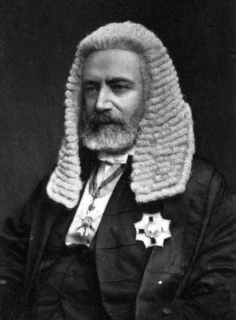
Charles Gavan Duffy Buried at Glasnevin Cemetery

Charles Gavan Duffy, Young Ireland leader, Irish nationalist, journalist, poet, and Australian politician, is buried in Glasnevin Cemetery, Glasnevin, Dublin, on March 8, 1903. He is the 8th Premier of Victoria and one of the most colourful figures in Victorian political history.

Duffy is born on April 12, 1816, in Dublin Street, Monaghan, County Monaghan. Both of his parents die while he is still a child and his uncle, Fr. James Duffy, who is the Catholic parish priest of Castleblayney, becomes his guardian for a number of years. He is educated at St. Malachy’s College in Belfast and is admitted to the Irish Bar in 1845. He becomes a leading figure in Irish literary circles.

Duffy, along with Thomas Osborne Davis and John Blake Dillon, founds The Nation and becomes its first editor. Davis and Dillon later become Young Irelanders. All three are members of Daniel O’Connell‘s Repeal Association. This paper, under Duffy, transforms from a literary voice into a “rebellious organisation.”

In August 1850, Duffy forms the Tenant Right League to bring about reforms in the Irish land system and protect tenants’ rights, and in 1852 is elected to the House of Commons for New Ross. By 1855, the cause of Irish tenants seems more hopeless than ever. Broken in health and spirit, Duffy publishes a farewell address to his constituency, declaring that he has resolved to retire from parliament, as it is no longer possible to accomplish the task for which he has solicited their votes.

In 1856, Duffy emigrates with his family to Australia, settling in the newly formed Colony of Victoria. A public appeal is held to enable him to buy the freehold property necessary to stand for the colonial Parliament. He is immediately elected to the Legislative Assembly for Villiers and Heytesbury in the Western District in 1856. He later represented Dalhousie and then North Gippsland. With the collapse of the Victorian Government‘s Haines Ministry during 1857, another Irish Catholic, John O’Shanassy, unexpectedly becomes Premier with Duffy his second-in-charge.

In 1871, Duffy leads the opposition to Premier Sir James McCulloch‘s plan to introduce a land tax, on the grounds that it unfairly penalised small farmers. When McCulloch’s government is defeated on this issue, he becomes Premier and Chief Secretary.  The majority of the colony is Protestant, and he is accused of favouring Catholics in government appointments. In June 1872, his government is defeated in the Assembly on a confidence motion allegedly motivated by sectarianism.

When Graham Berry becomes Premier in 1877, he makes Duffy Speaker of the Legislative Assembly, a post he holds without much enthusiasm until 1880, when he quits politics and retires to the south of France. Duffy remains interested in both the politics of his adoptive country and of Ireland. He is knighted in 1873 and is made KCMG in 1877.

Duffy spends his last years in Nice and dies at the age of 86 on February 9, 1903, at his home there, 12 Boulevard Victor Hugo. He is buried at Glasnevin Cemetery, Glasnevin, Dublin on March 8. 1903. The length of his career, the breadth of his experience, and his voluminous labours as a chronicler make him an important figure in the history of Ireland and the Irish diaspora in the nineteenth century. He also deserves attention as the most prominent and articulate Ulster catholic nationalist of his time. There are Duffy papers in the Royal Irish Academy and National Library of Ireland.


Leave a comment

Death of Seán MacEntee, Fianna Fáil Politician

Seán Francis MacEntee (Irish: Seán Mac an tSaoi), Fianna Fáil politician, dies on January 9, 1984, in Booterstown, Dublin. He serves as Tánaiste (1959-65), Minister for Social Welfare (1957-61), Minister for Health (1957-65), Minister for Local Government and Public Health (1941-48), Minister for Industry and Commerce (1939-41), and Minister for Finance (1932-39 and 1951-54). He serves as a Teachta Dála (TD) from 1918 to 1969. At the time of his death, he is the last surviving member of the First Dáil.

MacEntee is born as John McEntee at 47 King Street, Belfast, on August 23, 1889, the son of James McEntee, a publican, and his wife, Mary Owens, both of whom are from Monaghan. James McEntee is a prominent Nationalist member of Belfast Corporation and a close friend of Joseph Devlin MP.

MacEntee is educated at St. Mary’s Christian Brothers’ Grammar School, St. Malachy’s College and the Belfast Municipal College of Technology where he qualifies as an electrical engineer. His early political involvement is with the Irish Socialist Republican Party in Belfast. He quickly rises through the ranks of the trade union movement becoming junior representative in the city’s shipyards. Following his education, he works as an engineer in Dundalk, County Louth, and is involved in the establishment of a local corps of the Irish Volunteers in the town. He mobilises in Dundalk and fights in the General Post Office garrison in the Easter Rising in 1916. He is sentenced to death for his part in the rising. This sentence is later commuted to life imprisonment. He is released in the general amnesty in 1917 and is later elected a member of the National Executives of both Sinn Féin and the Irish Volunteers in October 1917. He is later elected Sinn Féin Member of Parliament (MP) for South Monaghan at the 1918 Irish general election.

An attempt to develop MacEntee’s career as a consulting engineer in Belfast is interrupted by the Irish War of Independence in 1919. He serves as Vice-Commandant of the Belfast Brigade of the Irish Republican Army (IRA). He is also a member of the Volunteer Executive, a sort of Cabinet and Directory for the Minister for Defence and the HQ Staff, however, he remains one of the few Sinn Féiners from the north. On August 6, 1920, he presents ‘a Memorial’ lecture to the Dáil from the Belfast Corporation. He tells the Dáil it is the only custodian of public order, that a Nationalist pogrom is taking place, and he advises them to fight Belfast. The Dáil government’s policy is dubbed Hibernia Irredenta or “Greening Ireland.” He is asked to resign his South Monaghan seat after voting against a bunting celebration in Lurgan to mark the signing of the Anglo-Irish Treaty.

In April 1921 MacEntee is transferred to Dublin to direct a special anti-partition campaign in connection with the May general election. It remains Michael Collins‘s policy, he declares, that the largely Protestant shipyard workers of Belfast are being directed by the British, urging all Irishmen to rejoin the Republic. Correspondingly the Ulster Unionist Council rejects the call for a review of the boundary commission decision made on Northern Ireland. But when Ulstermen choose James Craig as Premier, Collins denounces democracy in the north as a sham. It is on the partition of Ireland issue that MacEntee votes against the Anglo-Irish Treaty of 1921. During the subsequent Irish Civil War, he commands the IRA unit in Marlboro Street Post Office in Dublin. He later fights with Cathal Brugha in the Hamman Hotel and is subsequently interned in Kilmainham and Gormanstown until December 1923.

After his release from prison, MacEntee devotes himself more fully to his engineering practice, although he unsuccessfully contests the Dublin County by-election of 1924. He becomes a founder-member of Fianna Fáil in 1926 and is eventually elected a TD for Dublin County at the June 1927 Irish general election.

MacEntee founds the Association of Patent Agents in 1929, having gained his interest in Patents when he worked as an assistant engineer in Dundalk Urban District Council. He values his status as a Patent Agent as he maintains his name on the Register for over 30 years while he holds Ministerial rank in the Irish Government, although he is not believed to have taken any active part in the patent business, which is carried on by his business partners.

In 1932, Fianna Fáil comes to power for the very first time, with MacEntee becoming Minister for Finance. In keeping with the party’s protectionist economic policies his first budget in March of that year sees the introduction of new duties on 43 imports, many of them coming from Britain. This sees retaliation from the British government, which in turn provokes a response from the Irish government. This is the beginning of the Anglo-Irish Trade War between the two nations, however, a treaty in 1938, signed by MacEntee and other senior members brings an end to the issue.

In 1939, World War II breaks out and a cabinet reshuffle results in MacEntee being appointed as Minister for Industry and Commerce, taking over from his rival Seán Lemass. During his tenure at this department, he introduces the important Trade Union Act (1941). In 1941, another reshuffle of ministers takes place, with him becoming Minister for Local Government and Public Health. The Health portfolio is transferred to a new Department of Health in 1947. Following the 1948 Irish general election, Fianna Fáil returns to the opposition benches for the first time in sixteen years.

In 1951, Fianna Fáil are back in government, although in minority status, depending on independent deputies for survival. MacEntee once again returns to the position of Minister for Finance where he feels it is vital to deal with the balance of payments deficit. He brings in a harsh budget in 1951 which raises income tax and tariffs on imports. His chief aim is to cut spending and reduce imports, however, this comes at a cost as unemployment increases sharply. The increases are retained in his next two budgets in 1952 and 1953. It is often said that it is his performance during this period that costs Fianna Fáil the general election in 1954. The poor grasp on economics also does his political career tremendous damage as up to that point he is seen as a likely successor as Taoiseach. Seán Lemass, however, is now firmly seen as the “heir apparent.”

In 1957, Fianna Fáil returns to power with an overall majority with MacEntee being appointed Minister for Health. The financial and economic portfolios are dominated by Lemass and other like-minded ministers who want to move away from protection to free trade. He is credited during this period with the reorganisation of the health services, the establishment of separate departments of health and social welfare, and the fluoridation of water supplies in Ireland. In 1959, he becomes Tánaiste when Seán Lemass is elected Taoiseach.

Following the 1965 Irish general election, MacEntee is 76 years old and retires from the government. He re-emerges in 1966 to launch a verbal attack on Seán Lemass for deciding to step down as party leader and Taoiseach. The two men, however, patch up their differences shortly afterwards. MacEntee retires from Dáil Éireann in 1969 at the age of 80, making him the oldest TD in Irish history.

MacEntee dies in Dublin on January 9, 1984, at the age of 94. He is buried in Glasnevin Cemetery, Dublin.


Leave a comment

Death of Anew McMaster, Touring Shakespearean Actor & Manager

Anew McMaster, the last of the touring actor-managers who presents William Shakespeare’s plays throughout the United Kingdom, Ireland, Australia and the United States, dies in Dublin on August 24, 1962. For almost 35 years he tours as actor-manager of his own theatrical company performing the works of Shakespeare and other playwrights.

McMaster is born as Andrew McMaster on December 24, 1891, the son of Liverpool-born Andrew McMaster, a master stevedore, and Alice Maude (née Thompson). A number of sources make the erroneous claims, based on details supplied by McMaster himself, that he is born in 1893 or 1894 or even 1895 in County Monaghan in Ireland, but according to the Birth Register and the 1901 Census he is actually born in 1891 in Birkenhead, England. Like his future brother-in-law, Micheál Mac Liammóir, who is born in London as Alfred Willmore but who claims to have been born in Cork to Gaelic-speaking parents, McMaster reinvents himself as Irish and claims for himself the town of Monaghan as his birthplace, and Warrenpoint, County Down, as the scene of his earliest memories.

At the age of 19, McMaster gives up a career in banking to pursue one on the stage. He moves to Ireland and tours the country with the O’Brien-Ireland theatrical company from 1910 to 1914. Success quickly follows with his appearance as Jack O’Hara in Paddy the Next Best Thing at the Savoy Theatre in 1920. From 1921 he tours Australia in this and other plays, and in 1925 forms his own company, the McMaster Intimate Theatre Company, a “fit-up” company to tour in the works of Shakespeare, mainly in Ireland but also in Britain and Australia, touring with his theatrical company until 1959. One of the last actor-managers “of the old school – and an epitome of the type,” on occasions McMaster persuades a “big name” to act with his company as a draw for audiences, and Frank Benson (1928), Sara Allgood (1929) and Mrs. Patrick Campbell appear with him.

In 1933 at the Shakespeare Memorial Theatre in Stratford-upon-Avon McMaster appears as Hamlet opposite Esme Church as Gertrude, Coriolanus, Macduff in Macbeth, Leonato in Much Ado About Nothing, Prince Escalus in Romeo and Juliet, and Petruchio in The Taming of the Shrew. His greatest roles are as Othello and as Shylock in The Merchant of Venice, to which he adds King Lear in 1952. Just before World War II he and his company appear at the Chiswick Empire in a Shakespeare season. He tours the United States as James Tyrone in Eugene O’Neill‘s Long Day’s Journey into Night in 1956. Having “a great organ voice,” Harold Pinter, who acts in his company in Ireland from 1951 to 1953 and calls him “Perhaps the greatest actor-manager of his time,” later describes McMaster as “evasive, proud, affectionate, shrewd, merry.” In his brief biography Mac (1968), Pinter recalls, “Mac gave about a half dozen magnificent performances of Othello while I was with him… At his best he was the finest Othello I have seen. [He] stood dead in the centre of the role, and the great sweeping symphonic playing would begin, the rare tension and release within him, the arrest, the swoop, the savagery, the majesty and repose.”

McMaster’s only film role is an uncredited appearance as the Judge in Sword of Sherwood Forest (1960).

In 1924 McMaster marries the actress and designer Marjorie Willmore, the sister of Micheál Mac Liammóir. They have two children, the actors John Christopher McMaster and Mary-Rose McMaster.

McMaster dies at the age of 70 at his home in Dublin on August 24, 1962. He is buried with his wife in Dean’s Grange Cemetery in County Dublin.

McMaster trains a generation of actors who tour with his company and go on to achieve success as actors. These include Pauline Flanagan, Milo O’Shea, T. P. McKenna, Kenneth Haigh, Henry Woolf, Harold Pinter, Donal Donnelly and Patrick Magee. It is while they are touring with McMaster’s company that the actor and dramatist Micheál Mac Liammóir and the actor and producer Hilton Edwards first meet and begin their lifelong partnership.

McMaster’s biography, A Life Remembered: A Memoir of Anew McMaster, by his daughter Mary-Rose McMaster, is published in 2017. Harold Pinter also publishes a short biography, Mac, in 1968.


Leave a comment

Birth of Seán MacEntee, Fianna Fáil Politician

Seán Francis MacEntee (Irish: Seán Mac an tSaoi), Fianna Fáil politician, is born as John McEntee at 47 King Street, Belfast, on August 23, 1889. He serves as Tánaiste (1959-65), Minister for Social Welfare (1957-61), Minister for Health (1957-65), Minister for Local Government and Public Health (1941-48), Minister for Industry and Commerce (1939-41), and Minister for Finance (1932-39 and 1951-54). He serves as a Teachta Dála (TD) from 1918 to 1969.

MacEntee is the son of James McEntee, a publican, and his wife, Mary Owens, both of whom are from Monaghan. James McEntee is a prominent Nationalist member of Belfast Corporation and a close friend of Joseph Devlin MP.

MacEntee is educated at St. Mary’s Christian Brothers’ Grammar School, St. Malachy’s College and the Belfast Municipal College of Technology where he qualifies as an electrical engineer. His early political involvement is with the Irish Socialist Republican Party in Belfast. He quickly rises through the ranks of the trade union movement becoming junior representative in the city’s shipyards. Following his education, he works as an engineer in Dundalk, County Louth, and is involved in the establishment of a local corps of the Irish Volunteers in the town. He mobilises in Dundalk and fights in the General Post Office garrison in the Easter Rising in 1916. He is sentenced to death for his part in the rising. This sentence is later commuted to life imprisonment. He is released in the general amnesty in 1917 and is later elected a member of the National Executives of both Sinn Féin and the Irish Volunteers in October 1917. He is later elected Sinn Féin Member of Parliament (MP) for South Monaghan at the 1918 Irish general election.

An attempt to develop MacEntee’s career as a consulting engineer in Belfast is interrupted by the Irish War of Independence in 1919. He serves as Vice-Commandant of the Belfast Brigade of the Irish Republican Army (IRA). He is also a member of the Volunteer Executive, a sort of Cabinet and Directory for the Minister for Defence and the HQ Staff, however, he remains one of the few Sinn Féiners from the north. On August 6, 1920, he presents ‘a Memorial’ lecture to the Dáil from the Belfast Corporation. He tells the Dáil it is the only custodian of public order, that a Nationalist pogrom is taking place, and he advises them to fight Belfast. The Dáil government’s policy is dubbed Hibernia Irredenta or “Greening Ireland.” He is asked to resign his South Monaghan seat after voting against a bunting celebration in Lurgan to mark the signing of the Anglo-Irish Treaty.

In April 1921 MacEntee is transferred to Dublin to direct a special anti-partition campaign in connection with the May general election. It remains Michael Collins‘s policy, he declares, that the largely Protestant shipyard workers of Belfast are being directed by the British, urging all Irishmen to rejoin the Republic. Correspondingly the Ulster Unionist Council rejects the call for a review of the boundary commission decision made on Northern Ireland. But when Ulstermen choose James Craig as Premier, Collins denounces democracy in the north as a sham. It is on the partition of Ireland issue that MacEntee votes against the Anglo-Irish Treaty of 1921. During the subsequent Irish Civil War, he commands the IRA unit in Marlboro Street Post Office in Dublin. He later fights with Cathal Brugha in the Hamman Hotel and is subsequently interned in Kilmainham and Gormanstown until December 1923.

After his release from prison, MacEntee devotes himself more fully to his engineering practice, although he unsuccessfully contests the Dublin County by-election of 1924. He becomes a founder-member of Fianna Fáil in 1926 and is eventually elected a TD for Dublin County at the June 1927 Irish general election.

MacEntee founds the Association of Patent Agents in 1929, having gained his interest in Patents when he worked as an assistant engineer in Dundalk Urban District Council. He values his status as a Patent Agent as he maintains his name on the Register for over 30 years while he holds Ministerial rank in the Irish Government, although he is not believed to have taken any active part in the patent business, which is carried on by his business partners.

In 1932, Fianna Fáil comes to power for the very first time, with MacEntee becoming Minister for Finance. In keeping with the party’s protectionist economic policies his first budget in March of that year sees the introduction of new duties on 43 imports, many of them coming from Britain. This sees retaliation from the British government, which in turn provokes a response from the Irish government. This is the beginning of the Anglo-Irish Trade War between the two nations, however, a treaty in 1938, signed by MacEntee and other senior members brings an end to the issue.

In 1939, World War II breaks out and a cabinet reshuffle results in MacEntee being appointed as Minister for Industry and Commerce, taking over from his rival Seán Lemass. During his tenure at this department, he introduces the important Trade Union Act (1941). In 1941, another reshuffle of ministers takes place, with him becoming Minister for Local Government and Public Health. The Health portfolio is transferred to a new Department of Health in 1947. Following the 1948 Irish general election, Fianna Fáil returns to the opposition benches for the first time in sixteen years.

In 1951, Fianna Fáil are back in government, although in minority status, depending on independent deputies for survival. MacEntee once again returns to the position of Minister for Finance where he feels it is vital to deal with the balance of payments deficit. He brings in a harsh budget in 1951 which raises income tax and tariffs on imports. His chief aim is to cut spending and reduce imports, however, this comes at a cost as unemployment increases sharply. The increases are retained in his next two budgets in 1952 and 1953. It is often said that it is his performance during this period that costs Fianna Fáil the general election in 1954. The poor grasp on economics also does his political career tremendous damage as up to that point he is seen as a likely successor as Taoiseach. Seán Lemass, however, is now firmly seen as the “heir apparent.”

In 1957, Fianna Fáil returns to power with an overall majority with MacEntee being appointed Minister for Health. The financial and economic portfolios are dominated by Lemass and other like-minded ministers who want to move away from protection to free trade. He is credited during this period with the reorganisation of the health services, the establishment of separate departments of health and social welfare, and the fluoridation of water supplies in Ireland. In 1959, he becomes Tánaiste when Seán Lemass is elected Taoiseach.

Following the 1965 Irish general election, MacEntee is 76 years old and retires from the government. He re-emerges in 1966 to launch a verbal attack on Seán Lemass for deciding to step down as party leader and Taoiseach. The two men, however, patch up their differences shortly afterwards. MacEntee retires from Dáil Éireann in 1969 at the age of 80, making him the oldest TD in Irish history.

MacEntee dies in Dublin on January 9, 1984, at the age of 94. He is buried in Glasnevin Cemetery, Dublin. At the time of his death, he is the last surviving member of the First Dáil.


Leave a comment

The Battle of Antrim

The Battle of Antrim is fought on June 7, 1798, in County Antrim during the Irish Rebellion of 1798 between British troops and Irish insurgents led by Henry Joy McCracken. The British win the battle, beating off a rebel attack on Antrim town following the arrival of reinforcements but the county governor, John O’Neill, 1st Viscount O’Neill, is fatally wounded.

The outbreak of the United Irish rebellion in Leinster on May 23 had prompted calls from Ulster United Irishmen to take to the field in support of their southern comrades. However, the organisation in Ulster had been severely damaged in a brutal disarmament campaign the previous year, and the new leadership are less radical and are not willing take to the field without French assistance, which is expected daily.

After waiting for two weeks while the rebellion rages in the south, the grassroots United Irish membership in Antrim decides to hold a number of meetings independent of their leaders. The outcome is the election of Henry Joy McCracken as their adjutant general and the decision to rise immediately. McCracken, together with James Hope, quickly formulate a plan to attack and seize all government outposts in County Antrim and then for the main attack to fall on Antrim town. Then using artillery seized at Antrim, the rebels are to march on Belfast in conjunction with the United Irish rebels in County Down.

McCracken has high hopes that many members of the militia will desert and join him, as disaffection is believed to be widespread, evidenced by the execution of four of the Monaghan militia for treason in Belfast in May.

On 6 June, McCracken and James Hope issue a proclamation calling for the United army of Ulster to rise. The initial plan meets with success, as the towns of Larne, Ballymena, Portaferry and Randalstown are taken and the bridge at Toome damaged to prevent the government from rushing reinforcements into Antrim from west of the River Bann. The rebels then assemble at Donegore Hill in preparation for the march and attack on Antrim town, where an emergency meeting of the county’s magistrates called by the county governor, Lord O’Neill, is due to take place.

Although almost 10,000 rebels assemble at Donegore, many display reluctance for the coming fight and stay on the hill in reserve or desert later so that probably fewer than 4,000 actually take part in the attack. The United Irishmen in Ulster are mostly Presbyterian, but are joined with Catholic Defenders and the tension between the two groups on the march likely causes some desertions. These difficulties lead to a loss of momentum, and the attack is delayed. McCracken is forced to make adjustments to his plan of attack, which had envisaged a simultaneous overwhelming assault on the town from four separate points.

The town is garrisoned by a small force of about 200 yeomen, cavalry under Lt. Col. William Lumley and armed volunteers but they also have four artillery pieces and the delay in the rebel attack allows them to send requests for assistance to Belfast and Lisburn from where reinforcements are already on the way. The garrison forms themselves at the base of the demesne wall of Antrim Castle, with artillery to the front and cavalry to the rear with their flanks anchored by the Market House and Presbyterian Meeting House. A part of the Scottish Quarter in the town is also burned by the garrison as it is perceived to be a stronghold of rebel sympathisers.

The attack finally begins shortly before 3:00 p.m. when the rebels begin a cautious march through the town. As rebel front ranks arrive to face the garrison’s defensive line, artillery opens fire on the rebels, causing them to pull back out of range. Large clouds of dust and smoke are thrown up which, together with the fires from the Scottish Quarter, obscure the garrison’s view of events.

The rebel withdrawal is mistaken for a full retreat and the cavalry moves out to pursue and rout the supposed fleeing rebels. The cavalry effectively runs into a gauntlet of rebels who are protected by a long churchyard wall and stationed in houses along the main street, suffering heavy losses to the gunfire and pikes of the rebels.

After routing the cavalry, the rebels attack the remainder of the garrison, which then begins to pull back to the safety of the castle wall. This is mistaken by a newly arrived rebel column as an attack on them, causing them to flee in panic. In the confusion, the county commander, Lord O’Neill, trapped with his magistrates, is fatally wounded by James Clements who avoids trial by joining the army. A rebel attempt to seize the artillery is only narrowly beaten off by troops stationed behind the demesne wall.

At this critical juncture, British reinforcements from Belfast arrive outside the town and, assuming it to be held by the rebels, begin to shell it with their artillery. This prompts more desertions and the rebel army begins to disintegrate, but their withdrawal is protected by a small band under James Hope which fights a successful rearguard action from the church grounds along the main street. This allows the bulk of the rebels to withdraw safely.

When the military enters the town, they begin a spree of looting, burning and murder, of which the most enthusiastic perpetrators are reported to be the Monaghan militiamen, who are anxious to prove their loyalty and expunge the shame of the recent executions of their comrades for sedition. The town of Templepatrick is burned to the ground and Old Stone Castle is razed to the ground. McCracken, Hope and their remaining supporters withdraw northward, establishing camps of ever dwindling size along the route of their retreat until news of the defeat at Ballynahinch causes their final dispersion. McCracken is arrested by yeomen on July 7 and is hanged in Belfast on July 17, having refused an offer of clemency in return for informing on his comrades.

Commemoration of the centenary of the battle, marked by a nationalist parade in Belfast on June 6, 1898, provokes loyalist riots.


Leave a comment

Death of Peadar O’Donnell, Irish Republican & Socialist Activist

Peadar O’Donnell, Irish republican, socialist activist, politician, writer and one of the foremost radicals of 20th-century Ireland, dies in Dublin on May 13, 1986.

O’Donnell is born on February 22, 1893, in Meenmore, near Dungloe, County Donegal, youngest among six sons and three daughters of Biddy and James O’Donnell. He is greatly influenced by his upbringing in the Rosses, in northwest Donegal, one of the poorest and most remote parts of Ireland. His father, a popular local fiddler, earns a living through his smallholding, seasonal labouring in Scotland, and winter work in a local corn mill. His mother, who comes from a radical labour and nationalist political background, works in a local cooperative store. He attends Rampart national school and Roshine national school, near Burtonport, where he is a monitor for four years. In 1911 he wins a scholarship to attend St. Patrick’s College in Drumcondra, Dublin, and returns in 1913 to the Rosses, where he spends two years teaching on the islands of Inishfree. In 1915 he is appointed head of Derryhenny national school, near Dungloe, and the following year becomes principal of a national school on the island of Arranmore, where he begins to write.

O’Donnell had long been concerned by the poor conditions of the local ‘tatie-hokers’ (potato pickers) who migrate annually to Scotland. In the summer of 1918, he travels there to help organise the Scottish Farm Servants’ Union. While there he is influenced by left-wing radicals such as Willie Gallacher, later a communist Member of Parliament (MP), and Emanuel ‘Manny’ Shinwell, later Baron Shinwell. In September 1918, against a background of rising labour militancy, he leaves teaching to become a full-time organiser for the Irish Transport and General Workers’ Union (ITGWU) in the west Ulster area. The following year he organises one of Ireland’s first “soviets” when the attendants and nurses of the Monaghan District Lunatic Asylum occupy the grounds and appoint O’Donnell as governor until their demands are met.

In early 1919 O’Donnell joins the Irish Republican Army (IRA) in Monaghan, resigning from the ITGWU for full-time IRA service in late 1920. He leads the 2nd Battalion, Donegal IRA, from the summer of 1920. In December 1920 he goes “on the run” and leads a flying column in west Donegal until May 1921, when he is wounded. Regarded as insubordinate and militarily inexperienced, he is unpopular among the other senior officers of the 1st Northern Division. He, in turn, is disappointed by the lack of social radicalism among the nationalist leadership. He opposes the Anglo-Irish Treaty, is placed in command of the minority anti-treaty 1st Northern Division and is a member of the IRA executive that occupies the Four Courts in Dublin in defiance of the provisional government.

Arrested in June 1922, O’Donnell shares a prison cell with Liam Mellows and influences his radical “Notes from Mountjoy,” an important document for subsequent left-wing republicans. He spends the next two years in various prisons and internment camps. His execution is widely expected to follow those of December 8, 1922. In August 1923, he is elected as a Sinn Féin Teachta Dála (TD) for Donegal in the general election called after the end of the Irish Civil War. He goes on hunger strike for forty-one days in late 1923 and succeeds in escaping from the Curragh in March 1924. In June 1924, while on the run, he marries Lile O’Donel, a wealthy Cumann na mBan activist who had smuggled communications for republican prisoners. O’Donel, a radical and member of the Communist Party, is the daughter of Ignatius O’Donel, a prominent landowner from Mayo. They have no children but raise their nephew, Peadar Joe, as their own son after the death in New York of O’Donnell’s brother Joe.

O’Donnell begins writing seriously while in jail and remains a prolific writer, journalist, and editor until the 1960s. His first novel, Storm, set in the Irish War of Independence, is published in 1925. One of his most highly regarded books, Islanders, is published in 1928. Adrigoole, like Islanders a story of poverty and starvation in rural Ireland, is published the following year. The Knife (1930) and On the Edge of the Stream (1934) soon follow. The most significant of his later novels is probably The Big Windows (1954). Foremost among his qualities as a writer is his empathy for the people, life, and landscape of rural Ireland. But his novels have been criticised for their slow pace, excessive detail, and didactic nature. He claims his writing is incidental to his political activism. His trilogy of autobiographical non-fiction, The Gates flew Open (1932), Salud! An Irishman in Spain (1936), and There Will Be Another Day (1963), which respectively concern the Irish Civil War, his activism during the Spanish Civil War, and his role in the land annuities agitation, remain highly regarded. His other important literary achievement is with The Bell, an innovative literary and political magazine which plays a useful dissenting role in an insular and conservative period. He founds The Bell with the writer Seán Ó Faoláin in 1940 and edits it from 1946 until it ceases publication in 1954.

O’Donnell exercises an influential role in the interwar IRA, particularly through his editorship of An Phoblacht (1926–29), which he attempts to divert from militarism to socialist agitation. His ultimate aim is for a thirty-two-county socialist republic. His most successful campaign is organising small farmers against the payment of land annuities to the government in the late 1920s and early 1930s. This campaign is later adopted by Fianna Fáil and contributes to their electoral success in 1932. He is less successful in radicalising the IRA. After the failure of Saor Éire, a left-wing IRA front which provokes clerical and popular hostility against the IRA, increasing tensions between the IRA’s left-wing and the leadership lead O’Donnell, along with Frank Ryan and George Gilmore, to split from the IRA to establish the short-lived Republican Congress in 1934.

Although O’Donnell claims he was never a Communist Party member, he plays a central role in forging links between republicans and the revolutionary left both in Ireland and internationally and invariably supports the communist party line at critical junctures. After the failure of Republican Congress, he takes up the cause of the Spanish republic. His championing of unpopular causes such as communism and Spain entail a good deal of frustration. He is physically attacked at political meetings and in 1932, despite having never visited the Soviet Union, loses a high-profile libel action against the Dominican Irish Rosary, which claim he had studied in Moscow‘s Lenin College. He is banned from entering the United States for several decades, although he maintains: “My relations with all the great powers continue to be friendly.”

O’Donnell continues to support radical campaigns until his death. He is an outspoken advocate of Irish emigrants. He is prominent in the Irish Campaign for Nuclear Disarmament and serves as its president in the early 1960s. He is a leading protester against the Vietnam War and a supporter of African anti-colonial movements such as that against apartheid. In later years he is involved in the “Save the west” campaign, highlighting the problems of the west of Ireland.

After several months of ill-health following a heart attack, O’Donnell dies in Dublin, aged 93, on May 13, 1986. He leaves instructions that there are to be “no priests, no politicians and no pomp” at his funeral, and those wishes are granted. He is cremated in Glasnevin Cemetery and his ashes are buried at his wife’s home in Swinford, County Mayo. Although he once remarked that every cause he fought for was a failure, he is now regarded as one of the most influential socialist republican theorists and an important voice of dissent in twentieth-century Ireland.

(From: “O’Donnell, Peadar” by Fearghal McGarry, Dictionary of Irish Biography, http://www.dib.ie)

Leave a comment

Birth of Máire MacSwiney Brugha, Activist & Author

Máire MacSwiney Brugha, Irish activist who is the daughter of Terence MacSwiney and niece of Mary MacSwiney, is born in Cork, County Cork, on June 23, 1918. In addition to being an activist she is also an author and is now regarded as a person of historical importance.

MacSwiney Brugha is the daughter of the former Lord Mayor of Cork Terence MacSwiney and his wife Muriel Frances Murphy. Her father dies on hunger strike when she is two years old. Her father is in jail when she is born and does not see her until she is brought to see him when she is three months old. Her family’s republican and political activities leave a strong mark on her life.

Following the death of her father, her mother moves to Dublin. MacSwiney Brugha goes to live with Madame O’Rahilly, widow of The O’Rahilly, and sees her mother intermittently. Although as a child her parents decide she would speak the Irish language, her father’s death and her mother’s health results in her move to Germany in 1923 and there she is moved around a lot. She learns German and speaks no English and little or no Irish. In 1930 she is moved to Grainau in Bavaria, where she attends school. Her aunt, Mary MacSwiney, a legal guardian of hers, eventually comes to collect her and takes her back to Ireland. This causes a court case when it is claimed her aunt had kidnapped her. As a result of the court case her aunt is given custody, and she and her mother became estranged.

MacSwiney Brugha attends Scoil Íte and then St. Louis Secondary School in Monaghan where, in 1936, she completes her Leaving Certificate and gets a scholarship to University College Cork to study arts. In 1937 she plays the lead role in a play, The Revolutionist, published in 1914 and written by her father and produced by her aunt. She returns to Germany in 1938 to keep up her German and graduates with a first-class honours degree. She goes on to get her higher diploma and becomes a teacher. She spends some time teaching in Scoil Íte and then goes to Dublin in 1942 to get a master’s degree. She meets Ruairí Brugha while in Dublin. His father, Cathal Brugha, was killed in the Irish Civil War in 1922. They marry on July 10, 1945. The marriage produces four children: Deirdre, Cathal, Traolach and Ruairí.

MacSwiney Brugha’s husband has a strong political career with her support. He is a senator, a TD, and a member of the European Parliament. She leads her Fianna Fáil cumann and volunteers with the aid agency Gorta. With her husband as Official Opposition Spokesman on Northern Ireland from 1975 to 1977, the couple are very much involved in creating the policy of developing conciliation rather than aimed more at ending partition which they previously have been focused on.

At the age of 85 and after her sight has failed MacSwiney Brugha dictates her story to her daughter-in-law, Catherine Brugha. History’s Daughter: A Memoir from the Only Child of Terence MacSwiney is launched in 2005. Her own story is recorded in Irish Life and Lore. Her story is also the subject of a radio production. She dies unexpectedly at her home in Clonskeagh, County Dublin, at the age of 93 on May 20, 2012. She is buried in Glasnevin Cemetery.

Fianna Fáil leader Micheál Martin describes her as having made a “strong and valued” contribution to the development of Fianna Fáil while Gerry Adams says she “made her mark” on Irish history.

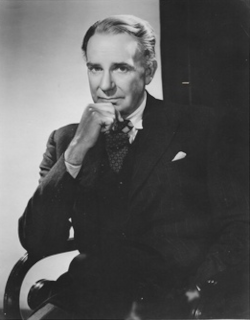
(Pictured: Máire MacSwiney Brugha on her wedding day, July 10, 1945)


Leave a comment

Birth of Jim Lynagh, Member of the East Tyrone Brigade, Provisional IRA

Jim Lynagh, member of the East Tyrone Brigade of the Provisional Irish Republican Army (IRA), one of twelve children, is born on the Tully Estate, a housing estate in the townland of Killygowan on the southern edge of Monaghan, County Monaghan, on April 13, 1956.

Lynagh joins the Provisional Irish Republican Army in the early 1970s. In December 1973 he is badly injured in a premature bomb explosion, arrested, and spends five years in the Maze Prison. While imprisoned, he studies and becomes a great admirer of Mao Zedong. After his release from prison in 1979 he is elected as a Sinn Féin councillor for Monaghan and holds this position until he is killed.

After his release from prison Lynagh becomes active in the IRA again, active with the Provisional IRA East Tyrone Brigade. He quickly becomes a unit commander and gradually builds up his ruthless reputation. After a series of Ulster loyalist attacks against Irish nationalist politicians in late 1980 and early 1981, he is suspected of involvement in an attack on the Stronge estate near Middletown, County Armagh, where the IRA murdered the retired Ulster Unionist Party Stormont speaker, Sir Norman Stronge, and his son James, a Royal Ulster Constabulary (RUC) officer, before burning down their home, Tynan Abbey, and shooting their way out through a police cordon.

Lynagh is known as “The Executioner” by the Royal Ulster Constabulary. He is arrested and interrogated many times by the Garda Síochána in County Monaghan but is never charged. During this period, he devises a Maoist military strategy, aimed at escalating the war against the British state in Northern Ireland. The plan envisages the destruction of police stations and British Army military bases in parts of Northern Ireland to create “liberated” areas that will be thereby rendered under the domination of the IRA. In 1984 he starts co-operating with Pádraig McKearney who shares his views. The strategy begins materialising with the destruction of an RUC police station in Ballygawley in December 1985 which kills two police officers, and in The Birches in August 1986.

Lynagh is killed by the British Army’s Special Air Service on May 8, 1987 during an attack on the isolated rural part-time police station at the small County Armagh village of Loughgall, the third such attack that he had taken part in. During the incident the IRA detonates a 200-lb. bomb, and attacks the station with automatic weapons, and in the process are ambushed by the British Army which is lying in wait for them, having been forewarned of the IRA operation. All eight of the IRA attacking force are killed in the exchange of fire, the British forces involved incurring no fatalities. The incident subsequently becomes known as the Loughgall ambush.

At the time of his death, Lynagh is living in a flat on Dublin Street in Monaghan. He is buried at St. Joseph’s Cemetery (Latlurcan Cemetery) in Monaghan. During his funeral, as his coffin is carried through the village of Emyvale, Irish Garda Síochána officers are attacked by the crowd of mourners after they pursue three gunmen who had fired a volley over his coffin.