seamus dubhghaill

Promoting Irish Culture and History from Little Rock, Arkansas, USA


Leave a comment

Birth of Novelist John Banville

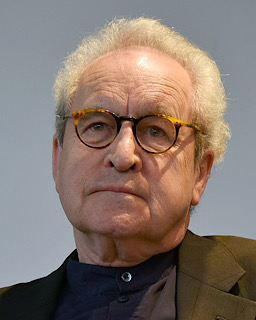
William John Banvillenovelistshort story writer, adapter of dramas, and screenwriter, is born in Wexford, County Wexford, on December 8, 1945. He also has a 30-year career working in the Irish newspaper industry and serves as literary editor of The Irish Times from 1988 until 1999.

Banville is born to Agnes (née Doran) and Martin Banville, a garage clerk, in Wexford. He is the youngest of three siblings. He is educated at CBS Primary, Wexford, a Christian Brothers school, and at St. Peter’s College, Wexford. Despite having intentions of being a painter and an architect, he does not attend university. After school, he works as a clerk at Aer Lingus, which allows him to travel at deeply discounted rates. He takes advantage of these rates to travel to Greece and Italy. He begins working as a sub-editor at The Irish Press in 1969.

Banville publishes his first book, a collection of short stories titled Long Lankin, in 1970. His first novelNightspawn, appears in 1971, followed by his second, Birchwood, two years later. His The Revolutions Trilogy, published between 1976 and 1982, comprises works named after renowned scientists: Doctor CopernicusKepler and The Newton Letter. His next work, Mefisto, has a mathematical theme, and, in combination with the three books from The Revolutions Trilogy, is the fourth book from the “Scientific Tetralogy.” His 1989 novel, The Book of Evidence, begins The Frames Trilogy, dealing with the work of art. It is completed by Ghosts and Athena. His thirteenth novel, The Sea, wins the Booker Prize in 2005. In addition, he publishes crime novels as Benjamin Black, most of which feature the character of Quirke, an Irish pathologist based in 1950s Dublin. His alternative history novel, The Secret Guests (2020), is published under the name B. W. Black.

Banville wins the 1976 James Tait Black Memorial Prize, the 2003 International Nonino Prize, the 2005 Booker Prize, the 2011 Franz Kafka Prize, the 2013 Austrian State Prize for European Literature and the 2014 Prince of Asturias Award for Literature. He is elected a Fellow of the Royal Society of Literature in 2007. Italy makes him a Cavaliere of the Ordine della Stella d’Italia (a knighthood) in 2017. He is a former member of Aosdána, having voluntarily relinquished the financial stipend in 2001 to another, more impoverished, writer. He is considered a contender for the Nobel Prize in Literature.

In 1969, Banville marries the American textile artist Janet Dunham, whom he met in San Francisco the previous year while she is a student at the University of California, Berkeley. The couple has two sons together. The marriage breaks down after Banville has an affair with a neighbour, Patricia Quinn, who subsequently becomes director of the Arts Council of Ireland. Banville has two daughters with Quinn, born around 1990 and 1997. Despite separating, Banville and Dunham never divorce and he describes them as remaining “on good terms.” Dunham dies at Blackrock Clinic on November 22, 2021, after which Banville states that he experienced “brain fog” due to grief and is unable to write for six months. In a 2024 interview, he expresses regret over his relationship history, saying, “I caused Janet such anguish. I have caused Patricia Quinn such anguish. I wasn’t good with my children. I was not a good parent. I am not a good person. I am selfish. But I have to have responsibility.”

Banville currently lives in Howth, Dublin.

Leave a comment

Death of William Trevor, Writer & Playwright

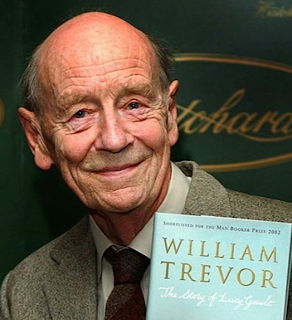
William Trevor Cox KBE, Irish novelist, playwright, and short story writer, dies in Crediton, Devon, England, on November 20, 2016. One of the elder statesmen of the Irish literary world, he is widely regarded as one of the greatest contemporary writers of short stories in the English language. He wins the Whitbread Prize three times and is nominated five times for the Booker Prize, the last for his novel Love and Summer (2009), which is also shortlisted for the International Dublin Literary Award in 2011. His name is also mentioned in relation to the Nobel Prize in Literature.

Trevor wins the 2008 International Nonino Prize in Italy. In 2014, he is bestowed with the title of Saoi within Aosdána. He resides in England from 1954 until his death in 2016, at the age of 88.

Trevor is born as William Trevor Cox on May 24, 1928, in Mitchelstown, County Cork, to a middle classAnglo-Irish Protestant (Church of Ireland) family. He moves several times to other provincial locations, including SkibbereenTipperaryYoughal and Enniscorthy, as a result of his father’s work as a bank official.

Trevor is educated at a succession of schools including St Columba’s College, Dublin (where he is taught by Oisín Kelly) and at Trinity College Dublin (TCD), from which he receives a degree in history. He works as a sculptor under the name Trevor Cox following his graduation from TCD, supplementing his income by teaching

Trevor marries Jane Ryan in 1952 and emigrates to England, working as a teacher, a sculptor and then as a copywriter for an advertising agency. During this time he and his wife have their first son. In 1952, he becomes an art teacher at Bilton Grange, a prep school near Rugby. He is commissioned to carve reliefs for several churches, including All Saints’ ChurchBraunstonNorthamptonshire. In 1956, he moves to Somerset to work as a sculptor and carries out commissions for churches. He stops wood carving in 1960. 

Trevor’s first novel, A Standard of Behaviour, is published in 1958 by Hutchinson & Co. of London, but receives little critical success. He later disowns this work, and, according to his obituary in The Irish Times, “refused to have it republished.” It is, in fact, republished in 1982 and in 1989.

In 1964, at the age of 36, Trevor is awarded the Hawthornden Prize for The Old Boys. This success encourages him to become a full-time writer.

In 1971, he and his family move from London to Devon in South West England, first to Dunkeswell, then in 1980 to Shobrooke, where he lives until his death. Despite having spent most of his life in England, he considers himself to be “Irish in every vein”.

Trevor dies peacefully in his sleep, at the age of 88, at Crediton, Devon, England, on November 20, 2016.


Leave a comment

George Bernard Shaw Refuses Nobel Prize Money

On November 18, 1926, George Bernard Shaw refuses to accept the Nobel Prize in Literature prize money of £7,000 awarded to him a year earlier. He says, “I can forgive Alfred Nobel for his invention of the explosive but only the devil can think of the Nobel Prize.”

Shaw is born in Dublin on July 26, 1856, the third child of George Carr Shaw, a civil servant who later turns to a failed grain business to become an alcoholic, and Lucinda Elizabeth Shaw, a professional singer and sister of the famous opera singer Lucinda Frances. He is initially poor but is gifted with music and soon understands and loves the work of famous musicians and learns more about painting in Dublin. At the age of 15, he works as an apprentice and cashier for a real estate firm.

In 1876, Shaw follows his mother and two sisters to London. There he writes music reviews for newspapers to earn money, self-studies and actively participates in social activities. In 1884, he joins the founding of Fabian Society, an organization of British intellectuals advocating transition from capitalism to socialism by way of peace. From 1879 to 1883, he writes his first novel, Immaturity, and five other works that are not printed. An Unsocial Socialist is the first novel to be printed in 1887. Considered the father of “conceptual drama,” he begins writing plays in 1885, but achieves initial fame with Widowers’ Houses (1892). By 1903, his drama takes over the American and German stage, and in 1904 dominates the domestic stage. He becomes even more famous when Edward VII, the King of England, attends the performance of John Bull’s Other Island (1904), after which his drama spreads to European countries.

In addition, Shaw is also considered the best playwright in Britain at the time. He wants to use art to awaken people first to require changing the bourgeoisie order with all its institutions and customs. He emphasizes the educational function of the theater, but seeing the function of education is not an imposition from the playwright but arousing the aesthetic needs of the audience. The harsh problems of contemporary society such as the island’s predominant power, exploitative patterns, and the poverty of the people lead to social evils clearly reflected in his drama. His drama style tends to be satirical, sarcastic, finding its way to truth through paradoxes.

Shaw’s youngest dream is to earn a sum of money, then marry a wealthy wife. However, before becoming so wealthy that he can spend $ 35,000 on charity and enough money to travel around the world, he goes through many years of hardship. In the first nine years of his career, he receives only $30 USD in royalties. He is so poor that he does not even have the toll to get his manuscript to publishers. His clothes are tattered, his shoes open. All of his spending comes from his mother’s allowance. When he gets his name and remembers the miserable days, he often frowns, “I should have supported my family, the results are the opposite. I have never done anything for my family, and my mother has to work, raising me even though I was an adult.” Shaw, however, decides not to give up writing.

Realizing that, Shaw looks at the real royalties by publishing novels and the journey to the desired destination seems far away. He then turns to writing plays. He calculates that if the script is made public, the author will have revenue through the number of tickets issued and the number of shows. At the same time, the name of the author is also quickly known to the public. On the other hand, he says, only theater can “awaken people before the change of modern social order with all its institutions and customs.” He also judges that in addition to entertainment functions, the drama also contains the function of education, through arousing the aesthetic needs of the audience. He does not hesitate to bring to the stage all the most pressing issues of contemporary society such as the money’s inertia, the poverty of the people, and the social evils.

Saint Joan (1923) is judged to be the culmination of Shaw’s writing career. It is performed throughout European stages and is very popular. Two years after the release of Saint Joan, he is awarded the Nobel Prize for “the ideological and highly humanistic compositions, especially the spectacular satirical plays, combined with looks. Strange beauty of poetry.” When notified of his winning of the Nobel Prize, he humorously says, “The Nobel Prize for literature is like a float thrown to a swimmer.” Although he thinks he is the “swimmer to the shore,” he never leaves the pen. Thirteen years after receiving the Nobel Prize, Pygmalion, a script he wrote in 1912, is made into a film and receives the Academy Award for Best Adapted Screenplay.

In terms of scenario remuneration, Shaw receives an average of $100,000 a year, enough to spend on life, “reproduce” writing and traveling. It is only possible to marry a wealthy wife until the age of 40 years old. He always thinks that he “has no marriage status because he always worries others.” In terms of form, he is not very attractive because of his skinny body, but watching as the sisters do not allow him to carry out his intention to preserve his “absolute freedom.” Many beautiful female actors actively proclaim marriage proposal to Shaw, but he always uses humorous sentences to refuse.

Describing the George Bernard Shaw, Albert Einstein‘s physical genius after having met him has to say, “There are rare people who are so independent that they can see the weaknesses and absurdities of contemporaries. and at the same time do not let me get into it, but even so, when I encounter the hardships of life, these lonely people often lose their courage in helping humanity, with subtle humor and gentleness, can enthrall contemporaries and deserve to be torchbearers on the way of art’s unfavorable ways, today, with a passionate affection, I salute celebrate the biggest teacher on that path – the one who taught us and made us all feel happy.” It is a rare meeting of two great people in London in the fall of 1930.

(From: “November 18, 1926 – George Bernard Shaw refuses to receive a Nobel prize,” ScienceInfo.net, updated December 17, 2018)


Leave a comment

Birth of William Trevor, Novelist, Playwright & Short Story Writer

William Trevor KBE, Irish novelist, playwright and short story writer, is born William Trevor Cox in Mitchelstown, County Cork, on May 24, 1928. One of the elder statesmen of the Irish literary world, he is widely regarded as one of the greatest contemporary writers of short stories in the English language.

Trevor is born to a middle-class, Anglo-Irish Protestant family. They move several times to other provincial towns, including Skibbereen, Tipperary, Youghal and Enniscorthy, as a result of his father’s work as a bank official. He is educated at St. Columba’s College, Dublin, and at Trinity College, Dublin, from which he receives a degree in history. He works as a sculptor under the name Trevor Cox after his graduation from Trinity College, supplementing his income by teaching. He marries Jane Ryan in 1952 and emigrates to Great Britain two years later, working as a copywriter for an advertising agency. It is during this time that he and his wife have their first son.

Trevor’s first novel, A Standard of Behaviour, is published in 1958 by Hutchinson of London, but has little critical success. He later disowns this work and, according to his obituary in The Irish Times, “refused to have it republished.” It was, in fact, republished in 1982 and in 1989.

In 1964, at the age of 36, Trevor wins the Hawthornden Prize for Literature for The Old Boys. The win encourages him to become a full-time writer. He and his family then move to Devon in South West England, where he resides until his death. In 2002, he makes honorary KBE for services to literature. Despite having spent most of his life in England, he considers himself to be “Irish in every vein.”

Trevor writes several collections of short stories that are well received. His short stories often follow a Chekhovian pattern. The characters in his work are typically marginalised members of society. The works of James Joyce influence his short-story writing, and “the odour of ashpits and old weeds and offal” can be detected in his work, but the overall impression is not of gloominess since, particularly in his early work, his wry humour offers the reader a tragicomic version of the world. He adapts much of his work for stage, television and radio. In 1990, Fools of Fortune is made into a film directed by Pat O’Connor, along with a 1999 film adaptation of Felicia’s Journey, which is directed by Atom Egoyan.

Trevor’s stories are set in both England and Ireland. They range from black comedies to tales based on Irish history and politics. His early books are peopled by eccentrics who speak in a pedantically formal manner and engage in hilariously comic activities that are recounted by a detached narrative voice. Instead of one central figure, the novels feature several protagonists of equal importance, drawn together by an institutional setting, which acts as a convergence point for their individual stories. The later novels are thematically and technically more complex. The operation of grace in the world is explored, and several narrative voices are used to view the same events from different angles.

Trevor wins the Whitbread Prize three times and is nominated five times for the Booker Prize, the last for his novel Love and Summer (2009), which is also shortlisted for the International Dublin Literary Award in 2011. His name is also mentioned in relation to the Nobel Prize in Literature. In 2014, he is bestowed Saoi by the Aosdána.

William Trevor dies peacefully in his sleep at the age of 88 on November 20, 2016, in Somerset, England.


Leave a comment

Death of Irish Playwright George Bernard Shaw

George Bernard Shaw, Irish playwright, critic, and polemicist, dies at the age of 94 on November 2, 1950, at Ayot St. Lawrence, Hertfordshire, England. His influence on Western theatre, culture, and politics extends from the 1880s to his death and beyond.

Shaw writes more than sixty plays, including major works such as Man and Superman (1902), Pygmalion (1912) and Saint Joan (1923). With a range incorporating both contemporary satire and historical allegory, he becomes the leading dramatist of his generation, and in 1925 is awarded the Nobel Prize in Literature.

Shaw is born on July 26, 1856, at 3 Upper Synge Street in Portobello, a lower-middle-class area of Dublin. The Shaw family is of English descent and belong to the dominant Protestant Ascendancy in Ireland. Between 1865 and 1871, Shaw attends four schools, all of which he hates. His experiences as a schoolboy leave him disillusioned with formal education. In October 1871 he leaves school to become a junior clerk in a Dublin firm of land agents, where he works hard and quickly rises to become head cashier. During this period, he is known as “George Shaw”; after 1876, he drops the “George” and styles himself “Bernard Shaw.”

Shaw moves to London in 1876, where he struggles to establish himself as a writer and novelist and embarks on a rigorous process of self-education. By the mid-1880s he has become a respected theatre and music critic. Following a political awakening, he joins the gradualist Fabian Society and becomes its most prominent pamphleteer. He has been writing plays for years before his first public success, Arms and the Man in 1894. Influenced by Henrik Ibsen, he seeks to introduce a new realism into English-language drama, using his plays as vehicles to disseminate his political, social, and religious ideas. By the early twentieth century his reputation as a dramatist is secured with a series of critical and popular successes that include Major Barbara, The Doctor’s Dilemma, and Caesar and Cleopatra.

Shaw’s expressed views are often contentious. He promotes eugenics and alphabet reform and opposes vaccination and organised religion. He courts unpopularity by denouncing both sides in World War I as equally culpable, and although not a republican, castigates British policy on Ireland in the postwar period. These stances have no lasting effect on his standing or productivity as a dramatist.

The inter-war years see a series of often ambitious plays, which achieve varying degrees of popular success. In 1938 Shaw provides the screenplay for a filmed version of Pygmalion for which he receives an Academy Award. His appetite for politics and controversy remains undiminished. By the late 1920s he has largely renounced Fabian gradualism and often writes and speaks favourably of dictatorships of the right and left — he expresses admiration for both Mussolini and Stalin. In the final decade of his life, he makes fewer public statements, but continues to write prolifically until shortly before his death, refusing all state honours including the Order of Merit in 1946.

During his later years, Shaw enjoys tending the gardens at Shaw’s Corner. He dies on November 2, 1950, at the age of 94 of renal failure precipitated by injuries incurred when falling while pruning a tree. His body is cremated at Golders Green Crematorium on November 6, 1950. His ashes, mixed with those of his wife Charlotte, are scattered along footpaths and around the statue of Saint Joan in their garden.

Since Shaw’s death scholarly and critical opinion has varied about his works, but he has regularly been rated as second only to Shakespeare among English-language dramatists. Analysts recognise his extensive influence on generations of playwrights. The word “Shavian” has entered the language as encapsulating Shaw’s ideas and his means of expressing them.


Leave a comment

Birth of Jack Butler Yeats, Artist & Olympic Medalist

John “Jack” Butler Yeats, Irish artist and Olympic medalist, is born in London, England on August 29, 1871.

Yeats’s early style is that of an illustrator. He only begins to work regularly in oils in 1906. His early pictures are simple lyrical depictions of landscapes and figures, predominantly from the west of Ireland, especially of his boyhood home of Sligo, County Sligo. His work contains elements of Romanticism.

Yeats is the youngest son of Irish portraitist John Butler Yeats and the brother of William Butler Yeats, the 1923 Nobel Prize in Literature recipient. He grows up in Sligo with his maternal grandparents, before returning to his parents’ home in London in 1887. Early in his career he works as an illustrator for magazines like The Boy’s Own Paper and Judy, draws comic strips, including the Sherlock Holmes parody “Chubb-Lock Homes” for Comic Cuts, and writes articles for Punch under the pseudonym “W. Bird.” In 1894 he marries Mary Cottenham, also a native of England and two years his senior and resides in Wicklow according to the 1911 Census of Ireland.

From around 1920, Yeats develops into an intensely Expressionist artist, moving from illustration to Symbolism. He is sympathetic to the Irish Republican cause, but not politically active. However, he believes that “a painter must be part of the land and of the life he paints,” and his own artistic development, as a Modernist and Expressionist, helps articulate a modern Dublin of the 20th century, partly by depicting specifically Irish subjects, but also by doing so in the light of universal themes such as the loneliness of the individual, and the universality of the plight of man. Samuel Beckett writes that “Yeats is with the great of our time… because he brings light, as only the great dare to bring light, to the issueless predicament of existence.” The Marxist art critic and author John Berger also pays tribute to Yeats from a very different perspective, praising the artist as a “great painter” with a “sense of the future, an awareness of the possibility of a world other than the one we know.”

Yeats’s favourite subjects included the Irish landscape, horses, circus and travelling players. His early paintings and drawings are distinguished by an energetic simplicity of line and colour, his later paintings by an extremely vigorous and experimental treatment of often thickly applied paint. He frequently abandons the brush altogether, applying paint in a variety of different ways, and is deeply interested in the expressive power of colour. Despite his position as the most important Irish artist of the 20th century (and the first to sell for over £1m), he takes no pupils and allows no one to watch him work, so he remains a unique figure. The artist closest to him in style is his friend, the Austrian painter, Oskar Kokoschka.

Besides painting, Yeats has a significant interest in theatre and in literature. He is a close friend of Samuel Beckett. He designs sets for the Abbey Theatre, and three of his own plays are also produced there. He writes novels in a stream of consciousness style that James Joyce acknowledges, and also many essays. His literary works include The Careless Flower, The Amaranthers, Ah Well, A Romance in Perpetuity, And to You Also, and The Charmed Life. Yeats’s paintings usually bear poetic and evocative titles. Indeed, his father recognizes that Jack is a far better painter than he, and also believes that “someday I will be remembered as the father of a great poet, and the poet is Jack.” He is elected a member of the Royal Hibernian Academy in 1916. He dies in Dublin on March 28, 1957, and is buried in Mount Jerome Cemetery.

Yeats holds the distinction of being Ireland’s first medalist at the Olympic Games in the wake of creation of the Irish Free State. At the 1924 Summer Olympics in Paris, his painting The Liffey Swim wins a silver medal in the arts and culture segment of the Games. In the competition records the painting is simply entitled Swimming.

(Pictured: Photo of Jack Butler Yeats by Alice Boughton)


Leave a comment

Death of Samuel Beckett, Playwright & Poet

Samuel Barclay Beckett, avant-garde novelist, playwright, theatre director, and poet, dies in ParisFrance on December 22, 1989.

Beckett is born on Good Friday, April 13, 1906, in FoxrockDublin. His father, William Frank Beckett, works in the construction business and his mother, Maria Jones Roe, is a nurse. Beckett attends Earlsfort House School in Dublin and then, at age 14, he goes to Portora Royal School, the same school attended by Oscar Wilde. He receives his bachelor’s degree from Trinity College, Dublin in 1927. In his youth he periodically experiences severe depression keeping him in bed until mid-day. This experience later influences his writing.

In 1928, Beckett finds a welcome home in Paris where he meets and becomes a devoted student of James Joyce. In 1931, he embarks on a restless sojourn through Great Britain, France and Germany. He writes poems and stories and does odd jobs to support himself. On his journey, he comes across many individuals who inspire some of his most interesting characters.

In 1937, Beckett settles in Paris. Shortly thereafter, he is stabbed by a pimp after refusing his solicitations. While recovering in the hospital, he meets Suzanne Dechevaux-Dumesnuil, a piano student in Paris. The two become life-long companions and eventually marry. After meeting with his attacker, Beckett drops the charges, partly to avoid the publicity.

During World War II, Beckett’s Irish citizenship allows him to remain in Paris as a citizen of a neutral country. He fights in the resistance movement until 1942 when members of his group are arrested by the Gestapo. He and Suzanne flee to the unoccupied zone until the end of the war.

After the war, Beckett is awarded the Croix de Guerre for bravery during his time in the French resistance. He settles in Paris and begins his most prolific period as a writer. In five years, he writes EleutheriaWaiting for GodotEndgame, the novels MolloyMalone DiesThe Unnamable, and Mercier et Camier, two books of short stories, and a book of criticism.

Beckett’s first publication, Molloy, enjoys modest sales, but more importantly praise from French critics. Soon, Waiting for Godot, achieves quick success at the small Theatre de Babylone putting Beckett in the international spotlight. The play runs for 400 performances and enjoys critical praise.

Beckett writes in both French and English, but his most well-known works, written between World War II and the 1960s, are written in French. Early on he realizes his writing has to be subjective and come from his own thoughts and experiences. His works are filled with allusions to other writers such as Dante AlighieriRené Descartes, and James Joyce. Beckett’s plays are not written along traditional lines with conventional plot and time and place references. Instead, he focuses on essential elements of the human condition in dark humorous ways. This style of writing has been called “Theater of the Absurd” by Martin Esslin, referring to poet Albert Camus’ concept of “the absurd.” The plays focus on human despair and the will to survive in a hopeless world that offers no help in understanding.

The 1960s are a period of change for Beckett. He finds great success with his plays across the world. Invitations come to attend rehearsals and performances which lead to a career as a theater director. In 1961, he secretly marries Suzanne Dechevaux-Dumesnuil who takes care of his business affairs. A commission from the BBC in 1956 leads to offers to write for radio and cinema through the 1960s.

Beckett continues to write throughout the 1970s and 1980s, mostly in a small house outside Paris. There he can give total dedication to his art of evading publicity. In 1969, he is awarded the Nobel Prize in Literature, though he declines accepting it personally to avoid making a speech at the ceremonies. However, he should not be considered a recluse. He often times meets with other artists, scholars and admirers to talk about his work.

By the late 1980s, Beckett is in failing health and is moved to a small nursing home. His wife Suzanne dies on July 17, 1989. His life is confined to a small room where he receives visitors and writes. Suffering from emphysema and possibly Parkinson’s disease, he dies on December 22, 1989.


Leave a comment

W.B. Yeats Receives Nobel Prize in Literature

william-butler-yeats-1

William Butler Yeats, Irish poet and one of the foremost figures of 20th century literature, receives Nobel Prize in Literature on December 10, 1923.

Yeats is born at Sandymount in County Dublin on June 13, 1865. His father, John Butler Yeats, is a lawyer and a well-known portrait painter. He is educated in London and in Dublin but spends his summers in the west of Ireland in the family’s summer house at Connacht. The young Yeats is very much part of the fin de siècle in London. At the same time, he is active in societies that attempt an Irish literary revival. His first volume of verse appears in 1887, but in his earlier period his dramatic production outweighs his poetry both in bulk and in import.

Together with Lady Gregory, Yeats founds the Irish Literary Theatre, which later becomes the Abbey Theatre, and serves as its chief playwright until the movement is joined by John Millington Synge. His plays usually treat Irish legends and also reflect his fascination with mysticism and spiritualism. The Countess Cathleen (1892), The Land of Heart’s Desire (1894), Cathleen ni Houlihan (1902), The King’s Threshold (1904), and Deirdre (1907) are among the best known.

After 1910, Yeats’s dramatic art takes a sharp turn toward a highly poetical, static, and esoteric style. His later plays are written for small audiences. They experiment with masks, dance, and music, and are profoundly influenced by the Japanese Noh plays. Although a convinced patriot, he deplores the hatred and the bigotry of the Nationalist movement, and his poetry is full of moving protests against it. He is appointed to the Irish Senate, Seanad Éireann, in 1922.

Yeats is one of the few writers whose greatest works are actually written after the award of the Nobel Prize. Whereas he receives the Prize chiefly for his dramatic works, his significance today rests on his lyric achievement. His poetry, especially the volumes The Wild Swans at Coole (1919), Michael Robartes and the Dancer (1921), The Tower (1928), The Winding Stair and Other Poems (1933), and Last Poems and Plays (1940), make him one of the outstanding and most influential twentieth-century poets writing in English. His recurrent themes are the contrast of art and life, masks, cyclical theories of life (the symbol of the winding stairs), and the ideal of beauty and ceremony contrasting with the hubbub of modern life.

Yeats dies at the age of 73 at the Hôtel Idéal Séjour, in Menton, France, on January 28, 1939. He is buried after a discreet and private funeral at Roquebrune-Cap-Martin. In September 1948, his body is moved to the churchyard of St. Columba’s Church, Drumcliff, County Sligo, on the Irish Naval Service corvette Macha.

(From Nobel Lectures, Literature 1901-1967, Editor Horst Frenz, Elsevier Publishing Company, Amsterdam, 1969)


Leave a comment

Birth of William Butler Yeats, Poet & Nobel Prize Winner

william-butler-yeats

William Butler Yeats, one of the greatest English-language poets of the 20th century and recipient of the Nobel Prize in Literature in 1923, is born in Sandymount, County Dublin on June 13, 1865.

Yeats is the oldest child of John Butler Yeats and Susan Mary Pollexfen. Although John trained as a lawyer, he abandons the law for art soon after his first son is born. Yeats spends much of his early years in London, where his father is studying art, but frequently returns to Ireland.

In the mid-1880s, Yeats pursues his own interest in art as a student at the Metropolitan School of Art in Dublin. Following the publication of his poems in the Dublin University Review in 1885, he soon abandons art school for other pursuits.

After returning to London in the late 1880s, Yeats meets writers Oscar Wilde, Lionel Johnson and George Bernard Shaw. He also becomes acquainted with Maud Gonne, a supporter of Irish independence. This revolutionary woman serves as a muse for Yeats for years. He even proposes marriage to her several times, but she turns him down. He dedicates his 1892 drama The Countess Cathleen to her.

Around this time, Yeats founds the Rhymers’ Club poetry group with Ernest Rhys. He also joins the Hermetic Order of the Golden Dawn, an organization that explores topics related to the occult and mysticism. While he is fascinated with otherworldly elements, Yeats’s interest in Ireland, especially its folktales, fuels much of his output. The title work of The Wanderings of Oisin and Other Poems (1889) draws from the story of a mythic Irish hero.

In addition to his poetry, Yeats devotes significant energy to writing plays. He teams with Lady Gregory to develop works for the Irish stage, the two collaborating for the 1902 production of Cathleen ni Houlihan. Around that time, he helps found the Irish National Theatre Society, serving as its president and co-director, with Lady Gregory and John Millington Synge. More works soon follow, including On Baile’s Strand, Deirdre and At the Hawk’s Well.

Following his marriage to Georgie Hyde-Lees in 1917, Yeats begins a new creative period through experiments with automatic writing. The newlyweds sit together for writing sessions they believe to be guided by forces from the spirit world, through which Yeats formulates intricate theories of human nature and history. They soon have two children, daughter Anne and son Michael.

Yeats then becomes a political figure in the new Irish Free State, serving as a senator for six years beginning in 1922. The following year, he receives an important accolade for his writing as the recipient of the Nobel Prize in Literature. According to the official Nobel Prize website, he is selected “for his always inspired poetry, which in a highly artistic form gives expression to the spirit of a whole nation.”

Yeats continues to write until his death. Some of his important later works include The Wild Swans at Coole (1917), A Vision (1925), The Tower (1928) and Words for Music Perhaps and Other Poems (1932). He dies on January 28, 1939, at the Hôtel Idéal Séjour, in Menton, France. He is buried after a discreet and private funeral at Roquebrune-Cap-Martin. In September 1948, his body is moved to the churchyard of St. Columba’s Church, Drumcliff, County Sligo, on the Irish Naval Service corvette Macha.

The publication of Last Poems and Two Plays shortly after his death further cements his legacy as a leading poet and playwright.


Leave a comment

Birth of Poet Seamus Heaney

seamus-heaney

Seamus Justin Heaney, Irish poet, playwright and translator, is born in the townland of Tamniaran between Castledawson and Toomebridge, Northern Ireland on April 13, 1939. He is the recipient of the 1995 Nobel Prize in Literature.

Heaney’s family moves to nearby Bellaghy when he is a boy. He attends Queen’s University Belfast and begins to publish poetry. In the early 1960s he becomes a lecturer at St. Joseph’s College in Belfast. He lives in Sandymount, Dublin from 1976 until his death. He also lives part-time in the United States from 1981 to 2006. He is recognised as one of the principal contributors to poetry during his lifetime.

Heaney is a professor at Harvard University from 1981 to 1997, and its Poet in Residence from 1988 to 2006. From 1989 to 1994, he is also the Professor of Poetry at the University of Oxford. In 1996, he is made a Commandeur de l’Ordre des Arts et des Lettres. Other awards that he receives include the Geoffrey Faber Memorial Prize (1968), the E. M. Forster Award (1975), the PEN Translation Prize (1985), the Golden Wreath of Poetry (2001), the T. S. Eliot Prize (2006) and two Whitbread Book Awards (1996 and 1999). In 2011, he is awarded the Griffin Poetry Prize and in 2012 he receives a Lifetime Recognition Award from the Griffin Trust. His literary papers are held by the National Library of Ireland.

American poet Robert Lowell describes Heaney as “the most important Irish poet since Yeats,” and many others, including the academic John Sutherland, have said that he is “the greatest poet of our age.” Robert Pinsky states that “with his wonderful gift of eye and ear Heaney has the gift of the storyteller.” Upon his death in 2013, The Independent describes him as “probably the best-known poet in the world.” One of his best-known works is Death of a Naturalist, published in 1966.

Seamus Heaney dies in Blackrock, Dublin on August 30, 2013, while hospitalized following a fall a few days earlier. He is buried at the Cemetery of St. Mary’s Church, Bellaghy, Northern Ireland. The headstone bears the epitaph “Walk on air against your better judgement,” from one of his poems, The Gravel Walks.

President Michael D. Higgins, himself a poet, praises Heaney’s “contribution to the republics of letters, conscience and humanity.” Taoiseach Enda Kenny says that Heaney’s death has brought “great sorrow to Ireland, to language and to literature.”