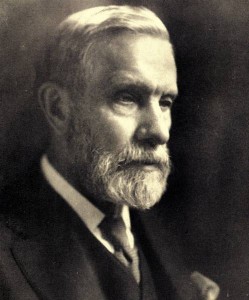
While in Dublin Sheridan attends the English Grammar School in Grafton Street. The family moves permanently to England in 1758 where he is a pupil at Harrow School from 1762 to 1768. After his period in Harrow School, his father employs a private tutor to directs his studies.
In 1775, Sheridan’s first play, The Rivals, is produced at London’s Covent Garden Theatre. It is a failure on its first night. He casts a more capable actor in the lead for its second performance, and it is a smash which immediately establishes the young playwright’s reputation and the favour of fashionable London. It has gone on to become a standard of English literature.
Shortly after the success of The Rivals, Sheridan and his father-in-law, Thomas Linley the Elder, a successful composer, produce the opera, The Duenna. This piece is accorded such a warm reception that it plays for seventy-five performances.
The following year, Sheridan, his father-in-law, and one other partner purchase a half-interest in the Drury Lane theatre and, two years later, buy out the other half. Sheridan is the manager of the theatre for many years and later becomes sole owner with no managerial role.
His most famous play, The School for Scandal (Drury Lane, May 8, 1777), is considered one of the greatest comedies of manners in English. It is followed by The Critic (1779), an updating of the satirical Restoration comedyThe Rehearsal. He has a rivalry with his fellow playwright Richard Cumberland and includes a parody of Cumberland in The Critic. In 1778, Sheridan writes The Camp, which comments on the ongoing threat of a French invasion of Britain.
In 1780, Sheridan enters Parliament as the ally of Charles James Fox on the side of the American Colonials in the political debate of that year. He remains in Parliament for 32 years.
On February 24, 1809, despite the much-vaunted fire safety precautions of 1794, the theatre burns down. On being encountered drinking a glass of wine in the street while watching the fire, Sheridan is famously reported to have said, “A man may surely be allowed to take a glass of wine by his own fireside.”
When he fails to be re-elected to Parliament in 1812, his creditors close in on him and his last years are harassed by debt and disappointment. On hearing of his debts, the United States Congress offers Sheridan £20,000 in recognition of his efforts to prevent the American Revolutionary War. The offer is refused.
In December 1815 Sheridan becomes ill and is largely confined to bed. He dies in poverty on July 7, 1816, and is buried in the Poets’ Corner of Westminster Abbey. His funeral is attended by dukes, earls, lords, viscounts, the Lord Mayor of London, and other notables.
Fenians propose a “New Departure,” an alliance with the Parnellites, on October 27, 1878. The term New Departure is used to describe several initiatives in the late 19th century by which Irish republicans, who are committed to independence from Britain by physical force, attempt to find a common ground for co-operation with groups committed to Irish Home Rule by constitutional means. The term refers to the fact that Fenians are to some extent departing from their orthodox doctrine of noninvolvement with constitutional politics, especially the British parliament.
John O’Connor and Dr. Mark Ryan, both members of the IRB’s Supreme Council, believe O’Connor Power has some hand in the new departure. John O’Connor suspects that Michael Davitt of the IRB has been influenced by O’Connor Power, and that the new departure proposals conceal some sinister scheme of Power’s devising, assumptions that Davitt hotly rejects. The precedent for constitutional agitation set by Power is not lost on orthodox Fenians such as Dr. Ryan, who sees behind the new departure the nefarious influence of the member for Mayo.
In late 1878 Michael Davitt makes a fund-raising political lecture tour of the United States, promoted by William Carroll and John Devoy of Clan na Gael. On October 13 in Brooklyn, New York, Davitt first presents, in a lecture titled “Ireland in parliament from a nationalist’s point of view,” a doctrine that Irish republicans cannot prevent Irishmen voting or being elected to the British parliament, but they can influence who is sent to that parliament. He states that the Home Rule League, especially Isaac Butt and John O’Connor Power, are failing to prevent Ireland from being “imperialised” or “West Britainised.” Davitt however believes that Parnell and Joseph Biggar are acceptable Irish MPs, and Irish republicans should ensure that more such strong nationalists are voted in. John Devoy follows and points out that if Irish republicans are to gain the support of Britain’s potential enemies, such as Russia, they need to provide far stronger opposition to Britain both inside and outside parliament. He points out that Russia has not yet seen the Irish as providing any such meaningful opposition, in fact to Russia they appear loyal to Britain. Hence it is necessary to replace representatives in all Irish public bodies with suitable committed nationalists. Both Davitt and Devoy at this meeting stress that resolution of the Irish land question by transfer of ownership to the farmers themselves is integral to Irish demands on Britain.
On October 27, 1878, Devoy, without first consulting Davitt, summarises these ideas in what he terms a “new departure” in the New York Herald, and it is reported in Ireland on November 11. He also states that Irish participation in the British parliament is to be temporary, and that at a suitable time Irish nationalist MPs will withdraw to Dublin and form an independent Irish legislature. Davitt is at first worried that perceived connections to the Fenians will threaten Parnell in parliament, but Devoy convinces him that Parnell will not be affected. IRB leaders John O’Leary and Charles Kickham reject the overture to constitutionalists and Parnell gives no comment. He does however adopt the militant rhetoric of land ownership to be transferred to the Irish farmers themselves in various public speeches in Ireland. Hence the stage is set for the successful collaboration in 1879 over the Land War.
In the late 1960s, a civil rights campaign develops in Northern Ireland. Adams is an active supporter and joins the Northern Ireland Civil Rights Association in 1967. However, the civil rights movement is met with violence from loyalist counterdemonstrations and the Royal Ulster Constabulary. In August 1969, Northern Ireland cities like Belfast and Derry erupt in major rioting.
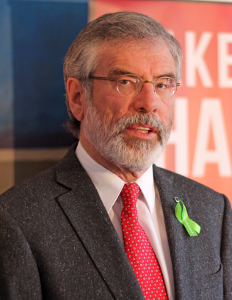
Adams has been the president of Sinn Féin since 1983. Since that time the party has become the third-largest party in the Republic of Ireland, the second-largest political party in Northern Ireland and the largest Irish nationalist party in that region. In 1984, Adams is seriously wounded in an assassination attempt by several gunmen from the Ulster Defence Association (UDA), including John Gregg. From the late 1980s onwards, Adams is an important figure in the Northern Ireland peace process, initially following contact by the then-Social Democratic and Labour Party (SDLP) leader John Hume and then subsequently with the Irish and British governments.
In 1986, Sinn Féin, under Adams, changes its traditional policy of abstentionism towards the Oireachtas, the parliament of the Republic of Ireland, and later takes seats in the power-sharing Northern Ireland Assembly. In 2005, the Provisional Irish Republican Army (IRA) states that its armed campaign is over and that it is exclusively committed to democratic politics.
In September 2017, Adams says Sinn Féin will begin a “planned process of generational change” after its November ardfheis and will allow his name to go forward for a one-year term as Uachtaran Shinn Fein (President Sinn Fein).
Born Charles William St. John Burgess, Brugha is the tenth of fourteen children and is educated at the JesuitBelvedere College but is forced to leave at the age of sixteen because of the failure of his father’s business.
In 1899 Brugha join the Gaelic League, and he subsequently changes his name from Charles Burgess to Cathal Brugha. He meets his future wife, Kathleen Kingston, at an Irish class in Birr, County Offaly and they marry in 1912. They have six children, five girls and one boy. Brugha becomes actively involved in the Irish Republican Brotherhood (IRB) and in 1913 he becomes a lieutenant in the Irish Volunteers. He leads a group of twenty Volunteers to receive the arms smuggled into Ireland in the Howth gun-running of 1914.
He is second-in-command at the South Dublin Union under Commandant Éamonn Ceannt in the Easter Rising of 1916. On the Thursday of Easter Week, being badly wounded, he is unable to leave when the retreat is ordered. Brugha, weak from loss of blood, continues to fire upon the enemy and is found by Eamonn Ceannt singing “God Save Ireland” with his pistol still in his hands. He is initially not considered likely to survive. He recovers over the next year but is left with a permanent limp.
Brugha is elected speaker of Dáil Éireann at its first meeting on January 21, 1919, and he reads out the Declaration of Independence in Irish, which ratifies “the establishment of the Irish Republic.” On the following day, he is appointed president of the ministry pro tempore. He retains this position until April 1, 1919, when Éamon de Valera takes his place.
Brugha has differences with Michael Collins, who, although nominally only the IRA’s Director of Intelligence, has far more influence in the organisation as a result of his position as a high-ranking member of the Irish Republican Brotherhood, an organisation that Brugha sees as undermining the power of the Dáil and especially the Ministry for Defence. Brugha opposes the oath of allegiance required for membership of the IRB and, in 1919, his proposition that all Volunteers should swear allegiance to the Irish Republic and the Dáil is adopted.
At a top-level IRA meeting in August 1920, Brugha argues against ambushes of Crown forces unless there is first a call to surrender, but it is dismissed as unrealistic by the brigade commanders present. Brugha also has the idea of moving the front line of the war to England but is opposed by Collins.
In the months between the Treaty debates and the outbreak of Civil War, Brugha attempts to dissuade his fellow anti-treaty army leaders including Rory O’Connor, Liam Mellows and Joe McKelvey from taking up arms against the Free State. When the IRA occupies the Four Courts, he and Oscar Traynor call on them to abandon their position. When they refuse, Traynor orders the occupation of the area around O’Connell Street in the hope of easing the pressure on the Four Courts and of forcing the Free State to negotiate.
On June 28, 1922, Brugha is appointed commandant of the forces in O’Connell Street. The outbreak of the Irish Civil War ensues in the first week of July when Free State forces commence shelling of the anti-treaty positions.
Most of the anti-Treaty fighters under Oscar Traynor escape from O’Connell Street when the buildings they are holding catch fire, leaving Brugha in command of a small rearguard. On July 5, he orders his men to surrender but refuses to do so himself. He then approaches the Free State troops, brandishing a revolver. He sustains a bullet wound to the leg which severs a major artery.
Cathal Brugha dies on July 7, 1922, eleven days before his 48th birthday. He has been re-elected as an anti-Treaty Teachta Dála (TD) at the 1922 Irish general election but dies before the Dáil assembles. He is buried in Glasnevin Cemetery.
Living in the nationalist Beechmount neighbourhood of the Falls, he stands for the Falls as a candidate for the Dock Labour Party in a city council by-election in 1956, but loses to Paddy Devlin of the Irish Labour Party, who later becomes his close ally. In 1958, he is elected to Belfast City Council as a member of the Irish Labour Party.
Many sympathetic British Members of Parliament (MPs) are present at a civil rights march in Derry on October 5, 1968, when Fitt and others are beaten by the Royal Ulster Constabulary. Fitt also supports the 1969 candidacy of Bernadette Devlin in the Mid Ulster by-election who runs as an anti-abstentionist ‘Unity‘ candidate. Devlin’s success greatly increases the authority of Fitt in the eyes of many British commentators, particularly as it produces a second voice on the floor of the British House of Commons who challenge the Unionist viewpoint at a time when Harold Wilson and other British ministers are beginning to take notice.
In August 1970, Fitt becomes the first leader of a coalition of civil rights and nationalist leaders who create the Social Democratic and Labour Party (SDLP). By this time Northern Ireland is charging headlong towards near-civil war and the majority of unionists remain hostile.
After the collapse of Stormont in 1972 and the establishment of the Northern Ireland Assembly in 1973 Fitt becomes deputy chief executive of the short-lived Power-Sharing Executive created by the Sunningdale Agreement.
Fitt becomes increasingly detached from both his own party and also becomes more outspoken in his condemnation of the Provisional Irish Republican Army. He becomes a target for republican sympathisers in 1976 when they attack his home. He becomes disillusioned with the handling of Northern Ireland by the British government. In 1979, he abstains from a crucial vote in the House of Commons which brings down the Labour government, citing the way that the government had failed to help the nationalist population and tried to form a deal with the Ulster Unionist Party.
In 1979, Fitt is replaced by John Hume as leader of the SDLP and he leaves the party altogether after he agrees to constitutional talks with British Secretary of StateHumphrey Atkins without any provision for an ‘Irish dimension’ and then sees his decision overturned by the SDLP party conference. Like Paddy Devlin before him, he claims the SDLP has ceased to be a socialist force.
In 1981, he opposes the hunger strikes in the Maze prison in Belfast. His seat in Westminster is targeted by Sinn Féin as well as by the SDLP. In June 1983, he loses his seat in Belfast West to Gerry Adams, in part due to competition from an SDLP candidate. The following month, on October 14, 1983, he is created a UK life peer as Baron Fitt, of Bell’s Hill in County Down. His Belfast home is firebombed a month later and he moves to London.
Gerry Fitt dies in London on August 26, 2005, at the age of 79, after a long history of heart disease.
John Beresford, Irish statesman, is born in Cork on March 14, 1738. He is a younger son of Sir Marcus Beresford who, having married Catherine, sole heiress of James Power, 3rd Earl of Tyrone, is created Earl of Tyrone in 1746. After the death of the earl in 1763, Beresford’s mother successfully asserts her claim suo jure to the barony of La Poer. John Beresford thus inherits powerful family connections. He is educated at Kilkenny College and Trinity College, Dublin and is called to the Irish bar.
Beresford enters the Irish House of Commons as member for County Waterford in 1761. In 1768, 1783, 1789 and finally in 1798, he stands also for Coleraine, however choosing each time to sit for Waterford.
His industry, added to the influence of his family, procures his admission to the Privy Council of Ireland in 1768, and his appointment as one of the commissioners of revenue two years later. In 1780 he becomes first commissioner of revenue, a position which gives him powerful influence in the Irish administration. He introduces some useful reforms in the machinery of taxation and is the author of many improvements in the architecture of the public buildings and streets of Dublin. He is first brought into conflict with Henry Grattan and the popular party in 1784, by his support of the proposal that the Irish parliament in return for the removal of restrictions on Irish trade should be bound to adopt the English navigation laws.
In 1786, Beresford is sworn a member of the Privy Council of Great Britain, and the power which he wields in Ireland through his numerous dependants and connections grows to be so extensive that a few years later he is spoken of as the “King of Ireland.” He is a vehement opponent of the increasing demand for Catholic Emancipation and when it becomes known that the Earl Fitzwilliam is to succeed John Fane, 10th Earl of Westmorland, as Lord Lieutenant of Ireland in 1795 for the purpose of carrying out a conciliatory policy, Beresford expresses strong hostility to the appointment. One of Fitzwilliam’s first acts is to dismiss Beresford from his employment for corruption, but with permission to retain his entire official salary for life, and with the assurance that no other member of his family will be removed. Fitzwilliam has been encouraged in this course of action by William Ponsonby. Beresford immediately exerts all his influence with his friends in England, to whom he describes himself as an injured and persecuted man. He appeals to William Pitt the Younger and goes to London to lay his complaint before the English ministers.
The recall of Fitzwilliam, which is followed by such momentous consequences in the history of Ireland is, as the viceroy himself believes, mainly due to Beresford’s dismissal. There has been a misunderstanding on the point between Pitt and Fitzwilliam. The latter, whose veracity is unimpeachable, asserts that previous to his coming to Ireland he had informed the prime minister of his intention to dismiss Beresford, and that Pitt had raised no objection. Pitt denies all recollection of any such communication, and on the contrary describes the dismissal as an open breach of the most solemn promise. In a letter to Frederick Howard, 5th Earl of Carlisle, justifying his action, Fitzwilliam mentions that malversation had been imputed to Beresford. Beresford sends a challenge to Fitzwilliam, but the combatants are interrupted on the field and Fitzwilliam then makes an apology.
When John Pratt, 1st Marquess Camden, replaces Fitzwilliam in the viceroyalty in March 1795, Beresford resumes his former position. On the eve of the Irish Rebellion of 1798 his letters to William Eden, 1st Baron Auckland, give an alarming description of the condition of Ireland and he counsels strong measures of repression. When first consulted by Pitt on the question of the union, Beresford appears to dislike the idea, but he soon becomes reconciled to the policy and warmly supports it. After the union Beresford continues to represent County Waterford in the Parliament of the United Kingdom, and he remains in office until 1802, taking an active part in settling the financial relations between Ireland and Great Britain.
In 1760, Beresford marries Constantia Ligondes, who dies in 1772. In 1774, he marries Barbara Montgomery, a celebrated beauty who figures in Sir Joshua Reynolds‘ picture of The Graces. He has large families by both marriages. His sons include Marcus Beresford, George Beresford, and John Claudius Beresford. John Beresford dies near Derry on November 5, 1805.
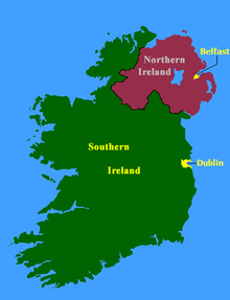
The Act is intended to establish separate Home Rule institutions within two new territories of Ireland – the six northeastern counties of Antrim, Armagh, Down, Fermanagh, Londonderry, and Tyrone are to form “Northern Ireland,” while the remaining 26 counties of the country are to form “Southern Ireland.” Each territory is to be self-governing, except in areas specifically reserved to the Parliament of the United Kingdom such as defence, foreign affairs, international trade, and currency. Provision is made for their future reunification under common Home Rule institutions.
Home Rule never takes effect in Southern Ireland due to the Irish War of Independence, which results instead in the Anglo-Irish Treaty and the establishment in 1922 of the Irish Free State. However, the institutions set up under this Act for Northern Ireland continue to function until they are suspended by the British parliament in 1972 as a consequence of the Troubles.
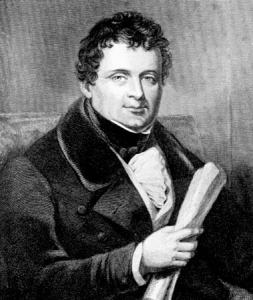
Daniel O’Connell, Irish political leader often referred to as The Liberator or The Emancipator, is born on August 6, 1775, at Carhan near Cahersiveen, County Kerry, to the O’Connells of Derrynane, a once-wealthy Roman Catholic family, that has been dispossessed of its lands.
Raised by his uncle, Daniel learns the Irish language and Irish lore in Kerry. O’Connell does part of his schooling in France during the revolution. On May 19, 1798, O’Connell is called to the Irish Bar and becomes a barrister. Four days later, the United Irishmen stage their rebellion which is put down by the British with great bloodshed. O’Connell does not support the rebellion. He believes that the Irish need to assert themselves politically rather than by force. The violent excesses he witnesses in France, the slaughter of the 1798 Rising, and finally his own killing of a man in a duel in 1815 leads him to renounce violence forever.
Moving into politics, O’Connell founds the Catholic Association in 1823, creating one of the first massive political movements in Europe or the Americas. The Catholic Association embraces other aims to better Irish Catholics, such as electoral reform, reform of the Church of Ireland, tenants’ rights, and economic development.
When he is elected to Parliament in 1828, he is unable to take his seat as members of parliament have to take the Oath of Supremacy, which is incompatible with Catholicism. Fear of the reaction of his millions of followers leads to the passage of the Roman Catholic Relief Act 1829. O’Connell works for Home Rule for Ireland for the rest of his days but never achieves it. The British ban his mass Repeal of the Union rallies in 1843 and jail him for a time. The movement loses momentum at that point and the long years of hard work wear “The Liberator” down.
O’Connell dies at the age of 71 of cerebral softening on May15, 1847, in Genoa, Italy, while on a pilgrimage to Rome. His time in prison seriously weakens him and the appallingly cold weather he has to endure on his journey is likely the final blow. According to his dying wish, his heart is buried in Rome at Sant’Agata dei Goti, then the chapel of the Irish College, and the remainder of his body in Glasnevin Cemetery in Dublin, beneath a round tower.
Daniel O’Connell, lawyer who becomes the first great 19th-century Irish nationalist leader and is known as “The Liberator,” dies in Genoa, Italy on May 15, 1847. Throughout his life, he campaigns for Catholic emancipation, including the right for Catholics to sit in the Westminster Parliament and the repeal of the Act of Union which combines Great Britain and Ireland.
Compelled to leave the Roman Catholic college at Douai, France, when the French Revolution breaks out, O’Connell goes to London to study law, and in 1798 he is called to the Irish bar. His forensic skill enables him to use the courts as nationalist forums. Although he has joined the Society of United Irishmen, a revolutionary society, as early as 1797, he refuses to participate in the Irish Rebellion of the following year. When the Act of Union takes effect on January 1, 1801, and abolishes the Irish Parliament, he insists that the British Parliament repeal the anti-Catholic laws in order to justify its claim to represent the people of Ireland. From 1813 he opposes various Catholic relief proposals because the government, with the acquiescence of the papacy, has the right to veto nominations to Catholic bishoprics in Great Britain and Ireland. Although permanent political organizations of Catholics are illegal, O’Connell sets up a nationwide series of mass meetings to petition for Catholic emancipation.
On May 12, 1823, O’Connell and Richard Lalor Sheil found the Catholic Association, which quickly attracts the support of the Irish priesthood and of lawyers and other educated Catholic laymen and which eventually comprises so many members that the government cannot suppress it. In 1826, when it is reorganized as the New Catholic Association, it causes the defeat of several parliamentary candidates sponsored by large landowners. In County Clare in July 1828, O’Connell himself, although as a Catholic ineligible to sit in the House of Commons, defeats a man who tries to support both the British government and Catholic emancipation. This result impresses on the British prime minister, Arthur Wellesley, 1st Duke of Wellington, the need for making a major concession to the Irish Catholics. Following the passage of the Catholic Emancipation Act of 1829, O’Connell, after going through the formality of an uncontested reelection, takes his seat at Westminster.
In April 1835, he helps to overthrow Sir Robert Peel’s Conservative ministry. In the same year, he enters into the “Lichfield House compact,” whereby he promises the Whig Party leaders a period of “perfect calm” in Ireland while the government enacts reform measures. O’Connell and his Irish adherents, known collectively as “O’Connell’s tail,” then aid in keeping the weak Whig administration of William Lamb, 2nd Viscount Melbourne, in office from 1835 to 1841. By 1839, however, O’Connell realizes that the Whigs will do little more than the Conservatives for Ireland, and in 1840 he founds the Repeal Association to dissolve the Anglo-Irish legislative union. A series of mass meetings in all parts of Ireland culminate in O’Connell’s arrest for seditious conspiracy, but he is released on appeal in September 1844 after three months’ imprisonment. Afterward his health fails rapidly, and the nationalist leadership falls to the radical Young Ireland group.
O’Connell dies at the age of 71 of cerebral softening in 1847 in Genoa, Italy, while on a pilgrimage to Rome. His time in prison has seriously weakened him, and the appallingly cold weather he has to endure on his journey is probably the final blow. According to his dying wish, his heart is buried at Sant’Agata dei Goti, then the chapel of the Irish College, in Rome and the remainder of his body in Glasnevin Cemetery in Dublin, beneath a round tower.
Devlin is born in Cookstown, County Tyrone to a Roman Catholic family and attends St. Patrick’s Girls Academy in Dungannon. She is studying Psychology at Queen’s University Belfast in 1968 when she takes a prominent role in a student-led civil rights organisation, People’s Democracy. Devlin is subsequently excluded from the university.
She stands unsuccessfully against James Chichester-Clark in the Northern Ireland general election of 1969. When George Forrest, the MP for Mid Ulster, dies, she fights the subsequent by-election on the “Unity” ticket, defeating Forrest’s widow Anna, the Ulster Unionist Party candidate, and is elected to the Parliament of the United Kingdom. At age 21, she is the youngest MP at the time, and remains the youngest woman ever elected to Westminster until the May 2015 general election when 20-year-old Mhairi Black succeeds to the title.
After engaging on the side of the residents in the Battle of the Bogside, she is convicted of incitement to riot in December 1969, for which she serves a short jail term.
Having witnessed the events of Bloody Sunday, Devlin is infuriated that she is consistently denied the floor in the House of Commons by the Speaker Selwyn Lloyd, despite the fact that parliamentary convention decrees that any MP witnessing an incident under discussion would be granted an opportunity to speak about it. Devlin slaps Reginald Maudling, the Home Secretary in the Conservative government, across the face when he states in the House of Commons that the paratroopers had fired in self-defence on Bloody Sunday.
Devlin stands as an independent candidate in support of the prisoners at Long Kesh prison in the 1979 European Parliament elections in Northern Ireland and wins 5.9% of the vote. She is a leading spokesperson for the Smash H-Block Campaign, which supports the hunger strikes of 1980 and 1981.
On January 16, 1981, Devlin and her husband, Michael McAliskey, are shot by members of the Ulster Defence Association (UDA), who break into their home near Coalisland, County Tyrone. Devlin is shot fourteen times in front of her children. British soldiers are watching the McAliskey home at the time but fail to prevent the assassination attempt. The couple are taken by helicopter to a hospital in nearby Dungannon for emergency treatment and then transported to the Musgrave Park Hospital, Military Wing, in Belfast, under intensive care. The attackers, all three members of the South Belfast UDA, are captured by the army patrol and subsequently jailed.
In 1982, she twice fails in an attempt to be elected to the Dublin North–Central constituency of Dáil Éireann. In 2003, she is barred from entering the United States and is deported on the grounds that the United States Department of State has declared that she “poses a serious threat to the security of the United States,” apparently referring to her conviction for incitement to riot in 1969.
On May 12, 2007, she is the guest speaker at éirígí‘s first Annual James Connolly commemoration in Arbour Hill, Dublin. She currently co-ordinates a not-for-profit community development organisation based in Dungannon, the South Tyrone Empowerment Programme, and works with migrant workers to improve their treatment in Northern Ireland.