seamus dubhghaill

Promoting Irish Culture and History from Little Rock, Arkansas, USA


Leave a comment

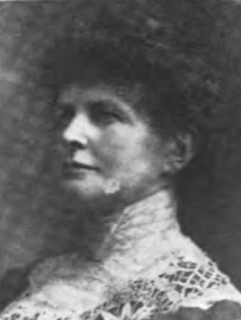
Birth of Sarah Atkinson, Writer & Philanthropist

Sarah (née Gaynor) Atkinson, Irish writer, biographer, essayist and philanthropist, is born in Athlone, County Westmeath, on October 23, 1823.

She is the eldest daughter of John and Anne Gaynor, of Athlone. At the age of fifteen she moves with her family to Dublin where her education is completed. Two of her sisters, Anna and Marcella, become nuns with Religious Sisters of Charity. At twenty-five, she marries the much older George Atkinson, a medical doctor and, with Sir John Gray, joint proprietor of the Freeman’s Journal. They are both interested in art and she accompanies her husband on many trips abroad, taking in the cultural centres of Europe. At home they make the acquaintance of prominent politicians, journalists and musicians. Regular guests at their house are Dr. John Shaw, editor of the Evening MailRosa Mulholland and Katharine Tynan.

The loss of her only child in his fourth year deeply affected Atkinson and she throws herself into charitable and other good works. She moves with her husband to Drumcondra in Dublin, where she makes the acquaintance of Ellen Woodlock. Woodlock, a sister of Francis Sylvester Mahony, is born in Cork, County Cork, in 1811 and is married in 1830 and widowed quite young, just before the birth of her only son. Woodlock is the sister-in-law of Rev. Dr. Bartholomew Woodlock, who is President of All Hallows College. She intends to join a religious community in France but after spending a few years in that country (with her son in a nearby school) returns to Cork and then moves to Dublin. At this time the post-famine city is inundated with poverty-stricken families and abandoned children. Fever and disease are rife, and the Poor Law of the day is insufficient to meet the needs of the starving population. Many evictions are taking place in deplorable circumstances, which force the poor, however reluctantly, to seek refuge in the workhouses. The most vulnerable sections of the community are single women (including widows) and children. Woodlock is totally against placing children in workhouses and founds St. Joseph’s Industrial Institute in 1855 to rescue girls from that situation. With her, Atkinson interests herself in the female paupers of the South Dublin Union. With much difficulty in the 1860s, she gains permission for ladies like herself to enter and inspect the condition of young girls in the North and South Dublin Unions, after which she opens a better home to which many were transferred. She campaigns for years to improve the state of the workhouses and provide better conditions for the poverty-stricken. One of her sisters runs the Our Lady’s Hospice in Dublin, to which she donates funds. She helps Woodlock establish the Children’s Health Ireland at 9 Buckingham Street in 1872, which later moves to Temple Street, which she visits every day. Every week she visits hospitals and prisons, in the 1880s accompanying Katharine Tynan to visit the last of the Land Leaguers incarcerated in Kilmainham Gaol.

From the 1850s Atkinson contributes a large number of historical and biographical articles and essays to several publications, including Duffy’s Hibernian MagazineThe MonthThe Nation and the Freeman’s Journal. She later writes for the Irish Monthly after it is established, and for the Irish Quarterly Review. Her Life of Mary Aikenhead is published in 1875 and is very well received. She follows this with biographies of the Irish sculptors John Henry Foley and John Hogan and also a life of Catherine of Siena. A collection of her essays, with a preface and biography by Rosa Mulholland, is published posthumously in 1895.

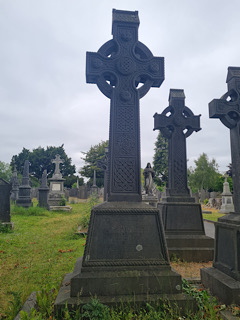
Atkinson dies in County Dublin on July 8, 1893, and is buried in Glasnevin Cemetery, Dublin, where the cemetery committee places a Celtic cross as a monument to her and her husband after his death on December 8, 1893.


Leave a comment

Birth of Caroline Agnes Gray, Owner of the “Freeman’s Journal”

Caroline “Carrie” Agnes Gray, English hostess and owner of the Freeman’s Journal, is born Caroline Agnes Chisholm in London, England, on May 13, 1848.

Gray is the sixth child of the eight children of the philanthropist Caroline Chisholm (née Jones) and Archibald Chisholm, an officer in the army of the East India Company.

Gray meets her husband, Edmund Dwyer Gray, in September 1868 when she witnesses him saving five people from a wrecked schooner during a storm in Killiney Bay, near Dún Laoghaire. She later meets him, and the couple are married in 1869. They had four children, with three surviving to adulthood: Edmund, Mary and Sylvia. She places both of her daughters in convents after their education and the early death of their father, supposedly as she fears they will harm her chances of remarrying.

Gray is a noted hostess during her husband’s political career, in particular while he is Lord Mayor of Dublin. Following his death in 1888, she holds over 40% of the shares in her husband’s newspaper, the Freeman’s Journal. While she is not involved in the day-to-day running of the company, she does exert influence over the newspaper. When Charles Stewart Parnell‘s party splits, the paper sides with Parnell at Gray’s consent. She is one of a number of prominent Catholic women in Dublin who continue to support Parnell. In 1891, she appears with Parnell in public, leading to the Archbishop of Dublin describing her as “a rock of scandal.”

It is only when the Freeman’s Journal‘s circulation and revenue suffers after the establishment of an anti-Parnell newspaper, the National Press, that Gray’s loyalty to Parnell wavers. Influenced by her son, she decides that the Freeman’s Journal will abandon its relationship with Parnell. This decision is formalised at a special general meeting to the Freeman company on September 21, 1891, seeing the pro-Parnell board replaced with one that includes her son and Captain Maurice O’Conor. The Freeman’s Journal and the National Press merge in March 1892, after which Gray is bought out of the company with her son and O’Conor stepping down from the board, thus ending the Gray family’s 50-year relationship with the Freeman’s Journal.

Gray marries Captain O’Conor in November 1891. A Captain, and later a Major, with the Connaught Rangers, he is a relative of Charles Owen O’Conor and George Moore. She is twelve years his senior, and the couple has no children. They live on Inisfale Island on Lough Allen, County Leitrim. She lives the last thirty years of her life there, with failing eyesight and eventual blindness. She dies there April 15, 1927. O’Conor dies in a hotel in Dún Laoghaire on January 3, 1941, in poor circumstances.


Leave a comment

Death of Sheila Pim, Crime Novelist & Horticulturalist

Sheila Pim, Irish crime novelist and horticulturalist, dies in Dublin on December 16, 1995.

Pim is born in Dublin on September 21, 1909, to a Quaker father and English mother. She is a twin, but her brother dies. She is sent to the French School in Bray, County Wicklow, before being sent to Lausanne, Switzerland to finishing school. She then goes on to Girton College, Cambridge to study modern languages, intending to graduate with a degree in French and Italian. Her mother’s ill health and ultimate death in 1940, causes her to return to Ireland to look after her and she remains there taking care of her father, who dies in 1958, and an older incapacitated brother, Tom.

But these are good years for Pim with time to write, and during the 1950s and early 1960s she writes no fewer than seven novels, mostly crime fiction in a lighthearted style. During this time, she is a member of Irish PEN. She is also an avid amateur horticulturalist and writes for the magazine My Garden. Her more serious undertaking is a biography of the Irish plant collector Augustine Henry, The Wood and the Trees: A Biography of Augustine Henry (Macdonald, London). Her brother Tom dies in an accident in 1964 leaving Pim with no further responsibilities. This allows her to spend significant time researching through Henry’s papers. The book is published in 1966.

When Pim has completed the biography, she focuses on philanthropy. She dedicates her time to the Friends Historical Society and is particularly interested in helping out in the traveller community. She supports a young group of children and their grandfather. They bring her considerable joy. The Royal Horticultural Society of Ireland awards her the Society’s Medal of Honour and makes her an honorary life member for her services to the study of horticulture.

In Pim’s later years increasing deafness makes socialising difficult for her, but she still keeps up with the world of books, the theatre and painting. She reads The Irish Times from cover to cover every day, and her reading includes the Bible, Marcel Proust (in French) and the stories of Roddy Doyle.

Pim’s deafness finally forces her to move into sheltered housing in Dublin where she dies on December 16, 1995.


Leave a comment

Birth of Mary Letitia Martin, Novelist & Philanthropist

Mary Letitia Martin, Irish novelist and philanthropist who is known as the “Princess of Connemara,” is born in Ballynahinch Castle, in the Connemara region of County Galway, on August 28, 1815. She publishes two books in her lifetime, and a third is published posthumously.

Martin is born into the chief landowning family of Connemara, the Martins of Ballynahinch Castle, a branch of the Martyn Tribe of Galway. Her parents are Thomas Barnwall Martin and Julia Kirwin. Her paternal grandfather is Richard Martin, a Member of Parliament (MP) for County Galway also known as “Humanity Dick.”

Educated at home in the upper-class style and by herself, Martin becomes fluent in Irish, English, French and a number of other languages. According to Maria Edgeworth, who meets her during her tour of Connemara in 1833, she is courted in 1834 by Count Adolphe de Werdinsky, whom she had met in London earlier in the year. She refuses to marry and de Werdinsky feigns a suicide attempt at Ballynahinch.

Martin publishes her first novel, St. Etienne, a Tale of the Vendean War, in 1845.

In 1847, Martin marries a cousin, Colonel Arthur Gonne Bell. He takes the name of Martin on marriage, by Royal Licence. In the same year, her father dies of famine fever contracted while visiting his tenants in the Clifden workhouse.

On the death of her father, Martin inherits a heavily encumbered estate of 200,000 acres. In the following two years, her remaining fortune is destroyed in the famine as she attempts to alleviate its effects on her tenants. Penniless, she emigrates with her husband to Belgium. There she contributes to a number of periodicals, notably Encyclopaedie Des Gens Du Monde.

In 1850, Martin’s autobiographical novel, Julia Howard: A Romance, is published. Martin and her husband sail to the United States in 1850, but she dies at the Union Place Hotel in New York City on November 7, 1950, ten days after arrival due to complications of premature childbirth in which the baby does not survive.

Martin’s husband returns to England. He arranges for the posthumous publication of her novel, Deed, not Words (1857). In 1883, he is killed in a railway accident.


Leave a comment

Death of Katherine Conolly, Hostess, Landowner & Philanthropist

Katherine Conolly, Irish political hostess, landowner, and philanthropist, dies at Castletown House, Celbridge, County Kildare, on September 23, 1752.

Katherine Conolly is born Katherine Conyngham around 1662. Her parents are Sir Albert Conyngham and Margaret (née Leslie). She is the eldest of their ten children, with one of her brother’s being Henry Conyngham. Her maternal grandfather is Henry Leslie. She marries William Conolly in 1694, Speaker of the Irish House of Commons (1715-29) and purported to be the wealthiest man in Ireland. The marriage is likely to have been a love match. The couple uses her dowry of £2,300 to purchase their first estates in County Meath. Through her connections, her husband is able to ally himself with the influential Protestant families such as the Gores, Montgomerys and Leslies. She becomes known as a political hostess, gaining a mention in a ballad detailing the 1723 Westmeath by-election.

Upon the death of her husband in 1729, Connolly inherits estates in Wales, as well as in counties Meath, Roscommon, Westmeath and Kildare. She continues to be influential in Irish public affairs, being asked for her opinions and counsel. Living on Capel Street, Dublin, and at Castletown House, County Kildare, she entertains a large circle of friends. She carries on her husband’s plan to build the residential Collegiate School, Celbridge, built from 1733 to 1737, then supports the school with £50 each year. She commissions a monument in her husband’s memory by Thomas Carter, in Kildrought Church, Celbridge. She also commissions Conolly’s Folly in 1740 and The Wonderful Barn in 1743 to generate employment in the area.

Connolly dies in Castletown House on September 23, 1752. A portrait of her by Charles Jervas still hangs there. Upon hearing of her death, Mary Delany notes that her death “is a general loss. Her table was open to all her friends of all ranks and her purse to the poor … she was clever at business, and wrote all her own letters … she was a plain and vulgar woman in her manner but had very valuable qualities.”

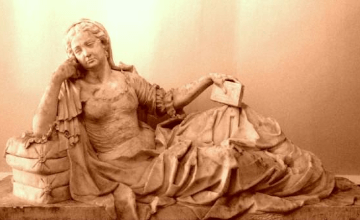
(Pictured: Reclining statue of Katherine Conolly by Thomas Carter, at Castletown House, Celbridge, County Kildare)


Leave a comment

Death of Edward Cecil Guinness, 1st Earl of Iveagh

Edward Cecil Guinness, 1st Earl of Iveagh, Irish businessman and philanthropist, dies at his London home in Grosvenor Place on October 7, 1927

Guinness is born on November 10, 1847 at St. Anne’s, Clontarf, County Dublin, the youngest of three sons of Sir Benjamin Lee Guinness, brewer, of Dublin, and Elizabeth, third daughter of Edward Guinness of Dublin. He is not sent to public school but is taught at home by a private tutor before entering Trinity College Dublin, where he takes his degree in 1870. His father dies in 1868, leaving him a share in the brewery, and he takes over management of the business with his brother Arthur, who in 1876 sells his shares, making Edward sole proprietor.

Guinness is also prominent in municipal life, holding the offices of Sheriff of Dublin City in 1876 and High Sheriff of the County of Dublin in 1885, the year in which he is created a baronet. He is a brilliantly effective businessman, with close attention to detail and a focus solely on the brewery, to the extent of remaining independent from the rest of the brewing trade. In 1888 he bluntly tells the Country Brewers’ Association, “I have always declined to identify myself with any trade question, or to take any side in a controversy on the liquor question, and to this I must adhere.” In 1886 Guinness is floated as a public company, a superbly successful venture with applications for shares exceeding £100 million, and Edward remains as chairman until 1890, although his formal retirement in that year brings little reduction in his involvement with the company, and he continues to make the final decision on many minor matters as well as all major questions of policy.

Socially innovative, with a concern for the welfare of employees, from as early as 1870 Guinness establishes a free dispensary for his workforce and makes provisions for pension and other allowances – acts of social reform that are remarkable for the time. To mark his retirement in 1890 he places in trust £250,000 to be expended in the erection of working-class housing in London and Dublin. Both funds are administered from London until 1903, when the Dublin fund is amalgamated by the Iveagh Trust act with other schemes carried out in Dublin by Edward, who had been raised to the peerage of the United Kingdom in 1891 as Baron Iveagh of Iveagh, County Down. The funds, which increase considerably from the original amount, are thereafter managed entirely in Dublin as a separate undertaking under the name of the Iveagh Trust, still in existence in the early twenty-first century.

As one of the pioneers of the voluntary housing movement Guinness is essentially carrying on the tradition of “merchant prince and city father” established by his father and shared by his brother. Wealthy, ambitious, and resolutely unionist, he gives generous financial support to the Irish Unionist Alliance, and is also public-spirited, religious, and devoted to duty. Acknowledging that the Iveagh Trust is essentially ameliorative, he believes that major social change will only be achieved if numerous other wealthy people follow his example. He insists that gifts of money from the fund are permissible only to assist individuals to improve their condition “without placing them in the position of being the recipients of a bounty.” Numerous other philanthropic donations follow, including another £250,000 for slum clearance in the Bull Alley district of Dublin; various contributions to Dublin hospitals, particularly in 1903 and 1911 on the occasion of royal visits; and in 1907 the opening of the Iveagh Markets, situated in the Francis Street and Patrick Street areas of Dublin, are made possible with his financial backing. Generous contributions are also made to Trinity College Dublin, of which he is elected chancellor in 1908, and he donates land in Iveagh Gardens to University College Dublin (UCD).

In 1905 Guinness is raised to a viscountcy and in September 1909 the nationalist corporation of Dublin presents him with an address of thanks for his many gifts, and even discusses the possibility of offering him the lord mayoralty of the city, which he declines owing to his political affiliations. By this time he lives chiefly in England, having bought Elveden Hall in Suffolk, where he frequently entertains royalty. He also purchases Lord Kensington’s London estate and makes many donations to medical research societies in England, and in conjunction with Sir Ernest Cassel he founds the London Radium Institute, as well as donates £250,000 to the Laster Institute of Tropical Medicine for the endowment of bacteriological research.

In 1919 Guinness is elevated to an earldom and in 1925 purchases the remainder of the Kenwood estate to the north of Hampstead Heath and arranges for it to become public property, ensuring the estate will not be sold for building purposes, and also bequeaths to the nation a valuable collection of art for use in the gallery at the same location. As well as being elected a fellow of the Royal Society, he is awarded honorary doctorates from the University of Dublin and the University of Aberdeen.

In 1873, Guinness marries his third cousin Adelaide Maud, nicknamed “Dodo.” She is descended from the banking line of Guinnesses, and is the daughter of Richard Samuel Guinness, barrister and MP, and his wife Katherine, a daughter of Sir Charles Jenkinson. They have three sons, the eldest of whom, Rupert Edward Cecil Lee, succeeds his father as 2nd Earl of Iveagh.

Guinness dies at his London home in Grosvenor Place on October 7, 1927, and is buried at Elveden, Suffolk. He leaves an estate valued at £11 million.


2 Comments

Birth of Margaret Aylward, Founder of the Sisters of the Holy Faith

Margaret Louisa Aylward, Roman Catholic nun, philanthropist, and founder of the Sisters of the Holy Faith, is born to a wealthy merchant family on November 23, 1810, in Thomas Street in Waterford, County Waterford.

Aylward is educated by the Ursuline nuns in Thurles, County Tipperary. After doing some charitable work in Waterford in her early years, she joins her sister in the Sisters of Charity in 1834 as a novice. She leaves the novitiate in 1836 and returns to Waterford to continue her charity work in a secular role. She again attempts to join a religious order in 1846 when she enters the Ursuline novitiate in Waterford, however she leaves after two months.

By 1851, Aylward has moved to Dublin where she is active in re-energising the Ladies’ Association of the Society of St. Vincent de Paul. The Great Famine leads to a large-scale movement of people from rural areas into cities, including Dublin, which leads to increased pressure on the charitable institutions of these areas. Her efforts are part of this wider charitable effort to help the poor, particularly Catholics who are seen to be at risk of coercive religious conversion (known as Souperism). This association is concerned with the “temporal as well as the spiritual relief of the sick poor in Dublin.”

The Ladies’ Association of St. Vincent de Paul opens St. Brigid’s in 1856, an orphanage which has an anti-proselytising mission and claims to rescue Catholic children from Protestant agencies. The Ladies’ Association often comes into dispute with those involved in the Irish Church Missions (ICM) and the ragged schools in Dublin, with members of the Ladies’ Association distributing crucifixes to children attending the Protestant-run ragged schools and visiting the homes of parents who send their children to them. The women involved in St. Brigid’s Orphanage organise themselves into a society called the Daughters of St. Brigid. However, while the establishment of St. Brigid’s brings Aylward closer to religious orders, historian Maria Luddy notes that in the 1850s, she is not concerned with the establishment of a religious community, rather she wants to “live in a community of women who were united by their religious convictions but did not necessarily desire to take formal religious vows.”

There is a growth in religious orders for women in Ireland from the early nineteenth century due to a relaxing of anti-Catholic Penal Laws. These include the Irish Sisters of Charity who are established in 1815 under Mary Aikenhead, the Sisters of Loreto order (1822) under Frances Ball, and Catherine McAuley‘s Sisters of Mercy (1831). Archbishop Paul Cullen of Dublin is an important figure in persuading leaders of religious communities of women, like Catherine McAuley, to formally organise as religious congregations in order to continue their charitable work and be respectable. While Aylward is resistant to this idea for a while, she eventually agrees. In 1857 the Sisters of the Holy Faith are established, and in 1869 the order are approved by Pope Pius IX.

Aylward is arrested in 1860 for “failing to produce a child named Mary Matthews, who had been taken away and concealed from her parents for the purpose of being brought up in the Roman Catholic faith.” Matthews had been placed with a nurse in Saggart, County Dublin, when her father had died, and her mother had emigrated to The Bahamas. When her mother returns, Aylward is notified by Matthews’ foster mother that she is missing. Aylward is acquitted of the charge of kidnapping but is found to be in contempt of court and serves six months in jail. She continues her work after her release.

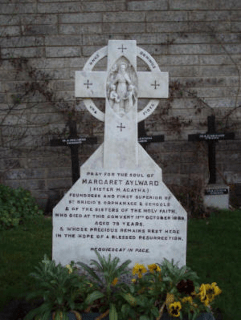
Aylward (now Sister Mary Agatha) dies on October 11, 1889. She had continued wearing her own clothes and travelling after taking her religious vows.

Historian Margaret Helen Preston argues that Aylward is unusual for the time that she lives in because she does not believe that poverty results from sin. Aylward refers to the poor as the “Elect of God” and argues that God sees the poor as special because of their difficult circumstances.

The Sisters of the Holy Faith still work around the world.


Leave a comment

Death of Charlotte Grace O’Brien, Philanthropist & Activist

Charlotte Grace O’Brien, author, philanthropist and an activist in nationalist causes and the protection of female emigrants, dies on June 3, 1909. She is known also as a plant collector.

Born on November 23, 1845, at Cahirmoyle, County Limerick, O’Brien is the younger daughter in a family of five sons and two daughters. Her father is William Smith O’Brien, the Irish nationalist and her mother is Lucy Caroline, eldest daughter of Joseph Gabbett, of High Park, County Limerick. On her father’s return in 1854 from the penal colony in Tasmania, she rejoins him in Brussels and stays there until he comes back to Cahirmoyle in 1856. On her mother’s death in 1861, she moves with her father to Killiney, near Dublin, and is his constant companion until his death at Bangor, Gwynedd in 1864.

From 1864, O’Brien lives at Cahirmoyle with her brother Edward, caring for his motherless children until his remarriage in 1880. Having been hard of hearing since childhood, by 1879 she has become entirely deaf. She goes to live at Ardanoir near Foynes on the River Shannon and spends time writing. She becomes a staunch supporter of Charles Stewart Parnell.

A bad harvest in Ireland in 1879, combined with Irish political turmoil, causes many Irish people to emigrate to the United States. In articles and letters to newspapers and reviews, O’Brien exposes the awful conditions that exist in the Queenstown (Cobh) lodging houses, on board the emigrant ships, and in the dock slums of New York City, where the Irish have to stay upon landing. A notable piece she writes is the Horrors of the Immigrant Ship which appears in The Pall Mall Gazette on May 6, 1881.

A visit to Queenstown, the port of embarkation, and a tour of the White Star Line‘s Germanic leads her to successfully lobby to get a Catholic priest aboard the emigrant ship to help ease the passage, at least spiritually. That achievement captures even more public attention by virtue of the fact that O’Brien herself is Protestant. Despite the limit of 1,000 passengers, she notes the steamer has carried as many as 1,775 at one time.

O’Brien presses the Board of Trade for greater vigilance, and in April 1882, founds a 105-bed boarding house at Queenstown for the reception and protection of girls on the point of emigrating. The O’Brien Emigrants Home at The Beach, Queenstown fails because it is boycotted by other boardinghouse keepers and local merchants, forcing her to order provisions from Cork.

O’Brien also daily visits three or four of the ships for which her lodgers are destined along with a medical officer. She makes passages herself to America, using the occasion to investigate shipboard conditions and lobby for the reform and enforcement of health and safety standards.

O’Brien finds little effort to provide food, drink or accommodation at the Castle Garden entry facility. She also finds that often the illiterate young women are being tricked into prostitution through spurious offers of employment. Additionally, she notes the high infant mortality rates in the tenements where the women live. She proposes to Archbishop John Ireland of Minnesota an information bureau at Castle Garden, a temporary shelter to provide accommodation for immigrants and a chapel. Archbishop Ireland agrees to raise the matter at the May 1883 meeting of the Irish Catholic Association which endorses the plan and votes to establish an information bureau at Castle Garden. Ireland also contacts Cardinal John McCloskey, Archbishop of New York, about providing a priest for immigrants arriving at Castle Garden.

The Mission opens on January 1, 1884, with Rev. John J. Riordan appointed as the first chaplain at Castle Garden. Immigrant girls needing accommodation are placed in local boarding houses until May 1 when a Home for Immigrant Girls is opened at 7 Broadway. In 1885, the James Watson House at 7 State Street is purchased from Isabella Wallace for the Mission of Our Lady of the Rosary for the Protection of Irish Immigrant Girls to serve as a way station for young immigrant women. Between 1884 and 1890, the Mission provides assistance to 25,000 Irish immigrant women.

In 1881–82, O’Brien embarks on a campaigning lecture tour in the United States. She encounters problems, however, particularly given her Protestant background and the need to enlist support from Catholic clergy. Poor health, and her profound deafness cause her to curtail her activities in America. When she returns to Ireland in 1883, she finds herself suspected of being a British agent whose Emigrant Boarding house and whose plans for an American home for Irish immigrant girls facilitate the government’s assisted emigrant scheme. Supposedly, this would be the scheme that helps landlords clear their estates of poor tenants. In fact, O’Brien opposes assisted emigration, but she continues to assist those who are sent to her.

O’Brien retires from active public work in 1886, moving to Ardanoir, Foynes, on the Shannon Estuary. She spends considerable time in Dublin, where she socialises with Douglas Hyde and the painter William Osbourne. She joins the Roman Catholic Church in 1887. She dies of heart failure on June 3, 1909, at Foynes, and is buried at Knockpatrick.


Leave a comment

Birth of Blessed Edmund Ignatius Rice

Blessed Edmund Ignatius Rice, educator, philanthropist, and the founder of the Congregation of Christian Brothers, is born in Westcourt, Callan, County Kilkenny on June 1, 1762.

Rice is born into a Catholic family and is one of nine children. It comes as a surprise that a Catholic family can be prosperous in these days but they have a lease of a good-sized farm and are industrious people. In view of his future work in education it is fortunate that he receives a very good education himself, first at a local hedge school and then at a private secondary school in Kilkenny.

Rice is apprenticed to his uncle, Michael Rice, in Waterford at the age of 17. Waterford is then the second largest port in Ireland with an expanding trade with England, France and Spain and has very special trading links across the Atlantic with Newfoundland. His uncle is involved in providing food and services for the crews and passengers of the ships trading in and out of the port of Waterford. His uncle becomes a very prosperous businessman, and his business expands even more after it is handed over to his nephew. His great wealth is later to be used in transforming the lives of countless young boys.

At the age of 25 Rice marries Mary Elliot and is left a widower two years later when she dies after falling from a horse. He is left with a handicapped daughter, Mary. He calls in his stepsister Joan Murphy to help him care for his daughter so he can develop the business he inherited from his uncle.

In 1802, having properly cared for his daughter, Rice begins a night school for the uneducated boys from the quays of Waterford. His deep desire is to found a religious order of men who will educate these poor boys so that they can live with dignity and high self-esteem. But his volunteer assistants cannot stick with it. Neither can the paid teachers he later employs. Just when his spirits are lowest, and he looks to be a failure to all his business colleagues, two men from his native Callan join him not only to educate these unruly boys but also to join him in his plan to found a religious order. To do such a thing is contrary to the law. Nevertheless, Rice and his growing number of companions proceed. In 1808 seven of them take religious vows under Bishop Power of Waterford. They are called Presentation Brothers. This is the first congregation of men to be founded in Ireland and one of the few ever founded in a Church by a layman. Rice has in the meantime built a substantial school out of his own money, but it is already proving too small for the many boys who flock to him for an education.

Gradually an extraordinary transformation takes place in the “quay kids” of Waterford. Rice and his Brothers educate them, clothe and feed them. Other Bishops in Ireland supply him with men whom he prepares for religious life and teaching. In this way the Presentation Brothers spread throughout Ireland. However, the groups in separate dioceses are not under his control but that of the bishop. This creates problems when Brothers need to be transferred. Rice seeks and ultimately obtains approval from Pope Pius VII for his Brothers to be made into a pontifical congregation with Rice as Superior General. He is then able to move Brothers to wherever they are most needed. From this time on they are called Christian Brothers. By 1825 there are 30 Christian Brothers working in 12 towns and cities and educating 5,500 boys, free of charge. Many of these boys are also being clothed and fed.

Rice’s life is steeped in a spirituality that is strong and practical. He is forever caring for the poor in the wretched circumstances of their lives, for he believes there is a great need “to give to the poor in handfuls.” Many people, both men and women, from many cultures, young and old are helped and given hope and purpose and a new footing in life. He and his Brothers even card for the inmates of the jails of Waterford. He is privileged to comfort and accompany many a condemned man to the gallows. The poor never forget his love for them and see him as “a man raised up by God.”

Rice endures many and severe trials and in 1829 it seems the Christian Brothers are going to be suppressed by the law of the land. They face extinction but this does not happen. An even worse trial comes to him personally when some of his own Brothers try to undermine his work. Fortunately, they are unsuccessful. He gave his Brothers as their motto a text from the Book of Job that means so much to him in his life: “The Lord has given, and the Lord has taken away; blessed be the name of the Lord forever.”

In 1838, at the age of 76, Rice retires from leadership of the congregation and returns to Waterford. After living in a near-comatose state for more than two years, he dies at Mount Sion, Waterford on August 29, 1844, where his remains lie in a casket to this day.

Rice is declared to be Blessed Edmund Rice by Pope John Paul II in Rome on October 6, 1996. His Feast Day in the Catholic Church is 5 May.

(From: “Blessed Edmund Ignatius Rice,” Diocese of Waterford & Lismore, http://www.waterfordlismore.ie)


Leave a comment

Birth of Sir Alfred Chester Beatty, First Honorary Citizen of Ireland

Sir Alfred Chester Beatty, mining engineer, philanthropist, art collector, and the first honorary citizen of Ireland (1957), is born in New York, New York, United States on February 7, 1875, on the site of what is now Rockefeller Center. He plays an important role in the development of copper deposits in Central Africa.

Beatty is the youngest of three sons born to Hetty and John Beatty, a banker and stockbroker. After studying engineering at the Columbia School of Mines and Princeton University, he helps to develop porphyry copper ores in the United States, first as a consulting engineer and later as a director on the boards of several copper-mining firms. In 1913 he relinquishes his mining interests in the United States and settles in Great Britain, becoming a naturalized British subject in 1933. In 1921 he forms a prospecting company that initiates the development of the Copperbelt region of Northern Rhodesia (now Zambia). For this, he becomes known as the “King of Copper.”

An early family anecdote recalls that, as a young boy, Beatty catches the collection bug, bidding at auction for mining samples. In 1931 an announcement in London‘s The Times casts him as a great collector. Between 1939 and 1949 he acquires over 140 nineteenth-century paintings to display in the Picture Gallery of his London home. These are now part of the collection of the National Gallery of Ireland.

Beatty supports the war effort, contributing a large number of raw materials to the Allies. He receives a belated knighthood by Queen Elizabeth II in the 1954 Birthday Honours list for his contribution to the wartime effort. By the late 1940s, however, he has become disillusioned with Britain. Political deviations from his free-market values, coupled with increased foreign exchange restrictions impacted both his personal and collecting interests in Britain.

In 1950, at the age of 75, Beattys over the reins of Selection Trust to his son Chester Jr. and relocates to Dublin. He purchases a large townhouse for himself on Ailesbury Road, in the Ballsbridge area of Dublin and a site on Shrewsbury Road for the construction of the Chester Beatty Library, which houses the collection, opening on August 8, 1953. The library is moved to its current location at Dublin Castle in 2000.

Beatty spends the remainder of his life between Dublin and the south of France. He is made a Freeman of the City of Dublin in 1954 and is the first person granted honorary citizenship of Ireland in 1957. He continues to collect in the 1950s and 1960s, acquiring important Ethiopian manuscripts and Japanese printed material during that period.

Beatty dies in Monte Carlo in Monaco on January 19, 1968. His Irish estate is valued at £7 million. He is accorded a state funeral by the Irish government, the first private citizen in Irish history to receive such an honour. He is buried in Glasnevin Cemetery in Dublin.