seamus dubhghaill

Promoting Irish Culture and History from Little Rock, Arkansas, USA


Leave a comment

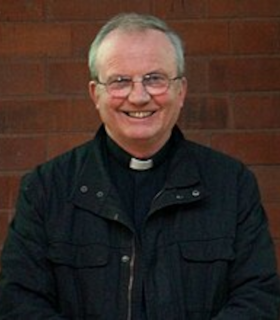
Birth of Anthony Farquhar, Auxiliary Bishop Emeritus of Down & Connor

Anthony J. FarquharIrish Catholic prelate who is the Auxiliary Bishop of the Roman Catholic Diocese of Down and Connor, is born in South BelfastNorthern Ireland, on September 6, 1940.

Farquhar is educated at St. Malachy’s College. He later studies classics at Queen’s University, Belfast. He is then sent to study theology at the Pontifical Lateran UniversityRome. He is ordained to the priesthood at the age of 24 on March 13, 1965.

Farquhar is assistant priest at Dunsford and Ardglass Parish. He is a hospital chaplain in 1966. He is later assigned to teach Latin at St. MacNissi’s College, Garron Tower, where he stays as a teacher from 1966 to 1970. From 1970 to 1975 he is assistant chaplain, along with Ambrose Macaulay, to Queen’s University Belfast, and finally as Chaplain/Lecturer at the University of Ulster from 1975 to 1983.

Farquhar’s main outside interests are folk music and football, particularly student football. He is president of Queen’s University Belfast A.F.C. and also serves as patron of the Irish Universities Football Union.

On April 6, 1983, aged 42, Farquhar is appointed Titular Bishop of Hermiana and, with Patrick Walsh, as Auxiliary Bishop of Down and Connor. The principal consecrator is the Bishop of Down and Connor, Cahal Daly, (later Cardinal Archbishop of the Archdiocese of Armagh) and principal co-consecrators are Archbishop Gaetano Alibrandi, the Apostolic Nuncio to Ireland and William J. Philbin (Bishop Emeritus of Down and Connor). During the ordination ceremony, the assistant Priests to Bishop Farquhar are his priest uncles, Canon Walter Larkin and Fr. Thomas Aquinas Larkin O.C.D.

Farquhar’s episcopal motto is “Sapientia Proficere” (“to increase in wisdom”) from Luke 2:52. He takes an active and ongoing interest in interchurch relations and serves as Chairman of the Irish Catholic Bishops’ Conference on Ecumenism.

Farquhar travels to Rome for the quinquennial visit ad limina visit in October 2006.

In December 2007, he officiates at the dedication of the new altar in the Church of the Good Shepherd in his native parish of the Most Holy Rosary, Belfast, following the renovation programme.

A book titled Inter-Church Relations: Developments and Perspectives, published by Veritas Communications to mark the 25th anniversary of Farquhar’s ordination as a bishop, contains contributions by a number of people praising Farquhar’s work. Seán Brady notes he was “engaged actively in promoting bonds of friendship and understanding at times when it has been far from easy to do so.”

On December 3, 2015, Pope Francis accepts Farquhar’s resignation on the grounds of age. He is at the time the longest serving bishop in Ireland.

Farquhar dies in Belfast on November 18, 2023, at the age of 83. His funeral requiem mass is celebrated in the Church of the Good Shepherd, Ormeau Road, Belfast, on November 23 followed by interment in the adjoining cemetery.


Leave a comment

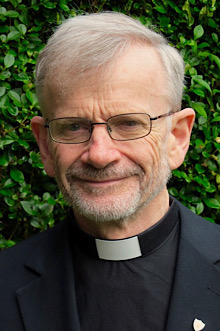
Birth of Dónal McKeown, Roman Catholic Bishop of Derry

Dónal McKeown, Roman Catholic prelate from Northern Ireland who has served as Bishop of Derry since 2014, is born in Belfast on April 12, 1950.

McKeown is one of four children born to James McKeown and his wife Rose (née McMeel), and is baptised in St. Patrick’s Church, Belfast. He is brought up in Randalstown, County Antrim, where he plays Gaelic football and hurling with Kickhams GAC Creggan.

McKeown attends primary school at Mount St. Michael’s Primary School, Randalstown, and secondary school as a boarder at St. MacNissi’s College, Camlough, between 1961 and 1968, completing his O-Levels and A-Levels with special distinctions in Modern Languages. Two of his teachers at St. MacNissi’s College are his future brother bishops, Anthony Farquhar and Patrick Walsh.

McKeown begins studying for the priesthood at St. Malachy’s College, Belfast, in 1968, and obtains a bachelor’s degree with honours in German and Italian from Queen’s University Belfast (QUB). He teaches English at a school in Dieburg, Germany, between 1970 and 1971, and subsequently works as Northern Ireland correspondent for the Catholic media company Katholische Nachrichten-Agentur between 1971 and 1973.

McKeown completes a licentiate in sacred theology at the Pontifical Gregorian University, Rome, between 1973 and 1978, during which he also works for Vatican Radio and as a correspondent for An Saol Mór, an Irish-language programme on RTÉ.

McKeown is ordained to the priesthood on July 3, 1977.

Following ordination, McKeown’s first pastoral assignment is as chaplain at Mater Infirmorum Hospital, before returning to Rome to complete his licentiate. He returns to the Diocese of Down and Connor in 1978, where he is appointed as a teacher at Our Lady and St. Patrick’s College, Knock, while also serving as assistant priest in Derriaghy. He returns to St. MacNissi’s College in 1983, where he continues his involvement with youth ministry and is given responsibility for organising the annual diocesan pilgrimage to Lourdes.

McKeown subsequently returns to St. Malachy’s College in 1987, where he teaches and serves as dean of the adjoining seminary, before succeeding Canon Noel Conway as president in 1995. During his presidency, he completes a Master of Business Administration at the University of Leicester in 2000, specialising in educational management.

McKeown has completed the Belfast Marathon on two occasions: as a priest with a team of 48 from Derriaghy in 1982, and as a bishop fundraising for a minibus for St. Malachy’s College in 2001.

McKeown is appointed auxiliary bishop-elect for the Diocese of Down and Connor and titular bishop of Cell Ausaille by Pope John Paul II on February 21, 2001, the first Irish bishop to be appointed in the third millennium. He is consecrated by the Bishop of Down and Connor, Patrick Walsh, on April 29 in St. Peter’s Cathedral, Belfast.

In response to a 2007 decision by Amnesty International to campaign for the legalisation of abortion in certain circumstances, McKeown supports the decision of Catholic schools in the diocese to disband their Amnesty International support groups, on the grounds that it is no longer appropriate to promote the organisation in their schools.

It is reported in an article in The Irish News that the mention of McKeown as a possible successor to Walsh as Bishop of Down and Connor is actively opposed by some priests in the diocese, who regard him as being “too soft” on the issue of integrated education. This opposition is branded a “Stop Donal” campaign.

McKeown also serves as a member of the Irish Catholic Bishops’ Conference, with responsibility for the promotion of Catholic education, youth ministry, university chaplaincies and the promotion of vocations. His interests include the interface between faith and the empirical sciences, and working with Catholic schools in Norway, Denmark, Lithuania, Poland and Germany.

McKeown also serves as a member of the Irish Catholic Bishops’ Conference and its committee on education and chairs its committees on vocations and youth. He leads the youth of the diocese to World Youth Day in 2002 and 2005 and also travels to Rome with his brother bishops for their quinquennial visit ad limina in 2006. He is also a regular contributor on Thought for the Day on BBC Radio Ulster.

McKeown is appointed Bishop-elect of Derry by Pope Francis on February 25, 2014. He is installed on April 6 in St. Eugene’s Cathedral, Derry.

Following the appointment of Noël Treanor as Apostolic Nuncio to the European Union on November 26, 2022, McKeown is announced as Apostolic Administrator of Down and Connor on January 21, 2023. He serves in this role until the installation of Alan McGuckian, following his appointment as Bishop of Down and Connor on February 2, 2024.

McKeown starts a 33-day journey of prayer toward the Consecration to Jesus Christ through Mary on January 9, 2025. The prayer takes place online each evening at 7:00 p.m. The 33 days of prayer take place the week following the Baptism of the Lord until the Feast of Our Lady of Lourdes on February 11.


Leave a comment

Death of Edward Daly, Catholic Bishop of Derry

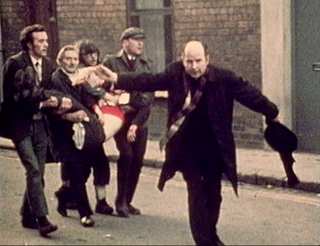
The retired Catholic Bishop of Derry, Dr. Edward Daly, whose photograph becomes the iconic image of Bloody Sunday in 1972, dies at the age of 82 on August 8, 2016.

Daly is born in Ballyshannon, County Donegal, but raised in Belleek, County Fermanagh in Northern Ireland. He attends and boards at St. Columb’s College in Derry on a scholarship, after which he spends six years studying towards ordination to the priesthood at the Pontifical Irish College in Rome. He is ordained a priest of the Diocese of Derry in Belleek on March 16, 1957. His first appointment is as a Curate in Castlederg, County Tyrone. In 1962, he is appointed a Curate in St. Eugene’s Cathedral in Derry, with responsibility for the Bogside area of the city. He leaves briefly in the 1970s to serve as a religious advisor to RTÉ in Dublin in the Republic of Ireland but spends the majority of his career in Derry.

During his time in Derry, Daly takes part in the civil rights marches. He has first-hand experience of the Battle of the Bogside in 1969, the early years of the Troubles, internment, and the events of Bloody Sunday, in which British soldiers fire on unarmed protesters on January 30, 1972, killing 14 people. He becomes a public figure after he is witnessed using a blood-stained handkerchief as a white flag in an attempt to escort 17-year-old Jackie Duddy, a wounded protester, to safety. Duddy dies of his injuries soon after and Daly administers the last rites. He later describes the events as “a young fella who was posing no threat to anybody being shot dead unjustifiably.”

Daly gives an interview to the BBC in which he insists, contrary to official reports, that the protesters were unarmed. He testifies as such to the Widgery Tribunal, though he also testifies that he had seen a man with a gun on the day, to the anger of some of those involved. The Widgery Report largely exonerates the British Army, perpetuating the controversy. Years later, he says that the events of Bloody Sunday were a significant catalyst to the violence in Northern Ireland, and that the shootings served to greatly increase recruitment to the Irish Republican Army (IRA).

Prior to Bloody Sunday, Daly is sympathetic to the “old” IRA, of which his father was a member, but the events of Bloody Sunday leave him of the opinion that “violence is completely unacceptable as a means to a political end,” which leads to tension with the Provisional Irish Republican Army throughout his career.

Daly is appointed Bishop of Derry in 1974, a position he holds until he is forced to retire in October 1993 after suffering a stroke. He continues in the role of chaplain to Derry’s Foyle Hospice until February 2016.

Daly makes headlines in 2011 when he says there needs to be a place in the modern Catholic Church for married priests. He addresses the controversial issue in his book about his life in the Church, A Troubled See. Allowing clergymen to marry would ease the church’s problems, he says.

Daly is awarded the Freedom of the City by Derry City Council in 2015 in a joint ceremony with Bishop James Mehaffey, with whom he had worked closely while the two were in office. He is “hugely pleased to accept [the award], particularly when it is being shared with my friend and brother, Bishop James.” The city’s mayor, Brenda Stevenson, announces that the joint award is in recognition of the two bishops’ efforts towards peace and community cohesion.

Daly dies on August 8, 2016, at Altnagelvin Area Hospital in Derry, having been admitted after a fall several weeks previously. He had also been diagnosed with cancer. He is surrounded by family and local priests.

Daly’s remains are taken to St. Eugene’s Cathedral, where he lay in state with mourners able to file past. His coffin is sealed at midday on August 11, 2016, and buried after Requiem Mass in the grounds of St. Eugene’s Cathedral alongside his predecessor as Bishop of Derry, Neil Farren. The bells of the cathedral toll for one hour on the morning of Daly’s death while many local people arrived to pay tribute. The mayor of Derry, Hilary McClintock, opens a book of condolence in the city’s guildhall for members of the public to sign. The funeral, conducted by the incumbent Bishop of Derry Donal McKeown, is attended by multiple religious and political leaders from across Ireland and retired leaders from throughout his career. A message from Pope Francis is read aloud at the beginning of the service. Hundreds of members of the public also attend the funeral, some lining the route from the cathedral to the gravesite. His coffin is greeted with applause as it is carried out of the cathedral for burial.

(Pictured: Father Edward Daly, waving a blood-stained white handkerchief as he escorts a mortally-wounded protester to safety during the events of Bloody Sunday (1972) in Derry, Northern Ireland, an image which becomes one of the most recognisable moments of the Troubles)


Leave a comment

Michael D. Higgins Meets Pope Francis in Rome

michael-higgins-and-pope-francis

President Michael D. Higgins discusses a range of issues including climate change, migration and the need to achieve social cohesion during a meeting with Pope Francis in Rome on May 22, 2017.

The meeting comes two days before Pope Francis is scheduled to meet with U.S. President Donald Trump, where the potential for disagreement is high as Trump has clashed with the pontiff on migrants and expressed skepticism about man-made impact on the environment. The meeting with President Higgins, however, is much more congenial as both leaders are very much on the same page.

Higgins is given the traditional welcome for visiting heads of state to the Vatican. He is walked through the frescoed rooms of the Vatican’s Apostolic Palace by men dressed in white tie and is then introduced to Pope Francis for their meeting, which lasts fifteen minutes.

Higgins’ visit comes six months after outgoing Irish Taoiseach Enda Kenny had a papal audience after which he confirmed the Pope would be coming to Ireland in 2018. While their discussions take place behind closed doors, it is likely that Higgins once again extends the invitation for Pope Francis to visit the country. The Pope ultimately visits Ireland August 25-26 as part of the World Meeting of Families 2018.

At the end of a seemingly warm and friendly encounter, Higgins presents the Pope a “climate bell” designed by renowned citizen-artist Vivienne Roche and is meant to represent a call to action on protecting the planet. “This is a very important symbol” the president tells the Pope before briefly ringing the bell.

For his part, the Pope presents Higgins with his landmark encyclical on climate change, Laudato si’, and his two apostolic exhortations, Evangelii gaudium and Amoris laetitia. He also presents the President with a medallion designed to represent the saying from Isaiah 32:15 which states “the desert will become a fertile ground.”

The audience takes place inside the Vatican Library with the use of an interpreter. Higgins, who has spent some time living in Latin America, concludes the meeting in the Pope’s native language, saying “muchos gracias.”


Leave a comment

Death of Honora “Nano” Nagle, Sister John of God

honora-nano-nagle

Honora “Nano” Nagle, Sister John of God and founder of the Sisters of the Presentation the Blessed Virgin Mary, dies of tuberculosis on April 26, 1784. Her recognition as one of the greatest women of Ireland derives from dedication to the poor and oppressed. Her mission between the cutting edge of the gospel and the miseries of her day inspires the Presentation Sisters to minister in joyful service, responding to current needs throughout the world in faithfulness to the gospel.

Born to a wealthy family in Ballygriffin, just north of Killavullen, County Cork in 1718, Nagle’s parents send her to France to be educated since strict penal laws bar Catholic children from attending school in Ireland. She returns to Ireland after her father’s death in 1746. Her mother dies soon afterwards. Prayer and reflection lead Nagle back to France to become a sister.

Even as she begins her new life as a sister, Nagle’s thoughts often return to the children of the poor families back in Ireland.

At age 32, Nagle leaves the convent in France and returns to Ireland, where she secretly gathers the children of the poor and teaches them catechism, reading, writing and mathematics. As she spends her days with the children, they tell her of their sick friends or family members. She begins to visit the sick and the elderly after school, bringing them food, medicine and comfort.

Nagle often makes visits late into the night, carrying her lamp among the alleyways. Before long, she becomes known as the Lady of the Lantern.

Nagle decides to open a convent where women can share the mission of Jesus through prayer, teaching and care for the sick and needy. She and three companions open the first Presentation Convent on Cove Lane (now Douglas Street) in Cork, County Cork on Christmas Day in 1775. There she receives the habit on June 29, 1776, taking the name of Mother Mary of St. John of God. The sisters make their first annual vows on June 24, 1777.

Honora “Nano” Nagle dies from tuberculosis at the age of 65 on April 26, 1784. She leaves her compelling vision of service to a growing community of Presentation Sisters. Her final words are emblematic of her timeless legacy, and they remain a guiding principle for the Sisters: “Love one another as you have hitherto done.”

Nagle is recognized as a woman of faith, hope and heroic virtue by the Roman Catholic Church and is declared Venerable on October 31, 2013, by Pope Francis. Once evidence of an authentic miracle is attributed to her intercession with God, she acquires the title Blessed. Another miracle initiates canonization and public recognition of Nagle as a Saint.


Leave a comment

The Ordination of Sinéad O’Connor

sinead-oconnor

Sinéad O’Connor, Irish singer-songwriter also known as Magda Davitt, is ordained as a priest in Lourdes on April 22, 1999, by Bishop Michael Cox of the Irish Orthodox Catholic and Apostolic Church, an Independent Catholic group not in communion with the Catholic Church.

The Roman Catholic Church considers ordination of women to be invalid and asserts that a person attempting the sacrament of ordination upon a woman incurs excommunication. The bishop had contacted her to offer ordination following her appearance on RTÉ’s The Late Late Show, during which she tells the presenter, Gay Byrne, that had she not been a singer, she would have wished to have been a Catholic priest. After her ordination, she indicates that she wishes to be called Mother Bernadette Mary.

In a July 2007 interview with Christianity Today, O’Connor states that she considers herself a Christian and that she believes in core Christian concepts about the Trinity and Jesus Christ. She says, “I think God saves everybody whether they want to be saved or not. So, when we die, we’re all going home… I don’t think God judges anybody. He loves everybody equally.” In an October 2002 interview, she credits her Christian faith in giving her the strength to live through, and then overcome the effects of, her child abuse.

On March 26, 2010, O’Connor appears on CNN‘s Anderson Cooper 360° to speak out about the Catholic sexual abuse scandal in Ireland. Two days later she has an opinion piece published in the Sunday edition of The Washington Post in which she writes about the scandal and her time in a Magdalene asylum as a teenager. Writing for the Sunday Independent she labels the Vatican as “a nest of devils” and calls for the establishment of an “alternative church,” opining that “Christ is being murdered by liars” in the Vatican. Shortly after the election of Pope Francis she describes the office of the Pope as an “anti-Christian office.”

Asked whether from her point of view, it is therefore irrelevant who is elected to be Pope, O’Connor replies, “Genuinely I don’t mean disrespect to Catholic people because I believe in Jesus Christ, I believe in the Holy Spirit, all of those, but I also believe in all of them, I don’t think it cares if you call it Fred or Daisy, you know? Religion is a smokescreen; it has everybody talking to the wall. There is a Holy Spirit who can’t intervene on our behalf unless we ask it. Religion has us talking to the wall. The Christ character tells us himself: you must only talk directly to the Father; you don’t need intermediaries. We all thought we did, and that’s OK, we’re not bad people, but let’s wake up… God was there before religion; it’s there [today] despite religion; it’ll be there when religion is gone.”