Pim is born in Dublin on September 21, 1909, to a Quaker father and English mother. She is a twin, but her brother dies. She is sent to the French School in Bray, County Wicklow, before being sent to Lausanne, Switzerland to finishing school. She then goes on to Girton College, Cambridge to study modern languages, intending to graduate with a degree in French and Italian. Her mother’s ill health and ultimate death in 1940, causes her to return to Ireland to look after her and she remains there taking care of her father, who dies in 1958, and an older incapacitated brother, Tom.
But these are good years for Pim with time to write, and during the 1950s and early 1960s she writes no fewer than seven novels, mostly crime fiction in a lighthearted style. During this time, she is a member of Irish PEN. She is also an avid amateur horticulturalist and writes for the magazine My Garden. Her more serious undertaking is a biography of the Irish plant collector Augustine Henry, The Wood and the Trees: A Biography of Augustine Henry (Macdonald, London). Her brother Tom dies in an accident in 1964 leaving Pim with no further responsibilities. This allows her to spend significant time researching through Henry’s papers. The book is published in 1966.
When Pim has completed the biography, she focuses on philanthropy. She dedicates her time to the Friends Historical Society and is particularly interested in helping out in the traveller community. She supports a young group of children and their grandfather. They bring her considerable joy. The Royal Horticultural Society of Ireland awards her the Society’s Medal of Honour and makes her an honorary life member for her services to the study of horticulture.
In Pim’s later years increasing deafness makes socialising difficult for her, but she still keeps up with the world of books, the theatre and painting. She reads The Irish Times from cover to cover every day, and her reading includes the Bible, Marcel Proust (in French) and the stories of Roddy Doyle.
Pim’s deafness finally forces her to move into sheltered housing in Dublin where she dies on December 16, 1995.
Father Des Wilson, Irish Catholic priest and church dissident who in the course of the Northern IrelandTroubles embraces ideas and practice associated, internationally, with liberation theology, dies in his native Belfast on November 5, 2019. He believes the Word of God can never be silent in the face of oppression, injustice and suffering. He seeks to apply the ideas of liberation theology to the North, supporting and empowering marginalised communities, and acting as a voice for the voiceless.
Wilson is born in Belfast on July 8, 1925, the youngest of five sons to William Wilson, a publican and native of County Cavan, and his wife Emma (née McAvoy), a native of south County Down. He spends his earliest years above his father’s pub in Belfast, before the family moves to a house in the suburbs.
Wilson attends primary school locally, then receives secondary education at St. Malachy’s College. During his time there Belfast is blitzed in April and May 1941. Almost 1,000 are killed. The carnage he sees is a factor in his deciding on the priesthood.
After ordination Wilson serves as chaplain in Belfast’s Mater Infirmorum Hospital, then spends 15 years in St. Malachy’s as spiritual director. Former pupils remember him as fair, and able to play jazz excellently on the organ.
Wilson lives out his beliefs, spending half a century in Belfast’s Ballymurphy estate, among the North’s most deprived, and one of the areas which suffers worst from the Troubles. There he plays a role in community development, establishing projects to provide employment in the area. He suffers, finding himself for years outside the official Catholic Church.
Wilson plays a significant role in providing adult education. He wants an education that does not just provide qualifications and open career paths but is psychologically liberating.
Life changes in 1966 when Wilson is moved to St. John’s Parish in West Belfast as a curate. Having come from a comfortable background in Ballymurphy, he is shocked by the poverty, the poor housing and the treatment of women. Unusual for a priest at the time, he moves into a terraced house in the estate. He finds the Catholic Church unable to respond to the multiple problems people are facing. That inability worsens as the Troubles erupt.
Wilson’s personal probity is so recognised that he is accepted as a mediator in feuds between the Provisional Irish Republican Army and Official Irish Republican Army in the 1970s and is able to broker permanent peace. He also helps bring about the ceasefires in the 1990s.
Wilson does not shirk unpopular stances. In the 1970s he refuses to condemn the Irish Republican Army (IRA). Later he says the conviction of former Real Irish Republican Army leader Michael McKevitt for directing terrorism is unsafe. He also publicly visits and supports a Ballymurphy couple which has a very bitter falling out with Sinn Féin, leading to a picket on their home.
By 1975 relations with his bishop has broken down and Wilson resigns but continues ministering in Ballymurphy. Forbidden to say Mass in a church, his pay cut off, he says Mass in his house. He suffers hardship, living from savings, some earnings from writing, broadcasting and lecturing, and help from Quaker and Presbyterian friends. By the early 1980s his Ballymurphy home becomes too small for the many classes he organises. His classes are rehoused and expanded as the Conway Education Centre in a vacant mill. He is able to offer a range of vocational and non-vocational courses with almost 1,000 students. In the mid-1980s his relationship with the Dioceses of Down and Connor is re-established, and he is allowed to continue his ministry.
Personally, Wilson has great gifts of head and heart and is incapable of rancour. A strong belief is that it is important to share food to talk, as happened in Biblical times. Thus, a lunch would last an afternoon.
Wilson dies on November 5, 2019, in Belfast. Instead of wreaths, he asks mourners to donate to the Ballymurphy Massacre Memorial Garden. The garden is dedicated to the victims of the Ballymurphy massacre of August 1971, which saw the killing in the district of eleven civilians by soldiers of the 1st Battalion, Parachute Regiment. The victims include Fr. Hugh Mullan, who had been a student of Wilson’s at St. Malachy’s. He was shot while going to the aid of a wounded man.
Among those to welcome the new organisation is Sinn Féin President, Éamon de Valera, who promises all the support he can offer. CardinalMichael Logue, CatholicPrimate of Ireland, also offers his assistance: “Even if peace were restored, of which there seems little prospect at present, all the help which can be obtained shall be necessary, to restore the country from the wreck to which it has been reduced, and to help those who have been left destitute by the murder of those on whom they depended, or ruined by the destruction of their property.”
The Irish White Cross is managed by the Quaker businessman, and later Irish Free Statesenator, James G. Douglas. The organisation continues to operate until the Irish Civil War and its books are officially closed in 1928. From 1922, its activities are essentially wound down and remaining funds divested to subsidiary organisations. The longest running of these aid committees is the Children’s Relief Association which distributes aid to child victims of this troubled period, north and south of the border, until 1947. The head of the Children’s Relief Association is Áine Ceannt, the widow of Éamonn Ceannt who is perhaps one of the least known signatories of the 1916 Proclamation of the Irish Republic.
James Green Douglas, Irish businessman and politician dies on September 16, 1954. In 1922 he serves as the first-ever Leas-Chathaoirleach (deputy chairperson) of Seanad Éireann, the upper house of the newly independent Irish parliament. He goes on to serve in the Seanad for 30 years.
Douglas is born July 11, 1887, at 19 Brighton Square, Dublin, the eldest of nine children of John Douglas, proprietor of John Douglas & Sons Ltd, drapers and outfitters of Wexford St. and originally of Grange, County Tyrone, and his wife, Emily, daughter of John and Mary Mitton of Gortin, Coalisland, County Tyrone. The genealogy of the Douglas family to which he belongs can be traced to Samuel Douglas of Coolhill, Killyman, County Tyrone.
Douglas attends (1895–98) a small school for Quaker children and is a boarder (1898–1902) in the Friends’ School, Lisburn. In 1902 he begins a three-year apprenticeship in his father’s business.
On February 14, 1911, Douglas marries Georgina (Ena) Culley (1883–1959), originally of Tirsogue, Lurgan, County Armagh, whom he meets during his apprenticeship. Their children are John Harold Douglas, who succeeds to the family busines and replaces his father as senator, and James Arthur Douglas, who becomes a well-known architect.
From an early age Douglas is fascinated by politics and influenced by the newspapers edited by Arthur Griffith. He becomes a member of the Dublin Liberal Association, whose members for the most part are Protestanthome rulers. After the 1916 Easter Rising, with George Russell and others, who also regard themselves as neither unionists nor nationalists, he sets out to promote what they term “full dominion status” for Ireland. This paves the way for the Irish Convention (1917–18), which, however, fails to reconcile the polarised political attitudes of the time.
Douglas goes on to become a very active member of Seanad Éireann between 1922 and 1936 under the constitution he had helped to prepare. In 1922, he is elected as the first vice-chairman of the Senate. The Senate is abolished in 1936 and re-established under the terms of the 1937 Constitution of Ireland. He is again an active Senator between 1938 and 1943, and from 1944 to 1954. The topics most associated with him during his work as Senator are international refugees and the League of Nations.
For some thirty years he runs the family business, and is also a director of Aspro (Ireland) Ltd, Nugent & Cooper Ltd, Philips Lamps (Ireland) Ltd, and the Greenmount & Boyne Linen Co. Ltd. In addition, he serves as president of the Linen and Cotton Textile Manufacturers Association and as a member of the council of the Federated Union of Employers.
Webb is born in 1805 in the Cornmarket, Dublin, the eldest of seven sons of James Webb and Deborah Webb (née Sparrow), who own a linen business. He is educated in Quaker schools at Mountmellick, County Laois, and at Ballitore, County Kildare, where he becomes friendly with Mary Leadbeater, sister of the influential schoolmaster Abraham Shackleton. Schoolfellows include James Haughton and Jonathan Pim.
In 1837, Webb is one of three founding members, with James Haughton and Richard Allen, of the Hibernian Antislavery Association. This is not the first antislavery association, but it is acknowledged to be the most active and considered the most ardent abolitionists in Europe. Allen serves as the secretary of this association.
Webb marries Hannah Waring, and they have four children: Alfred, Richard, Deborah and Anne. He and his two sons, Alfred and Richard, are regular correspondents with the American abolitionist William Lloyd Garrison.
Webb is one of the few Irish delegates at the 1840 World Anti-Slavery Convention in London which attracts hundreds from the United States. The Irish delegation includes Webb, Richard Allen and Daniel O’Connell. In 1846, he attends another world convention in London. This time the subject is temperance, and his fellow delegate Richard Allen is one of the speakers. He meets the American delegates Wendell Phillips and his wife Ann, with Ann reporting how they are particularly impressed by Webb.
Webb was notable in Douglass’s regard for the arguments that he and Webb have. Douglass feels that white abolitionists would prefer to be hypocritical than be racist and would try not to disagree with him face to face. Webb shows no such false regard, and they argue as equals in a way that Douglass hopes would be a precursor of the relationships that might exist across the races when slavery ends in the United States. Webb, however, quickly comes to distrust and dislike Douglass and his associates.
In 1852 Webb prints and publishs the elaborate Transactions of the Central Relief Committee, compiled by Jonathan Pim. This deals with the relief operations in Ireland in which Quakers had been involved throughout the Great Famine of the 1840s, and also includes statistics and recommendations for reforms. He helps Quaker efforts to provide food for the poor in Ireland, and in April and May 1847 he travels on fact-finding missions in Connacht for the Yearly Meeting. His contributions to Quaker historiography include his edition of Mary Leadbetter’s The Leadbetter Papers, which he prints, and which is published in London (1862). Also, in 1862 he publishes Betsy Shackleton’s Ballitore Seventy Years Ago. He frequently publishes comments on Irish conditions and politics in The Manchester Guardian and elsewhere.
Webb’s commitment to the causes in which he believes so strongly end only with his death on July 14, 1872. He is buried in Temple Hill graveyard, Blackrock, County Dublin.
Carey enters the bookselling and printing business in 1775 and, at the age of seventeen, publishes a pamphlet criticizing dueling. He follows this with a work criticizing the severity of the Irish penal code, and another criticizing Parliament. As a result, the British House of Commons threatens him with prosecution. In 1781 he flees to Paris as a political refugee. There he meets Benjamin Franklin, the ambassador representing the American Revolutionary forces, which achieves independence that year. Franklin takes Carey to work in his printing office.
Carey works for Franklin for a year before returning to Ireland, where he edits two Irish nationalist newspapers, the Freeman’s Journal and The Volunteer’s Journal. He gains passage on a ship to emigrate to the newly independent United States in September 1784.
Upon Carey’s arrival in Philadelphia, he finds that Franklin has recommended him to Gilbert du Motier, Marquis de Lafayette, who gives him a $400 check to establish himself. He uses this money to set up a new publishing business and a book shop. He founds The Pennsylvania Herald (1785), Columbian Magazine (1786), and The American Museum (1787). None of these ventures proves very profitable. The American Museum is the first American periodical to treat American culture as rich and original, instead of a poor imitation of Great Britain’s. He prints the first American version of the Douay–Rheims Bible in 48 weekly installments, this Roman Catholic edition popularly known as the Carey Bible. It is the first Roman Catholic version of the Bible printed in the United States. He also prints numerous editions of the King James Version, fundamental to English-speaking peoples.
Carey frequently writes articles on various social topics, including events during the 1793 Philadelphia Yellow Fever Epidemic, which proves a crisis for the city. He reports on debates in the state legislature as well as providing political commentary in his essays. He is a Catholic and a founding member of the American Sunday-School Society, along with Quaker merchant Thomas P. Cope, Dr. Benjamin Rush and Episcopal bishop William White.
In 1822 Carey publishes Essays on Political Economy; or, The Most Certain Means of Promoting the Wealth, Power, Resources, and Happiness of Nations, Applied Particularly to the United States. This is one of the first treatises favoring Alexander Hamilton‘s protectionist economic policy.
During Carey’s lifetime, the publishing firm evolves to M. Carey & Son (1817–21), M. Carey & Sons (1821–24), and then to Carey & Lea (1824). He retires in 1825, leaving the publishing business to his son, Henry Charles Carey and son-in-law Isaac Lea. Lea and Henry Carey make the business economically successful and, for a time, it is one of the most prominent publishers in the country.
Upon arriving in America, Carey quickly develops political connections in the developing country. One of his most important supporters is John Adams, still a leading figure of the Federalist Party at the time. His passionate support for the establishment of an American Navy contributes significantly to his alliance with the Federalists.
Throughout his political career in America, Carey supports the development and maintenance of American naval strength, even after joining Thomas Jefferson’s Democratic-Republicans in 1796. His political realignment occurs shortly before the American ratification of the Jay Treaty, primarily intended to ensure peace with Britain, while distancing America from France. His publishing in America channels his energy toward productive political objectives. His published works are credited with swaying public opinion toward the establishment of a powerful American navy.
Carey’s book Naval History of the United States, is meant to influence the public. Its conspicuous omission of naval activity during the American Quasi-War with France shows his political intentions. It helps direct political energy against the British, with which the U.S. is at war at the time of the book’s publication on May 6, 1813.
Focus on the British, known around the world for their naval power, makes an influential case for extending the reach of the American navy. Along with his publication of Naval History, Carey writes Olive Branch, published in 1814. He tries to eliminate competition between the two American political parties to create unity during the War of 1812. To many people, these efforts, and his early relationship with Franklin, make him the logical choice as Franklin’s political successor. Scholars believe that he contributed significantly by his books and publications to the establishment of the United States Whig Party.
Carey is elected a member of the American Antiquarian Society (AAS) in 1815. A significant portion of his business papers, as well as a very large number of original copies of works printed and/or published by him reside in the collections of the AAS.
Doyle is born close to New Ross, County Wexford in 1786, the posthumous son of a respectable Catholic farmer. His mother, Anne Warren, of Quaker extraction, is living in poverty at the time of his birth. At the age of eleven he witnesses the horrors of the Battle of New Ross between the United Irishmen and British Crown forces supplemented by the militia and yeomanry.
Doyle receives his early education at Clonleigh, at Rathconrogue at the school of a Mr. Grace, and later at the Augustinian College, New Ross under the care of an Augustinian monk, Rev. John Crane.
Doyle joins the Augustinian friars in 1805 at Grantstown, County Wexford, and then studies for his doctorate at Coimbra in Portugal (1806–08). His studies are disturbed by the Peninsular War, during which he serves as a sentry in Coimbra. Later, he accompanies the British Army with Arthur Wellesley‘s forces to Lisbon as an interpreter.
Following Doyle’s return to Ireland, he is ordained to the priesthood on October 1, 1809, at Enniscorthy. He teaches logic at the Augustinian College, New Ross. In 1813, he is appointed to a professorship at St. Patrick’s, Carlow College, holding the Chair of Rhetoric and in 1814, the Professorship of Theology.
Michael Corcoran, Bishop of Kildare and Leighlin, dies on February 22, 1819. Doyle is a popular choice of the clergy and bishops of the Archdiocese of Dublin and is chosen by the Holy See as Corcoran’s successor. He is formally named in August 1819 and is duly consecrated in Carlow Parish Church on November 14. During his fifteen-year tenure as Bishop of Kildare and Leighlin, he earns respect nationwide for his polemics in furtherance of the Catholic position in both Irish and British society, and in supporting the work of the Catholic Association. His books on pastoral, political, educational and inter-denominational matters provide a rich source of material for social and religious historians. He is a close ally of Daniel O’Connell in the political campaign for Catholic emancipation which is finally passed in 1829 by the Wellington government.
In 1830, the new tithe-proctor of Graigue, a parish of 4,779 Catholics and 63 Protestants, decides to break with the tradition of Doyle’s predecessor and to enforce seizure orders for the collection of arrears of Tithes. Tithes provide financial support of the established AnglicanChurch of Ireland. Some of the recalcitrant Catholics habitually transfer ownership of their livestock to Doyle in order to avoid seizure at the town fair. The new proctor requests their priest’s cooperation in handing over the assets. Doyle refuses, and the proctor, aided by the Royal Irish Constabulary, seize some of the livestock. A mass riot breaks out at the fair and there is several casualties. A civil disobedience campaign follows, peppered with sporadic violence mostly at county fairs over the seizure of livestock. A period of instability that becomes known as the Tithe War follows.
Doyle is a leader of nonviolent resistance to the Tithe, devoting himself both to strengthening the nonviolent resistance and to discouraging like paramilitary secret societies who have taken to using violence to drive out tithe-collectors and to intimidate collaborators. He says, “I maintain the right which [Irish Catholics] have of withholding, in a manner consistent with the law and their duty as subjects, the payment of tithe in kind or in money until it is extorted from them by the operation of the law.”
Given Doyle’s prior experience in education, his major contribution is arguably in helping the establishment of National Schools across Ireland from 1831, the initiative of Edward Smith-Stanley, Chief Secretary for Ireland, which are initially started with a UK government grant of £30,000. The proposed system is ahead of state provision for education in England or Scotland at that time. This Model School prototype is, in some respects, experimental. His involvement is a sign of his practicality and foresight.
Doyle makes statements on other issues: the theological status of ‘non-Catholic’ Christians, freedom to convert to Protestantism, mixed marriages and, as already mentioned, on the union of Catholics and Anglicans. On this last issue he is asked to resign by Rome and is eventually allowed to continue after agreeing not to speak on the issue again.
The construction of Carlow Cathedral of the Assumption crowns Doyle’s career, being started in 1828 and finished at the end of November 1833. He falls ill for a number of months before dying on June 15, 1834. He is buried in his new cathedral. A sculpture, by John Hogan, in memorial to Doyle is finished in 1839.
Several biographies are written on Doyle before 1900 and his influence on the later Irish Catholic bishops in the period 1834-1900 is considerable. He had proved that negotiations with government could be beneficial to his church, his congregation, and its finances.
William of Orange, King of Holland, and recently declared King William III of England, arrives with his fleet in Belfast on June 14, 1690. He remains for twelve days, departing on June 26. For his part he likes what he sees. “This country is worth fighting for,” he says.
William’s departure from London is held up by parliamentary business until the end of May, when he announces that he can wait no longer and adjourns Parliament. He sets out early in the morning of June 4, reaching Northampton before nightfall. On Sunday, June 8, he attends divine service in Chester Cathedral and goes on to inspect the ships at Hoylake on the tip of the Wirral Peninsula.
For two days the wind is contrary, but on June 11 he embarks on board the yacht “Mary” with a fleet escorted by Sir Cloudesley Shovell‘s squadron. On June 14 the hills of Ireland come in sight and in the afternoon the fleet casts anchor off Carrickfergus. He is rowed ashore in the Rear Admiral’s barge and at about 3:30 p.m. lands at the Old Quay under the shadow of the great Norman Castle.
The Garrison of the Castle has drawn up a Guard of Honour and the townspeople add their applause. The chosen spokesman is a Quaker, whose principles forbid him to doff his hat or use such titles as Sir and Majesty. He gets around the difficulty by taking off his hat and laying it on a stone and then stepping forward and saying “William, thou art welcome to thy Kingdom” which pleases the King so much that he replies, “You are the best-bred gentleman I have met since I came to England.” With these words he mounts his horse and sets off for Belfast.
Halfway along the shore is the little port of Whitehouse, where most of the army disembarks. The Commander-in-Chief, Frederick Schomberg, 1st Duke of Schomberg, and his senior commanders are waiting here to welcome the King. To cover the disembarkation, earthworks have been thrown up by the engineers at Fort William and garrisoned by troops ready for action.
In 1690 Belfast consists of about 300 houses in five streets. It has two churches, the Parish Church, where St. George’s Church still stands in the High Street, and the Presbyterian Meeting House in Rosemary Lane. The town had been surrounded by a rampart in 1642 and had been captured by Colonel Robert Venebles for Oliver Cromwell after a four-day siege and an assault on the North Gate in 1649.
It is at the North Gate that King William enters Belfast where North Street now crosses Royal Avenue. Here he is welcomed by the magistrates and burgesses in their robes and by the Rev. George Walker, now Bishop-elect of Derry. A Royal Salute is fired from the Castle and is echoed and re-echoed by the guns which Schomberg had placed at wide intervals for the purpose of conveying signals from post to post. Wherever it is heard it is known that King William has come. Before midnight all the heights of Antrim and Down are blazing with bonfires.
The next day being Sunday, William attends church at the Corporation Church, now St. George’s Church. On Monday, June 16, addresses of loyalty are presented on behalf of the Church of Ireland and Presbyterian Church clergy, the civic authorities of the city of Londonderry, the town of Belfast and by the Sheriffs, Justices of the Peace and Gentlemen of the Counties of Down and Antrim. The next two days are spent in military preparation.
In the previous season Schomberg had conducted a slow and cautious campaign but William says he has not come to Ireland to let the grass grow under his feet. He orders a general muster of the army in the Parish of Aghaderg which includes Scarvagh and on Thursday, June 19, begins his southward march from Belfast Castle.
The line of march continues along Upper Malone by the Old Coach Road and past the ruins of both Drumbeg and Lambeg Parish Churches which had been burned down in 1641. William reaches Schomberg’s headquarters in Lisburn Castle for lunch on the same day that he left Belfast Castle. The afternoon and evening are spent inspecting troops on Blaris Moor, and then on to Hillsborough Castle for the night.
The cavalcade moves on through the little round hills of County Down, crosses the Upper Bann between Huntly and Ballievey by ford over the hill of Banbridge and on to the rendezvous on the northwest of Loughbrickland.
After the disappointments of the previous season and the appalling loss of life through disease, Schomberg had dispersed his army into winter quarters all over Ulster. The Derry and Enniskillen men had gone home to pick up the threads of their lives. Now the farmers among them have the crop in and are recalled to the colours and ready to be reviewed. There are four regiments of Enniskillen men – Wynns, Tiffins, Lloyds and Cunninghams, one of foot and three of horse. There is only one regiment of Derry men, St. John’s, commanded by Mitchelburne with Rev. George Walker as chaplain.
On June 22, William sits in the saddle for hours reviewing his 36,000 men. Marching past are 10,000 Danes, some of whom came from Norway and Sweden, and even Finland, 7,000 Dutch and Brandenburgers, 2,000 French Huguenots, 11,000 English and Scots, 800 Derrymen, 4,500 Inniskilleners and two companies from Bandon, County Cork.
On June 24, an advance party reaches beyond Newry to the edge of Dundalk and brings intelligence that the deposed King James II has fallen back on Ardee. The following day the main army advances to Newry and camps on the side of a hill. On June 25, with the King at their head, wearing an Orange colour sash, they go through the Moyry Gap and pass out of Ulster en route to the Boyne.
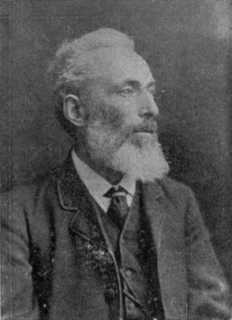
Webb is the first child and only son of the three children of Richard Davis Webb (1805-1872) and Hannah Waring Webb (1810-1862). The family runs a printing shop in Dublin and belongs to a Quaker group that supports reforms such as suffrage, the abolition of slavery and anti-imperialism. The family press prints booklets for many of these causes and, in turn, their regular customers grow to include other similar organisations, including the Irish Protestant Home Rule Association and the Ladies’ Land League, an organisation founded by Fanny and Anna Parnell in 1880 that advocates on behalf of poor tenant farmers.
Webb is interested in literature and history and begins to write A Compendium of Irish Biography. In 1865, he begins to take a more active interest in Irish politics. He is inspired by the Fenians, although he believes in non-violence and the Fenians of that time believe that Ireland can only gain independence through an armed revolution. He is first elected to the House of Commons of the United Kingdom on February 24, 1890, when he wins a by-election for the West Waterford constituency. He is again returned for West Waterford in the 1892 United Kingdom general election, this time as an anti-Parnellite MP. In December 1883, he resigns from the position of Land League treasurer, complaining of Parnell’s “autocratic management of funds.”
Webb’s family takes an interest in the welfare of British colonies and are outspoken opponents of the opium traffic into China. He is a close friend of Dadabhai Naoroji, a key member of the Indian National Congress, who is also a friend of other Irish nationalists including Michael Davitt and Frank Hugh O’Donnell. Naoroji is elected, as a member of the Liberal Party, in 1892, the year of the Liberal landslide to the Finsbury Central Westminster seat. While O’Donnell attempts to involve Naoroji in Irish politics, Webb is invited by Naoroji to preside over the Indian National Congress in 1894.
Webb is a supporter of Anti-Caste, Britain’s first anti-racism journal which fellow Quaker activist Catherine Impey founds in 1888. He is able to rally subscribers and activists for the journal around the world. For example, although he is not a regular subscriber, he and Dadabhai Naoroji co-sign a letter with others to request support for a new association, The Society for the Furtherance of Human Brotherhood.
In 1910 Day forms the local Irish Women’s Franchise League branch in Cork as an activist group for women’s suffrage. The following year she leaves that group and founds the non-militant Munster Women’s Franchise League. Her new interest in politics leads to her winning the election of poor law guardians the same year. Her later writings reveal that she sees the Cork workhouses as an expensive self-perpetuating evil run by amateurs. This leads to her first novel, The Amazing Philanthropists (1916). From 1913 to 1917 she writes three plays for the Abbey Theatre in collaboration with Geraldine Cummins, Broken Faith (1913), The Way of the World (1914), and Fox and Geese (1917), which is the most successful of the three.
The Battle of Verdun lasts most of 1916 and during that time Day is amongst a group from the Society of Friends who cares for the wounded. She is in France for fifteen months and uses the experience to create her 1918 book Round about Bar-le-Duc. Where the Mistral Blows is published in 1933 and describes her time in Provence in France.
Day works as a member of the fire service in London during World War II. She lives in Cork, France and London. At the time of her death she is living at 47 Argyle Road, Kensington, London. She dies in the Cromer and District Hospital on May 26, 1964.
The work of Suzanne Rouviere Day and Geraldine Cummins has been described as a mixture of paganism and melodrama and has been suggested as a precursor to John B. Keane.
(Pictured: Suzanne R. Day in the cast of the 1901 production of The Mikado, Cork, County Cork)