seamus dubhghaill

Promoting Irish Culture and History from Little Rock, Arkansas, USA


Leave a comment

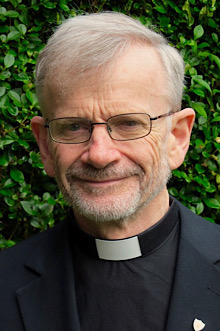
Birth of Dónal McKeown, Roman Catholic Bishop of Derry

Dónal McKeown, Roman Catholic prelate from Northern Ireland who has served as Bishop of Derry since 2014, is born in Belfast on April 12, 1950.

McKeown is one of four children born to James McKeown and his wife Rose (née McMeel), and is baptised in St. Patrick’s Church, Belfast. He is brought up in Randalstown, County Antrim, where he plays Gaelic football and hurling with Kickhams GAC Creggan.

McKeown attends primary school at Mount St. Michael’s Primary School, Randalstown, and secondary school as a boarder at St. MacNissi’s College, Camlough, between 1961 and 1968, completing his O-Levels and A-Levels with special distinctions in Modern Languages. Two of his teachers at St. MacNissi’s College are his future brother bishops, Anthony Farquhar and Patrick Walsh.

McKeown begins studying for the priesthood at St. Malachy’s College, Belfast, in 1968, and obtains a bachelor’s degree with honours in German and Italian from Queen’s University Belfast (QUB). He teaches English at a school in Dieburg, Germany, between 1970 and 1971, and subsequently works as Northern Ireland correspondent for the Catholic media company Katholische Nachrichten-Agentur between 1971 and 1973.

McKeown completes a licentiate in sacred theology at the Pontifical Gregorian University, Rome, between 1973 and 1978, during which he also works for Vatican Radio and as a correspondent for An Saol Mór, an Irish-language programme on RTÉ.

McKeown is ordained to the priesthood on July 3, 1977.

Following ordination, McKeown’s first pastoral assignment is as chaplain at Mater Infirmorum Hospital, before returning to Rome to complete his licentiate. He returns to the Diocese of Down and Connor in 1978, where he is appointed as a teacher at Our Lady and St. Patrick’s College, Knock, while also serving as assistant priest in Derriaghy. He returns to St. MacNissi’s College in 1983, where he continues his involvement with youth ministry and is given responsibility for organising the annual diocesan pilgrimage to Lourdes.

McKeown subsequently returns to St. Malachy’s College in 1987, where he teaches and serves as dean of the adjoining seminary, before succeeding Canon Noel Conway as president in 1995. During his presidency, he completes a Master of Business Administration at the University of Leicester in 2000, specialising in educational management.

McKeown has completed the Belfast Marathon on two occasions: as a priest with a team of 48 from Derriaghy in 1982, and as a bishop fundraising for a minibus for St. Malachy’s College in 2001.

McKeown is appointed auxiliary bishop-elect for the Diocese of Down and Connor and titular bishop of Cell Ausaille by Pope John Paul II on February 21, 2001, the first Irish bishop to be appointed in the third millennium. He is consecrated by the Bishop of Down and Connor, Patrick Walsh, on April 29 in St. Peter’s Cathedral, Belfast.

In response to a 2007 decision by Amnesty International to campaign for the legalisation of abortion in certain circumstances, McKeown supports the decision of Catholic schools in the diocese to disband their Amnesty International support groups, on the grounds that it is no longer appropriate to promote the organisation in their schools.

It is reported in an article in The Irish News that the mention of McKeown as a possible successor to Walsh as Bishop of Down and Connor is actively opposed by some priests in the diocese, who regard him as being “too soft” on the issue of integrated education. This opposition is branded a “Stop Donal” campaign.

McKeown also serves as a member of the Irish Catholic Bishops’ Conference, with responsibility for the promotion of Catholic education, youth ministry, university chaplaincies and the promotion of vocations. His interests include the interface between faith and the empirical sciences, and working with Catholic schools in Norway, Denmark, Lithuania, Poland and Germany.

McKeown also serves as a member of the Irish Catholic Bishops’ Conference and its committee on education and chairs its committees on vocations and youth. He leads the youth of the diocese to World Youth Day in 2002 and 2005 and also travels to Rome with his brother bishops for their quinquennial visit ad limina in 2006. He is also a regular contributor on Thought for the Day on BBC Radio Ulster.

McKeown is appointed Bishop-elect of Derry by Pope Francis on February 25, 2014. He is installed on April 6 in St. Eugene’s Cathedral, Derry.

Following the appointment of Noël Treanor as Apostolic Nuncio to the European Union on November 26, 2022, McKeown is announced as Apostolic Administrator of Down and Connor on January 21, 2023. He serves in this role until the installation of Alan McGuckian, following his appointment as Bishop of Down and Connor on February 2, 2024.

McKeown starts a 33-day journey of prayer toward the Consecration to Jesus Christ through Mary on January 9, 2025. The prayer takes place online each evening at 7:00 p.m. The 33 days of prayer take place the week following the Baptism of the Lord until the Feast of Our Lady of Lourdes on February 11.


Leave a comment

Execution of James Dickey, Member of the Society of United Irishmen

James Dickey, a young barrister from a Presbyterian family in Crumlin, County Antrim, in the north of Ireland, is hanged at Corn Market, Belfast, on June 26, 1798. He is active in the Society of United Irishmen and is hanged with Henry Joy McCracken for leading rebels at the Battle of Antrim.

The Society of United Irishmen is formed in October 1791 by leading citizens in Belfast who seek a representative government in Ireland based on principles they believe have been modelled by the American and French Revolutions. At their first meeting they embrace the argument of Theobald Wolfe Tone for a “brotherhood of affection” between Irishmen of all religious persuasions. Tone argues that in Ireland the landed Anglican Ascendancy and the English appointed Irish executive employ division between Protestants and Catholics to balance “the one party by the other, plunder and laugh at the defeat of both.”

Despairing of reform, and in the hope of French assistance, in May 1798, the United Irishmen take up arms against the Dublin government and the British Crown. Beginning in Kildare, the insurrection spreads to other counties in Leinster before finally reaching the Presbyterian districts surrounding Belfast. On June 5, the Antrim societies of United Irishmen meet in Templepatrick where they elect textile manufacturer Henry Joy McCracken as their General. The next day McCracken issues a proclamation calling for the United army of Ulster to rise. The initial plan meets with success, as the towns of Larne, Ballymena, Maghera and Randalstown are taken and the bridge at Toome is damaged to prevent the government rushing reinforcements into Antrim from west of the River Bann.

According to the memoirs of James Burns from Templepatrick, Dickey commands the insurgents at Randalstown and kills Samuel Parker, a “traitor, with his own hands, while standing at his own door, where he went for the purpose.”

McCracken leads a body of about 6,000 rebels in an attack on Antrim town. As promised, Catholic Defenders turn out, but in the march upon the town tensions with the Presbyterian United Irish causes some desertions and a delay in McCracken’s planned assault. McCracken’s men are defeated, and his army melts away. On June 15, Dickey, together with McCracken, James Hope, James Orr and about fifty other rebel survivors from Antrim, arrive at Slemish, near Ballymena. There they set up camp for three weeks before leaving under threat of attack from Colonel Green of the Tay Fencibles.

Dickey is captured by the Sutherland fencibles on Divis, a hill northwest of Belfast. He is court-martialed and hanged at Corn Market, Belfast on June 26, 1798. Famously, before his hanging he refuses to wear a black hood saying to the hangman, “Sir, don’t cover my face!” According to local legend he shouts, “Don’t think gentlemen, I am ashamed to show my face among you, I am dying for my country!” However, a loyalist source hostile to the United Irish cause, Henry Joy of the Belfast News Letter, has Dickey on the scaffold recanting his commitment to the “brotherhood of affection” between Catholic and Protestant. He supposedly warned the assembled that had “the Presbyterians of the north succeeded in their [republican] designs, they would ultimately have had to contend with the Roman Catholics.” It is testament to the sentiment that in the north is to largely expunge the memory of his, and McCracken’s, sacrifice.

Dickey is 22 years old at the time of his execution. His head is placed on a spike outside the Market House on Belfast’s High Street.

Dickey’s brother, John Dickey of Crumlin, is also implicated in the rebellion. He is informed on by neighbours who had noticed that he was making pikes and attending secret meetings of the United Irishmen late at night. Arrested and court-martialed, he refuses the terms granted by the government to the “State Prisoners” in Dublin. He is transported to the West Indies for penal servitude but manages to escape and makes his way to the United States.


Leave a comment

The Battle of Antrim

The Battle of Antrim is fought on June 7, 1798, in County Antrim during the Irish Rebellion of 1798 between British troops and Irish insurgents led by Henry Joy McCracken. The British win the battle, beating off a rebel attack on Antrim town following the arrival of reinforcements but the county governor, John O’Neill, 1st Viscount O’Neill, is fatally wounded.

The outbreak of the United Irish rebellion in Leinster on May 23 had prompted calls from Ulster United Irishmen to take to the field in support of their southern comrades. However, the organisation in Ulster had been severely damaged in a brutal disarmament campaign the previous year, and the new leadership are less radical and are not willing take to the field without French assistance, which is expected daily.

After waiting for two weeks while the rebellion rages in the south, the grassroots United Irish membership in Antrim decides to hold a number of meetings independent of their leaders. The outcome is the election of Henry Joy McCracken as their adjutant general and the decision to rise immediately. McCracken, together with James Hope, quickly formulate a plan to attack and seize all government outposts in County Antrim and then for the main attack to fall on Antrim town. Then using artillery seized at Antrim, the rebels are to march on Belfast in conjunction with the United Irish rebels in County Down.

McCracken has high hopes that many members of the militia will desert and join him, as disaffection is believed to be widespread, evidenced by the execution of four of the Monaghan militia for treason in Belfast in May.

On 6 June, McCracken and James Hope issue a proclamation calling for the United army of Ulster to rise. The initial plan meets with success, as the towns of Larne, Ballymena, Portaferry and Randalstown are taken and the bridge at Toome damaged to prevent the government from rushing reinforcements into Antrim from west of the River Bann. The rebels then assemble at Donegore Hill in preparation for the march and attack on Antrim town, where an emergency meeting of the county’s magistrates called by the county governor, Lord O’Neill, is due to take place.

Although almost 10,000 rebels assemble at Donegore, many display reluctance for the coming fight and stay on the hill in reserve or desert later so that probably fewer than 4,000 actually take part in the attack. The United Irishmen in Ulster are mostly Presbyterian, but are joined with Catholic Defenders and the tension between the two groups on the march likely causes some desertions. These difficulties lead to a loss of momentum, and the attack is delayed. McCracken is forced to make adjustments to his plan of attack, which had envisaged a simultaneous overwhelming assault on the town from four separate points.

The town is garrisoned by a small force of about 200 yeomen, cavalry under Lt. Col. William Lumley and armed volunteers but they also have four artillery pieces and the delay in the rebel attack allows them to send requests for assistance to Belfast and Lisburn from where reinforcements are already on the way. The garrison forms themselves at the base of the demesne wall of Antrim Castle, with artillery to the front and cavalry to the rear with their flanks anchored by the Market House and Presbyterian Meeting House. A part of the Scottish Quarter in the town is also burned by the garrison as it is perceived to be a stronghold of rebel sympathisers.

The attack finally begins shortly before 3:00 p.m. when the rebels begin a cautious march through the town. As rebel front ranks arrive to face the garrison’s defensive line, artillery opens fire on the rebels, causing them to pull back out of range. Large clouds of dust and smoke are thrown up which, together with the fires from the Scottish Quarter, obscure the garrison’s view of events.

The rebel withdrawal is mistaken for a full retreat and the cavalry moves out to pursue and rout the supposed fleeing rebels. The cavalry effectively runs into a gauntlet of rebels who are protected by a long churchyard wall and stationed in houses along the main street, suffering heavy losses to the gunfire and pikes of the rebels.

After routing the cavalry, the rebels attack the remainder of the garrison, which then begins to pull back to the safety of the castle wall. This is mistaken by a newly arrived rebel column as an attack on them, causing them to flee in panic. In the confusion, the county commander, Lord O’Neill, trapped with his magistrates, is fatally wounded by James Clements who avoids trial by joining the army. A rebel attempt to seize the artillery is only narrowly beaten off by troops stationed behind the demesne wall.

At this critical juncture, British reinforcements from Belfast arrive outside the town and, assuming it to be held by the rebels, begin to shell it with their artillery. This prompts more desertions and the rebel army begins to disintegrate, but their withdrawal is protected by a small band under James Hope which fights a successful rearguard action from the church grounds along the main street. This allows the bulk of the rebels to withdraw safely.

When the military enters the town, they begin a spree of looting, burning and murder, of which the most enthusiastic perpetrators are reported to be the Monaghan militiamen, who are anxious to prove their loyalty and expunge the shame of the recent executions of their comrades for sedition. The town of Templepatrick is burned to the ground and Old Stone Castle is razed to the ground. McCracken, Hope and their remaining supporters withdraw northward, establishing camps of ever dwindling size along the route of their retreat until news of the defeat at Ballynahinch causes their final dispersion. McCracken is arrested by yeomen on July 7 and is hanged in Belfast on July 17, having refused an offer of clemency in return for informing on his comrades.

Commemoration of the centenary of the battle, marked by a nationalist parade in Belfast on June 6, 1898, provokes loyalist riots.


Leave a comment

People’s Democracy March Ambush at Burntollet Bridge

On January 4, 1969, during the first stages of the Troubles in Northern Ireland, the civil rights group People’s Democracy is attacked at Burntollet Bridge on the final day of a four-day march from Belfast to Derry by 200 loyalists and off-duty Royal Ulster Constabulary (RUC) officers armed with iron bars, bricks, and bottles.

The People’s Democracy organizes the four-day march from Belfast to Derry, starting on January 1, 1969. The march is to be the acid test of the government’s intentions. Either the government will face up to the extreme right of its own Unionist Party and protect the march from the ‘harassing and hindering,’ or it will be exposed as impotent in the face of sectarian thuggery, and Westminster will be forced to intervene, re-opening the whole Irish question for the first time in 50 years. The march is modelled on the Selma to Montgomery march in Alabama in 1965, which had exposed the racist thuggery of America’s Deep South and forced the United States government into major reforms.

The departure on New Year’s Day 1969 of approximately 40 People’s Democracy supporters on the march to Derry is marked by a protest in Belfast by loyalists under the direction of Major Ronald Bunting, a close associate of Rev. Ian Paisley. It is the loyalist’s intention to harass the march along its entire journey.

On the first day of the march, the group makes its way unhindered towards Antrim. Just outside Antrim the marchers run into a police barricade, behind which several hundred loyalists are gathered, led by Major Bunting. The RUC refuses to remove the blockade and after a lengthy delay, and minor scuffles, the marchers are driven in police tenders to Whitehall Community Centre where they spend an unsettled night interrupted by a bomb threat.

The next day, the marchers set off for Randalstown but again find their way blocked by Major Bunting and a crowd of loyalists. Once again, the RUC refuses to remove the loyalist protesters and the marchers are eventually transported to Toome by car. The marchers are welcomed at Toome and after taking lunch in the village they set out for Maghera. After 30 minutes the march is again halted and then rerouted away from the loyalist village of Knockloughlin. After two miles, loyalist protestors led by Major Bunting again halt the march. Another standoff ensues and, as locals gather to support the marchers, the RUC’s County Inspector Kerr asks the loyalists to stand aside, which they do. The marchers then make their way towards Maghera, where loyalists have gathered to await their arrival. On hearing of this ‘reception’ committee, which is armed with clubs and sticks, the marchers decide to bypass the village and spend the night at Bracaghreilly. That night Maghera witnesses considerable violence from frustrated loyalists.

On January 3, the third day of the march, the marchers set out for Dungiven and encounter little opposition. After lunch in Dungiven they travel on to Feeny. A mile outside Dungiven the marchers are halted by the RUC with reports of a loyalist protest further along the road. A civil rights supporter then arrives along the road that is allegedly blocked and reports no obstructions ahead. The marchers decide to breach police lines and encounter no protest ahead. After reaching Feeny the marchers move on to Claudy, where they receive a friendly reception and settle down for the night. That night a loyalist attack on the hall in which the marchers are staying is repulsed by locals.

The same night in Derry, a rally by Ian Paisley in the Guildhall leads to serious disorder. While those inside the hall are listening to Major Bunting call for loyalists to gather the next day at Burntollet, a crowd of nationalists gather outside the building in protest. During clashes as the rally disperses, Major Bunting’s car is destroyed. Later that night stockpiles of bottles and stones are left by loyalists in the fields at Burntollet.

On the morning of January 4, the marchers, who now number approximately 500, set out on the last league of their journey to Derry. Just before reaching Burntollet District Inspector Harrison stops the march in order to investigate reports of loyalists ahead. Harrison, together with County Inspector Kerr, speak of 50 loyalists ahead and claim to be confident that there is no danger. With the RUC leading the way the marchers advance. In the field overlooking the road the marchers observe approximately 300 loyalists, identified by white armbands and armed with cudgels. They come under a bombardment of missiles. Marchers seek to escape the bombardment by speeding up the road but there is to be no escape as they immediately encounter a second contingent of loyalists blocking their escape.

As many marchers flee into the fields they are pursued by attackers and the RUC makes no attempt to intervene. Others are thrown into the nearby River Faughan. As what is left of the marchers continue on to Derry, they are also attacked twice in Derry’s Waterside before receiving a rousing welcome in Guildhall Square.

That night clashes occur between the RUC and local people and the first “Free Derry” is born. At 2:00 AM members of the RUC attack the Bogside, running amok in the Lecky Road and St. Columbs Wells districts. Windows are broken, residents are assaulted, and sectarian abuse is directed at the people of the Bogside. The reaction to this ‘invasion’ ranges from the painting of the Free Derry legend to the formation of vigilante squads in the area, based at the Foyle Harps Hall in the Brandywell and Rossville Hall in the Bogside. The barricades remain up for a number of days and relations between the community in the Bogside and the RUC, which has never been particularly good, grows steadily worse.

These events, together with the steady increase of conflict between local youths and the RUC as the year progress, is to lay the foundations for the resistance that is to take place during the Battle of the Bogside.

(From: “People’s Democracy march, January 4, 1969” by Jude Collins, http://www.judecollins.com, January 4, 2016)


Leave a comment

Terence O’Neill Becomes Fourth Prime Minister of Northern Ireland

File source: http://en.wikipedia.org/wiki/File:Captain_Terence_O%27Neill.jpg

Terence O’Neill becomes the fourth Prime Minister of Northern Ireland on March 25, 1963, following the resignation of Basil Brooke, 1st Viscount Brookeborough. He plays a significant role in the first year of the Troubles, trying unsuccessfully to stem growing sectarian violence.

O’Neill is born on September 10, 1914, at 29 Ennismore Gardens, Hyde Park, London, the son of Captain Arthur O’Neill of Shane’s Castle, Randalstown, the first member of parliament (MP) to be killed in action in World War I five months later. He is educated in the English public school system at West Downs SchoolWinchester and Eton College, spending his summer holidays at the family estate in Ulster. He is later commissioned in the British Army, rising to the rank of captain and serving with the Irish Guards in World War II. He is wounded in 1944 and opts to resettle permanently in Northern Ireland.

In 1946, O’Neill is elected to the Parliament of Northern Ireland, representing the Unionist stronghold of Bannside. He remains in the parliament at Stormont for almost 25 years. He becomes Northern Ireland’s Minister of Home Affairs in April 1956, Minister of Finance in September 1956 and Prime Minister in March 1963.

As Prime Minister, O’Neill introduces economic reforms to stimulate industrial growth and employment, with mixed results. He also tries narrowing the divide between Protestants and Catholics. He does this with important gestures, like visiting Catholic schools and expressing condolences on the death of Pope John XXIII.

O’Neill also seeks better relations with the Republic of Ireland, and in January 1965 invites Taoiseach Seán Lemass to Belfast. Catholics and moderate Unionists welcome this reconciliation but many conservative Loyalists, like Ian Paisley, condemn it as treachery.

When the civil rights movement erupts in the late 1960s, O’Neill offers a package of reforms and concessions, including changes to the allocation of housing. These proposals, however, anger staunch Unionists and fail to satisfy many Republicans.

In December 1969, O’Neill appears on Northern Ireland television and makes an impassioned plea for unity, warning that “Ulster stands at the crossroads.” His government is reelected in February 1969, though O’Neill himself is almost voted out of his own seat.

With the situation worsening, O’Neill is further embarrassed by Loyalist attempts to sabotage Belfast’s water supply. Fast losing the confidence of his own party, he resigns the prime ministership in April 1969. He remains in the parliament until January 1970.

O’Neill is made Baron O’Neill of the Maine and spends the last decade of his life in Britain’s House of Lords. He dies of cancer on June 12, 1990.