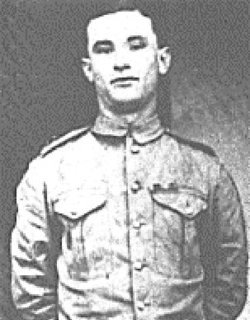
On June 28, 1920, Joseph Hawes leads a company of the Connaught Rangers stationed at Jalandhar on the plains of the Punjab lay down their arms and refuse to perform their military duties as a protest against the activities of the Black and Tans, officially the Royal Irish Constabulary Special Reserve in Ireland. On the following day, the mutineers send two emissaries to a company of Connaught Rangers stationed at Salon, about twenty miles away in the foothills of the Himalayas. The soldiers there take up the protest as well and, like their counterparts at Jalandhar, fly the Irish tricolour, wear Sinn Féin rosettes on their British Army uniforms and sing rebel songs.
The protests are initially peaceful, but on the evening of July 1 around thirty members of the company at Salon, armed with bayonets, attempt to recapture their rifles from the company magazine. The soldiers on guard open fire, killing two men and wounding another. The incident effectively brings the mutiny to an end and the mutineers at both Jalandhar and Salon are placed under armed guard.
Sixty-one men are convicted by court-martial for their role in the mutiny. Fourteen are sentenced to death by firing squad, but the only soldier whose capital sentence is carried out is Private James Joseph Daly of Tyrellspass, County Westmeath. Daly is considered the leader of the mutiny at Salon and the man responsible for the failed attack on the magazine. On the morning of November 2, 1920, at the age of 22, he is executed in Dagshai prison in northern India.
The Connaught Rangers do not survive much longer than Daly. In 1922 the regiment is disbanded after the signing of the Anglo-Irish Treaty that creates the Irish Free State. In 1970, James Daly’s body is brought home and buried at Tyrellspass. Among those in the guard of honor at the reinterment ceremony are five of Daley’s fellow mutineers – Joseph Hawes, James Gorman, Eugene Egan, Patrick Hynes, and William Coote.
Nationalists throughout Ireland wish to see the end of the IRA. In a response to a major speech by Adams, Mark Durkan, leader of the Social Democratic and Labour Party (SDLP), says IRA activity is playing into the hands of anti-Agreement unionists and calls on the IRA to cease all activity.
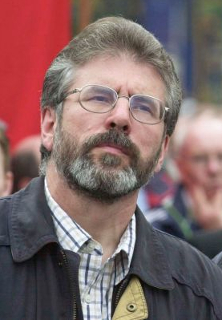
Adams tells elected Sinn Féin representatives from both sides of the Irish border in Monaghan that he can envision a future without the IRA. He also admits that “alleged” IRA activities are boosting the cause of those opposing the Northern Ireland peace process. However, he also tells Tony Blair that the IRA will never disband in response to ultimatums.
“He needs to recognise, however, that the Agreement requires an end to paramilitarism and that nationalists throughout this island fervently want one. It is time that republicans took heed of their call.”
The former Deputy First Minister in the devolved administration at Stormont says he welcomes Adams’ recognition that IRA activity is exacerbating the difficulties within unionism. “The reality is that IRA activity is playing right into the hands of anti-Agreement unionists. And letting the nationalist community badly down,” he said.
“It is also welcome that Gerry Adams has begun to recognise Sinn Féin’s credibility crisis. Too often republican denials have proved to be false in the past – be it over Colombia or Florida. This too has served only to create distrust and destabilise the Good Friday Agreement,” he adds.
In a major speech billed by his party as a considered response to the Prime Minister’s demand for an end to Republican-linked violence, Adams declares “Our view is that the IRA cessations effectively moved the army out of the picture – and allowed the rest of us to begin an entirely new process.” His speech is understood to have been handed in advance to both the British and Irish governments.
Adams says the continued IRA ceasefire and decommissioning initiatives demonstrated the organisation’s commitment to the peace process. “I do not pretend to speak for the army (IRA) on these matters, but I do believe that they are serious about their support for a genuine peace process. They have said so. I believe them,” he said. He adds, “The IRA is never going to respond to ultimatums from the British government or David Trimble.”
Fianna Fáil leader Bertie Ahern later says he welcomes and is encouraged by many aspects of Adams’ speech. He says the Sinn Féin leader’s strong statement of determination to keep the peace process intact and the recognition of the need to bring closure to all the key issues is a positive contribution at this difficult time in the Northern Ireland peace process.
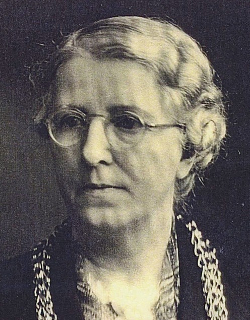
Kathleen Daly is born into a prominent Fenian family in Limerick on April 11, 1878, the third daughter of Edward and Catherine Daly. Her paternal uncle, John Daly, is at the time imprisoned for his political activities in Chatham and Portland Prisons in England. He is released in 1896 and returns home to Limerick. When Tom Clarke, who had been imprisoned with her uncle, is released in 1898 he travels to Limerick to receive the Freedom of the City and stays with the Daly family.
In 1901 Daly decides to emigrate to the United States to join Tom, who had been there since 1900, having secured work through his Fenian contacts. They marry on July 16, 1901, in New York City. Through his contacts in the Clan na Gael and the Irish Republican Brotherhood (IRB), Tom Clarke continues to be involved in nationalist activity. Kathleen joins the Gaelic League while in the United States and they return to Ireland in November 1907.
In 1914 Clarke becomes a founder member of Cumann na mBan. Her husband forbids her permission to take an active part in the 1916 Easter Rising as she has orders regardless of how the events pan out. As Tom Clarke is the first signatory of the Proclamation of the Irish Republic, he is chosen to be executed for his part in the Easter Rising. Her younger brother, Ned Daly, is also executed for taking part in the rising. She visits both of them before they are executed. After the Rising, Michael Collins establishes contact with her while in prison in his attempts to re-build the IRB network. She also sets up the Irish National Aid Fund to aid those who had family members killed or imprisoned as a result of the Easter Rising, closely aided by Sorcha MacMahon.
Clarke becomes a member of Sinn Féin and in 1917 is elected a member of the party’s Executive. During the German Plot she is arrested and imprisoned in Holloway Prison for eleven months. During the Irish War of Independence, she serves as a District Judge on the Republican Courts in Dublin. In 1919 she is elected as an Alderman for the Wood Quay and Mountjoy Wards of Dublin Corporation and serves until the Corporation is abolished in 1925.
Clarke is elected unopposed as a Sinn Féin TD to the Second Dáil at the 1921 elections for the Dublin Mid constituency. She is not re-elected at the 1922 Irish general election, however, and supports the Anti-Treaty forces during the Irish Civil War. In 1926 she becomes a founder member of Fianna Fáil and has to resign from Cumann na mBan. She is re-elected to the short-lived 5th Dáil at the June 1927 Irish general election as a Fianna Fáil member for the Dublin Mid constituency but loses her seat at the September 1927 Irish general election and does not regain it. She is elected as one of six Fianna Fáil Senators to the Free State Seanad for nine years at the 1928 Seanad election under the leadership of Joseph Connolly. She remains a member of the Seanad until it is abolished in 1936.
In 1930 Clarke is elected to the re-constituted Dublin Corporation for Fianna Fáil along with Robert Briscoe, Seán T. O’Kelly, Thomas Kelly and Oscar Traynor. She serves as the first Fianna Fáil Lord Mayor of Dublin as well as the first female Lord Mayor, from 1939 to 1941. She opposes the Constitution of Ireland as she feels that several of its sections would place women in a lower position that they had been afforded in the Proclamation of the Irish Republic. She is criticised by many in the Fianna Fáil organisation as a result and, while she resigns from the Thomas Clarke Cumann, she remains a member of the Fianna Fáil Ard Chomhairle.
While Clarke does not support the Irish Republican Army (IRA) bombing in England during World War II, she appeals for those sentenced to death by the Irish Government to be given clemency. Ultimately this leads to her breaking with the party completely after her term as Lord Mayor finishes in 1941. She declines to stand as a Fianna Fáil candidate at the 1943 Irish general election.
In 1966, as part of the celebrations of the Easter Rising, Clarke and other surviving relatives are awarded honorary Doctor of Law by the National University of Ireland. Following her death on September 29, 1972, she receives the rare honour of a state funeral. She is buried at Deans Grange Cemetery, Dublin.
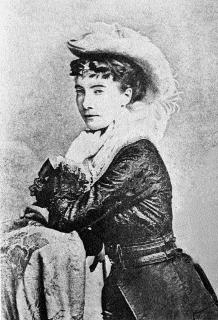
Parnell is born at Avondale House near Rathdrum, County Wicklow, the tenth of eleven children of John Henry Parnell, a landlord, and Delia Tudor Stewart Parnell, an Irish American and daughter of Admiral Charles Stewart of the United States Navy. She has very little formal education as a child, but the family has an extensive library which she is encouraged to read by her mother. After her father dies in 1859, she moves with the family to Dublin. Delia Parnell is an active socialite while in Dublin and exposes her children to a wide variety of political views.
In 1865 the family moves to Paris, but Parnell feels stifled by upper class society rules imposed upon her. She is in Paris when the Franco-Prussian War breaks out in 1870 and is active in the American Ladies’ Committee fundrasing and setting up hospitals. She returns alone to Dublin in 1870 to study art.
Parnell moves to London in 1875 to continue studying art. When her brother Charles is elected as a Member of Parliament (MP) for Meath, she becomes increasingly political. She frequently visits Parliament during debates, sitting in the Ladies’ Gallery. She writes articles about the debates in a column titled Notes From the Ladies’ Cage in the Celtic Monthly. In 1879 she joins her sister, Fanny Parnell, a poet, in New York City where they raise money in support of the Irish National Land League. The sisters work closely with their brother Charles and Michael Davitt but are critical of how the funds raised in America are being used in Ireland. In October 1880 the sisters found the New York Ladies’ Land League with their mother as president. They raised thousands of dollars sent to Ireland.
Parnell returns in Dublin in late 1880. When it seems that the Land League men are likely to be arrested, it is suggested that a women’s league in Ireland could take over the work in their absence. Public opinion at the time is against women in politics, but the Ladies’ Land League is founded on January 31, 1881, with Parnell as its effective leader.
When Charles Parnell and other leaders are imprisoned in 1881, as predicted, the Ladies’ Land League takes over their work. Though it is envisioned as a place holder until the men are released, Parnell organises branches throughout Ireland, encouraging women to play an active role in Land League activities. Offices are given to the ladies but little help. They raise funds for the League and for the support of prisoners and their families. They distribute Land League wooden huts to shelter evicted tenant families and by the beginning of 1882 they have 500 branches, thousands of women members and considerable publicity. They distribute £60,000 in relief aid.
This puts the Ladies’ Land League in serious debt. Parnell approaches her brother Charles, requesting money to settle the debts. Charles, who distrusts her understanding of politics, agrees to provide the money under the condition that the Ladies’ Land League is disbanded. She agrees, disbanding in 1882, but she never forgives Charles.
After her brother’s death in 1891 Parnell lives the rest of her life in the south of England under the assumed name Cerisa Palmer. She writes an angry account of her Land League experiences in Tale of a Great Sham, which is not published until 1986. She makes one last political appearance when she campaigns for a Sinn Féin candidate in a 1907 by-election.
By the summer of 1911, the 59-year-old Parnell is staying in lodgings at Ilfracombe in Devon. An enthusiastic swimmer since childhood, she bathes every day, and on September 20, disregarding a warning of dangerous seas, she goes swimming as usual. She is seen to be in difficulties and the alarm is raised, but by the time rescuers reached her, she is dead. Unlike her brother, whose funeral in Dublin had been the occasion for a massive outpouring of grief and remorse, Anna Parnell was buried quietly in the churchyard of Holy Trinity Church in Ilfracombe, in the presence of just seven strangers, and far away from the scenes of her greatest efforts and notoriety.
In the hours leading up to Trimble’s midnight resignation, there are minor clashes between the two sides as the Protestant “marching season,” an annual flashpoint for trouble, starts in Belfast.
Trimble, recipient of the Nobel Peace Prize with Catholic leader John Hume for their part in the 1998 Good Friday Agreement, precipitates the crisis by submitting a post-dated resignation letter several weeks earlier in protest of the Irish Republican Army‘s (IRA) refusal to disarm as part of the deal.
Under the landmark Good Friday Agreement, the power-sharing government of Catholics and Protestants that Trimble has headed has a six-week period to either re-install Trimble or replace him before the Northern Irish Assembly and Northern Ireland Executive are suspended. If such steps fail, Britain can call new provincial elections or re-impose direct rule from London.
As Trimble leaves the province, police and British troops mount a strong presence to head off trouble during a parade by the Protestant Orange Order institution. There are only minor scuffles between police and residents as a concrete and steel barrier is put up by security forces to seal off the Catholic enclave ahead of the march.
A spokesman for Trimble’s UUP says Empey’s appointment is intended to “shore up the political institutions and ensure its representation in the government.” Empey says his role is to perform the functions of First Minister but not take the title or salary. He says his party will not share power with the Irish Republican Army’s (IRA) political arm Sinn Féin unless the guerrilla group starts to disarm.
Sinn Fein leaders denounce Trimble’s resignation as an evasion of responsibility for peace in the province. The IRA says it wants a permanent peace and security sources say there is no sign of a return-to-war mood in the ranks of the guerrilla group. It has twice opened up arms dumps for international inspection to prove that the weapons have not been used, but Protestant politicians say that is not enough.
Daly is a militant member of the Prisoners’ Relatives Action Committee and the national Hunger Strike Committee. In that campaign, she works with Seamus Costello and soon joins him in the Irish Republican Socialist Party (IRSP) and the Irish National Liberation Army (INLA). After Costello is assassinated, she becomes chairperson, leading the party for two years. During this time, she and her husband are instrumental in opposing Sinn Féin‘s drift towards federalism.
On June 26, 1980, Daly is shot dead at her home in the Andersonstown area of west Belfast. At the time of her assassination, she is in charge of the IRSP prisoners’ welfare.
According to reports in The Irish Times, members of the Ulster Defence Association gain entry to her home with the intention of killing her husband, who is also a republican activist. Daly is captured and tied up while they wait for him to return home. However, he is in Dublin at the time and so does not arrive. After a considerable time, the UDA men decide to kill Daly instead. Muffling the sound of the gun with a cushion, they shoot her in the head and cut the phone lines before fleeing. Her body is discovered when her ten-year-old daughter arrives home from school.
Éamon De Valera and Michael Collins agree to a pact on May 20, 1922 whereby a national coalition panel of candidates will represent the pro- and anti-Treaty wings of Sinn Féin throughout Ireland in the forthcoming general election.
As in the Irish elections, 1921 in the south, Sinn Féin stands one candidate for every seat, except those for the University of Dublin and one other. The treaty has divided the party between 65 pro-treaty candidates, 57 anti-treaty and 1 nominally on both sides. Unlike the elections a year earlier, other parties stand in most constituencies forcing single transferable vote elections, with Sinn Féin losing 30 seats.
To avoid a deeper split de Valera and Collins work out a “pact” whereby it is agreed that the pro-treaty and anti-treaty factions will fight the general election jointly and form a coalition government afterwards. This pact prevents voters giving their opinions on the treaty itself, especially in uncontested seats. However, the draft constitution of the Irish Free State is then published on June 15, and so the anti-treaty Sinn Féin group’s 36 seats out of 128 seem to many to be a democratic endorsement of the pro-treaty Sinn Féin’s arrangements. Others argue that insufficient time is available to understand the draft constitution, but the main arguments have been made public in the Treaty Debates which end in January 1922.
Despite the Pact, the election starts the effective division of Sinn Féin into separate parties. Anti-Treaty members led by de Valera walk out, and pro- and anti-Treaty members take opposite sides just weeks later in the ensuing Irish Civil War.
During McGilligan’s period in opposition from 1932 to 1948 he builds up a law practice and becomes professor of constitutional and international law at University College, Dublin. When the National University of Ireland representation is transferred to Seanad Éireann in 1937, he is elected as TD for the Dublin North-West constituency.
In 1948 McGilligan is appointed Minister for Finance in the first Inter-Party Government. As Minister he undertakes some major reforms. He instigates a new approach where Government invests radically in capital projects. Colleagues however complain of his frequent absence from the Cabinet table and the difficulty of contacting him at the Department of Finance. Between 1954 and 1957 he serves as Attorney General. He retires from Dáil Éireann at the 1965 general election, having served for over 40 years.
Patrick McGilligan dies in Dublin on November 15, 1979. Despite his well-known fondness for predicting that he would die young, he reaches the age of ninety. A later Attorney General, John M. Kelly, in the preface to his definitive text, The Irish Constitution (1980), notes the remarkable number of senior judges who are former students of McGilligan and suggests that, given his own firm belief in the value of judicial review, he deserves much of the credit for the remarkable development of Irish law in this field since the early 1960s.
Thomas Curtin is born at Ballyknockane, Mourne Abbey, County Cork, on March 20, 1884, the son of Patrick Curtin, a farmer, and Julia Sheehan. He attends Burnfort National School. In 1897 the family moves to Cork City, where he attends the North Monastery school.
Mac Curtain, as he later becomes known, is active in a number of cultural and political movements beginning around the turn of the 20th century. He joins the Blackpool, Cork branch of Conradh na Gaeilge, becoming its secretary in 1902. He has interests in music, poetry, history, archaeology and Irish history. He works in his early career as a clerk, and in his free time teaches Irish. In 1911 he joins Fianna Éireann and is a member of the Irish Volunteers.
He meets Elizabeth Walsh (Eibhlís Breathnach) at a Gaelic League meeting, and they marry on June 28, 1908. They have six children, five of whom survive into adulthood. The family lives over 40 Thomas Davis Street, where Mac Curtain runs a small clothing and rainwear factory.
In April 1916, at the outset of the Easter Rising, Mac Curtain commands a force of up to 1,000 men of the Irish Volunteers who assemble at various locations around County Cork. From the volunteer’s headquarters at Sheares Street in the city, Mac Curtain and his officers await orders from the volunteer leadership in Dublin, but conflicting instructions and confusion prevail and as a result the Cork volunteers never enter the fray. A tense stand-off develops when British forces surround the volunteer hall and continued for a week until a negotiated agreement leads to the surrender of the volunteers’ arms to the then Lord Mayor of Cork Thomas Butterfield on the understanding that they will be returned at a later date. This does not happen however, and Mac Curtain is jailed in Wakefield Prison, in the Frongoch internment camp in Wales, and in Reading Gaol. After the general amnesty of participants in the Rising 18 months later, Mac Curtain returns to active duty as a Commandant of what is now the Irish Republican Army.
By 1918 Mac Curtain is a brigade commander, the highest and most important rank in the IRA. During the Conscription Crisis of 1918, he actively encourages the hiring of the women of Cumann na mBan to cater for Volunteers. He is personally involved with Michael Collins‘ Squad that, along with a Cork battalion, attempt to assassinate Lord John French, whose car is missed as the convoy passes through the ambush positions. Despite the setback he remains brigadier of No.1 Cork when he is elected Lord Mayor. He is elected in the January 1920 council elections as the Sinn Féin councillor for NW Ward No. 3 of Cork and is chosen by his fellow councillors to be the Lord Mayor. He begins a process of political reform within the city.
In January 1919, the Irish War of Independence starts, and Mac Curtain becomes an officer in the IRA. On March 20, 1920, his 36th birthday, Mac Curtain is shot dead in front of his wife and son by a group of men with blackened faces, who are found to be members of the Auxilaries along with unknown members of the Royal Irish Constabulary (RIC) by the official inquest into the event. In the wake of the killing, which is in revenge for the shooting of a policeman, Mac Curtain’s house in Blackpool is ransacked.
The killing causes widespread public outrage. The coroner’s inquest passes a verdict of willful murder against British Prime MinisterDavid Lloyd George and against certain members of the RIC. Michael Collins later orders his squad of assassins to uncover and assassinate the police officers involved in the attack. RIC District Inspector Oswald Swanzy, who had ordered the attack, is fatally shot, with Mac Curtain’s own revolver, while leaving a Protestant church in Lisburn, County Antrim on August 22, 1920, sparking what is described by Tim Pat Coogan as a “pogrom” against the Catholic residents of the town.
Redmond is born to an old prominent Catholic family in Kilrane, County Wexford on September 1, 1856. Several relatives are politicians. He takes over control of the minority IPP faction loyal to Charles Stewart Parnell after Parnell dies in 1891. He is a conciliatory politician who achieves the two main objectives of his political life: party unity and, in September 1914, the passing of the Irish Home Rule Act.
The Irish Home Rule Act grants limited self-government to Ireland, within the United Kingdom. However, implementation of Home Rule is suspended by the outbreak of the World War I. Redmond calls on the National Volunteers to join Irish regiments of the New British Army and support the British and Allied war effort to restore the “freedom of small nations” on the European continent, thereby to also ensure the implementation of Home Rule after a war that is expected to be of short duration. However, after the Easter Rising of 1916, Irish public opinion shifts in favour of militant republicanism and full Irish independence, resulting in his party losing its dominance in Irish politics.
In sharp contrast to Parnell, Redmond lacks charisma. He works well in small committees but has little success in arousing large audiences. Parnell had always chosen the nominees to Parliament. Now they are selected by the local party organisations, giving Redmond numerous weak MPs over whom he has little control. He is an excellent representative of the old Ireland but grows increasingly old-fashioned because he pays little attention to the new forces attracting younger Irishmen, such as Sinn Féin in politics, the Gaelic Athletic Association in sports, and the Gaelic League in cultural affairs.
Redmond never tries to understand the unionist forces emerging in Ulster. He is further weakened in 1914 by the formation of the Irish Volunteers by Sinn Féin members. His enthusiastic support for the British war effort alienates many Irish nationalists. His party has been increasingly hollowed out, and a major crisis, notably the Easter Rising, is enough to destroy it.
Redmond is increasingly eclipsed by ill-health after 1916. An operation in March 1918 to remove an intestinal obstruction appears to progress well initially, but he then suffers heart failure. He dies a few hours later at a London nursing home on March 6, 1918.
Condolences and expressions of sympathy are widely expressed. After a funeral service in Westminster Cathedral his remains are interred, as requested in a manner characteristic of the man, in the family vault at the old Knights Templars‘ chapel yard of Saint John’s Cemetery, Wexford, amongst his own people rather than in the traditional burial place for Irish statesmen and heroes in Glasnevin Cemetery. The small, neglected cemetery near the town centre is kept locked to the public. His vault, which has been in a dilapidated state, has been only partially restored by Wexford County Council.



 seamus dubhghaill