seamus dubhghaill

Promoting Irish Culture and History from Little Rock, Arkansas, USA


Leave a comment

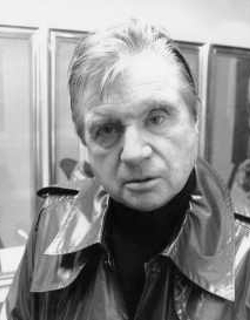
Death of Figurative Painter Francis Bacon

francis-bacon

Francis Bacon, Irish-born British figurative painter known for his bold, emotionally charged and raw imagery, dies of a heart attack while on holiday in Madrid, Spain on April 28, 1992.

Bacon is born in Dublin on October 28, 1909. He is best known for his depictions of popes, crucifixions and portraits of close friends. His abstracted figures are typically isolated in geometrical cage like spaces, set against flat, nondescript backgrounds. Bacon says that he sees images “in series,” and his work typically focuses on a single subject for sustained periods, often in triptych or diptych formats. His output can be broadly described as sequences or variations on a single motif, beginning with the 1930s Pablo Picasso-informed Furies, moving on to the 1940s male heads isolated in rooms or geometric structures, the 1950s screaming popes, and the mid-to-late 1950s animals and lone figures, the 1960s portraits of friends, the nihilistic 1970s self-portraits, and the cooler more technical 1980s late works.

Bacon takes up painting in his late 30s, having drifted as an interior decorator, bon vivant and gambler. He says that his artistic career was delayed because he spent too long looking for subject matter that could sustain his interest. His breakthrough comes with the 1944 triptych Three Studies for Figures at the Base of a Crucifixion, which seals his reputation as a uniquely bleak chronicler of the human condition. From the mid-1960s he mainly produces portraits of friends and drinking companions, either as single or triptych panels. Following the 1971 suicide of his lover, George Dyer, his art becomes more sombre, inward-looking and preoccupied with the passage of time and death. The climax of this later period is marked by masterpieces, including Study for Self-Portrait (1982) and Study for a Self-Portrait—Triptych, 1985–86.

Despite his bleak existentialist outlook, solidified in the public mind through his articulate and vivid series of interviews with David Sylvester, Bacon in person is highly engaging and charismatic, articulate, well-read and unapologetically gay. He is a prolific artist, but nonetheless spends many of the evenings of his middle age eating, drinking and gambling in London‘s Soho with like-minded friends such as Lucian Freud, John Deakin, Muriel Belcher, Henrietta Moraes, Daniel Farson, Tom Baker, and Jeffrey Bernard.

After Dyer’s suicide he largely distances himself from this circle, and while his social life is still active and his passion for gambling and drinking continues, he settles into a platonic and somewhat fatherly relationship with his eventual heir, John Edwards. The art critic Robert Hughes describes him as “the most implacable, lyric artist in late 20th-century England, perhaps in all the world” and along with Willem de Kooning as “the most important painter of the disquieting human figure in the 50’s of the 20th century.” Bacon is the subject of two Tate retrospectives and a major showing in 1971 at the Grand Palais.

While on holiday in Madrid in 1992, Francis Bacon is admitted to the Handmaids of Maria, a private clinic, where he is cared for by Sister Mercedes. His chronic asthma, which has plagued him all his life, has developed into a respiratory condition and he is unable to talk or breathe very well. He dies of a heart attack on April 28, 1992, after attempts to resuscitate him fail.

Bacon bequeaths his estate, then valued at £11 million, to John Edwards and Brian Clark, executors. In 1998 the director of the Hugh Lane Gallery in Dublin secures the donation of the contents of Bacon’s chaotic studio at 7 Reece Mews, South Kensington. The contents of his studio are moved and reconstructed in the gallery. Most of his works remain in the Hugh Lane in Dublin today.

Since his death his reputation and market value have grown steadily, and his work is among the most acclaimed, expensive and sought-after. In the late 1990s a number of major works, previously assumed destroyed, including early 1950s popes and 1960s portraits, reemerge to set record prices at auction. In 2013 his Three Studies of Lucian Freud sets the world record as the most expensive piece of art sold at auction.


3 Comments

The Retreat of Donal Cam O’Sullivan Beare

donall-cam-osullivan-beare

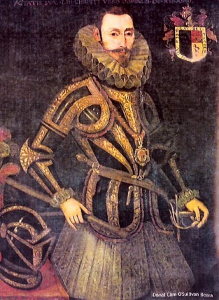
Donal Cam O’Sullivan Beare and his clan begin their epic march to Ulster on December 31, 1602. O’Sullivan has supported Hugh O’Neill, Earl of Tyrone, in his fight against Elizabethan England‘s attempts to destroy Gaelic Ireland once and for all. The cause O’Neill and O’Sullivan fight for is probably doomed after O’Neill’s defeat in the Battle of Kinsale in 1601, but the fight goes on, nonetheless.

O’Sullivan Beare conceals 300 of the women, children and aged of his community in a stronghold on Dursey Island, but this position is attacked, and the defenders hanged. In what is later termed the Dursey Massacre, Philip O’Sullivan Beare, nephew of O’Sullivan Beare, writes that the women and children of the Dursey stronghold are massacred by the English, who tie them back-to-back, throw them from the cliffs, and shoot at them with muskets.

After the fall of Dursey and Dunboy, O’Sullivan Beare, Lord of Beara and Bantry, gathers his remaining followers and sets off northwards on December 31, 1602, on a 500-kilometre march with 1,000 of his remaining people. He hopes to meet Hugh O’Neill on the shores of Lough Neagh.

O’Sullivan Beare fights a long rearguard action northwards through Ireland, through Munster, Connacht and Ulster, during which the much larger English force and their Irish allies fight him all the way. The march is marked by the suffering of the fleeing and starving O’Sullivans as they seek food from an already decimated Irish countryside in winter. They face equally desperate people in this, often resulting in hostility, such as from the Mac Egans at Redwood Castle in County Tipperary and at Donohill in O’Dwyer’s country, where they raid the Earl of Ormonde‘s foodstore.

O’Sullivan Beare marches through Aughrim, where he raids villages for food and meets local resistance. He is barred entrance to Glinsk Castle and leads his refugees further north. On their arrival at Brian Oge O’Rourke‘s castle in Leitrim on January 4, 1603, after a fortnight’s hard marching and fighting, only 35 of the original 1,000 remain. Many had died in battles or from exposure and hunger, and others had taken shelter or fled along the route. O’Sullivan Beare had marched over 500 kilometres, crossed the River Shannon in the dark of a midwinter night, having taken just two days to make a boat of skin and hazel rods to carry 28 at a time the half-kilometre across the river, fought battles and constant skirmishes, and lost almost all of his people during the hardships of the journey.

In Leitrim, O’Sullivan Beare seeks to join with other northern chiefs to fight the English, and organises a force to this end, but resistance ends when Hugh O’Neill, 2nd Earl of Tyrone signs the Treaty of Mellifont. O’Sullivan Beare, like other members of the Gaelic nobility of Ireland who flees and seeks exile, making his escape to Spain by ship. O’Sullivan Beare settles in Spain and continues to plead with the Spanish government to send another invasion force to Ireland. King Phillip III gives him a knighthood, pension, and the title Earl of Bearhaven, but never that which he desires most, another chance to free his homeland.

Many generations of O’Sullivan Beare’s family later achieve prominence in Spain. In 1618, Donal Cam O’Sullivan Beare is killed in Madrid by John Bathe, an Anglo-Irishman, but the legend of “O’Sullivan’s March” lives on.

The Beara-Breifne Way long-distance walking trail follows closely the line of the historical march.


Leave a comment

Birth of Marcus O’Sullivan, Middle Distance Runner

marcus-osullivan

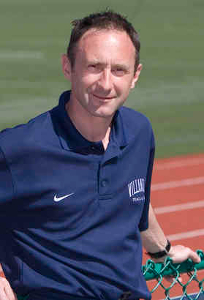
Marcus O’Sullivan, Irish middle distance runner, is born in Cork, County Cork, on December 22, 1961. Although he does not plan to enroll at any of Ireland’s universities, his running encourages him to go to Villanova University. After four years of education at Villanova, he graduates with a degree in accounting and later attains an MBA and a CPA.

O’Sullivan quickly becomes a world class runner and takes part in four summer Olympic Games. He wins three gold medals at the IAAF World Indoor Championships over 1500m in Indianapolis (1987), Budapest (1989), and Toronto (1993). In his victories in 1987 and 1989, he sets championship records. He is third all-time in total sub-4 minute miles with 101, trailing Steve Scott (137) and John Walker (127).

At the 1985 European Athletics Indoor Championships, O’Sullivan wins a silver medal in the 1500m. He finishes 4th in the 1991 IAAF World Indoor Championships in Seville, Spain. He qualifies for Ireland for Olympic Games in 1984, 1988, 1992, and 1996, at both 800 metres and 1500 metres. He reaches the 1500 metre finals at the 1988 Summer Olympics in Seoul, South Korea.

O’Sullivan sets an indoor 1500 metres world record of 3:35.4 on February 10, 1989, and is generally regarded as a better competitor running indoors. This is evidenced by the fact that he wins the prestigious Wanamaker Mile in Madison Square Garden‘s Millrose Games six times (1986, 1988, 1989, 1990, 1992, and 1996).

O’Sullivan’s personal best for the mile, which is set indoors in 1988, is 3:50.94. His personal best for the 1500 metres, which is set outdoors in 1996, is 3:33.61.

O’Sullivan, along with Irish runners Ray Flynn, Eamonn Coghlan, and Frank O’Mara (who ran collegiately at the University of Arkansas) establish the still standing world record in the 4 x 1 mile relay, when they combine in Dublin on August 17, 1985 to run 15:49.08.

O’Sullivan now runs the Running Works cross country summer camp in Canadensis, Pennsylvania, along with Cricket Batz, and is the head coach of Villanova cross country and track and field. He is coached by Tom Donnelly of Haverford College and advises Bob Kennedy in the later years before Kennedy’s retirement.

In addition to his ties to American record holder Bob Kennedy, O’Sullivan has coached elite professional runners such as Canadian indoor world silver medalist Carmen Douma-Hussar and New Zealander Adrian Blincoe.


Leave a comment

The Navigation Act 1651

The Navigation Act 1651 is passed on October 9, 1651, by the Rump Parliament led by Oliver Cromwell. It authorises the Commonwealth of England to regulate trade within the colonies. It reinforces a long-standing principle of government policy that English trade should be carried in English vessels. The Act is a reaction to the failure of the English diplomatic mission led by Oliver St. John and Walter Strickland to The Hague seeking a political union of the Commonwealth with the Republic of the Seven United Netherlands, after the States of Holland had made some cautious overtures to Cromwell to counter the monarchical aspirations of stadtholder William II, Prince of Orange.

The stadtholder dies suddenly, however, and the States are now embarrassed by Cromwell taking the idea too seriously. The English propose the joint conquest of all remaining Spanish and Portuguese possessions. England would take America and the Dutch would take Africa and Asia. But the Dutch have just ended their war with Spain and already taken over most Portuguese colonies in Asia, so they see little advantage in this grandiose scheme and propose a free trade agreement as an alternative to a full political union. This again is unacceptable to the British, who would be unable to compete on such a level playing field, and is seen by them as a deliberate affront.

The Act bans foreign ships from transporting goods from outside Europe to England or its colonies, and bans third-party countries’ ships from transporting goods from a country elsewhere in Europe to England. These rules specifically target the Dutch, who control much of Europe’s international trade and even much of England’s coastal shipping. It excludes the Dutch from essentially all trade with England, as the Dutch economy is competitive with, not complementary to the English, and the two countries therefore exchange few commodities. This Anglo-Dutch trade, however, constitutes only a small fraction of total Dutch trade flows.

The Act is often mentioned as a major cause of the First Anglo-Dutch War, though it is only part of a larger British policy to engage in war after the negotiations have failed. The English naval victories in 1653 (the Battle of Portland, the Battle of the Gabbard and the Battle of Scheveningen) show the supremacy of the Commonwealth navy in home waters. However, farther afield the Dutch predominate and are able to close down English commerce in the Baltic and the Mediterranean. Both countries hold each other in a stifling embrace.

The Treaty of Westminster (1654) ends the impasse. The Dutch fail to have the Act repealed or amended, but it seems to have had relatively little influence on their trade. The Act offers England only limited solace. It cannot limit the deterioration of England’s overseas trading position, except in the cases where England herself is the principal consumer, such as the Canary Islands wine trade and the trade in Puglian olive oil. In the trade with the West Indies, the Dutch keep up a flourishing “smuggling” trade, thanks to the preference of English planters for Dutch import goods and the better deal the Dutch offer in the sugar trade. The Dutch colony of New Netherland offers a loophole through intercolonial trade wide enough to drive a shipload of Virginia tobacco through.

The 1651 Act, like other laws of the Commonwealth period, is declared void on the Restoration of Charles II of England, having been passed by “usurping powers.” Parliament therefore passes new legislation. This is generally referred to as the “Navigation Acts,” and, with some amendments, remains in force for nearly two centuries.


Leave a comment

Birth of Ronnie Drew, Singer & Folk Musician

Joseph Ronald “Ronnie” Drew, singer, folk musician and actor who achieves international fame during a fifty-year career recording with The Dubliners, is born in Dún Laoghaire, County Dublin, on September 16, 1934. He is most recognised for his lead vocals on the single “Seven Drunken Nights” and “The Irish Rover” both charting in the U.K. top 10. He is recognisable for his long beard and his voice, which is once described by Nathan Joseph as being “like the sound of coal being crushed under a door.”

Drew is educated at CBS Eblana. Despite his aversion to education, he is considered the most intelligent in his class by schoolfriend and future Irish film censor, Sheamus Smith. Drew also sings as a boy soprano before his voice breaks.

In the 1950s, Drew moves to Spain to teach English and learn Spanish and flamenco guitar. His interest in folk music begins at the age of nineteen. When he returns to Ireland, he performs in the Gate Theatre with John Molloy and soon goes into the music business full-time, after holding a number of short-term jobs.

In 1962, he founds the Ronnie Drew Group with Luke Kelly, Barney McKenna and Ciarán Bourke. They soon change their name to The Dubliners, with John Sheahan joining shortly afterwards to form the definitive line-up and quickly become one of the best-known Irish folk groups. They play at first in O’Donoghue’s Pub in Merrion Row, Dublin where they are often accompanied by Mary Jordan on the spoons and vocalist Ann Mulqueen, a friend of McKenna’s. Mary Jordan’s mother, Peggy Jordan, introduces them to the Abbey Tavern in Howth, which becomes a regular Monday night venue for the emerging group. They also play across the road in the Royal Hotel, at all-night parties in Peggy’s large house in Kenilworth Square in Rathgar, and in John Molloy’s flat at Ely Place.

Drew leaves the Dubliners in 1974, goes to Norway in 1978 and records two songs with the Norwegian group Bergeners. He rejoins The Dubliners in 1979 and leaves for good in 1995, though he does reunite with the group in 2002 for a 40th anniversary celebration. He makes several television appearances with the group between 2002 and 2005.

From 1995 onwards, Drew pursues a solo career. He records with many artists, including Christy Moore, The Pogues, Antonio Breschi, Dropkick Murphys, Eleanor Shanley and others. He does a number of “one-man shows” consisting of stories about people such as Brendan Behan, Patrick Kavanagh and Seán O’Casey, as well as Drew singing their songs.

He fronts a campaign to encourage the use of Dublin’s light-rail infrastructure and, before that, the “My Dublin” ads for radio stations 98FM and FM104. He narrates a retelling of the great Irish Myths and Legends over a six CD set in 2006. He also narrates the stories of Oscar Wilde in his distinctive voice for a series released on CD by the News of the World newspaper. Both were re-released as CD box sets in 2010.

On August 22, 2006, Drew is honoured in a ceremony where his handprints are added to the “Walk of Fame” outside Dublin‘s Gaiety Theatre.

In September 2006, Drew is reported to be in ill-health after being admitted to St. Vincent’s Hospital, Dublin, to undergo tests for suspected throat cancer. On October 25, 2007, Drew, now bald and beardless, appears on Ryan Confidential on RTÉ 1 to give an interview about his role in The Dubliners, his life since leaving the band and being diagnosed with throat cancer. Later in 2007, he appears on The Late Late Show, where he speaks about the death of his wife and his ongoing treatment for cancer.

Ronnie Drew dies in St. Vincent’s Hospital, Dublin, on August 16, 2008, following his long illness. He is buried three days later in Redford Cemetery in Greystones.


Leave a comment

Death of Novelist & Playwright Kate O’Brien

Kathleen Mary Louise “Kate” O’Brien, novelist and playwright, dies in Canterbury, England, on August 13, 1974.

O’Brien is born in Limerick, County Limerick on December 3, 1897. Following the death of her mother when she is five years old, she becomes a boarder at Laurel Hill Convent. She graduates in English and French from the newly established University College Dublin, and she then moves to London, where she works as a teacher for a year.

In 1922–1923, O’Brien works as a governess in the Basque Country, in the north of Spain, where she begins to write fiction. Upon her return to England, she works at the Manchester Guardian. After the success of her play Distinguished Villa in 1926, she takes to full-time writing and is awarded both the 1931 James Tait Black Memorial Prize and the Hawthornden Prize for her debut novel Without My Cloak. O’Brien is best known for her 1934 novel The Ante-Room, her 1941 novel The Land of Spices, and the 1946 novel That Lady.

Many of O’Brien’s books deal with issues of female agency and sexuality in ways that are new and radical at the time. Her 1936 novel, Mary Lavelle, is banned in Ireland and Spain, while The Land of Spices is banned in Ireland upon publication. In addition to novels, she writes plays, film scripts, short stories, essays, copious journalism, two biographical studies, and two very personal travelogues. Throughout her life, she feels a particular affinity with Spain. While her experiences in the Basque Country inspire Mary Lavelle, she also writes a life of the Spanish mystic Teresa of Avila, and she uses the relationship between the Spanish king Philip II and Maria de Mendoza to write the anti-fascist novel That Lady.

O’Brien writes a political travelogue, Farewell Spain, to gather support for the leftist cause in the Spanish Civil War, and it has been argued that she is close to anarchism in the 1930s. A feminist, her novels promote gender equality and are mostly protagonised by young women yearning for independence. Several of her books include positive gay/lesbian characters. Her determination to encourage a greater understanding of sexual diversity makes her a pioneer in queer literary representation. She is very critical of conservatism in Ireland, and by spearheading a challenge to the Irish Censorship Act, she helps bring to an end the cultural restrictions of the 1930s and 40s in the country.

Kate O’Brien lives much of her life in England and died in Faversham, near Canterbury, on August 13, 1974.


Leave a comment

Richard Pigott Exposed as Forger of Phoenix Park Letters

richard-pigott

Richard Pigott, an Irish journalist, is exposed as the forger of The Times Phoenix Park letters on February 10, 1889.

Pigott is born in 1835 in Ratoath, County Meath. As a young man he supports Irish nationalism and works for The Nation and The Tablet before acting as manager of The Irishman, a newspaper founded by Denis Holland. James O’Connor later claims Pigott embezzled funds from the paper and covered his tracks by not keeping written records. Pigott also works for the Irish National Land League, departing in 1883 after accusing its treasurer, Mr. Fagan, of being unable to account for £100,000 of its funds, and for keeping inadequate records. Nothing is done about his accusation, which is publicised in the newspapers, and he turns against the League, which is allied to several Irish nationalist groups including the Irish Parliamentary Party led by Charles Stewart Parnell.

In 1879 Pigott is proprietor of three newspapers, which he soon sells to the Irish Land League, of which Charles Stewart Parnell is president. Hitherto a violent Nationalist, from 1884 Pigott begins to vilify his former associates and to sell information to their political opponents. In an effort to destroy Parnell’s career, Pigott produces fake letters, which purports that Parnell had supported one of the Phoenix Park murders.

The Times purchases Pigott’s forgeries for £1,780 and publishes the most damning letter on April 18, 1887. Parnell immediately denounces it as “a villainous and barefaced forgery.” In February 1889, the Parnell Commission vindicates him by proving that the letters are forgeries. They include misspellings which Pigott has written elsewhere. A libel action instituted by Parnell also vindicates him and his parliamentary career survives the Pigott accusations.

The Commission eventually produces 37 volumes in evidence, covering not just the forgeries but also the surrounding violence that follows from the Plan of Campaign.

After admitting his forgeries to Henry Labouchère, Pigott flees to Spain, and shoots himself in a Madrid hotel room. Parnell then sues The Times for libel, and the newspaper pays him £5,000 in an out-of-court settlement, as well as considerably more in legal fees. When Parnell next enters the House of Commons, he receives a hero’s reception from his fellow Members of Parliament.

(Pictured: Pigott as caricatured by Spy (Leslie Ward) in Vanity Fair, March 1889)


Leave a comment

Birth of Kate O’Brien, Novelist and Playwright

kate-obrien

Kathleen Mary Louise “Kate” O’Brien, novelist and playwright, is born in Limerick, County Limerick, on December 3, 1897. She becomes best known for her 1934 novel The Ante-Room, her 1941 novel The Land of Spices, and the 1946 novel That Lady.

Following the death of her mother when she is five, O’Brien becomes a boarder at Laurel Hill Convent. She graduates in English and French from the newly established University College Dublin, and then moves to London, where she works as a teacher for a year.

In 1922–23, she works as a governess in the Basque Country, in the north of Spain, where she begins to write fiction. Upon her return to England, O’Brien works at the Manchester Guardian. After the success of her play Distinguished Villa in 1926, she takes to full-time writing and is awarded both the 1931 James Tait Black Memorial Prize and the Hawthornden Prize for her debut novel Without My Cloak.

Many of her books deal with issues of female agency and sexuality in ways that are new and radical at the time. Her 1936 novel, Mary Lavelle, is banned in Ireland and Spain, while The Land of Spices is banned in Ireland upon publication. In addition to novels, she writes plays, film scripts, short stories, essays, copious journalism, two biographical studies, and two very personal travelogues.

Throughout her life, O’Brien feels a particular affinity with Spain. While her experiences in the Basque Country inspire Mary Lavelle, she also writes a life of the Spanish mystic Teresa of Ávila, and she uses the relationship between the Spanish king Philip II and Maria de Mendoza to write the anti-fascist novel That Lady.

O’Brien writes a political travelogue, Farewell Spain, to gather support for the leftist cause in the Spanish Civil War, and it is believed that she is close to anarchism in the 1930s. A feminist, her novels promote gender equality and are mostly protagonised by young women yearning for independence. With several of her books including positive gay/lesbian characters, O’Brien’s determination to encourage a greater understanding of sexual diversity makes her a pioneer in gay literary representation. She is very critical of conservatism in Ireland, and by spearheading a challenge to the Irish Censorship Act, she helps bring to an end the cultural restrictions of the 1930s and 1940s in the country. She lives much of her life in England and died in Faversham, near Canterbury, on August 13, 1974.

The Glucksman Library at the University of Limerick holds an important collection of O’Brien’s writings. The Limerick Literary Festival in honour of Kate O’Brien, formerly the Kate O’Brien Weekend, takes place in Limerick every year, attracting academic and non-academic audiences.


6 Comments

The Battle of Moira

battle-of-moira

The Battle of Moira, known archaically as the Battle of Magh Rath, is fought on June 24, 637, near the Woods of Killultagh, just outside the village of Moira in what becomes County Down. The battle pits the Gaelic High King of Ireland Domnall II against his foster son King Congal of Ulster, supported by his ally Domnall the Freckled (Domnall Brecc) of Dál Riata.

The battle is allegedly the largest battle ever fought on the island of Ireland, and results in the death of Congal and the retreat of Domnall Brecc. The battle is caused as a result of the invading Gaels spreading out from Galway Bay. The Gaels have fled France and Spain to escape the Roman invasion of those areas. The Gaels are later to be known as Irish but are not native to the island. The native people of Ulster have been pushed into an area the size of two counties in what is now Antrim and Down.

Congal first establishes his power base in Dál nAraidi, where he becomes King before being recognised as King of Ulster in 627. His ambitions soon come into conflict with Domnall II, who becomes High King of Ireland in 628. Ironically, Domnall II rises to such a position because Congal has defeated and killed the previous High King, Suibne Menn, in a previous battle.

Domnall continues to press the rivalry with Congal very quickly. In 629 the two kings engage each other at the Battle of Dún Ceithirn in what is now County Londonderry. On that occasion Congal is defeated and Domnall is left unchallenged as the High King.

Throughout the 630s, Domnall continues to wage war on his rivals in the Uí Néill clan. In 637, however, Congal once again rises to challenge the Ard Rí, and enlists the help of Dál Riata to do so. The two forces meet just east of Lough Neagh.

Little is known about the actual battle itself. The armies of both Domnall II and Congal are primarily made up of warriors native to Ireland. However, Domnall I of Dál Riata brings a more varied force to the fight. His army included Scots, Picts, Anglo-Saxons, and Britons (Welshmen). At least one side has a substantial cavalry force.

There is reason to believe that the battle might have lasted a week, at the end of which the defeated force flees towards the woods of Killultagh. The forces of Ulster and Dál Riata are defeated, with Domnall of Dál Riata forced to flee north to his kingdom’s holdings. Congall is killed in the course of the battle.

The scale of the battle is confirmed in the 19th century when the railway line in Moira is being constructed. Thousands of bodies of men and horses are excavated. When one considers that the survivors probably numbered quite considerably more, then the reputation of the scale of the battle becomes obvious.


Leave a comment

Pope Gregory XIII Commissions the Gregorian Calendar

pope-gregory-xiii

Pope Gregory XIII commissions the new Gregorian calendar on February 24, 1582, replacing the Julian calendar introduced by Julius Caesar in 45BCE.

The reason for the reform is that the average length of the year in the Julian calendar is too long. It treats each year as 365 days, 6 hours in length, whereas calculations show that the actual mean length of a year is 365 days, 5 hours, and 49 minutes. As a result, the date of the actual vernal equinox, over the course of 13 centuries, has slowly slipped to March 10, while the calculation of the date of Easter still follows the traditional date of March 21.

These calculations are verified by the observations of mathematician and astronomer Christopher Clavius, and the new calendar is instituted when Gregory decrees on February 24, 1582, that the day after Thursday, October 4, 1582 will not be Friday, October 5, but rather Friday, October 15, 1582. The new calendar duly replaces the Julian calendar and has since come into universal use. Because of Gregory’s involvement, the reformed Julian calendar comes to be known as the Gregorian calendar.

The switchover is bitterly opposed by much of the populace, who fear it is an attempt by landlords to cheat them out of a week and a half of rent. However, the Catholic countries of Spain, Portugal, Poland, and Italy comply almost immediately. France, some states of the Dutch Republic, and various Catholic states in Germany and Switzerland follow suit within a year or two, and Hungary follows in 1587.

More than a century passes before Protestant Europe accepts the new calendar. Denmark, the remaining states of the Dutch Republic, and the Protestant states of the Holy Roman Empire and Switzerland adopt the Gregorian calendar in 1700–1701. Ireland and Great Britain, along with its American colonies, reform in 1752, where Wednesday, September 2, 1752 is immediately followed by Thursday, September 14, 1752. They are joined by the last Protestant holdout, Sweden, on March 1, 1753.

The Gregorian calendar is not accepted in eastern Christendom for several hundred years, and then only as the civil calendar. The Gregorian Calendar is instituted in Russia by the Bolsheviks in 1917. Romania accepts it in 1919 and is followed by Turkey in 1923. The last Orthodox country to accept the calendar is Greece, also in 1923.