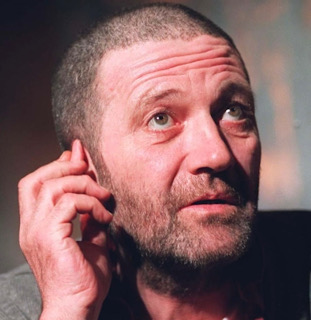
O’Connor releases four solo albums and his third one, titled No Place Like Home, is named by The Irish Times as Number 1 Traditional/Folk album of the year in 2004. After the sudden death of banjo player Barney McKenna on April 5, 2012, he joins The Dubliners to complete their planned tour, until the final shows at Vicar Street in Dublin, on December 28-30. McKenna himself says about Gerry O’Connor: “He’s my best pupil ever.” Together with Eamonn Campbell, Patsy Watchorn and Seán Cannon, O’Connor keeps touring in 2013 as The Dublin Legends.
O’Connor is one of four musicians brought together by blues rock singer/guitar player Joe Bonamassa to perform on a variety of instruments in an acoustic concert at the Vienna State Opera on July 3, 2012. None of the five had ever worked together nor even met until they arrive in Vienna, where three days later they put on a live performance. The event is released on March 12, 2013, on CD and DVD/Blu-Ray, titled An Acoustic Evening At The Vienna Opera House, and in 2014 is broadcast as a PBS special.
O’Connor mainly plays CGDA tuned tenor banjo, instead of the usual Irish tuning GDAE. He plays a David Boyle banjo on almost every tour since 1996, but usually records with an Epiphone Recording A banjo.
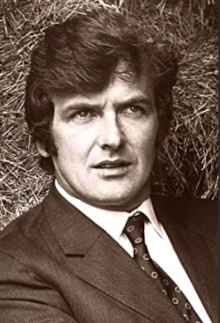
McCann’s career includes parts in many plays from the Irish literary canon, including Tarry Flynn, The Shaughran, and the Gate Theatre‘s highly acclaimed production of Seán O’Casey‘s classic Juno and the Paycock in the 1980s (McCann plays the “Paycock” (Captain Boyle) opposite Geraldine Plunkett as Juno and John Kavanagh as Joxer Daly) as well as a subsequent production of O’Casey’s The Plough and the Stars.
McCann develops a particularly fruitful relationship with the playwright Brian Friel. He plays the role of Gar O’Donnell, the public figure, in a film adaptation of Philadelphia, Here I Come! in 1970 and, despite popular belief, he never plays either public or private Gar on stage. He gives a landmark performance as Frank Hardy, the title character, in Faith Healer in 1980 (a role he reprised in 1994), continuing his relationship with Friel through productions of Translations (1988) and Wonderful Tennessee (1993).
Friel says that McCann’s work “contains extraordinary characteristics that go beyond acting … it is deeply spiritual.” Perhaps McCann’s most renowned role is as Thomas Dunne in Sebastian Barry‘s The Steward of Christendom. He wins the London Critics’ Circle Theatre Award (Drama Theatre) as best actor for this role in 1995. He reprises this role in a 1996 production at the Gate Theatre, Dublin and, following a twelve-week run at the Brooklyn Academy of Music in 1997, his “performance of unarguable greatness” (The New York Observer) had Newsweekhailing him as “a world-class star,” and The New York Times referring to this “astonishing Irish actor…widely regarded as the finest of them all.”
On the London stage, McCann plays in Prayer for My Daughter opposite Antony Sher (1978), and is Jean to Dame Helen Mirren‘s Julie in Miss Julie (1971). This is filmed for the BBC, and he much later plays Judge Brack with Fiona Shaw in the title role of Henrik Ibsen‘s Hedda Gabler, a production filmed for the BBC in 1993.
His best-known film role is as Gabriel Conroy in The Dead (1987), starring opposite Anjelica Huston and directed by her father, John Huston. Significant late roles include Bernardo Bertolucci‘s Stealing Beauty (1996) and in John Turturro‘s Illuminata (released in 1999, after McCann’s death).
McCann’s television work includes the featured role of Phineas Finn in the BBC’s serialised adaptation of Anthony Trollope‘s The Pallisers, Willie Burke in RTÉ‘s Prix Italia drama entry The Burke Enigma (1979) and Barney Mulhall in RTÉ’s Strumpet City (1980), as well as many one-off parts.
McCann plays in Bob Quinn‘s Irish language film Poitín (1979) and in Quinn’s somewhat experimental The Bishop’s Story (1995). After hearing that McCann is ill, Tom Collins asks Quinn to make a TV documentary about McCann for RTÉ called It Must Be Done Right (1999), after a remark by McCann on his craft. The film airs on RTÉ a week before McCann’s death.
In his private life, McCann is a quiet and unassuming man, but he battles both depression and alcoholism all his life. He has many friends in Irish theatre and artistic circles but also across all strata of life. His hobbies include sketching and he is passionate about horse racing.
Remembering McCann on the 25th anniversary of his death, Gerald Smyth writes, “In the melancholy of that life-worn voice could be heard the cadences of a lyric heart.”
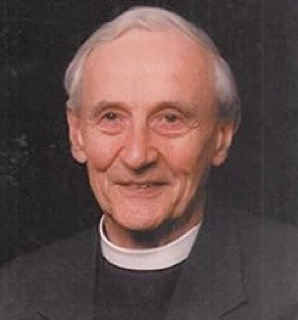
He is appointed Dean of Cork in 1952. Consecrated a bishop, he serves as Bishop of Cork, Cloyne and Ross, between 1952 and 1956. At forty-two, he is the youngest Church of Ireland clergyman appointed to a bishopric since John Gregg in 1915. He serves as Archbishop of Dublin from 1956 to 1969. During this time, he maintains a courteous relationship with John Charles McQuaid, his Roman Catholic counterpart as Archbishop of Dublin. From 1969 to 1980, he serves as Archbishop of Armagh.
Alongside CardinalWilliam Conway, Simms chairs the first official ecumenical meeting between the leaders of Ireland’s Protestant Churches and the Catholic Church in Ballymascanlon Hotel, Dundalk, County Louth, on September 26, 1973, an important meeting amidst the increasing violence in Northern Ireland. The meeting is protested by Ian Paisley.
Simms is a scholar, and publishes research on topics including the history of the Church of Ireland, and theological reflections on key texts including the Book of Kells, Saint Patrick’s Breastplate, and the Sarum Primer. He is also a fluent speaker of the Irish language.
Simms is also an accomplished journalist, and the author of many newspaper obituaries. His weekly Thinking Aloud column in The Irish Times is a popular reflection, and runs continuously for thirty-eight years. He also works on the research, preparation, and even performs the presentation, of a number of television programmes.
In 1978, Simms is made an honorary fellow of Trinity College Dublin.
Simms is the uncle of mathematician David J. Simms. In 1941, he marries Mercy Felicia Gwynn. They have five children. He dies in Dublin on November 15, 1991. He is interred with his wife in the cemetery attached to St. Maelruain’s Church, Tallaght, County Dublin.
In 2004, Bacik’s book Kicking and Screaming: Dragging Ireland into the 21st Century, is published by The O’Brien Press.
In 2007, she contested the Seanad Éireann elections for the third time in the Dublin University constituency, and is elected to the third seat, behind sitting Independent senators Shane Ross and David Norris. She initially sits as an Independent senator.
In February 2009, Bacik is included in an ‘All Star Women’s Cabinet’ in the Irish Independent. In March 2009, she confirmed claims made on a TV programme that she had taken two voluntary pay cuts of 10% in addition to a pension levy. In June 2009, she is the Labour Party candidate for the Dublin Central by-election. She comes in third with 17% of the first preference votes. She joins the Labour Party group in the Seanad in September 2009, and becomes Labour Party Seanad spokesperson for both Justice and Arts, Sports and Tourism. In November 2009, a feature by Mary Kenny of the Irish Independent includes Bacik in a list of women who “well deserved their iconic status.”
In May 2010, Bacik seeks Labour’s nomination to contest the next election in the Dublin South-East constituency but is not selected. In December 2010, she is added to the ticket as the second candidate beside Labour Party leader, Eamon Gilmore, in the Dún Laoghaire constituency for the 2011 Irish general election. Gilmore tops the poll, with Bacik receiving 10.1% of first preference votes but she is not elected. She is re-elected to Seanad Éireann at the subsequent election, after which she becomes Deputy Leader of the Seanad. She holds her seat in the Seanad in 2016 and in 2020.
On April 27, 2021, after the resignation of Eoghan Murphy from his Dáil seat in Dublin Bay South, Bacik announces her intention to stand in the upcoming by-election. She campaigns with an emphasis on providing affordable housing, as well as improving healthcare and childcare, tackling climate change, and achieving “a true republic in which church and state are separated.” During the campaign, she describes herself as having “more bills passed into law than any other Senator, on issues such as workers’ conditions, women’s health rights, and LGBT equality”. She also campaigns on increasing the number of sports amenities for children in the area, calling for unused Defence Forces football fields at the Cathal Brugha Barracks to be freed up for local sports, with the suggestion rejected by Fine GaelMinister for DefenceSimon Coveney. Fine Gael complains to RTÉ after she features prominently on National Treasures, a prime-time TV show broadcast by RTÉ during the campaign. RTÉ has strict rules about fair coverage of candidates during campaigns. The national broadcaster blames an “inadvertent error” for the programme being shown three days before the election. A steering group within the broadcaster tells Fine Gael that “the broadcast should not have happened.” Consequentially, RTÉ has to show a special report on the by-election on Prime Time to “ensure fair coverage is given to all candidates.”
Bacik wins this election, receiving 8,131 (30.2%) first-preference votes. It is her fourth attempt as a Labour candidate, and she expresses her delight at the success at the count centre in the RDS. Following the election, she is described by The Irish Times as “a formidable activist and public intellectual” and that Fine Gael’s perceived antipathy towards their former TD, Kate O’Connell, may have contributed to the surge in support to Bacik from women voters. The newspaper claims that her election is “a long overdue morale boost” for Labour.
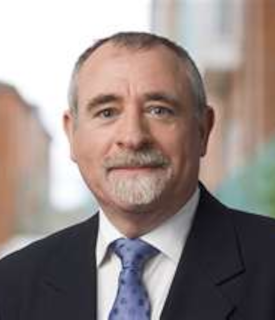
In March 2022, Bacik confirms she will run to succeed Alan Kelly as Labour Party leader. Kelly states that he believes that Bacik will succeed him. On March 24, 2022, she is confirmed as Labour Party leader unopposed at a party conference in Dublin. In a speech, she says she will focus on the rising cost of living and the serious and global problems facing the country. She pledges that Labour will fight the next election as a “standalone party” rather than joining any left-wing alliance.
O’Reilly is one of six children of James P. O’Reilly, shopkeeper and musician, and Catherine O’Reilly (née Donegan). The family moves to Dublin when he is nine years old. He is educated at the Christian Brothers school in James’s Street, where he excels at Gaelic football and develops an interest in drama and music. Toward the end of his schooldays, he begins to participate in athletics, particularly the high jump, and is coached by Jack Sweeney, a leading athletics coach.
Always a man of many talents and interests, after leaving school O’Reilly combines working in the insurance business with an athletics career with Donore Harriers and evening drama classes. He wins several Irish titles, including the high jump, javelin, and decathlon, and sets a national record in the high jump. In 1954 he wins the British AAA Championships high jump title, beating the Commonwealth champion into second place, and setting a championship record of 6 ft. 5 in. (1.96 m). As a result, he secures a United States athletics scholarship to the University of Michigan, Ann Arbor, where he takes a degree in liberal arts, majoring in speech and drama. While at Michigan he improves his Irish record to 6 ft. 7 in. (2.007 m). His athletic career, however, is dogged with bad luck. He is selected to compete in the high jump at the European Athletics Championships in Bern, Switzerland, in 1954 but fractures an ankle in practice and fails to advance beyond the qualifying round. Although he competes at international level for ten years (1952–62), he is unlucky to never take part in the Olympic Games. A victim of sporting politics in 1952, as an NCAA athlete he is not entitled to compete. He is selected for the 1956 Summer Olympics in Melbourne but is unable to attend when, at the last minute, his club cannot provide the finance for him to attend. Earlier that year he wins the Big Ten Conference high jump title.
On leaving Michigan O’Reilly moves to New York City, where he embarks on an acting career with the Irish Players, but he returns to Dublin in 1959, where, after brief spells working as a teacher and for an advertising agency, he applies to Ireland’s new television station for a position. He is looking for an acting job but ends up being offered a position as a presenter, joining Teilifís Éireann in 1961 as an announcer/interviewer. His relaxed and unobtrusive style appeals to viewers and his light entertainment show, The Life of O’Reilly, is the most popular programme on Irish television in the day, eclipsing even a fledgling The Late Late Show. It is as a sports presenter and commentator, however, that O’Reilly is primarily remembered, as he becomes the face of sport on RTÉ Television for many years. He attends five Olympic Games as a broadcaster, from Mexico in 1968 to Los Angeles in 1984, commentating on athletics and gymnastics. The first presenter of RTÉ’s flagship Saturday afternoon sports programme Sports Stadium in 1984, he continues to present it over its fourteen-year life, co-presenting the final programme in December 1997. He also is the regular presenter of RTÉ’s Wimbledon Championships tennis coverage for many years, the sports results on news broadcasts on TV and radio, and Sunday Sport on RTÉ Radio, as well as commentating on individual sports such as ice-skating.
Although sports presenting is a natural progression for an athlete with his talents, O’Reilly’s real love is the arts. He continues to act, playing the part of Detective Inspector Michael Roarke in the classic children’s film Flight of the Doves (1971) with Ron Moody and Willie Rushton. He is also an accomplished singer and songwriter, and writes and performs his own one-man show, Across the Spectrum, comprising his own poems and songs in 1992. As well as a book of poems, The Great Explosion (1977), he releases a number of albums and tops the charts with his own song, “The Ballad of Michael Collins,” in 1981. He has a great admiration for Michael Collins, and this leads to his becoming the first non-political figure to give the oration at the annual Collins commemoration at Béal na Bláth, County Cork, in 1981. He also writes the song “Let the Nations Play” (1985), inspired by the boycotts of the Olympic games of 1980 and 1984, and the song is adopted as an anthem of the international Olympic movement.
Tall and slim in build, O’Relly is affable, modest, and self-deprecating in character. His relaxed style is no mere public affectation. He often exasperates colleagues by turning up just in time for broadcasts, and his ability to ad-lib is important in a live television environment. He once describes himself as “a champion high-jumper who could enunciate properly and keep my hair neatly combed” (The Irish Times, April 7, 2001). Despite the disappointments in his sporting career, he maintains that his other interests more than compensated. In relation to the Olympics he is quoted as saying, “If you asked me whether I’d have preferred to win a medal or have written the song, I’d honestly say I would have preferred to have written the song” (Longford Leader, April 6, 2001).
O’Reilly lives in Ranelagh, Dublin, and is married twice. He meets his first wife Linda Herbst (née Kuhl) in New York in the late 1950s. His second marriage is to Johanna Lowry. He has four children. After a lengthy illness, he dies on April 1, 2001, in St. Vincent’s Hospital, Fairview, Dublin. He is buried at Mount Venus cemetery, Rathfarnham.
(From: “O’Reilly, Brendan” by Jim Shanahan, Dictionary of Irish Biography, http://www.dib.ie, October 2009)
He is elected in 1985 as a Workers’ Party member of Dublin City Council for Crumlin–Kimmage area, and is re-elected at subsequent local elections until 2011, when he is forced to resign his seat due to dual mandate. He is finally elected at the 1989 Irish general election. He joins with Workers’ Party members who form Democratic Left in 1992. He unexpectedly loses his seat at the 1992 Irish general election. Labour’s Pat Upton is unexpectedly returned on the first count, with Byrne finally losing the last seat to Fianna Fáil‘s Ben Briscoe by five votes after a marathon 10-day count.
He loses his seat again at the 1997 Irish general election. Although the Labour Party and the Democratic Left merge in 1999, he is not selected to contest the Dublin South-Central by-election which follows Pat Upton‘s death later that year. Upton’s sister Mary is elected for the Labour Party.
Byrne contests the 2002 Irish general election on the Labour Party ticket as Mary Upton’s running-mate but is unsuccessful. Along with Upton, he contests the Dublin South-Central constituency at the 2007 Irish general election advocating a Labour Party/Fine Gael government but misses the final seat by 69 votes. He is nominated by the Labour Party to contest the Seanad election in the Labour panel but is not elected. In 2009, he is re-elected to Dublin City Council. At the 2011 Irish general election he is re-elected to the Dáil, after a fourteen-year absence.
In January 2015, Byrne becomes involved in an altercation with Sinn Féin TD, Jonathan O’Brien. During ministers’ questions, O’Brien criticises TánaisteJoan Burton over homelessness in Ireland, citing the experiences of his brother, a recovering heroin addict. Byrne asks of O’Brien, “Why doesn’t his good family give him a home?” This infuriates O’Brien. The Irish TimesjournalistMiriam Lord criticizes Byrne, remarking that “You sense the relief rising in the chamber. They don’t like it when the real world intrudes. These sort of things don’t really happen to TDs.”
Blackham is born in London, England, on December 16, 1891. His father, William George Blackham, is an Ulster Protestant from Newry, while his mother is an Englishwoman named Evison Elizabeth Saunders. An uncle is Robert J. Blackham who is the Surgeon-General to the British Army in Ireland. The family are evangelical Protestants, against which he rebels. Having been brought up to take the Bible literally, he suffers a religious crisis upon the realisation his teachers at school do not. He finds the transition to adulthood difficult, particularly due to the early death of his father.
For a time, Blackham moves in socialist circles, under the influence of Ulster socialist Robert Wilson Lynd. However, upon the discovery that his father had been a Protestant who had been in favour of Irish home rule and also had some republican sympathies, he turns toward Irish nationalism.
Blackham becomes involved in the Gaelic League while in London. he Gaelicizes his name to Aodh Sandrach de Blácam or Hugh de Blácam, despite his non-Gaelic ethnic origin. He learns the Irish language from the essayist Robert Wilson Lynd. During this time, he seeks to synthesize his urge to reclaim his sense of Irish nationality with the works and thoughts of hardline Catholic author G. K. Chesterton. It is partially because of Chesterton’s influence that he converts to Catholicism, although the conversion of Protestant Irish Nationalists to Catholicism is common throughout the early 20th century. Another influence upon his decision to convert is his desire to marry Catholic Mary McCarville of County Monaghan.
In May 1914 de Blácam returns to Ireland and begins working as a freelance journalist. He joins the Enniscorthy Echo as a journalist in 1915.
During the Irish War of Independence de Blácam writes nationalist propaganda alongside Arthur Griffith and Herbert Moore Pim. He is interned by the British in 1919. During this time period he writes two political manifestoes: Towards the Republic; a study of new Ireland’s social and political aims (1918) and What Sinn Féin Stands For (1921). The two books argue that at their root, Catholic social teaching (CST) and Bolshevism are essentially identical and that Ireland, having only experienced feudalism and capitalism because of external forces, can skip many of the phrases normally described in the Marxist Trajectory of historical development and go straight to a soviet-type society, an idea not dissimilar to the two-stage theory. He imagines this soviet-type society to be an Irish-speaking decentralised rural cooperative commonwealth. Critics of Sinn Féin frequently cite his works as proof of the infeasibility of Sinn Féin’s aims.
De Blácam opposes the Anglo-Irish Treaty and subsequently aids the Anti-Treaty Irish Republican Army (IRA) during the Irish Civil War. For this he is interned by the newly created Irish Free State in 1922. Following his release, he continues to pin his flag to the mast of Éamon de Valera and his newly formed Fianna Fáil party. He believes De Valera fully embodies his own political ideas.
During the 1920s de Blácam joins The Irish Times, which he later leaves to become editor of The Catholic Standard. For seventeen years he writes a feature in the Fianna Fáil aligned The Irish Press called “Roddy the Rover.”
It was also during the 1920s that de Blácam moves to Dublin, where he begins to move in the same circles as George Bernard Shaw, George Russell, and W. B. Yeats. He hopes all three men might one day convert to Catholicism as he did and is sorely disappointed when each do not. Upon the death of Yeats, he goes so far as to refer to Yeats’ poem as “Demonic.” He has similar hopes for Peadar O’Donnell but is similarly disappointed in his lack of interest in conversion.
In 1938 de Blácam publishes The Black North, a book which carries an introduction by de Valera. In the book he argues that Ulster Protestants are in actuality both Irish and Catholic, but they simply do not realise it. Among his arguments to support this idea are the suggestions that the presbyterian emphasis on self-government is derived from the Gaelic clan tradition, that presbyterian “kailyard” writers of rural nostalgia such as Lydia Mary Foster exemplify the naturally Irish piety and purity of her co-religionists, and that the fact that some workers commute from the Armagh borderland to work in Dundalk factories prove that the south is better off economically than the north.
It is suggested de Blácam is an influence upon de Valera’s 1943 broadcast “The Ireland That We Dreamed Of.” Politically he is highly considered about rural depopulation and is involved in a number of organisations seeking to end it. He advocates more economic autarky and cultural protectionism to combat rural depopulation and lamented urbanisation and industrialisation. He also tries to convince the Fianna Fáil executive that they should ban women from emigration as well as ban women from factories in order to force women to remain in rural Ireland. His ideas fail to impress the executive, with Seán MacEntee in particular standing in strong disagreement.
De Blácam is a member of the Fianna Fáil executive until 1947, when he defects to the upstart Irish Republican party Clann na Poblachta. For this move he is immediately fired from The Irish Press. He stands for Clann na Poblachta in the Louth constituency at the 1948 Irish general election but is not elected.
During the brief period in which Clann na Poblachta is in government, de Blácam serves as an official spokesman for the Department of Health and as a speechwriter to Noël Browne, the embattled Minister for Health.
De Blácam dies while working in the Custom House on January 16, 1951. His funeral is attended by many dignitaries including TaoiseachJohn A. Costello and former Taoiseach Éamon de Valera. He is buried in New Mellifont Abbey, County Louth.
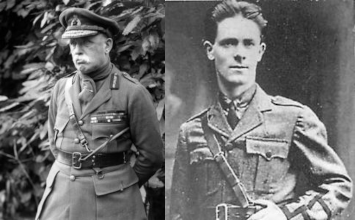
On a cold December day in 1919, a group of young IRA volunteers wait at a public house near the Ashtown gate of Dublin’s Phoenix Park. Some are from Dublin, members of Michael Collins’ recently created assassination unit, the Squad. Others are from farther afield, like Dan Breen and Seán Treacy from County Tipperary and Martin Savage from County Sligo.
They are waiting for Sir John French, Lord Lieutenant of Ireland, the most senior British official in the land. He is returning from a visit to the west of Ireland and has alighted at Ashtown train station before returning by car to his official residence, the Viceregal Lodge, in the Phoenix Park.
The IRA men have a signaler in a tree and when French’s car approaches, they attempt to block the road with a farm cart. However, they are too late to block the Lord Lieutenant’s car which sweeps through the impromptu barricade. Shots are fired and one policeman is wounded but French himself emerges unscathed.
A second car, which the IRA believes to contain French, bears the brunt of the volunteers’ revolver fire and grenades. Though the car is badly damaged, there are no casualties.
The third car in the convoy contains French’s military escort and the soldiers inside the vehicle return fire, killing one of the attackers, Martin Savage. Some of the volunteers attempt to recover his body but the Crown forces’ fire is too heavy. Savage’s body is left on the scene as the IRA party flees on bicycles back to the city.
The Irish Times, for one, expresses outrage at the attack, “the attempted assassination of the greatest of Irishmen” which it says will “shock Ireland” and force Sinn Féin, victorious in the election of the previous year, to reflect on whether it wants to be associated with “outrage and assassination.” “There will now be many throughout the world ready to attribute the character of a murder society to the whole new Irish movement.”
Many in Ireland are even less sympathetic to hear of the escape of the Lord Lieutenant. The Irish Catholicbishops issue a statement the next day condemning not the attack but British rule in Ireland, which they characterise as “rule of the sword, utterly unsuited to a civilised nation.”
The attack is, in hindsight, a turning point, moving the standoff over Irish independence toward all out guerrilla warfare, but also, in a way, symbolising the eclipse of French and of his vision for what the country should be.
Sir John French’s health declines in 1920 and though he holds the position of Lord Lieutenant until April 1921, his central role in Irish affairs is eclipsed by new Chief Secretary for Ireland Sir Hamar Greenwood. He wants to retire to his estates in Ireland in 1922 but is told it is simply too dangerous for him. During the Irish Civil War (1922-23), his country house at Drumdoe, County Roscommon, is raided by armed men who carry off much of the furniture.
(From: “Today in Irish History: 19 December 1919, The Attempted Assassination of Sir John French” by John Dorney, The Irish Story, http://www.theirishstory.com, December 18,2019 | Pictured: L to R, Sir John French and Martin Savage)
Pim is born in Dublin on September 21, 1909, to a Quaker father and English mother. She is a twin, but her brother dies. She is sent to the French School in Bray, County Wicklow, before being sent to Lausanne, Switzerland to finishing school. She then goes on to Girton College, Cambridge to study modern languages, intending to graduate with a degree in French and Italian. Her mother’s ill health and ultimate death in 1940, causes her to return to Ireland to look after her and she remains there taking care of her father, who dies in 1958, and an older incapacitated brother, Tom.
But these are good years for Pim with time to write, and during the 1950s and early 1960s she writes no fewer than seven novels, mostly crime fiction in a lighthearted style. During this time, she is a member of Irish PEN. She is also an avid amateur horticulturalist and writes for the magazine My Garden. Her more serious undertaking is a biography of the Irish plant collector Augustine Henry, The Wood and the Trees: A Biography of Augustine Henry (Macdonald, London). Her brother Tom dies in an accident in 1964 leaving Pim with no further responsibilities. This allows her to spend significant time researching through Henry’s papers. The book is published in 1966.
When Pim has completed the biography, she focuses on philanthropy. She dedicates her time to the Friends Historical Society and is particularly interested in helping out in the traveller community. She supports a young group of children and their grandfather. They bring her considerable joy. The Royal Horticultural Society of Ireland awards her the Society’s Medal of Honour and makes her an honorary life member for her services to the study of horticulture.
In Pim’s later years increasing deafness makes socialising difficult for her, but she still keeps up with the world of books, the theatre and painting. She reads The Irish Times from cover to cover every day, and her reading includes the Bible, Marcel Proust (in French) and the stories of Roddy Doyle.
Pim’s deafness finally forces her to move into sheltered housing in Dublin where she dies on December 16, 1995.
Gregory becomes involved in republican politics, joining Sinn Féin and the Irish Republican Army (IRA) in 1964. In UCD he helps found the UCD Republican Club, despite pressure from college authorities, and becomes involved with the Dublin Housing Action Committee. Within the party he is a supporter of Wicklow Republican Seamus Costello. Costello, who is a member of Wicklow County Council, emphasises involvement in local politics and is an opponent of abstentionism. Gregory sides with the Officials in the 1970 split within Sinn Féin. Despite having a promising future within the party, he resigns in 1972 citing frustration with ideological infighting in the party. Later, Costello, who had been expelled by Official Sinn Féin, approaches him and asks him to join his new party, the Irish Republican Socialist Party. He leaves the party after Costello’s assassination in 1977. He is briefly associated with the Socialist Labour Party.
Gregory contests the 1979 local elections for Dublin City Council as a “Dublin Community Independent” candidate. At the February 1982 general election, he is elected to Dáil Éireann as an Independent TD. On his election he immediately achieves national prominence through the famous “Gregory Deal,” which he negotiates with Fianna Fáil leader Charles Haughey. In return for supporting Haughey as Taoiseach, he is guaranteed a massive cash injection for his inner-city Dublin constituency, an area beset by poverty and neglect.
Although Gregory is reviled in certain quarters for effectively holding a government to ransom, his uncompromising commitment to the poor is widely admired. Fianna Fáil loses power at the November 1982 general election, and many of the promises made in the Gregory Deal are not implemented by the incoming Fine Gael–Labour Party coalition.
Gregory is involved in the 1980s in tackling Dublin’s growing drug problem. Heroin had largely been introduced to Dublin by the Dunne criminal group, based in Crumlin, in the late 1970s. In 1982 a report reveals that 10% of 15- to 24-year-olds have used heroin at least once in the north inner city. The spread of heroin use also leads to a sharp increase in petty crime. He confronts the government’s handling of the problem as well as senior Gardaí, for what he sees as their inadequate response to the problem. He co-ordinates with the Concerned Parents Against Drugs group in 1986, who protest and highlight the activities of local drug dealers and defend the group against accusations by government Ministers Michael Noonan and Barry Desmond that it is a front for the Provisional IRA. He believes that the solution to the problem is multi-faceted and works on a number of policy level efforts across policing, service co-ordination and rehabilitation of addicts. In 1995 in an article in The Irish Times, he proposes what would later become the Criminal Assets Bureau, which is set up in 1996, catalysed by the death of journalistVeronica Guerin. His role in its development is later acknowledged by then Minister for JusticeNora Owen.
Gregory also advocates for Dublin’s street traders. After attending a sit-down protest with Sinn Féin Councillor Christy Burke, and future Labour Party TD Joe Costello on Dublin’s O’Connell Street in defence of a street trader, he, Burke and four others are arrested and charged with obstruction and threatening behaviour. He spends two weeks in Mountjoy Prison after refusing to sign a bond to keep the peace.
Gregory remains a TD from 1982 and, although he never holds a government position, remains one of the country’s most recognised Dáil deputies. He always refuses to wear a tie in the Dáil chamber stating that many of his constituents could not afford them.
Gregory dies on January 2, 2009, following a long battle with cancer. Following his death, tributes pour in from politicians from every party, recognising his contribution to Dublin’s north inner city. During his funeral, politicians from the Labour Party, Fianna Fáil and Fine Gael are told that although they speak highly of Gregory following his death, during his time in the Dáil he had been excluded by many of them and that they were not to use his funeral as a “photo opportunity.” He is buried on January 7, with the Socialist Party‘s Joe Higgins delivering the graveside oration.