seamus dubhghaill

Promoting Irish Culture and History from Little Rock, Arkansas, USA


Leave a comment

Birth of George Moore, Writer, Poet & Dramatist

george-augustus-moore

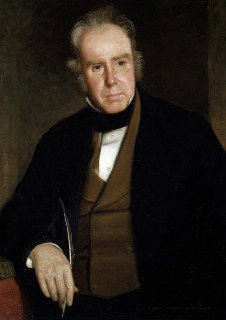
George Augustus Moore, novelist, short story writer, poet, art critic, memoirist, and dramatist, is born in Moore Hall, near Lough Carra, County Mayo on February 24, 1852. He is considered an innovator in fiction in his day.

Moore comes from a distinguished Catholic family of Irish landholders. When he is 21, he leaves Ireland for Paris to become a painter. His Reminiscences of the Impressionist Painters (1906) vividly describes the Café Nouvelle-Athènes and the circle of Impressionist painters who frequent it. He is particularly friendly with Édouard Manet, who sketches three portraits of him. Another account of the years in Paris, in which he introduces the younger generation in England to his version of fin de siècle decadence, is his first autobiography, Confessions of a Young Man (1888).

Deciding that he has no talent for painting, Moore returns to London in 1882 to write. His first novels, A Modern Lover (1883) and A Mummer’s Wife (1885), introduce a new note of French Naturalism into the English scene, and he later adopts the realistic techniques of Gustave Flaubert and Honoré de Balzac. Esther Waters (1894), his best novel, deals with the plight of a servant girl who has a baby out of wedlock. It is a story of hardship and humiliation illumined by the novelist’s compassion. It is an immediate success, and he follows it with works in a similar vein: Evelyn Innes (1898) and Sister Teresa (1901).

In 1901 Moore moves to Dublin, partly because of his loathing for the South African War and partly because of the Irish Literary Revival spearheaded by his friend, the poet William Butler Yeats. In Dublin he contributes notably to the planning of the Abbey Theatre. He also produces The Untilled Field (1903), a volume of fine short stories reminiscent of Ivan Turgenev’s writing that focuses on the drudgery of Irish rural life, and a short poetic novel, The Lake (1905). The real fruits of his life in Ireland, however, come with the trilogy Hail and Farewell (Ave, 1911; Salve, 1912; Vale, 1914). Discursive, affectionate, and satirical by turns, it reads like a sustained monologue that is both a carefully studied piece of self-revelation and an acute, though not always reliable, portrait gallery of his Irish acquaintance, which included Yeats, George William Russell, and Lady Gregory. Above all it is a perfectly modulated display of the comic spirit.

The increasing narrowness of the Irish mind, politics, and clericalism sends Moore back to England in 1911. After Hail and Farewell, he makes another literary departure. Aiming at epic effect he produces The Brook Kerith (1916), an elaborate and stylish retelling of the Gospel story that is surprisingly effective despite some dull patches. He continues his attempts to find a prose style worthy of epic theme in Héloïse and Abélard (1921). His other works include A Story-Teller’s Holiday (1918), a blend of autobiography, anecdote, Irish legend, and satire, Conversations in Ebury Street (1924), autobiography, The Pastoral Loves of Daphnis and Chloe (1924) and Ulick and Soracha (1926), an Irish legendary romance.

George Moore dies at his home at Ebury Street in the London district of Belgravia on January 21, 1933, leaving a fortune of £70,000. He is cremated in London at a service attended by Ramsay MacDonald among others. An urn containing his ashes is interred on Castle Island in Lough Carra in view of the ruins of Moore Hall, which had been burned by anti-treaty forces in 1923, during the final months of the Irish Civil War.

Leave a comment

Death of Landscape Painter T.P. Flanagan

t-p-flanagan

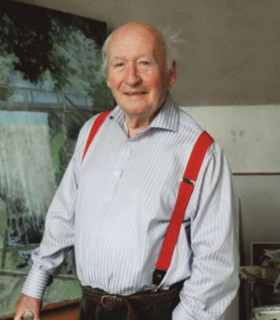
Terence Philip “T.P.” Flanagan, one of the finest landscape painters of his generation, passes away in Belfast on February 23, 2011, at the age of eighty. For more than 60 years he shapes the face of landscape painting in Northern Ireland and is known internationally for his rural scenes of his native County Fermanagh and County Sligo. With his stunning watercolours and intricate brush strokes, he is described as one of the most successful artists of his generation. Poet Seamus Heaney, who dedicates his 1969 poem Bogland to Flanagan, pays tribute saying “he was a teacher and a friend whose work held a deep personal significance.”

Flanagan is born in Enniskillen, County Fermanagh in 1929. When he is in his late teens, he learns the art of watercolour painting from the famous local portraitist and landscape artist Kathleen Bridle. Later, he paints her portrait, which now hangs in the Ulster Museum, and interviews her in a film of her life and art, which is produced shortly before her death in 1989.

After his time with Bridle, Flanagan attends Belfast College of Art from 1949-1953. The following year he joins the teaching staff at St. Mary’s College of Education, where he remains for 28 years, eventually becoming Head of the Art Department.

Flanagan spends the majority of his painting career in Ireland, but his landscapes have received wide attention and his work has been recognised both in Ireland and abroad. His first solo exhibition is held at the Council for the Encouragement of Music and the Arts (CEMA), Belfast in 1961. He also shows regularly at the Hendriks Gallery in Dublin and at the Tom Caldwell Gallery in Belfast during the 1970s and 1980s. He participates in many group exhibitions, including “Four Ulster Painters” at the Arnolfini gallery in Bristol (1965), “Two Irish Painters” (with Colin Middleton) at the Herbert Art Gallery & Museum, Coventry, (1968) and is represented in “The Gordon Lambert Collection Exhibitions” held at the Hugh Lane Gallery, Dublin (1972) and the Ulster Museum (1976). In addition, he exhibits at the Royal Hibernian Academy (RHA) in Dublin and at the Royal Ulster Academy Of Arts (RUA) in Belfast.

Abroad, Flanagan’s works are exhibited at the Armstrong Gallery, New York (1986) and the Concept Gallery, Pittsburgh. A retrospective of his painting from the period 1967-1977 is held at the Arts Council of Northern Ireland in 1977. In 1995, the Ulster Museum stages a major retrospective of his paintings (1945-1995). Other retrospectives are held at the Hugh Lane Gallery in Dublin and the Stadsmusueum, Gothenberg, Sweden. His paintings are also included in the show “A Century of Irish Painting” organized by the Hugh Lane Gallery which tours Japanese museums in 1995.

As an artist, Flanagan works in oils as well as his preferred watercolours, although by rapid application of the paint with minimal overworking, even his oils manage to retain the luminous colouring of the watercolourist. He specializes in landscape painting within his native County Fermanagh and the adjoining County Sligo, his methods being ideally suited to capturing the soft atmospheric light of Ireland’s northwest.

Flanagan is elected associate of the RUA in 1960, a full member in 1964, and President 1978-82. During his long career, he receives numerous commissions and other awards for his works, which are represented in the collections of The Arts Councils of Ireland & Northern Ireland, the Ulster Museum, the Hugh Lane Municipal Gallery, Dublin, Irish Museum of Modern Art, and the National Self-Portrait Collection, Limerick.

Flanagan dies suddenly on February 23, 2011. His funeral takes place at St. Brigid’s Church in south Belfast and is buried at St. Michaels’ Church in Enniskillen.

The auction record for a work by T.P. Flanagan is set in 2009, when his landscape painting, entitled Castlecoole From Lough Coole, is sold at Christie’s, London, for £20,000.

(From Encyclopedia of Visual Artists In Ireland, visual-arts-cork.com)


Leave a comment

Neil Jordan Receives Silver Bear for Best Director

neil-patrick-jordan

Neil Patrick Jordan, director of The Butcher Boy (1997), is awarded a Silver Bear for Best Director at the 48th Berlin International Film Festival on February 22, 1998.

Jordan is born in County Sligo on February 25, 1950. His first book, Night in Tunisia, wins a Somerset Maugham Award and the Guardian Fiction Prize in 1979. He also wins an Academy Award for Best Original Screenplay for The Crying Game (1992).

Jordan is educated at St. Paul’s College, Raheny. Later, Jordan attends University College Dublin, where he studies Irish history and English literature. He is raised a Catholic and is quite religious during the early stages of his life. Regarding his current beliefs, he states that “God is the greatest imaginary being of all time. Along with Einstein‘s General Theory of Relativity, the invention of God is probably the greatest creation of human thought.”

When John Boorman is filming Excalibur in Ireland, he recruits Jordan as a “creative associate.” A year later Boorman is executive producer on Jordan’s first feature, Angel, a tale of a musician caught up in the Troubles, starring Stephen Rea who subsequently appears in almost all of Jordan’s films to date. During the 1980s, he directs films that win him acclaim, including The Company of Wolves and Mona Lisa, both made in England. The Company of Wolves becomes a cult favorite.

As a writer/director, Jordan has a highly idiosyncratic body of work, ranging from mainstream hits like Interview with the Vampire to commercial failures like We’re No Angels to a variety of more personal, low-budget arthouse pictures. He is also the driving force behind the cable TV series The Borgias.

Unconventional sexual relationships are a recurring theme in Jordan’s work, and he often finds a sympathetic side to characters that audiences would traditionally consider deviant or downright horrifying. His film The Miracle, for instance, follows two characters who struggle to resist a strong, incestuous attraction, while The Crying Game makes complicated, likable characters out of an IRA volunteer and a transgender woman. Interview with the Vampire, like the Anne Rice book it is based on, focuses on the intense, intimate interpersonal relationship of two undead men who murder humans nightly, accompanied by an equally lusty vampire woman who is eternally trapped in the body of a little girl. While Lestat (Tom Cruise) is depicted in an attractive but villainous manner, his partner Louis (Brad Pitt) and the child vampire Claudia (Kirsten Dunst) are meant to capture the audience’s sympathy despite their predatory nature.

In addition to the unusual sexuality of Jordan’s films, he frequently returns to the Troubles of Northern Ireland. The Crying Game and Breakfast on Pluto both concern a transgender character, both concern the Troubles, and both feature frequent Jordan leading man Stephen Rea. The two films, however, are very different, with The Crying Game being a realistic thriller/romance and Breakfast on Pluto a much more episodic, stylized, darkly comic biography. Jordan also frequently tells stories about children or young people, such as The Miracle and The Butcher Boy. While his pictures are most often grounded in reality, he occasionally directs more fantastic or dreamlike films, such as The Company of Wolves, High Spirits, Interview with the Vampire, and In Dreams.

The critical success of Jordan’s early pictures leads him to Hollywood, where he directs High Spirits and We’re No Angels. Both are critical and financial disasters. He later returns home to make the more personal The Crying Game, which is nominated for six Academy Awards. Jordan wins the Academy Award for Best Original Screenplay for the film. Its unexpected success leads him back to American studio filmmaking, where he directs Interview with the Vampire. He also directs the crime drama The Brave One starring Jodie Foster.

Jordan also writes and directs the Irish-made film Ondine (2009), starring Colin Farrell and Alicja Bachleda-Curuś. He also directs Byzantium, an adaptation of the vampire play of the same name starring Saoirse Ronan, Gemma Arterton, and Jonny Lee Miller.

Jordan lives in Dalkey, which is a part of the larger town of Dún Laoghaire.


Leave a comment

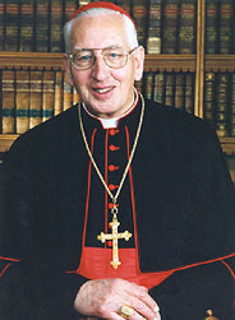
Desmond Connell Created Cardinal-Priest by John Paul II

desmond-connell

Desmond Connell is created Cardinal-Priest by Pope John Paul II at the Consistory in Rome on February 21, 2001. He becomes the first Archbishop of Dublin in over 100 years to be installed as a Cardinal. A large Irish contingent from Church and State, along with family and friends of the Cardinal, attend the installation which for the first time takes place at the front of the entrance to St. Peter’s Basilica.

Connell is born in Dublin on March 24, 1926. He is educated at St. Peter’s National School, Phibsborough and the Jesuit Fathers’ second level school, Belvedere College, and studies for the priesthood at Holy Cross College. He later studies Arts at University College Dublin (UCD) and graduates with a BA in 1946 and is awarded an MA the following year. Between 1947 and 1951, he studies theology at St. Patrick’s College, Maynooth for a Bachelor of Divinity.

Connell is ordained priest by Archbishop John Charles McQuaid on May 19, 1951. He takes up a teaching post at the Department of Metaphysics at the University College Dublin. He is appointed Professor of General Metaphysics in 1972 and in 1983 becomes the Dean of the Faculty of Philosophy and Sociology. The College’s Department of Metaphysics is abolished after his departure.

Connell is appointed Archbishop of Dublin by the Holy See in early 1988. He is consecrated at St. Mary’s Pro-Cathedral, Dublin on March 6, 1988. He is created Cardinal-Priest by Pope John Paul II at the Consistory in Rome on February 21, 2001, with the Titulus S. Silvestri in Capite. Archbishops of Armagh, who hold the higher title of Primate of All Ireland, are more frequently appointed Cardinal than Archbishops of Dublin. The last Archbishop of Dublin to have been a cardinal is Cardinal Edward MacCabe, who was appointed in 1882.

On April 26, 2004, Connell retires as archbishop, handing the diocese to the coadjutor bishop, Diarmuid Martin. All bishops submit their resignation to the Pope on their 75th birthday. Connell’s is accepted shortly after his 78th birthday.

Connell is one of the cardinal electors who participates in the 2005 papal conclave that selects Pope Benedict XVI. Connell is considered quite close to Pope Benedict, both theologically and personally, both having served together on a number of congregations. He attends the 50th International Eucharistic Congress in Dublin in June 2012 and concelebrates at the Statio Orbis Mass in Croke Park.

It is Connell’s failure, when Archbishop of Dublin in 1988–2004, to address adequately the abuse scandals in Dublin that lead the Vatican to assign Archbishop Martin as his replacement in the country’s largest diocese. The Murphy Report finds that Connell had handled the affair “badly” as he was “slow to recognise the seriousness of the situation.” It does praise him for making the archdiocesan records available to the authorities in 2002 and for his 1995 actions in giving the authorities the names of 17 priests who had been accused of abuse, although it says the list is incomplete as complaints were made against at least 28 priests in the archdiocese.

From 1988 Connell also continues to insure his archdiocese against liability from complainants, while claiming to the Murphy Commission that the archdiocese is “on a learning curve” in regard to child abuse. He arranges for compensation payments to be made from a “Stewardship Trust” that is kept secret from the archdiocese’s parishioners until 2003. In 1996 he refuses to help a victim of Paul McGennis and does not pass on what he knows about McGennis to her, or to the police. He apologises for this in 2002.

Desmond Connell dies in Dublin at the age of 90 on February 21, 2017, exactly sixteen years after his creation as Cardinal.


Leave a comment

Birth of William Carleton, Writer & Novelist

william-carleton

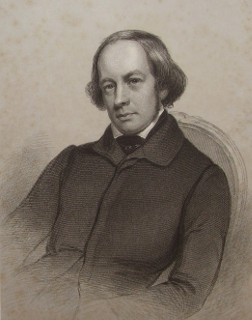
William Carleton, Irish writer and novelist, is born in Clogher, County Tyrone on February 20, 1794. He is best known for his Traits and Stories of the Irish Peasantry, a collection of ethnic sketches of the stereotypical Irishman.

Carleton receives a basic education at various hedge schools. Most of his learning is gained from a curate, Father Keenan, who teaches at a classical school at Donagh, County Monaghan which he attends from 1814 to 1816. He studies for the priesthood at St. Patrick’s Pontifical University, Maynooth, but leaves after two years. Around the age of 19 he undertakes one of the religious pilgrimages then common in Ireland. His experiences as a pilgrim make him give up the thought of entering the church.

Carleton’s vacillating ideas as to a mode of life are determined by reading the picaresque novel Gil Blas by Alain-René Lesage. He decides to try what fortune has in store for him, and he goes to Killanny, County Louth. For six months he serves as tutor to the family of a farmer named Piers Murphy. After some other experiments he sets out for Dublin, arriving with two shillings and sixpence in his pocket.

Carleton first seeks occupation as a bird-stuffer, but a proposal to use potatoes and meal as stuffing fails to recommend him. He then tries to become a soldier, but the colonel of the regiment dissuades him. After staying in a number of cheap lodgings, he eventually finds a place in a house on Francis Street which contains a circulating library. The landlady allows him to read from 12 to 16 hours a day. He obtains some teaching and a clerkship in a Sunday School office, begins to contribute to journals. “The Pilgrimage to Lough Derg,” which is published in the Christian Examiner, attracts great attention.

In 1830 Carleton publishes his first full-length book, Traits and Stories of the Irish Peasantry (2 volumes), which is considered his best achievement. A second series (3 volumes) appears in 1833, and Tales of Ireland in 1834. From that time until a few years prior to his death he writes constantly. “Fardorougha the Miser, or the Convicts of Lisnamona” appears in 1837–1838 in the Dublin University Magazine.

Carleton remained active publishing in Dublin magazines through the 1830s and 1840s writing many ethnic stories often drawn from the south Tyrone locality. He also writes a lot of fiction. During the last months of his life, he begins an autobiography which he brings down to the beginning of his literary career. This forms the first part of The Life of William Carleton by David James O’Donoghue, which contains full information about his life, and a list of his scattered writings.

Carleton’s later years are characterised by drunkenness and poverty. In spite of his considerable literary production, he remains poor but receives a pension in 1848 of £200 a year granted by Lord John Russell in response to a memorial on Carleton’s behalf signed by numbers of distinguished persons in Ireland.

William Carleton dies at his home at Woodville, Sandford Road, in Ranelagh, Dublin on January 30, 1869, and is interred at Mount Jerome Cemetery, Harold’s Cross, Dublin. The house, now demolished, is close to the entrance to the Jesuit residence at Milltown Park. Despite his conversion to Protestantism, Carleton remains on friendly terms with one of the priests there, Reverend Robert Carbery, who offers to give him the Last Rites of the Catholic Church. In the final weeks before his death, Carleton politely declines the offer, stating he had not been a Roman Catholic “for half a century and more.”

(Pictured: Portrait of Irish author William Carleton (1794-1869) by John Slattery (fl. 1850s))


Leave a comment

Birth of Phil Coulter, Songwriter & Producer

phil-coulter

Phil Coulter, musician, songwriter and record producer, is born in Derry, County Londonderry, Northern Ireland on February 19, 1942. He is one of the most eclectic and accomplished arranger/musicians to emerge from Ireland during the 1960s.

Coulter spends his secondary school years at St. Columb’s College. He later studies music and French at the Queen’s University Belfast. During his time at Queen’s he takes up songwriting, composing the hit Foolin’ Time for the Capitol Showband. His talents are swiftly captured by leading entrepreneur Phil Solomon. Initially working with such showbands as the Cadets and Pacific, he continues to compose for the Capitol Showband and even pens their 1965 Eurovision Song Contest entry, Walking the Streets in the Rain. In the meantime, Coulter works on Solomon’s other acts, including Twinkle, who enjoys a major UK hit with the Coulter-arranged Terry. He also contributes to Them’s song catalogue, with the driving I Can Only Give You Everything.

After leaving the Solomon stable in 1967, Coulter, now based in London, forms a partnership with Bill Martin, which becomes one of the most successful of its era. The duo is particularly known for their ability to produce instantly memorable pop hits, and achieve international fame after penning Sandie Shaw’s 1967 Eurovision Song Contest winner, Puppet on a String. They barely miss repeating that feat the following year with Cliff Richard’s stomping Congratulations.

Coulter subsequently leads his own country to victory in the contest by arranging Dana’s 1970 winner, All Kinds of Everything. That same year, Coulter/Martin are commissioned to write Back Home, the official song for the England national football team, which proves a lengthy UK number 1. As well as his pop outings, which include writing My Boy and an album’s worth of material for Richard Harris, he maintains his connection with the Irish folk scene, via his work with another of Solomon’s acts, The Dubliners. He also produces three albums for the groundbreaking Planxty and works with The Fureys.

During the mid-1970s, Coulter and Martin are called in to assist the Bay City Rollers, and subsequently compose a string of hits for the Scottish teenyboppers, including Remember (Sha-La-La), Shang-a-Lang, Summerlove Sensation, Saturday Night, and All Of Me Loves All Of You. During the same period, they enjoy three Top 10 hits with Kenny and reach the top again in 1976 with Slik’s Forever and Ever. He also produces several records by comedian Billy Connolly, including 1975’s UK number 1 D.I.V.O.R.C.E..

After his partnership with Martin ends in the late 1970s, Coulter specializes in orchestral recordings, which prove hugely successful in Irish communities. Albums such as Classic Tranquillity and Sea Of Tranquillity (both 1984), Words And Music (1989), American Tranquillity (1994), Celtic Horizons (1996), and collaborations with flautist James Galway and Roma Downey, also enjoy major international success, and Coulter is a regular fixture in the upper regions of the U.S. New Age album chart.

Coulter’s production credits during the 1990s include work for Sinéad O’Connor and Boyzone. His lengthy career, as producer, arranger, songwriter and performer, is all the more remarkable for encompassing such contrasting musical areas from folk and orchestral to straightforward Tin Pan Alley pop.

Despite his successes, Coulter suffers several family tragedies. His son is born with Down syndrome and dies at the age of three. The song Scorn Not His Simplicity is written in his memory. His brother also dies tragically in a drowning incident in Ireland, which briefly causes him to retreat from the music business. He records the anthemic Home From The Sea with the Lifeboat Chorus as a tribute.

Coulter has received honorary doctorates from the University of Ulster (1988), Dublin Institute of Technology (2006), and the Open University (2018).


Leave a comment

Paddington & Victoria Stations Bombings

london-victoria-station

The Provisional Irish Republican Army (PIRA) explodes two bombs at London mainline stations on February 18, 1991, one at Victoria station and the other at Paddington station, killing one person and injuring 38 others all at Victoria station. It is the IRA’s second major attack in London in February 1991 after the Downing Street mortar attack eleven days earlier which is an attempt to wipe out the British war cabinet and British prime minister John Major. It is also the first IRA attack on civilians since the 1983 Harrods bombing, marking a strategic change in their bombing campaign.

The Paddington bomb, which goes off at 4:20 AM, is much smaller than the second bomb at Victoria and is designed to make sure the security services will take the Victoria bomb seriously and not as a hoax. There are no deaths or injuries at Paddington station, but the roof is badly damaged.

Sometime before 7:00 AM, a caller with an Irish accent says, “We are the Irish Republican Army. Bombs to go off in all mainline stations in 45 minutes.” The Victoria station bomb, which is hidden in a rubbish bin inside the station, goes off at 7:40 AM. Despite a 45-minute warning and the Paddington bomb three hours earlier, the security services are slow to act. The bomb kills one person instantly and injures 38 others from flying glass and other debris. This is the worst attack suffered by civilians in England by the IRA since the 1983 Harrods bombing which killed three policemen, three civilians and injured 50 people. All London’s rail terminals are closed, disrupting the journeys of almost half a million commuters and bringing chaos to London, which is the IRA’s intended goal. There is also a hoax call made to Heathrow Airport, causing the airport’s closure.

That night the Provisional IRA claims responsibility for the bombings but blames the British police for the casualties. A statement from the Provisional IRA GHQ says, “The cynical decision of senior security personnel not to evacuate railway stations named in secondary warnings, even three hours after the warning device had exploded at Paddington in the early hours of this morning was directly responsible for the casualties at Victoria.” The statement goes on, “All future warnings should be acted upon.” The main purpose of the bombings in the overall IRA strategy is to keep pressure up on John Major, his Government and to make sure he acts on the Irish Troubles.

Police defend the decision not to close all stations after receiving warning that bombs had been planted. Commander George Churchill-Coleman, head of Scotland Yard‘s anti-terrorist squad, says that dozens of hoax calls are received every day. “It is very easy with hindsight to be critical.” Churchill-Coleman also says that the bomb was “quite deliberately intended to maim and kill.”

A year later, a French TV crew interviews an IRA Commander who says he speaks on behalf of the IRA’s GHQ Staff. The commander of the unit says of the Victoria station bombing that warnings were given by telephone naming nine railroad stations in London and that a 50-minute warning was given. He goes on to say that the attack was not aimed at hurting anybody but to disrupt the British transport system.

This bombing marks the IRA’s shift to targeting civilian areas following the July 1990 London Stock Exchange bombing. It is also the first IRA attack on the London transport system since 1976. The IRA keeps bombing targets in England for the remainder of the year.

(Pictured: London Victoria Station – The main station building for this terminus, with trains servicing the south and south-eastern destinations, as well as Gatwick. In front is the bus station.)


Leave a comment

Birth of Marie Dolores Eliza Rosanna Gilbert, Dancer & Actress

lola-montez

Marie Dolores Eliza Rosanna Gilbert, Countess of Landsfeld, Irish dancer and actress better known by the stage name Lola Montez, is born in Grange, County Sligo, on February 17, 1821. She becomes famous as a “Spanish dancer,” courtesan, and mistress of King Ludwig I of Bavaria, who makes her Countess of Landsfeld. She uses her influence to institute liberal reforms. At the start of the German revolutions of 1848-1849, she is forced to flee. She proceeds to the United States via Switzerland, France, and London, returning to her work as an entertainer and lecturer.

Gilbert’s family makes their residence at King House in Boyle, County Roscommon, until early 1823, when they journey to Liverpool, thence departing for India on March 14. Gilbert spends much of her childhood in India but is educated in Scotland and England. At age 19 she elopes with Lieutenant Thomas James. The couple separates five years later, and, in 1843, Gilbert launches a career as a dancer. Her London debut in June 1843 as “Lola Montez, the Spanish dancer” is disrupted when she is recognized as Mrs. James. The fiasco would probably have ended the career of anyone less beautiful and determined, but Gilbert receives additional dancing engagements throughout Europe. During her travels she reputedly forms liaisons with Franz Liszt and Alexandre Dumas, among many others.

Late in 1846, Gilbert dances in Munich and Ludwig I of Bavaria is so struck by her beauty that he offers her a castle. She accepts, becomes Baroness Rosenthal and Countess of Lansfeld, and remains as his mistress. Under Gilbert’s influence, Louis inaugurates liberal and anti-Jesuit governmental policies, but his infatuation with her helps to bring about the collapse of his regime in the revolution of 1848. In March of that year Ludwig abdicates in favour of his son. Gilbert flees to London, where in 1849 she marries Lieutenant George Heald, although she has never been divorced from James. Heald later leaves her.

From 1851 to 1853 Gilbert performs in the United States. Her third marriage, to Patrick P. Hull of San Francisco in 1853, ends in divorce soon after she moves to Grass Valley, California. There, among other amusements, she coaches young Lotta Crabtree in singing and dancing. She settles in New York City after an unsuccessful tour of Australia in 1855–1856 and gathers a following as a lecturer on such topics as fashion, gallantry, and beautiful women. An apparently genuine religious conversion leads her to take up various personal philanthropies.

Gilbert publishes Anecdotes of Love; Being a True Account of the Most Remarkable Events Connected with the History of Love; in All Ages and among All Nations (1858), The Arts of Beauty, or, Secrets of a Lady’s Toilet with Hints to Gentlemen on the Art of Fascination (1858), and Lectures of Lola Montez, Including Her Autobiography (1858). The international notoriety of her heyday persists long after her death and inspires numerous literary and balletic allusions.

Gilbert spends her last days in rescue work among women. By November 1859 she is showing the tertiary effects of syphilis, and her body begins to waste away. She dies at the age of 39 on January 17, 1861. She is buried in Green-Wood Cemetery in Brooklyn, New York.


Leave a comment

Death of Robert John Kane, Chemist & Educator

robert-john-kane

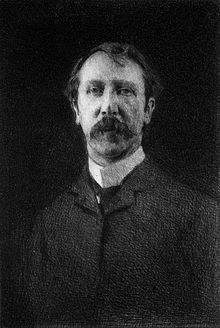
Sir Robert John Kane, chemist and educator, dies at the age of 80 in Dublin on February 16, 1890. In a distinguished career, he founds the Dublin Journal of Medical  & Chemical Science, is Vice-Chancellor of Royal University of Ireland and is director of the Museum of Irish Industry.

Kane is born at 48 Henry Street, Dublin on September 24, 1809 to John and Eleanor Kean (née Troy). His father is involved in the Irish Rebellion of 1798 and flees for a time to France where he studies chemistry. Back in Dublin, Kean (now Kane) founds the Kane Company and manufactures sulfuric acid.

Kane studies chemistry at his father’s factory and attends lectures at the Royal Dublin Society as a teenager. He publishes his first paper in 1828, Observations on the existence of chlorine in the native peroxide of manganese, in the London Quarterly Journal of Science, Literature and Art. The following year, his description of the natural arsenide of manganese results in the compound being named Kaneite in his honour. He studies medicine at Trinity College, Dublin, graduating in 1834 while working in the Meath Hospital. He is appointed Professor of Chemistry at the Apothecaries’ Hall, Dublin in 1831, which earns him the moniker of the “boy professor.” In the following year he participates in the founding of the Dublin Journal of Medical & Chemical Science.

On the strength of his book Elements of Practical Pharmacy, Kane is elected to the Royal Irish Academy in 1832. He studies acids, shows that hydrogen is electropositive, and proposes the existence of the ethyl radical. In 1836 he travels to Giessen in Germany to study organic chemistry with Justus von Liebig. In 1843 he is awarded the Royal Irish Academy’s Cunningham Medal for his work on the nature and constitution of compounds of ammonia.

Kane publishes a three-volume Elements of Chemistry in 1841–1844, and a detailed report on the Industrial Resources of Ireland. This includes the first assessment of the water power potential of the River Shannon, which is not realised until the 1920s at Ardnacrusha.

Kane becomes a political adviser on scientific and industrial matters. He serves on several commissions to enquire into the Great Irish Famine, along with Professors Lindley and Taylor, all more or less ineffective. His political and administrative work means that his contribution to chemistry ceases after about 1844.

Kane’s work on Irish industry leads to his being appointed director of the Museum of Irish Industry in Dublin in 1845. The Museum is a successor to the Museum of Economic Geology, and is housed at 51 St. Stephen’s Green.

Also in 1845 Kane becomes the first President of Queen’s College, Cork (now University College Cork). He does not spend a lot of time in Cork as he has work in Dublin, and his wife lives there. The science building on the campus is named in his honour. He is knighted in 1846.

In 1873 Kane takes up the post of National Commissioner for Education. He is elected president of the Royal Irish Academy in 1877, holding the role until 1882. In 1880 he is appointed the first chancellor of the newly created Royal University of Ireland. After a motion to admit women to the University, put forward by Prof. Samuel Haughton at Academic Council in Trinity College Dublin, March 10, 1880, Kane is appointed to a committee of ten men to look into the matter. He is opposed to the admission of women, and nothing is reported from the committee in the Council minutes for the next ten years.


Leave a comment

The First Dungannon Convention

bank-of-ireland-college-green

The first Dungannon Convention of the Ulster Volunteers on February 15, 1782, calls for an independent Irish parliament. This is the parliament that Henry Grattan also campaigns for and later becomes known as “Grattan’s parliament.”

The Irish Volunteers are a part-time military force whose original purpose is to guard against invasion and to preserve law and order when regular troops are being sent to America during the American Revolutionary War. Members are mainly drawn from the Protestant urban and rural middle classes and the movement soon begins to take on a political importance.

The first corps of Volunteers is formed in Belfast and the movement spreads rapidly across Ireland. By 1782 there are 40,000 enlisted in the Volunteers, half of them in Ulster. Strongly influenced by American ideas, though loyal to the Crown, the Volunteers demand greater legislative freedom for the Dublin Parliament.

The Dungannon Convention is a key moment in the eventual granting of legislative independence to Ireland.

At the time, all proposed Irish legislation has to be submitted to the Privy Council of the United Kingdom for its approval under the great seal of England before being passed by the Parliament of Ireland. English Acts emphasise the complete dependence of the Irish parliament on its English counterpart and English Houses claim and exercise the power to legislate directly for Ireland, even without the agreement of the parliament in Dublin.

The Ulster Volunteers, who assemble in Dungannon, County Tyrone, demand change. Prior to this, the Volunteers received the thanks of the Irish parliament for their stance but in the House of Commons, the British had ‘won over’ a majority of that assembly, which led to a resistance of further concessions. Thus, the 315 volunteers in Ulster at the Dungannon convention promised “to root out corruption and court influence from the legislative body,” and “to deliberate on the present alarming situation of public affairs.”

The Convention is held in a church and is conducted in a very civil manner. The Volunteers agree, almost unanimously, to resolutions declaring the right of Ireland to legislative and judicial independence, as well as free trade. A week later, Grattan, in a great speech, moves an address of the Commons to His Majesty, asserting the same principles but his motion is defeated. So too is another motion by Henry Flood, declaring the legislative independence of the Irish Parliament.

However, the British soon realise they can resist the agitation no longer. It is through ranks of Volunteers drawn up outside the parliament house in Dublin that Grattan passes on April 16, 1782, amidst unparalleled popular enthusiasm, to move a declaration of the independence of the Irish parliament. After a month of negotiations, legislative independence is granted to Ireland.

(Pictured: The original Irish Parliament Building which now houses the Bank of Ireland, College Green, opposite the main entrance to Trinity College, Dublin)