seamus dubhghaill

Promoting Irish Culture and History from Little Rock, Arkansas, USA


Leave a comment

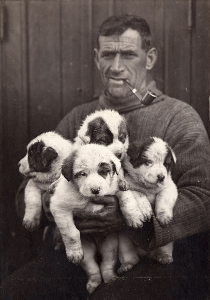
Birth of Antarctic Explorer Tom Crean

Tom Crean

Thomas “Tom” Crean, Irish seaman and Antarctic explorer, is born on February 25, 1877 in the farming area of Gurtuchrane near the village of Annascaul on the Dingle Peninsula in County Kerry.

Crean leaves the family farm to enlist in the Royal Navy at the age of fifteen. In 1901, while serving on Ringarooma in New Zealand, he volunteers to join Captain Robert Falcon Scott‘s 1901–04 Discovery Expedition to Antarctica, thus beginning his exploring career.

He is a member of three major expeditions to Antarctica during the Heroic Age of Antarctic Exploration, including Captain Scott’s 1911–13 Terra Nova Expedition. This sees the race to reach the South Pole lost to Roald Amundsen and ends in the deaths of Scott and his polar party. During this expedition, Crean’s 35 statute miles solo walk across the Ross Ice Shelf to save the life of Edward Evans leads to him receiving the Albert Medal for Lifesaving.

After his Terra Nova experience, Crean’s third and final Antarctic venture is as second officer on Ernest Shackleton‘s Imperial Trans-Antarctic Expedition, on Endurance. After Endurance becomes beset in the pack ice and sinks, Crean and the ship’s company spend months drifting on the ice before a journey in boats to Elephant Island. He is a member of the crew which makes an open boat journey of 800 nautical miles from Elephant Island to South Georgia, to seek aid for the stranded party.

Crean’s contributions to these expeditions seals his reputation as a polar explorer and earns him a total of three Polar medals. After the Endurance expedition, he returns to the navy. When his naval career ends in 1920 he moves back to County Kerry. In his home town of Annascaul, Crean and his wife Ellen live quietly and unobtrusively and open a pub called The South Pole Inn.

In 1938 Crean becomes ill with a ruptured appendix. He is taken to the nearest hospital in Tralee, but as no surgeon is available to operate, he is transferred to the Bon Secours Hospital in Cork where his appendix is removed. Because of the delay of the operation an infection develops and after a week in the hospital he dies on July 27, 1938, shortly after his sixty-first birthday. He is buried in his family’s tomb at the cemetery in Ballynacourty.

Crean’s name is commemorated in at least two places – 8,630 foot Mount Crean in Victoria Land and the Crean Glacier on South Georgia. A one-man play, Tom Crean – Antarctic Explorer, has been widely performed since 2001 by its author Aidan Dooley, including a special showing at the South Pole Inn, Annascaul, in October 2001. In July 2003, a bronze statue of Crean is unveiled across from his pub in Annascaul. It depicts him leaning against a crate whilst holding a pair of hiking poles in one hand and two of his beloved sled dog pups in the other.


Leave a comment

Birth of Samuel Lover, Songwriter, Novelist & Painter

samuel-lover-1

Samuel Lover, Irish songwriter, composer, novelist, and a painter of portraits, chiefly miniatures, is born at 60 Grafton Street in Dublin on February 24, 1797. He is also known as “Ben Trovato” (“well invented”) and is the grandfather of Victor Herbert. He is noted as saying, “When once the itch of literature comes over a man, nothing can cure it but the scratching of a pen.”

Lover goes to school at Samuel Whyte’s at 79 Grafton Street, now home to Bewley’s café. By 1830 he is secretary of the Royal Hibernian Academy and lives at 9 D’Olier Street. In 1835 he moves to London and begins composing music for a series of comic stage works. To some of them, like the operetta Il Paddy Whack in Italia (1841), he contributes both words and music, for others he merely contributes a few songs.

Lover produces a number of Irish songs, of which several – including The Angel’s Whisper, Molly Bawn, and The Four-leaved Shamrock – attain great popularity. He also writes novels, of which Rory O’Moore and Handy Andy are the best known, and short Irish sketches which, with his songs, he combines into a popular entertainment called Irish Nights or Irish Evenings. With the latter, he tours North America between 1846 and 1848. He joins with Charles Dickens in founding Bentley’s Magazine.

Lover’s grandson is composer Victor Herbert whose mother is Lover’s daughter Fanny. Herbert is best remembered for his many successful musicals and operettas that premier on Broadway. As a small child he lives with the Lovers in a musical environment following the divorce of his mother.

Samuel Lover dies on July 6, 1868, in Saint Helier on the island of Jersey. A memorial in St. Patrick’s Cathedral, Dublin summarises his achievements:

“Poet, painter, novelist and composer, who, in the exercise of a genius as distinguished in its versatility as in its power, by his pen and pencil illustrated so happily the characteristics of the peasantry of his country that his name will ever be honourably identified with Ireland.”


Leave a comment

Birth of Sculptor Jerome Connor

jerome-connor

Jerome Connor, recognized world-class Irish sculptor, is born on February 23, 1874, in Coumduff, Annascaul, County Kerry.

In 1888, Connor emigrates to Holyoke, Massachusetts. His father is a stonemason, which leads to Connor’s jobs in New York as a sign painter, stonecutter, bronze founder and machinist. Inspired by his father’s work and his own experience, he would steal his father’s chisels as a child and carve figures into rocks.

It is believed Connor possibly assisted in the manufacture of bronzes such as the Civil War monument in Town Green in South Hadley, Massachusetts erected in 1896 and The Court of Neptune Fountain at the Library of Congress in Washington, D.C., completed in 1898.

Connor joins the Roycroft arts community in 1899 where he assists with blacksmithing and later starts creating terracotta busts and reliefs. Eventually he is recognized as Roycroft’s sculptor-in-residence.

After four years at Roycroft, Connor then works with Gustav Stickley and becomes well known as a sculptor being commissioned to create civic commissions in bronze for placement in Washington, D.C., Syracuse, East Aurora, New York, San Francisco, and in his native Ireland. In 1910, he establishes his own studio in Washington, D.C. From 1902 until his death, he produces scores of designs ranging from small portrait heads to relief panels to large civic commissions realized in bronze.

Connor is a self-taught artist who is highly regarded in the United States where most of his public works can be seen. He appears to be heavily influenced by the work of Irish American sculptor Augustus Saint-Gaudens. He uses the human figure to give expression to emotions, values and ideals. Many of the commissions he receives are for civic memorials and secular figures which he casts in bronze, a pronounced departure from the Irish tradition of stone carved, church sponsored works.

Connor’s best-known work is Nuns of the Battlefield located at the intersection of Rhode Island Avenue NW, M Street and Connecticut Avenue NW in Washington, D.C. It serves as a tribute to the over six hundred nuns who nursed soldiers of both armies during the American Civil War and is one of two monuments in the District that represent women’s roles in the Civil War. The sculpture is authorized by the United States Congress on March 29, 1918, with the agreement that the government will not fund it. The Ancient Order of Hibernians raises $50,000 for the project and Connor is selected since he focuses on Irish Catholic themes, being one himself. Connor, however, ends up suing the Order for nonpayment.

Connor works in the United States until 1925 at which time he moves to Dublin and opens his own studio but suffers from lack of financial support and patrons. In 1926 he is contacted by Roycroft and asked to design and cast a statue of Elbert Hubbard who, with his wife Alice, had died in the sinking of the RMS Lusitania. It is unveiled in 1930 and today stands on the lawn of East Aurora’s Middle School across the street from the Roycroft Chapel building.

While working on the Hubbard statue, Connor receives a commission to create a memorial for all the RMS Lusitania victims. It is to be erected in Cobh, County Cork where many of the victims are buried. The project is initiated by the New York Memorial Committee, headed by William Henry Vanderbilt whose father, Alfred Gwynne Vanderbilt, perished on the RMS Lusitania. He dies before the memorial is completed and based on Connor’s design its installation falls to another Irish artist.

Jerome Connor dies on August 21, 1943, of heart failure and reputably in poverty. There is a now a “Jerome Connor Place” in Dublin and around the corner there is a plaque in his honour on Infirmary Road, overlooking Dublin’s Phoenix Park, his favourite place.


Leave a comment

Lord Randolph Churchill’s Speech at Ulster Hall

Generated by IIPImage

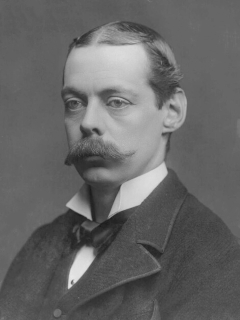
Conservative Party politician Lord Randolph Churchill, father of Winston Churchill, gives what many consider one of the single most destructive speeches in Irish history, inciting militant loyalists at Ulster Hall in Belfast on February 22, 1886.

The Conservative Party in Ulster launches an anti-Home Rule campaign in February 1886. It joins with the Orange Order to organise a huge political rally which is addressed by Lord Churchill.

Protestants in Ulster are very concerned about the prospect of Irish Home Rule. They fear that an Irish parliament will put rural agricultural interests before the needs of the industrial North-East. They believe a Dublin parliament will introduce tariffs which will damage industries in the north. They also fear that they will be discriminated against because of their religion, outnumbered in a Dublin parliament by Catholic representatives.

Churchill has shown disdain for Ulster Unionists up until this time, in private at least, telling Lord Salisbury, “these foul Ulster Tories have always ruined our party,” but as 1886 begins he sees an opportunity to exploit their fears for political gain. He decides that should Prime Minister William Gladstone “went for Home Rule (for Ireland), the Orange Card would be the one to play. Please God may it turn out the ace of trumps and not the two.” This quote leads one to believe he has few real convictions regarding the issue.

“Ulster will fight, and Ulster will be right,” Lord Churchill proclaims to a crowd before he even arrives at Ulster Hall.

Lord Churchill gives a rousing speech at the rally. During his speech, he plays on Protestant fears of Dublin “Catholic” rule and encourages Ulster Protestants to organize against Home Rule, so it does not come upon them “as a thief in the night.” As a result, the Ulster Protestants begin to form paramilitary drilling units.

Churchill achieves a short-term political gain by his playing of the Orange Card, but his most lasting legacy is the unfounded fear of Irish Catholics that he helps to implant in the minds of Ulster Protestants, a tragedy for both traditions on the island. Those fears remain evident over a century later.


Leave a comment

Death of Paul Funge, Painter & Arts Enthusiast

paul-funge

Paul Funge, internationally respected painter and arts enthusiast, dies at Loughlinstown Hospital in the south Dublin suburb of Loughlinstown on February 21, 2011, after a short illness.

A native of Gorey, County Wexford, Funge is a founder of the Project Arts Centre in Dublin and the founder of Gorey Arts Centre in 1970. He is also a founder of the Belltable Arts Centre in Limerick while the regional arts officer for the midwest. In addition, he establishes the Gorey Arts Festival, a three-week summer arts festival, and runs it for more than fifteen years. He is remembered as the man who brought U2 to play at the Gorey Arts Festival in the days before they became an international success.

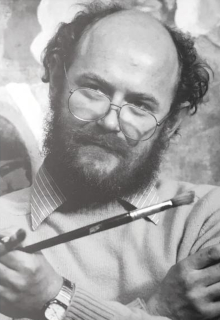
A painter of portraits and landscapes, Funge teaches art in many schools including Clongowes Wood College and Newbridge College. He also lectures at the National College of Art and Design (NCAD), the University of California, and Kunsthistorisch Instituut in Amsterdam. He is also an inspector for art in the Department of Education for a number of years.

As a portrait artist Funge’s sitters included U2’s Adam Clayton, Frank McGuinness and Colm Tóibín as well as many ministers and academics.

Funge suffers a fall before Christmas 2010, badly fracturing his leg and he is admitted to St. Vincent’s Hospital. On January 6, he transfers from Vincent’s to recuperate at a nursing home in Bray. In early February he takes a turn and develops chest problems. His condition deteriorates and he is admitted to the ICU in Loughlinstown Hospital. Initially he appears to be making a reasonable recovery, but his condition deteriorates again in the days prior to his death.

Following Funge’s death, Eamon Carter, director of Gorey School of Art, pays tribute to him as a visionary who felt passionate about decentralising the arts to areas outside of Dublin.

Carter adds that it had just been announced that the Gorey School of Art is linking up with NCAD to provide a masters in fine arts and it is sad that in the week it receives such good news it also receives the sad news of Funge’s death. “I’m saddened that he wasn’t here to see that because he would have been chuffed obviously,” he said.


Leave a comment

The Clive Barracks Bombing

clive-barracks-bombing

The Clive Barracks bombing, a bomb attack carried out by the Provisional Irish Republican Army on a British Army barracks at Ternhill, Shropshire, takes place on February 20, 1989. The attack injures two soldiers from the Parachute Regiment and destroys a large part of the barracks.

The IRA intensifies their campaign outside of Northern Ireland in 1988. In May 1988 the IRA enjoys one of their most successful ambushes on British Military figures in mainland Europe with attacks in the Netherlands where they kill three and injured three Royal Air Force soldiers. Four months later in August 1988, the Provisional IRA carries out the Inglis Barracks bombing, which kills one British soldier and injures ten others. It is the first IRA attack in England since the infamous Brighton hotel bombing in October 1984.

On Monday, February 20, 1989, the Provisional IRA explodes two bombs at Clive Barracks at Ternhill. Only two of the planned three bombs are primed and ready to explode when the two IRA members, both of whom are wearing combat jackets, are spotted and approached by a sentry, Lance-Corporal Alan Norris, who raises the alarm. They throw the third bomb, which was inside a backpack, at him and run to a car they had stolen earlier and drive away. Soldiers fire three rounds at the IRA members as they are fleeing but no shots hit their target.

The bombs explode about ten minutes after the IRA men escape. Even though nobody is killed in the attack, the explosions cause large damage to the barracks. The alarm sounded by Norris gives about fifty British soldiers a chance to escape almost certain death. Only two soldiers are injured, one being hit by flying glass the other with only minor injuries.

The IRA claims responsibility for the bombings and British police believe IRA fugitive Patrick Sheehy is the main operator in the attack. The IRA issues a statement saying, “While Britain maintains its colonial grip on the north of Ireland, the IRA will continue to strike at those who oversee and implement British Government policy in our country.”

Five months later, in July 1989, the IRA kills a British soldier in Hanover, West Germany when they place a booby trap IED under his car. On September 7 the IRA mistakenly shoots dead Heidi Hazell, the German wife of a British soldier, in a hail of bullets in Dortmund. In the climax of the England and European campaign by the IRA is the Deal barracks bombing in which the IRA kills eleven Royal Marines and seriously injures 22 others. It is the highest death toll from an operation in England in seven years since the Hyde Park and Regent’s Park bombings on September 22, 1982, which kill 11 soldiers and injured more than fifty.


Leave a comment

Irish Neutrality During World War II

File written by Adobe Photoshop? 4.0

On February 19, 1939 Taoiseach Éamon de Valera states his intention to preserve Irish neutrality in the event of a second world war.

The policy of Irish neutrality during World War II is adopted by the Oireachtas at the instigation of De Valera upon the outbreak of World War II in Europe. It is maintained throughout the conflict, in spite of several German airstrikes by aircraft that miss their intended British targets and attacks on Ireland’s shipping fleet by Allies and Axis alike. De Valera refrains from joining either the Allies or Axis powers. While the possibilities of not only a German but also a British invasion are discussed in Dáil Éireann, and either eventuality is prepared for, with the most detailed preparations being done in tandem with the Allies under Plan W, De Valera’s ruling party, Fianna Fáil, supports his neutral policy for the duration of the war.

This period is known in the Republic of Ireland as “The Emergency“, owing to the wording of the constitutional article employed to suspend normal government of the country.

Pursuing a policy of neutrality requires attaining a balance between the strict observance of non-alignment and the taking of practical steps to repel or discourage an invasion from either of the two concerned parties.

Ireland maintains a public stance of neutrality to the end, although this policy leads to a considerable delay in Ireland’s membership of the United Nations (UN). Ireland’s applications for membership are vetoed by the Soviet Union, a permanent member of the United Nations Security Council, from 1946 to December 1955. Seán MacBride considers that the UN boycott of Ireland had been originally agreed upon at the 1945 Yalta Conference by Winston Churchill and Joseph Stalin. Ireland’s acceptance into the UN is finally announced by John A. Costello on December 15, 1955.

Despite the official position of neutrality, there are many unpublicised contraventions of this, such as permitting the use of the Donegal Corridor to Allied military aircraft, and extensive co-operation between Allied and Irish intelligence, including exchanges of information, such as detailed weather reports of the Atlantic Ocean. For example, the decision to go ahead with the Normandy landings is decided by a weather report from Blacksod Bay, County Mayo.

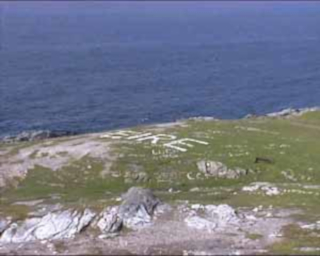
(Pictured: Markings to alert aircraft to neutral Ireland during World War II on Malin Head, County Donegal)


Leave a comment

Birth of Walter P. Lane, Confederate General

LEAD Technologies Inc. V1.01

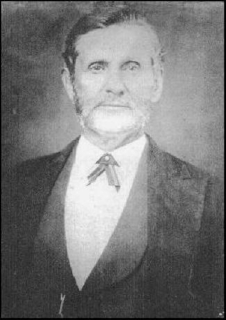
Walter Paye Lane, Confederate general during the American Civil War who also serves in the armies of the Republic of Texas and the United States of America, is born in County Cork on February 18, 1817.

The Lane family emigrates to Fairview in Guernsey County, Ohio, in 1821, and moves to Kentucky in 1825. In 1836 Lane moves to Texas to participate in its war for independence against Mexico. After Texas has gained its independence, he lives in San Augustine County in East Texas and then San Antonio, where he briefly serves as a Texas Ranger.

In 1846 Lane joins the First Regiment, Texas Mounted Riflemen, as a first lieutenant to fight in the Mexican American War. He fights with honors at the Battle of Monterey and is later given the rank of major and command of his own battalion. After the Mexican American War, he wanders about doing various things in Arizona, California, and Peru before opening a mercantile business in Marshall, Texas, in 1858.

When the American Civil War breaks out, Lane is among the first Texans to call for secession. His military reputation is so great that the first volunteer Confederate company raised in Harrison County is named for him, though he joins the 3rd Texas Cavalry. He participates in the Battle of Wilson’s Creek, the Battle of Chustenahlah, the Battle of Pea Ridge and both the Siege of Corinth and Second Battle of Corinth. He leads the 3rd Texas at the battle of Franklin, Mississippi, and is commended by General P. G. T. Beauregard for his efforts. He is severely wounded in the Battle of Mansfield in 1864, where Confederates forces rebuff a push to capture either or both Shreveport, Louisiana, or Marshall, Texas. Before the war ends, Lane is promoted to the rank of brigadier general in 1865, being confirmed on the last day the Confederate States Congress meets.

After the Civil War, Lane returns to Marshall where he helps to establish the Texas Veterans Association. After Reconstruction, he and his brother George, a local judge, found the first White Citizens Party in Texas and run Republicans and African Americans out of Marshall. With Democratic white hegemony brutally reestablished in Marshall and Harrison County, he declares the city and county “redeemed.”

Lane dies in Marshall, Texas on January 28, 1892, and is buried in the Marshall Cemetery near downtown Marshall. His memoirs, The Adventures and Recollections of General Walter P. Lane, are published posthumously in 1928.


Leave a comment

Birth of Seán Mac Stíofáin, Irish Republican Army Commander

sean-mac-stiofain

Seán Mac Stíofáin, Irish Republican Army (IRA) commander and a founding member of the Provisional IRA and its first chief of staff, is born in Leytonstone, London on February 17, 1928.

Mac Stíofáin is born John Stephenson, the son of Protestant parents. He claims Irish ancestry on his mother’s side although the validity of this is uncertain. He leaves school at sixteen, working as a labourer and converting to Catholicism. He also serves in the Royal Air Force during World War II, working as a storeman. After the war, he becomes involved and obsessed with Irish republicanism. He joins the Irish Republican Army in 1949 and helps organise an IRA unit in London.

In 1953, Stephenson leads a raid that steals rifles and mortars from a cadet school armoury in Essex. He is stopped randomly by police, arrested and sentenced to eight years in prison. He serves more than three years behind bars, using this time to learn Irish Gaelic. Released in 1956, he marries an Irish woman, moves to Dublin and changes his name to Seán Mac Stíofáin, the Gaelic form of his birth name.

Mac Stíofáin gradually ascends through the ranks of the IRA, becoming its director of intelligence. The outbreak of the Troubles in 1969 opens up divisions in the IRA over strategy and tactics. While Cathal Goulding and other leaders want to use violence carefully, Mac Stíofáin and his supporters urge open warfare with the Royal Ulster Constabulary (RUC).

In August 1969, Mac Stíofáin leads a raid on the RUC station at Crossmaglen, in defiance of IRA orders. In December, he and four others form a Provisional Army Council. This splinter group becomes the nucleus of the Provisional IRA.

Mac Stíofáin becomes the Provisional IRA’s first chief of staff. He also oversees its rearming and the escalation of its military campaign in Northern Ireland. In July 1972, he represents the Provisional IRA in secret talks with the British government in London. When these talks collapse, he orders an increase in Provisional IRA operations, beginning with the mass bombing of Belfast on July 21, 1972.

Mac Stíofáin remains in charge until November 1972, when a controversial television interview leads to his arrest, imprisonment and removal from the Provisional IRA leadership. He is released the following year but is no longer prominent in the Provisional IRA. He spends the rest of the 1970s working for a Sinn Féin newspaper.

Mac Stíofáin died on May 18, 2001, in Our Lady’s Hospital in Navan, County Meath, after a long illness. He is buried in St. Mary’s Cemetery, Navan. His funeral is attended by Gerry Adams and Martin McGuinness.


Leave a comment

Birth of James Thomson, Engineer & Physicist

james-thomson

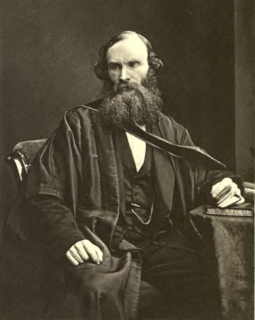
James Thomson, engineer and physicist whose reputation is substantial though overshadowed by that of his younger brother William Thomson (Lord Kelvin), is born in Belfast on February 16, 1822.

Thomson spends much of his youth in Glasgow. His father James is professor of mathematics at the University of Glasgow from 1832 onward. He attends Glasgow University from a young age and graduates in 1839 with high honors in his late teens. After graduation, he serves brief apprenticeships with practical engineers in several domains. He then gives a considerable amount of his time to theoretical and mathematical engineering studies, often in collaboration with his brother, during his twenties in Glasgow. In his late twenties he enters into private practice as a professional engineer with special expertise in water transport. In 1855, he is appointed professor of civil engineering at Queen’s University Belfast. He remains there until 1873, when he accepts the Regius professorship of Civil Engineering and Mechanics at the University of Glasgow in which he is successor to the influential William Rankine. He serves in this position until he resigns with failing eyesight in 1889.

In 1875 Thomson is elected a Fellow of the Royal Society of Edinburgh. His proposers are his younger brother William, Peter Guthrie Tait, Alexander Crum Brown and John Hutton Balfour. He is elected a Fellow of the Royal Society of London in June 1877. He serves as President of the Institution of Engineers and Shipbuilders in Scotland from 1884 to 1886.

Thomson dies of cholera in Glasgow on May 8, 1892. He is buried on the northern slopes of the Glasgow Necropolis overlooking Glasgow Cathedral. One obituary describes Thomson as “a man of singular purity of mind and simplicity of character,” whose “gentle kindness and unfailing courtesy will be long remembered.”

Thomson is known for his work on the improvement of water wheels, water pumps and turbines. He is also known for his innovations in the analysis of regelation, i.e., the effect of pressure on the freezing point of water, and his studies in glaciology including glacial motion, where he extends the work of James David Forbes. He studies the experimental work of his colleague Thomas Andrews concerning the continuity of the liquid and gaseous states of matter, and strengthens understanding of it by applying his strong knowledge of thermodynamics. He derives a simplified form of the Clapeyron equation for the solid-liquid phase boundary. He proposes the term triple point to describe the conditions for which solid, liquid and vapour states are all in equilibrium.

Thomson also makes contributions in the realm of fluid dynamics of rivers. It is claimed that the term torque is introduced into English scientific literature by Thomson in 1884.