Milligan is brought up as a Methodist, the daughter of the writer Seaton Milligan, antiquarian and member of the Royal Irish Academy (RIA). She is one of eleven children, including music collector Charlotte Milligan Fox, and from 1877 to 1887 attends Methodist College Belfast (MCB), after which she completes a teacher-training course. Together with her father she writes a political travelogue of the north of Ireland in 1888, Glimpses of Erin. She writes her first novel, A Royal Democrat, in 1890.
After the death of Charles Stewart Parnell, Milligan becomes an ardent nationalist. In 1894 with Jenny Armour, she founds branches of the Irish Women’s Association in Belfast and other places and becomes its first president. With Ethna Carbery she founds two nationalist publications in the 1890s, The Northern Patriot, and later The Shan Van Vocht, a monthly literary magazine published in Belfast from 1896 to 1899.
Alice Milligan dies in Omagh in April 1953 and is buried in Blackford Municipal Cemetery, County Tyrone. On her headstone is inscribed “She loved no other place than Ireland.”
During 2010/2011 the Ulster History Circle mounts plaques for famous Ulster figures. Charlotte Milligan Fox and Alice Milligan have a plaque mounted on Omagh Library, 1 Spillar’s Place, Omagh, County Tyrone.
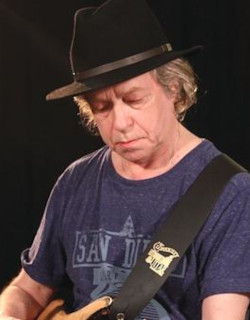
Eric Robin Bell, Northern Irish rock and blues musician, is born on September 3, 1947 in East Belfast, Northern Ireland. He is best known as a founder member and the original guitarist of the rock group Thin Lizzy. After his time in Thin Lizzy, he briefly fronts his own group before joining The Noel Redding Band in the mid-1970s. He has since released several solo albums and performs regularly with a blues-based trio, the Eric Bell Band.
Bell begins his career with local groups around the Belfast area, including the last incarnation of Them to feature Van Morrison, between September and October 1966. He also plays with a number of other bands including Shades of Blue, The Earth Dwellers and The Bluebeats, before joining an Irish showband named The Dreams. He leaves in 1969 having tired of the showband format and, at the end of that year, forms a band with local musicians Phil Lynott, Eric Wrixon and Brian Downey. Bell names the group Thin Lizzy, after Tin Lizzie, a robot character in The Dandy comic.
Organist Eric Wrixon leaves Thin Lizzy after a few months, and the remaining trio later secure a contract with Decca Records. As lead guitarist, Bell plays on Thin Lizzy’s first three albums, Thin Lizzy, Shades of a Blue Orphanage and Vagabonds of the Western World, as well as their hit single “Whiskey in the Jar.” He co-writes a number of songs with Lynott and Downey, including “The Rocker” which becomes a live favourite throughout the band’s career. He also composes one song on his own, “Ray Gun,” from their first album, Thin Lizzy.
Although Thin Lizzy gains in popularity during the early 1970s, the pressures of recording, touring and the excesses of the rock star lifestyle begin to take their toll. Bell leaves the band after a New Year’s Eve concert in 1973, after throwing his guitar into the air in the middle of the concert, pushing the amplifiers into the audience and storming off stage. He states later that he had no regrets about leaving: “I really had to leave because of ill-health. It was exhaustion, and the majority of things that were available to me… I couldn’t really handle it.” He is temporarily replaced by Gary Moore.
In 1974, after a brief period fronting his own Eric Bell Band, Bell is recruited by ex-Jimi Hendrix sideman Noel Redding, along with guitarist/singer Dave Clarke and drummer Les Sampson, to form The Noel Redding Band. He is initially unsure of the musical direction Redding is taking, but goes on to record two albums with the group before they split in 1976. A third album of unused tracks is released in 1995. He composes the song “Love and War” for the second album, Blowin’.
In 1980, Bell reunites with Thin Lizzy to record a tribute song to Jimi Hendrix, “Song for Jimmy,” which is released as an orange flexi disc and given away with Flexipop in August 1981. It is later included on Thin Lizzy’s Vagabonds Kings Warriors Angelsbox set in 2002, although much of Bell’s lead guitar work is missing from this version as the relevant master tapes cannot be found. He also appears as a guest on Thin Lizzy’s final tour in 1983, and the accompanying live album, Life.
Bell subsequently joins saxophonist Dick Heckstall-Smith‘s eight-piece blues rock ensemble Mainsqueeze. They tour Europe, record a live album in 1983, and later tour as Bo Diddley‘s backing group, recording the Hey… Bo Diddley: In Concert album in 1986.
Bell continues to perform and record with the Eric Bell Band throughout the 1990s and 2000s, releasing several albums. He also records with the Barrelhouse Brothers.
In 2005, Bell joins Gary Moore onstage to perform “Whiskey in the Jar” at the Phil Lynott tribute concert “The Boy Is Back in Town” in the Point Theatre, Dublin. This is released on a DVD called One Night in Dublin: A Tribute to Phil Lynott. In 2010, he moves from London where he had lived for many years to his new home in West Cork, Ireland.
The First Amendment of the Constitution Act 1939 amends the Constitution of Ireland to extend the constitutional definition of “time of war” to include a period during which a war occurs without the state itself being a direct participant. It is introduced and signed into law on September 2, 1939, the day after the Invasion of Poland by Germany and allows the government to exercise emergency powers during World War II, known in Ireland as The Emergency, although the state is neutral.
Article 28.3.3° of the Constitution grants the state sweeping powers during a state of emergency, but in the form in which the article is adopted in 1937, they can be invoked only during a “time of war or armed rebellion.” The First Amendment specifies that “time of war” can include an armed conflict in which the state is not actually taking part.
The amendment is introduced by the Fianna Fáil government of Éamon de Valera on September 2, 1939, and passes swiftly through both houses of the Oireachtas. Unlike later amendments, the First and Second Amendments are not submitted to a referendum because under the terms of Article 51, one of the Transitory Provisions of the Constitution, the Constitution can be amended by a vote of the Oireachtas alone from 1938 to 1941.
The First Amendment is passed only in English. This creates a constitutional difficulty, as the Irish text of the Constitution has legal precedence. The error is rectified by the Second Amendment, passed in 1941, which includes in its provisions, at Reference No. 21, the Irish text of the First Amendment.
The Emergency Powers Act 1939 is passed and signed on the same day as the First Amendment. Further Acts are passed over the course of World War II. The Emergency Powers Act 1976 is passed in response to The Troubles.
Article 28.3.3º is amended on two further occasions. The Second Amendment, passed in 1941, also under Article 51, clarifies that emergency provisions must be within the time of war or armed rebellion itself and add a clause at the end of the last sentence, which specifies that a “time of war” can extend beyond the termination of hostilities. The Twenty-first Amendment, passed in 2001, prohibits the use of the death penalty in a new subsection in Article 15.5.2º, and provides that the emergency provisions of the Constitution cannot be used to allow the death penalty.
On February 10, 1975, the Provisional IRA and British government enter into a truce and restart negotiations. The IRA agrees to halt attacks on the British security forces, and the security forces mostly end their raids and searches. There is a rise in sectarian killings during the truce. Loyalists, fearing they are about to be forsaken by the British government and forced into a united Ireland, increase their attacks on Irish Catholics/nationalists. They hope to force the IRA to retaliate and thus end the truce. Some IRA units concentrate on tackling the loyalists. The fall-off of regular operations causes unruliness within the IRA and some members, with or without permission from higher up, engage in tit-for-tat killings.
On August 22, loyalists kill three Catholic civilians in a gun and bomb attack on a pub in Armagh. Two days later, loyalists shoot dead two Catholic civilians after stopping their car at a fake British Army checkpoint in the Tullyvallen area. Both of these attacks are linked to the Glenanne gang. On August 30, loyalists kill two more Catholic civilians in a gun and bomb attack on a pub in Belfast.
On the night of September 1, a group of Orangemen are holding a meeting in their isolated Orange hall in the rural area of Tullyvallen. At about 10:00 PM, two masked gunmen burst into the hall armed with assault rifles and spray it with bullets while others stand outside and fire through the windows. The Orangemen scramble for cover. One of them is an off-duty Royal Ulster Constabulary (RUC) officer. He returns fire with a pistol and believes he hit one of the attackers. Five of the Orangemen, all Protestant civilians, are killed while seven others are wounded. Before leaving, the attackers also plant a two-pound bomb outside the hall, but it fails to detonate.
The victims are John Johnston (80), James McKee (73) and his son William McKee (40), Nevin McConnell (48), and William Herron (68) who dies two days later. They all belong to Tullyvallen Guiding Star Temperance Orange Lodge. Three of the dead are former members of the Ulster Special Constabulary.
A caller to the BBC claims responsibility for the attack on behalf of the “South Armagh Republican Action Force” or “South Armagh Reaction Force,” saying it is retaliation for “the assassinations of fellow Catholics.” The Irish Times reports on September 10: “The Provisional IRA has told the British government that dissident members of its organisation were responsible” and “stressed that the shooting did not have the consent of the organisation’s leadership.”
In response to the attack, the Orange Order calls for the creation of a legal militia, or “Home Guard,” to deal with republican paramilitaries.
Some of the rifles used in the attack are later used in the Kingsmill massacre in January 1976, when ten Protestant workmen are killed. Like the Tullyvallen massacre, it is claimed by the “South Armagh Reaction Force” as retaliation for the killing of Catholics elsewhere.
In November 1977, 22-year-old Cullyhanna man John Anthony McCooey is convicted of driving the gunmen to and from the scene and of IRA membership. He is also convicted of involvement in the killings of Ulster Defence Regiment (UDR) soldier Joseph McCullough, chaplain of Tullyvallen Orange lodge, in February 1976, and UDR soldier Robert McConnell in April 1976.
O’Rourke makes his debut on the inter-county scene when he is picked for the Meath minor team. He later joins the under-21 side but enjoys little success in these grades. He makes his senior debut during the 1975-1976 league. Over the course of the next twenty years he is a regular member of the starting fifteen and wins back-to-back All-Ireland medals in 1987 and 1988. He also wins five Leinster Senior Football Championship medals, three National Football League titles and is named Texaco Footballer of the Year in 1991. He plays his last game for Meath in July 1995.
In retirement from playing O’Rourke combines his teaching career with a new position as a sports broadcaster. His media career begins with RTÉ where he has worked as a studio analyst with the flagship programme The Sunday Game for over twenty-five years. He also writes a weekly column for the Sunday Independent.
Feargus Edward O’Connor, Irish Chartist leader and advocate of the Land Plan, which seeks to provide smallholdings for the labouring classes, dies in Notting Hill, West London, England on August 30, 1855. He succeeds in making Chartism the first specifically working-class national movement in Great Britain. A highly charismatic figure, he is admired for his energy and oratory but was criticised for alleged egotism.
O’Connor is born on July 18, 1796, in Connorville house, near Castletown-Kinneigh in west County Cork, into a prominent Irish Protestant family. He is originally christened Edward Bowen O’Connor, but his father, the Irish nationalist politician Roger O’Connor, chooses to call him Feargus. He is educated mainly at Portarlington Grammar School and has some elementary schooling in England.
O’Connor, who claims royal descent from the ancient kings of Ireland, practices law but exchanges law for politics when he is elected to the British House of Commons as Member of Parliament for County Cork, as a Repeal candidate rather than a Whig. Unseated in 1835, he turns to radical agitation in England, although he continues to press Irish grievances and to seek Irish support. As a result of his humour, invective, and energy, he becomes the best-known Chartist leader and the movement’s most popular speaker. His journal, The Northern Star, founded in 1837, gains a wide circulation.
O’Connor’s methods and views alienate other Chartist leaders, particularly William Lovett, but in 1841, after spending a year in prison for seditious libel, he acquires undisputed leadership of the Chartists. Failing to lead the movement to victory and vacillating in his attitude toward the middle class and toward the People’s Charter, a six-point bill drafted and published in May 1838, he begins to lose power, although he is remarkably elected to Parliament for Nottingham in 1847, defeating Thomas Benjamin Hobhouse.
The failure of the People’s Charter in 1848 marks the beginning of the end for O’Connor, whose egocentricity is already bordering on madness. In the spring of 1852, he visits the United States, where his behaviour leaves no doubt that he is not a well man. It is possible that he is in the early stages of general paralysis of the insane, brought on by syphilis.
In the House of Commons in 1852 O’Connor strikes three fellow MPs, one of them Sir Benjamin Hall, a vocal critic of the Land Plan. Arrested by the Deputy Sergeant-at-Arms, he is sent by his sister to Dr. Thomas Harrington Tuke‘s private Manor House Asylum in Chiswick, where he remains until 1854, when he is removed to his sister’s house. He dies on August 30, 1855, at 18 Albert Terrace, Notting Hill Gate. He is buried in Kensal Green Cemetery on September 10. No fewer than 40,000 people witness the funeral procession. Most Chartists prefer to remember his strengths rather than his shortcomings.
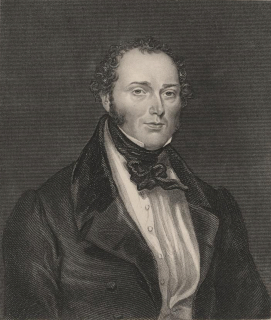
(Pictured: Stipple engraving portrait of the Chartist leader Feargus Edward O’Connor by an unknown artist, mid 19th century, published in the Northern Star in December 1837)
Yeats’s early style is that of an illustrator. He only begins to work regularly in oils in 1906. His early pictures are simple lyrical depictions of landscapes and figures, predominantly from the west of Ireland, especially of his boyhood home of Sligo, County Sligo. His work contains elements of Romanticism.
Yeats is the youngest son of Irish portraitist John Butler Yeats and the brother of William Butler Yeats, the 1923 Nobel Prize in Literature recipient. He grows up in Sligo with his maternal grandparents, before returning to his parents’ home in London in 1887. Early in his career he works as an illustrator for magazines like The Boy’s Own Paper and Judy, draws comic strips, including the Sherlock Holmes parody “Chubb-Lock Homes” for Comic Cuts, and writes articles for Punch under the pseudonym “W. Bird.” In 1894 he marries Mary Cottenham, also a native of England and two years his senior and resides in Wicklow according to the 1911 Census of Ireland.
From around 1920, Yeats develops into an intensely Expressionist artist, moving from illustration to Symbolism. He is sympathetic to the Irish Republican cause, but not politically active. However, he believes that “a painter must be part of the land and of the life he paints,” and his own artistic development, as a Modernist and Expressionist, helps articulate a modern Dublin of the 20th century, partly by depicting specifically Irish subjects, but also by doing so in the light of universal themes such as the loneliness of the individual, and the universality of the plight of man. Samuel Beckett writes that “Yeats is with the great of our time… because he brings light, as only the great dare to bring light, to the issueless predicament of existence.” The Marxist art critic and author John Berger also pays tribute to Yeats from a very different perspective, praising the artist as a “great painter” with a “sense of the future, an awareness of the possibility of a world other than the one we know.”
Yeats’s favourite subjects included the Irish landscape, horses, circus and travelling players. His early paintings and drawings are distinguished by an energetic simplicity of line and colour, his later paintings by an extremely vigorous and experimental treatment of often thickly applied paint. He frequently abandons the brush altogether, applying paint in a variety of different ways, and is deeply interested in the expressive power of colour. Despite his position as the most important Irish artist of the 20th century (and the first to sell for over £1m), he takes no pupils and allows no one to watch him work, so he remains a unique figure. The artist closest to him in style is his friend, the Austrian painter, Oskar Kokoschka.
Besides painting, Yeats has a significant interest in theatre and in literature. He is a close friend of Samuel Beckett. He designs sets for the Abbey Theatre, and three of his own plays are also produced there. He writes novels in a stream of consciousness style that James Joyce acknowledges, and also many essays. His literary works include The Careless Flower, The Amaranthers, Ah Well, A Romance in Perpetuity, And to You Also, and The Charmed Life. Yeats’s paintings usually bear poetic and evocative titles. Indeed, his father recognizes that Jack is a far better painter than he, and also believes that “someday I will be remembered as the father of a great poet, and the poet is Jack.” He is elected a member of the Royal Hibernian Academy in 1916. He dies in Dublin on March 28, 1957, and is buried in Mount Jerome Cemetery.
Yeats holds the distinction of being Ireland’s first medalist at the Olympic Games in the wake of creation of the Irish Free State. At the 1924 Summer Olympics in Paris, his painting The Liffey Swim wins a silver medal in the arts and culture segment of the Games. In the competition records the painting is simply entitled Swimming.
(Pictured: Photo of Jack Butler Yeats by Alice Boughton)
Le Fanu is born at 45 Lower Dominick Street in Dublin to Thomas Philip Le Fanu and Emma Lucretia Dobbin, a literary family of Huguenot, Irish, and English descent. Within a year of his birth the family moves to the Royal Hibernian Military School in Phoenix Park where his father, a Church of Ireland clergyman, is appointed to the chaplaincy of the establishment.
In 1826, the family moves to Abington, County Limerick, where Le Fanu’s father takes up his second rectorship. Le Fanu uses his father’s library to educate himself and by the age of fifteen he was writing poetry.
The disorders of the Tithe War (1831–1836) affect the region in 1832 and the following year the family temporarily moves back to Dublin, where Le Fanu works on a government commission. Although Thomas Le Fanu tries to live as though he is well-off, the family is in constant financial difficulty. At his death, Thomas has almost nothing to leave to his sons and the family has to sell his library to pay off some of his debts.
Le Fanu studies law at Trinity College, Dublin, where he is elected Auditor of the College Historical Society. He is called to the bar in 1839 but never practices and soon abandons law for journalism. In 1838 he begins contributing stories to the Dublin University Magazine, including his first ghost story, The Ghost and the Bone-Setter (1838). He becomes owner of several newspapers from 1840, including the Dublin Evening Mail and the Warder.
In 1856 the family moves from Warrington Place to the house of his wife Susanna’s parents at 18 Merrion Square. His personal life becomes difficult at this time, as his wife suffers from increasing neurotic symptoms. She suffers from anxiety after the deaths of several close relatives, including her father two years previous. In April 1858, Susanna suffers a “hysterical attack” and dies the following day. She is buried in the Bennett family vault in Mount Jerome Cemetery beside her father and brothers. He does not write any fiction from this point until the death of his mother in 1861.
He becomes the editor and proprietor of the Dublin University Magazine in 1861 and begins to take advantage of double publication, first serializing in the Dublin University Magazine, then revising for the English market. He publishes both The House by the Churchyard and Wylder’s Hand in this manner. After lukewarm reviews of The House by the Churchyard, which is set in the Phoenix Park area of Dublin, Le Fanu signs a contract with Richard Bentley, his London publisher, which specifies that future novels be stories “of an English subject and of modern times,” a step Bentley thinks necessary for Le Fanu to satisfy the English audience. Le Fanu succeeds in this aim in 1864, with the publication of Uncle Silas, which is set in Derbyshire. In his very last short stories, however, Le Fanu returns to Irish folklore as an inspiration and encourages his friend Patrick Kennedy to contribute folklore to the Dublin University Magazine.
Le Fanu dies in his native Dublin on February 7, 1873, at the age of 58. Today there is a road and a park in Ballyfermot, near his childhood home in south-west Dublin, named after him.
Lord Louis Mountbatten is killed on August 27, 1979, when Provisional Irish Republican Army (IRA) terrorists detonate a 50-pound bomb hidden on his fishing vessel, Shadow V. Mountbatten, a war hero, elder statesman, and second cousin of Queen Elizabeth II, is spending the day with his family in Donegal Bay off Ireland’s northwest coast when the bomb explodes. Three others are killed in the attack, including Mountbatten’s 14-year-old grandson, Nicholas. Later that day, an IRA bombing attack on land kills 18 British paratroopers in County Down, Northern Ireland in what becomes known as the Warrenpoint ambush.
The assassination of Mountbatten is the first blow struck against the British royal family by the IRA during its long terrorist campaign to drive the British out of Northern Ireland and unite it with the Republic of Ireland to the south. The attack hardens the hearts of many British against the IRA and convinces Prime MinisterMargaret Thatcher’s government to take a hardline stance against the terrorist organization.
In 1947, Mountbatten is appointed the last Viceroy of India, and he conducts the negotiations that lead to independence for India and Pakistan later that year. He holds various high naval posts in the 1950s and serves as chief of the United Kingdom Defense Staff and chairman of the Chiefs of Staff Committee. Meanwhile, he is made Viscount Mountbatten of Burma and a first earl. He is the uncle of Philip Mountbatten and introduces Philip to the future Queen Elizabeth. He later encourages the marriage of the two distant cousins and becomes godfather and mentor to their first born, Charles, Prince of Wales.
Made Governor and then Lord-Lieutenant of the Isle of Wight in his retirement, Mountbatten is a respected and beloved member of the royal family. His assassination is perhaps the most shocking of all horrors inflicted by the IRA against the United Kingdom. In addition to his grandson Nicholas, 15-year-old boat hand Paul Maxwell and the Dowager Lady Brabourne, Nicholas’ grandmother, are also killed. Mountbatten’s grandson Timothy, Nicholas’ twin brother, is injured as is his daughter, Lady Brabourne, and the twins’ father, Lord Brabourne.
The IRA immediately claims responsibility for the attack, saying it detonated the bomb by remote control from the coast. It also takes responsibility for the same-day bombing attack against British troops in County Down, which claims eighteen lives.
IRA member Thomas McMahon is later arrested and convicted of preparing and planting the bomb that destroyed Mountbatten’s boat. A near-legend in the IRA, he is a leader of the IRA’s notorious South Armagh Brigade, which kills more than 100 British soldiers. He is one of the first IRA members to be sent to Libya to train with detonators and timing devices and is an expert in explosives. Authorities believe the Mountbatten assassination is the work of many people, but McMahon is the only individual convicted. Sentenced to life in prison, he is released in 1998 along with other IRA and Unionist terrorists under a controversial provision of the Good Friday Agreement.
(From: This Day In History: Mountbatten killed by IRA, by the editors of History.com, July 21, 2010, http://www.history.com)
Fitzsimons is born in Ireland in 1741. In the mid-1750s his family immigrates to Philadelphia, where his father dies soon thereafter. He has enough education that he begins work as a clerk in a mercantile house. He marries Catherine Meade on November 23, 1761 and forms a business partnership with her brother George. Their firm, which specializes in the West Indies trade, operates successfully for over 41 years.
The firm is soon hit by the new revenue measures created to help support the finances of the British Empire, including the much reviled Stamp Act of 1765. Concerned with these ideas, Fitzsimons becomes active in the Irish merchant community in Philadelphia. He is a founding member of the Friendly Sons of St. Patrick in 1771 and later, in 1774, a steering committee organized to protest the Coercive Acts.
When Pennsylvania begins mobilizing and organizing a militia to fight the British, Fitzsimons is soon involved. He serves as captain of a company of home guards under the command of Colonel John Caldwalader. Initially his company serves as part of the soldiers who man posts along the New Jersey coast. His unit later serves as part of the reserve at the Battle of Trenton in 1776. Later in the war, he serves on the Pennsylvania Council of Safety and heads a board to oversee the newly formed Pennsylvania Navy.
Fitzsimons enters active politics as a delegate to the Continental Congress in 1782 and 1783. He is a member of the Pennsylvania House of Representatives from 1786 until 1795. He is also a delegate to the U.S. Constitutional Convention in 1787. Although not a leading member of that convention, he supports a strong national government, the end of slavery, the United States Congress‘s powers to impose a tariff on imports and exports, the granting the House of Representatives, and power in equal to the United States Senate in making treaties. He is one of only two Catholic signers of the Constitution of the United States, the other being Daniel Carroll of Maryland.
After the Constitution is established, Fitzsimons serves in the first three sessions of the House of Representatives as a Federalist, where he favors protective tariffs and a strong navy, co-drafting the Naval Act of 1794 authorizing the original six frigates of the United States Navy. He fails to win re-election in 1794. This was partially attributed to public opinion turning against the Federalist Party over the forceful suppression of the Whiskey Rebellion. Although he never holds elective office again, he serves in 1798 as head of the committee of merchants overseeing the subscription-loan to build a warship at private expense for use in the Quasi-War.
In 1796, Fitzsimons, along with James Innes of Virginia, is appointed by President John Adams to serve as one of two American members on the five-man debt commission charged under Article VI of the Jay Treaty with examining the claims of British subjects unable to collect debts incurred by Americans prior to the American Revolution. Fitzsimons, Innes and Samuel Sitgreaves, who replaces Innes upon the latter’s death, become annoyed with the arguments used by their British counterparts to inflate the claims total. Fitzsimons and Sitgreaves angrily and permanently secede from the board in July 1799. The claims are eventually disposed of by a lump-sum payment, agreed upon by United States Minister to BritainRufus King with British Foreign SecretaryRobert Banks Jenkinson and approved by PresidentThomas Jefferson and the Senate in 1802.