seamus dubhghaill

Promoting Irish Culture and History from Little Rock, Arkansas, USA


Leave a comment

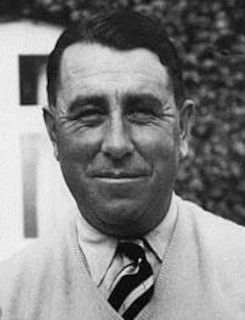
Graeme McDowell Seals European Victory at the 2010 Ryder Cup

On Monday, October 4, 2010, Northern Ireland golfer Graeme McDowell delivers the match-winning point for the European team on the 17th green of the 2010 Ryder Cup at the Celtic Manor Resort in Newport, Wales. His is the last match of the twelve player singles matches against the defending champion United States team, with his opponent being Hunter Mahan. Europe wins the tournament 14.5 to 13.5, and it was his 5-foot putt that is conceded to give victory to Europe. For the first time in its history, the Ryder Cup stretches into a fourth day due to torrential rain on the first day.

Only the brilliance of the Northern Irishman, who holes a stunning birdie putt on the 16th green to extend his lead in the match, and the nervousness of Mahan, who duffs a chip shot on the par-three 17th that seals his defeat, finally turns back a United States team that threatened to deny Colin Montgomerie a captain’s victory to add to the many he has won as a player in this event.

“I didn’t hit a shot out there so it’s not much of an achievement,” Montgomerie says afterwards, dedicating the victory to Seve Ballesteros who is suffering from brain cancer and ultimately dies in 2011. “But it is a proud, proud personal moment for me and for all of us in European golf. My players all played magnificently, all 12 of them.”

McDowell, who had won the U.S. Open earlier in the year, is magnificent when his captain and his teammates need him to be. Through the years the Irish have developed a habit of holing the winning putt in this event and if the latest member of a club that includes Eamonn Darcy, Philip Walton and Paul McGinley is disappointed in being denied the chance to actually watch his ball roll into the hole, he hides it well.

“I didn’t need to hole a putt, thank God,” he says. “I was so nervous out there. I just can’t describe the feeling of this golf tournament – trying to win it for eleven other teammates, the caddies, the fans and Monty. It’s just a special feeling. There is nothing quite like it.”

Europe goes into the singles round holding a three-point lead and at one stage during the afternoon are ahead in eight of the twelve matches. An easy victory beckons, or at least it does until the United States wins a series of matches, some decisively (Tiger Woods over Francesco Molinari 4 & 3, Dustin Johnson over Martin Kaymer 6 & 4) and one by a narrow margin (Steve Stricker beats Lee Westwood on the 17th green). Even Phil Mickelson, one of the weakest players on the United States team over the previous three days, manages a victory, beating Peter Hanson 4 & 2.

The European team responds, with points coming from Luke Donald, who beats Jim Furyk one-up, and Ian Poulter, a victor over Matt Kuchar. However, as the day progresses a victory that had seemed inevitable begins to look uncertain.

In the end, it comes down to McDowell and Mahan on the 17th hole, watched by their teammates and captains, a good portion of the 35,000 mud-splattered souls at Celtic Manor, and a television audience around the world running into many millions. Major championships come with their own particular pressure but, as McDowell says, the Ryder Cup exerts pressure of an altogether different order. In the end the pressure proves too much for the American. His attempted chip from 15 yards short of the green does not even reach the green, far less the flag.


Leave a comment

Death of Sculptor Conor Fallon

Irish sculptor Conor Hubert Fallon dies of lung cancer at the Blackrock Clinic, County Dublin, on October 3, 2007.

Fallon is born at Holles Street Hospital, Dublin, on January 30, 1939, the third of six sons of Padraic Fallon, the Irish poet and playwright, and Dorothea Maher. The family moves to Clonard, County Wexford, where he grows up. He has three surviving brothers, Brian, Ivan and Padraic, who have all had journalism careers. His early interest in literature and the arts is nourished by his father and elder brothers, and by contact with the cultured circle of writers, artists, musicians and intellectuals within which his father moves.

Fallon is educated at St. Peter’s College, Wexford, and Trinity College, Dublin. He begins painting in 1957 while at Trinity College, where he is studying natural science but is advised to pay more attention to his art. His interest in painting is probably inspired by the example of Tony O’Malley, a close family friend. As a compromise with his father, who does not see his talent, he also studies accountancy at night.

Largely self-taught in painting, he learns fundamentals of technique from Richard Kingston, to whom he is introduced by O’Malley. He largely paints landscapes in acrylic and gouache, in a manner heavily influenced by that of Jack Butler Yeats.

In 1964, Fallon visits O’Malley in St. Ives, Cornwall, where he had emigrated several years earlier, intending also to meet the Cornish abstract landscape painter Peter Lanyon, the chief creative force in the thriving artists’ colony centred on St. Ives. His arrival, however, coincides with Lanyon’s death from injuries suffered in a gliding accident. A gently sympathetic stranger amid the bereaved artistic community, he finds an immediate empathy and rapport with Nancy Wynne-Jones, a Welsh-born painter sixteen years his senior who had studied under Lanyon. They marry in 1966. They adopt two children in 1970, siblings John and Bridget.

Encouraged to take up sculpture, English sculptor Denis Mitchell becomes Fallon’s mentor in Cornwall, and with Breon O’Casey, he develops his sculpting. He becomes notable for his cast steel and bronze work, especially birds, horses and hares. He has his first solo exhibition in Newlyn in 1972, showing both painting and sculpture.

In May 1972, Fallon moves with his family back to Ireland, settling at Scilly House, on a hillside overlooking the harbour at Kinsale, County Cork. Removed from any centre of artistic activity, he devotes himself fulltime to a solitary development of his sculpture, refining his methodology and technique, and his skills in working various metals, beginning in 1974 to work in steel. In 1975, he first exhibits in Ireland at a solo show at the Emmet Gallery, Dublin, again showing both painting and sculpture, including his first steel sculptures to be exhibited.

Beginning in 1983, Fallon exhibits regularly with the Taylor Galleries, Dublin. Desiring closer proximity to Dublin art activities, and with their children attending university in the city, Fallon and his wife move in 1987 to Ballard House, Ballinaclash, Rathdrum, County Wicklow.

In 1980, Fallon is awarded the Oireachtas gold medal for sculpture. He becomes an honorary associate of the National College of Art and Design in 1993. He is secretary of the Royal Hibernian Academy, becoming a full member in 1989, and on the board of the National Gallery of Ireland. He is also elected to Aosdána in 1984.

In the summer of 2007, some six months after his wife’s death, Fallon wis diagnosed with advanced metastatic lung cancer. He dies on October 3, 2007, at the Blackrock Clinic, County Dublin, and is buried beside his wife in Ballinatone churchyard, Greenan, Rathdrum, County Wicklow.


Leave a comment

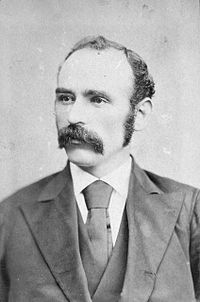
Birth of Ruairí Ó Brádaigh, Republican Political & Military Leader

Ruairí Ó Brádaigh, Irish republican political and military leader, is born Peter Roger Casement Brady on October 2, 1932, in Longford, County Longford. He is Chief of Staff of the Irish Republican Army (IRA) from 1958 to 1959 and again from 1960 to 1962, president of Sinn Féin from 1970 to 1983, and president of Republican Sinn Féin from 1987 to 2009.

Ó Brádaigh is born into a middle-class republican family. His father, Matt Brady, is an IRA volunteer who is severely wounded in an encounter with the Royal Irish Constabulary (RIC) in 1919. His mother, May Caffrey, is a Cumann na mBan volunteer and a 1922 graduate of University College Dublin (UCD). His father dies when he is ten and is given a paramilitary funeral led by his former IRA colleagues. His mother, prominent as the Secretary for the County Longford Board of Health, lives until 1974. He is educated at Melview National School at primary level and attends secondary school at St. Mel’s College, leaving in 1950, and graduates from University College Dublin in 1954. That year he takes a job teaching Irish language at Roscommon Vocational School in Roscommon. He is a deeply religious Catholic who refrains from smoking or drinking.

Ó Brádaigh joins Sinn Féin in 1950. While at university, in 1951, he joins the Irish Republican Army. In September 1951, he marches with the IRA at the unveiling of the Seán Russell monument in Fairview Park, Dublin. A teacher by profession, he is also a Training Officer for the IRA. In 1954, he is appointed to the Military Council of the IRA, a subcommittee set up by the IRA Army Council in 1950 to plan a military campaign against Royal Ulster Constabulary (RUC) barracks in Northern Ireland.

On August 13, 1955, Ó Brádaigh leads a ten-member IRA group in an arms raid on Hazebrouck Barracks, near Arborfield, Berkshire, England, a depot for the No. 5 Radar Training Battalion of the Royal Electrical and Mechanical Engineers. It is the biggest IRA arms raid in Britain. Most, if not all, of the weapons are recovered in a relatively short period of time. A van, traveling too fast, is stopped by the police and IRA personnel are arrested. Careful police work leads to weapons that had been transported in a second van and stored in London.

The IRA Border Campaign commences on December 12, 1956. As an IRA General Headquarters Staff (GHQ) officer, Ó Brádaigh is responsible for training the Teeling Column in the west of Ireland. During the Campaign, he serves as second-in-command of the Teeling Column. On December 30, 1956, he partakes in the Teeling Column attack on RUC barracks in Derrylin, County Fermanagh. RUC Constable John Scally is killed in the attack and is the first fatality of the new IRA campaign. Ó Brádaigh and others are arrested by the Garda Síochána across the border in County Cavan the day after the attack. They are tried and jailed for six months in Mountjoy Prison. A leading abstentionist, upon his arrest he refuses to recognize the authority of the Irish government and refuses to renounce violence in exchange for his release.

Although a prisoner, Ó Brádaigh is elected a Sinn Féin Teachta Dála (TD) for the Longford–Westmeath constituency at the 1957 Irish general election. Running on an abstentionist ticket, Sinn Féin wins four seats which go to Ó Brádaigh, Eighneachán Ó hAnnluain, John Joe McGirl and John Joe Rice. They refuse to recognise the authority of Dáil Éireann and state they will only take a seat in an all-Ireland parliament. He does not retain his seat at the 1961 Irish general election.

Upon completing his prison sentence, Ó Brádaigh is immediately interned at the Curragh Camp along with other republicans. On September 27, 1958, he escapes from the camp along with Dáithí Ó Conaill. While a football match is in progress, the pair cuts through a wire fence and escapes from the camp under a camouflage grass blanket. This is an official escape, authorised by the officer commanding (OC) of the IRA internees, Tomás Óg Mac Curtain. He is the first Sinn Féin TD on the run since the 1920s.

In October 1958, Ó Brádaigh becomes the IRA Chief of Staff, a position he holds until May 1959, when Seán Cronin is elected as his replacement. He is arrested in November 1959, refuses to answer questions, and is jailed in Mountjoy Prison under the Offences against the State Act. He is released in May 1960 and, after Cronin is arrested, again becomes Chief of Staff. Although he always emphasises that it is a collective declaration, he is the primary author of the statement ending the IRA Border Campaign in 1962. At the IRA 1962 Convention he indicates that he is not interested in continuing as Chief of Staff.

After Ó Brádaigh’s arrest in December 1956, he takes a leave from teaching at Roscommon Vocational School. He is re-instated and begins teaching again in late 1962, just after he is succeeded by Cathal Goulding in the position of Chief of Staff of the IRA. He remains an active member of Sinn Féin and is also a member of the IRA Army Council throughout the decade.

In the 1966 United Kingdom general election, Ó Brádaigh runs unsuccessfully as an Independent Republican candidate in the Fermanagh and South Tyrone constituency.

Ó Brádaigh opposes the decision of the IRA and Sinn Féin to drop abstentionism and to recognise the Westminster parliament in London, the Stormont parliament in Belfast and the Leinster House parliament in 1969/1970. On January 11, 1970, along with Seán Mac Stíofáin, he leads the walkout from the 1970 Sinn Féin Ard Fheis after the majority votes to end the policy of abstentionism, although the vote to change the Sinn Féin constitution fails to receive the required two-thirds majority. The delegates who walk out reconvene at the Kevin Barry Hall in Parnell Square, Dublin, and establish Provisional Sinn Féin.

Ó Brádaigh is voted chairman of the Caretaker Executive of Provisional Sinn Féin. That October, he formally becomes president of the party. He holds this position until 1983. In his presidential address to the 1971 Provisional Sinn Féin Ard Fheis, he says that the first step to achieving a United Ireland is to make Northern Ireland ungovernable. He apparently also serves on the Army Council or the executive of the Provisional Irish Republican Army until he is seriously injured in a car accident on January 1, 1984.

On May 31, 1972, Ó Brádaigh is arrested under the Offences Against the State Act and immediately commences a hunger strike. A fortnight later the charges against him are dropped and he is released. With Dáithí Ó Conaill he develops the Éire Nua policy, which is launched on June 28, 1972. The policy calls for a federal Ireland.

On December 3, 1972, Ó Brádaigh appears on the London Weekend Television Weekend World programme. He is arrested by the Gardaí again on December 29, 1972, and charged in the newly established Special Criminal Court with Provisional IRA membership. In January 1973 he is the first person convicted under the Offences Against the State (Amendment) Act 1972 and is sentenced to six months in the Curragh Camp.

In 1974, Ó Brádaigh testifies in person before the United States Senate Committee on Foreign Relations regarding the treatment of IRA prisoners in Ireland. He also has a meeting with prominent Irish American congressman Tip O’Neill. The same year, the State Department revokes his multiple entry visa. Federal Bureau of Investigation documents in 1975 describe him as a “national security threat” and a “dedicated revolutionary undeterred by threat or personal risk” and show that the visa ban was requested by the British Foreign Office and supported by the Dublin government.

On December 10, 1974, Ó Brádaigh participates in the Feakle talks between the IRA Army Council and Sinn Féin leadership and the leaders of the Protestant churches in Ireland. Although the meeting is raided and broken up by the Gardaí, the Protestant churchmen pass on proposals from the IRA leadership to the British government. These proposals call on the British government to declare a commitment to withdraw, the election of an all-Ireland assembly to draft a new constitution and an amnesty for political prisoners.

The IRA subsequently calls a “total and complete” ceasefire intended to last from December 22, 1974, to January 2, 1975, to allow the British government to respond to proposals. British government officials also hold talks with Ó Brádaigh in his position as president of Sinn Féin from late December to January 17, 1975.

On February 10, 1975, the IRA Army Council, unanimously endorses an open-ended cessation of IRA “hostilities against Crown forces,” which becomes known as the 1975 truce. The IRA Chief of Staff at the time is Seamus Twomey of Belfast. It is reported in some quarters that the IRA leaders mistakenly believe they had persuaded the British Government to withdraw from Ireland and the protracted negotiations between themselves and British officials are the preamble to a public declaration of intent to withdraw. In fact, as British government papers now show, the British entertain talks with the IRA in the hope that this would fragment the movement further and score several intelligence coups during the talks. This bad faith embitters many in the republican movement, and another ceasefire does not happen until 1994.

In late December 1976, along with Joe Cahill, Ó Brádaigh meets two representatives of the Ulster Loyalist Central Co-ordinating Committee (ULCCC), John McKeague and John McClure, at the request of the latter body. Their purpose is to try to find a way to accommodate the ULCCC proposals for an independent Northern Ireland with the Sinn Féin’s Éire Nua programme. It is agreed that if this can be done, a joint Loyalist-Republican approach can then be made to request the British government to leave Ireland. Desmond Boal QC and Seán MacBride SC are requested and accepted to represent the loyalist and republican positions. For months they have meetings in various places including Paris. The dialogue eventually collapses when Conor Cruise O’Brien, then Minister for Posts and Telegraphs and vociferous opponent of the Provisional IRA, becomes aware of it and condemns it on RTÉ Radio. As the loyalists had insisted on absolute secrecy, they feel unable to continue with the talks as a result.

In the aftermath of the 1975 truce, the Ó Brádaigh/Ó Conaill leadership comes under severe criticism from a younger generation of activists from Northern Ireland, headed by Gerry Adams, who becomes a vice-president of Sinn Féin in 1978. By the early 1980s, Ó Brádaigh’s position as president of Sinn Féin is openly under challenge and the Éire Nua policy is targeted in an effort to oust him. The policy is rejected at the 1981 Sinn Féin Ard Fheis and finally removed from the Sinn Féin constitution at the 1982 Ard Fheis. At the following year’s Ard Fheis, Ó Brádaigh and Ó Conaill resign from their leadership positions, voicing opposition to the dropping of the Éire Nua policy by the party.

On November 2, 1986, the majority of delegates to the Sinn Féin Ard Fheis vote to drop the policy of abstentionism if elected to Dáil Éireann, but not the British House of Commons or the Northern Ireland parliament at Stormont, thus ending the self-imposed ban on Sinn Féin elected representatives from taking seats at Leinster House. Ó Brádaigh and several supporters walk out and immediately assemble at Dublin’s West County Hotel and set up Republican Sinn Féin (RSF). As an ordinary member, he had earlier spoken out against the motion (resolution 162) in an impassioned speech. The Continuity IRA becomes publicly known in 1996. Republican Sinn Féin’s relationship with the Continuity IRA is similar to the relationship between Sinn Féin and the Provisional IRA when Ó Brádaigh was Sinn Féin’s president.

Ó Brádaigh believes RSF to be the sole legitimate continuation of the pre-1986 Sinn Féin, arguing that RSF has kept the original Sinn Féin constitution. RSF readopts and enhances his Éire Nua policy. His party has electoral success in only a few local elections.

Ó Brádaigh remains a vociferous opponent of the Good Friday Agreement, viewing it as a programme to copperfasten Irish partition and entrench sectarian divisions in the north. He condemns his erstwhile comrades in Provisional Sinn Féin and the Provisional IRA for decommissioning weapons while British troops remain in the country. In his opinion, “the Provo sell-out is the worst yet – unprecedented in Irish history.” He condemns the Provisional IRA’s decision to seal off a number of its arms dumps as “an overt act of treachery,” “treachery punishable by death” under IRA General Army Order Number 11.

In July 2005, Ó Brádaigh hands over a portion of his personal political papers detailing discussions between Irish Republican leaders and representatives of the British Government during 1974–1975 to the James Hardiman Library, National University of Ireland, Galway.

In September 2009, Ó Brádaigh announces his retirement as leader of Republican Sinn Féin. His successor is Des Dalton. He is also a long-standing member of the Celtic League, an organization which fosters cooperation between the Celtic people and promotes the culture, identity and eventual self-determination for the people, in the form of six sovereign states, for the Celtic nationsWales, Cornwall, Brittany, Scotland, Isle of Man and Ireland.

After suffering a period of ill-health, Ó Brádaigh dies on June 5, 2013, at Roscommon County Hospital. His funeral is attended by 1,800 mourners including Fine Gael TD Frank Feighan and is policed by the Garda Emergency Response Unit and Gardaí in riot gear, for “operational reasons,” a show of force believed to have been to deter the republican tradition of firing a three-volley salute of shots over the final place of rest during the graveyard oration. As a result, there are some minor scuffles between gardai and mourners.


Leave a comment

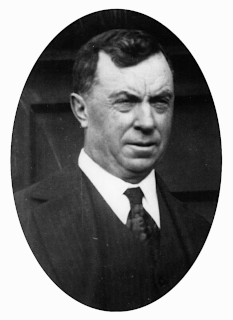
Birth of William Cosgrove, Victoria Cross Recipient

William Cosgrove VC MSM, an Irish recipient of the Victoria Cross, the highest and most prestigious award for gallantry in the face of the enemy that can be awarded to British and Commonwealth forces, is born at Aghada, County Cork, on October 1, 1888.

Cosgrove is the son of Michael and Mary Cosgrove. He has four brothers, Dan, Ned, David and Joseph, and a sister Mary-Catherine. While they are still young their father emigrates to Australia, but later returns. In the meantime, his mother moves with his siblings to a cottage in nearby Peafield and they attend school at the National School, Ballinrostig. He begins work as an apprentice butcher at Whitegate. One of his daily chores is a morning delivery to Fort Carlisle (now Fort Davis) with a consignment of meat for the troops. It is from Fort Carlisle that he joins the army.

Cosgrove enlists in the Royal Munster Fusiliers on March 24, 1909, and is given the regimental number 8980. At the outbreak of war, the 1st Battalion of the Munster Fusiliers is stationed in Rangoon, Burma, as regular battalions are routinely stationed overseas. They leave Rangoon on November 21, 1914, and Cosgrove, now a corporal, lands in England on January 10, 1915. Upon landing they still wear their Indian issue uniforms and stand on the cold quay in their khaki drill shorts. The battalion is then assigned to the 86th Brigade of the 29th Division (United Kingdom), in preparation for the landings at the Dardanelles in Turkey.

During the Battle of Gallipoli, Turkey, the 1st Munsters, together with the 1st Battalion Royal Dublin Fusiliers and Royal Hampshire Regiment, are on the converted collier River Clyde when it runs ashore for the Cape Helles ‘V’ beach landing at 6:20 a.m. on April 25, 1915. On departing from the ship’s bay they are subject to fierce enfilading machine gun fire from hidden Turkish defences. One hundred or more of the Battalion’s men fall at this stage of the battle, with just three companies of Munsters making it to the shelter of the dunes. They are unable to advance due to the withering Turkish fire.

At daybreak on the following day it is decided to take the village behind the Sedd el Bahr fort overlooking the bay. Cosgrove leads a company section during the attack on the Turkish positions. Barbed wire holds them up and he sets himself the task of pulling the stanchion posts of the enemy’s high wire entanglement single-handed out of the ground, notwithstanding the terrific fire from both front and flanks with officers and men falling all around him. Thanks to his exceptional bravery, his heroic actions contribute greatly to the successful clearing of the heights. Turkish counter-attacks are held off. It is during this attack that his actions earn him the regiment’s first Victoria Cross of the war. He is also wounded during this action. Promoted to Sergeant, he sees no further action due to his wound, which is a contributing factor in his death years later.

Cosgrove transfers to the Royal Fusiliers in 1918, to the Prince of Wales’s Leinster Regiment in 1920, the Royal Northumberland Fusiliers in 1922, and later goes as an instructor to the Indian Territorial Force in 1928 to become 7042223 Staff Sgt Instructor. He comes home in 1935 pending discharge to pension. However, he is admitted to Millbank hospital and takes discharge before he is fit. After a short leave in Cork, he returns to London, where he is admitted to Middlesex Hospital. He is later transferred to Millbank hospital London, where he dies at the age of 47 on July 21, 1936.

In 1972, Cosgrove’s Victoria Cross medal is sold for a record price £2,300 to a private collector. When questioned about the high price which the medal fetches, the auctioneer replies “When one buys a gallantry medal, it is not just the medal one buys, but the act that won it.” His Victoria Cross, together with his other medals, are sold at an auction by Dix Noonan Webb held on September 22, 2006 for “the world’s most valuable auction of orders, decorations and medals.” A total of £1,965,010 is spent by 305 different buyers, a figure which represents “the highest amount ever realised by any numismatic auction in the UK.” The day’s highest price, £180,000, is paid by a collector for the Gallipoli landings Victoria Cross group of six, which includes the medal awarded to Sgt. William Cosgrove, Royal Munster Fusiliers.


Leave a comment

Birth of Irish Playwright Jimmy Murphy

Irish playwright Jimmy Murphy is born to Irish parents in Salford, Lancashire, England, on September 30, 1962. He is a former writer-in-residence at the National University of Ireland, Maynooth (2000–01), a member of the Abbey Theatre’s Honorary Advisory Council, a recipient of three bursaries in literature from the Arts Council (Irish: An Chomhairle Ealaíon) and is elected a member of Aosdána in 2004.

When Murphy is six, his family returns to Dublin, settling in the South inner-city district of Islandbridge. He first goes to school in nearby Inchicore, attending the Oblate Fathers’ primary school there, then moves to Ballyfermot, a working-class heartland of suburban Dublin, in his teens. There, he attends secondary school at St. John’s De La Salle College. After failing the Irish Intermediate Certificate he leaves school to pursue an apprenticeship in painting and decorating, taking his Junior and Senior Irish Trade Certificates, and the City and Guilds of London exams at the Dublin Institute of Technology, Bolton Street.

Murphy’s stage plays include Brothers of the Brush (Dublin, The Peacock, Dublin Theatre Festival 1993), which is awarded best new Irish play; A Picture of Paradise (The Peacock, 1997); The Muesli Belt (Dublin, The Abbey Theatre, 2000); Aceldama (1998); The Kings of the Kilburn High Road (Waterford, Red Kettle Theatre Company, 2000); The Castlecomer Jukebox (Red Kettle, 2004); and What’s Left of The Flag (Theatre Upstairs at The Plough, 2010), nominated for The Irish Times Best New Play Award. His last play, with an all-female cast, The Hen Night Epiphany, premieres at the Focus Theatre, Dublin, in September 2011 and is published by Oberon Books. It has recently been translated into Hebrew.

Plays for radio include Mandarin Lime (BBC Radio 4, 1995), Peel’s Brimstone (BBC Radio 4, 1995), and The Jangle of the Keys (BBC Radio 4 1997). His awards include the Stewart Parker Trust Award in 1994. The play The Kings of the Kilburn High Road is adapted by Tommy Collins as the Irish language film Kings, and is selected as Ireland’s entry for best foreign-language film for the Academy Awards by the Irish Film & Television Academy.

Three of Murphy’s plays have been presented at the Acting Irish International Theatre Festival: Brothers of the Brush (2001 Festival, presented by the Tara Players of Winnipeg), The Kings of the Kilburn High Road (2005 Festival, first North American production, presented by the Irish Players of Rochester), and The Muesli Belt (2008 Festival, presented by the Toronto Irish Players).

A one act play, Perfida, premieres at Theatre Upstairs in July 2012. In October 2012, The Muesli Belt receives its United States premiere at the Banshee Theater, Burbank, California, and in 2013 The Hen Night Epiphany receives its U.S. premiere at the Wade James Theater, Edmonds, Washington. In June 2013 a new production of Perfidia is staged by Red Kettle Theatre Company at their new theatre in Waterford. In May 2017 his second Verabtim piece for the Abbey, looking at police corruption, A Whisper Anywhere Else, is produced at the Peacock theatre. His first Verbatim play for the Abbey, Of This Brave Time, commissioned to commemorate the 1916 Easter Rising, tours the United Kingdom in 2016 and later returns to the Peacock stage for a short run. A new full length play, The Cartographer’s Pen, commissioned to mark the centenary of the drawing of the Irish border, opens at the Town Hall Theatre, Cavan, in May 2022.

Murphy is currently living in Dublin.


Leave a comment

Birth of Irish Writer Gabriel Rosenstock

Gabriel Rosenstock, Irish writer who works chiefly in the Irish language, is born in Kilfinane, County Limerick, on September 29, 1949. A member of Aosdána, he is poet, playwright, haikuist, tankaist, essayist, and author/translator of over 180 books, mostly in Irish.

Rosenstock’s father, George, is a doctor and writer from Schleswig-Holstein, Germany, who serves as a medical officer with the Wehrmacht in World War II. His mother is a nurse from County Galway. He is the third of six children and the first born in Ireland. He is educated locally in Kilfinane, then in Mount Sackville, County Dublin.

Rosenstock exhibits an early interest in anarchism and is expelled from Gormanston College in County Meath and exiled to Rockwell College near Cashel, County Tipperary. Later, he attends University College Cork (UCC).

Rosenstock works for some time on the television series Anois is Arís on RTÉ, then on the weekly newspaper Anois. Until his retirement he works with An Gúm, the publications branch of Foras na Gaeilge, the North-South body which promotes the Irish language.

Although he has worked in prose, drama and translation, Rosenstock is primarily known as a poet. He has written or translated over 180 books.

Rosenstock has edited and contributed to books of haiku in Irish, English, Scots and Japanese. He is a prolific translator into Irish of international poetry (among others Ko Un, Seamus Heaney, K. Satchidanandan, Rabindranath Tagore, Muhammad Iqbal, Hilde Domin, Peter Huchel), plays (Samuel Beckett, Max Frisch, W. B. Yeats) and songs (Bob Dylan, Kate Bush, The Pogues, Leonard Cohen, Bob Marley, Van Morrison, Joni Mitchell). He also has singable Irish translations of Lieder and other art songs. His being named as Lineage Holder of Celtic Buddhism inspires the latest title in a rich output of haiku collections: Antlered Stag of Dawn (Onslaught Press, Oxford, 2015), haiku in Irish and English with translations into Japanese and Scots Lallans.

Rosenstock also writes for children, in prose and verse. Haiku Más É Do Thoil É! (An Gúm) wins the Children’s Books Judges’ Special Prize in 2015.

Rosenstock appears in the anthology Best European Fiction 2012, edited by Aleksandar Hemon, with a preface by Nicole Krauss (Dalkey Archive Press). He gives the keynote address to Haiku Canada in 2015.

Rosenstock has worked with American photographer Ron Rosenstock, Indian Photographer Debiprasad Mukherjee, Greek photographer Kon Markogiannis, Dublin photographer Jason Symes, French photographer Jean-Pierre Favreau and many more to create the new guise of a photo-haiku (or a haiga) – the interplay of visual aesthetic and literature.

Rosenstock currently resides in Dublin. His son, Tristan, is a member of the Irish traditional music quintet Téada, and impressionist/actor Mario Rosenstock is his nephew.


Leave a comment

Ulster Day

Ulster’s Solemn League and Covenant, commonly known as the Ulster Covenant, is signed by nearly 500,000 people on and before September 28, 1912, in protest against the Third Home Rule Bill introduced by the British Government in the same year.

The Covenant is first drafted by Thomas Sinclair, a prominent unionist and businessman from Belfast. Sir Edward Carson is the first person to sign the Covenant at Belfast City Hall with a silver pen, followed by Charles Stewart Vane-Tempest-Stewart, 6th Marquess of Londonderry (the former Lord Lieutenant of Ireland), representatives of the Protestant churches, and then by Sir James Craig. The signatories, 471,414 in all, are all against the establishment of a Home Rule parliament in Dublin. The Ulster Covenant is immortalised in Rudyard Kipling‘s poem “Ulster 1912.” On September 23, 1912, the Ulster Unionist Council votes in favour of a resolution pledging itself to the Covenant.

The Covenant has two basic parts: the Covenant itself, which is signed by men, and the Declaration, which is signed by women. In total, the Covenant is signed by 237,368 men; the Declaration, by 234,046 women. Both the Covenant and Declaration are held by the Public Record Office of Northern Ireland (PRONI). An online searchable database is available on the PRONI website.

In January 1913, the Ulster Volunteers aim to recruit 100,000 men between the ages of 17 and 65 who had signed the Covenant as a unionist militia. A British Covenant, similar to the Ulster Covenant in opposition to the Home Rule Bill, receives two million signatures in 1914.

The majority of the signatories of the Covenant are from Ulster, although the signing is also attended by several thousand southern unionists. Acknowledging this, Carson pays tribute to “my own fellow citizens from Dublin, from Wicklow, from Clare [and], yes, from Cork, rebel Cork, who are now holding the hand of Ulster,” to cheers from the crowd.

Robert James Stewart, a Presbyterian from Drum, County Monaghan, and the grandfather of Heather Humphreys, the Minister for Arts, Heritage and the Gaeltacht (2014-16) in the Republic of Ireland, is one of around 6,000 signatories in County Monaghan, where one quarter of the population is Protestant before the establishment of the Irish Free State. Almost 18,000 people sign either the Covenant or the Declaration in County Donegal.

The signature of Frederick Hugh Crawford is claimed by him to have been written in blood. However, this is disputed. Based on the results of a forensic test that he carries out in September 2012 at PRONI, Dr. Alastair Ruffell of Queen’s University Belfast asserts that he is 90% positive that the signature is not blood. Crawford’s signature is injected with a small amount of luminol. This substance reacts with iron in blood’s hemoglobin to produce a blue-white glow. The test is very sensitive and can detect tiny traces even in old samples. Crawford’s signature is still a rich red colour today which would be unlikely if it had been blood. Nevertheless, some unionists are not convinced by the evidence.

The term “Solemn League and Covenant” recalls a key historic document signed in 1643, by which the Scottish Covenanters make a political and military alliance with the leaders of the English Parliamentarians during the First English Civil War.

The Ulster Covenant is used as a template for the “Natal Covenant,” signed in 1955 by 33,000 British-descended Natalians against the nationalist South African government’s intention of declaring the Union a republic. It is signed in Durban‘s City Hall. Loosely based on Belfast’s Ulster Covenant, the Ulster scene is almost exactly reproduced.

September 28 is today known as “Ulster Day” to unionists.

(Pictured: Sir Edward Carson signing the Solemn League and Covenant)


Leave a comment

Prime Ministers Meet to Discuss the Ulster Crisis

Edward Heath, Prime Minister of the United Kingdom, Brian Faulkner, Prime Minister of Northern Ireland and Irish Taoiseach Jack Lynch meet at Chequers, the country house retreat of the Prime Minister of the United Kingdom, on September 27, 1971, to talk over the Ulster crisis. They meet for much of the day and continue their sessions the following day.

The meeting is held under conditions of tight secrecy. Each man has only one assistant with him and there is no briefing for the press afterward. No one expects a firm agreement on any issue of substance. The British appear to be satisfied with a promise to meet again and to keep the communication lines open.

The meeting, the first such tripartite conference since the partition of Ireland 50 years earlier, is itself a considerable accomplishment politically. Even six weeks earlier, it is considered an impossibility by most observers.

At that time, Faulkner is widely regarded as being under such heavy pressure from the right-wing of his Ulster Unionist Party (UUP) that he cannot talk with the Taoiseach. Lynch has been saying that he can meet with Faulkner only as the leader of the Unionist party, not as the Prime Minister of Northern Ireland. That is consistent with Dublin‘s view that the six counties of Ulster are part of the Republic of Ireland.

Heath also seems to have retreated from his previous position. In an angry exchange of telegrams in August, he suggests that the situation in Northern Ireland is a British affair and none of Lynch’s business. The exchange follows the decision to intern suspected members of the Irish Republican Army (IRA) in Ulster without trial. Faulkner, backed by the Heath government, begin arrests of suspects on August 9.

The interment policy arouses a bitter reaction among the Roman Catholics of Ulster, where they make up a third of the population. Lynch denounces the policy. The Catholic opposition members in the Ulster Parliament at Stormont say they will boycott all Government matters until the interned men are released.

What has softened the attitudes of the three leaders is the appalling extent of violence in Belfast and other towns in Northern Ireland since the internments began. In those seven weeks, 17 British soldiers, 36 civilians and one policeman are killed, most of them by IRA bullets and bombs.

The British Government and Faulkner offer broad changes in the constitutional setup of the Ulster regime. They talk about bringing Catholics — non‐Unionists — into the Government for the first time. But internment without trial remains an obstacle even to talking about those ideas with the main opposition group, the Social Democratic and Labor Party (SDLP). The SDLP refuses to join in a proposed conference on political reform while internment goes on.

Ideally, the British would like Lynch to use his influence with the opposition leaders. They want him to urge them to talk about political reform in return for some concession on internment, perhaps the release of some of those currently held. But any such concession might get Faulkner in trouble with his own party or arouse Protestant violence. That is always the trouble in Northern Ireland – any gesture toward one side antagonizes the other.

A new and serious problem for Heath is an apparent waning of the British public’s willingness to bear the military and social burden of Northern Ireland. A poll just before the meeting at Chequers shows that 59% want to bring all British troops home from Ulster at once.

Even Lynch, though he is pledged to the principle of a United Ireland, does not want the hasty withdrawal of British troops. That would almost certainly mean an enlargement of the present terror into civil war.

(From: 3 Prime Ministers Confer on Ulster, The New York Times, September 28, 1971)


Leave a comment

Birth of Novelist & Poet Annie M. P. Smithson

Annie Mary Patricia Smithson, Irish novelist, poet and Nationalist, is born into a Protestant family in Sandymount, Dublin, on September 26, 1873.

Smithson is christened Margaret Anne Jane but takes the names Anne Mary Patricia on her conversion to Catholicism. Her mother and father are first cousins, and her father dies when she is young. About 1881 her mother marries her second husband, Peter Longshaw, who owns a chemical factory in Warrington, Lancashire, England. She dislikes her stepfather and refers to him always as Mr. Longshaw. There are five children of the second marriage.

Smithson abandons her ambition to become a journalist in order to train as a nurse and a midwife. She trains in London and Edinburgh, before returning to Dublin in 1900. In 1901 she takes up a post as district nurse in Millton, County Down. There she falls in love with her colleague Dr. James Manton, a married man. Deciding that a relationship is impossible, she leaves Millton in 1906. They keep up a correspondence until her conversion, when she burns his letters.

Smithson converts to Catholicism in March 1907 and becomes a fervent Republican and Nationalist. She becomes a member of Cumann na mBan and campaigns for Sinn Féin in the 1918 Irish general election.

Smithson takes the Republican side in the Irish Civil War and nurses participants in the siege at Moran’s Hotel. In 1922 she is imprisoned by Irish Free State forces and is rescued from Mullingar prison by Linda Kearns McWhinney and Muriel MacSwiney, posing as a Red Cross delegation. Her political views lead to her resignation from the Queen’s Nurses Committee and a move into private nursing. In 1924 she writes a series of articles on child welfare work for the Evening Mail newspaper, based on her work in tenements in the Dublin Liberties, one of the poorest areas of the city, where she continues to work until 1929.

Smithson is Secretary and Organiser of the Irish Nurse Organisation from 1929 to 1942. She writes for the Irish Nurses’ Magazine and edits the Irish Nurses Union Gazette.

In 1917 Smithson publishes her first novel, Her Irish Heritage, which becomes a best-seller. It is dedicated to those who died in the Easter Rising of 1916. In all, she publishes twenty novels and two short story collections. Other successful novels include By Strange Paths and The Walk of a Queen. Many of her works are highly romantic and draw on her own life experiences, with nationalism and Catholicism featured as recurrent themes. In 1944 she publishes her autobiography, Myself – and Others.

From 1932 onwards Smithson shares a house in Rathmines, Dublin, with her stepsister and her stepsister’s family. She dies of heart failure on February 21, 1948, at 12 Richmond Hill, Dublin, and is buried in Whitechurch, Dublin.

Smithson’s novels are featured in Brian Friel‘s 1990 play Dancing at Lughnasa. Between 1989 and 1990 the Mercier Press reprints several of her works.


Leave a comment

Shamrock Rovers Become 1st Irish Team to Play in European Competition

League of Ireland champions Shamrock Rovers become the first Irish team to play in European soccer competition on September 25, 1957, when they welcome Manchester UnitedBusby Babes” to Dublin for the first of two legs in the preliminary round. It is an interesting debut as they are hammered by the pre-Munich Manchester squad.

The Munich Air Disaster, which rips the heart out of Manchester United’s star-studded team, is still five months away and Duncan Edwards, Roger Byrne, David Pegg and Tommy Taylor all line out for the English champions.

The home side features future Republic of Ireland national football team manager Liam Tuohy in their ranks while 45,000 fans show up at Dalymount Park for the match.

In his programme notes, Rovers chairman Joseph Cunningham pays tribute to their opponents. “This evening it is my privilege and pleasure on the behalf of my Co-Directors, to extend Manchester United a sincere and hearty welcome to Dublin.”

“To the men who have substantially helped to put this team on the field — Directors, Manager, Coach, Trainer, Scouts, etc. — we owe a debt.”

“In this connection I sincerely suggest that when the Manchester United team make their appearance on the field of play tonight, we would like them to know that the welcome is not only a salute to a great team, but also salute to the “Backroom Boys” who have moulded the team to its present greatness.”

The game itself sees Manchester United win out comfortably, slamming six goals past the Rovers without reply. Two weeks later, however, the Hoops manage to save some face by going down by a single goal 3-2 at Old Trafford.

Less than five months later, most of the Manchester United team is wiped out in a British European Airways (BEA) plane crash in Munich, Germany, including Dubliner Liam Whelan, who did not play against the Rovers. Of the United greats featured in the Dublin game, only Bobby Charlton survives the Munich plane crash.

(From: “#OTD in 1957 – Shamrock Rovers are the First Irish Team to Play in European Soccer Competition,” Stair na hÉireann | History of Ireland, https://stairnaheireann.net)