seamus dubhghaill

Promoting Irish Culture and History from Little Rock, Arkansas, USA


2 Comments

The Opening of the Gaiety Theatre

The Gaiety Theatre, a theatre on South King Street in Dublin off Grafton Street and close to St. Stephen’s Green, opens on November 27, 1871 with John Spencer, the Lord Lieutenant of Ireland, as guest of honour and a double bill of the comedy She Stoops to Conquer and a burlesque version of La Belle Sauvage. Designed by architect Charles J. Phipps and built in under seven months, it specialises in operatic and musical productions, with occasional dramatic shows.

The Gaiety is extended by theatre architect Frank Matcham in 1883, and, despite several improvements to public spaces and stage changes, it retains several Victorian era features and remains Dublin’s longest-established, continuously producing theatre.

Patrick Wall and Louis Elliman purchase the theatre in 1936 and run it for several decades with local actors and actresses. They sell it in 1965, and in the 1960s and the 1970s the theatre is run by Fred O’Donovan and the Eamonn Andrews Studios, until Joe Dowling, former artistic director of the Abbey Theatre, becomes director of the Gaiety in the 1980s. In the 1990s Groundwork Productions take on the lease and the theatre is eventually bought by the Break for the Border Group. The Gaiety is purchased by music promoter Denis Desmond and his wife Caroline in the late 1990s, who undertake a refit of the theatre. The Department of Arts, Sport and Tourism also contributes to this restoration fund.

Performers and playwrights associated with the theatre have been celebrated with hand-prints cast in bronze and set in the pavement beneath the theatre canopy. These handprints include those of Luciano Pavarotti, Brendan Grace, Maureen Potter, Twink, John B. Keane, Anna Manahan, Niall Tóibín and Brian Friel.

The theatre plays host to the 1971 Eurovision Song Contest, the first to be staged in Ireland, during the Gaiety’s centenary year. Clodagh Rodgers, a contestant in that particular contest, later presents her RTÉ television series The Clodagh Rodgers Show from the theatre in the late 1970s.

The Gaiety is known for its annual Christmas pantomime and has hosted a pantomime every year since 1874. Actor and director Alan Stanford directs both Gaiety productions of Snow White and Sleeping Beauty. Irish entertainer June Rodgers stars in the Gaiety pantomime for years, until she begins to headline the equally established Olympia Theatre panto. The Gaiety shows have included Irish performers that appeal to home grown audiences, including a number of Fair City actors. Pantomimes in the 21st century have included versions of Mother Goose (2006), Beauty and the Beast (2007), Cinderella (2008), Jack and the Beanstalk (2009), Aladdin (2010), Robinson Crusoe (2011/12), Peter Pan (2013/14), Red Riding Hood (2014/15).


Leave a comment

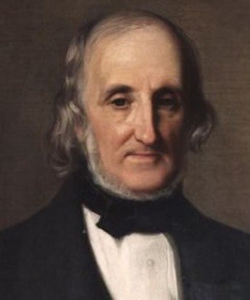
Birth of Painter Richard Rothwell

Richard Rothwell, nineteenth-century Irish portrait and genre painter, is born on November 20, 1800, in Athlone, County Westmeath.

Rothwell is born to James and Elizabeth and is the oldest of their seven children. He trains to become a painter at the Dublin Society‘s school from 1814 until 1820 and wins a silver medal for his work. At the age of 24, he is made a member of the newly established Royal Hibernian Academy and exhibits portraits there from 1826 to 1829. He subsequently moves to London and works as a studio assistant to Thomas Lawrence. When Lawrence dies in 1830, Rothwell completes many of his unfinished works and is poised to become the next foremost portrait painter in Britain and Ireland.

According to Leoneé Ormond’s biographical article in the Grove Dictionary of Art, Rothwell “was at the height of his powers from 1829 to 1831” and he “was much influenced by Lawrence, but he lacked the incisiveness and flair of his master.” According to Fintan Cullen‘s biographical entry in the Oxford Dictionary of National Biography, Rothwell’s “portraits are highly accomplished” and “fine examples” including those of novelist Gerald Griffin and Mary Shelley.

From 1831 to 1834, Rothwell tours Italy to study Italian art so that he can paint history paintings. In the 1830s, he starts painting genre pictures, such as The Poor Mendicants (1837). He usually paints Italian-inspired pieces, such as his semi-nude study Calisto, a work he considers to be his masterpiece. He is furious when the painting is poorly hung at the 1862 International Exhibition in London and publishes a pamphlet on the topic.

When Rothwell returns to London, his popularity has evaporated. He lives and exhibits works in Ireland, the United States, London, and Italy, but he never again achieves the same level of popularity he had reached in the late 1820s.

In 1842 Rothwell marries Rosa Marshall. The couple has several children.  Rothwell contracts a fever while working in Rome and dies on September 13, 1868. Joseph Severn, who painted a portrait of the Romantic poet John Keats, arranges for Rothwell’s funeral and tomb in the Protestant Cemetery, Rome.


Leave a comment

Premiere of “The Quare Fellow”

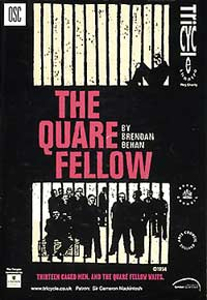
Brendan Behan’s first play, The Quare Fellow, premieres at the Pike Theatre in Dublin on November 19, 1954, to critical success. The title is taken from a Hiberno-English pronunciation of queer.

The Quare Fellow is initially offered to Dublin’s Abbey Theatre but is turned down. The play has its London première in May 1956 at Joan Littlewood‘s Theatre Workshop at the Theatre Royal Stratford East. On July 24, 1956, it transfers to the Comedy Theatre, London. In September 1956 the Abbey Theatre finally performs The Quare Fellow. It has such success that the Abbey’s artistic director, Ria Mooney, pushes the next play back to allow The Quare Fellow to run for six weeks. Its first New York performance is on November 27, 1958, at the Circle in the Square Theatre.

The play is set in Mountjoy Prison, Dublin. The antihero of the play, the Quare Fellow, is never seen or heard but rather functions as the play’s central conceit. He is a man condemned to die on the following day, for an unmentioned crime. Whatever it is, it revolts his fellow inmates far less than that of the Other Fellow, a very camp, almost Wildean, gay man.

There are three generations of prisoners in Mountjoy including boisterous youngsters who can irritate both other inmates and the audience and the weary old lags Neighbour and “methylated martyr” Dunlavin.

The first act is played out in the cramped area outside five cells and is comedic, sometimes rather like an Irish episode of Porridge. After the interval, the pace slows considerably and the play becomes much darker, as the time for the execution approaches. The focus moves to the exercise yard and to the workers who are digging the grave for the soon-to-be-executed Quare Fellow.

The play is a grimly realistic portrait of prison life in Ireland in the 1950s, and a reminder of the days in which homosexuality was illegal and the death penalty relatively common. The play is based on Behan’s own prison experiences, and highlights the perceived barbarity of capital punishment, then in use in Ireland. The play also attacks the false piety in attitudes to sex, politics and religion.

The Auld Triangle“, a song from the opening of the play, has become an Irish music standard and is known by many who are unaware of its link to The Quare Fellow.

In 1962 the play is adapted for the screen by Arthur Dreifuss and stars Patrick McGoohan, Sylvia Syms and Walter Macken. Although the film receives some favourable reviews, it is not regarded as a faithful adaptation of the play.


Leave a comment

Birth of Landscape Painter Francis Danby

Francis Danby, Irish painter of the Romantic era, is born near Killinick, County Wexford, on November 16, 1793. His imaginative, dramatic landscapes are comparable to those of John Martin. Danby initially develops his imaginative style while he is the central figure in a group of artists who have come to be known as the Bristol School. His period of greatest success is in London in the 1820s.

The death of Danby’s father in 1807 causes the family to move to Dublin. He begins to practice drawing at the Royal Dublin Society‘s schools and, under an erratic young artist named James Arthur O’Connor, he begins painting landscapes. Danby also makes acquaintance with George Petrie.

In 1813 Danby leaves for London together with O’Connor and Petrie. This expedition, undertaken with very inadequate funds, quickly comes to an end, and they have to get home again by walking. At Bristol they make a pause and Danby, finding he can get trifling sums for watercolor drawings, remains there working diligently and sending pictures of importance to the London exhibitions. There his large oil paintings quickly attract attention.

Around 1819, Danby becomes a member of the informal group of artists which become known as the Bristol School, taking part in their evening sketching meetings and sketching excursions visiting local scenery. He remains connected with members of the Bristol School for about a decade, even after leaving Bristol in 1824.

The group initially forms around Edward Bird, and Danby eventually succeeds Bird as its central figure. The Bristol artists, particularly the amateur Francis Gold, are also important in influencing Danby towards a more imaginative and poetical style. George Cumberland, another of the amateurs, has influential London connections. In 1820 when Danby exhibits The Upas Tree of Java at the British Institution, Cumberland uses his influence to promote its favourable reception. Danby’s atmospheric work An Enchanted Island, successfully exhibited in 1825 at the British Institution and then back in Bristol at the Bristol Institution, is in turn particularly influential on other Bristol School artists.

The Upas Tree of Java (1820) and The Delivery of Israel (1825) bring him his election as an Associate Member of the Royal Academy of Arts. He leaves Bristol for London, and in 1828 exhibits his Opening of the Sixth Seal at the British Institution, receiving from that body a prize of 200 guineas.

In 1829 Danby’s wife deserts him, running off with the painter Paul Falconer Poole. Danby leaves London, declaring that he will never live there again. For a decade he lives on the Lake Geneva in Switzerland, becoming a Bohemian with boat-building fancies, painting only occassionaly. He later moves to Paris for a short period of time. He returns to England in 1840.

Francis Danby lives his final years at Exmouth in Devon, where he dies on February 9, 1861. Along with John Martin and J. M. W. Turner, Danby is considered among the leading British artists of the Romantic period.


Leave a comment

Death of Martin Fay, Founding Member of The Chieftains

Martin Fay, Irish fiddler and bones player, and a former member of The Chieftains, dies on November 14, 2012. The Chieftains collaborate with musicians from a wide range of genres and cultures and bring in guest performers such as Mick Jagger, Van Morrison and James Galway. Yet traditional tunes lay at the heart of the band, with Fay’s fiddle a vital part of their distinctive sound.

Fay is born in Cabra, Dublin, where his mother teaches him to play the piano. As a boy, he is captivated by the music in the film The Magic Bow (1946), about the life of Niccolò Paganini, and he changes instrument. He progresses well in his classical violin lessons and at fifteen is playing in a Butlins holiday camp orchestra. After leaving school at eighteen, Fay works in an office by day and in the evenings plays in the Abbey Theatre orchestra, where he meets the Abbey’s musical director, Seán Ó Riada.

In the 1950s, traditional music is regarded as distinctly old-fashioned in Ireland, but Ó Riada’s success with a film score, and a play at the Abbey, encourage him to establish a folk orchestra which includes Fay, piper Paddy Moloney and the tin whistle player Seán Potts. Instead of all the musicians playing together in unison, as in the established cèilidh bands, Ó Riada wants to create a chamber orchestra, playing arrangements of folk music. Fay’s classical music background is essential for this approach. The resulting ensemble, Ceoltóirí Cualann, enjoys radio success and, in 1961, plays the soundtrack for a film of The Playboy of the Western World. Fay was soon earning more playing traditional music than in his day job.

Garech Browne, a member of the Guinness family and founder of Claddagh Records, asks Moloney to record some traditional Irish music. Moloney brings in Fay, Potts and Michael Tubridy on flute, and uses a similar approach to arranging the tunes. Their eponymous album, The Chieftains, is released in 1964, before they first perform in public. The success of this new approach to traditional Irish music leads to radio and television work, and they attract celebrity fans. Browne is a great thrower of parties, where the guests included Jagger, Princess Grace of Monaco, Peter O’Toole and Sean Connery, with The Chieftains invariably playing through the night.

By 1968, Moloney is working full time for Claddagh Records, and when he, Potts and Fay are offered a recording contract by a rival company, Gael Linn, Moloney refuses to sign. Potts and Fay believe that their future lay with Gael Linn, and they leave The Chieftains, only to return a year later. In the meantime, Seán Keane has joined to play fiddle, but on Fay’s return the pair work well together.

The Chieftains’ popularity is extending far beyond folk enthusiasts, but they are still playing only in their spare time. That changes in 1975 when they provide music for the Oscar-winning score of Stanley Kubrick‘s film Barry Lyndon and the promoter Jo Lustig books the group into the Royal Albert Hall in London on St. Patrick’s Day. The sell-out concert is a triumph, and Fay and his fellow Chieftains finally give up their day jobs.

The relentless international touring takes its toll on band members with young families, and Tubridy and Potts leave, to be replaced by the flautist Matt Molloy. Fay is happy to continue. A reserved and modest man with a great sense of humour, he is unfazed by the pressures of extensive touring. He is the only Chieftain not to be racked by nerves when playing to well over a million people at Phoenix Park during Pope John Paul II‘s visit to Dublin in 1979.

Although he has a classical training, Fay has a natural understanding of traditional music. He is a master of changing the mood at Chieftains concerts from the lively onstage parties to a more tranquil atmosphere, through his emotional interpretations of the slow airs. In total, Fay records more than 30 albums with the group before he withdraws from touring in 2001 and retires altogether in 2002.

Martin Fay dies in Cabra, Dublin, on November 14, 2012, after a lengthy illness.


Leave a comment

Birth of Irish Folk Musician Tommy Makem

Thomas “Tommy” Makem, internationally celebrated Irish folk musician, artist, poet and storyteller, is born in Keady, County Armagh, on November 4, 1932. He is best known as a member of The Clancy Brothers and Tommy Makem. He plays the long-necked 5-string banjo, tin whistle, low whistle, guitar, bodhrán and bagpipes, and sings in a distinctive baritone. He is sometimes known as “The Bard of Armagh,” taken from a traditional song of the same name, and “The Godfather of Irish Music.”

Makem’s mother, Sarah Makem, is an important source of traditional Irish music, who is visited and recorded by, among others, Diane Guggenheim Hamilton, Jean Ritchie, Peter Kennedy and Sean O’Boyle. His father, Peter Makem, is a fiddler who also plays the bass drum in a local pipe band named “Oliver Plunkett,” after a Roman Catholic martyr of the reign of Charles II of England. His brother and sister are folk musicians as well. Makem, from the age of eight, is member of the St. Patrick’s church choir for 15 years where he sings Gregorian chant and motets. He does not learn to read music but he makes it in his “own way.”

Makem starts to work at 14 as a clerk in a garage and later he works for a while as a barman at Mone’s Bar, a local pub, and as a local correspondent for The Armagh Observer.

Makem emigrates to the United States in 1955, carrying his few possessions and a set of bagpipes from his time in a pipe band. Arriving in Dover, New Hampshire, he works at Kidder Press, where his hand was accidentally crushed by a press in 1956. With his arm in a sling, he leaves Dover for New York City to pursue an acting career.

The Clancys and Makem are signed to Columbia Records in 1961. The same year, at the Newport Folk Festival, Makem and Joan Baez are named the most promising newcomers on the American folk scene. During the 1960s, the Clancy Brothers and Tommy Makem perform sellout concerts at such venues as Carnegie Hall, and make television appearances on shows like The Ed Sullivan Show and The Tonight Show. The group performs for President John F. Kennedy. They also play in smaller venues such as the Gate of Horn in Chicago. They appear jointly in the UK Albums Chart in April 1966, when Isn’t It Grand Boys reaches number 22.

Makem leaves the group in 1969 to pursue a solo career. In 1975, he and Liam Clancy are both booked to play a folk festival in Cleveland, Ohio, and are persuaded to do a set together. Thereafter they often perform as Makem and Clancy, recording several albums together. He once again goes solo in 1988. Throughout the 1970s and 1980s he performs both solo and with Liam Clancy on The Irish Rovers‘ various television shows, which are filming in Canada and Ireland.

In the 1980s and 1990s, Makem is a principal in a well-known Irish music venue in New York, “Tommy Makem’s Irish Pavilion.” This East 57th Street club is a prominent and well-loved performance spot for a wide range of musicians. Among the performers and visitors are Paddy Reilly, Joe Burke, and Ronnie Gilbert. Makem is a regular performer, often solo and often as part of Makem and Clancy, particularly in the late fall and holiday season. The club is also used for warm-up performances in the weeks before the 1984 reunion concert of The Clancy Brothers and Tommy Makem at Lincoln Center for the Performing Arts. In addition, the after-party for Bob Dylan‘s legendary 30th Anniversary Concert Celebration at Madison Square Garden in 1992 is held at the Irish Pavilion.

In 1997 Makem writes a book, Tommy Makem’s Secret Ireland, and in 1999 premiers a one-man theatre show, Invasions and Legacies, in New York. His career includes various other acting, video, composition, and writing credits. He also establishes the Tommy Makem International Festival of Song in South Armagh in 2000.

Tommy Makem dies in Dover, New Hampshire, on August 1, 2007, following a lengthy battle with lung cancer. He continues to record and perform until very close to the end. Paying tribute to him after his death, Liam Clancy says, “He was my brother in every way.” He is buried next to his wife at New Saint Mary Cemetery in Dover.


Leave a comment

Birth of Richard Brinsley Sheridan, Playwright & Satirist

Richard Brinsley Butler Sheridan, Irish satirist, playwright and poet, and long-term owner of the London Theatre Royal, Drury Lane, is born on October 30, 1751, in Dublin, where his family has a house on then fashionable Dorset Street.

While in Dublin Sheridan attends the English Grammar School in Grafton Street. The family moves permanently to England in 1758 where he is a pupil at Harrow School from 1762 to 1768. After his period in Harrow School, his father employs a private tutor to directs his studies.

In 1775, Sheridan’s first play, The Rivals, is produced at London’s Covent Garden Theatre. It is a failure on its first night. He casts a more capable actor in the lead for its second performance, and it is a smash which immediately establishes the young playwright’s reputation and the favour of fashionable London. It has gone on to become a standard of English literature.

Shortly after the success of The Rivals, Sheridan and his father-in-law, Thomas Linley the Elder, a successful composer, produce the opera, The Duenna. This piece is accorded such a warm reception that it plays for seventy-five performances.

The following year, Sheridan, his father-in-law, and one other partner purchase a half-interest in the Drury Lane theatre and, two years later, buy out the other half. Sheridan is the manager of the theatre for many years and later becomes sole owner with no managerial role.

His most famous play, The School for Scandal (Drury Lane, May 8, 1777), is considered one of the greatest comedies of manners in English. It is followed by The Critic (1779), an updating of the satirical Restoration comedy The Rehearsal. He has a rivalry with his fellow playwright Richard Cumberland and includes a parody of Cumberland in The Critic. In 1778, Sheridan writes The Camp, which comments on the ongoing threat of a French invasion of Britain.

In 1780, Sheridan enters Parliament as the ally of Charles James Fox on the side of the American Colonials in the political debate of that year. He remains in Parliament for 32 years.

On February 24, 1809, despite the much-vaunted fire safety precautions of 1794, the theatre burns down. On being encountered drinking a glass of wine in the street while watching the fire, Sheridan is famously reported to have said, “A man may surely be allowed to take a glass of wine by his own fireside.”

When he fails to be re-elected to Parliament in 1812, his creditors close in on him and his last years are harassed by debt and disappointment. On hearing of his debts, the United States Congress offers Sheridan £20,000 in recognition of his efforts to prevent the American Revolutionary War. The offer is refused.

In December 1815 Sheridan becomes ill and is largely confined to bed. He dies in poverty on July 7, 1816, and is buried in the Poets’ Corner of Westminster Abbey. His funeral is attended by dukes, earls, lords, viscounts, the Lord Mayor of London, and other notables.


Leave a comment

Birth of Soprano Catherine Hayes

Catherine Hayes, world-famous Irish soprano of the Victorian era, is born in Limerick, County Limerick, on October 25, 1818. According to London‘s Daily Express, “Hayes was the ‘Madonna‘ of her day; she was the 19th-century operatic equivalent of the world’s most famous pop star.”

Hayes is born into abject poverty. After five years of vocal study in Paris and Milan she makes her debut at the Italian Opera in Marseilles, in Vincenzo Bellini‘s I Puritani in May 1845, followed by performances of Gaetano Donizetti‘s Lucia di Lammermoor and Gioachino Rossini‘s Mosé in Egitto.

Her debut at La Scala in Milan quickly followed in 1845 with phenomenal success. Shortly thereafter the young Giuseppe Verdi becomes interested in her for one of his new operas. Her great success continues in Vienna, as well as in Venice, Florence, Genoa, Rome and other cities in Italy, where she becomes the most sought after Lucia di Lammermoor.

Early in 1849, Hayes accepts a contract to sing at the Royal Opera House, Covent Garden, London where she makes her debut in Linda di Chamounix in April. In June 1849, she receives an invitation to sing at Buckingham Palace for Queen Victoria and 500 guests. After an evening of Italian music, when the Queen requests an encore, Hayes with a smile sings the beautiful Irish rebel songKathleen Mavourneen.”

During Ireland’s Great Famine in November 1849, her emotional return to her native country results in rave notices for her performance in Lucia di Lammermoor and other operas and concerts in Dublin, Limerick and Cork. Her success is now almost complete.

In 1851 Hayes goes to the United States, where Jenny Lind is creating such a wave of success. Hayes gives concerts in New York City, Boston, Toronto, Philadelphia, Washington, D.C., Charleston, Savannah and New Orleans and forty-five other places including the river towns along the Mississippi River, with equal success. She meets presidents, statesmen and business leaders along the way. She is also destined to meet her future lover and husband in America, Jenny Lind’s former manager. Her travels take her to the “gold rush” in the San Francisco area in the 1850s, where her presence creates a furor, singing for the miners and the elite of San Francisco. The great showman P.T. Barnum sponsors her tour.

She sings in opera and concerts in Peru and Chile, then travels to Hawaii where she gives a concert before continuing on to Australia. Hayes is the first great European opera star to visit Australia. She is mentioned in most Australian history books about early culture in the young colony.  She also travels to Calcutta, India where she performs for the British Military and then on to Singapore and Batavia (Java) before returning to Australia for more opera and concerts.

Hayes returns to England in August 1856, after an absence of five years.  On October 8, 1857, at St. George’s, Hanover Square, she marries William Avery Bushnell. He soon falls into ill-health and dies at Biarritz, France, on July 2, 1858. After her husband’s death she takes part in concerts in London and the country towns.

Catherine Hayes dies in the house of a friend, Henry Lee, at Roccles, Upper Sydenham, Kent, on August 11, 1861, and is buried in Kensal Green Cemetery.


Leave a comment

Birth of Opera Singer Margaret Burke Sheridan

Irish opera singer Margaret Burke Sheridan is born in Castlebar, County Mayo, on October 15, 1889. She is known as Maggie from Mayo and is regarded as Ireland’s second prima donna, after Catherine Hayes (1818–1861).

Sheridan has her early vocal training while at school at the Dominican Convent in Eccles Street, Dublin, with additional lessons from Vincent O’Brien. In 1908, she wins a gold medal at the Feis Ceoil. From 1909 to 1911 she studies at the Royal Academy of Music in London, during which time she is introduced to the Italian inventor Guglielmo Marconi, who is instrumental in arranging further studies for her in opera in Rome.

With Marconi’s help Sheridan auditions in 1916 for Alfredo Martino, a prominent singing teacher attached to the Teatro Costanzi, and she makes her début there in January 1918 in Giacomo Puccini‘s La bohème. In July 1919 she appears at the Royal Opera House in Covent Garden in the title role in Iris by Pietro Mascagni.

Sheridan returns to Italy, where her career continues to grow, with performances at the Teatro Dal Verme in Milan and at the Teatro di San Carlo in Naples, primarily in Puccini roles. In 1922 she first sings at La Scala, Milan, in La Wally by Alfredo Catalani under the direction of Arturo Toscanini. For the next few years, she sings at La Scala with great success. Perhaps her greatest role is Madama Butterfly, which she sings extensively in Italy and at Covent Garden. When she plays the part of Madama Butterfly, Puccini is said to be spellbound.

Despite her successes, Sheridan’s career is short. Suffering vocal difficulties, she goes into retirement around 1930 except for a few concerts. Bríd Mahon, in her 1998 book While Green Grass Grows, states that “It was rumoured that an Italian whose overtures she had rejected had blown his brains out in a box in La Scala, Milan, while she was on stage and that after the tragedy, she never sang in public again.”

Margaret Sheridan dies in relative obscurity on April 16, 1958, having lived in Dublin for many years, and her remains are buried in Glasnevin Cemetery, Dublin.


Leave a comment

Birth of Singer & Songwriter Gavin Friday

Gavin Friday, born Fionán Martin Hanvey, Irish singer and songwriter, composer, actor and painter, is born in Dublin on October 8, 1959.

Friday grows up in Ballygall, a neighbourhood located on Dublin’s Northside between Finglas and Glasnevin where he went to school. When he is fourteen years old and living on Cedarwood Road, he meets Bono and Guggi at a party to which he has not been invited. Bono says, “We caught him trying to steal something of the house. Classic teenage stuff… but we became friends.”

Friday is a founding member of the post-punk group Virgin Prunes and has recorded several solo albums and soundtracks. In 1986, after the demise of The Virgin Prunes, he devotes himself to painting for a while, sharing a studio with Bono, Guggi and Charlie Whisker. This results in the exhibition Four Artists – Many Wednesdays (1988) at Dublin’s Hendricks Gallery. Friday, Guggi and Whisker show paintings, while Bono opts to exhibit photos taken in Ethiopia. Friday’s part of the show is entitled I didn’t come up the Liffey in a bubble, an expression often used by his father.

His main collaborator between 1987 and 2005 is multi-instrumentalist, Maurice Seezer. They sign to Island Records in 1988 and release three albums together, before parting with the company in 1996. After that Friday and Seezer compose the score for the Jim Sheridan films The Boxer and In America which is nominated for Best Original Film Score in the 2004 Ivor Novello Awards.

Friday has maintained a close friendship with U2‘s Bono since childhood, and they collaborate on the soundtrack for the Jim Sheridan’s film In the Name of the Father, including the title track, “Billy Boola” and “You Made Me the Thief of Your Heart”, which is sung by Sinéad O’Connor and nominated for a Golden Globe Award for Best Original Song. In 2003 they write “Time Enough for Tears,” the original theme tune for Sheridan’s film In America, as sung by Andrea Corr. The song is nominated for a Golden Globe Award for Best Original Song.

In 2005 Friday and Seezer collaborate with Quincy Jones on incidental music for the 50 Cent biopic Get Rich or Die Tryin’. In 2001 they score the film Disco Pigs by Kirsten Sheridan and two years later they also collaborated with Bono on Peter & the Wolf in aid of the Irish Hospice Foundation.

Taking time out from work on his fourth solo album with Herb Macken, Friday teams up with English composer Gavin Bryars, the Royal Shakespeare Company and Opera North for a new interpretation of William Shakespeare‘s Sonnets touring as part of the 2007 Complete Works Festival. Friday and Macken compose the music for the Patrick McCabe play, The Revenant, which opens as part of the 2007 Galway International Arts Festival.

In 2009 Friday and Macken work on Bryars’ fourth studio album. On April 6, 2010, Rubyworks Records announces the signing of Gavin Friday and that a new album is on its way. The new CD is titled catholic and is released in Ireland on Good Friday, April 22, 2011.