seamus dubhghaill

Promoting Irish Culture and History from Little Rock, Arkansas, USA


Leave a comment

Birth of Peter Sutherland, Barrister & Politician

File source: http://commons.wikimedia.org/wiki/File:Peter-Sutherland-2011.jpg

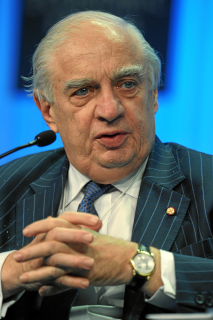
Peter Denis Sutherland, businessman, barrister and politician, is born in Foxrock, Dublin on April 25, 1946. He is a barrister by profession and a Senior Counsel of the Bar Council of Ireland. He is known for serving in a variety of international organisations, political and business roles.

Sutherland is educated at Gonzaga College, Ranelagh, Dublin. He is of partial Scottish ancestry. He graduates in Civil Law at University College Dublin and practices at the Irish Bar between 1969 and 1980. He marries Maruja Sutherland, a Spaniard, in 1974.

Sutherland makes his entry into politics when he is appointed Attorney General of Ireland in June 1981. He resigns in March 1982 only to take the post again between December 1982 and December 1984.

Sutherland is appointed to the European Commission in 1985. He is Chairman of the Committee that produces The Sutherland Report on the completion of the Internal Market of the European Economic Community (EEC), commissioned by the European Commission and presented to the European Council at its Edinburgh meeting in 1992.

Sutherland serves as United Nations Special Representative of the Secretary-General for International Migration from January 2006 until March 2017. He is responsible for the creation of the Global Forum on Migration and Development (GFMD). He also serves as President of the International Catholic Migration Commission, as well as member of the Migration Advisory Board of the International Organisation for Migration.

In 1993, Sutherland becomes Director-General of the General Agreement on Tariffs and Trade, now the World Trade Organization. He serves as Chairman of Allied Irish Banks (AIB) from 1989 to 1993 and as Chairman of Goldman Sachs from 1995 to 2015.

In September 2016, Sutherland suffers a heart attack while on his way to Mass at a Catholic Church in London. Six months later, he resigns from his post as United Nations Special Representative of the Secretary-General for International Migration because of poor health. After a long illness, he dies at St. James’s Hospital in Dublin on January 7, 2018, of complications from an infection, at the age of 71. He is buried in Kilternan Cemetery Park in Dublin.

Peter Sutherland received numerous awards including European Person of the Year Award (1988).

(Pictured: Peter D. Sutherland, Chairman, Goldman Sachs International, United Kingdom; Member of the Foundation Board of the World Economic Forum, speaks during the session ‘China’s Impact on Global Trade and Growth’ at the Annual Meeting 2011 of the World Economic Forum in Davos, Switzerland, January 27, 2011. Copyright by World Economic Forum swiss-image.ch/Photo by Michael Wuertenberg)

1 Comment

Death of Writer Walter Macken

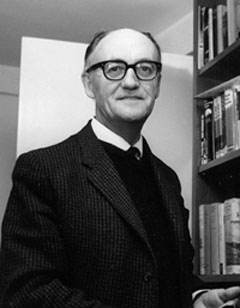
Walter Macken, writer of short stories, novels and plays, dies at his home in the Gaeltacht village of Menlo, County Galway on April 22, 1967.

Macken is born at 18 St. Joseph’s Terrance in Galway, County Galway on May 3, 1915. His father, Walter Macken, Sr., formerly a carpenter, joins the British Army in 1915 and is killed in March of the following year at Saint-Éloi. The family therefore has to rely on lodgers and a small service pension to sustain them.

Macken attends the Presentation Convent for Infants from (1918-1921), St. Mary’s, a Diocesan College where they train people who want to become priests (1923-1924), and Patrician Brothers both Primary and Secondary (1921-1922 and 1924-1934), where he takes his Leaving Certificate. He is writing short stories, novels, and plays in exercise books from the age of eight and carries on these works well into his teens.

Macken is originally an actor, principally with the Taibhdhearc na Gaillimhe in Galway, where he meets his wife Peggy, and the Abbey Theatre in Dublin. He also plays lead roles on Broadway in M. J. Molloy‘s The King of Friday’s Men and his own play Home Is the Hero. The success of his third book, Rain on the Wind, winner of the Literary Guild award in the United States, enables him to focus his energies on writing.

Macken also acts in films, notably in Arthur Dreifuss‘ adaptation of Brendan Behan‘s The Quare Fellow. He is perhaps best known for his trilogy of Irish historical novels Seek the Fair LandThe Silent People, and The Scorching Wind.

His son Ultan Macken is a well-known journalist in the print and broadcast media of Ireland, and wrote a biography of his father, Walter Macken: Dreams on Paper.

Walter Macken dies of heart failure at the age of 51 in Menlo, County Galway, on April 22, 1967.


Leave a comment

Birth of John Jordan, Poet & Writer

john-jordan

John Jordan, Irish poet, short-story writer and broadcaster, is born in the Rotunda Hospital, Dublin on April 8, 1930.

Jordan is educated at Synge Street CBS, University College Dublin (UCD) and Pembroke College, Oxford. In his teens he acts on the stage of the Gate Theatre, Dublin, before winning a Scholarship in English and French to the University of Oxford from UCD. In the mid-1950s he returns to UCD as a lecturer in English and teaches there until the end of the 1960s. He also lectures on sabbatical leave at the Memorial University of Newfoundland and briefly at Princeton University in the United States. He is a founding member of Aosdána. He is a celebrated literary critic from the late 1950s until his death on June 6, 1988, in Cardiff, Wales, where he had been participating in the Merriman Summer School.

In 1962 Jordan re-founds and edits the literary magazine Poetry Ireland in hopes of contributing towards the recreation of Dublin as a literary centre. In this journal, he introduces a number of poets who are to become quite famous later, including Paul Durcan, Michael Hartnett and Seamus Heaney. This series of Poetry Ireland lasts until 1968–69.

In 1981 Jordan becomes the first editor of the new magazine published by the Poetry Ireland Society, called Poetry Ireland Review. He serves as a reviewer of novels for The Irish Times, writes a column for Hibernia, contributes to Envoy, A Review of Literature and Art and The Irish Press among others, and serves as a TV presenter and arts interviewer. He is a defender of Gaelic literature, translates Pádraic Ó Conaire, edits The Pleasures of Gaelic Literature (Mercier Press, 1977), and champions the later plays of Seán O’Casey. His translation of one of Aogán Ó Rathaille‘s essays is published in The Pleasures of Gaelic Poetry (London: Allen Lane, 1982).

Jordan’s Collected Poems (Dedalus Press) and Collected Stories (Poolbeg Press) are edited by his literary executor, Hugh McFadden, and published in Dublin in 1991. His Selected Prose, Crystal Clear, also edited by McFadden, is published by The Lilliput Press in Dublin in 2006. His Selected Poems, edited with an introduction by McFadden, is published in February 2008 by Dedalus Press. Uncollected stories appear in Penguin Book of Irish Short Stories, Cyphers, and The Irish Press, among other places.

Jordan’s literary papers and letters are held in the National Library of Ireland. In 1953 the young Irish artist Reginald Gray is commissioned by University College Dublin to design the decor and costumes for their production of “The Kings Threshold” by William Butler Yeats. The leading role is given to Jordan. During the preparations for the production, Gray starts a portrait of Jordan, which he never finishes. This work now hangs in the Dublin Writers Museum.

(Pictured: John Jordan, by Patrick Swift, c. 1950)


Leave a comment

Death of Peter Doherty, Northern Ireland Footballer

peter-doherty

Peter Dermot Doherty, Northern Ireland international footballer and manager who played for several clubs, including Manchester City F.C. and Doncaster Rovers F.C., dies in Poulton-le-Fylde, Lancashire, England on April 6, 1990.

Born in Magherafelt, County Londonderry on June 5, 1913, Doherty begins his career with Glentoran F.C. in the Irish League. After helping Glentoran to the 1933 Irish Cup, early in the 1933–1934 season he joins English club Blackpool F.C., at the age of 19. He then joins Manchester City on February 19, 1936 for a then-club record of £10,000. Blackpool needs the money urgently, and Doherty is summoned from his lunch to report to Bloomfield Road. He tries hard to persuade Blackpool directors that he does not wish to leave the club, for he is due to marry a local girl and has just bought a new house in the town. The fee is an exceptionally high transfer fee for the period, coming within £1,000 of the British record. Doherty’s Manchester City debut, against Preston North End F.C., is not a successful one. Tightly man-marked by Bill Shankly throughout, he fails to make an impact. He later describes the remainder of his first Manchester City season as “uneventful,” however his second is anything but.

Manchester City starts the 1936–1937 season poorly and are in the bottom half of the table until December. Occasional big wins, including a 6–2 defeat of West Bromwich Albion F.C. and a 4–1 defeat of Everton F.C., are mixed with extended barren runs. At one point the club gains just one win in twelve matches. However, Doherty scores goals regularly. A goal in a 5–3 Christmas day loss to Grimsby Town F.C. is his twelfth of the season. Christmas proves to be a turning point for the club, as a win against Middlesbrough F.C. the following day is the start of a long unbeaten run. By April, Manchester City is second in the table and faces a fixture against Arsenal F.C., league leaders and the dominant club of the period. Doherty scores the first goal in a 2–0 win, and City reaches the top of the table. The unbeaten run continues until the end of the season, and City secures their first league championship with a 4–1 win over Sheffield Wednesday F.C.. Doherty, with 30 league goals, is the club’s leading scorer, helped by a run of eleven goals in seven games as the season draws to a close.

Doherty scores 79 goals in 130 appearances during his time at Maine Road. During the World War II years of 1939–1945, Doherty serves in the Royal Air Force. He remains registered as a Manchester City player, scoring 60 goals in 89 wartime matches, though wartime games are not generally included in official records. He also guests for numerous clubs across the country. During a guest appearance for Port Vale F.C. in 1945, he famously goes to take a penalty but instead of shooting he lays it off to a teammate who scores.

After the conclusion of the war, Doherty transfers to Derby County F.C., with whom he wins the FA Cup, scoring a goal in the final itself. He also goes on to play for Huddersfield Town A.F.C., scoring 33 goals in 83 league appearances.

Doherty makes his final move to Doncaster in 1949, where he assumes the role of player-manager. He later becomes manager of the Northern Ireland national football team (1951–1962), for whom he has 16 caps as a player. He leads the country to the 1958 FIFA World Cup, reaching the quarter-finals. He also manages Bristol City F.C..

Doherty’s coaching techniques are revolutionary at the time. He emphasises ball practice and instead of endless laps of the pitch, suggests volleyball “to promote jumping, timing and judgement,” basketball “to encourage split-second decision-making and finding space,” and walking football “to build up calf muscles.”

Later life sees Doherty become a scout for Liverpool F.C., helping to unearth such talents as Kevin Keegan. He is inducted into the English Football Hall of Fame in 2002.

Following Doherty’s death in 1990, a plaque to mark his birthplace is placed in Magherafelt. It can be found at what is now a barber shop.


Leave a comment

Barry’s Tea Centennial

barrys-tea

On April 4, 2001, former employees and staff join three generations of the Barry family in a celebration of 100 years in business for Barry’s Tea which has become an Irish institution.

Barry’s Tea is an Irish tea company founded in 1901 by James J. Barry in Cork, County Cork. In 1934, Anthony Barry, son of the founder, is awarded the Empire Cup for Tea Blending, confirming his expertise in the tea trade. Until the 1960s, the tea is only sold from a shop in Prince’s Street, but thereafter the company expands its wholesaling and distribution operations.

In 1960, Peter Barry, Anthony’s son, pioneers the concept of wholesaling tea and begins sourcing tea from East Africa. There is an incredible reaction to these new blends, and they become something of a Barry’s Tea signature.

By the mid-1980s Barry’s Tea has become a national brand. According to their website, www.barrystea.ie, they are currently responsible for 38% of all tea sales in the Irish market, which is worth an estimated €85 million annually. Today, Barry’s Tea is also available in the United Kingdom, Spain, and in some areas of Canada, Australia, France, Luxembourg and the United States where there are significant Irish immigrant communities.

Members of the Barry family have been elected representatives for Fine Gael: the founder’s son Anthony Barry (TD 1954–1957 and 1961–1965), Anthony’s son Peter Barry (TD 1969–1997) and Peter’s daughter Deirdre Clune (TD 1997–2001 and 2007–2011, and MEP since 2014).

In May 2018, it was revealed that many of Barry’s Tea teabags are made with polypropylene and are not compostable.


Leave a comment

Death of Writer John McGahern

john-mcgahern

John McGahern, regarded as one of the most important Irish writers of the latter half of the twentieth century, dies in Dublin on March 30, 2006. Known for the detailed dissection of Irish life found in works such as The Barracks, The Dark and Amongst Women, The Observer hails him as “the greatest living Irish novelist” before his death and in its obituary The Guardian describes him as “arguably the most important Irish novelist since Samuel Beckett.”

Born in Knockanroe about half a mile from Ballinamore, County Leitrim, McGahern is the eldest child of seven. Raised alongside his six young siblings on a small farm in Knockanroe, his mother runs the farm (with some local help) while maintaining a job as a primary school teacher in the local school. His father, a Garda sergeant, lives in the Garda barracks at Cootehall in County Roscommon, a somewhat sizeable distant away from his family at the time. His mother subsequently dies of cancer in 1944, when the young McGahern is ten years old resulting in the unrooting of the McGahern children to their new home with their father in the aforementioned Garda barracks, Cootehall.

In the years following his mother’s death, McGahern completes his primary schooling in the local primary school, and ultimately wins a scholarship to the Presentation Brothers secondary school in Carrick-on-Shannon. Having traveled daily to complete his second level education, he continues to accumulate academic accolades by winning the county scholarship in his Leaving Certificate enabling him to continue his education to third level.

Following on from his second level success, McGahern is offered a place at St. Patrick’s College of Education in Drumcondra where he trains to be a teacher. Upon graduation from third level education, he begins his career as a primary schoolteacher at Scoil Eoin Báiste (Belgrove) primary school in Clontarf where, for a period, he teaches the eminent academic Declan Kiberd. He is dismissed from Scoil Eoin Báiste on the order of the Archbishop of Dublin, John Charles McQuaid. He is first published by the London literary and arts review, X magazine, which publishes in 1961 an extract from his abandoned first novel, The End or Beginning of Love.

McGahern marries his first wife, Finnish-born Annikki Laaksi, in 1965 and in the same year publishes his second novel, The Dark, which is banned by the Censorship of Publications Board for its alleged pornographic content along with its implied sexual abuse by the protagonist’s father. Due to the controversy which is stirred by the book’s publication McGahern is dismissed from his teaching post and forced to move to England where he works in a variety of jobs before returning to Ireland to live and work on a small farm near Fenagh in County Leitrim.

John McGahern dies from cancer in the Mater Misericordiae University Hospital in Dublin on March 30, 2006, at the age of 71. He is buried in St. Patrick’s Church, Aughawillan alongside his mother.


Leave a comment

Death of Artist Jack Butler Yeats

jack-butler-yeats

John “Jack” Butler Yeats, artist, Olympic medalist and brother of William Butler Yeats, dies in Dublin on March 28, 1957.

Butler’s early style is that of an illustrator. He only begins to work regularly in oils in 1906. His early pictures are simple lyrical depictions of landscapes and figures, predominantly from the west of Ireland, especially of his boyhood home of Sligo. His work contains elements of Romanticism.

Yeats is born in London on August 29, 1871. He is the youngest son of Irish portraitist John Butler Yeats. He grows up in Sligo with his maternal grandparents, before returning to his parents’ home in London in 1887. Early in his career he works as an illustrator for magazines like The Boy’s Own Paper and Judy, draws comic strips, including the Sherlock Holmes parody “Chubb-Lock Homes” for Comic Cuts, and writes articles for Punch under the pseudonym “W. Bird.” In 1894 he marries Mary Cottenham, also a native of England and two years his senior and resides in Wicklow according to the Census of Ireland, 1911.

From around 1920, Yeats develops into an intensely Expressionist artist, moving from illustration to Symbolism. He is sympathetic to the Irish Republican cause, but not politically active. However, he believes that “a painter must be part of the land and of the life he paints,” and his own artistic development, as a Modernist and Expressionist, helps articulate a modern Dublin of the 20th century, partly by depicting specifically Irish subjects, but also by doing so in the light of universal themes such as the loneliness of the individual, and the universality of the plight of man. Samuel Beckett writes that “Yeats is with the great of our time… because he brings light, as only the great dare to bring light, to the issueless predicament of existence.” The Marxist art critic and author John Berger also pays tribute to Yeats from a very different perspective, praising the artist as a “great painter” with a “sense of the future, an awareness of the possibility of a world other than the one we know.”

Yeats’s favourite subjects include the Irish landscape, horses, circus and travelling players. His early paintings and drawings are distinguished by an energetic simplicity of line and colour, his later paintings by an extremely vigorous and experimental treatment of often thickly applied paint. He frequently abandons the brush altogether, applying paint in a variety of different ways, and is deeply interested in the expressive power of colour. Despite his position as the most important Irish artist of the 20th century, he takes no pupils and allows no one to watch him work, so he remains a unique figure. The artist closest to him in style is his friend, the Austrian painter, Oskar Kokoschka.

Besides painting, Yeats has a significant interest in theatre and in literature. He is a close friend of Samuel Beckett. He designs sets for the Abbey Theatre, and three of his own plays are also produced there. He writes novels in a stream of consciousness style that James Joyce acknowledges, and also many essays. His literary works include The Careless Flower, The Amaranthers, Ah Well, A Romance in Perpetuity, And To You Also, and The Charmed Life. His paintings usually bear poetic and evocative titles. He is elected a member of the Royal Hibernian Academy in 1916.

Yeats holds the distinction of being Ireland’s first medalist at the Olympic Games in the wake of creation of the Irish Free State. At the 1924 Summer Olympics in Paris, his painting The Liffey Swim wins a silver medal in the arts and culture segment of the Games. In the competition records the painting is simply entitled Swimming.

Yeats dies in Dublin on March 28, 1957, and is buried in Mount Jerome Cemetery.


Leave a comment

Birth of Actor Patrick Joseph McGoohan

patrick-joseph-mcgoohan

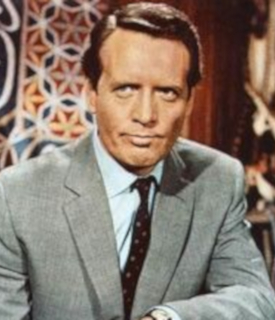
Patrick Joseph McGoohan, American-born actor who is raised in Ireland and Great Britain, is born in Astoria, Queens, New York on March 19, 1928. He establishes an extensive stage and film career.

McGoohan is the son of Rose (Fitzpatrick) and Thomas McGoohan, who are living in the United States after emigrating from Ireland to seek work. He is brought up as a Catholic. Shortly after he is born, his parents move back to Mullaghmore, County Leitrim. Seven years later they emigrate to Sheffield, England.

McGoohan attends St. Vincent’s School and De La Salle College in Sheffield. During World War II, he is evacuated to Loughborough, Leicestershire. There he attends Ratcliffe College, where he excels in mathematics and boxing. He leaves school at the age of 16 and returns to Sheffield, where he works as a chicken farmer, a bank clerk, and a lorry driver before getting a job as a stage manager at Sheffield Repertory Theatre. When one of the actors becomes ill, McGoohan is substituted for him, launching his acting career.

McGoohan is most closely identified with two 1960s British television series, Danger Man and The Prisoner. The espionage drama Danger Man, which runs in the United States as Secret Agent, runs for 86 episodes during 1960–1961 and 1964–1967. The cult hit The Prisoner runs for 17 episodes in 1967–1968.

In Danger Man McGoohan puts a new spin on the secret agent formula by refusing to allow his character, John Drake, to carry a gun or indulge in sexual dalliances. The show’s success makes him Britain’s highest-paid TV actor.

McGoohan is one of several actors considered for the role of James Bond in Dr. No. While McGoohan turns down the role on moral grounds, the success of the Bond films is generally cited as the reason for Danger Man being revived in 1964. He is later considered for the Bond role in Live and Let Die but again turns it down.

The success of Danger Man provides McGoohan the leverage he needs to produce The Prisoner, an allegorical Kafkaesque series in which he portrays Number Six, an unnamed agent, thought by many to represent Drake, who angrily resigns and is then held captive in a superficially banal place called The Village, where the mysterious unseen Number One, the ever-changing Number Two, and others try to overcome the fiercely individualistic Number Six’s escape attempts and pry information from him.

McGoohan’s later works include the short-lived medical mystery series Rafferty (1977), such films as Ice Station Zebra (1968), Escape from Alcatraz (1979), and Braveheart (1995), the Broadway spy drama Pack of Lies (1985), and a record four guest-villain appearances on the American detective series Columbo, two of which earned him Emmy Awards. He also directs and writes several episodes of The Prisoner and Columbo. One of his last roles is as Number Six in a 2000 episode of the animated TV comedy The Simpsons.

Patrick McGoohan dies on January 13, 2009, at Saint John’s Health Center in Santa Monica, California, following a brief illness. His body is cremated.


Leave a comment

Liam Cosgrave Elected Taoiseach of Ireland

liam-cosgrave

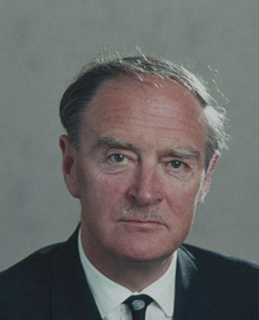
Liam Cosgrave is elected the sixth Taoiseach of Ireland on March 14, 1973. He serves in the position from March 1973 to July 1977.

Cosgrave is born on April 13, 1920, in Castleknock, County Dublin. His father, William Thomas Cosgrave, was the first President of the Executive Council and head of the government of the Irish Free State during the first 10 years of its existence (1922–32). The eldest son, he is educated at Synge Street CBS, Castleknock College, Dublin, studies law at King’s Inns and is called to the Irish bar in 1943. In that same year he enters Dáil Éireann (the lower house of the Oireachtas, the Irish parliament), and he retains his seat until his retirement from politics in 1981.

In 1948, when the first inter-party government replaces Éamon de Valera’s Fianna Fáil regime, which had been in power for the previous 16 years, Cosgrave becomes parliamentary secretary to the Taoiseach and to the Minister for Industry and Commerce. It is a short-lived administration, going out of power in 1951 after three years of rule. But in a second inter-party government (1954–57), he becomes Minister for External Affairs and leads the first Irish delegation to the United Nations General Assembly in 1956.

Cosgrave succeeds James Dillon as leader of the Fine Gael party in 1965. Eight years later, as leader of a coalition government in which Fine Gael combines forces with the Labour Party, he becomes Taoiseach. He and British Prime Minister Edward Heath are the main participants in the intergovernmental conference at Sunningdale in December 1973 that gives birth to Northern Ireland’s first, though short-lived, power-sharing executive (1973–74).

A devout Roman Catholic, Cosgrave is intensely conservative on social issues and shocks his cabinet colleagues by voting against his own government’s bill on liberalizing the sale of contraceptives in 1974. The National Coalition is defeated in the general election of June 1977, largely on the economic issues of inflation and unemployment.

In 1981, Cosgrave retires as Dáil Deputy for Dún Laoghaire to be replaced by his son, Liam T. Cosgrave. He reduces his involvement in public life, but he makes occasional appearances and speeches. In October 2010 he attends the launch of The Reluctant Taoiseach, a book about former Taoiseach John A. Costello written by David McCullagh. He also appears in public for the Centenary of the Easter Rising in 2016, watching from a car as the military parade marches through Dublin. On May 8, 2016, in a joint appearance with the grandsons of Éamonn Ceannt and Cathal Brugha, he unveils a plaque commemorating the 1916 Rising at St. James’s Hospital, the former site of the South Dublin Union.

Liam Cosgrave dies on October 4, 2017, at the age of 97 of natural causes. He had been at Tallaght Hospital for several months prior to his death there. His funeral is held on October 7, 2017, after which he is interred alongside his father at Inchicore‘s Goldenbridge Cemetery.

Taoiseach Leo Varadkar says “Liam Cosgrave was someone who devoted his life to public service; a grateful country thanks and honours him for that and for always putting the nation first. Throughout his life he worked to protect and defend the democratic institutions of our State and showed great courage and determination in doing so. He always believed in peaceful co-operation as the only way of achieving a genuine union between the people on this island, and in the 1970s he celebrated that this country had embarked, in his own words, ‘on a new career of progress and development in the context of Europe’. I had the honour on a few occasions to meet and be in the presence of Liam Cosgrave, and I was always struck by his commanding presence and great humility, which in him were complementary characteristics.”


Leave a comment

Birth of Erskine B. Childers, Writer, Correspondent & Civil Servant

erskine-barton-childers

Erskine Barton Childers, Irish writer, BBC correspondent and United Nations senior civil servant, is born in Dublin on March 11, 1929.

Childers is born to Erskine Hamilton Childers (Ireland’s fourth President) and his first wife Ruth Ellen Dow. He grows up in a multi-cultural atmosphere which influences his whole life. From an early age, he has an obvious fascination with history and world affairs. He studies at Newtown School, Waterford and much later on at Trinity College, Dublin and Stanford University. At Stanford he is actively involved with the National Student Association and rises to Vice-President of the organisation by 1949.

By 1960, Childers is in London working for the BBC in both radio and television. His broadcasts from the BBC World Service range on varying topics from the Suez Crisis and Palestine to the John F. Kennedy assassination in 1963. He is one of the first presenters at the start of the BBC TV show The Money Programme in 1966. The Suez Canal and Palestine issues later form the basis of his writing on the subjects.

Childers is distinguished as one of the first mainstream writers in the West to systematically challenge the contention that Palestinian Arab refugees of the 1947–1948 Civil War in Mandatory Palestine and the 1948 Arab–Israeli War fled their homes primarily from Arab broadcast evacuation orders, rather than from the use of force and terror by armed forces of the newly forming state of Israel.

Childers specialises in UN issues, even serving as a periodic consultant including a special mission in the Congo for Secretary-General U Thant. In 1967, under the leadership of Henry Richardson Labouisse, Jr., he is hired to lead a United Nations, UNICEF and United Nations Development Programme (UNDP) programme called Development Support Communication. In 1968 he co-authors a paper with United Nations colleague Mallica Vajrathon called “Project Support Communication,” later published in an important anthology about social change.

From 1975 to 1988, Childers is based in New York as Director of Information for UNDP. By his retirement in 1989 after 22 years of service as Senior Advisor to the UN Director General for Development and International Economic Co-operation, Childers had worked with most of the organisations of the UN system, at all levels and in all regions.

After his retirement, Childers continues to strive relentlessly for the ideals for which he had worked so hard. He co-authors several notable books for the Ford Foundation and the Dag Hammarskjöld Foundation on the reform of the United Nations with his colleague and equally devoted United Nations civil servant, Sir Brian Urquhart. The best known of these publications is A World in Need of Leadership. He continues writing on United Nations matters while traveling constantly and lecturing on the Organisation and the many challenges confronting it, such as globalisation and democracy, conflict prevention and peacekeeping, humanitarian assistance, human rights, famine, ageing and development, health, financial arrangement of the United Nations, citizen’s rights, female participation, design and perceptions, education, the North South divide and world economy. In 1995 he co-authors a paper with his international law colleague Marjolijn Snippe called The Agenda for Peace and the Law of the Sea, for Pacem in Maribus XXIII, the Annual Conference of the International Ocean Institute, that is held in Costa Rica, December 1995.

Childers becomes Secretary General of the World Federation of United Nations Associations in March 1996. Having served for only five months, he dies on August 25, 1996, during the organisation’s fiftieth anniversary congress. He is buried in Roundwood, County Wicklow.