seamus dubhghaill

Promoting Irish Culture and History from Little Rock, Arkansas, USA


Leave a comment

James FitzGerald, Lord Ophaly, Wins Athy By-Election

At the Athy by-election on June 12, 1741, following the death of Sir Walter Dixon Borrowes, James FitzGerald, styled Lord Ophaly and later 1st Duke of Leinster, is returned. In the course of the election there is a duel between William Paul Warren and Jack Hardy, which leads to Hardy’s right hand and arm being shattered. It is thought that it might have to be amputated.

FitzGerald, an Anglo-Irish nobleman, soldier and politician, is the son of Robert FitzGerald, 19th Earl of Kildare, and Lady Mary, daughter of William O’Brien, 3rd Earl of Inchiquin.

FitzGerald is a member of the Irish House of Commons for Athy from the 1741 by-election until he succeeds his father as 20th Earl of Kildare in 1743. He is sworn of the Privy Council of Ireland in 1746 and in 1747, on the occasion of his marriage, he is created Viscount Leinster, of Taplow in the County of Buckingham, in the Peerage of Great Britain, and takes his seat in the British House of Lords that same year. From 1749 to 1755 he is one of the leaders of the Popular Party in Ireland and serves as the country’s Master-General of the Ordnance between 1758 and 1766, becoming Colonel of the Royal Irish Artillery in 1760. He is promoted to Major General in 1761 and to Lieutenant General in 1770.

In 1761 FitzGerald is created Earl of Offaly and Marquess of Kildare in the Peerage of Ireland and in 1766 he is further honoured when he is made Duke of Leinster, becoming by this time the Premier Duke, Marquess and Earl in the Peerage of Ireland.

FitzGerald marries the 15-year-old Lady Emily Lennox, daughter of Charles Lennox, 2nd Duke of Richmond, and one of the famous Lennox Sisters, in London on February 7, 1747. She is a great-granddaughter of King Charles II and is therefore a distant fifth cousin of King George III. Both of them are descended from King James VI and I. The couple has nineteen children.

FitzGerald dies at Leinster House, Dublin, on November 19, 1773, aged 51, and is buried in the city’s Christ Church Cathedral. He is succeeded by his second (but eldest surviving) son, William, Marquess of Kildare. The Duchess of Leinster causes a minor sensation by marrying her lover William Ogilvie in 1774 but continues to be known as The Dowager Duchess of Leinster. She has a further three children by him. She dies in London on March 27, 1814, aged 82.

In 1999, Irish Screen, BBC America and WGBH produce Aristocrats, a six-part limited television series based on the lives of Emily Lennox and her sisters. FitzGerald is portrayed by Ben Daniels.


Leave a comment

The Battle of Antrim

The Battle of Antrim is fought on June 7, 1798, in County Antrim during the Irish Rebellion of 1798 between British troops and Irish insurgents led by Henry Joy McCracken. The British win the battle, beating off a rebel attack on Antrim town following the arrival of reinforcements but the county governor, John O’Neill, 1st Viscount O’Neill, is fatally wounded.

The outbreak of the United Irish rebellion in Leinster on May 23 had prompted calls from Ulster United Irishmen to take to the field in support of their southern comrades. However, the organisation in Ulster had been severely damaged in a brutal disarmament campaign the previous year, and the new leadership are less radical and are not willing take to the field without French assistance, which is expected daily.

After waiting for two weeks while the rebellion rages in the south, the grassroots United Irish membership in Antrim decides to hold a number of meetings independent of their leaders. The outcome is the election of Henry Joy McCracken as their adjutant general and the decision to rise immediately. McCracken, together with James Hope, quickly formulate a plan to attack and seize all government outposts in County Antrim and then for the main attack to fall on Antrim town. Then using artillery seized at Antrim, the rebels are to march on Belfast in conjunction with the United Irish rebels in County Down.

McCracken has high hopes that many members of the militia will desert and join him, as disaffection is believed to be widespread, evidenced by the execution of four of the Monaghan militia for treason in Belfast in May.

On 6 June, McCracken and James Hope issue a proclamation calling for the United army of Ulster to rise. The initial plan meets with success, as the towns of Larne, Ballymena, Portaferry and Randalstown are taken and the bridge at Toome damaged to prevent the government from rushing reinforcements into Antrim from west of the River Bann. The rebels then assemble at Donegore Hill in preparation for the march and attack on Antrim town, where an emergency meeting of the county’s magistrates called by the county governor, Lord O’Neill, is due to take place.

Although almost 10,000 rebels assemble at Donegore, many display reluctance for the coming fight and stay on the hill in reserve or desert later so that probably fewer than 4,000 actually take part in the attack. The United Irishmen in Ulster are mostly Presbyterian, but are joined with Catholic Defenders and the tension between the two groups on the march likely causes some desertions. These difficulties lead to a loss of momentum, and the attack is delayed. McCracken is forced to make adjustments to his plan of attack, which had envisaged a simultaneous overwhelming assault on the town from four separate points.

The town is garrisoned by a small force of about 200 yeomen, cavalry under Lt. Col. William Lumley and armed volunteers but they also have four artillery pieces and the delay in the rebel attack allows them to send requests for assistance to Belfast and Lisburn from where reinforcements are already on the way. The garrison forms themselves at the base of the demesne wall of Antrim Castle, with artillery to the front and cavalry to the rear with their flanks anchored by the Market House and Presbyterian Meeting House. A part of the Scottish Quarter in the town is also burned by the garrison as it is perceived to be a stronghold of rebel sympathisers.

The attack finally begins shortly before 3:00 p.m. when the rebels begin a cautious march through the town. As rebel front ranks arrive to face the garrison’s defensive line, artillery opens fire on the rebels, causing them to pull back out of range. Large clouds of dust and smoke are thrown up which, together with the fires from the Scottish Quarter, obscure the garrison’s view of events.

The rebel withdrawal is mistaken for a full retreat and the cavalry moves out to pursue and rout the supposed fleeing rebels. The cavalry effectively runs into a gauntlet of rebels who are protected by a long churchyard wall and stationed in houses along the main street, suffering heavy losses to the gunfire and pikes of the rebels.

After routing the cavalry, the rebels attack the remainder of the garrison, which then begins to pull back to the safety of the castle wall. This is mistaken by a newly arrived rebel column as an attack on them, causing them to flee in panic. In the confusion, the county commander, Lord O’Neill, trapped with his magistrates, is fatally wounded by James Clements who avoids trial by joining the army. A rebel attempt to seize the artillery is only narrowly beaten off by troops stationed behind the demesne wall.

At this critical juncture, British reinforcements from Belfast arrive outside the town and, assuming it to be held by the rebels, begin to shell it with their artillery. This prompts more desertions and the rebel army begins to disintegrate, but their withdrawal is protected by a small band under James Hope which fights a successful rearguard action from the church grounds along the main street. This allows the bulk of the rebels to withdraw safely.

When the military enters the town, they begin a spree of looting, burning and murder, of which the most enthusiastic perpetrators are reported to be the Monaghan militiamen, who are anxious to prove their loyalty and expunge the shame of the recent executions of their comrades for sedition. The town of Templepatrick is burned to the ground and Old Stone Castle is razed to the ground. McCracken, Hope and their remaining supporters withdraw northward, establishing camps of ever dwindling size along the route of their retreat until news of the defeat at Ballynahinch causes their final dispersion. McCracken is arrested by yeomen on July 7 and is hanged in Belfast on July 17, having refused an offer of clemency in return for informing on his comrades.

Commemoration of the centenary of the battle, marked by a nationalist parade in Belfast on June 6, 1898, provokes loyalist riots.


Leave a comment

Death of Henry Capell, 1st Baron Capell of Tewkesbury

Henry Capell, 1st Baron Capell of Tewkesbury KB, PC, English politician who sits in the House of Commons of England between 1660 and 1692, dies in Chapelizod, Dublin, on May 30, 1696.

Capell is born in Little Hadham, Hertfordshire, England, in 1638. He is the son of Arthur Capell, 1st Baron Capell of Hadham, and Elizabeth Morrison. He is baptised on March 6, 1638. His father is raised to the peerage in 1641, and he dies fighting for the King in the English Civil War in 1649 as one of the commanders of the Colchester garrison. His eldest brother is Arthur Capell, 1st Earl of Essex.

Capell founds the Kew Gardens at Kew, a district in the London Borough of Richmond upon Thames. Later he is elected Member of Parliament for Tewkesbury in the Convention Parliament. He is invested as a Knight of the Order of the Bath, on April 23, 1661. In 1661, he is re-elected MP for Tewkesbury in the Cavalier Parliament. He is a member of the Privy Council of Ireland from April 1673 to March 1684/85. He is re-elected MP for Tewkesbury in the two elections of 1679, is a member of the Privy Council of England from April 22, 1679, to January 31, 1680, and is First Lord of the Admiralty, between 1679 and 1680.

In 1689, Capell is elected MP for Cockermouth and is Lord of the Treasury, between 1689 and 1690. He is invested again as Privy Councillor, on February 14, 1689. He is elected MP for Tewkesbury in 1690, and sits until April 11, 1692, when he is ennobled as Baron Capell of Tewkesbury, in the County of Gloucester. One year later, he becomes Lord Justice of Ireland and in turn a Privy Councillor of Ireland, in June 1693. In 1695 and 1696, he is Lord Deputy of Ireland. His term as Lord Deputy is not considered successful because of him being a firm Whig and presiding over an administration which is deeply divided between Whigs and Tories. He does nothing to help change this situation.

Capell dies at the age of 58 in Chapelizod, County Dublin, on May 30, 1696. He is buried on September 8, 1696, in Little Hadham, Hertfordshire. The barony dies with him.

On February 16, 1659, Capell marries Dorothy Bennet, daughter of Richard Bennet. The marriage is childless but does bring part of what later becomes Kew Palace into the Capell family, leading to its becoming known as Capel House. Dorothy dies in 1721, and through her will endows a number of charities.

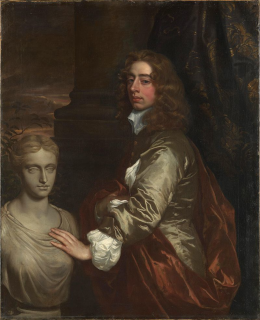
(Pictured: “Sir Henry Capel (1638-1696),” oil on canvas by Peter Lely, Metropolitan Museum of Art)


Leave a comment

Birth of James Sheridan Knowles, Dramatist & Actor

James Sheridan Knowles, Irish dramatist and actor, is born in Cork, County Cork, on May 12, 1784. A relative of Richard Brinsley Sheridan, he enjoys success writing plays for the leading West End theatres. Later in his career he also produces several novels.

Knowles’s father is the lexicographer James Knowles, cousin of Richard Brinsley Sheridan. The family moves to London in 1793, and at the age of fourteen he publishes a ballad entitled The Welsh Harper, which, set to music, is very popular. His talents secure him the friendship of William Hazlitt, who introduces him to Charles Lamb and Samuel Taylor Coleridge. He serves for some time in the Wiltshire and afterwards in the Tower Hamlets militia, leaving the service to become a pupil of Dr. Robert Willan. He obtains the degree of M.D. and is appointed vaccinator to the Jennerian Society.

Although Dr. Willan offers him a share in his practice, Knowles decides to give up medicine for the stage, making his first appearance as an actor probably at Bath, and plays Hamlet at the Crow Street Theatre, Dublin. At Wexford he marries, in October 1809, Maria Charteris, an actress from the Edinburgh Theatre. In 1810, he writes Leo, a successful play in which Edmund Kean appears. Another play, Brian Boroihme, written for the Belfast Theatre in the next year, attracts crowds. Nevertheless, his earnings are so small that he is obliged to become assistant to his father at the Royal Belfast Academical Institution. In 1817 he moves from Belfast to Glasgow, where, besides keeping a flourishing school, he continues to write for the stage.

Knowles first important success is Caius Gracchus, produced at the Belfast Theatre in 1815. His Virginius, written for William Charles Macready, is first performed in 1820 at Covent Garden. In William Tell (1825), he writes for Macready one of his favourite parts. His best-known play, The Hunchback, is produced at Covent Garden in 1832, and he wins praise acting in the work as Master Walter. The Wife is brought out at the same theatre in 1833. The Daughter, better known as The Wrecker’s Daughter, in 1836, and The Love Chase in 1837. His 1839 play Love is praised by Mary Shelley for its “inspiring situations founded on sentiment and passion.” His second wife is the actress, Emma Knowles.

In his later years Knowles forsakes the stage for the pulpit and, as a Baptist preacher, attracts large audiences at Exeter Hall and elsewhere. He publishes two polemical works: the Rock of Rome and the Idol Demolished by Its Own Priests in both of which he combats the special doctrines of the Roman Catholic Church. He is for some years in the receipt of an annual pension of £200, bestowed by Sir Robert Peel in 1849. In old age he befriends the young Edmund Gosse, whom he introduces to Shakespeare. He makes a happy appearance in Gosse’s Father and Son.

Knowles dies at Torquay on November 30, 1862. He is buried under a huge tomb at the summit of the Glasgow Necropolis.

A full list of the works of Knowles and of the various notices of him can be found in The Life of James Sheridan Knowles (1872), privately printed by his son, Richard Brinsley Knowles (1820–1882), who is well known as a journalist. It is translated into German.


Leave a comment

Birth of Eleanor Charlotte Butler, Recluse of Llangollen

Eleanor Charlotte Butler, recluse of Llangollen, is born in Cambrai, France, on May 11, 1739.

Butler is the youngest daughter of Walter Butler of Garryricken, County Tipperary, and his wife, Ellen (née Morres), of Latargh, County Tipperary. Her family are members of the old Catholic gentry, and her father is the sole lineal representative of James Butler, 2nd Duke of Ormonde. In 1740 her family returns to the Garryricken estate, where she spends part of her childhood. She is educated by the English Benedictine nuns of the convent of Our Lady of Consolation in Cambrai, where her Jacobite grand-aunt is a pensioner. Reared in the liberal and anti-clerical environment at Cambrai, she is open about her opposition to Irish Catholicism. She is also well read in literature.

By the time Butler returns to Ireland, her brother John had claimed the family titles and was recognised as 16th Earl of Ormond. Though he never uses the title, his sisters are recognised as the daughters of an earl. As the family is impoverished, and she is not disposed to marriage, a decade is passed in unhappiness. Then, in 1768, the thirteen-year-old Sarah Ponsonby arrives in Kilkenny to attend a local school. Following her visit to the Butler home at Kilkenny Castle, and despite the difference in age, the two form an immediate friendship and corresponded secretly, having discovered their mutual interest in the arts and Rousseau‘s ideal of pastoral retirement.

Ponsonby, upon finishing school, is sent to live with relatives at nearby Woodstock Estate, and there is subject to the uninvited attention of a middle-aged guardian. Butler is discontented with her life and the prospects of her family’s wish to send her back to Cambrai, so the two plan to leave their difficulties behind and settle in England. In their first attempt to flee in March 1778, they leave for Waterford disguised as men and wielding pistols, but their families manage to catch up with them. Butler is then sent to the home of her brother-in-law, Thomas ‘Monarch’ Kavanagh of Borris, County Carlow, but makes a second, successful attempt and runs away to find Ponsonby at Woodstock Estate. Her persistence wins out when both families finally capitulate and accepted their plans to live together.

Butler and Ponsonby set out for Wales in May 1778 and, after an extensive tour of Wales and Shropshire, eventually settle in Llangollen Vale, where they rent a cottage which is renamed Plas Newydd. They are accompanied by Mary Carryll, a former servant of the Woodstock household, who remains in their service until her death in 1809. Having made a deliberate decision to retire from the world, they spend the greater part of their days corresponding with friends, reading, building up a large library and making alterations to Plas Newydd, which takes on a fashionable Gothic look. Their garden, landscaped under their direction, becomes a popular attraction for visitors. Butler meticulously records their daily routine in a series of journals, some of which are now lost.

Their seclusion, eccentricities, semi-masculine dress and short-cropped powdered hair gain them notoriety, and it becomes fashionable to call on them. Their numerous and illustrious visitors include Hester Lynch Piozzi, Charles and Erasmus Darwin, Sir Walter Scott, Sir Arthur Wellesley, the Duke of Gloucester and Josiah Wedgwood. In 1792 they entertain Stéphanie Caroline Anne Syms, later that year to become the wife of Lord Edward FitzGerald, and her mother, Madame de Genlis. Following the arrest of Edward FitzGerald in 1798, Stéphanie and her suite flee to London and on May 27 pass through Llangollen, where the events in Dublin are already known. On hearing that she is staying in the local inn, Butler and Ponsonby invite her to call in. However, when she wishes to stay for the day, their apprehension of Jacobinism leads them to persuade her “principally for her own sake and a little for [our] own to proceed as fast and as incognito as possible for London.”

Both Anna Seward and William Wordsworth, who stay at Plas Newydd, write poems celebrating their friendship, and Lord Byron sends them a copy of The Corsair. Owing to her support of the Bourbons, Butler is sent the Croix St. Louis, which she wears about her neck. Though generally considered a hospitable couple, Seward, who is a good friend, admits that the “incessant homage” they received could make Butler “haughty and imperious,” while Lady Lonsdale thinks her “very clever, very odd.” Their celebrity does have its drawbacks: an article in the General Evening Post of July 24, 1790, entitled “Extraordinary female affection,” suggests indirectly that their relationship is unnatural. Butler is particularly angered by this publicity and appeals to Edmund Burke for legal advice. Their retirement is also continually dogged by financial difficulties. They live mainly off their respective allowances and Butler’s royal pension (granted through the influence of Lady Frances Douglas), but spend beyond their means and are often in debt. To add to their problems, Butler receives no mention in her father’s will. However, the Gothic eccentricities of their cottage, which they succeed over time in purchasing, and garden attract even the interest of Queen Charlotte.

Though it is claimed that neither woman spends a night away from Plas Newydd, in January 1786 they stay with their friends, the Barretts of Oswestry, and that September they visit Sir Henry Bridgeman of Weston Park, near Staffordshire. In June 1797 they take their only holiday, at the coastal resort of Barmouth. Despite their isolation they are well informed about international events and society gossip. The Irish serjeant-at-law Charles Kendal Bushe recalls how they gave him all the news of Dublin, London, Cheltenham, and Paris.

In later years Butler’s eyesight deteriorates, preventing her from keeping her journal. She is secretly painted as an old woman with Ponsonby by Lady Mary Leighton and sketched by Lady Henrietta Delamere. A distinctive, anonymous silhouette shows the two generously proportioned women in traditional riding habits (National Portrait Gallery, London). Butler dies on June 2, 1829, and is buried alongside Carryll at Llangollen church. Sarah Ponsonby is subsequently buried with them.

(From: “Butler, Lady (Charlotte) Eleanor” by Frances Clarke, Dictionary of Irish Biography, http://www.dib.ie)


Leave a comment

The Execution of Roddy McCorley, Irish Nationalist

Roddy McCorley, Irish nationalist, is executed on February 28, 1800. He is alleged to be a member of the United Irishmen and claimed as a participant in their rebellion of 1798.

McCorley, the son of a miller, and is born near Toome in the civil parish of Duneane, County Antrim, in what is now Northern Ireland. A few years before the Irish Rebellion of 1798, his father is believed to have been executed for stealing sheep. These charges appear to be politically motivated in an attempt to remove a troublesome agitator at a time of great social unrest. Following his father’s execution, his family is evicted from their home.

There is uncertainty as to whether McCorley is actually actively involved with the predominantly Presbyterian United Irishmen or the predominantly Catholic Defenders. His role in the 1798 rebellion itself is unrecorded. In a ballad called “Roddy McCorley” written in the 1890s by Ethna Carbery, he is claimed to have been one of the leaders of the United Irishmen at the Battle of Antrim, however there is no contemporary documentary evidence to support this claim or prove that he was even active in the rebellion.

After the rebellion, McCorley joins a notorious outlaw gang known as Archer’s Gang, made up of former rebels and led by Thomas Archer. Some of these men had been British soldiers who changed sides in the conflict, and as such are guilty of treason and thus exempt from the terms of amnesty offered to the rank and file of the United Irishmen. This means that they are always on the run in an attempt to evade capture. This “quasi-rebel” group are claimed to have attacked loyalists and participated in common crime. It is believed that McCorley is caught while in hiding, having been betrayed by an informer.

After McCorley is arrested he is tried by court martial in Ballymena on February 20, 1800, and sentenced to be hanged “near the Bridge of Toome,” in the parish of Duneane. His execution occurs on February 28, 1800. The bridge had been partially destroyed by rebels in 1798 to prevent the arrival of loyalist reinforcements from west of the River Bann.

McCorley’s body is then dismembered and buried under the gallows, on the main Antrim to Derry road. A letter published in the Belfast News Letter a few days after his execution gives an account of the execution and how he was viewed by some. In it he is called Roger McCorley, which may be his proper Christian name.

His great-grandson, Roger McCorley, is an officer in the Irish Republican Army in the Irish War of Independence (1919–1921).

In addition to Ethna Carbery’s ballad, historian Guy Beiner uncovers earlier references to McCorley in Presbyterian folklore, which he shows to have been repeatedly forgotten and obscured on the background of mainstream Presbyterian identification with Unionism.

Carbery’s ballad is re-popularised by The Clancy Brothers and Tommy Makem, The Dubliners, The Kingston Trio, and others during the folk music revival of the 1960s. It is recorded in 1995 by Shane MacGowan and The Popes for their album The Snake and has also been recorded by other contemporary artists, such as Heather Dale on her 2006 album The Hidden Path. The melody for “Roddy McCorley” is reused in 1957 for “Sean South,” about a failed operation that year during the IRA’s border campaign.

An account of McCorley’s career compiled in the early twentieth century from local traditions and correspondence with his descendants, Who Fears to Speak of ’98?, is written by the Belfast antiquary and nationalist Francis Joseph Bigger. It contains an edited version of an early 19th-century ballad about Roddy McCorley’s fate.


Leave a comment

Birth of Thomas Spring Rice, 1st Baron Monteagle of Brandon

Thomas Spring Rice, 1st Baron Monteagle of Brandon, PC, FRS, FGS, British Whig politician who serves as Chancellor of the Exchequer from 1835 to 1839, is born on February 8, 1790, into a notable Anglo-Irish family which owns large estates in Munster.

Spring Rice is one of the three children of Stephen Edward Rice, of Mount Trenchard House, and Catherine Spring, daughter and heiress of Thomas Spring of Ballycrispin and Castlemaine, County Kerry, a descendant of the Suffolk Spring family. He is a great grandson of Sir Stephen Rice, Chief Baron of the Irish Exchequer and a leading Jacobite Sir Maurice FitzGerald, 14th Knight of Kerry. His grandfather, Edward, converted the family from Roman Catholicism to the Anglican Church of Ireland, to save his estate from passing in gavelkind.

Spring Rice is educated at Trinity College, Cambridge, and later studies law at Lincoln’s Inn, but is not called to the Bar. His family is politically well-connected, both in Ireland and Great Britain, and he is encouraged to stand for Parliament by his father-in-law, Lord Limerick.

Spring Rice first stands for election in Limerick City in 1818 but is defeated by the Tory incumbent, John Vereker, by 300 votes. He wins the seat in 1820 and enters the House of Commons. He positions himself as a moderate unionist reformer who opposes the radical nationalist politics of Daniel O’Connell and becomes known for his expertise on Irish and economic affairs. In 1824 he leads the committee which establishes the Ordnance Survey in Ireland.

Spring Rice’s fluent debating style in the Commons brings him to the attention of leading Whigs and he comes under the patronage of the Marquess of Lansdowne. As a result, he is made Under-Secretary of State for the Home Department under George Canning and Lord Goderich in 1827, with responsibility for Irish affairs. This requires him to accept deferral of Catholic emancipation, a policy which he strongly supports. He then serves as joint Secretary to the Treasury from 1830 to 1834 under Lord Grey. Following the Reform Act 1832, he is elected to represent Cambridge from 1832 to 1839. In June 1834, Grey appoints him Secretary of State for War and the Colonies, with a seat in the cabinet, a post he retains when Lord Melbourne becomes Prime Minister in July. A strong and vocal unionist throughout his life, he leads the Parliamentary opposition to Daniel O’Connell’s 1834 attempt to repeal the Acts of Union 1800. In a six-hour speech in the House of Commons on April 23, 1834, he suggests that Ireland should be renamed “West Britain.” In the Commons, he also champions causes such as the worldwide abolition of slavery and the introduction of state-supported education.

The Whig government falls in November 1834, after which Spring Rice attempts to be elected Speaker of the House of Commons in early 1835. When the Whigs return to power under Melbourne in April 1835, he is made Chancellor of the Exchequer. As Chancellor, he has to deal with crop failures, a depression and rebellion in North America, all of which create large deficits and put considerable strain on the government. His Church Rate Bill of 1837 is quickly abandoned and his attempt to revise the charter of the Bank of Ireland ends in humiliation. Unhappy as Chancellor, he again tries to be elected as Speaker but fails. He is a dogmatic figure, described by Lord Melbourne as “too much given to details and possessed of no broad views.” Upon his departure from office in 1839, he has become a scapegoat for the government’s many problems. That same year he is raised to the peerage as Baron Monteagle of Brandon, in the County of Kerry, a title intended earlier for his ancestor Sir Stephen Rice. He is also Comptroller General of the Exchequer from 1835 to 1865, despite Lord Howick‘s initial opposition to the maintenance of the office. He differs from the government regarding the exchequer control over the treasury, and the abolition of the old exchequer is already determined upon when he dies.

From 1839 Spring Rice largely retires from public life, although he occasionally speaks in the House of Lords on matters generally relating to government finance and Ireland. He vehemently opposes John Russell, 1st Earl Russell‘s policy regarding the Irish famine, giving a speech in the Lords in which he says the government had “degraded our people, and you, English, now shrink from your responsibilities.”

In addition to his political career, Spring Rice is a commissioner of the state paper office, a trustee of the National Gallery and a member of the senate of the University of London and of the Queen’s University of Ireland. Between 1845 and 1847, he is President of the Royal Statistical Society. In addition, he is a Fellow of the Royal Society and a Fellow of the Geological Society of London. In May 1832 he becomes a member of James Mill‘s Political Economy Club.

Spring Rice is well regarded in Limerick, where he is seen as a compassionate landlord and a good politician. An advocate of traditional Whiggism, he strongly believes in ensuring society is protected from conflict between the upper and lower classes. Although a pious Anglican, his support for Catholic emancipation wins him the favour of many Irishmen, most of whom are Roman Catholic. He leads the campaign for better county government in Ireland at a time when many Irish nationalists are indifferent to the cause. During the Great Famine of the 1840s, he responds to the plight of his tenants with benevolence. The ameliorative measures he implements on his estates almost bankrupts the family and only the dowry from his second marriage saves his financial situation. A monument in honour of him still stands in the People’s Park in Limerick.

Even so, Spring Rice’s reputation in Ireland is not entirely favourable. In a book regarding assisted emigration from Ireland, a process in which a landlord pays for their tenants’ passage to the United States or Australia, Moran suggests that Spring Rice was engaged in the practice. In 1838, he is recorded as having “helped” a boat load of his tenants depart for North America, thereby allowing himself the use of their land. However, he is also recorded as being in support of state-assisted emigration across the British Isles, suggesting that his motivation is not necessarily selfish.

Spring Rice dies at the age of 76 on February 7, 1866. Mount Monteagle in Antarctica and Monteagle County in New South Wales are named in his honour.

(Pictured: Thomas Spring Rice, 1st Baron Monteagle of Brandon (1790-1866), contemporary portrait by George Richmond (1809-1896))


Leave a comment

Premiere of Oliver Goldsmith’s Play “The Good-Natur’d Man”

The Good-Natur’d Man, a play written by Oliver Goldsmith in 1768, is first performed at Central London’s Covent Garden on January 29, 1768. The play is written in the form of a comedy with Mary Bulkley as Miss Richland. It is released at the same time as Hugh Kelly‘s False Delicacy, staged at Drury Lane Theatre. The two plays go head-to-head, with Kelly’s proving the more popular. Goldsmith’s play is a middling success, and the printed version of the play becomes popular with the reading public.

Although his birth date and year and birthplace are not known with any certainty, it is believed that Goldsmith is born on November 10, 1728, in Kilkenny West, County Westmeath. He is an Anglo-Irish essayist, poet, novelist, dramatist, and eccentric, made famous by such works as the series of essays The Citizen of the World, or, Letters from a Chinese Philosopher (1762), the poem The Deserted Village (1770), the novel The Vicar of Wakefield (1766), and the play She Stoops to Conquer (1773).

Goldsmith is the son of an Anglo-Irish clergyman, the Rev. Charles Goldsmith, curate in charge of Kilkenny West. At about the time of his birth, the family moves into a substantial house at nearby Lissoy, where he spends his childhood. Much has been recorded concerning his youth, his unhappy years as an undergraduate at Trinity College Dublin, where he received the BA degree in February 1749, and his many misadventures before he leaves Ireland in the autumn of 1752 to study in the medical school at Edinburgh. By this time his father has died, but several of his relations support him in his pursuit of a medical degree. Later on, in London, he comes to be known as Dr. Goldsmith, Doctor being the courtesy title for one who holds the Bachelor of Medicine, but he takes no degree while at Edinburgh nor, so far as anyone knows, during the two-year period when, despite his meagre funds, which are eventually exhausted, he somehow manages to make his way through Europe. The first period of his life ends with his arrival in London, bedraggled and penniless, early in 1756.

Goldsmith’s rise from total obscurity is a matter of only a few years. He works as an apothecary‘s assistant, school usher, physician, and as a hack writer, reviewing, translating, and compiling. Much of his work is for Ralph Griffiths‘s Monthly Review. It remains amazing that this young Irish vagabond, unknown, uncouth, unlearned, and unreliable, is yet able within a few years to climb from obscurity to mix with aristocrats and the intellectual elite of London. Such a rise is possible because he has one quality, soon noticed by booksellers and the public, that his fellow literary hacks do not possess – the gift of a graceful, lively, and readable style.

Goldsmith’s rise begins with the Enquiry into the Present State of Polite Learning in Europe (1759), a minor work. Soon he emerges as an essayist, in The Bee and other periodicals, and above all in his Chinese Letters. These essays are first published in the journal The Public Ledger and are collected as The Citizen of the World in 1762. The same year brings his The Life of Richard Nash. Already he is acquiring those distinguished and often helpful friends whom he alternately annoys and amuses, shocks and charms – Samuel Johnson, Sir Joshua Reynolds, Thomas Percy, David Garrick, Edmund Burke, and James Boswell.

The obscure drudge of 1759 becomes in 1764 one of the nine founder-members of the famous The Club, a select body, including Reynolds, Johnson, and Burke, which meets weekly for supper and talk. Goldsmith can now afford to live more comfortably, but his extravagance continually runs him into debt, and he is forced to undertake more hack work. He thus produces histories of England and of ancient Rome and Greece, biographies, verse anthologies, translations, and works of popular science.

Goldsmith’s premature death on April 4, 1774, may be partly due to his own misdiagnosis of a kidney infection. He is buried in Temple Church in London. A monument is originally raised to him at the site of his burial, but this is destroyed in an air raid in 1941. A monument to him survives in the centre of Ballymahon, also in Westminster Abbey with an epitaph written by Samuel Johnson.

Among Goldsmith’s papers is found the prospectus of an encyclopedia, to be called the Universal dictionary of the arts and sciences. He wishes this to be the British equivalent of the Encyclopédie and it is to include comprehensive articles by Samuel Johnson, Edmund Burke, Adam Smith, Edward Gibbon, Sir Joshua Reynolds, Sir William Jones, Charles James Fox and Dr. Charles Burney. The project, however, is not realised due to Goldsmith’s death.

(Pictured: “Mr Honeywell introduces the bailiffs to Miss Richland as his friends,”a scene from the play “The Good-Natur’d Man” by Oliver Goldsmith, oil on panel by William Powell Frith)


Leave a comment

Birth of Mathew Carey, Irish American Publisher & Economist

Mathew Carey, Irish-born American publisher and economist who lives and works in Philadelphia, Pennsylvania, is born into a middle-class Catholic family in Dublin on January 28, 1760. He is the father of economist Henry Charles Carey.

Carey enters the bookselling and printing business in 1775 and, at the age of seventeen, publishes a pamphlet criticizing dueling. He follows this with a work criticizing the severity of the Irish penal code, and another criticizing Parliament. As a result, the British House of Commons threatens him with prosecution. In 1781 he flees to Paris as a political refugee. There he meets Benjamin Franklin, the ambassador representing the American Revolutionary forces, which achieves independence that year. Franklin takes Carey to work in his printing office.

Carey works for Franklin for a year before returning to Ireland, where he edits two Irish nationalist newspapers, the Freeman’s Journal and The Volunteer’s Journal. He gains passage on a ship to emigrate to the newly independent United States in September 1784.

Upon Carey’s arrival in Philadelphia, he finds that Franklin has recommended him to Gilbert du Motier, Marquis de Lafayette, who gives him a $400 check to establish himself. He uses this money to set up a new publishing business and a book shop. He founds The Pennsylvania Herald (1785), Columbian Magazine (1786), and The American Museum (1787). None of these ventures proves very profitable. The American Museum is the first American periodical to treat American culture as rich and original, instead of a poor imitation of Great Britain’s. He prints the first American version of the Douay–Rheims Bible in 48 weekly installments, this Roman Catholic edition popularly known as the Carey Bible. It is the first Roman Catholic version of the Bible printed in the United States. He also prints numerous editions of the King James Version, fundamental to English-speaking peoples.

In 1794–96, Carey publishes America’s first atlases. His 1802 map of Washington, D.C. is the first to name the stretch of land west of the United States Capitol as the “Mall.”

Carey frequently writes articles on various social topics, including events during the 1793 Philadelphia Yellow Fever Epidemic, which proves a crisis for the city. He reports on debates in the state legislature as well as providing political commentary in his essays. He is a Catholic and a founding member of the American Sunday-School Society, along with Quaker merchant Thomas P. Cope, Dr. Benjamin Rush and Episcopal bishop William White.

In 1822 Carey publishes Essays on Political Economy; or, The Most Certain Means of Promoting the Wealth, Power, Resources, and Happiness of Nations, Applied Particularly to the United States. This is one of the first treatises favoring Alexander Hamilton‘s protectionist economic policy.

During Carey’s lifetime, the publishing firm evolves to M. Carey & Son (1817–21), M. Carey & Sons (1821–24), and then to Carey & Lea (1824). He retires in 1825, leaving the publishing business to his son, Henry Charles Carey and son-in-law Isaac Lea. Lea and Henry Carey make the business economically successful and, for a time, it is one of the most prominent publishers in the country.

In 1821, Carey is elected as a member to the American Philosophical Society (APS) in Philadelphia.

Upon arriving in America, Carey quickly develops political connections in the developing country. One of his most important supporters is John Adams, still a leading figure of the Federalist Party at the time. His passionate support for the establishment of an American Navy contributes significantly to his alliance with the Federalists.

Throughout his political career in America, Carey supports the development and maintenance of American naval strength, even after joining Thomas Jefferson’s Democratic-Republicans in 1796. His political realignment occurs shortly before the American ratification of the Jay Treaty, primarily intended to ensure peace with Britain, while distancing America from France. His publishing in America channels his energy toward productive political objectives. His published works are credited with swaying public opinion toward the establishment of a powerful American navy.

Carey’s book Naval History of the United States, is meant to influence the public. Its conspicuous omission of naval activity during the American Quasi-War with France shows his political intentions. It helps direct political energy against the British, with which the U.S. is at war at the time of the book’s publication on May 6, 1813.

Focus on the British, known around the world for their naval power, makes an influential case for extending the reach of the American navy. Along with his publication of Naval History, Carey writes Olive Branch, published in 1814. He tries to eliminate competition between the two American political parties to create unity during the War of 1812. To many people, these efforts, and his early relationship with Franklin, make him the logical choice as Franklin’s political successor. Scholars believe that he contributed significantly by his books and publications to the establishment of the United States Whig Party.

Carey is elected a member of the American Antiquarian Society (AAS) in 1815. A significant portion of his business papers, as well as a very large number of original copies of works printed and/or published by him reside in the collections of the AAS.

Carey dies on September 16, 1839, and is buried in St. Mary’s Catholic Churchyard in Philadelphia.

In 1943, Publishers Weekly creates the Carey-Thomas Award for creative publishing, naming it in honor of Mathew Carey and Isaiah Thomas.

(Pictured: Portrait of Mathew Carey by John Neagle, 1825, The Library Company of Philadelphia)


1 Comment

Death of Simon Luttrell, 1st Earl of Carhampton

Simon Luttrell, 1st Earl of Carhampton, Anglo-Irish politician who sits in the House of Commons of Great Britain from 1754 to 1780, dies on January 14, 1787.

Luttrell is born in 1713, the second son of Henry Luttrell, of Luttrellstown Castle (whose family had held Luttrellstown Castle and the demesne and adjoining lands since the land had been granted to Sir Geoffrey de Luterel in about 1210 by King John of England) and his wife Elizabeth Jones. His father is a noted commander in the Jacobite Irish Army between 1689 and 1691. He later receives a pardon from the Williamite authorities and is accused by his former Jacobite comrades of having betrayed them. He is murdered when his sedan chair is attacked in Dublin on October 22, 1717.

Luttrell serves as a Member of Parliament in the House of Commons of Great Britain for four constituencies: Mitchell (1755–1761), Wigan (1761–1768), Weobley (1768–1774) and Stockbridge (1774–1780).

On October 13, 1768, Luttrell is created Baron Irnham of Luttrellstown in the Peerage of Ireland. As his title is an Irish peerage, he is able to keep his seat in the British House of Commons. He is elevated to the title of Viscount Carhampton on January 9, 1781, and is made Earl of Carhampton on June 23, 1785. He lives at Four Oaks Hall, Four Oaks, Sutton Coldfield, from 1751 to 1766.

On January 22, 1735, Luttrell marries Judith Maria Lawes, daughter of Sir Nicholas Lawes, Governor of Jamaica and Elizabeth Cotton (née Lawley), by whom he has eight children:

Luttrell’s rakish behaviour earns him the nickname “King of Hell,” with “Hell” being a district of Dublin notorious for its brothels. He reputedly starts the courtesan Mary Nesbitt in her career by seducing her.

Luttrell dies at Four Oaks, Warwick, England, on January 14, 1787. He is buried at Kingsbury, Warwick, England.