seamus dubhghaill

Promoting Irish Culture and History from Little Rock, Arkansas, USA


2 Comments

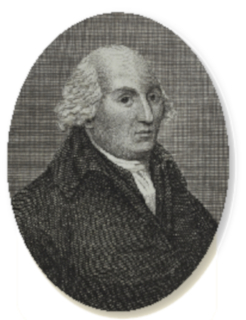
The Suicide of Reverend William Jackson

william-jackson

The Reverend William Jackson, noted Irish preacher, journalist, playwright, radical, and spy, commits suicide on April 30, 1795, after being found guilty of high treason.

Jackson was born in Newtownards, County Down, in 1737. Much is unclear about his early life. He studies at Oxford and becomes an Anglican curate. In the 1760s, he moves to London, where he preaches at the Tavistock Chapel and St. Mary-le-Strand. Although he gains some popularity as a preacher, he remains unbeneficed and eventually turns to journalism to support himself.

In 1766, Jackson becomes the editor of The Public Ledger. Under his editorship, the London paper becomes increasingly strident and oppositional in its politics. He is forced to flee to France in April 1777 to avoid a trial for libel that the popular actor and playwright Samuel Foote had initiated. He does not have to stay long in exile because Foote dies on October 21 of that same year.

After Foote’s death, Jackson returns to England. He resumes his political activities by publishing The Constitutions of the Several Independent States of America in 1783, with a dedication to the opposition leader, William Bentinck, 4th Duke of Portland. But the following year, he is secretly hired by the Prime Minister, William Pitt the Younger, to support the government in The Morning Post. Publishing anonymously, he attacks his former allies with his usual vehemence until he is discovered and is soundly damned for his apostasy and finds himself generally excluded from English politics.

Jackson’s next appearance in the public results in yet another scandal. In 1787 he joins forces with “Gentleman” John Palmer. Their goal is to build a new theatre in London. Jackson and Palmer persuade investors to sink more than eighteen thousand pounds into the construction of the Royalty Theatre. However, while there is no law against building a theatre in London, there is a law against operating one without the Lord Chamberlain‘s authorisation. Jackson and Palmer have no such authorisation so the theatre is shut down after just one night. The duped investors initiated legal action. Jackson again flees to France, where he arrives on the eve of revolution.

During his stay in Paris, Jackson is swept up in the revolutionary fervour and becomes involved with the radical British expatriate set there. Swept up in the general arrest of British subjects in 1793, he is released from prison on the strength of his radical commitments. Upon his release, he becomes inspector of horses for Meaux and later in 1793 is commissioned as a spy for the French. Nicholas Madgett, an Irishman who works in the Marine Ministry, recruits Jackson to go to England and Ireland to assess the public’s inclination towards armed revolution.

Jackson arrives in London in early 1794 and becomes reacquainted with John Cockayne, a lawyer he had met two decades earlier. He reveals his mission to Cockayne, who promptly reveals it to the Prime Minister out of fear of being tried for treason himself. When Jackson leaves London for Dublin, he is accompanied by Cockayne. In Ireland they meet with several radical leaders of the Society of United Irishmen, including Theobald Wolfe Tone, James Reynolds and Archibald Hamilton Rowan. Hamilton Rowan, in particular, is tempted by Jackson’s talk of French assistance, and persuades Tone to write up a report for the French, indicating Irish willingness to rise up. Jackson makes the fatal mistake of placing Tone’s report and other letters in the public mail, where they are seized by the authorities. This seizure leads to Jackson’s arrest on April 28, 1794.

Jackson remains in prison for a year before his trial takes place. The delays are at his request, allowing him time to assemble a defence and procure witnesses. During his imprisonment, he writes his last work, Observations in Answer to Mr. Paine’s Age of Reason (1795). His trial takes place in Dublin on April 23, 1795, and he is found guilty. One week later, on the morning of his sentencing hearing Jackson steps into the dock looking terribly ill. As his lawyers make drawn out speeches, hoping to avoid judgment on the technicality of an improperly filed indictment, Jackson’s condition steadily worsens. The judges order that a chair be provided for him and ask that a doctor attend him. He then collapses and dies. An autopsy finds that Jackson had ingested a large quantity of a “metallic poison.” This is likely administered by his second wife, but the inquest pointedly refuses to assign blame.

The effect of Jackson’s suicide is that he had not actually been pronounced guilty of treason by the court, and so his family can inherit his goods and a pension.


Leave a comment

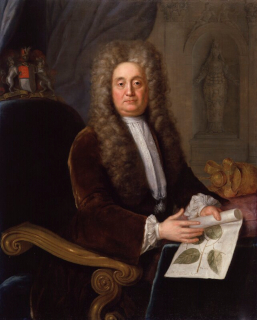
Birth of Sir Hans Sloane, Physician & Naturalist

Generated by IIPImage

Sir Hans Sloane, Irish physician and naturalist whose collection of books, manuscripts, and curiosities form the basis for the British Museum in London, is born on April 16, 1660, in Killyleagh, County Down in what is now Northern Ireland.

As a child Sloane possesses a strong curiosity of nature, and he develops a particular interest in plants. After studying medicine in London, he travels in France, taking an M.D. degree at the University of Orange in 1683. In 1685 he returns to London and is elected a fellow of the Royal Society. He proceeds to practice medicine as an assistant to British physician Thomas Sydenham. He is made a fellow of the Royal College of Physicians in 1687. That same year he accepts an opportunity to visit Jamaica, traveling as personal physician to the Christopher Monck, 2nd Duke of Albermarle, who had been appointed to govern the island.

The journey to Jamaica provides Sloane with the chance to pursue his interest in the natural sciences. During the 15 months of his travels, he visits multiple islands in the West Indies, including Saint Kitts, Nevis, and Barbados. He ultimately collects specimens of about 800 plants. He also records information on and collects specimens of various fish, mollusks, and insects, and he observes the local peoples and contemplates the natural phenomena of the area. His observations and the specimens he collects during the voyage lay the foundation for his later contributions to botany and zoology and for his role in the formation of the British Museum. He returns to England in 1689, his trip having been cut short by Monck’s death. His collection of plants from the West Indies is one of the first from that region to reach England.

Sloane’s trip to Jamaica also leads to his invention of a milk chocolate beverage. While on the island, he encounters a local drink made from a cacao plant. The beverage apparently makes him nauseous. To avoid this, he decides to mix the cacao material with milk. He finds this concoction to be not only more tolerable but also tasty and healthy. Shortly after his return to England, his milk-based concoction is sold by apothecaries as a medicinal product. His recipe later forms the basis for a milk chocolate product manufactured by Cadbury.

In 1696 Sloane publishes in Latin an elaborate catalogue, Catalogus Plantarum Quae in Insula Jamaica, on the plants he collected in Jamaica. He later publishes Natural History of Jamaica (2 Vol., 1707 and 1725), a comprehensive account of his studies of the natural phenomena of the island country.

Sloane also makes important contributions to medicine. He is physician to Queen Anne, King George I, and King George II. He is created a baronet in 1716, becoming the first medical practitioner to receive a hereditary title. He is relatively progressive as a physician, and, while serving George I, he adopts the practice of inoculation against smallpox for members of the royal family. In 1719 he is elected president of the Royal College of Physicians, a post he serves until 1735. In 1727 he becomes president of the Royal Society, succeeding physicist and mathematician Sir Isaac Newton. He holds the position until 1741. He earns a reputation as a specialist in eye diseases, and he eventually publishes Account of a Medicine for Soreness, Weakness and Other Distempers of the Eyes (1745).

Sloane is also known as an avid collector, and he benefits greatly from the acquisition of the cabinets of other collectors, including amateur scientist William Charleton and English apothecary and botanist James Petiver. When he retires from active work in 1741, his library and cabinet of curiosities has grown to be of unique value, and on his death, he bequeaths his collection to the nation, on condition that parliament pay his executors £20,000. The bequest is accepted and goes to form the collection opened to the public as the British Museum in 1759.

Sloane has no son that survives beyond infancy, and the baronetcy becomes extinct upon his death in London on January 11, 1753.

(From: Encyclopaedia Britannica, http://www.britannica.com/biography/Sir-Hans-Sloane-Baronet/)


Leave a comment

Birth of Patrick Ford, Irish American Journalist

patrick-ford

Patrick Ford, Irish American journalist, Georgist land reformer and fund-raiser for Irish causes, is born in Galway, County Galway on April 12, 1837.

Ford is born to Edward Ford (1805-1880) and Ann Ford (1815-1893), emigrating with his parents to Boston, Massachusetts in 1845, never returning to Ireland. He writes in the Irish World in 1886 that “I might as well have been born in Boston. I know nothing of England. I brought nothing with me from Ireland — nothing tangible to make me what I am. I had consciously at least, only what I found and grew up with in here.”

Ford leaves school at the age of thirteen and two years later is working as a printer’s devil for William Lloyd Garrison‘s The Liberator. He credits Garrison for his advocacy for social reform. He begins writing in 1855 and by 1861 is editor and publisher of the Boston Tribune, also known as the Boston Sunday Tribune or Boston Sunday Times. He is an abolitionist and pro-union.

During the American Civil War (1861–1865) Ford serves in the Union Army in the Ninth Massachusetts Regiment with his father and brother. He sees action in northern Virginia and fights in the Battle of Fredericksburg.

Ford spends four years after the war in Charleston, South Carolina, editing the Southern Carolina Leader, printed to support newly freed slaves. He settles in New York City in 1870 and founds the Irish World, which becomes the principal newspaper of Irish America. It promises “more reading material than any other paper in America” and outsells John Boyle O’Reilly‘s The Pilot.

In 1878, Ford re-titles his newspaper, the Irish World and American Industrial Liberator. During the early 1880s, he promotes the writings of land reformer, Henry George in his paper.

In 1880, Ford begins to solicit donations through the Irish World to support Irish National Land League activities in Ireland. Funds received are tabulated weekly under the heading “Land League Fund.” Between January and September 1881 alone, more than $100,000 is collected in donations. British Prime Minister William Ewart Gladstone later states that without the funds from the Irish World, there would have been no agitation in Ireland.”

Patrick Ford dies on September 23, 1913.


Leave a comment

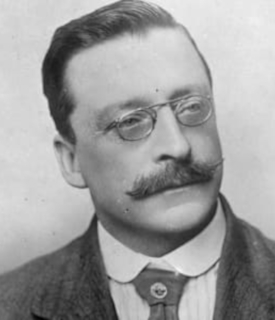
Birth of Arthur Griffith, Founder of Sinn Féin

arthur-griffith

Arthur Joseph Griffith, writer, newspaper editor and politician who founded the political party Sinn Féin, is born in Dublin on March 31, 1871. He leads the Irish delegation at the negotiations that produce the 1921 Anglo-Irish Treaty and serves as President of Dáil Éireann from January 1922 until his death in August 1922.

Griffith, a Roman Catholic, is educated by the Irish Christian Brothers. He works for a time as a printer before joining the Gaelic League, which is aimed at promoting the restoration of the Irish language.

After a short spell in South Africa, Griffith founds and edits the Irish nationalist newspaper The United Irishman in 1899. In 1904, he writes The Resurrection of Hungary: A Parallel for Ireland, which advocates the withdrawal of Irish members from the Parliament of the United Kingdom and the setting up of the institutions of government at home, a policy that becomes known as Sinn Féin (ourselves). On November 28, 1905, he presents “The Sinn Féin Policy” at the first annual Convention of the National Council. The occasion is marked as the founding date of the Sinn Féin party. Although the organization is still small at the time, Griffith takes over as president of Sinn Féin in 1911.

Griffith is arrested following the Easter Rising of 1916, despite not having taken any part in it. On his release, he works to build up Sinn Féin, which wins a string of by-election victories. At the party’s Ardfheis (annual convention) in October 1917, Sinn Féin becomes an unambiguously republican party, and Griffith resigns the presidency in favour of the 1916 leader Éamon de Valera, becoming vice-president instead. Griffith is elected as a member of parliament (MP) in June 1918, and is re-elected in the 1918 general election, when Sinn Féin wins a huge electoral victory over the Irish Parliamentary Party and refusing to take their seats at Westminster, set up their own constituent assembly, Dáil Éireann.

In the Dáil, Griffith serves as Minister for Home Affairs from 1919 to 1921, and Minister for Foreign Affairs from 1921 to 1922. In September 1921, he is appointed chairman of the Irish delegation to negotiate a treaty with the British government. After months of negotiations, he and the other four delegates sign the Anglo-Irish Treaty, which creates the Irish Free State, but not as a republic. This leads to a split in the Dáil. After the Treaty is narrowly approved by the Dáil, de Valera resigns as president and Griffith is elected in his place. The split leads to the Irish Civil War.

Griffith enters St. Vincent’s Nursing Home, Leeson Street, Dublin, during the first week of August 1922, following an acute attack of tonsillitis. He is confined to his room by his doctors, who had observed signs of what they thought might be a subarachnoid hemorrhage. It is difficult to keep him quiet and he resumes his daily work in the government building. When about to leave for his office shortly before 10:00 AM on August 12, 1922, he pauses to retie his shoelace and falls down unconscious. He regains consciousness but collapses again with blood coming from his mouth. Three doctors render assistance, but to no avail. Father John Lee of the Marist Fathers administers extreme unction, and Griffith expires as the priest recites the concluding prayer. The cause of death, cerebral hemorrhage, is also reported as being due to heart failure. He dies at the age of 51, ten days before Michael Collins‘ assassination in County Cork and two months after the outbreak of the Irish Civil War. He is buried in Glasnevin Cemetery four days later.


Leave a comment

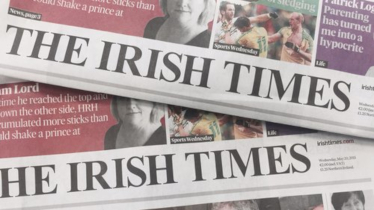
Launch of “The Irish Times”

the-irish-times

The Irish Times, an Irish daily broadsheet newspaper, is launched at 4 Lower Abbey Street in Dublin on March 29, 1859. The first appearance of a newspaper using the name The Irish Times occurs in 1823 but it closes in 1825. The title is revived as a thrice weekly publication by Major Lawrence E. Knox. It is originally founded as a moderate Protestant Irish nationalist newspaper, reflecting the politics of Knox, who stands unsuccessfully as a parliamentary candidate for Isaac Butt’s Home Rule League. In its early days, its main competitor is the Dublin Daily Express.

Though formed as a Protestant nationalist paper, within two decades and under new owners it becomes the voice of British unionism in Ireland. It is no longer marketed as a unionist paper, but rather presents itself politically as “liberal and progressive,” as well as promoting neoliberalism on economic issues. The editorship of the newspaper from 1859 until 1986 is controlled by the Anglo-Irish Protestant minority, only gaining its first nominal Irish Catholic editor 127 years into its existence.

The paper’s most prominent columnists include writer and arts commentator Fintan O’Toole and satirist Miriam Lord. The late Taoiseach Garret FitzGerald is once a columnist. Senior international figures, including Tony Blair and Bill Clinton, have written for its op-ed page. Its most prominent columns have included the political column Backbencher, by John Healy, Drapier, an anonymous piece produced weekly by a politician giving the ‘insider’ view of politics, Rite and Reason, a weekly religious column edited by ‘religious affairs’ editor Patsy McGarry, and the long running An Irishman’s Diary. An Irishman’s Diary is written by Patrick Campbell in the forties (under the pseudonym ‘Quidnunc’), by Seamus Kelly from 1949 to 1979 (also writing as ‘Quidnunc’) and more recently by Kevin Myers. After Myers’ move to the rival Irish Independent, An Irishman’s Diary has usually been the work of Frank McNally. On the sports pages, Philip Reid is the paper’s golf correspondent.

One of its most popular columns is the biting and humorous Cruiskeen Lawn satire column written, originally in Irish, later in English, by Myles na gCopaleen, the pen name of Brian O’Nolan who also writes books using the name Flann O’Brien. Cruiskeen Lawn is an anglicised spelling of the Irish words crúiscín lán, meaning “full little jug.” Cruiskeen Lawn makes its debut in October 1940, and appears with varying regularity until O’Nolan’s death in 1966.

The editor is Paul O’Neill who succeeds Kevin O’Sullivan on April 5, 2017. The deputy editor is Deirdre Veldon. The Irish Times is published every day except Sundays and employs 420 people.


Leave a comment

Birth of Erskine B. Childers, Writer, Correspondent & Civil Servant

erskine-barton-childers

Erskine Barton Childers, Irish writer, BBC correspondent and United Nations senior civil servant, is born in Dublin on March 11, 1929.

Childers is born to Erskine Hamilton Childers (Ireland’s fourth President) and his first wife Ruth Ellen Dow. He grows up in a multi-cultural atmosphere which influences his whole life. From an early age, he has an obvious fascination with history and world affairs. He studies at Newtown School, Waterford and much later on at Trinity College, Dublin and Stanford University. At Stanford he is actively involved with the National Student Association and rises to Vice-President of the organisation by 1949.

By 1960, Childers is in London working for the BBC in both radio and television. His broadcasts from the BBC World Service range on varying topics from the Suez Crisis and Palestine to the John F. Kennedy assassination in 1963. He is one of the first presenters at the start of the BBC TV show The Money Programme in 1966. The Suez Canal and Palestine issues later form the basis of his writing on the subjects.

Childers is distinguished as one of the first mainstream writers in the West to systematically challenge the contention that Palestinian Arab refugees of the 1947–1948 Civil War in Mandatory Palestine and the 1948 Arab–Israeli War fled their homes primarily from Arab broadcast evacuation orders, rather than from the use of force and terror by armed forces of the newly forming state of Israel.

Childers specialises in UN issues, even serving as a periodic consultant including a special mission in the Congo for Secretary-General U Thant. In 1967, under the leadership of Henry Richardson Labouisse, Jr., he is hired to lead a United Nations, UNICEF and United Nations Development Programme (UNDP) programme called Development Support Communication. In 1968 he co-authors a paper with United Nations colleague Mallica Vajrathon called “Project Support Communication,” later published in an important anthology about social change.

From 1975 to 1988, Childers is based in New York as Director of Information for UNDP. By his retirement in 1989 after 22 years of service as Senior Advisor to the UN Director General for Development and International Economic Co-operation, Childers had worked with most of the organisations of the UN system, at all levels and in all regions.

After his retirement, Childers continues to strive relentlessly for the ideals for which he had worked so hard. He co-authors several notable books for the Ford Foundation and the Dag Hammarskjöld Foundation on the reform of the United Nations with his colleague and equally devoted United Nations civil servant, Sir Brian Urquhart. The best known of these publications is A World in Need of Leadership. He continues writing on United Nations matters while traveling constantly and lecturing on the Organisation and the many challenges confronting it, such as globalisation and democracy, conflict prevention and peacekeeping, humanitarian assistance, human rights, famine, ageing and development, health, financial arrangement of the United Nations, citizen’s rights, female participation, design and perceptions, education, the North South divide and world economy. In 1995 he co-authors a paper with his international law colleague Marjolijn Snippe called The Agenda for Peace and the Law of the Sea, for Pacem in Maribus XXIII, the Annual Conference of the International Ocean Institute, that is held in Costa Rica, December 1995.

Childers becomes Secretary General of the World Federation of United Nations Associations in March 1996. Having served for only five months, he dies on August 25, 1996, during the organisation’s fiftieth anniversary congress. He is buried in Roundwood, County Wicklow.


Leave a comment

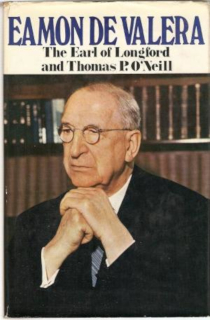
Death of Historian Thomas P. O’Neill

eamon-de-valera-biography

Thomas P. O’Neill, Irish historian who wrote Éamon de Valera‘s official biography with Frank Pakenham, 7th Earl of Longford, dies in Dublin on March 2, 1996.

Born in County Carlow, O’Neill is educated at St. Mary’s Knockbeg College and University College Dublin (UCD). While assistant keeper of the National Library of Ireland, he is asked to undertake the work on de Valera. Frank Gallagher, head of the Government Information Services and later a member of the library’s staff had been working on a biography for several years but dies in 1962 without completing the work.

De Valera knows of O’Neill’s reputation as a historian and asks him to undertake the project. A contract is signed with the publishers in 1963, and O’Neill moves to Áras an Uachtaráin to work on the book. He is later joined by Lord Longford as co-author.

O’Neill’s other works include a biography in Irish of James Fintan Lalor and a major study of the Great Famine, which establishes his reputation as a historian.

After the completion of the de Valera work, O’Neill is appointed lecturer and later professor of history in University College, Galway. On his retirement, he returns to live in Dublin, where he renews his association with the National Library, becoming a strong supporter of its expansion.

O’Neill continues historical research until shortly before his death. He discovers evidence that the 1916 Proclamation of the Irish Republic was signed by the seven signatories at the home of the president of Cumann na mBan, Jennie Wyse Power, in Henry Street, Dublin, before the Easter Rising and not merely printed in Liberty Hall from an unsigned manuscript on Easter Sunday.

O’Neill is survived by his wife, Marie, and six children. His funeral Mass takes place at St. Joseph’s Church on March 5, followed by his interment at Shanganagh Cemetery.

(From: “Biographer of de Valera dies at 74,” The Irish Times, Monday, March 4, 1996)


Leave a comment

Birth of William Carleton, Writer & Novelist

william-carleton

William Carleton, Irish writer and novelist, is born in Clogher, County Tyrone on February 20, 1794. He is best known for his Traits and Stories of the Irish Peasantry, a collection of ethnic sketches of the stereotypical Irishman.

Carleton receives a basic education at various hedge schools. Most of his learning is gained from a curate, Father Keenan, who teaches at a classical school at Donagh, County Monaghan which he attends from 1814 to 1816. He studies for the priesthood at St. Patrick’s Pontifical University, Maynooth, but leaves after two years. Around the age of 19 he undertakes one of the religious pilgrimages then common in Ireland. His experiences as a pilgrim make him give up the thought of entering the church.

Carleton’s vacillating ideas as to a mode of life are determined by reading the picaresque novel Gil Blas by Alain-René Lesage. He decides to try what fortune has in store for him, and he goes to Killanny, County Louth. For six months he serves as tutor to the family of a farmer named Piers Murphy. After some other experiments he sets out for Dublin, arriving with two shillings and sixpence in his pocket.

Carleton first seeks occupation as a bird-stuffer, but a proposal to use potatoes and meal as stuffing fails to recommend him. He then tries to become a soldier, but the colonel of the regiment dissuades him. After staying in a number of cheap lodgings, he eventually finds a place in a house on Francis Street which contains a circulating library. The landlady allows him to read from 12 to 16 hours a day. He obtains some teaching and a clerkship in a Sunday School office, begins to contribute to journals. “The Pilgrimage to Lough Derg,” which is published in the Christian Examiner, attracts great attention.

In 1830 Carleton publishes his first full-length book, Traits and Stories of the Irish Peasantry (2 volumes), which is considered his best achievement. A second series (3 volumes) appears in 1833, and Tales of Ireland in 1834. From that time until a few years prior to his death he writes constantly. “Fardorougha the Miser, or the Convicts of Lisnamona” appears in 1837–1838 in the Dublin University Magazine.

Carleton remained active publishing in Dublin magazines through the 1830s and 1840s writing many ethnic stories often drawn from the south Tyrone locality. He also writes a lot of fiction. During the last months of his life, he begins an autobiography which he brings down to the beginning of his literary career. This forms the first part of The Life of William Carleton by David James O’Donoghue, which contains full information about his life, and a list of his scattered writings.

Carleton’s later years are characterised by drunkenness and poverty. In spite of his considerable literary production, he remains poor but receives a pension in 1848 of £200 a year granted by Lord John Russell in response to a memorial on Carleton’s behalf signed by numbers of distinguished persons in Ireland.

William Carleton dies at his home at Woodville, Sandford Road, in Ranelagh, Dublin on January 30, 1869, and is interred at Mount Jerome Cemetery, Harold’s Cross, Dublin. The house, now demolished, is close to the entrance to the Jesuit residence at Milltown Park. Despite his conversion to Protestantism, Carleton remains on friendly terms with one of the priests there, Reverend Robert Carbery, who offers to give him the Last Rites of the Catholic Church. In the final weeks before his death, Carleton politely declines the offer, stating he had not been a Roman Catholic “for half a century and more.”

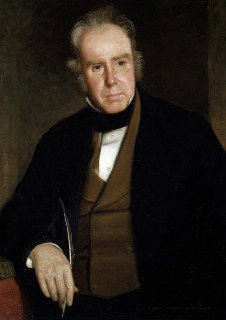
(Pictured: Portrait of Irish author William Carleton (1794-1869) by John Slattery (fl. 1850s))


Leave a comment

Birth of Stephen Lucius Gwynn, Writer & Politician

stephen-lucius-gwynn

Stephen Lucius Gwynn, journalist, biographer, author, poet, Protestant Nationalist politician, and Member of Parliament (MP) in the House of Commons of the United Kingdom of Great Britain and Ireland, is born on February 13, 1864, in St. Columba’s College, Rathfarnham, Dublin, where his father John Gwynn, a biblical scholar and Church of Ireland clergyman, is a warden.

Gwynn spends his early childhood in rural County Donegal, which shapes his later view of Ireland. He is educated at St. Columba’s College and goes on to Brasenose College, Oxford, where, as scholar, in 1884 he is awarded first-class honours in classical moderations and in 1886 literae humaniores. During term holidays he returns to Dublin, where he meets several of the political and literary figures of the day.

After graduating Gwynn moves to France where he works as a schoolmaster for ten years. In December 1889 he marries his cousin Mary Louisa Gwynn. They have four sons and two daughters. Having dabbled in journalism since his student days, he moves to London in 1896 to pursue a career as a writer. He soon becomes a prominent figure in literary and journalistic circles.

In 1904 the Gwynns return to Ireland to live in Raheny, County Dublin. In November 1906 he wins a seat for Galway Borough, which he represents as a member of the Irish Parliamentary Party until 1918. During this time, he also becomes active with the Gaelic League and the Irish Literary Revival.

At the outbreak of World War I, Gwynn gives his support to John Redmond that Irishmen should enlist in the British forces. At the age of fifty-one he enlists as a private in the 7th Leinster Regiment and is later commissioned lieutenant in the 6th Battalion Connaught Rangers, attached to the 16th (Irish) Division. He is promoted to captain in 1915 and serves with his battalion at the battles of Ginchy and Guillemont during the Somme offensive and also at Messines in 1917, leaving the front line shortly afterwards.

Gwynn is appointed to the Dardanelles Commission in 1916, an investigation into the unsuccessful 1915 Gallipoli Campaign.

After the war Gwynn continues with his writing and political life. He receives honorary doctorates from the National University of Ireland in 1940 and the University of Dublin in 1945. He dies on June 11, 1950, at his home in Terenure, Dublin and is buried at Tallaght cemetery.


Leave a comment

Birth of Thomas Clarke Luby, Irish Revolutionary

thomas-clarke-luby

Thomas Clarke Luby, Irish revolutionary, author, journalist and one of the founding members of the Irish Republican Brotherhood, is born in Dublin on January 16, 1822.

Luby is the son of a Church of Ireland clergyman from Templemore, County Tipperary, his mother being a Catholic. He is educated at Trinity College Dublin where he studies law and puts in the necessary number of terms in London and Dublin where he acquires a reputation as a scholar and takes his degree. He goes on to teach at the college for a time.

Luby supports the Repeal Association and contributes to The Nation newspaper. After the breach with Daniel O’Connell, he joins the Young Irelanders in the Irish Confederation. He is deeply influenced by James Fintan Lalor at this time. Following the suppression of the Young Ireland Rebellion of 1848, he with Lalor and Philip Gray attempt to revive the fighting in 1849 as members of the secret Irish Democratic Association. This, however, ends in failure.

In 1851 Luby travels to France, where he hopes to join the French Foreign Legion to learn infantry tactics but finds the recruiting temporarily suspended. From France he goes to Australia for a year before returning to Ireland. From the end of 1855 he edits the Tribune newspaper founded by John E. Pigot who had been a member of The Nation group. During this time, he remains in touch with the small group of ’49 men including Philip Gray and attempts to start a new revolutionary movement. Luby’s views on social issues grow more conservative after 1848 which he makes clear to James Stephens whom he meets in 1856.

In the autumn of 1857 Owen Considine arrives with a message signed by four Irish exiles in the United States, two of whom are John O’Mahony and Michael Doheny. The message conveys the confidence they have in Stephens and asks him to establish an organisation in Ireland to win national independence. Considine also carries a private letter from O’Mahony to Stephens which is a warning, and which is overlooked by Luby and Stephens at the time. Both believe that there is a strong organisation behind the letter, only later to find it is rather a number of loosely linked groups. On December 23 Stephens dispatches Joseph Denieffe to America with his reply which is disguised as a business letter dated and addressed from Paris. In his reply, Stephen’s outlines his conditions and his requirements from the organisation in America.

On March 17, 1858, Denieffe arrives in Dublin with the acceptance of Stephens’s terms by the New York Committee and the eighty pounds. On that very evening the Irish Republican Brotherhood is established in Peter Langan’s timberyard in Lombard Street.

In mid-1863 Stephens informs his colleagues he wishes to start a newspaper, with financial aid from O’Mahony and the Fenian Brotherhood in America. The offices are established at 12 Parliament Street, almost at the gates of Dublin Castle. The first issue of the Irish People appears on November 28, 1863. The staff of the paper along with Luby are Charles J. Kickham and Denis Dowling Mulcahy as the editorial staff. Jeremiah O’Donovan Rossa and James O’Connor have charge of the business office, with John Haltigan being the printer. John O’Leary is brought from London to take charge in the role of Editor.

On July 15, 1865, American-made plans for a rising in Ireland are discovered. Superintendent Daniel Ryan, head of the G Division of the Dublin Metropolitan Police at Dublin Castle, has an informer within the offices of the Irish People who supplies him with an “action this year” message on its way to the IRB unit in Tipperary. With this information, Ryan raids the offices of the Irish People on Thursday, September 15, followed by the arrests of Luby, O’Leary and O’Donovan Rossa. Kickham is caught after a month on the run. Stephens is also caught with the support of Fenian prison warders. The last number of the paper is dated September 16, 1865.

After his arrest and the suppression of the Irish People, Luby is sentenced to twenty years of penal servitude. He is released in January 1871 but is compelled to remain away from Ireland until the expiration of his sentence.

Upon his release Luby goes first to the Continent and later settles in New York City. He lectures all over the country for years and writes for a number of Irish newspapers on political topics. At the memorial meeting on the death of John Mitchel, he delivers the principal address in Madison Square Garden.

Thomas Clarke Luby dies at 109½ Oak Street, Jersey City, New Jersey of paralysis, on November 29, 1901, and is buried in a grave shared with his wife in Bayview Cemetery in Jersey City. His epitaph reads: “Thomas Clarke Luby 1822–1901 He devoted his life to love of Ireland and quest of truth.”