seamus dubhghaill

Promoting Irish Culture and History from Little Rock, Arkansas, USA


Leave a comment

Founding of North Tipperary County Council

North Tipperary County Council (Irish: Comhairle Contae Thiobraid Árann Thuaidh) is established on April 1, 1899, under the Local Government (Ireland) Act 1898 for the administrative county of Tipperary, North Riding. It is the local authority of the county of North Tipperary from 1899 to 2014. The head of the council has the title of Cathaoirleach. The county town was Nenagh.

North Tipperary County Council succeeds the judicial county of the North Riding of County Tipperary, except for the district electoral divisions of Cappagh, Curraheen, and Glengar, which become part of South Tipperary.

Originally, North Tipperary County Council holds its meetings in Nenagh Courthouse. The county council relocates to a new facility, known as the Civic Offices, in 2005.

The Local Government (Ireland) Act 1919 introduces the electoral system of proportional representation by means of the single transferable vote (PR-STV) for the 1920 Irish local elections. Tipperary North Riding is divided into five county electoral areas to elect the twenty members of the council.

Under the Local Government Act 2001, North Tipperary County Council is allocated twenty-one seats. The 2009 North Tipperary County Council election is the last election to the council.

On July 26, 2011, Phil Hogan, the Minister for the Environment, Community and Local Government, announces the proposed merger of North Tipperary County Council and South Tipperary County Council. Following implementation of the Local Government Reform Act 2014, it is dissolved on June 1, 2014, and succeeded by Tipperary County Council.


Leave a comment

Birth of Breeda Moynihan-Cronin, Former Labour Party Politician

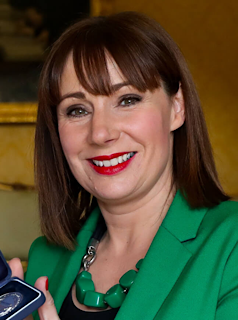
Breeda Moynihan-Cronin (née Moynihan), former Labour Party politician who serves as a Teachta Dála (TD) for the Kerry South constituency from 1992 to 2007, is born in Cork, County Cork, on March 31, 1953.

Although born in Cork, Moynihan-Cronin is a native of KillarneyCounty Kerry. She is educated at St. Brigid’s Secondary School in Killarney, Dominican College Sion Hill in Dublin, and Skerry’s College, Cork. Her father, Michael Moynihan, is a TD for Kerry South from 1981 to 1987 and from 1989 to 1992. She works as a bank official before becoming involved in politics in 1991 when she is elected to Kerry County Council. She is first elected to Dáil Éireann at the 1992 Irish general election as a Labour Party TD for Kerry South, succeeding her father. She is re-elected at every election until 2007.

Moynihan-Cronin holds a number of front bench positions in the Labour Party, including, Spokesperson on Justice, Equality and Law Reform (1997–98), Social, Community and Family Affairs(1998–99), Tourism and Recreation (1999–2002), Social, Community and Family Affairs (2002–03), and Equality and Law Reform (2003–07). She is a former chairperson of the Labour Party.

On October 11, 2005, Moynihan-Cronin announces that she will not stand for re-election at the forthcoming general election due to ill-health. Her decision to retire presents considerable difficulties for the Labour Party to retain her seat, as the party performed poorly at the 2004 Kerry County Council election, failing to elect any councillors within the county. However, on October 28, 2006, she announces that she will stand in the forthcoming general election, having overcome her health difficulties. However, she fails to retain her seat.

In June 2011, Moynihan-Cronin returns to politics when she is co-opted onto Kerry County Council to represent the Killarney area, filling the seat left vacant when Marie Moloney is elected to the 24th Seanad. In 2013, she stands down from the council and is replaced by Sean Counihan.


Leave a comment

Birth of Martin McAleese, Politician, Dentist & Accountant

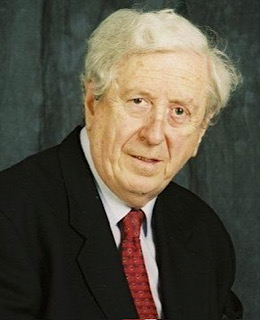
Martin McAleese, Irish politician, dentist and accountant who has served as the Chancellor of Dublin City University (DCU) since August 2011, is born in Belfast, Northern Ireland, on March 24, 1951. He serves as a Senator from 2011 to 2013, after being nominated by the Taoiseach. He is the husband of the former president of IrelandMary McAleese.

McAleese is educated at St. Mary’s Christian Brothers’ Grammar School, Belfast. He then studies at Queen’s University Belfast (QUB), obtaining an honours Bachelor of Science in Physics. He plays Gaelic football for the Antrim Minors and is captain of the team in 1969. In 1972, after he graduates he moves to Dublin and trains there as an accountant with the chartered accountancy firm of Stokes, Kennedy, Crowley. He later works as financial controller for an Aer Lingus subsidiary.

McAleese marries Mary Leneghan in 1976. The couple resides in Scholarstown, Dublin, for a short period, and then for almost twelve years near RatoathCounty Meath. In 1980, he returns to full-time education at Trinity College Dublin (TCD), to study as a dentist, subsequently moving back, with his family, to Northern Ireland, where he practises as a dentist in Crossmaglen and BessbrookCounty Armagh.

While his wife serves as President of Ireland, McAleese initiates a series of meetings with senior Ulster loyalist paramilitary leaders to pursue peace negotiations. These actions do not take place without controversy, but are widely viewed as instrumental in bringing loyalist paramilitary groups to peace talks.

In May 2011, McAleese is appointed as a Senator by the Taoiseach Enda Kenny. In August 2011, he is appointed the Chancellor of Dublin City University, taking over from David Byrne.

On February 1, 2013, McAleese announces his intention to resign as a member of Seanad Éireann.

McAleese accepts an appointment as Chairman of the Inter-Departmental Committee which is set up by the Government of Ireland to investigate the Magdalene laundries. His findings have been criticised by some survivors and researchers from the Magdalene Names project.

On October 18-19, 2014, McAleese attends the One Young World Summit in Dublin as a keynote speaker. Here, he hosts a special session for the One Young World Peace and Conflict Resolution Project alongside former Ulster Defence Association (UDA) prisoner Jackie McDonald and former Irish Republican Army (IRA) prisoner Sean Murray. They address young people from 191 countries to share and develop ideas to strengthen efforts at conflict resolution in their own countries.

McAleese and his wife Mary have three children. The family moves to RostrevorCounty Down, in 1987, when he sets up practice in County Armagh.


Leave a comment

Enactment of the Peace Preservation (Ireland) Act of 1881

On March 21, 1881, the Peace Preservation (Ireland) Act of 1881, a significant piece of legislation, is enacted by the British Parliament, led by Prime Minister William Ewart Gladstone, during a period of political turbulence in Ireland.

This act is part of a series of legislative measures introduced by the British government to address the rise of agrarian agitation and unrest in Ireland, particularly in response to the activities of the Irish National Land League. The Act grants extensive powers to the authorities to combat perceived threats to public order and security. It allows for the arrest and detention of individuals suspected of being involved in agrarian crimes, as well as the suppression of public meetings and the imposition of curfews in troubled areas. It is part of the broader response by the British government to the Land War, a period of agrarian agitation and tenant-landlord conflicts in Ireland during the late 19th century. The legislative measures during this time are controversial and lead to increased tensions between the Irish population and the British authorities.

William Ewart Gladstone, a member of the Liberal Party, is the prime minister of the United Kingdom of Great Britain and Ireland on four separate occasions between 1868 and 1894. He is noted for his moralistic leadership and his emphasis on world peace, economical budgets, political reform and efforts to resolve the Irish question.

Gladstone sees himself as a national leader driven by a political and almost religious mission, which he tries to validate through elections and dramatic appeals to the public conscience. His approach sometimes divides the Liberal Party, which he dominates for three decades. Finally, he splits his party on the issue of Irish Home Rule, which he sees as mandated by the true public interest regardless of the political cost.

In 1881, Gladstone is convinced that to pass a Land Bill for Ireland, law and order should be restored. In February 1881, the government therefore passes the Peace Preservation (Ireland) Act 1881 which gives the Lord Lieutenant of Ireland powers to suspend habeas corpus, and gives him in effect the power to lock up anyone he likes for as long as he likes. This is the Act used to arrest Irish Nationalist leader Charles Stewart Parnell.

On August 22, 1881, Parliament passes the Land Law (Ireland) Act 1881 which gives Irish tenants “the three Fs”: fair rent, fixity (security) of tenure, and the right to freely sell their holdings.

Gladstone’s government also passes the Arrears of Rent (Ireland) Act 1882, which cancels rent arrears for Irish tenants occupying land worth less than £30 per annum who were unable to pay.

(From: “The Peace Preservation Act, Controlling Possession and Importation of Arms, Is Enacted,” Today In Celtic History, http://www.todayinceltichistory.com | Pictured: William Ewart Gladstone, Prime Minister of the United Kingdom)


Leave a comment

Death of John Mitchel, Nationalist Activist & Journalist

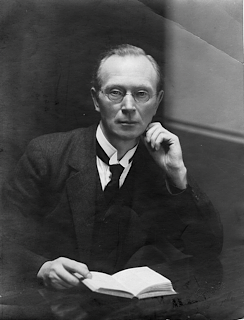
John MitchelIrish nationalist activist, author, and political journalist, dies at Drumalane, his parents’ house in Newry, County Down, on March 20, 1875.

Mitchel is born in Camnish, near DungivenCounty Derry, on November 3, 1815, the son of a Presbyterian minister. At the age of four, he is sent to a classical school, run by an old minister named Moor, nicknamed “Gospel Moor” by the students. He reads books from a very early age. When a little over five years old, he is introduced to Latin grammar by his teacher and makes quick progress. In 1830, not yet 15 years old, he enters Trinity College, Dublin (TCD) and obtains a law degree in 1834.

In the spring of 1836, Mitchel meets Jane Verner, the only daughter of Captain James Verner. Though both families are opposed to the relationship, they become engaged in the autumn and are married on February 3, 1837, by the Rev. David Babington in Drumcree Church, the parish church of Drumcree.

Mitchel works in a law office in Banbridge, County Down, where he eventually comes into conflict with the local Orange Order. He meets Thomas Davis and Charles Gavan Duffy during visits to Dublin. He joins the Young Ireland movement and begins to write for The Nation. Deeply affected by the misery and death caused by the Great Famine, he becomes convinced that nothing will ever come of the constitutional efforts to gain Irish freedom. He then forms his own paper, United Irishmen, to advocate passive resistance by Ireland’s starving masses.

In May 1848, the British tire of Mitchel’s open defiance. Ever the legal innovators in Ireland, they invent a crime especially for the Young Irelanders – felony-treason. They arrest him for violating this new law and close down his paper. A rigged jury convicts him, and he is deported first to Bermuda and then to Australia. However, in June 1853, he escapes to the United States.

Mitchel works as a journalist in New York City and then moves to the South. When the American Civil War erupts, he is a strong supporter of the Southern cause, seeing parallels with the position of the Irish. His family fully backs his commitment to the Southern cause. He loses two sons in the war, one at the Battle of Gettysburg in 1863 and another at the Battle of Fort Sumter in 1864, and another son loses an arm. His outspoken support of the Confederacy causes him to be jailed for a time at Fort Monroe, where one of his fellow prisoners is Confederate President Jefferson Davis.

In 1874, the British allow Mitchel to return to Ireland and in 1875 he is elected in a by-election to be a member of the Parliament of the United Kingdom representing the Tipperary constituency. However, his election is invalidated on the grounds that he is a convicted felon. He contests the seat again in the resulting by-election and is again elected, this time with an increased vote.

Unfortunately, Mitchel, one of the staunchest enemies to English rule of Ireland in history, dies in Newry on March 20, 1875. He is buried in his parents’ grave in the unitarian cemetery, High Street, Newry, where a monument is later erected by his widow. He is also commemorated by a statue in Newry. Thirty-eight years later, his grandson, John Purroy Mitchel, is elected Mayor of New York City.


Leave a comment

Birth of Patrick Guiney, Irish Nationalist Politician

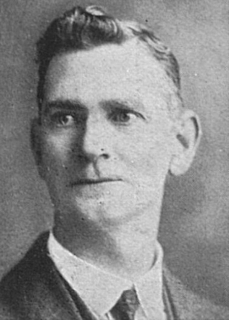
Patrick Guiney, Irish Nationalist politician, agrarian agitator and Member of Parliament (MP) in the House of Commons of the United Kingdom of Great Britain and Ireland, is born in NewmarketCounty Cork, on March 16, 1867.

Guiney is the eldest son of Timothy Guiney, a shopkeeper and later clerk of Kanturk poor law union, and Ellen Carver. He is educated at St. Patrick’s Monastery, MountrathCounty Laois. He serves three terms of imprisonment for activity in the Land War and later Plan of Campaign movement during the 1880s under the Coercion Act. He becomes a farmer and serves as councillor for Newmarket and on the Cork County Council (1908–11) as well as Chair of Newmarket Agricultural Society, Newmarket Gaelic League and Newmarket Old-Age Pensions Committee.

With strong family connection in the North Cork area, Guiney builds a personal political base as a Land and Labour Association activist, skilled in organising land agitation and deploying it at a local level to make landlords agree to sales terms under the Land Purchase (Ireland) Act 1903. A supporter of William O’Brien‘s All-for-Ireland League, he is elected MP for North Cork in the January 1910 United Kingdom general election. He is re-elected in the following December 1910 United Kingdom general election, when he also contests (unsuccessfully) for East Kerry.

Guiney marries Nanette O’Connor of BallycloghMallow, County Cork, in 1895.

Guiney dies at his home in Newmarket on October 12, 1913, after contracting pneumonia and is buried in Clonfert Cemetery, Newmarket.

Guiney’s brother, John, a solicitor in Kanturk, is returned unopposed for his seat in the resulting 1913 North Cork by-election. They are uncles of Philip BurtonFine Gael TD for Cork North-East from 1961 to 1969, and member of the Seanad from 1973 to 1977.

(Pictured: All-for-Ireland League group portrait of five of its Members of Parliament, in the “Cork Free Press”, 30 July 1910. These are: Patrick Guiney (North Cork), James Gilhooly (West Cork), Maurice Healy (North-east Cork), D. D. Sheehan (Mid Cork), and Eugene Crean (South-east Cork))


Leave a comment

Death of Donogh O’Malley, Politician & Rugby Union Player

Donogh Brendan O’Malley, Irish Fianna Fáil politician and rugby union player, dies suddenly in Limerick, County Limerick, on March 10, 1968. He serves as Minister for Education (1966-68), Minister for Health (1965-66) and Parliamentary Secretary to the Minister for Finance (1961-65). He also serves as a Teachta Dála (TD) for the Limerick East constituency (1954-68). He is best remembered as the Minister who introduces free secondary school education in the Republic of Ireland.

O’Malley is born on January 18, 1921, in Limerick, one of eight surviving children of Joseph O’Malley, civil engineer, and his wife, Mary “Cis” (née Tooher). Born into a wealthy middle-class family, he is educated by the Jesuits at Crescent College and later at Clongowes Wood CollegeCounty Kildare. He later studies at University College Galway (UCG), where he is conferred with a degree in civil engineering in 1943. He later returns to Limerick, where he works as an engineer before becoming involved in politics.

O’Malley plays rugby at provincial level for MunsterLeinster and Connacht and at club level for Bohemians and Shannon RFC. His chances at an international career are ruined by the suspension of international fixtures during World War II. It is at a rugby match in Tralee that he first meets Dr. Hilda Moriarty, who he goes on to marry in August 1947.

Although O’Malley runs as a Fianna Fáil candidate, he is born into a politically active family who supports Cumann na nGaedheal until a falling-out with the party in the early 1930s. He first becomes involved in local politics as a member of Limerick Corporation. He becomes Mayor of Limerick in 1961, the third O’Malley brother to hold the office (Desmond from 1941-43 and Michael from 1948-49). He is a strong electoral performer, topping the poll in every general election he runs in.

O’Malley is first elected to Dáil Éireann as a Fianna Fáil TD for Limerick East at the 1954 Irish general election. Fianna Fáil is not returned to government on that occasion. He spends the rest of the decade on the backbenches. However, his party is returned to power in 1957. Two years later, the modernising process begins when Seán Lemass takes over from Éamon de Valera as Taoiseach. Lemass introduces younger cabinet ministers, as the old guard who has served the party since its foundation in 1926 begin to retire.

In 1961, O’Malley joins the government as Parliamentary Secretary to the Minister for Finance. He is part of a new, brasher style of politician that emerges in the 1960s, sometimes nicknamed “the men in the mohair suits.” It is expected that this generation of politician, born after the Irish Civil War, will be a modernising force in post-de Valera Ireland.

Although his sporting background is in rugby and swimming, it is association football which O’Malley gets involved in at a leadership level, becoming President of the Football Association of Ireland despite never having played the sport.

Following Fianna Fáil’s retention of power in the 1965 Irish general election, O’Malley joins the cabinet as Minister for Health. He spends just over a year in this position before he is appointed Minister for Education, a position in which he displays renowned dynamism. Having succeeded Patrick Hillery, another dynamic young minister, he resolves to act swiftly to introduce the recommendations of an official report on education.

As Minister for Education, O’Malley extends the school transport scheme and commissions the building of new non-denominational comprehensive and community schools in areas where they are needed. He introduces Regional Technical Colleges (RTCs), now called Institutes of Technology, in areas where there is no third level college. The best example of this policy is the University of Limerick, originally an Institute of Higher Education, where O’Malley is credited with taking the steps to ensure that it becomes a university. His plan to merge Trinity College Dublin and University College Dublin arouses huge controversy, and is not successful, despite being supported by his cabinet colleague Brian Lenihan. Access to third-level education is also extended, the old scholarship system being replaced by a system of means-tested grants that give easier access to students without well-off parents.

Mid-twentieth century Ireland experiences significant emigration, especially to the neighbouring United Kingdom where, in addition to employment opportunities, there is a better state provision of education and healthcare. Social change in Ireland and policies intending to correct this deficit are often met with strong resistance, such as Noël Browne‘s proposed Mother and Child Scheme. As a former Health Minister, O’Malley has first-hand experience of running the department which had attempted to introduce this scheme and understood the processes that caused it to fail, such as resistance from Department of Finance and John Charles McQuaid. This influences his strategy in presenting the free-education proposal.

Shortly after O’Malley is appointed, he announces that from 1969 all education up to Intermediate Certificate level will be without cost, and free buses will bring students in rural areas to their nearest school, seemingly making this decision without consulting other ministers. However, he does discuss it with Lemass. Jack Lynch, who, as Minister for Finance, has to find the money to pay for the programme, is not consulted and is dismayed at the announcement.

By announcing the decision first to journalists and on a Saturday (during a month when the Dáil is in recess), the positive public reaction tempers resistance to the idea before the next cabinet meeting. O’Malley’s proposals are hugely popular with the public, and it is impossible for the government to go back on his word.

Some Irish commentators consider that O’Malley’s extension of education, changing Ireland from a land where the majority are schooled only to the age of 14 to a country with universal secondary-school education, indirectly leads to the Celtic Tiger boom of the 1990s-2000s when it is followed for some years by an extension of free education to primary degree level in university, a scheme that is launched in 1996 by the Labour Party and axed in 2009 by Fianna Fáil’s Batt O’Keeffe.

In 1967, O’Malley appoints Justice Eileen Kennedy to chair a committee to carry out a survey and report on the reformatory and industrial school systems. The report, which is published in 1970, is considered ground-breaking in many areas and comes to be known as the Kennedy Report. The Report makes recommendations about a number of matters, including the Magdalene laundries, in relation to which they are not acted upon. The report recommends the closure of a number of reformatories, including the latterly infamous reformatory at DaingeanCounty Offaly.

O’Malley’s reforms make him one of the most popular members of the government. He is affectionately known as “the School Man” for his work in education. His sudden death in Limerick on March 10, 1968, before his vision for the education system is completed, comes as a shock to the public. He is buried with a full Irish state funeral.

Following O’Malley’s death, his widow, Hilda O’Malley, does not run in the subsequent by-election for the seat he has left vacant. It is won narrowly by their nephew Desmond O’Malley. Hilda seeks the Fianna Fáil nomination for the 1969 Irish general election, but Fianna Fáil gives the party nomination to Desmond, as the sitting TD. Hilda runs as an Independent candidate in that election. After what proves a bitter campaign against her nephew, she fails to get the fourth seat in Limerick East by just 200 votes.


Leave a comment

Birth of Richie Ryan, Fine Gael Politician

Richard RyanFine Gael politician, is born in Dublin on February 27, 1929. He serves as Minister for Finance and Minister for the Public Service from 1973 to 1977 and a Member of the European Court of Auditors from 1986 to 1989. He serves as a Member of the European Parliament (MEP) from 1977 to 1986. He serves as a Teachta Dála (TD) from 1959 to 1982.

Ryan is educated at Synge Street CBSUniversity College Dublin (UCD), where he studies economics and jurisprudence, and the Law Society of Ireland, subsequently qualifying as a solicitor. A formidable orator, at UCD he is auditor of the Literary and Historical Society (L&H) and subsequently of the Solicitors Apprentice Debating Society (1950), and wins both societies’ gold medals for debating. He serves as an Honorary Vice-president of the L&H.

After qualifying, Ryan works for several solicitors’ firms before establishing a private practice in Dame Street in Dublin, in which he remains an active partner until appointed to ministerial office in 1973.

Ryan first holds political office when he is elected to Dáil Éireann as a Fine Gael TD for Dublin South-West in a 1959 by-election, and retains his seat until he retires at the February 1982 Irish general election to concentrate on his European Parliament seat.

In opposition, Ryan serves as Fine Gael Spokesperson on Health and Social Welfare (1966–70) and on Foreign Affairs and Northern Ireland (1970–73). During this period he is involved in several important pro bono legal cases, including the 1963 challenge in the High Court, and then, on appeal, in the Supreme Court of Ireland in 1964, by Gladys Ryan (no relation) on the constitutionality of the fluoridation of the water supply. While the court rules against Gladys Ryan, the case remains a landmark, for it establishes the right to privacy under the Constitution of Ireland (or, perhaps more precisely, the right to bodily integrity under Article 40.3.1.). The case also raises a legal controversy, owing to the introduction by Justice Kenny of the concept of unenumerated rights. Other notable cases involving Ryan include a challenge to the rules governing the drafting of constituency boundaries, and an unsuccessful attempt to randomise the order of candidates on ballot papers (owing to a preponderance of TDs with surnames from the first part of the alphabet).

Fine Gael comes to power in a coalition with the Labour Party in 1973, and Ryan becomes Minister for Finance. He presides over a tough four years in the National Coalition under Liam Cosgrave, during the 1970s oil crisis when, in common with most Western economies, Ireland faces a significant recession. He is variously lampooned as “Richie Ruin” on the Irish satire show Hall’s Pictorial Weekly, and as “Red Richie” for his government’s introduction of a wealth tax. Following the 1977 Irish general election Fine Gael is out of power, and he once again becomes Spokesperson on Foreign Affairs.

Ryan also served as a Member of the European Parliament (MEP) in 1973 and from 1977 to 1979, being appointed to Ireland’s first delegation and third delegation. At the first direct elections to the European Parliament in 1979, he is elected for the Dublin constituency and is re-elected in 1984 European Parliament election in Ireland, heading the poll on both occasions.

On being appointed to the European Court of Auditors in 1986, he resigns his seat and is succeeded by Chris O’Malley. He serves as a member of the Court of Auditors from 1986 to 1994, being replaced by Barry Desmond. After retirement, he continues in several roles, including as a Commissioner of Irish Lights (until 2004) and a time as Chairman of the Irish Red Cross in 1998.

Ryan is the father of the economist and academic Cillian Ryan. He dies in Dublin at the age of 90 on March 17, 2019. He is buried at Newlands Cross Cemetery and Crematorium in Dublin.


Leave a comment

Birth of James Chichester-Clark, Prime Minister of Northern Ireland

James Dawson Chichester-Clark, Baron Moyola, the penultimate Prime Minister of Northern Ireland and eighth leader of the Ulster Unionist Party (UUP), is born as James Dawson Clark on February 12, 1923, at Moyola Park, near CastledawsonCounty Londonderry, his family’s ancestral home.

Chichester-Clark is the eldest of three children of James Lenox-Conyngham Clark and Marion Caroline Dehra (née Chichester). His brother is Robin Chichester-Clark and his sister is Penelope Hobhouse, the garden writer and historian.

In 1924, James Clark Snr. changes the family name to Chichester-Clark by deed poll, thus preventing the old Protestant Ascendancy name Chichester, his wife’s maiden name, from dying out. On his mother’s side the family are descended from the Donegall Chichesters and are the heirs of the Dawsons of Castledawson, who had originally held Moyola Park.

Educated, against his own wishes, at Selwyn House, Broadstairs, and then Eton College, Chichester-Clark leaves school and enters adulthood in the midst of World War II. On joining the Irish Guards, the regiment of his grandfather, in Omagh, he begins his year-long training at the Royal Military College, Sandhurst, before receiving his commission as a second lieutenant.

Chichester-Clark marries widow Moyra Haughton (née Morris) in 1959. Lady Moyola’s first husband, Capt. Thomas Haughton from Cullybackey, had been killed in the RAF Nutts Corner air crash in January 1953. She, while pregnant, is seriously injured in the crash and suffers a broken neck.  He and his wife have two daughters (Tara and Fiona), in addition to Moyra’s son Michael from her previous marriage. Lady Moyola is a cousin of Colonel Sir Michael McCorkellLord Lieutenant of County Londonderry (1975–2000). Chichester-Clark serves as his Vice Lord-Lieutenant.

Chichester-Clark is an officer in the 1st Battalion, Irish Guards, part of 24th Infantry Brigade attached to British 1st Infantry Division, and participates briefly in the Anzio landings. He is injured on February 23, 1944, by an 88m shell as he and his Platoon Sergeant take their first look at the ground in the “gullies” to the west of the AnzioAlbano Laziale road. His company is all but wiped out, and he spends most of the war in hospital recovering from injuries, the effects of which stay with him throughout his life.

Following the war, Chichester-Clark’s military career takes him from the dull duties of the post-war occupation of Germany, to Canada as aide-de-camp to Harold Alexander, 1st Earl Alexander of Tunis, then Governor General of Canada. The popularity and competence of his senior officer makes this uneventful two-year period of his life the most remarkable element of his pre-parliamentary career. On returning from Canada, he continues in the Army for several years, refusing promotion to seniority before retiring a major in 1960.

In an uncontested by-election in 1960, Chichester-Clark takes over the South Londonderry seat in the Northern Ireland Parliament that had been held by his grandmother, Dame Dehra Parker, since 1933. As Dehra Chichester, she is an MP for the county of Londonderry until 1929 when she stands down for a first time. Chichester-Clark’s father replaces her in 1929 when the county is split, but he suddenly dies in 1933. Dehra, by then remarried, willingly returns to Northern Ireland from England, and wins the ensuing by-election.

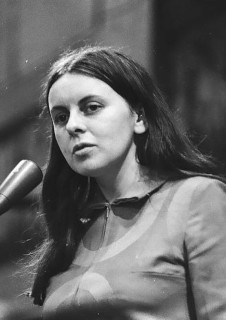
Chichester-Clark retains the seat for the remainder of the Parliament’s existence, and so the South Londonderry area is represented by three generations of the same family for the entire period of the Northern Ireland House of Commons. Between 1929 and the last election in 1969, the family is challenged for the seat on only two occasions, the second being in 1969, when future Westminster MP Bernadette Devlin stands, attracting 39% of the vote.

Chichester-Clark makes his maiden speech on February 8, 1961, during the Queen’s speech debate.

For the remainder of Basil Brooke, 1st Viscount Brookeborough‘s premiership, Chichester-Clark remains on the back benches. It is not until 1963, when Terence O’Neill becomes Prime Minister of Northern Ireland, that he is appointed assistant whip, and a month later when William Craig is promoted to the Ministry of Home Affairs, he takes over as Government Chief Whip. Accounts of the period are that he enjoys the Whip’s office more than any other he is to subsequently hold in politics. This despite including references to anti O’Neill MP and future Democratic Unionist Party (DUP) Westminster MP, John McQuade, and the occasional “good row.” From the outset, O’Neill takes the unusual decision to allow Chichester-Clark to attend and speak at all cabinet meetings while Chief Whip. Proving a competent parliamentary party administrator, O’Neill adds Leader of the House of Commons to Chichester-Clark’s duties in October 1966, a promotion that makes him a full member of the Cabinet. He is also sworn into the Privy Council of Northern Ireland in 1966.

In 1967, O’Neill sacks his Minister of Agriculture, Harry West, for ministerial impropriety, and Chichester-Clark is appointed in his place, a position he retains for two quiet years. On April 23, 1969, he resigns from the Cabinet one day prior to a crucial Parliamentary Party meeting, claiming that he disagrees with the Prime Minister’s decision to grant universal suffrage in local government elections at that time. He states that he disagrees not with the principle of one man one vote but with the timing of the decision, having the previous day expressed doubts over the expediency of the measure in Cabinet. It has since been suggested that his resignation was in order to accelerate O’Neill’s own resignation, and to improve his own position in the jostling to succeed him.

O’Neill “finally walked away” five days later on April 28, 1969. In order to beat his only serious rival, Brian Faulkner, Chichester-Clark needs the backing of O’Neill-ite MPs elected at the 1969 Northern Ireland general election, to which end he attends a tea party in O’Neill’s honour only days after causing his resignation.

Chichester-Clark beats Faulkner in the 1969 Ulster Unionist Party leadership election by one vote on May 1, 1969, with his predecessor using his casting vote in the tied election for his distant cousin because “Faulkner had been stabbing him in the back for a lot longer.” Although Faulkner believes, until his death, that he is the victim of an upper-class conspiracy to deny him the premiership, he becomes a high profile and loyal member of Chichester-Clark’s cabinet.

Chichester-Clark’s premiership is punctuated by civil unrest that erupts after August 1969. He suffers from the effects of the Hunt Report, which recommends the disbandment of the Ulster Special Constabulary, which his Government accepts to the consternation of many Unionists.

In April 1970, Chichester-Clark’s predecessor and another Unionist MP resign their seats in the Northern Ireland House of Commons. The by-election campaigns are punctuated by major liberal speeches by senior government figures like Brian Faulkner, Jack Andrews and the Prime Minister himself. Ian Paisley‘s Protestant Unionist Party (PUP), however, takes both seats in the House of Commons. Later that same month the O’Neill-ite group, the New Ulster Movement, becomes the Alliance Party of Northern Ireland, and his party begins passing votes of no confidence in him.

As the civil unrest grows, the British Government, particularly the Home SecretaryJames Callaghan, becomes increasingly involved in Northern Ireland’s affairs, forcing Chichester-Clark’s hand on many issues. These include the disbanding of the “B” Specials of the Ulster Special Constabulary and, importantly, the handing over of operational control of the security forces to the British Army General Officer Commanding Northern Ireland.

On March 9, 1971, the Provisional Irish Republican Army lures three off-duty soldiers from a pub in Belfast to a lane way outside the city, where they kill them. Chichester-Clark flies to London on March 18, 1971, to request a new security initiative from the new British prime minister Edward Heath, who offers an extra 1,300 troops, and resists what he sees as an attempt by Chichester-Clark to gain political control over them. Chichester-Clark resigns on March 20.

On March 23, 1971, Brian Faulkner is elected UUP leader in a vote by Unionist MP’s, defeating William Craig by twenty-six votes to four. He is appointed prime minister the same day.

On July 20, 1971, Chichester-Clark is created a life peer as Baron Moyola, of Castledawson in the County of Londonderry, his title taken from the name of his family’s estate. He endorses the Good Friday Agreement in the 1998 Northern Ireland Good Friday Agreement referendum. He remains quiet about his political career in his retirement. Lady Moyola, however, says that her husband does enjoy the time – contrary to popular opinion – and that he thinks of life as an MP as akin to that of an army welfare officer.

Chichester Clark dies on May 17, 2002, at the age of 79, following a short illness. His funeral takes place at Christ Church in Castledawson on May 21. He is the last surviving Prime Minister of Northern Ireland.


Leave a comment

Birth of John Pratt, 1st Marquess Camden

John Jeffreys Pratt, 1st Marquess Camden, a British politician, is born at Lincoln’s Inn FieldsLondon, on February 11, 1759. He is styled Viscount Bayham from 1786 to 1794 and known as the 2nd Earl Camden from 1794 to 1812. He serves as Lord Lieutenant of Ireland in the revolutionary years 1795 to 1798 and as Secretary of State for War and the Colonies between 1804 and 1805.

Pratt is born the only son of the barrister Charles Pratt, 1st Earl Camden, and Elizabeth, daughter of Nicholas Jeffreys, of The Priory, Brecknockshire, Wales. He is baptised on the day Halley’s Comet appears. In 1765, his father is created Baron Camden, at which point he becomes The Hon. John Pratt. He is educated at the University of Cambridge (Trinity College).

In 1780, Pratt is elected Member of Parliament for Bath and obtains the position of Teller of the Exchequer the same year, a lucrative office which he keeps until his death, although after 1812 he refuses to receive the large income arising from it. He serves under William Perry, 2nd Earl of Shelburne, as Lord of the Admiralty between 1782 and 1783 and in the same post under William Pitt the Younger between 1783 and 1789, as well as a Lord of the Treasury between 1789 and 1792.

In 1786, Pratt’s father is created Earl Camden, at which point he becomes known by one of his father’s subsidiary titles as Viscount Bayham.

In 1793, Pratt is sworn of the Privy Council. In 1794 he succeeds his father as 2nd Earl Camden, and the following year he is appointed Lord Lieutenant of Ireland by Pitt.

As an opponent of parliamentary reform and of Catholic emancipation, Pratt’s term of office is one of turbulence, culminating in the Irish Rebellion of 1798. His refusal in 1797 to reprieve the United Irishman William Orr, convicted of treason on the word of one witness of dubious credit (and for which his own sister, Frances Stewart, Marchioness of Londonderry, petitions him), arouses great public indignation. To break the United Irish conspiracy, he suspends habeas corpus and unleashes a ruthless martial law campaign to disarm and break up the republican organization.

Pratt resigns from office in June 1798, to be replaced with Charles Cornwallis, 1st Marquess Cornwallis, who oversees the military defeat of the rebellion. In 1804, Pratt becomes Secretary of State for War and the Colonies under Pitt, and in 1805 Lord President of the Council, an office he retains until 1806. He is again Lord President from 1807 to 1812, after which date he remains for some time in the cabinet without office. In 1812 he is created Earl of Brecknock and Marquess Camden.

The enforced resignation from the Cabinet of Robert Stewart, Viscount Castlereagh, the stepson of his sister Frances (Lady Londonderry), to whom he has always been personally close, in September 1809, leads to a series of bitter family quarrels, when it becomes clear that Pratt has known for months of the plan to dismiss Stewart, but has given him no warning. Stewart himself regards Pratt as “a weak friend,” not an enemy, and they are eventually reconciled. Other members of the Stewart family, however, never forgive Pratt for what they regard as his disloyalty.

Pratt is also Lord Lieutenant of Kent between 1808 and 1840 and appoints himself Colonel of the Cranbrook and Woodsgate Regiment of Local Militia in 1809. He is Chancellor of the University of Cambridge between 1834 and 1840. He is made a Knight of the Garter in 1799 and elected a Fellow of the Society of Antiquaries of London in 1802.

Pratt marries Frances, daughter of William Molesworth, in 1785. She dies at Bayham AbbeySussex, in July 1829. He survives her by eleven years and dies at SealKent, on October 8, 1840, aged 81. He is succeeded by his only son, George.

The family owns and lives in a house located at 22 Arlington Street in St. James’s, a district of the City of Westminster in central London, which adjoins The Ritz Hotel. In the year of his death, he sells the house to Henry Somerset, 7th Duke of Beaufort.